Install a reflective commercial roof in Independence, MO with a suitable membrane, sound insulation, drainage, and details built for the existing roof.
A reflective roof changes how much solar energy the surface absorbs, but color alone does not determine the building's heat load. Insulation, air leakage, equipment, ventilation, and operating hours also matter. We inspect the roof assembly and identify whether a reflective membrane or coating fits its condition. In Independence, MO, July station normals reach a typical high near 89 degrees. At retail sites such as Sterling Apple Market's US 24 district, roof work must also account for active customer and delivery access.
Surface Reflectance Is One Input
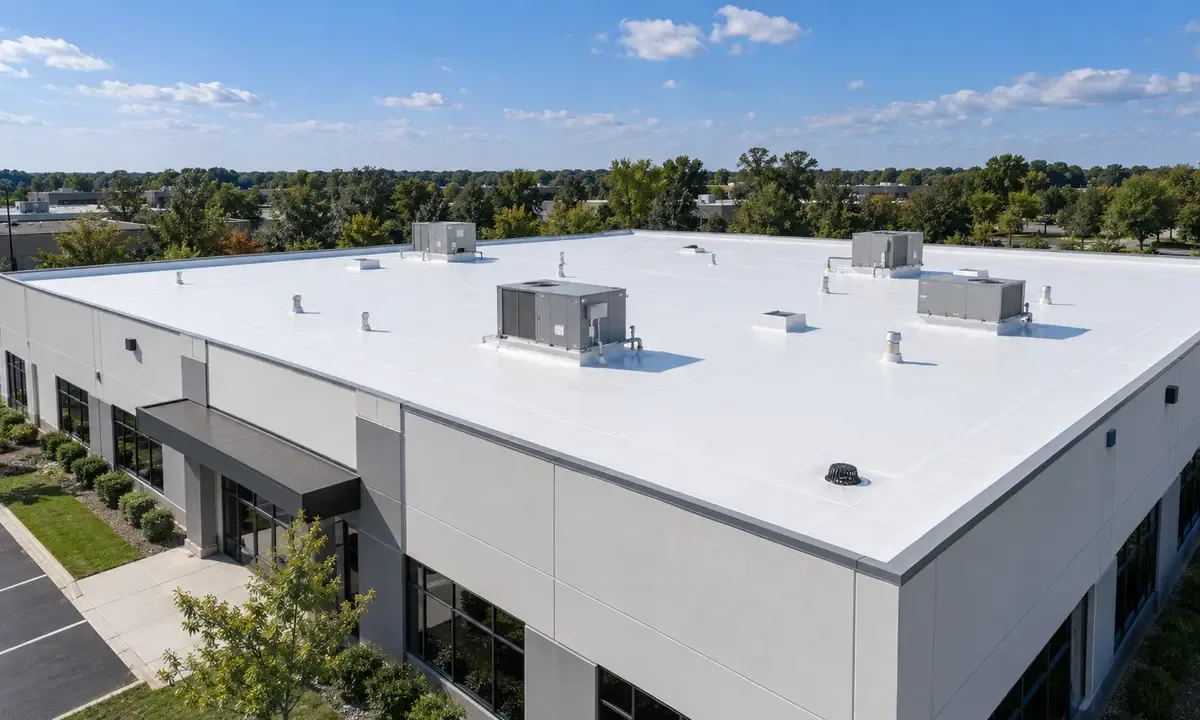
A cool-roof surface reflects more sunlight than a darker surface and can reduce solar heat absorbed at the roof plane. The benefit inside a building depends on the full assembly. A roof with wet insulation or open seams can remain a problem after a color change. We inspect membrane condition, insulation, deck, ventilation, and rooftop equipment before recommending a reflective system.
Independence's summer climate brings repeated upper-80-degree days in the Kansas City climate record. That is regional station context, not a measurement from a specific roof. Heat exposure can age sealants, stress seams, and increase movement at penetrations. We check the existing system for those defects before choosing a reflective membrane or coating. A coating restoration assessment starts with adhesion, moisture, and substrate checks; it is not a shortcut around a failed assembly.
Building use changes the operating question. Medical, manufacturing, school, retail, and civic facilities have different schedules and internal loads. A reflective roof may be one part of a heat-management project, but it does not replace equipment commissioning or insulation correction. We can document roof-level options and keep building-system decisions with the appropriate design team.
At Liberty, Missouri, the property is a regional enclosed retail destination with a mix of tenant uses. That use makes phasing and access relevant during installation, but it does not prove a particular roof detail. We inspect each building area separately and identify whether tenants can remain below an active work zone.
Choose a Compatible Surface
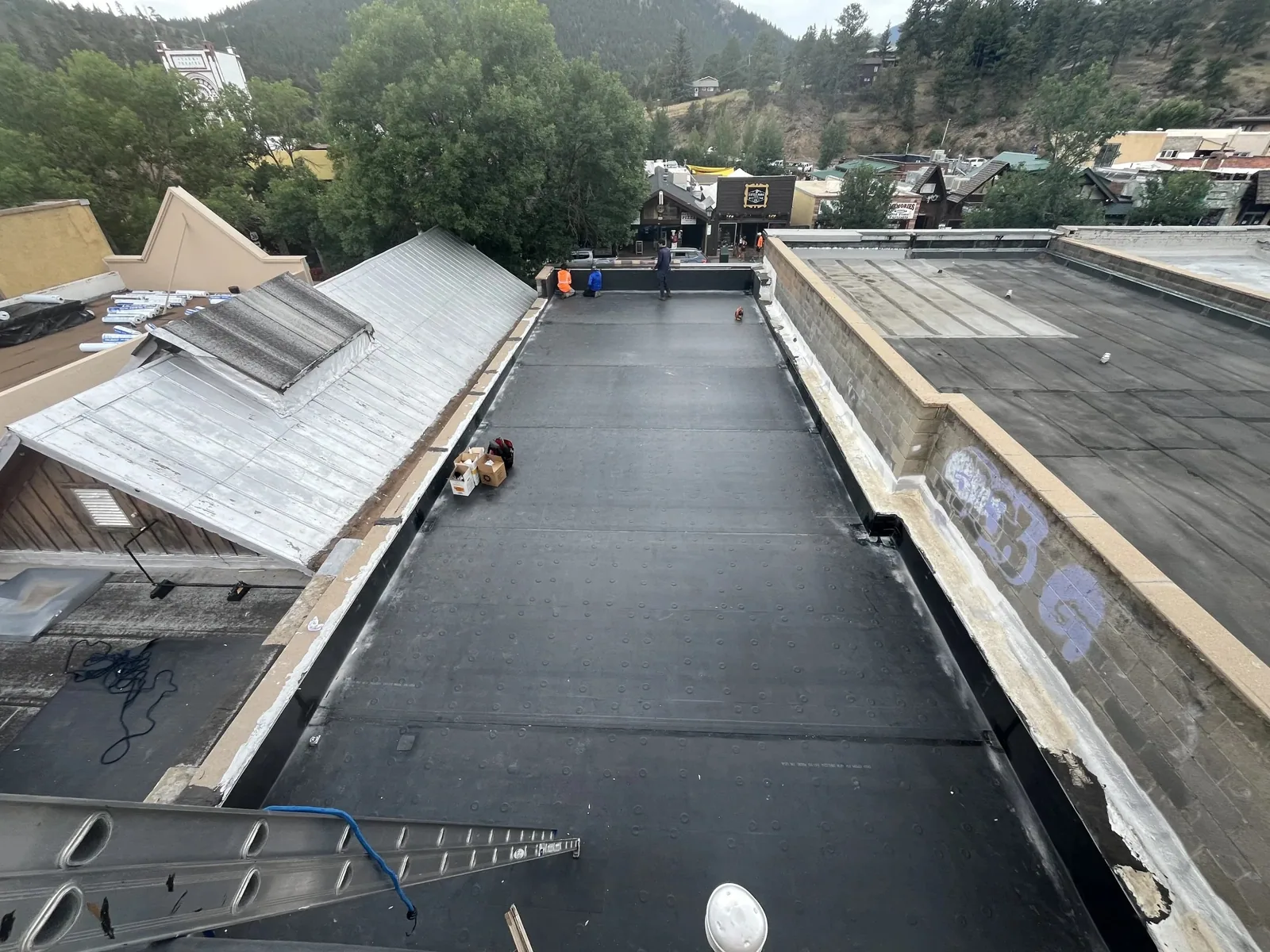
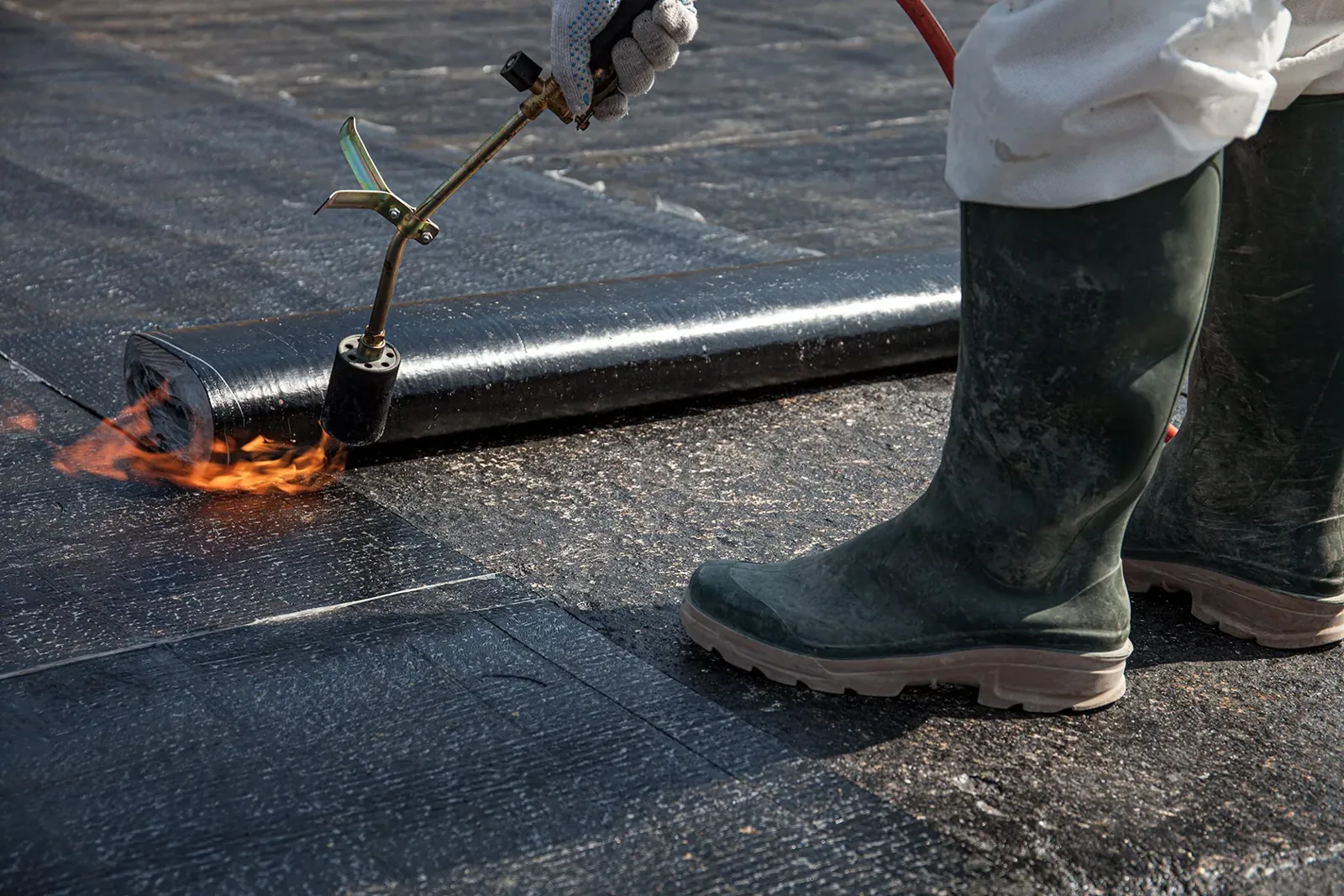
A reflective TPO or PVC membrane can be part of a replacement or recover when the existing roof is a suitable base. A reflective coating can be considered when the membrane is sound, dry, and compatible with the coating system. We verify surface preparation, seams, penetrations, drainage, and edge terminations. If the roof has trapped moisture or widespread delamination, the surface may need removal instead of another layer.
Material selection includes more than initial color. We compare membrane or coating type, thickness, reinforcement, attachment, flashing components, and the manufacturer's published reflectance data. The assembly also needs to meet the project's design and applicable code. Independence lists the 2024 building and existing-building codes with local amendments. The project design professional and permitting authority determine how those requirements apply to a reroof or recover.
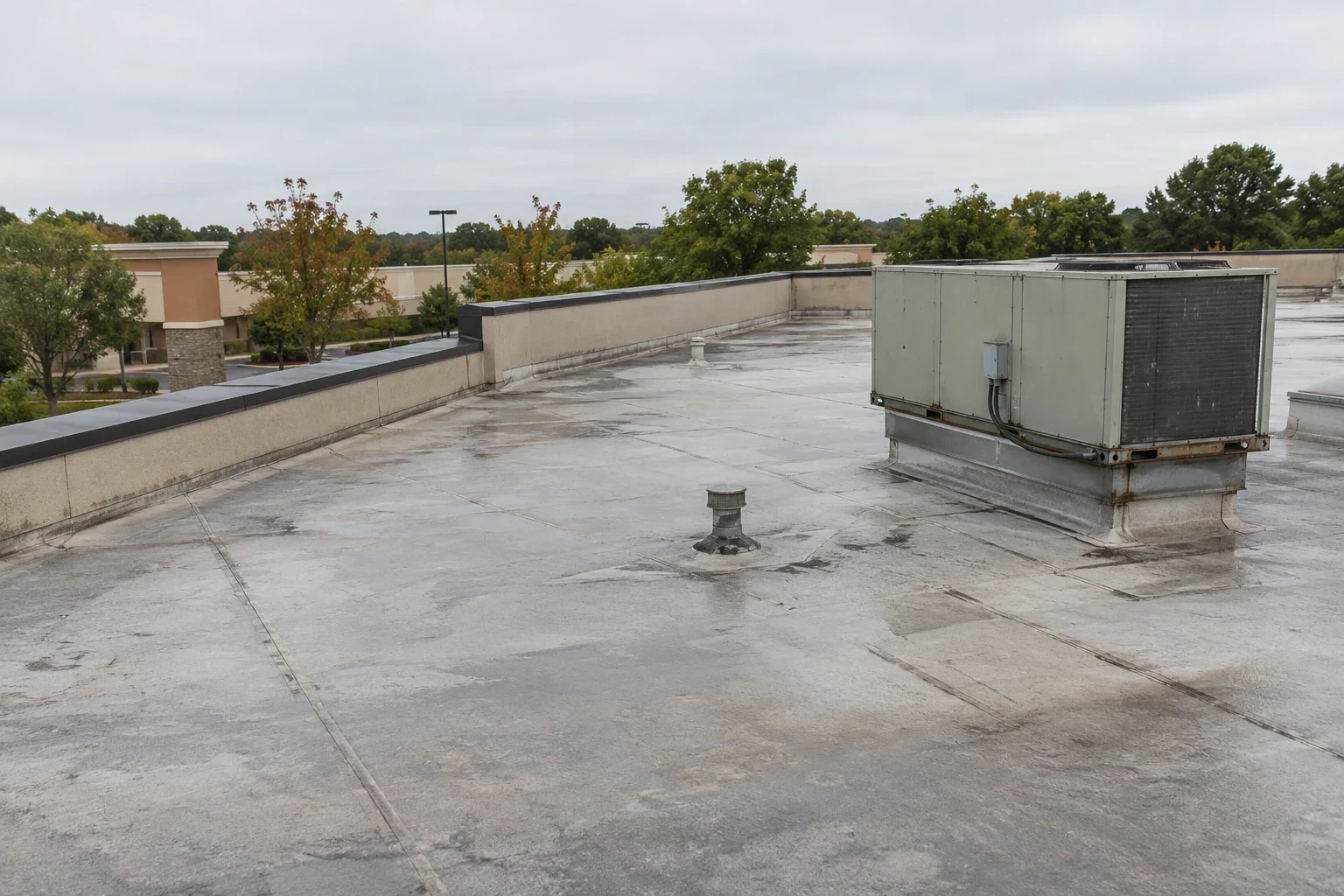
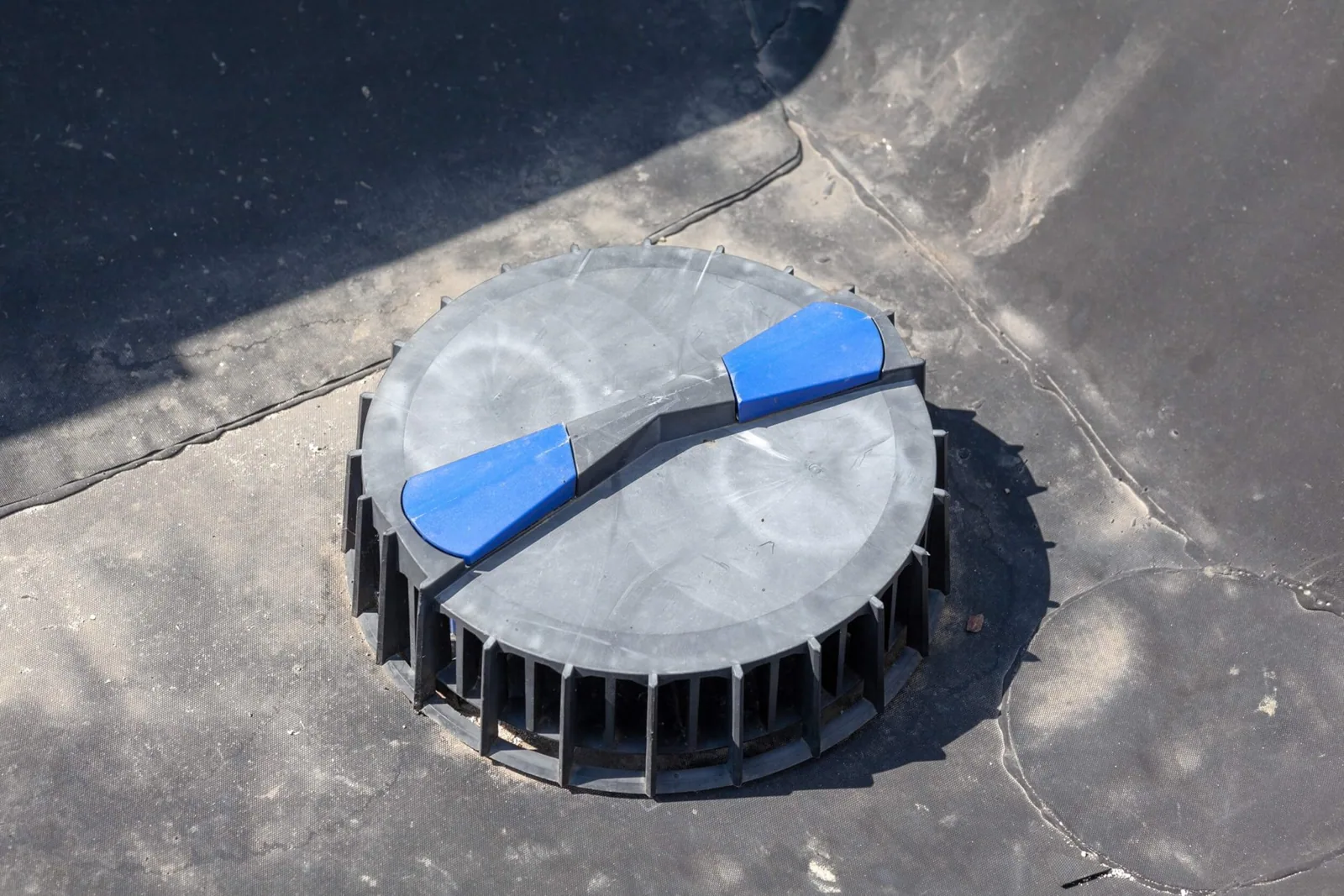
Reflectivity does not correct poor drainage. Ponding can leave dirt lines and biological growth that reduce surface performance and stress seams. We map low areas and confirm that drains, scuppers, and overflow paths work. If the deck needs slope correction, tapered insulation and cover board may be part of the roof design. Drainage work can address the outlet and transition.
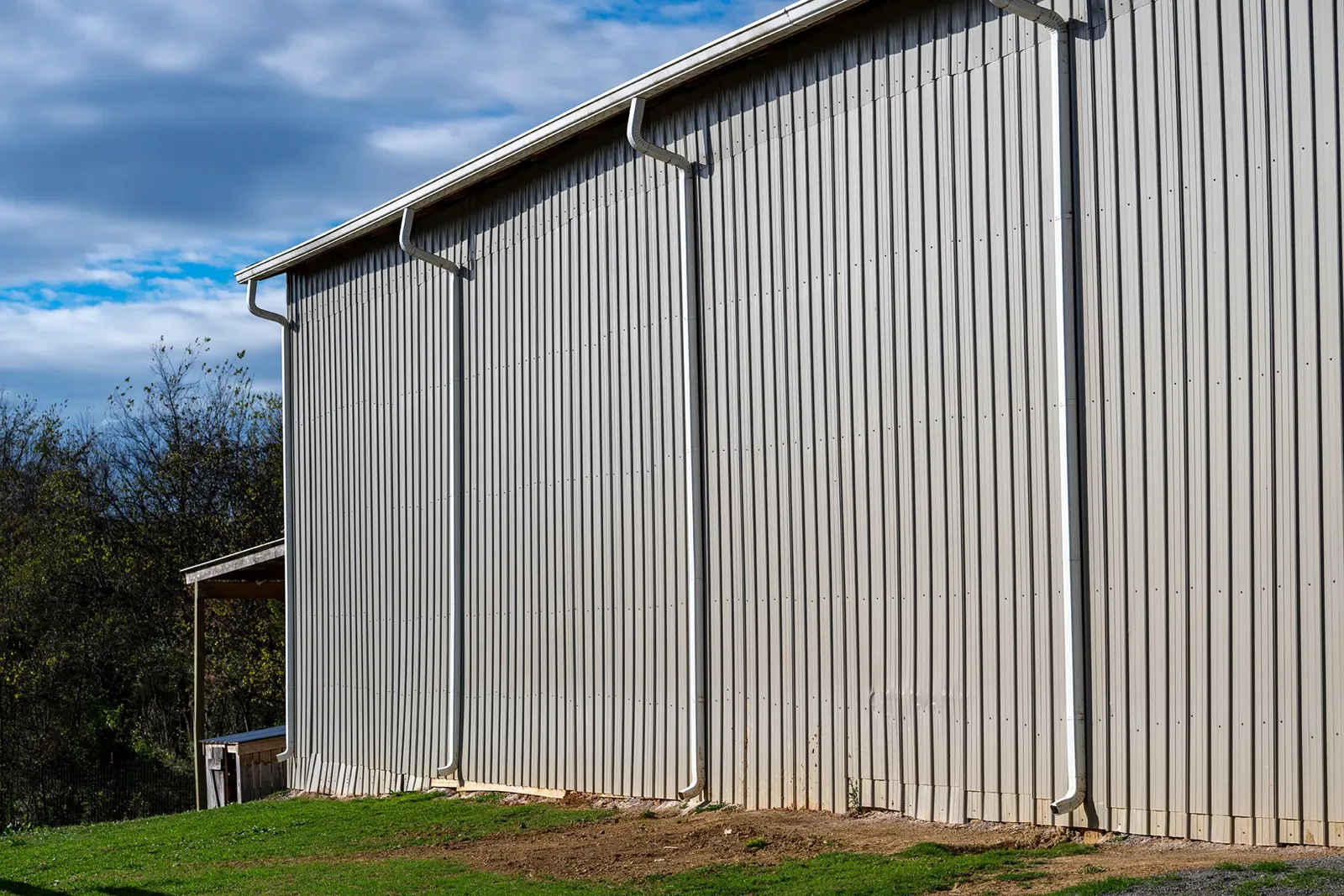
At the edge, a new reflective membrane must tie into coping, gutters, and wall flashing. We check the perimeter attachment and metal interface so water does not bypass the field system. A roof-edge repair may need to be coordinated with the main installation.
Prepare the Existing Roof
Before installation, we locate wet or deteriorated materials, open seams, unstable flashings, and equipment supports. Core sampling can confirm concealed layers when approved. Surface readings can identify areas for further testing, but they do not replace verification. The removal boundary should extend to dry, secure material so moisture does not remain beneath the new roof.
A recover can reduce tear-off only when the old assembly is dry, attached, and suitable for the added load. We check deck type, fastener engagement, edge height, curb height, and drain elevation. A reflective layer may change the finished roof elevation. That change affects door thresholds, wall terminations, equipment supports, and parapet caps. The scope should resolve those transitions before materials arrive.
Staging affects an occupied building. We sequence roof sections, keep temporary tie-ins watertight, protect air intakes from dust or odor, and coordinate any required shutdowns. For commercial buildings near Fairmount and the US 24 corridor, local traffic and access can influence delivery timing. The actual property route and operating constraints need confirmation for each project.
Cost and schedule depend on roof area, tear-off layers, insulation replacement, membrane attachment, edge details, access, disposal, and weather windows. A coating project has different preparation and curing constraints than a membrane replacement. We identify included surfaces, penetrations, and transitions so a bid does not leave the most exposed details undefined.
Measure the Roof Result
A useful performance check begins with the system installed, not a promise about utility bills. We can record the membrane or coating product, assembly layers, repair locations, and closeout photos. Energy use also reflects insulation, air leakage, HVAC efficiency, occupancy, and controls. A roof change alone cannot attribute a measured bill reduction.
Reflective surfaces need maintenance. Dirt, standing water, biological growth, and worn coating can alter the surface. Inspections should check adhesion, seams, flashings, penetrations, drains, and edge attachment. Scheduled maintenance keeps those roof conditions in the same record as other repairs. When multiple buildings are involved, condition reports can separate each assembly's status and next step.
Winter performance matters too. A reflective surface does not eliminate freeze-thaw stress at joints or prevent water entry at a curb. Kansas City January normals include lows around 20 degrees. We detail transitions for the local seasonal range and inspect the roof after severe weather. After severe weather, we inspect the building and document any damage before defining the repair.
Set a Roof-Specific Scope
Cool-roof work starts with a sound assembly and a clear objective. We can compare reflective membrane replacement, a compatible coating, and insulation correction after checking moisture, drainage, attachment, and transitions. The result is a defined system and repair boundary, not a color-only recommendation.
Schedule a reflective roof inspection with Commercial Roofing Independence. We will review the existing layers and document which roof improvements are supported by field conditions.
Commercial Roofing Questions
Will a reflective roof lower our energy bills?
A reflective surface can reduce solar heat absorbed at the roof, but energy use also depends on insulation, air leakage, HVAC, occupancy, and controls. We describe the roof contribution without assigning savings we cannot measure.
Can a reflective coating go over any commercial roof?
No. The membrane or substrate must be sound, dry, and compatible with the coating. We test adhesion and inspect seams, penetrations, and moisture before specifying a restoration.
Does a cool roof prevent leaks?
Reflectance does not make a failed seam watertight. We repair openings and transitions as part of the system scope, then document the completed roof details.
What affects the price of a reflective roof?
Roof area, preparation, removal, insulation, attachment, access, and edge work affect the scope. Coating and membrane systems also have different application steps and weather limits.
Can reflective roofing be installed while tenants are open?
Phased work can keep some areas operating when access and temporary tie-ins are planned. We coordinate the work zone and any shutdown needs with the building contact. Often the work can be phased so access, noise, odors, and material movement are coordinated with building operations, though the roof assembly and installation method set the practical limits. We map delivery and staging, protect entrances below active work, and identify areas that need temporary separation from occupied space. Before each phase closes, the crew checks seams, terminations, drains, and transitions so the next section does not inherit an unfinished edge.