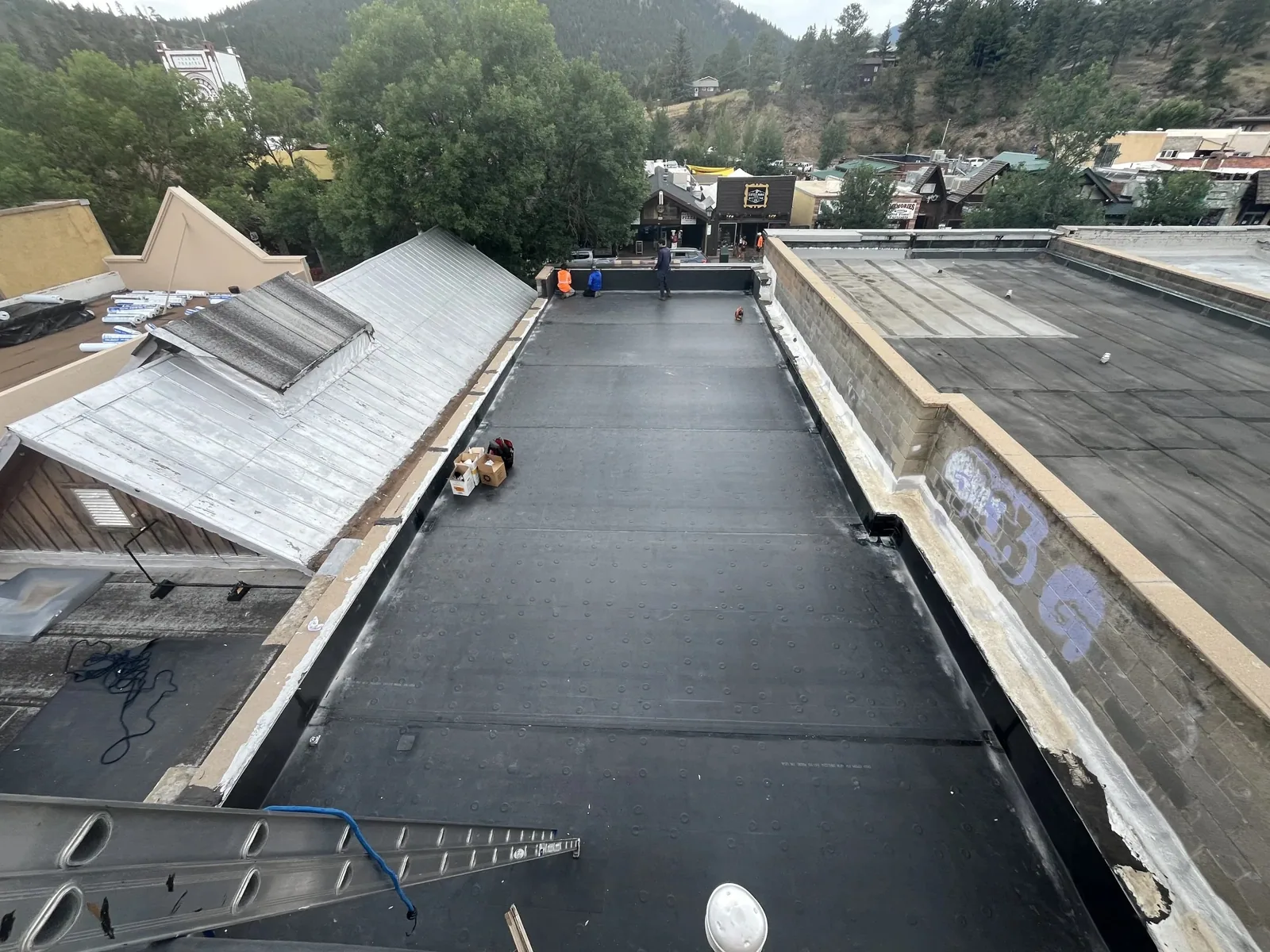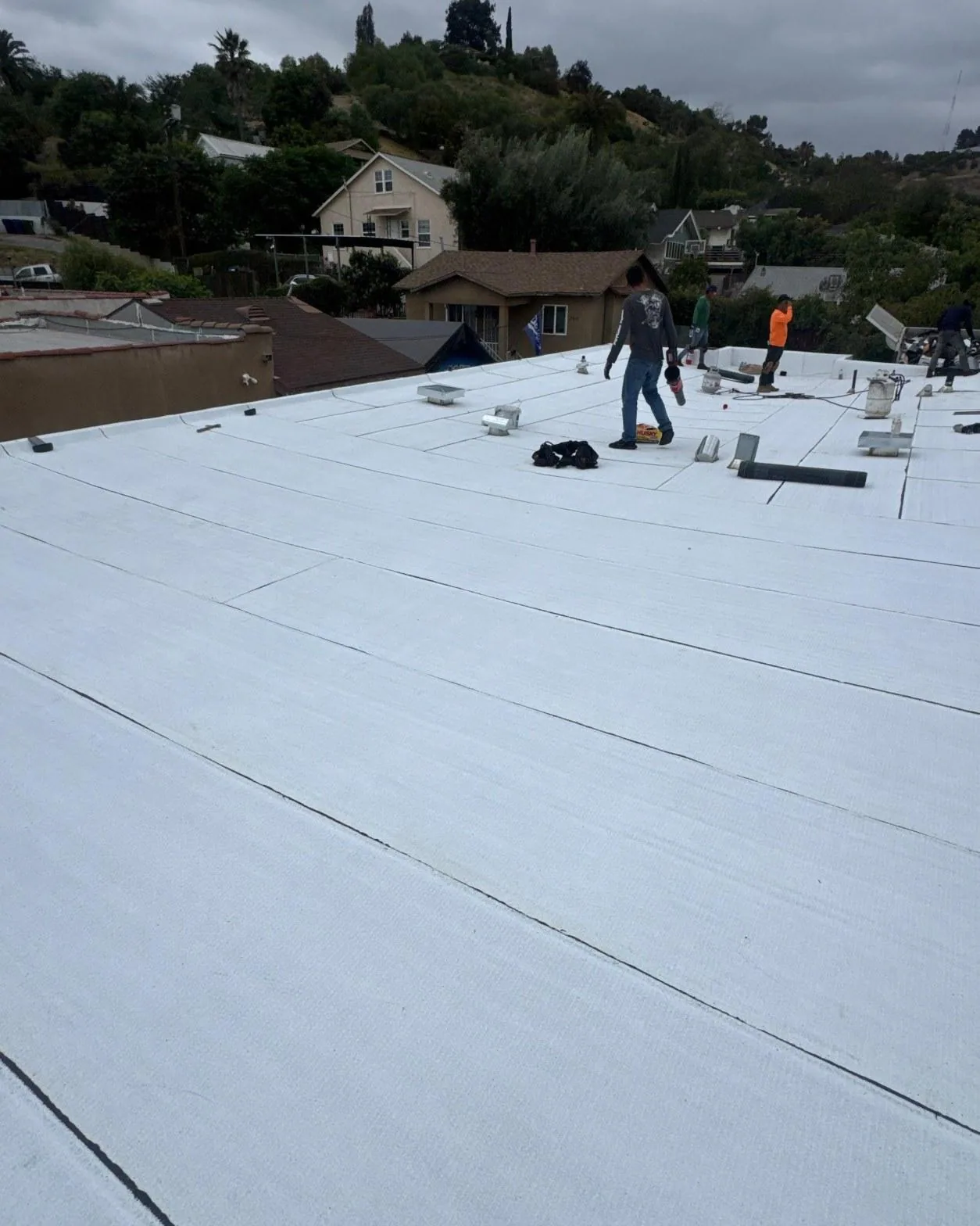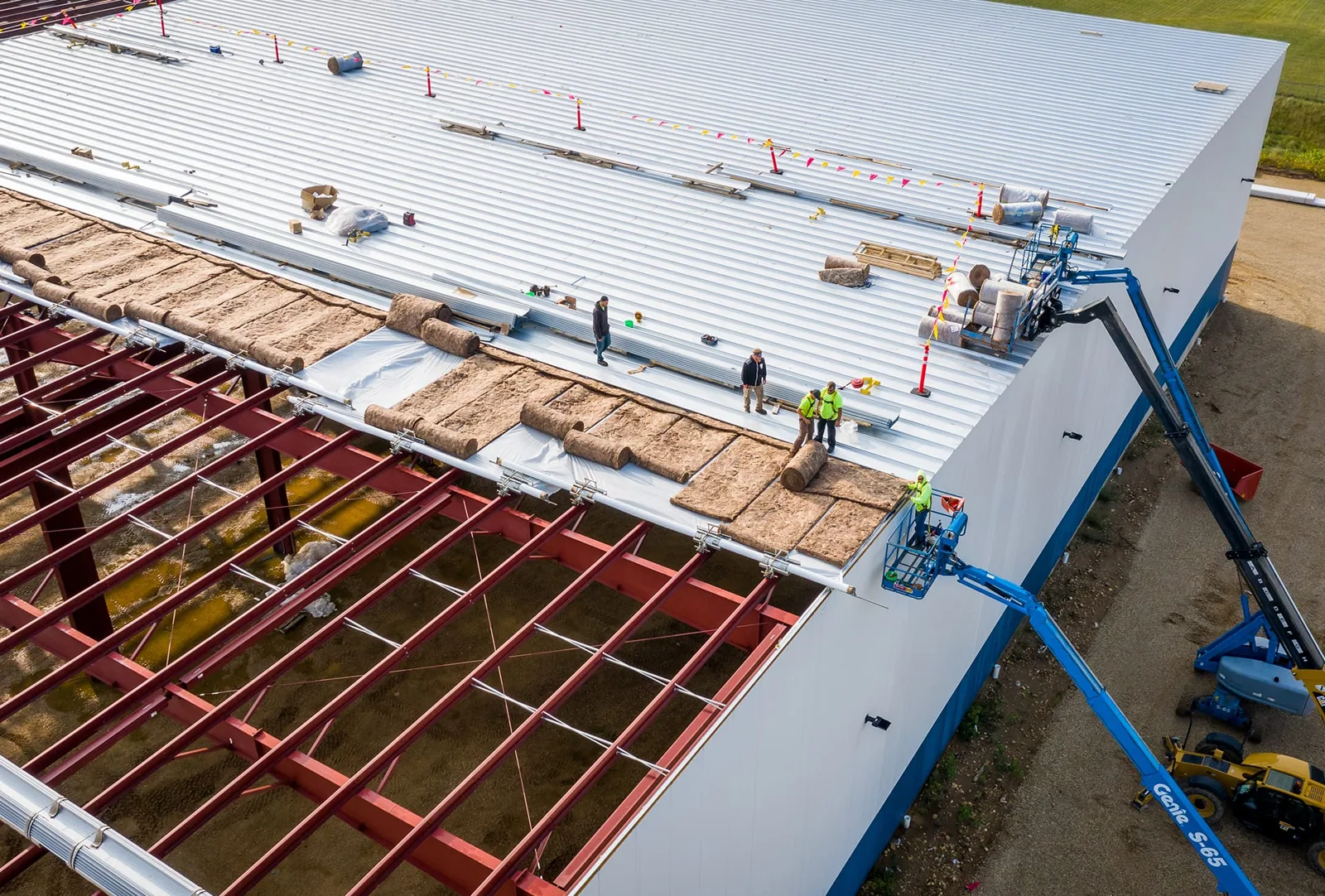
Maintain commercial roofs in Independence, MO with scheduled checks of drainage, seams, penetrations, flashing, and open repair items before water enters.
An occupied retail building needs a roof plan that fits deliveries, tenants, and the work happening below. In Independence, scheduled maintenance keeps drains, seams, penetrations, and edge details on a regular inspection list. At the shops around Historic Independence Square and along the Noland Road corridor, roof access and operating hours may differ, but the field checks remain specific: identify the assembly, follow the water path, and record the condition that needs attention.
Set a Useful Inspection Interval
A maintenance schedule should reflect the roof system, drainage layout, nearby trees, equipment, past leaks, and how the building is used. A site with several rooftop units and kitchen exhaust needs a different checklist from a roof with a broad open field. We set visits around seasonal changes and after significant weather when access permits. The schedule can include a spring review of winter movement, a fall clearing of outlets, and follow-up after completed repairs.
Each visit starts with the roof map and prior findings. We inspect seams, patches, flashing, penetrations, curbs, expansion joints, drains, scuppers, overflow paths, and perimeter metal. We note new conditions and compare them with the last record. Loose fasteners or sealant separation at one location may point to repeated movement elsewhere. Finding that pattern early can shape a repair plan before water reaches insulation or occupied space.
Independence has medical campuses, schools, industrial employers, retail centers, and civic facilities. Building use helps coordinate access, but does not establish roof construction. At a property near Independence Center, tenant operations can affect roof entry timing. We confirm the site rules with the facility contact and inspect the installed system rather than assume details from the business type.
Keep Outlets and Paths Clear
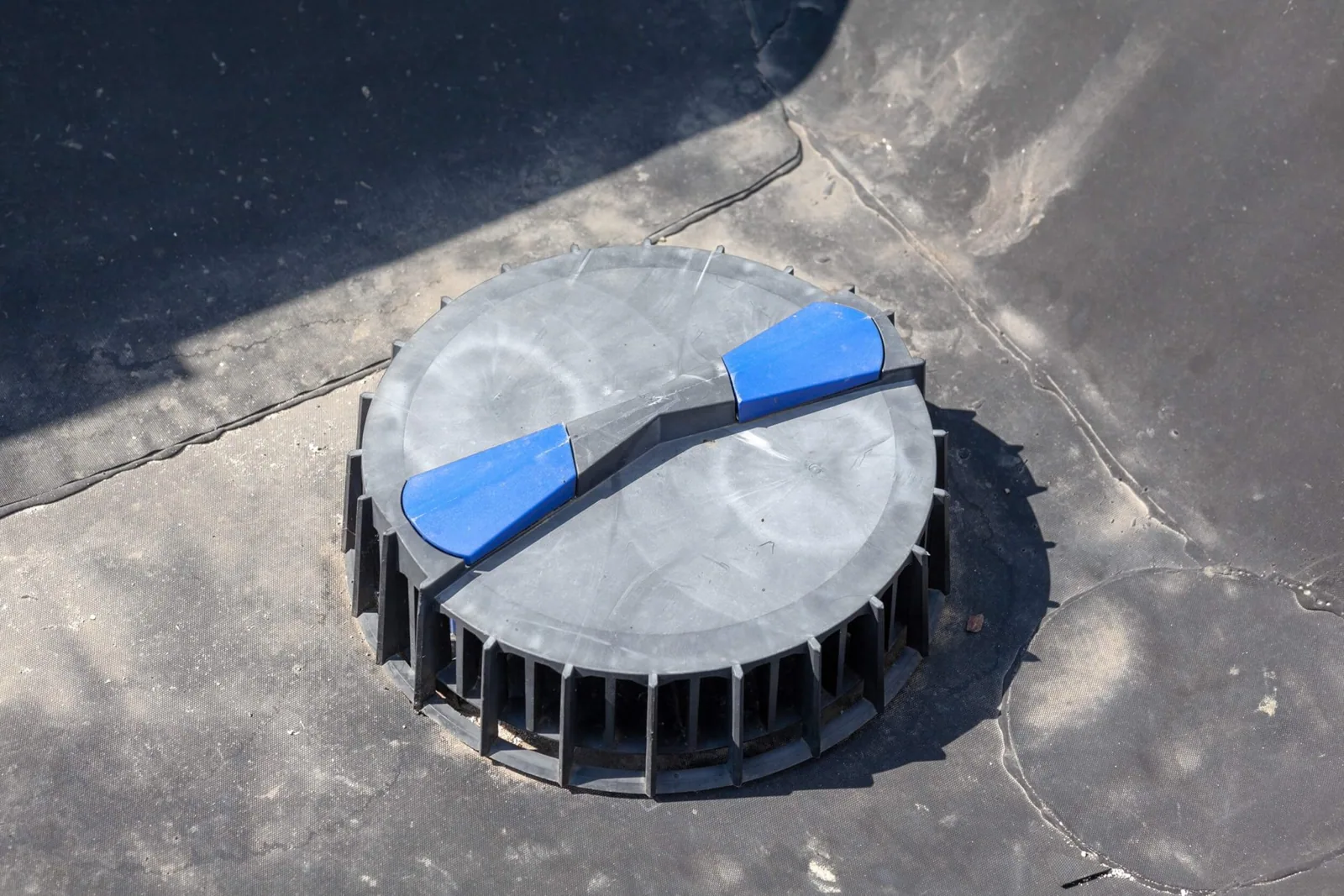
Drainage is a maintenance item because debris can interrupt the route water is supposed to follow. We clear strainers where included, check drain bowls and scuppers, inspect overflow openings, and look for material collecting behind curbs or at low points. We note standing water and its location. If the water remains after outlets are clear, slope, deck deflection, or insulation layout may be involved. Cleaning the drain does not correct a depression in the roof plane.
A roof drain can also leak at its clamping ring, flashing, or connection to the membrane. We inspect the area around the bowl for movement, exposed reinforcement, loose sealant, and prior patches. When the outlet itself needs rebuilding, drain and scupper repairs can be scheduled with the related membrane work. The maintenance report should distinguish routine cleaning from a repair that restores the water barrier.
Independence experiences seasonal freeze and heat. Kansas City climate tables put a normal January low near 20 degrees and a normal July high near 89. Water left at an open seam may freeze in winter; summer heat can increase movement at a metal-to-membrane transition. We inspect those interfaces for new gaps and use compatible materials if a repair is needed. The climate values describe the metro observation site, not a temperature measured on an individual roof.
Close Small Defects Before They Spread
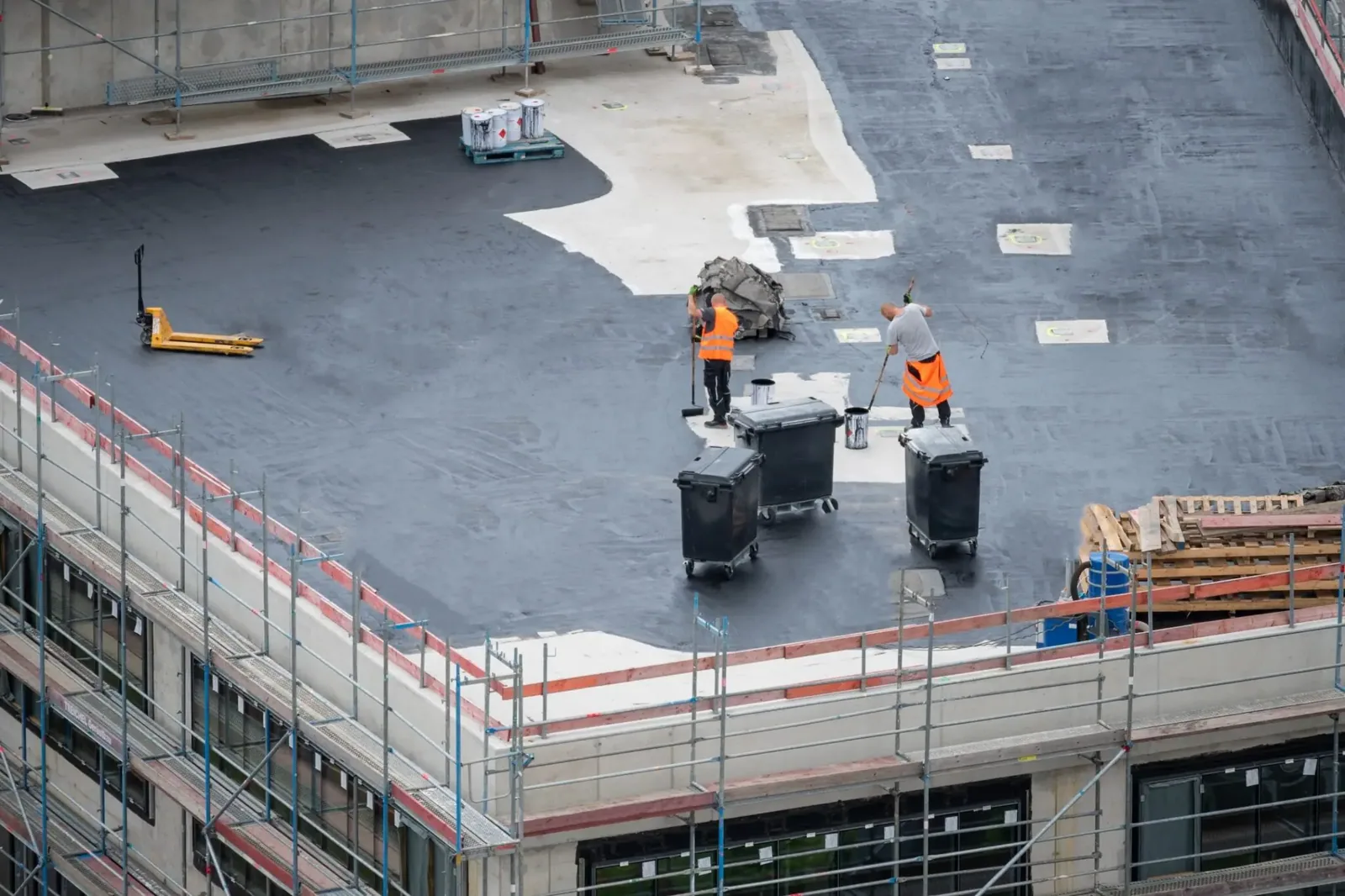
Maintenance repair should address the mechanism, not just cover a mark. A patch needs sound membrane around its edge. A loose pipe boot needs a secure base and compatible flashing. A lifted edge may require checking attachment below the metal. We identify what is loose, split, wet, or obstructed and record the repair boundary. If a hidden condition appears after opening the surface, we document it before expanding the work.
Hail and wind records can help decide when to add an inspection, but they cannot prove damage at a particular address. A June 2022 Jackson County tornado produced documented wind damage north-northwest of Independence. The location report gives a useful prompt for checking perimeter attachment after a severe-weather event, while the inspection still depends on evidence at the roof. After a reported storm, we inspect the actual membrane and flashings for cuts, punctures, displaced edges, or exposed reinforcement. An event log is context. Roof findings determine the repair.
Maintenance cannot reverse widespread moisture or restore a roof assembly whose attachment has failed. When repeated patches and wet areas appear across different sections, we compare ongoing repair with a planned repair scope, coating restoration, or replacement. A condition report can make open items and completed work easier to review at a capital meeting.
Keep the Roof Record Current
Each maintenance visit should leave a usable record. We identify the roof sections inspected, conditions found, photos captured, and work completed. We also list items that need another visit or a separate proposal. A photo with a location label is more useful than a general note that says a seam needs attention. That distinction matters when a facility has several roof areas or when a new manager inherits the maintenance file.
Owners with more than one building can compare issue types and priority without assuming that roofs need identical work. The city's commercial stock ranges from manufacturing and medical uses to retail and historic business districts. A maintenance schedule can account for different access requirements and roof assemblies while using consistent record fields. For a portfolio with roofs around Eastgate and the Square, the work log helps separate an outlet cleaning from a membrane repair or a larger moisture investigation.
We review unresolved items with the property contact and set the next inspection date. A preventive plan is not a promise that leaks cannot occur. It is a repeatable way to observe condition, maintain drainage, and correct small defects while the affected area can still be defined. If a building has active water entry, leak tracing should proceed promptly rather than wait for the next routine visit.
Choose the Next Work Item
Our visit can end with routine cleaning, a targeted repair, or a recommendation for testing. We identify the roof system and explain why the item matters. If moisture is suspected below the membrane, an infrared moisture survey can guide core locations. If the assembly has broad deterioration, a hands-on inspection can document the larger condition before repair or replacement is scoped.
Cost and timing depend on roof access, area, material compatibility, repair depth, drainage work, and whether the building must remain open during the visit. We group compatible items when it reduces repeated setup, while keeping conditions that require separate testing distinct. A clear maintenance list lets the owner decide what to schedule now and what to include in the next budget cycle.
Set a maintenance inspection with Commercial Roofing Independence to record drainage, seams, and repair priorities. We will identify the assembly, inspect drainage and transitions, and set a maintenance sequence around the building's access and operating needs.
Commercial Roofing Questions
What belongs on a commercial roof maintenance checklist?
Start with the installed system, then inspect seams, patches, penetrations, curbs, drains, scuppers, overflow paths, and edge details. We record visible change and separate cleaning from repair.
Should maintenance include drain cleaning?
Yes, when it is part of the agreed scope. We check strainers, drain bowls, and overflow routes, then note whether standing water remains after debris is removed.
Does a maintenance visit include repairs?
The visit can include defined minor repairs if the condition, material, and authorization are clear. Larger or concealed defects are documented and scoped separately before work expands.
Can maintenance show when a roof needs replacement?
Repeated failures, widespread moisture, or deteriorated attachment may shift the decision toward replacement. We compare those findings with the condition of the deck and the repair history.
When should I add an inspection after a storm?
A storm report can prompt a check, but it does not prove damage at your building. We inspect the membrane, edges, and penetrations for actual impact or movement after safe access is available.