Repair or install commercial KEE roofing in Independence, MO with checks for alloy membrane seams, chemical exposure, flashing, and attachment.
KEE roofing uses a ketone ethylene ester alloy blended into a PVC-based membrane. It retains heat-welded seams while offering a different formulation from standard PVC. The project still depends on verified exposure, substrate, attachment, and flashing. In Independence, MO, the Little Blue Valley plan guides development in the eastern part of the city, and the Noland Fashion Square area is an active improvement district. Those places frame local building activity, not the roof material at any individual property.
Verify the Membrane Formulation
KEE is often specified where the designer wants a PVC-alloy membrane with a particular chemical resistance or durability profile. The exact product, reinforcement, thickness, and accessory system matter. We read the project specification and identify the installed sheet before ordering repair materials. A KEE label alone does not establish that every cleaner, oil, or process fluid is compatible with the roof.
We ask what reaches the membrane, where exhaust discharges, how the area is cleaned, and whether spills occur. A sample or product data review can resolve compatibility before repair. If a roof has a coated or contaminated surface, we verify the proposed weld and patch method on prepared material. Applying a general-purpose adhesive without checking the membrane can create another separation at the repair edge.
KEE and conventional PVC roofing share thermoplastic welding, but a project may specify a distinct formulation and set of accessories. TPO membrane roofing is another single-ply system, with its own weld behavior and compatibility limits. We compare actual product data and roof exposure instead of treating the names as interchangeable.
Independence includes manufacturing, medical, retail, education, and civic uses. Manufacturing is one of the city's major employment sectors. That classification can prompt questions about exhaust and cleaning, but it does not prove what a specific tenant releases onto a roof. The facility contact and roof inspection establish the actual exposure.
Test the Welded Interface
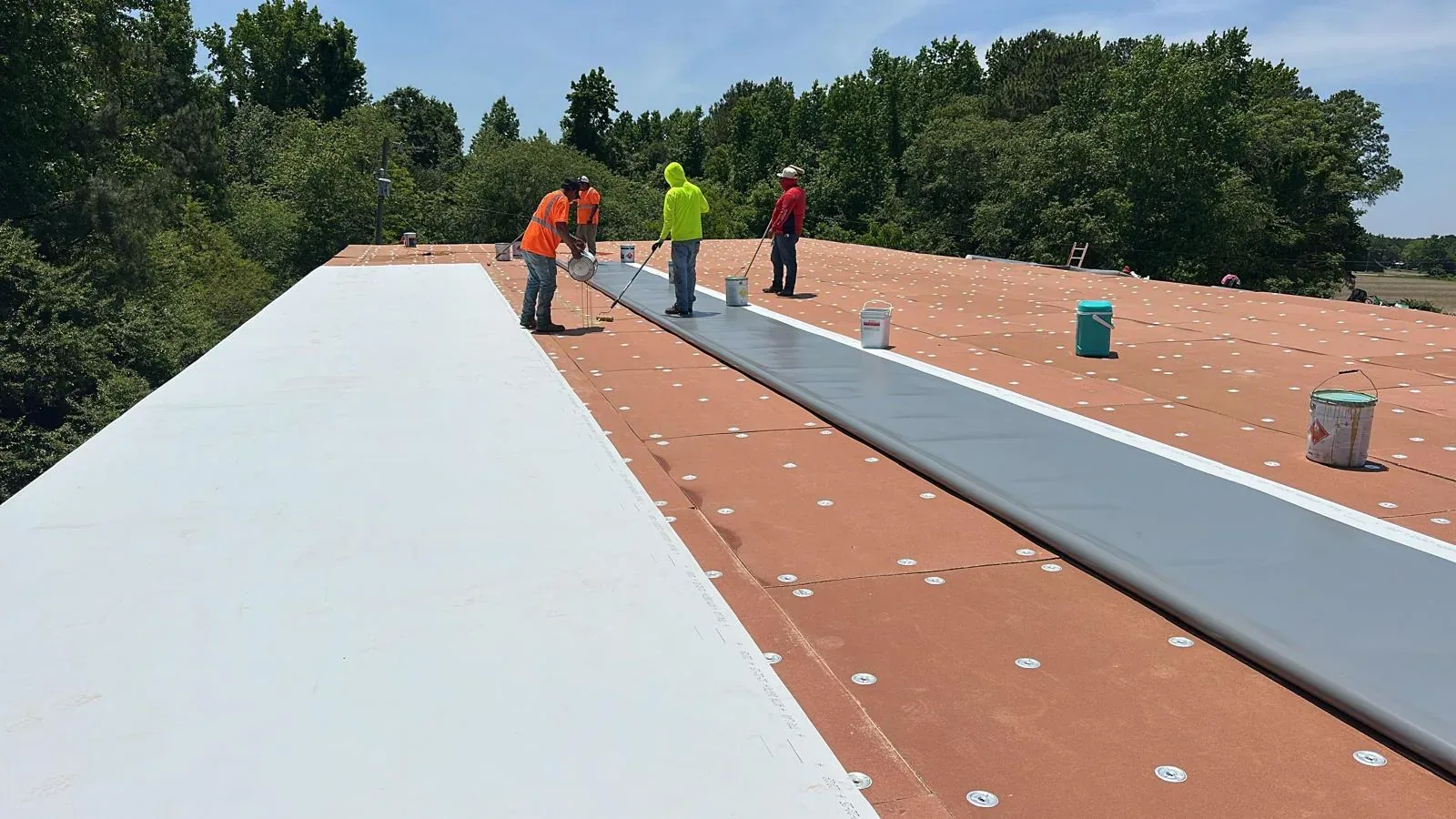
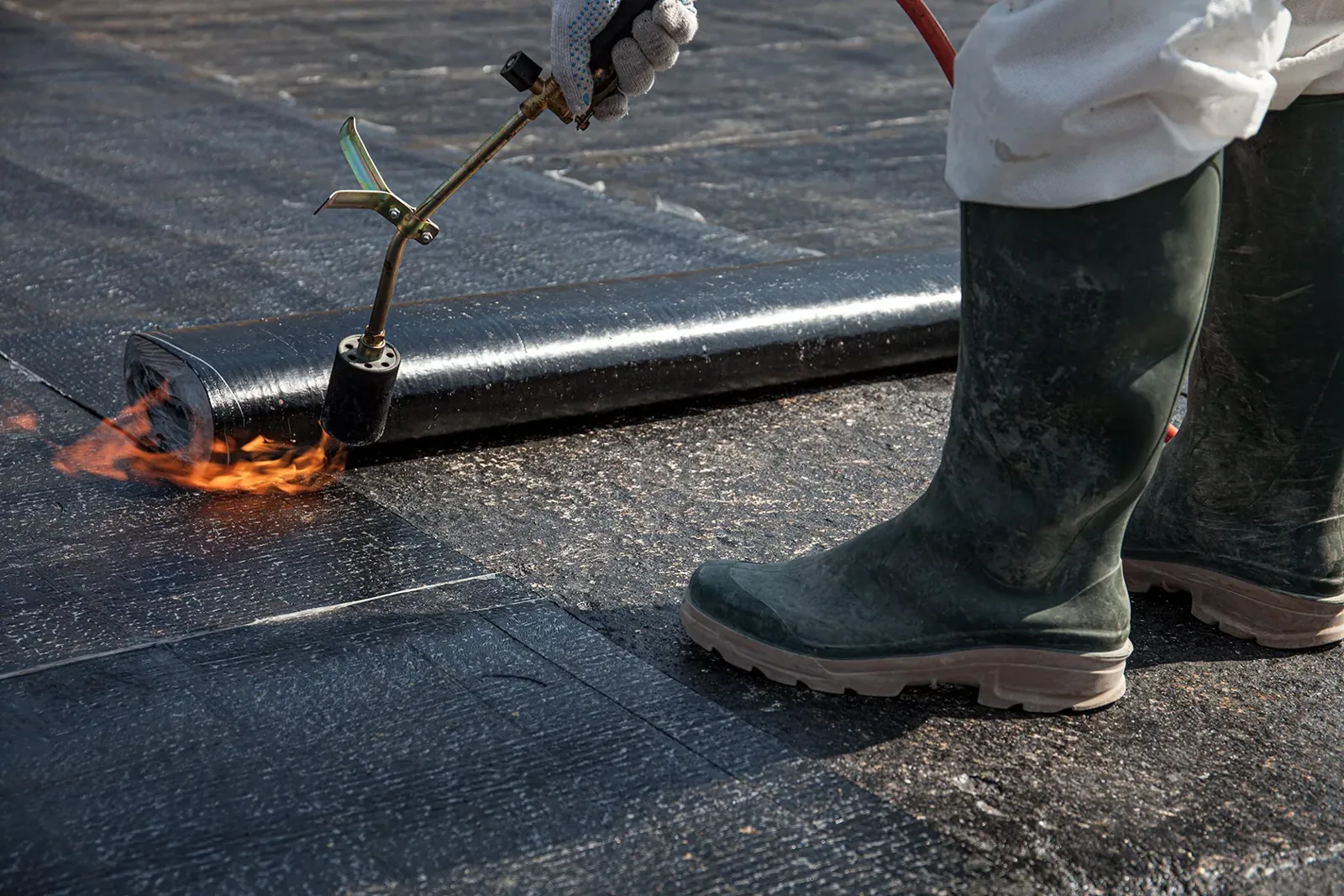
KEE seams are heat welded. We inspect lap width, weld continuity, corners, and field transitions. A probe can find an open edge, while a test weld on prepared material can help set repair conditions. Dirt, moisture, or residue in the seam can keep the sheets from fusing. The repair process needs a clean surface and a verified temperature and travel speed.
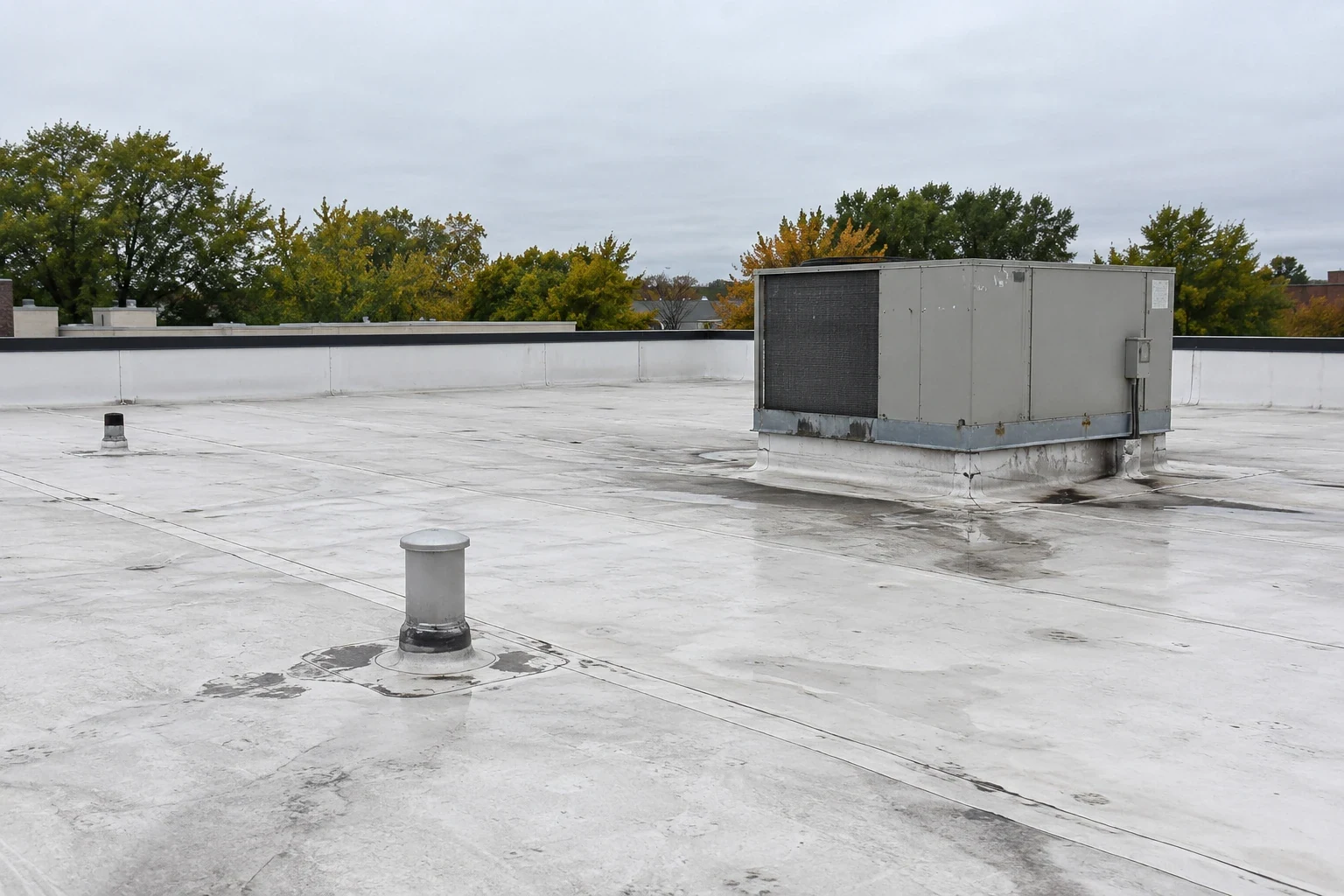
Movement concentrates at curbs, inside corners, and changes in roof plane. We look for wrinkles, stress marks, pulled fasteners, or flashing that has separated from the vertical surface. If the membrane has shifted, a patch across the tension point may fail again. We locate sound sheet and rebuild the transition so the seam remains supported. A transition may need a reinforcing strip, new flashing, or local sheet replacement rather than another surface patch. The field sketch records which layer carries the weld and where movement concentrates, so later service does not cut through the same stressed point.
Independence sees seasonal movement between winter freeze and summer heat. Kansas City station normals list a January normal high near 39 degrees and low near 20, while July's normal high reaches 89. These metro observations help describe the annual range. The field check determines whether a KEE lap or flashing has actually lost bond or moved at the building.
A surface blemish does not automatically mean the membrane has failed. We distinguish scuffs, discoloration, impact, chemical change, and open welds. Quarter-size hail was observed at Centerpoint Medical Center during the March 2017 event near Independence; that location-specific observation is not evidence of damage on another roof. We document observed punctures and seam conditions separately from the event history.
Carry Loads to the Deck
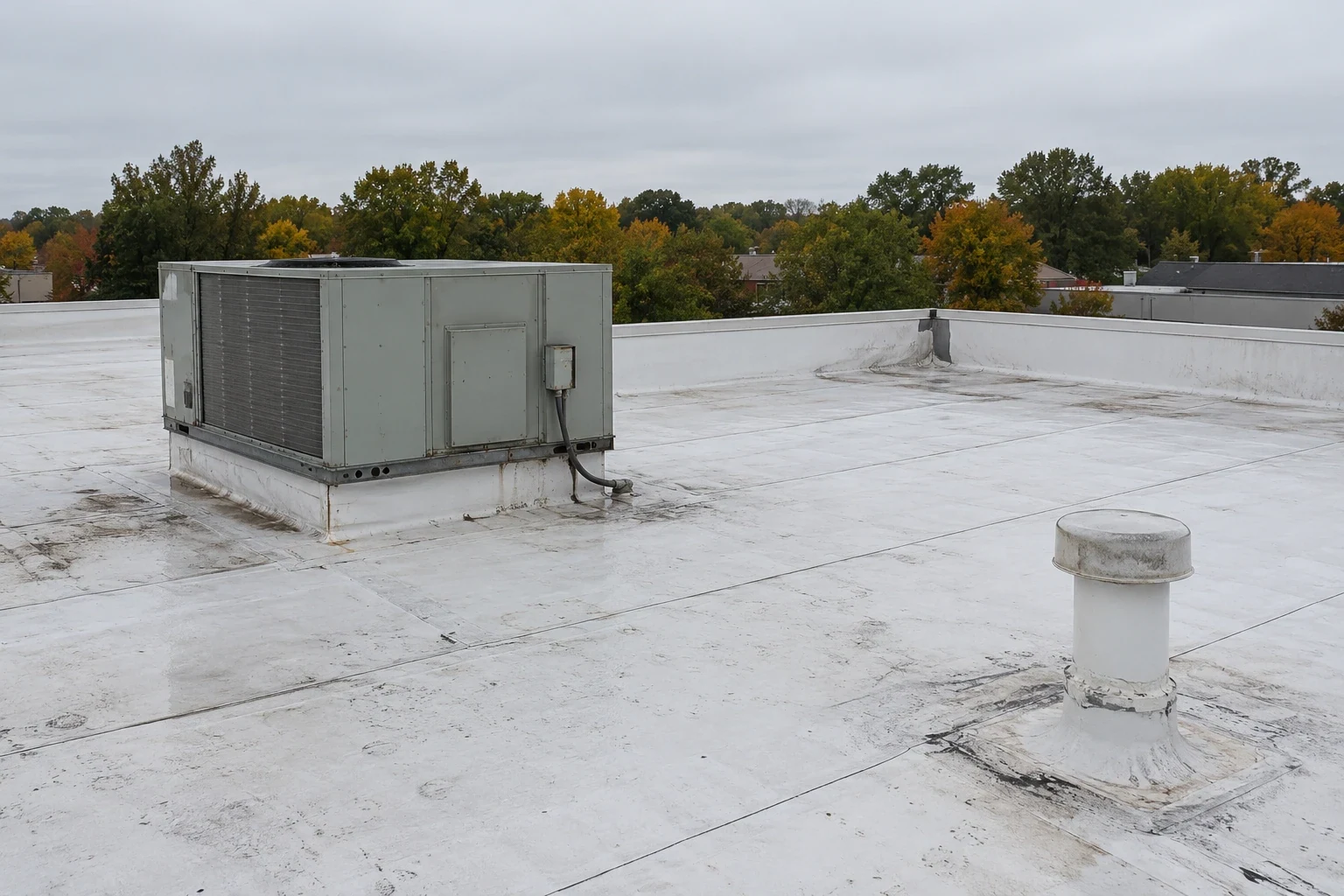
KEE systems may be mechanically attached or adhered according to the approved assembly. We inspect fasteners, plates, bond, perimeter securement, and the substrate. Pullout or detachment can expose a seam to movement and uplift. A repair must restore the designed attachment, not simply seal the visible membrane.
Edge metal and wall details need compatible transitions. We check terminations, parapet corners, coping, and the change from field sheet to flashing. If a metal cap moves independently from the membrane, the joint must allow that movement and maintain the water barrier. Edge-metal and coping repair may be coordinated with membrane work.
Roof insulation affects the support beneath the KEE sheet. Soft or wet board can permit foot traffic or equipment to deform the membrane and can weaken fastener engagement. Insulation assessment can confirm whether the board is dry and secure before a recover or replacement. We use cores when the project permits an opening and record the layer condition.
Drain bowls and scuppers also require a secure membrane connection. We check the clamping ring, flashing flange, low points, and water flow. Drainage repairs can resolve an outlet transition that is contributing to a leak or ponding area.
Choose a System-Level Repair
A weld repair can close an isolated opening if the nearby KEE remains flexible, cleanable, and attached. Multiple open seams, broad chemical deterioration, widespread moisture, or damaged insulation may require a larger scope. We inspect and map the defects, then decide where removal reaches sound material.
Independence's 2024 building and existing-building codes include local amendments. The design and permitting teams determine how those requirements apply to a new assembly. We match the product, attachment pattern, insulation, and flashing to approved project documents. A recover also needs review of existing moisture, load, elevation, and transition heights.
Cost depends on the sheet area, repair preparation, access, seam length, penetrations, wet insulation removal, and edge detailing. A simple field patch differs from replacing a roof with multiple equipment curbs and chemical exposure zones. We itemize the repair boundary and any concealed condition that could affect the quantity.
For facilities that want a continuing roof record, a condition report can map KEE repairs, material identification, and inspection photos. Maintenance visits can check welds, flashings, drains, and areas with repeated exposure.
Keep the Product Record
Closeout should identify the KEE product, repair material, field and flashing locations, attachment work, and any remaining concern. We inspect completed welds and transitions before the area is returned to service. The record helps distinguish this membrane from adjacent systems and supports future compatibility decisions. If a mechanical contractor later moves equipment or adds a curb, record the new penetration and the flashing material used. A service technician can then check that interface before applying a patch or cleaning product. Keep product labels, repair locations, and roof-area references together so the next inspection can distinguish the original sheet from a later detail.
Schedule a KEE roof review with Commercial Roofing Independence. We will identify the membrane, inspect the welds and transitions, and define a repair scope that follows the installed system.
Commercial Roofing Questions
How is KEE different from standard PVC?
KEE is a PVC-based alloy formulation. Product specifications and accessories can differ, so we identify the installed membrane and use compatible repair materials.
Can a KEE roof be repaired with a heat weld?
Yes, if the installed sheet and patch material are compatible and the surface can be cleaned and dried. We verify weld settings on the roof, then probe the finished seam and inspect corners separately.
Does KEE tolerate every chemical used in manufacturing?
No. Resistance depends on the specific substance, concentration, contact time, and product formulation. We review actual exposure and manufacturer data before deciding on a system.
What causes a KEE flashing to pull away?
Movement, poor attachment, weak substrate, or an incompatible transition can stress the flashing. We check the curb or wall connection along with the membrane edge.
Can you add a coating over a KEE membrane?
A coating needs verified adhesion and chemical compatibility. We inspect the membrane and test the proposed system before treating coating as an option.