Repair commercial roof edge metal, coping, gutters, and downspouts in Independence, MO with details that account for attachment, drainage, and movement.
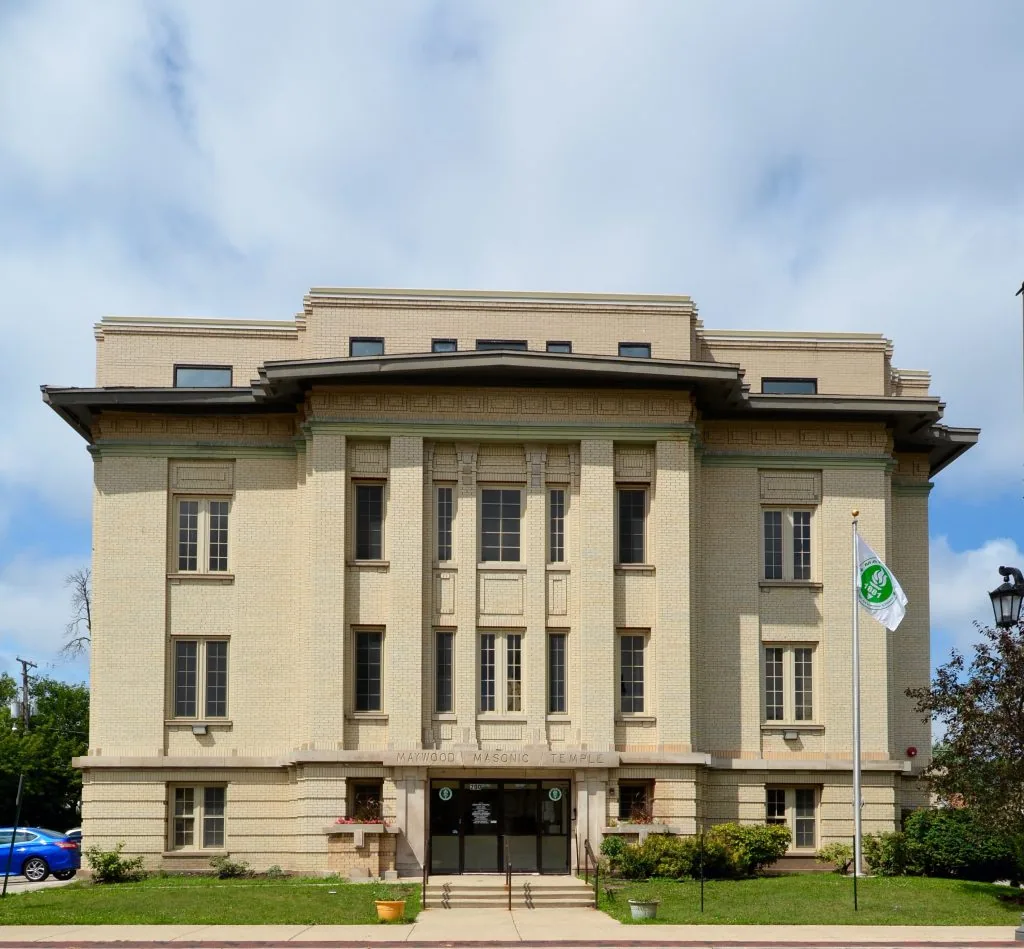
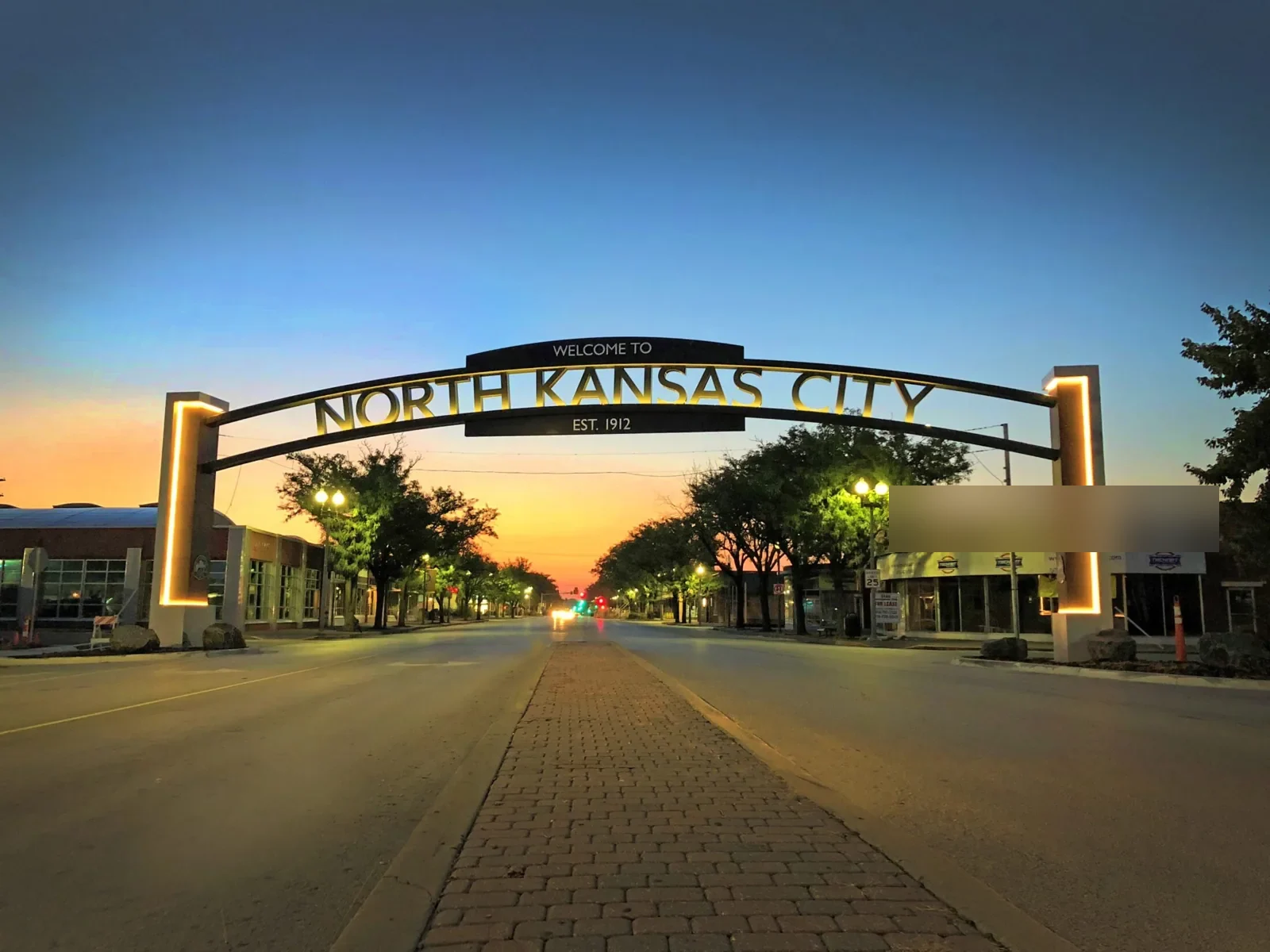
A parapet cap has to stay attached while water moves across the roof and away from the wall. On a retail property around Maywood or an arena-side building near North Kansas City, Missouri, coping, gutters, and downspouts are separate parts of one drainage and edge system. We inspect the metal, fasteners, splice joints, membrane termination, and discharge path before recommending repair. A bead of sealant cannot correct loose attachment or a blocked outlet.
Follow the Roof Edge
We check coping width, cleats, fastener spacing, splice plates, end dams, corners, and transitions into wall flashing. The metal should shed water outward and remain secured under wind pressure. Loose cleats or separated joints can let water behind the coping and into the parapet. At the roof edge, we also inspect how the membrane terminates and whether the metal covers the assembly without pinching or exposing it.
Thermal movement can open a joint or pull at a fastener. Kansas City climate normals show January lows near 20 degrees and July highs near 89. Metal changes length as temperatures shift, while sealant and membrane respond differently. We inspect lap direction, allowance for movement, and the condition of adjacent materials. If the metal is distorted or corroded, replacing the affected section may be more reliable than adding sealant over the joint.
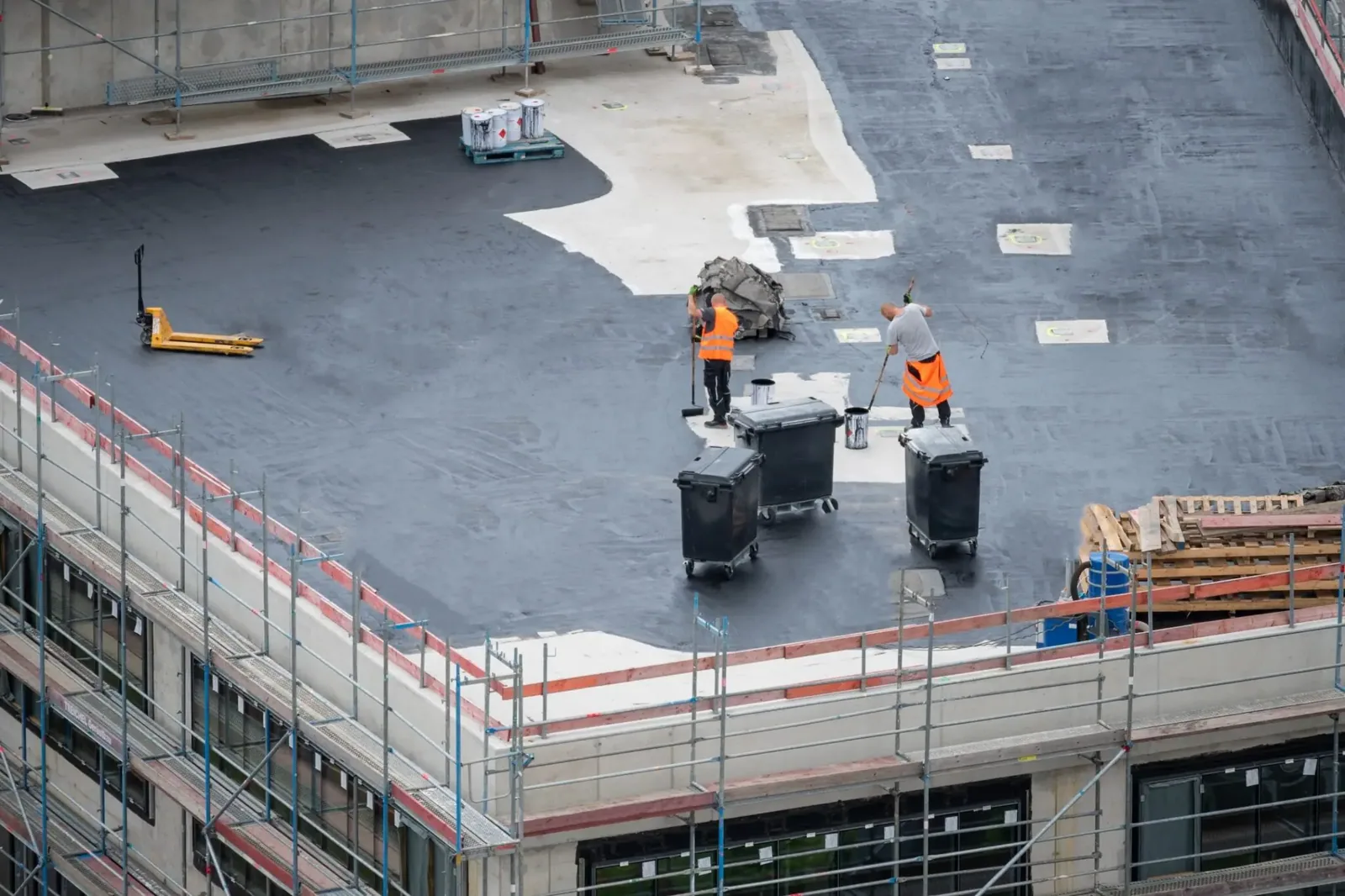
Independence includes older business districts as well as retail, medical, industrial, and civic properties. Building age alone does not establish the roof detail. We inspect the actual edge and deck attachment. When the roof membrane and coping connect at one termination, membrane repairs may need to be included so the new metal does not leave a gap at the interface.
Trace the Discharge Path
A gutter is useful only if it collects roof water and carries it to a clear downspout. We inspect hanger spacing, seams, end caps, outlets, downspout joints, and the connection at the building. Debris can slow flow, but sagging or separated hangers may change the gutter pitch. We note leaks at seams and outlets, as well as water spilling onto siding or collecting at the foundation.
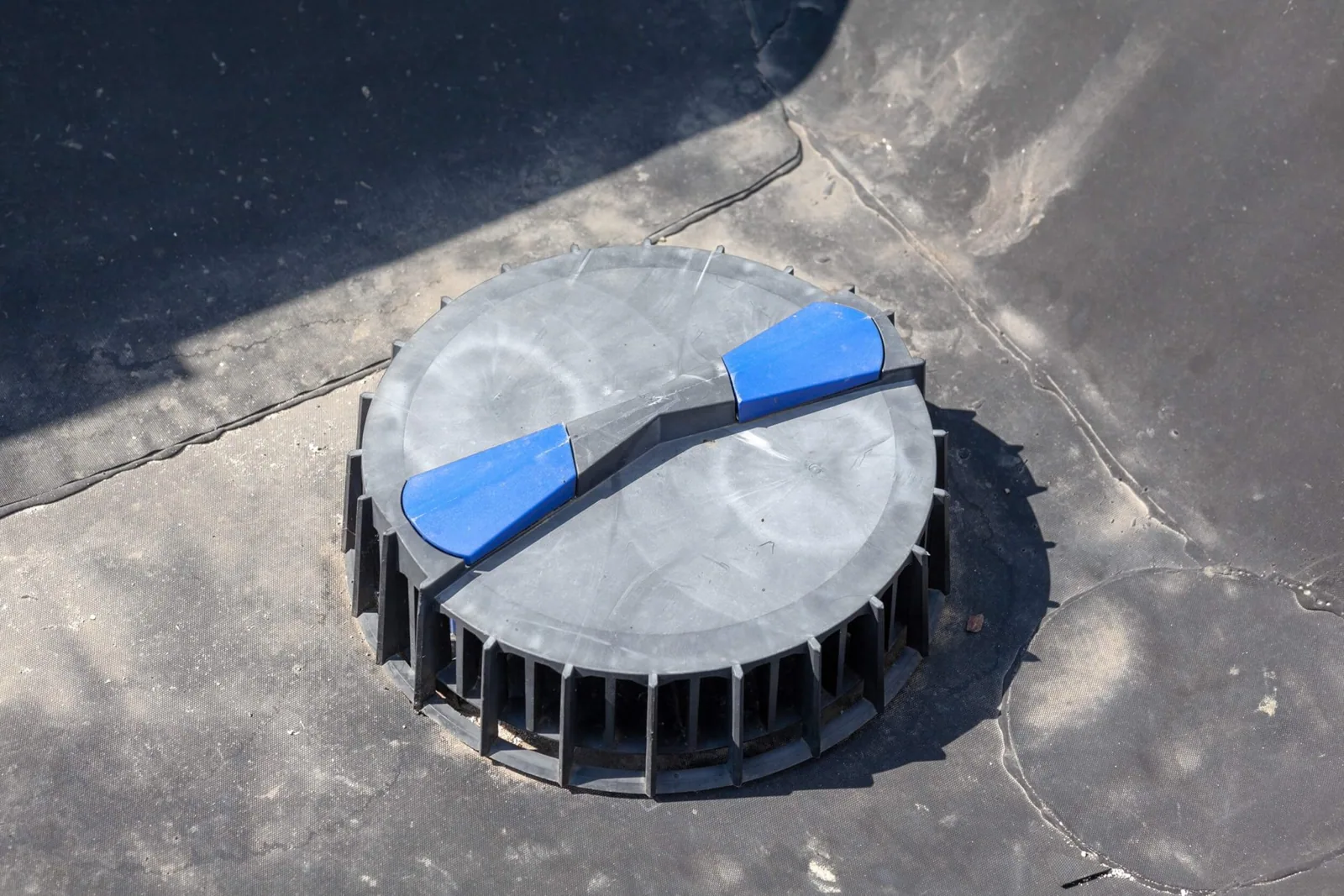
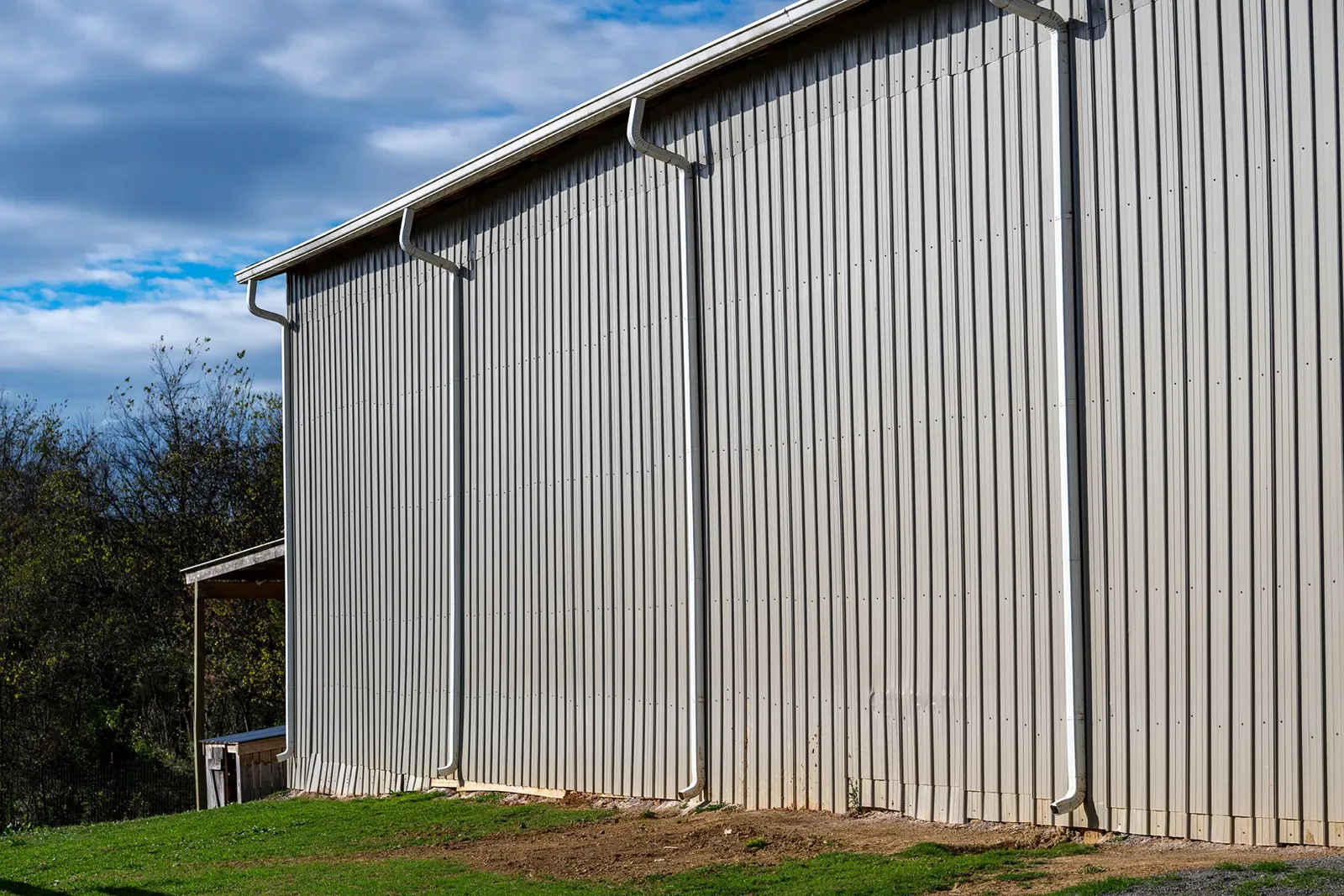
Downspouts need secure attachment and a discharge path that does not send water behind the wall or onto a walkway. We check elbows, straps, splash blocks, and connections to the site drainage. Where an outlet meets a flat roof, we inspect the scupper sleeve and membrane transition. A blocked exterior line can back water up toward the roof edge, so the repair scope may need both gutter and outlet work.
If water remains on the roof after gutters and drains are cleared, we map the low area before proposing slope changes. A gutter cannot correct a deck depression, and a scupper repair cannot resolve a disconnected downspout. Drain and scupper repairs can be coordinated when the roof outlet is part of the same flow path. The report identifies which component is obstructed, loose, or damaged.
Check Attachment and Corner Conditions
Wind uplift places different pressure on field, perimeter, and corner zones. We inspect the edge metal attachment and look for lifted corners, open end joints, missing fasteners, and membrane pullback. A loose cap can allow water entry even when the field membrane appears intact. We look at the entire termination and the substrate below rather than replace only the visible face metal.
Wind damage was observed one mile north-northwest of Independence during a June 8, 2022 Jackson County tornado event. That report gives a local reason to review edges after severe weather, but it does not prove damage at another building. We document any displaced coping, gutter, downspout, or membrane found at the property. Storm history and field evidence remain separate in the repair record.
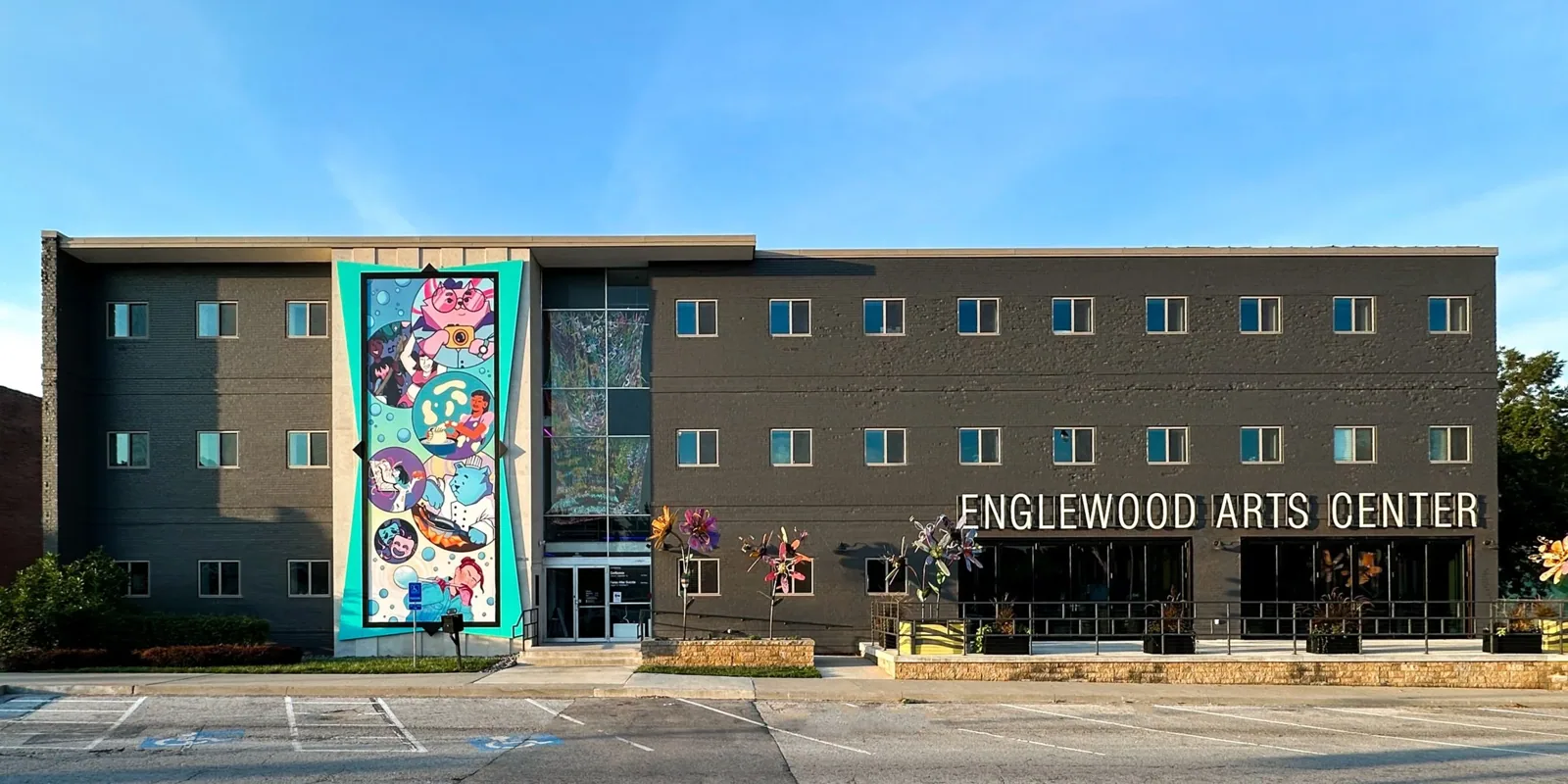
Along Noland Road and around the Englewood Arts District, commercial properties can have different elevations and access constraints. Those facts help plan how a lift or repair crew reaches the edge. The metal detail still depends on the wall, deck, and roof assembly at the specific building.
Select the Repair Boundary
Small repairs may include resecuring loose metal, replacing a damaged splice, clearing an outlet, or reconnecting a downspout. A wider scope may require new coping, membrane termination, fascia, or gutter sections. We identify where sound material begins and ends and note any concealed deck or wall condition that could change the work after opening.
Material compatibility matters where metal meets the roof membrane. Coated metal, sealants, adhesives, and membrane flashing must work together. The metal gauge, joint geometry, attachment, and wind exposure affect how the edge is rebuilt. We avoid covering a failed termination with a metal cap unless the new detail restores the water barrier and attachment.
Cost depends on the linear extent, height, access, corner details, metal profile, substrate repair, and whether the roof remains occupied during the work. A small gutter joint differs from rebuilding a parapet edge around several roof sections. Photos and measurements make the proposed limit easier to assess. If the membrane is also damaged, a storm repair review can connect roof-level damage with the edge scope.
Maintain the Edge Assembly
After repair, we review cleats, fasteners, joints, corners, terminations, gutters, and downspout connections. We check that water has a clear route away from the roof and that the membrane remains connected to the metal detail. The closeout record notes replaced sections and any nearby condition that still needs attention. Before fabrication, we measure the existing profile, confirm the substrate and cleat condition, and identify transitions at corners, walls, and drains. That limits field cuts and helps the new section fit its adjoining metal. If the work crosses an active entrance or loading area, the property contact sets the barrier location and delivery window. We keep one area open at a time when the repair sequence allows it, and close each exposed termination before moving to the next section. The final walk checks the water route as well as the visible cap.
Routine maintenance can remove debris from gutters and check for a separated joint before water reaches the wall. It should also inspect the membrane edge and overflow route. A maintenance schedule can track edge details alongside drains and rooftop penetrations. For larger properties with many transitions, a condition report can map repair locations and photos for later review.
Schedule an edge and drainage review with Commercial Roofing Independence. We will inspect coping, gutters, downspouts, and membrane terminations, then define a repair boundary that restores the water route and attachment.
Commercial Roofing Questions
Can sealant fix a loose coping cap?
Sealant alone does not restore attachment. We inspect cleats, fasteners, joints, and substrate, then determine whether resecuring or replacing the metal is needed.
Why does a gutter overflow if the roof drain is open?
A gutter outlet or downspout may be blocked, disconnected, or pitched incorrectly. We trace the full discharge path before assigning the cause to the roof drain.
Do you replace metal only where it is damaged?
We define the limit from the joint and attachment condition. A short replacement can work when adjoining metal is sound and the transition can be sealed correctly.
Does wind damage always show up as a lifted cap?
No. Open splices, loose cleats, missing fasteners, or membrane pullback can signal movement while the cap still looks seated. We inspect the attachment and corners before setting the repair boundary.
Can you fix the membrane termination with the coping?
Yes, when both details need work. We verify the cleat, metal joint, membrane termination, and wall flashing together so the rebuilt edge maintains attachment and a continuous water barrier.