Commercial roofing in Raytown's Central Business District starts with a roof-specific inspection, access coordination, and a documented repair limit.
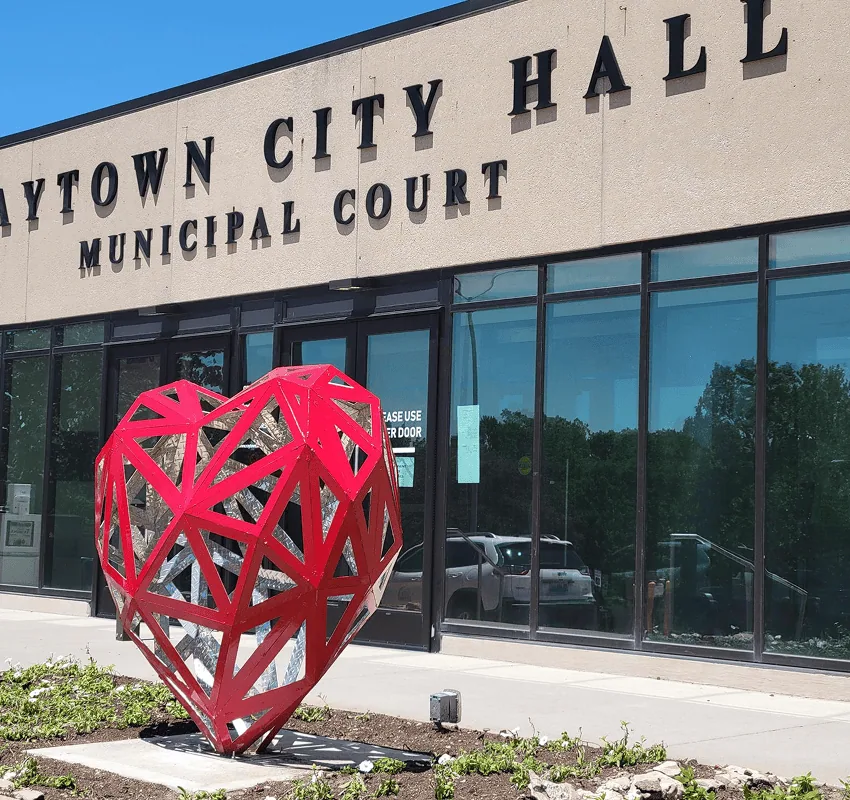
Raytown's Central Business District centers on East 63rd Street and Raytown Road, a historic hub for commercial and civic activity. Its plan identifies commercial uses on East 63rd Street and commercial and industrial uses south of it near the rail corridor. The City's economic-development office supports business retention and real-estate site selection. Those facts orient a property visit, but they do not identify any roof's age, system, or condition. We inspect the specific building before proposing work.
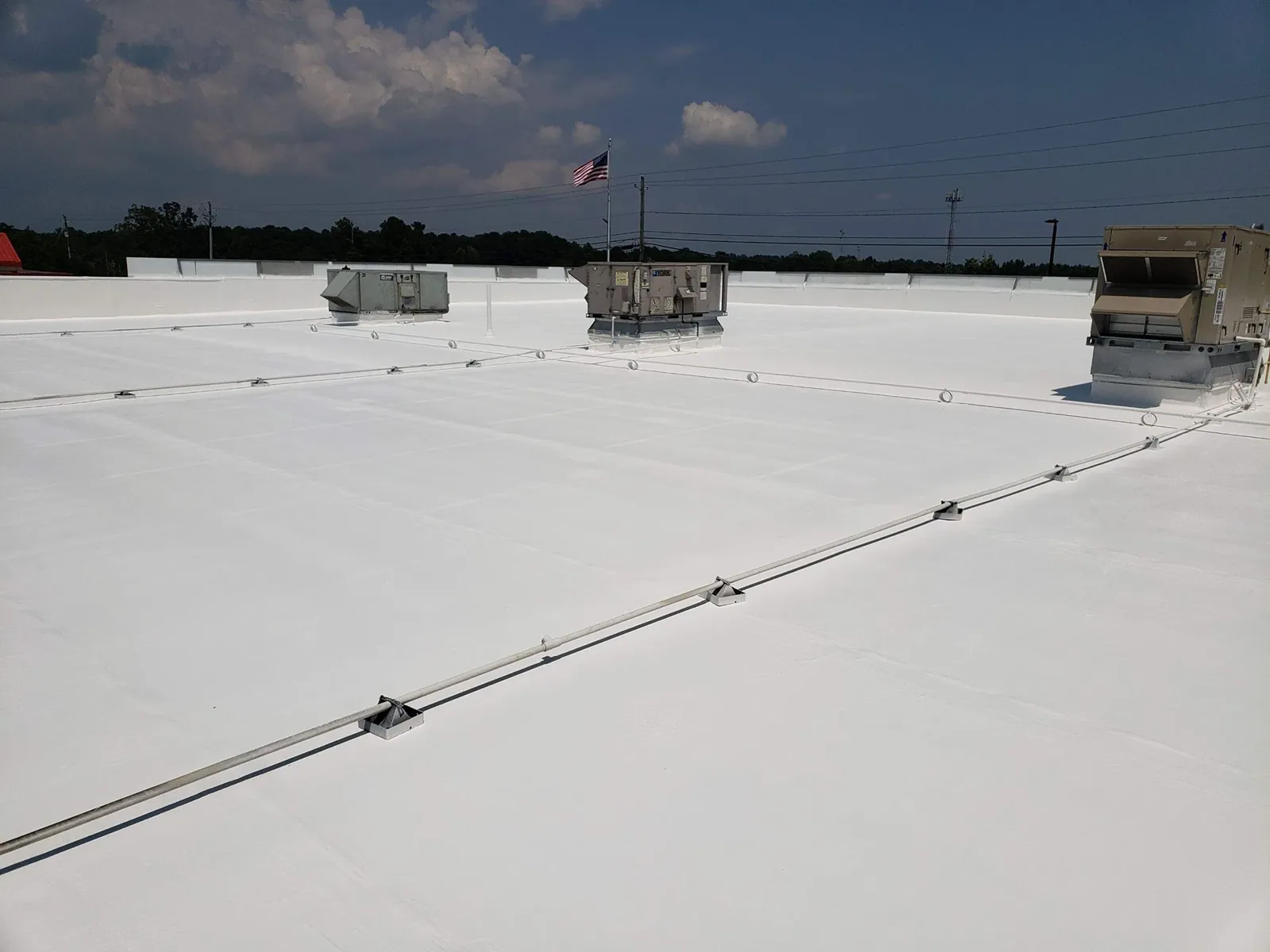
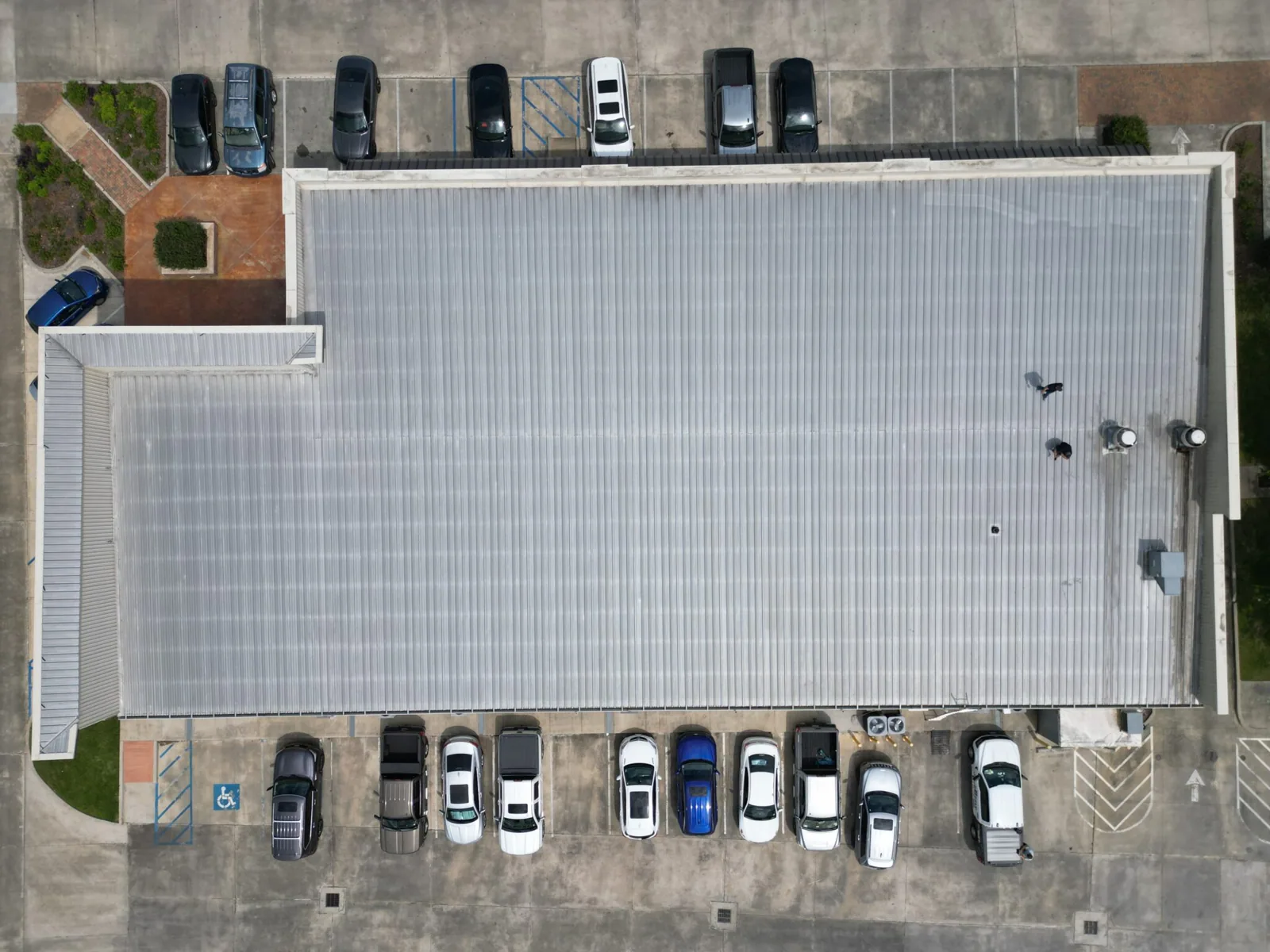
The roof review checks visible membrane or metal, seams, flashings, drains, curbs, edges, and interior moisture evidence. The owner or manager confirms access, loading, operating hours, and any rail or street coordination relevant to that address. We document the water route and the confirmed repair boundary. If acquisition or business expansion is planned, an inspection record can help align roof decisions with the property's next use.
Coordinate With the Business
Commercial property work can affect customer entrances, deliveries, and employees. The facility contact defines the approved route for roof access and material staging, and identifies any work window that protects daily operations. If a building is near the rail corridor, the actual site contact determines whether coordination is needed. We do not infer track access or work restrictions from the district plan alone.
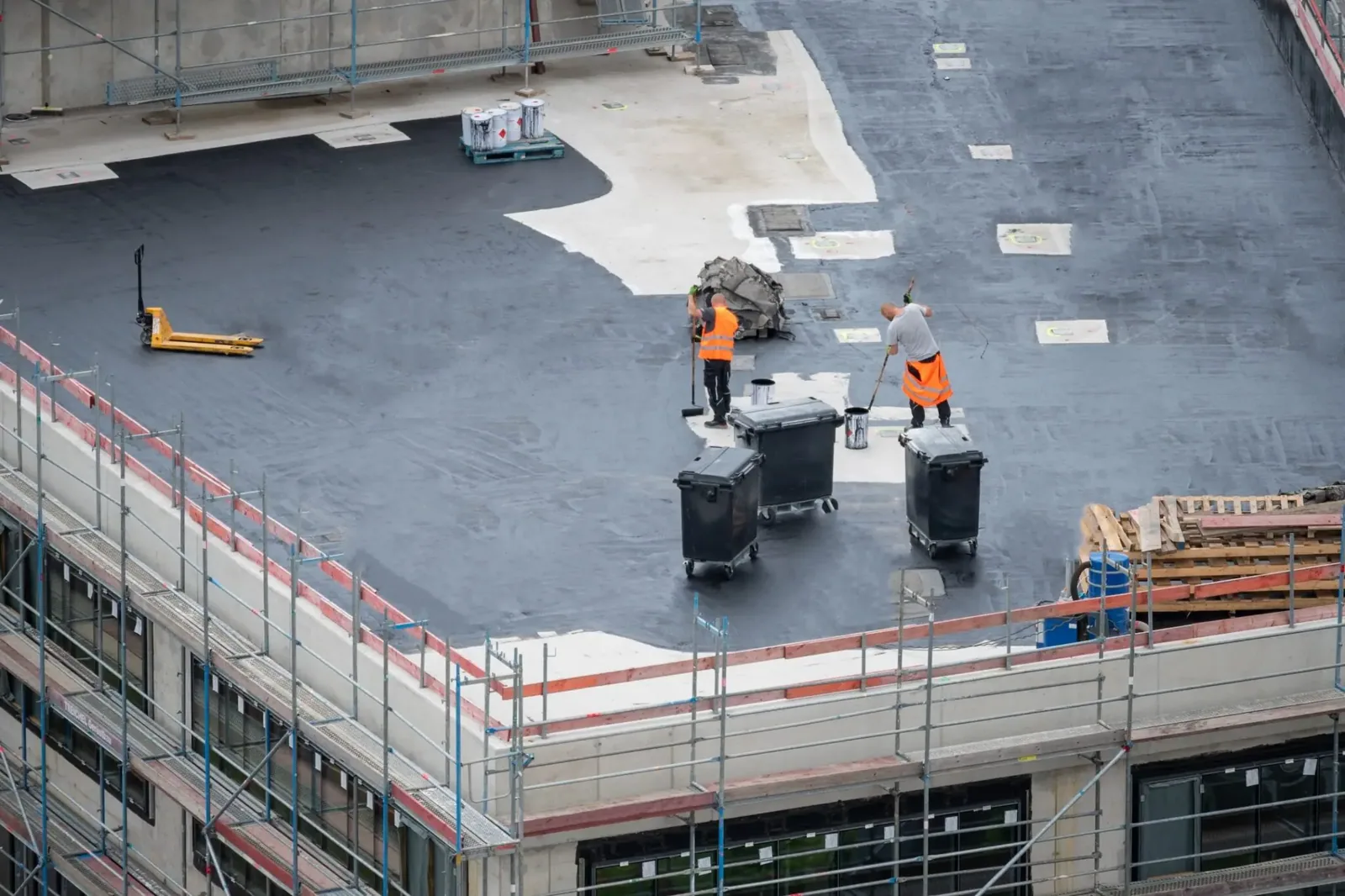
Before tear-off, we decide how much roof can be opened and closed in one shift. Materials are placed where approved, interior areas below are protected, and a dry-in detail is ready before removal begins. If access changes, the crew secures the roof and notifies the owner before resuming. Phased occupied-building roofing can separate noisy or disruptive tasks from public and business access and keep each day's work area limited.
Identify the Roof Before Repair
The district's commercial and industrial land uses do not establish what any building's roof contains. We inspect exposed edges, field seams, penetrations, equipment curbs, and past patches. Available records can confirm original installation, but current conditions may differ after additions or repairs. If an overlay hides the system or substrate, a test opening may be needed before selecting materials.
A repair method must match the roof assembly. Membrane seams, bituminous laps, and metal panels each need a compatible preparation and tie-in. We check whether the substrate is dry and attached so the patch has a sound base. A photo-based inspection records the system by roof zone, including areas that could not be safely accessed. The report can be used for maintenance or due diligence, but it distinguishes visible condition from concealed layers.
Trace Water Through the Roof
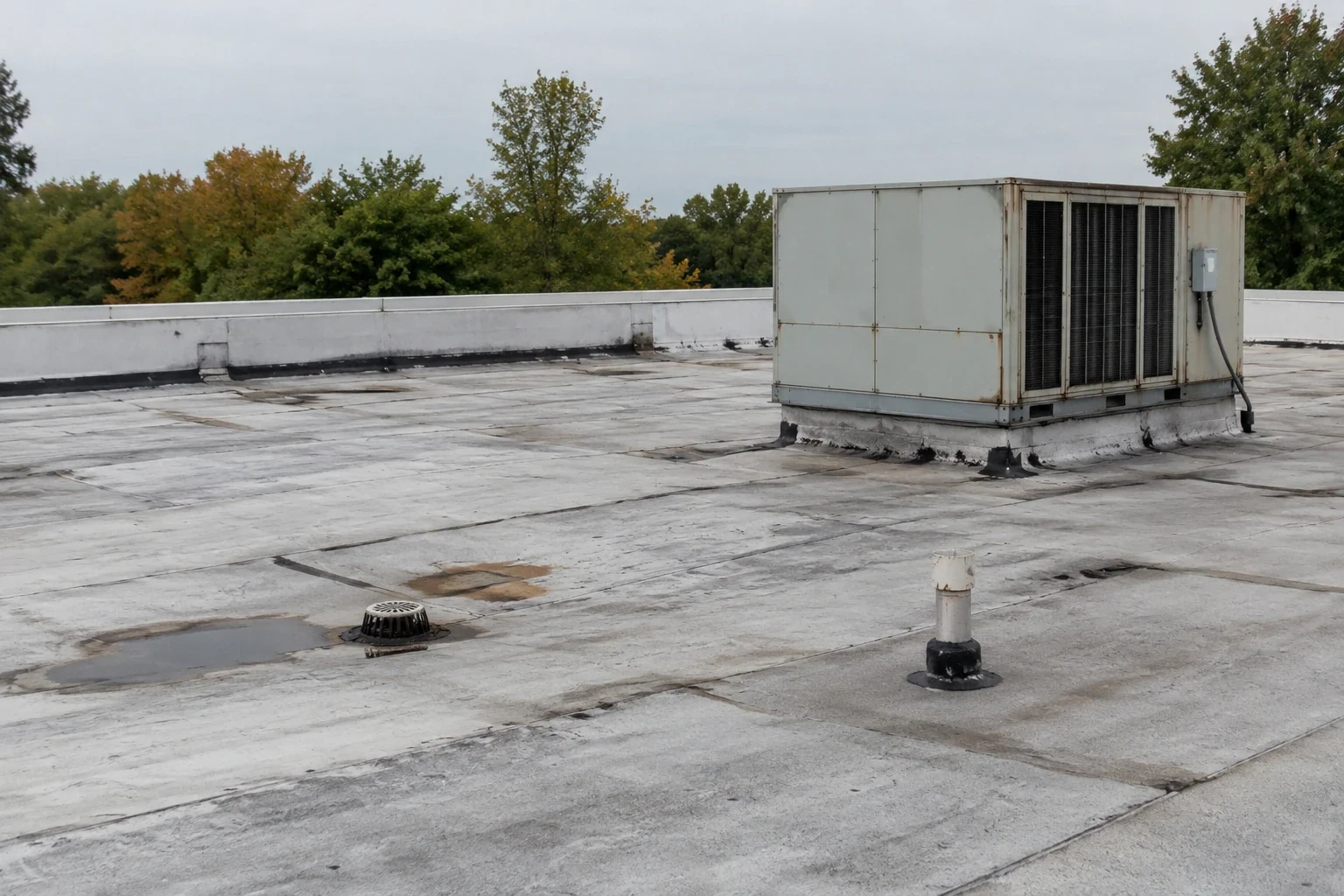
We check where water enters, where it travels, and whether it exits through the designed drains or scuppers. The inspection includes strainers, drain bowls, overflow routes, leaders, membrane around the outlet, and low areas. Persistent ponding is measured after the expected drainage period. A blocked strainer, low slope, or deflected deck can create similar surface evidence, but each requires a different response.
Interior staining can appear away from the opening. We compare the report with the roof layout and inspect the likely path through walls, seams, curbs, and old repairs. If moisture under the roof surface is possible, infrared survey work can direct test openings. Testing confirms wet insulation. If a drain connection has failed, drain and scupper repairs can restore the outlet detail when surrounding materials remain sound.
Account for Use and Equipment
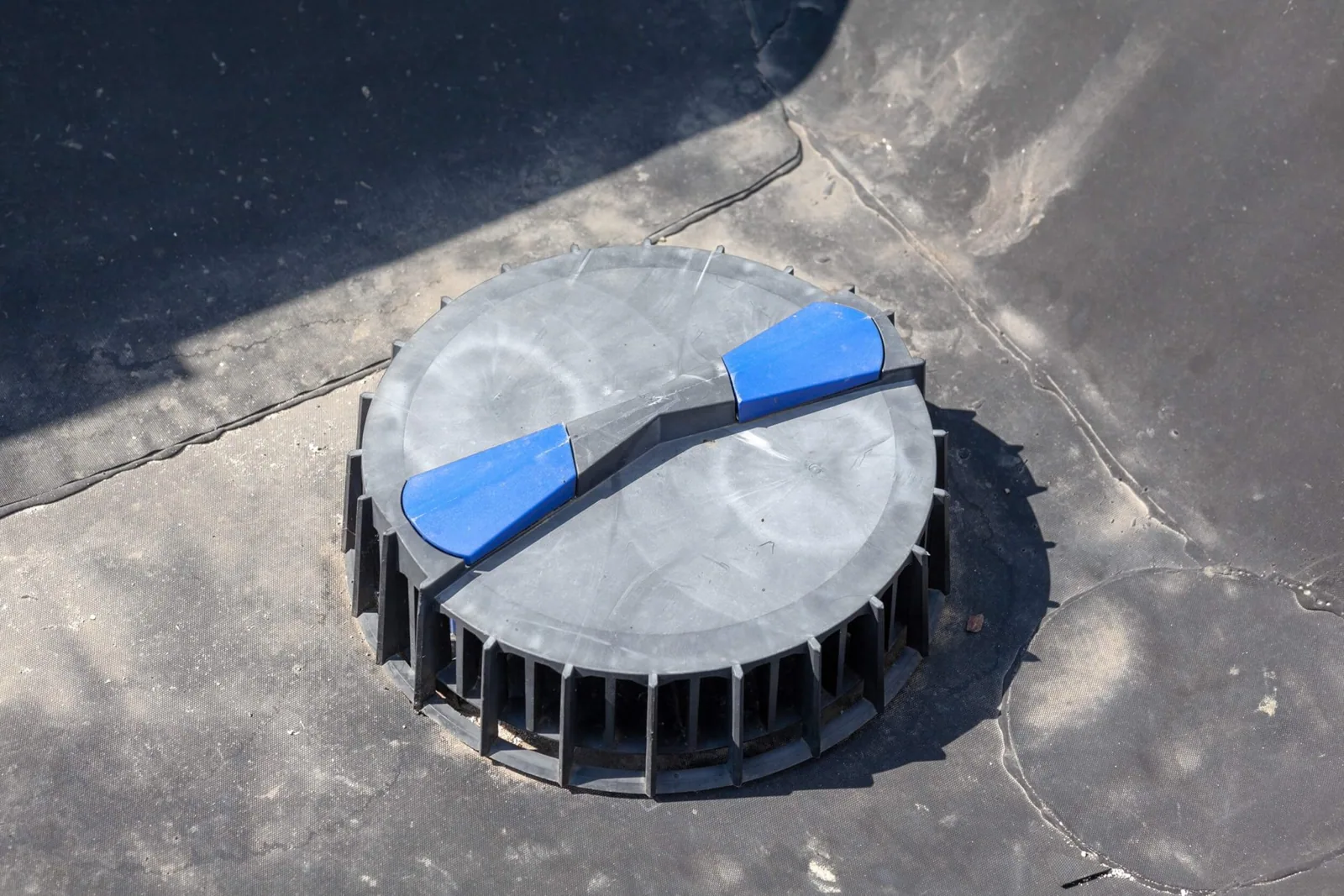
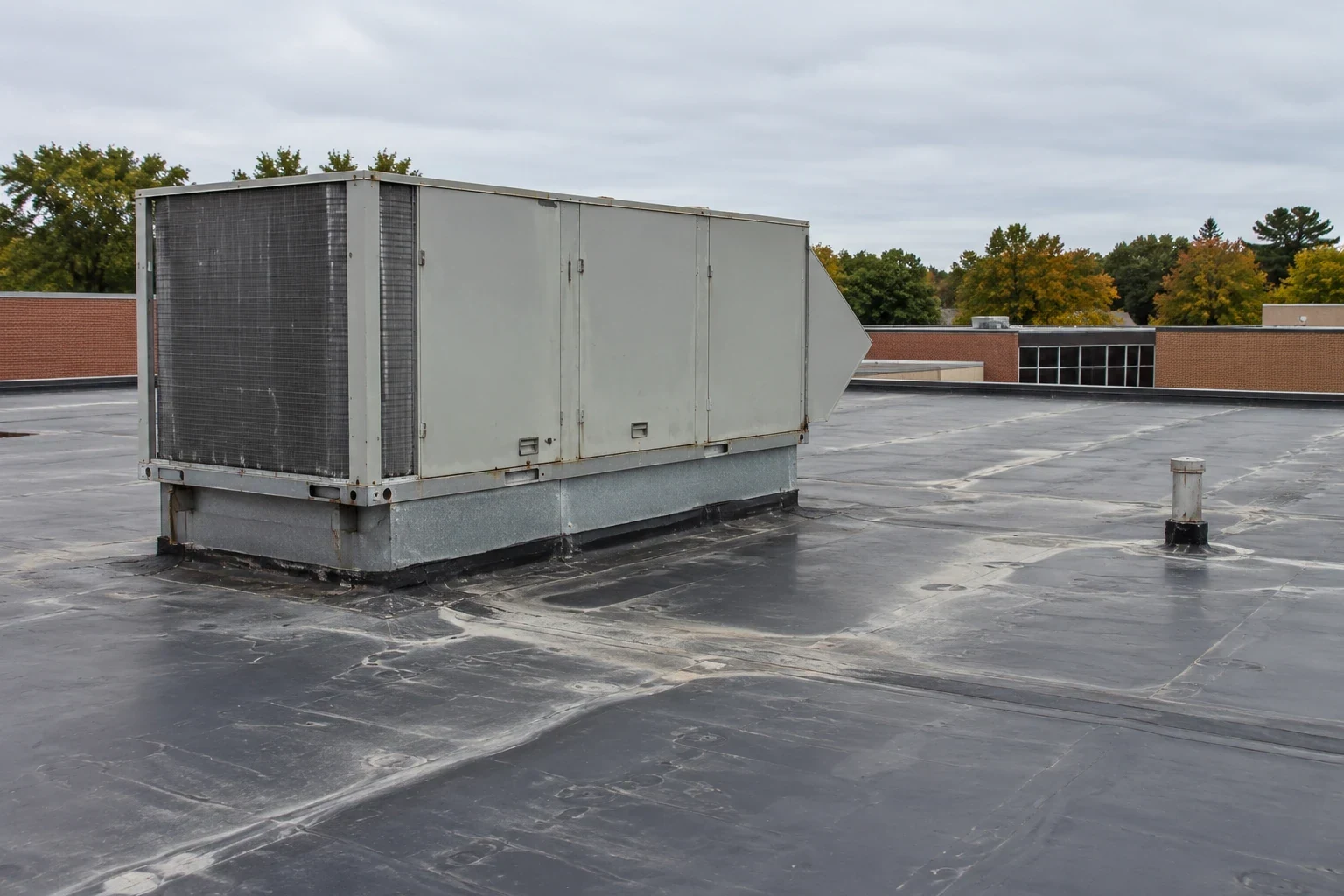
A roof above a civic office, storefront, or industrial use can have different equipment, access, and interruption needs. The plan documents what is actually present: ducts, curbs, vents, pipes, or solar attachments, if any. We check support and flashing around each item and identify penetrations that have been abandoned or changed. The building's land-use category alone is not evidence that a particular rooftop feature exists.
If equipment work is planned, the roofer and other contractor should agree on the flashing boundary and who closes the roof opening. A curb installed after membrane work can leave a vulnerable interface if the transition is incomplete. Equipment curb and support service can address those roof details as part of a coordinated scope. We photograph the condition before and after any new penetration work.
Set a Measured Scope
A small puncture or seam split may be repaired when surrounding materials remain dry and attached. Widespread wet insulation, repeated leaks, failed edge metal, or deck deterioration may need a broader scope. We measure and photograph the area supported by testing. If tear-off reveals additional damage, the owner receives the new boundary and cost driver before work proceeds.
A new layer can go over the existing roof only when the deck, drainage geometry, fastening, and project requirements support it. If any of those conditions fail, removing the old system provides access to a sound base. Schedule and cost depend on quantity, access, materials, disposal, protection below, and weather. A repair scope specifies preparation and tie-ins. Replacement work identifies the new assembly, drains, edges, and closeout checks, which gives the property owner clear points to inspect.
Use a Roof File for Site Decisions
The City's economic-development services can support business retention and site selection. A roof condition report helps a property owner evaluate the building's physical needs during those decisions. It identifies observed material, active leak evidence, repairs, testing limitations, and next actions. It does not promise remaining life without evidence about the concealed assembly and maintenance history.
Raytown's district plan references East 63rd Street and Raytown Road. We also inspect Historic Independence Square and the Noland Road Corridor in Independence; each gets a separate site record. For Raytown, the closeout names the address, roof zone, repair material, drainage result, and any item still requiring access or approval. That is the basis for comparing later visits and keeping work tied to the correct property.
Where a commercial or industrial use lies near the rail corridor, the roof scope should distinguish building work from any separate rail or site operation. We confirm whether vibration, restricted access, or overhead utilities affect the actual address instead of assuming a condition from the district map. The inspection also records roof penetrations and supports that could move when equipment is serviced. If another trade will work above the membrane, a joint walk can clarify the flashing tie-in and who documents the finished detail.
In Raytown's central business area, a roof visit should be scheduled around the individual business's access and delivery needs. Identify the building contact, the planned crew route, and the roof section to be opened so tenants know where activity will occur. Before selecting a repair, check the transition from the field membrane to parapets, curbs, and drains that can carry water into the reported space. If the roof is shared with another tenant or addition, confirm who controls the affected portion and how the finished tie-in will be recorded. A specific scope and closeout help the property owner plan further work without assigning one storefront's condition to neighboring buildings.
Commercial Roofing Questions
Does the central business district plan tell you the building's roof type?
No. It identifies land uses and corridor context. We inspect roof materials, drainage, and prior work at the property.
Can you inspect a commercial property during site selection?
Yes. We can document visible conditions, access limits, moisture evidence, and any testing needed to evaluate a roof before a business decision.
Do rail-adjacent properties require a special roofing plan?
The specific property and authorized contact determine access and coordination. We confirm site restrictions rather than infer them from the rail corridor.
How do you decide between a repair and replacement?
We compare tested damage, substrate condition, repair history, attachment, and drainage. The report explains which conditions support a local patch or a larger scope.