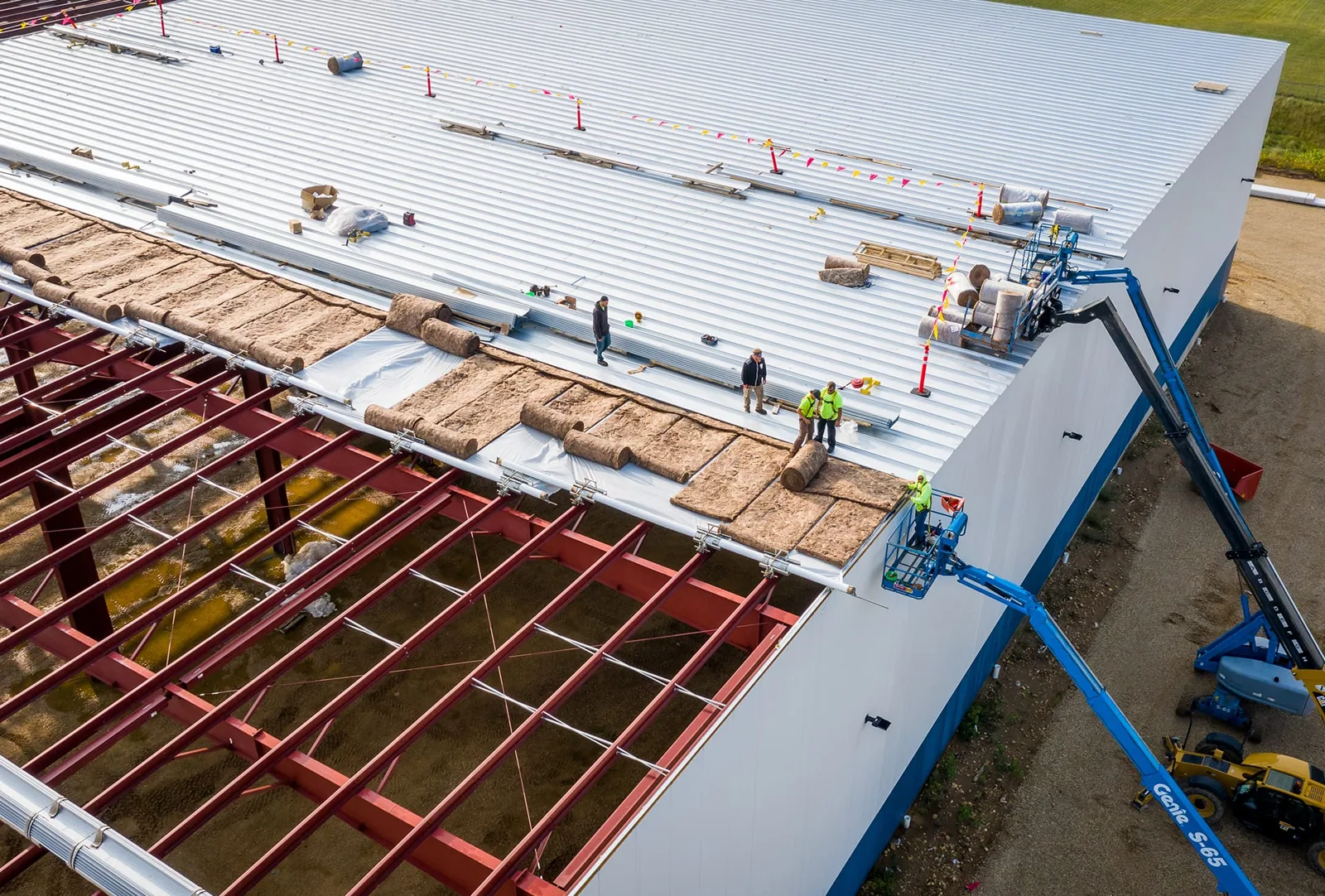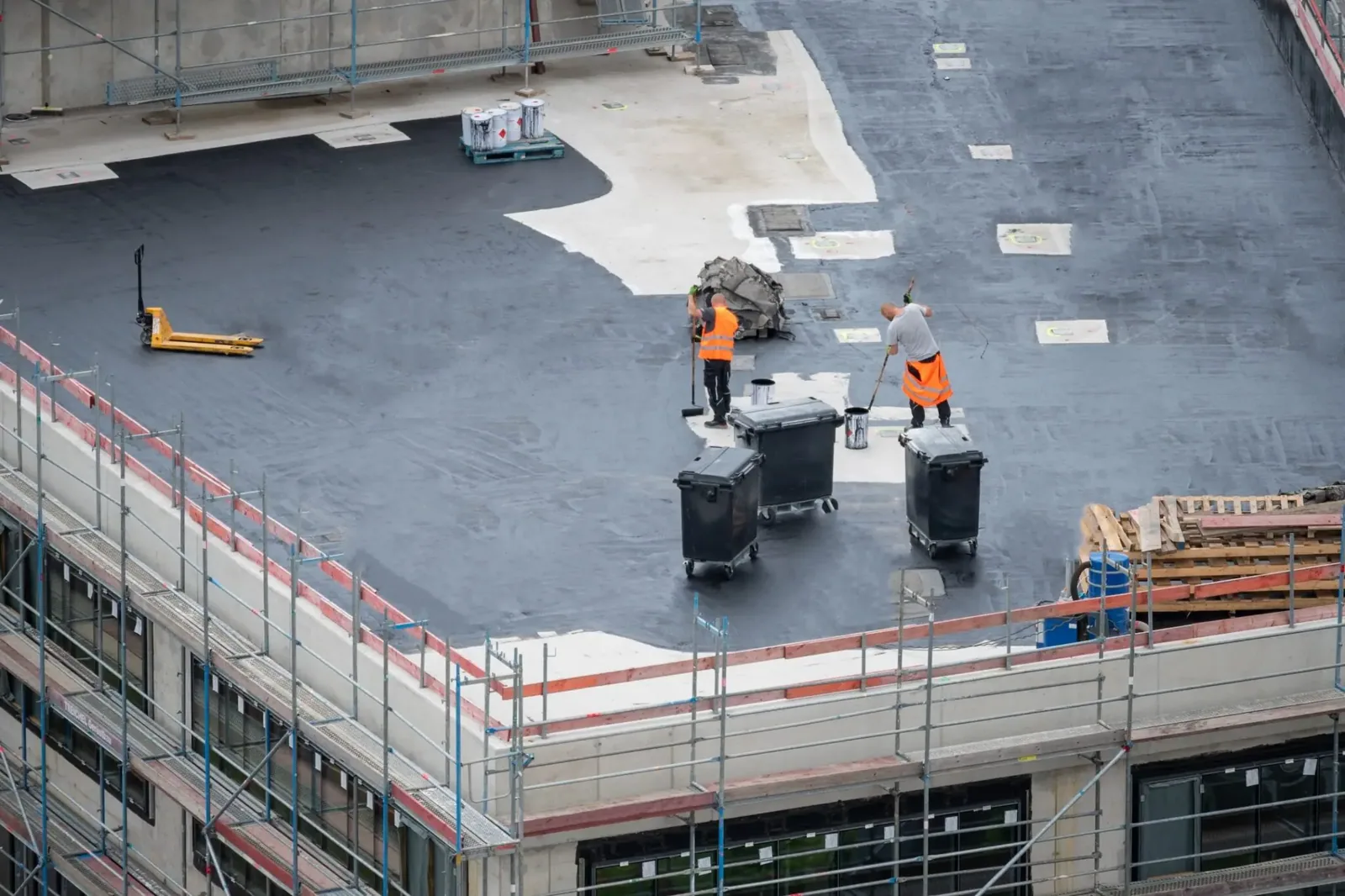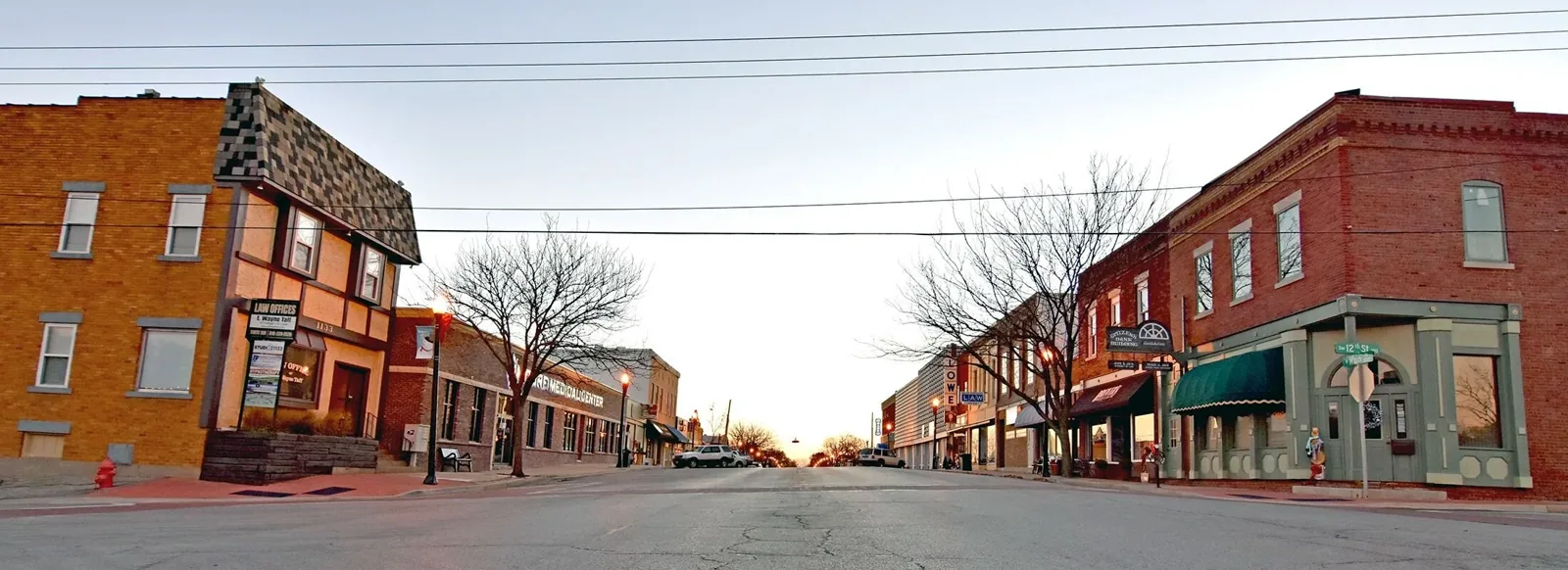
Commercial roofing in Downtown Blue Springs, MO, starts with a building-specific inspection and a work plan coordinated with storefront operations.
Downtown Blue Springs' 2024 master plan covers retail, office, civic, residential, transportation, and open-space development. The City also allocated bond funds for plan improvements and streetscape work, while a local stakeholder group focuses on storefront reuse and façade improvements. Commercial roof work in that setting needs to coordinate with building access and public activity. The plan does not identify any roof assembly. We inspect the individual property before recommending repair or replacement.
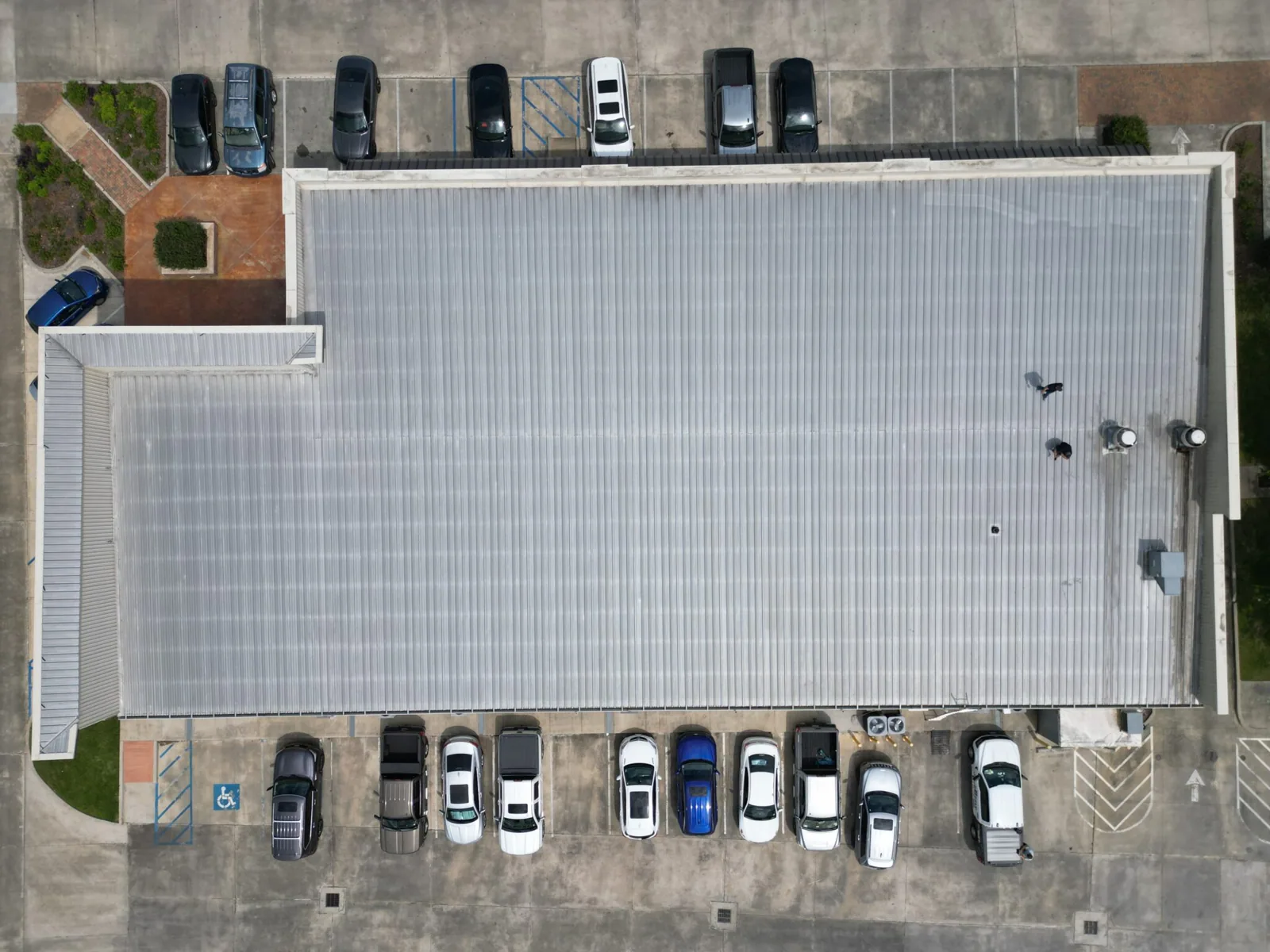
Our review identifies roof material, seams, drains, parapets, curbs, and signs of moisture inside. The owner or manager confirms the work address, roof access, current storefront use, loading time, and any active streetscape restriction. The inspection records verified conditions and areas requiring tests. That gives owners, merchants, and project teams a clear scope tied to the building rather than to a general downtown plan.
Coordinate With Storefront Improvements
Downtown facade and streetscape projects can put several trades near the same building. The property contact confirms when a lift or material delivery can use the frontage and whether a sidewalk route must remain open. We verify current conditions before staging, even if a public plan shows the broader project area. A roof opening also needs a closure detail ready before tear-off starts, so changes in pedestrian access do not leave material exposed.
If facade work includes parapets, signage, or exterior penetrations, the roofing scope should state which trade completes each connection. We inspect the roof-to-wall transition and photograph conditions before another surface conceals the flashing. Coping and edge-metal details help manage the interface at roof perimeters. Phased occupied-building work can coordinate roof activity with shop or office hours and separate customer access from the active work zone.
When a facade project changes coping height, cladding, or signs, we inspect the termination where that work meets the roof. The detail must shed water away from the wall and keep the membrane attached. We photograph the interface before and after other work, then verify that debris or fasteners did not damage the roof surface. This small coordination step prevents separate contracts from leaving an unclear responsibility at a shared transition.
Inspect the Existing Roof
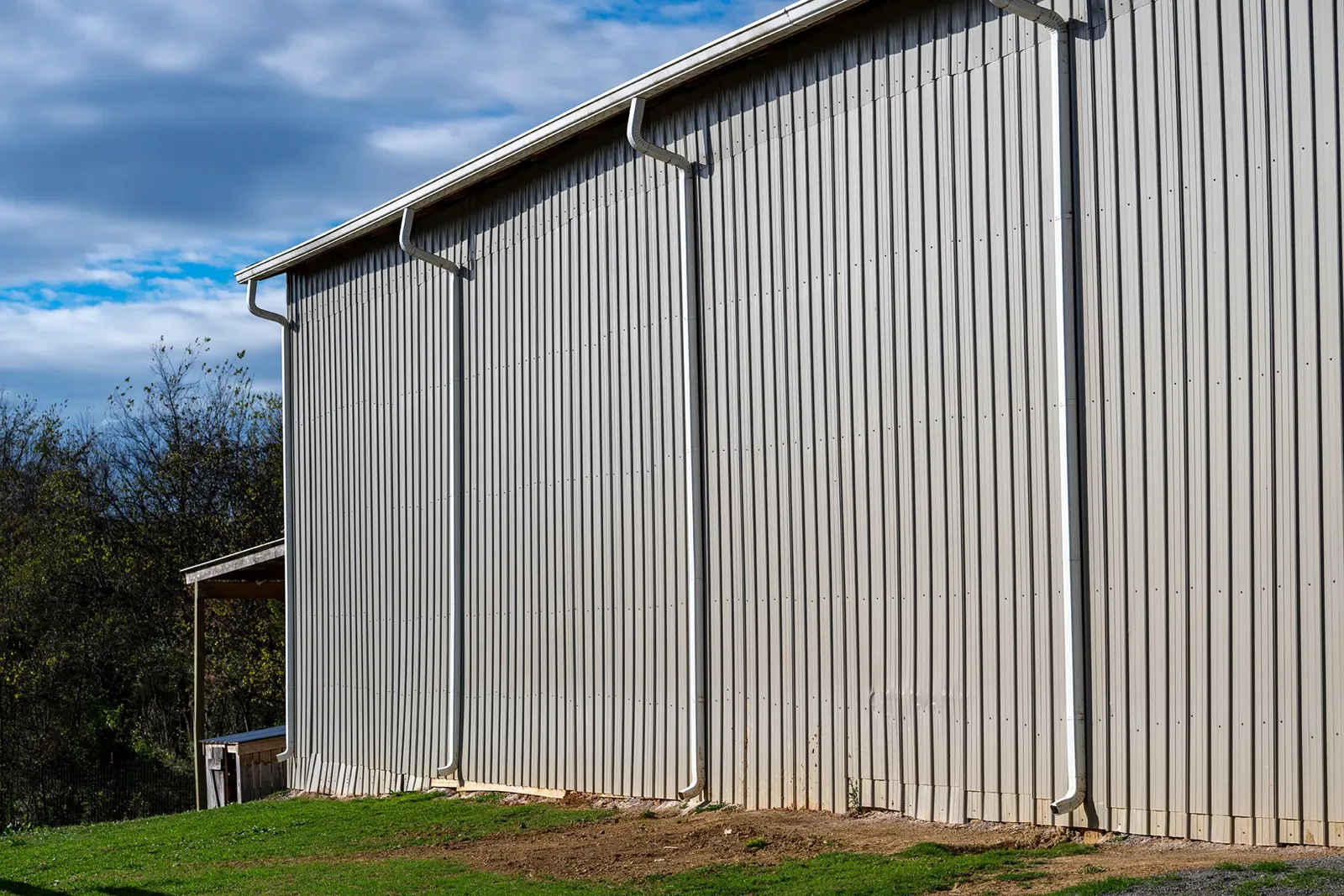
A master plan or storefront description does not say whether a building has a membrane, built-up roof, modified bitumen, or metal. We inspect exposed seams, field patches, roof edges, drains, penetrations, and previous repairs. Available plans can help identify original work, but later additions may have changed the assembly. If an overlay or coating hides the substrate, a test opening may be needed to confirm the deck and insulation.
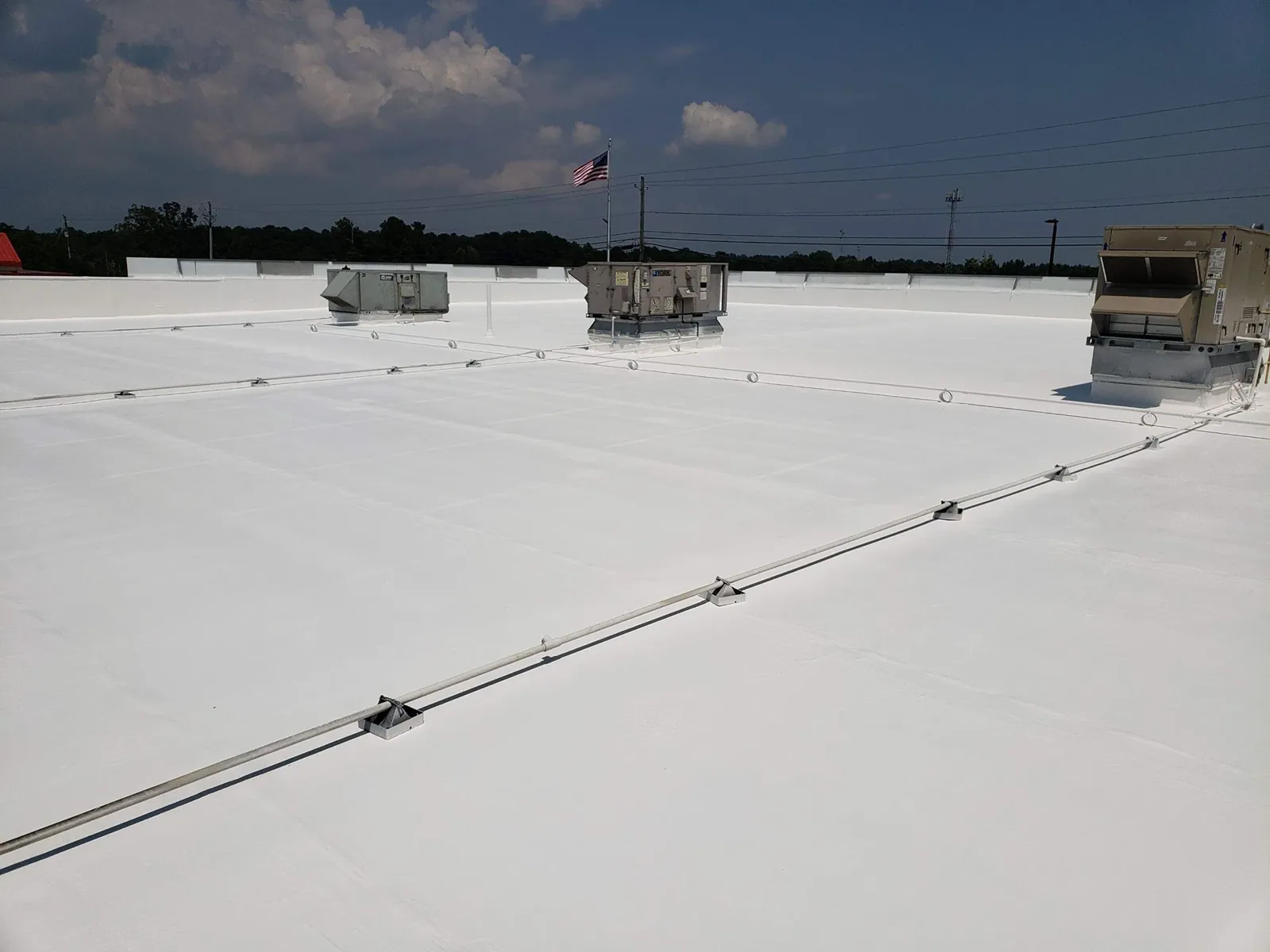
Material compatibility controls the repair. A membrane patch needs a prepared surface and seam method that matches the system. Metal details need secure attachment and room for movement. A coating cannot correct wet insulation or a failed deck. A photo-backed inspection lists visible materials, defect locations, and any section needing further testing. That record helps building owners coordinate a roof repair with a separate facade or accessibility project.
Follow Water to the Source
Interior staining is a clue about where water traveled, not necessarily where it entered. We compare the report with the roof above and inspect the route through parapets, seams, drains, curbs, and prior patches. A commercial building with several additions may have more than one drainage plane. We document where water appears and which transition or outlet is supported by inspection as the likely source.
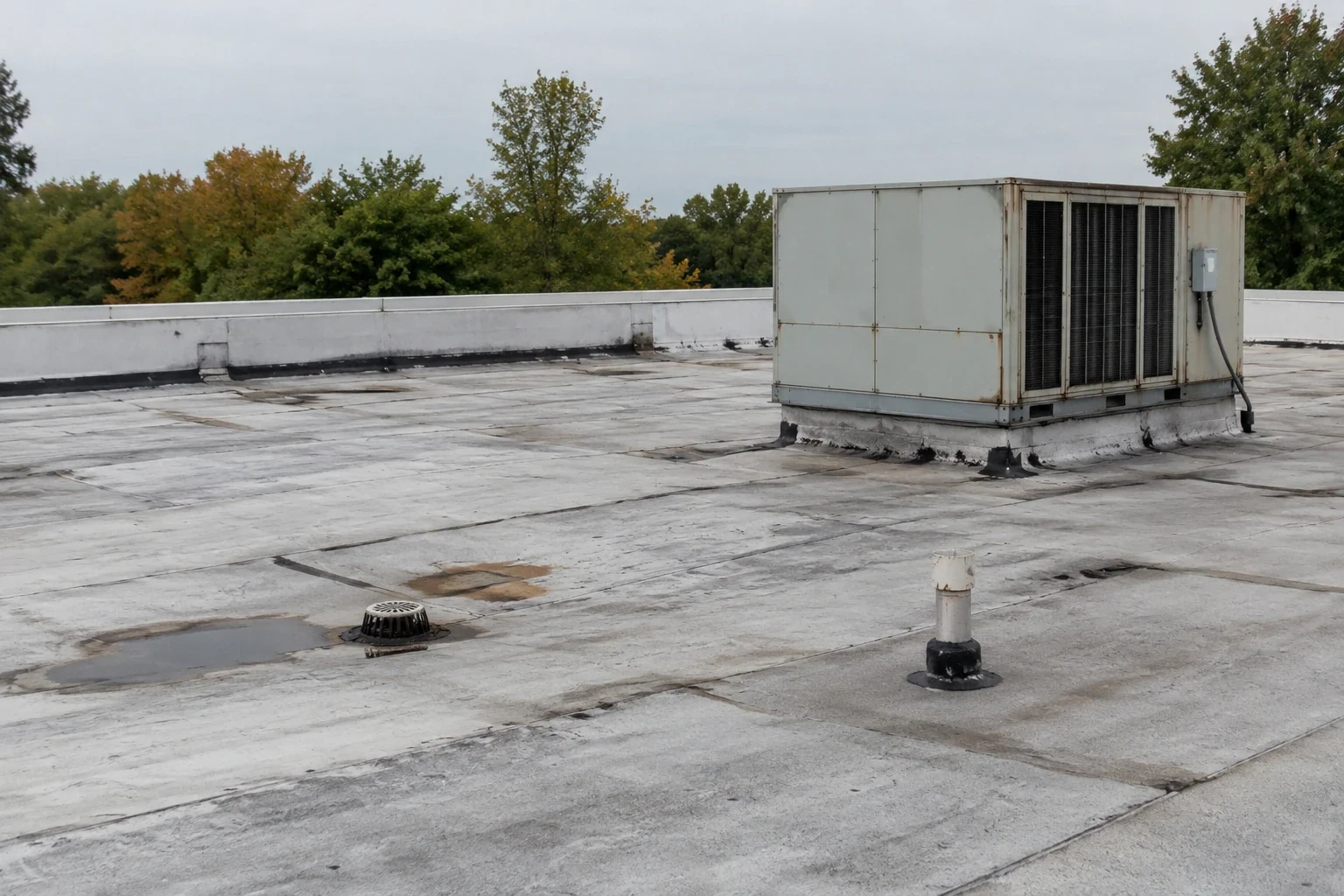
Drainage checks cover strainers, drain bowls, scuppers, overflow points, and leaders. We measure any ponding that remains after expected drainage time and look for blockage, low slope, or deck movement. If trapped moisture may extend under the membrane, infrared survey methods can help select test areas. A test opening confirms whether insulation is wet. The scope distinguishes a suspected area from a measured repair boundary.
Account for Regional Conditions
Temperature and forecast conditions affect repair and coating windows. After a reported weather event, we inspect the storefront roof at its address and document material condition before setting the work boundary.
Work products are installed according to their temperature and substrate requirements. If a forecast changes, we close a smaller area and protect exposed layers before leaving. A roof review can identify open seams, loose edge metal, and blocked drains before a weather event creates an interior leak. Preventive maintenance records which details were checked and sets a follow-up date. It also gives an owner a roof record to use when storefront work changes the outside wall or penetrations.
Choose a Repair Limit
An isolated puncture, loose flashing, or seam defect can be repaired if the surrounding material is dry and firmly attached. Wider moisture, recurring leakage, or failing edges may need a larger scope. We test uncertain areas, measure confirmed damage, and explain how the work boundary follows the evidence. If tear-off reveals concealed deterioration, photographs and measurements support the change before the assembly is closed again.
Recover is possible only after checking existing layers, deck capacity, outlet height, code, and attachment. Replacement may be needed to reach sound material or correct repeated failures. Cost and schedule depend on measured area, site access, materials, disposal, weather, and protection below the work zone. A repair scope states the detail and tie-in; a replacement plan names the new assembly, edge work, drains, and inspection points.
Document Each Downtown Property
A closeout file should show the building, roof zone, installed material, seams or attachment checked, drain condition, and any item that remains for testing. Photos give future owners a location reference. If sidewalk or facade work was underway, the record notes the approved roof access and whether any temporary protection remains. Separate project records keep a roof repair from being confused with streetscape or storefront improvements.
Blue Springs' master plan and local stakeholder process address a wider downtown program. We also inspect commercial properties in Independence at Historic Independence Square and 23rd Street and Sterling Avenue, with a separate inspection at each address. The Blue Springs report remains specific to the property reviewed and lists its own drainage routes, repairs, and follow-up needs.
For a downtown Blue Springs property, arrange access with the building contact and identify the roof section before discussing a repair amount. Confirm whether the work could affect a public entrance, tenant space, or shared service route, then include the needed protection and notification in the sequence. If the existing roof includes additions or prior overlays, verify the construction at each proposed tie-in instead of assuming the visible surface tells the full story. Record drains and overflow details that could be affected by the repair. These observations allow the owner to distinguish a localized correction from a broader project and make the next inspection easier to compare.
Commercial Roofing Questions
Does the Downtown Master Plan describe a building's roof?
No. It guides land use and public improvements. We inspect the property's assembly, drainage, and repair history before setting a roof scope.
Can roof repairs happen while a facade project is underway?
They can if the trades agree on access, flashing ownership, staging, and sequence. We document the roof-to-wall condition before it is covered.
How do you protect customers near roof work?
We coordinate lifts, material routes, barriers, and noisy work with the property contact and keep the approved pedestrian path clear.
What should I do if a downtown storefront has an active leak?
Protect contents below, notify the property contact, and arrange an inspection. We stabilize entry if needed and trace the source before defining permanent work.