Define the Operational Constraints
The site team identifies roof access, work permits, loading, shifts, noise limits, restricted areas, and who can approve a change after tear-off. We use those rules to set the daily opening size and closure method. If the owner manages multiple buildings, property management companies can use a consistent report format while each site's findings remain separate. General contractors can coordinate roofing with mechanical, electrical, or facade work when responsibility for each tie-in is clear.
Independence's City employer information includes education and retail sectors, alongside major local institutions and businesses. A property such as Grandview, Missouri or the Adams Dairy Parkway Corridor, Blue Springs receives its own access plan and roof review.
Connect the Roof to the Work
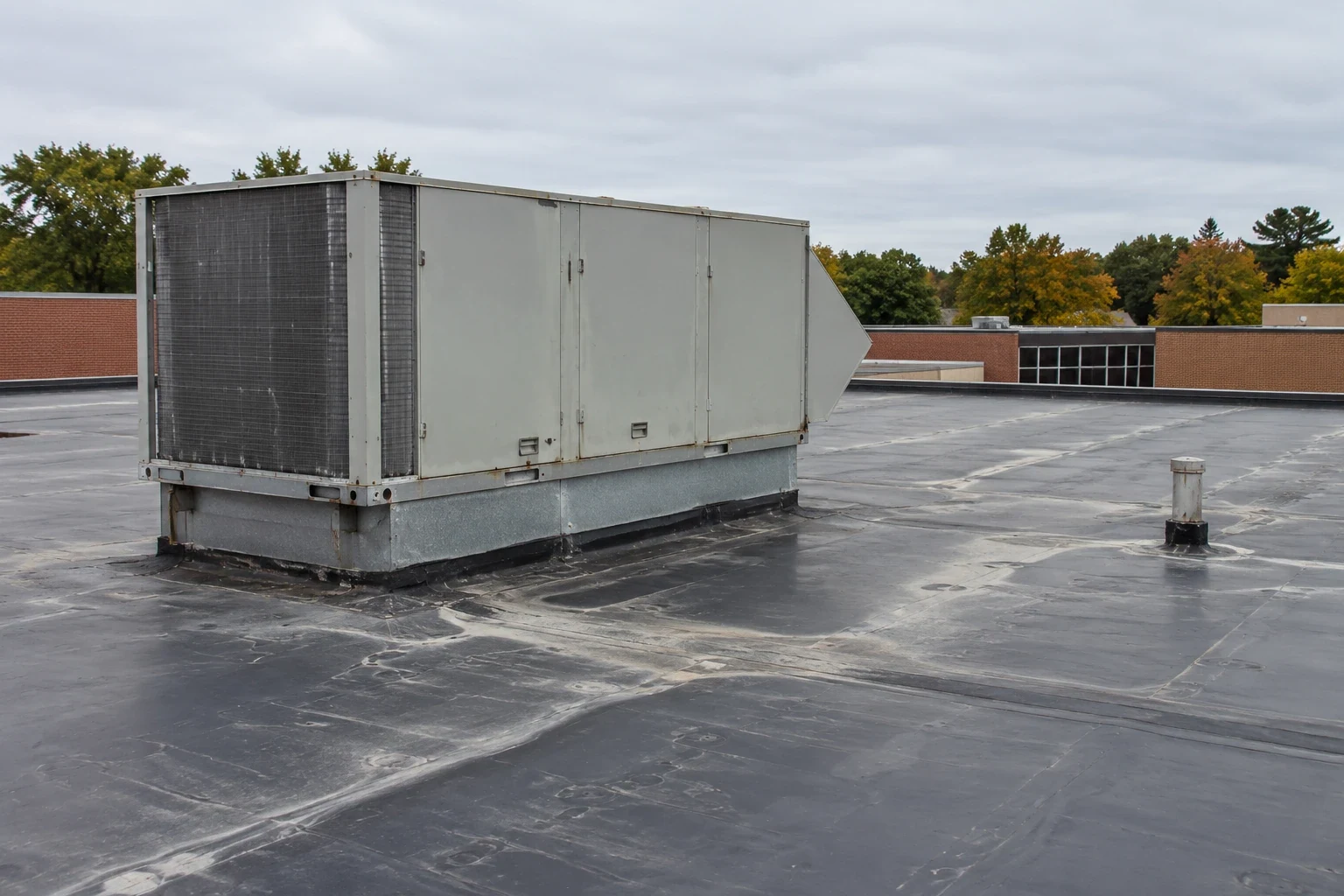
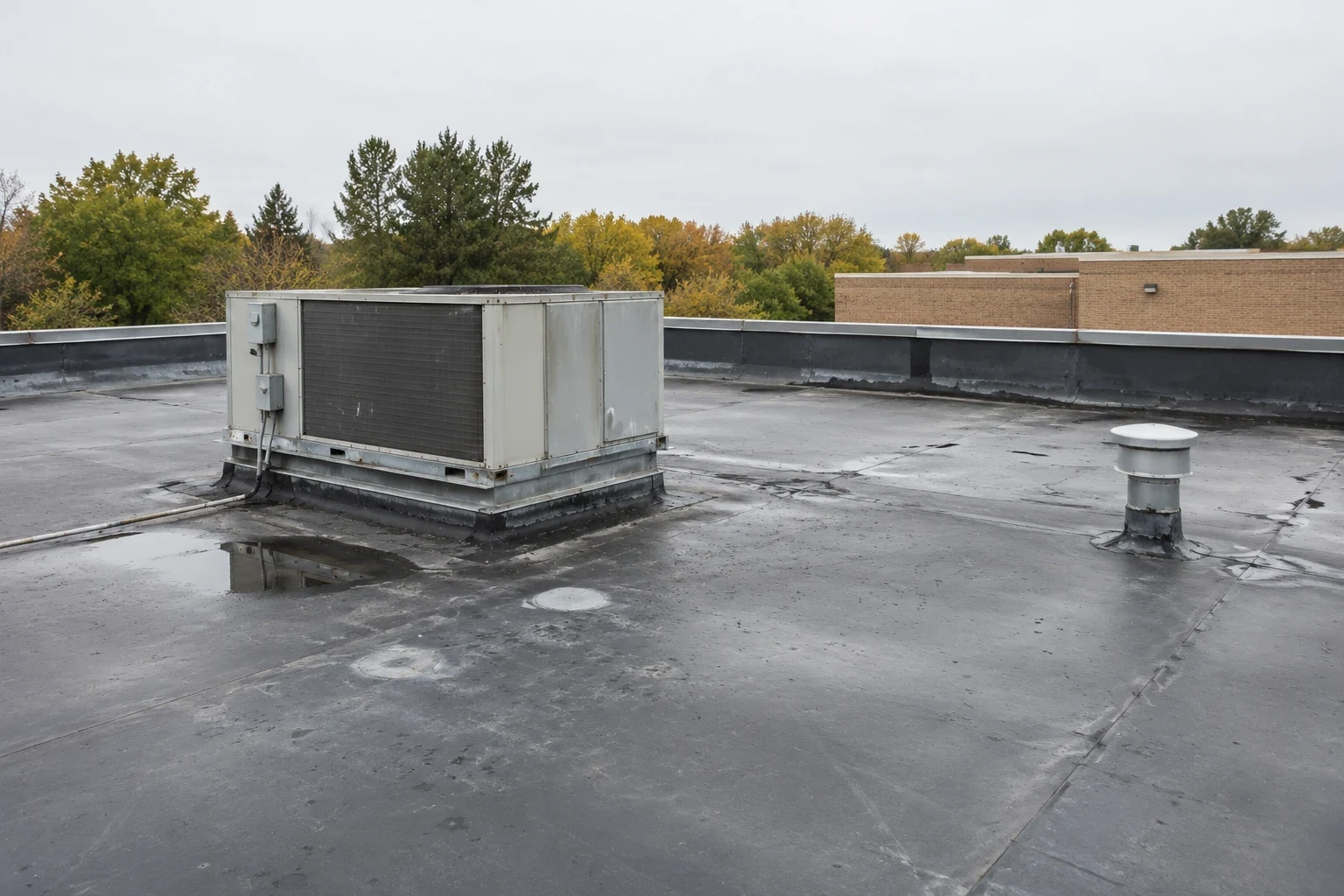
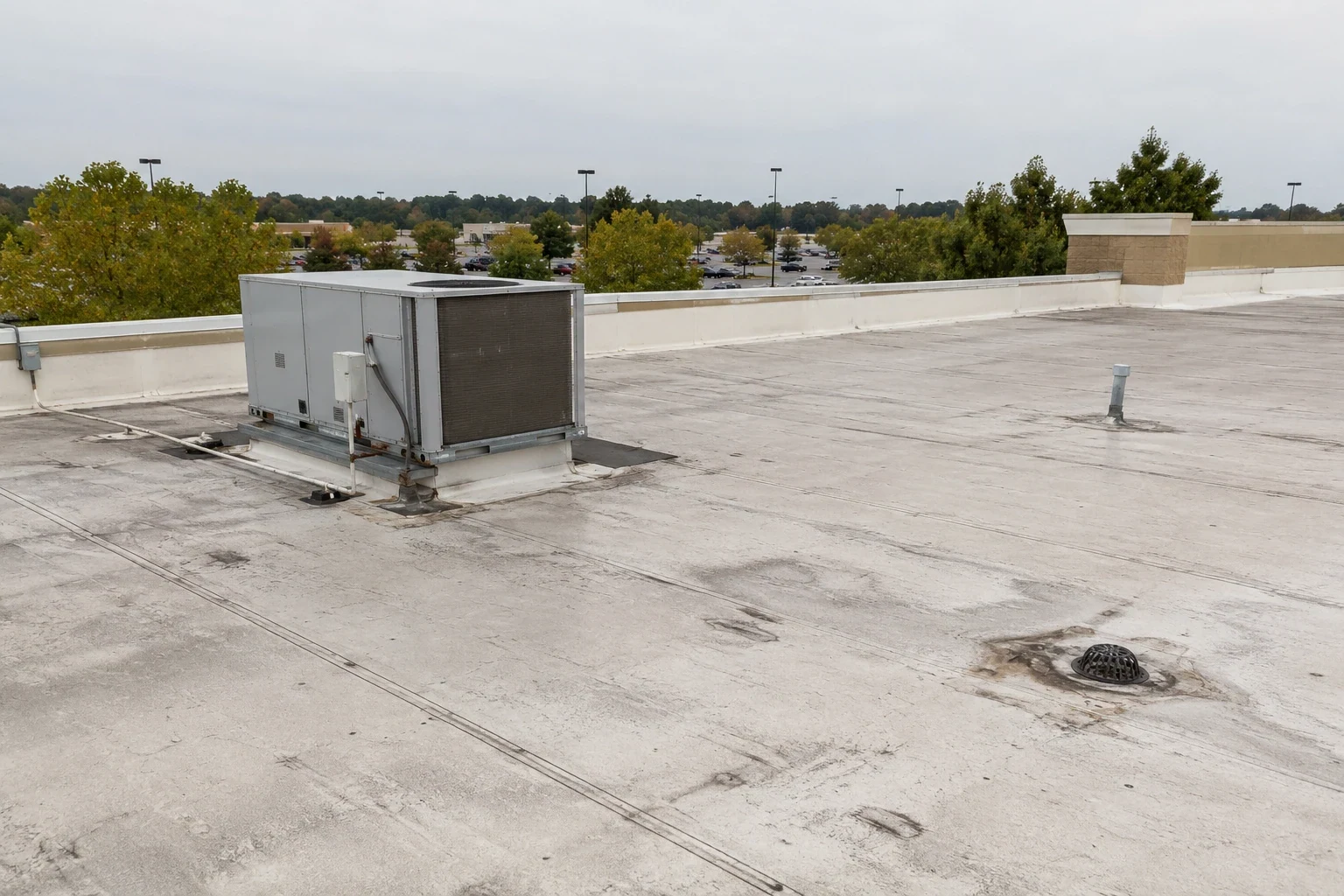
Industrial and commercial roofs can have drains, curbs, vents, and penetrations that serve the process below. We inspect each visible interface and compare it with available plans. If equipment will change, the roofing scope should identify who flashes the new curb and how the finished connection is checked. A leak near a production or customer area also needs the interior report matched to the likely water route overhead.
For schools or public buildings, school districts and public agencies can align roof work with term dates, public access, or procurement schedules. Insurance restoration work adds documentation needs, but damage still has to be observed and measured. We separate temporary protection, confirmed repair, and areas awaiting testing in the report.
Build a Scope the Facility Can Use
We compare a local repair with broader removal after checking the substrate and surrounding system. Wet insulation, failed attachment, repeated leaks, or deck damage can change a small patch into a larger project. Cost and schedule depend on measured roof area, access, material, protection below, disposal, and weather. The scope names work zones and records what would trigger a change when concealed conditions are opened.
Maintenance reports help facility teams budget and track the same drains, edges, and penetrations on later visits. For multiple sites, a multi-site program can group inspections and priorities. The individual building still gets its own repair detail, closeout, and service history.
Work in the Independence Market
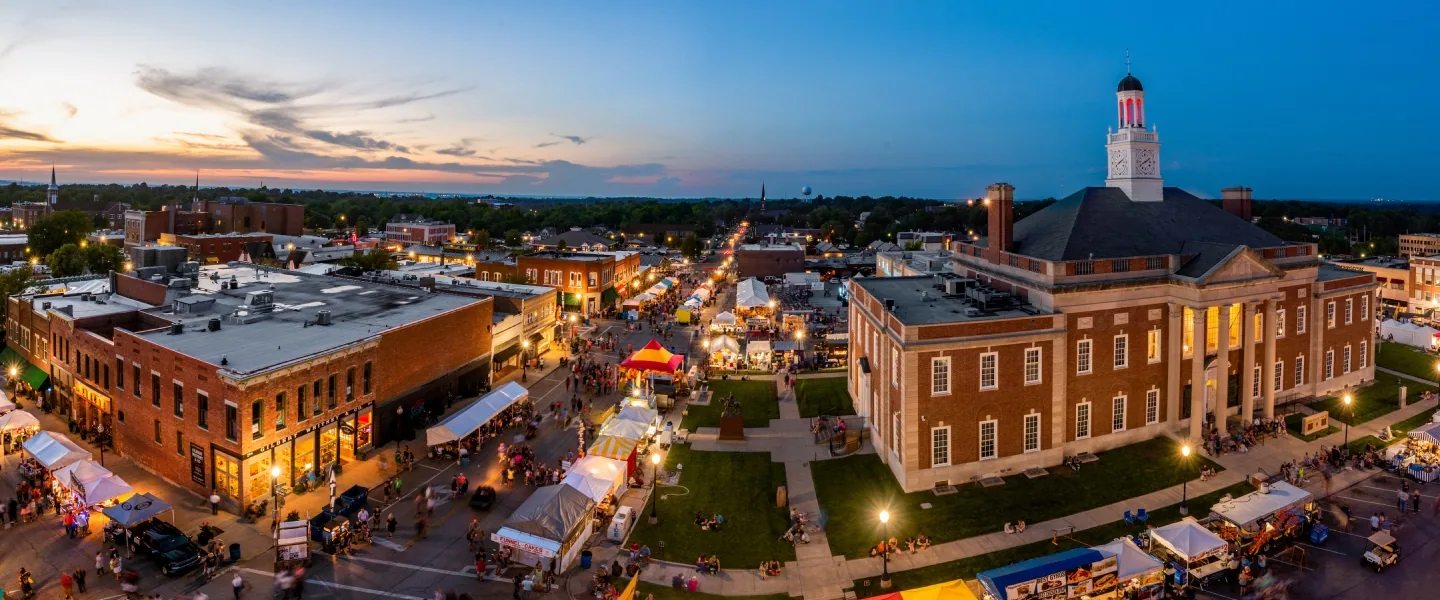
Local routing may include industrial, medical, retail, public, and campus properties. We confirm the address and access requirements before dispatch. For example, Eastgate Commerce Center and Historic Independence Square have distinct settings, owners, and work areas. Neither location stands in for another site's roof condition.
Each project closes with photos, materials used, seams and transitions checked, drainage status, and any item still needing a test or approval. That gives operations and property teams a record they can use when maintenance, equipment work, or another roof project is planned.
Commercial Roofing Questions
Does industry determine roof materials?
No. Building records and field inspection identify the assembly. Industry context helps plan access and protection.
Can you coordinate roofing with mechanical work?
Yes. The project team should assign curb, flashing, and final inspection responsibility before equipment work begins.
How are multi-location portfolios handled?
We keep reports and repair scopes specific to each address, then group priorities for the owner's planning.
What if a facility has access restrictions?
The site contact sets the approved route and work window. We document unvisited areas and arrange a follow-up when access is available.