Get commercial roof condition reports in Independence, MO with labeled photos, mapped defects, moisture findings, repair priorities, and documented limits.
A useful roof report lets a facility manager find the defect, see its location, and understand what decision follows. It identifies the assembly, records evidence, and distinguishes confirmed conditions from questions that still need testing. For buildings near Centerpoint Medical Center or along the Noland Road corridor, we prepare the report from a site inspection, not from the address or a general weather record. Photos, roof-zone references, and clear repair limits make the findings actionable.
Identify What Was Inspected
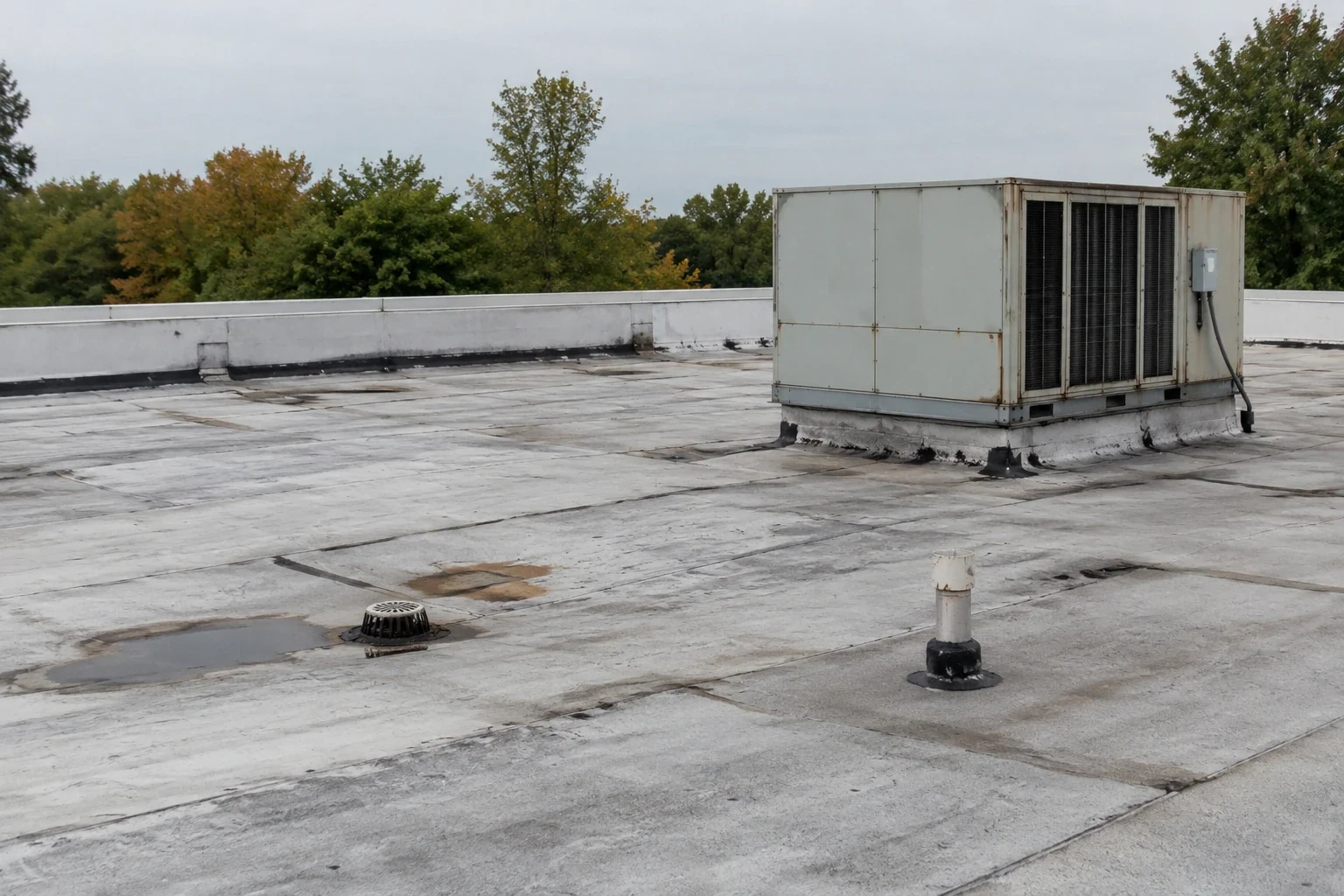
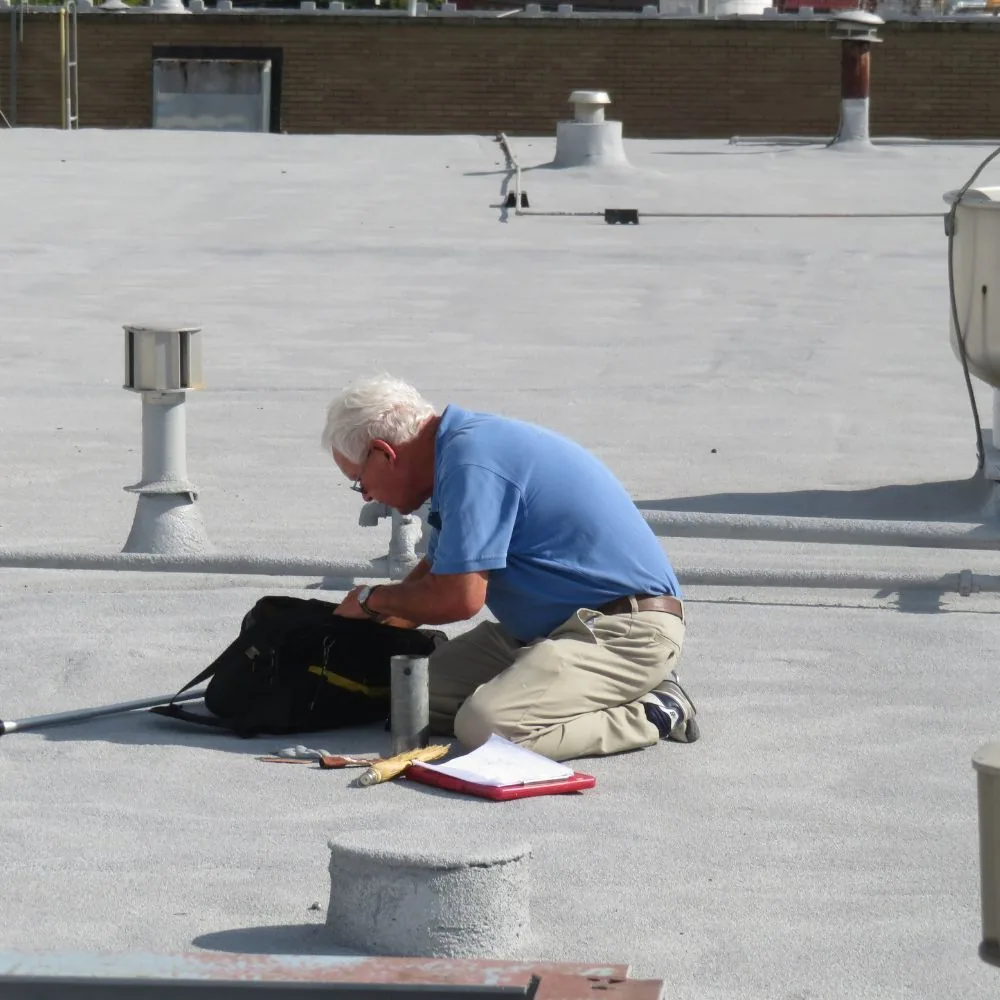
The report starts with the roof area and material observed. We record membrane or metal type where identifiable, drainage features, penetrations, walls, curbs, and transitions. A site map or marked roof plan shows where photographs were taken. If access is limited or a section remains covered, state that plainly. The record should not imply that a concealed deck or inaccessible zone was inspected.
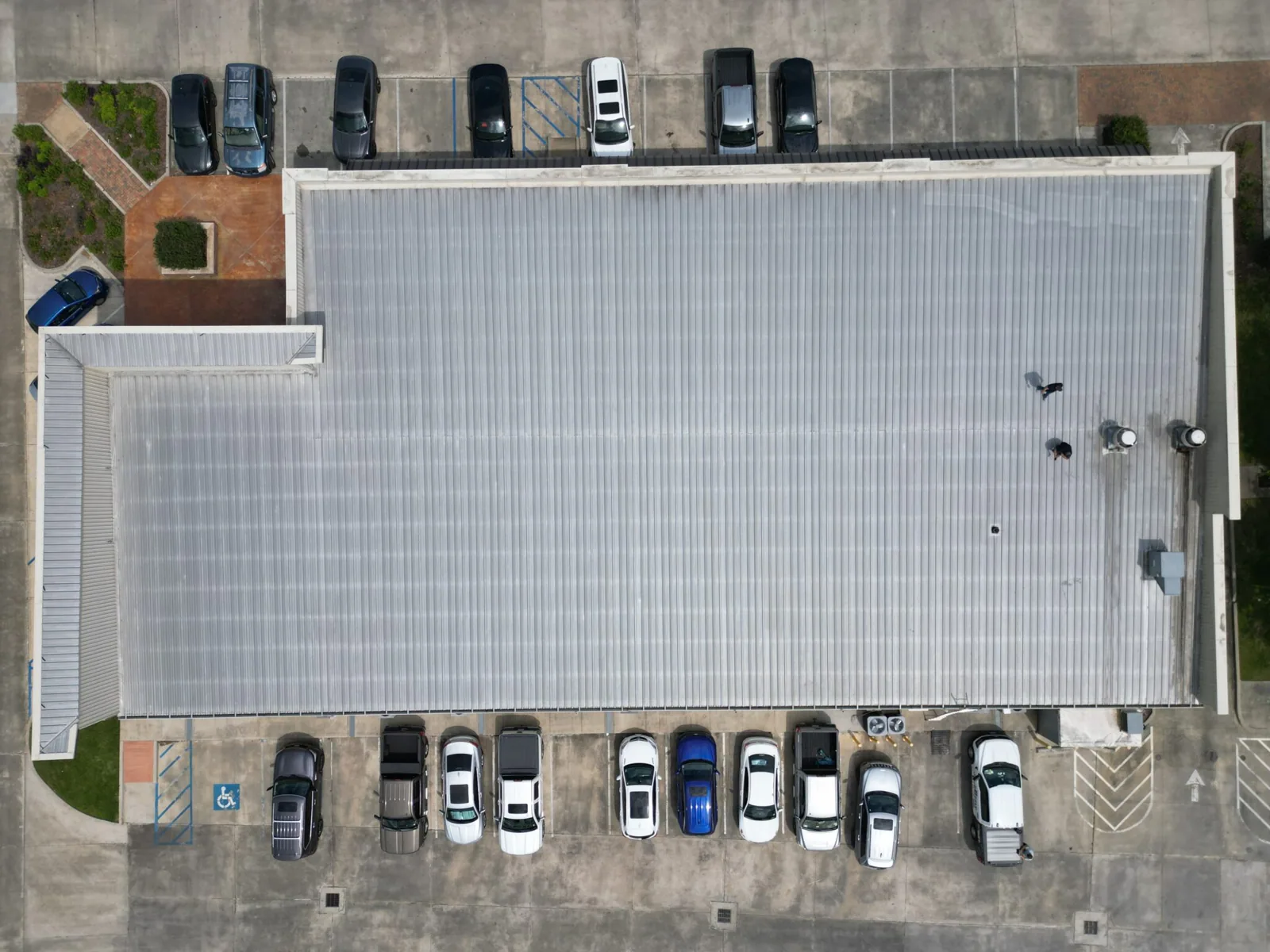
Photographs need context. A close view shows the split seam, open flashing, or damaged drain. A wider view shows which roof section contains it. We label the image with orientation, roof zone, and date so another reviewer can return to the same location. A roof inspection can establish this baseline; drone imagery may help document areas that are difficult to see from a safe walking route, subject to site conditions.
Independence's major employment sectors include manufacturing, health, education, social services, and retail. A report can note the building's operating limits for access and interior protection, but should not infer a roof system from its business use. At a healthcare property, identify the actual roof, occupied spaces, and mechanical access restrictions with the facility contact.
Separate Evidence from Inference
For each finding, describe what is visible, what it may indicate, and what would confirm the cause. An open lap is observed. Wet insulation beneath it is confirmed only if tested or exposed. A ceiling mark suggests water entry but does not identify the roof opening by itself. Keep those statements distinct. This prevents a repair estimate from assuming hidden damage that has not been inspected.
Moisture surveys can guide test locations, while selective openings confirm layer condition. Infrared moisture work should be reported with scan limits, test locations, and results. If a core shows wet insulation, identify the sampling point and the next area that needs delineation. A clear report also states whether the deck was visible and whether structural review falls outside the roofing assessment.
A March 2017 hail observation at Centerpoint Medical Center recorded quarter-size stones; a separate point two miles east-northeast of Independence measured 1.75-inch hail. The event locations explain why a roof might be inspected, but they do not establish damage elsewhere. We tie any roof-impact finding to evidence at the property. Grandview, Missouri remains a local reference, not a proxy for another building's condition.
Make the Next Step Clear
Each recommendation should connect a finding to a scope. Repair can address a localized seam or flashing defect where surrounding materials are sound. Moisture testing can refine a removal boundary. Drainage corrections address a low point or blocked outlet. Replacement becomes a comparison when failures are broad or repeated. If an option depends on a test, say what information the test will provide and what decision it can change.
Priorities can be grouped as immediate protection, near-term repair, monitoring, and longer-range renewal. Avoid false precision when conditions remain concealed. Note access, weather, material compatibility, and operating windows that may affect timing. A capital plan can use the report to compare project timing; asset management can preserve findings and repair history across inspection cycles.
Independence follows adopted 2024 building and existing-building code editions with local amendments. A roofing report can note that permits need review for planned work, while leaving a project-specific code interpretation to the design professional and building department. Confirm project requirements with the City and the design professional for the planned work.
Keep the Repair Boundary Visible
When a repair is completed, add dated photos and identify what material was removed and installed. Mark the tie-in and any adjacent section left outside the contract. If temporary protection remains, show its limits and the next inspection date. A closeout note should say whether the repair was tested and what result was observed. The next technician should not have to infer the history from an invoice alone.
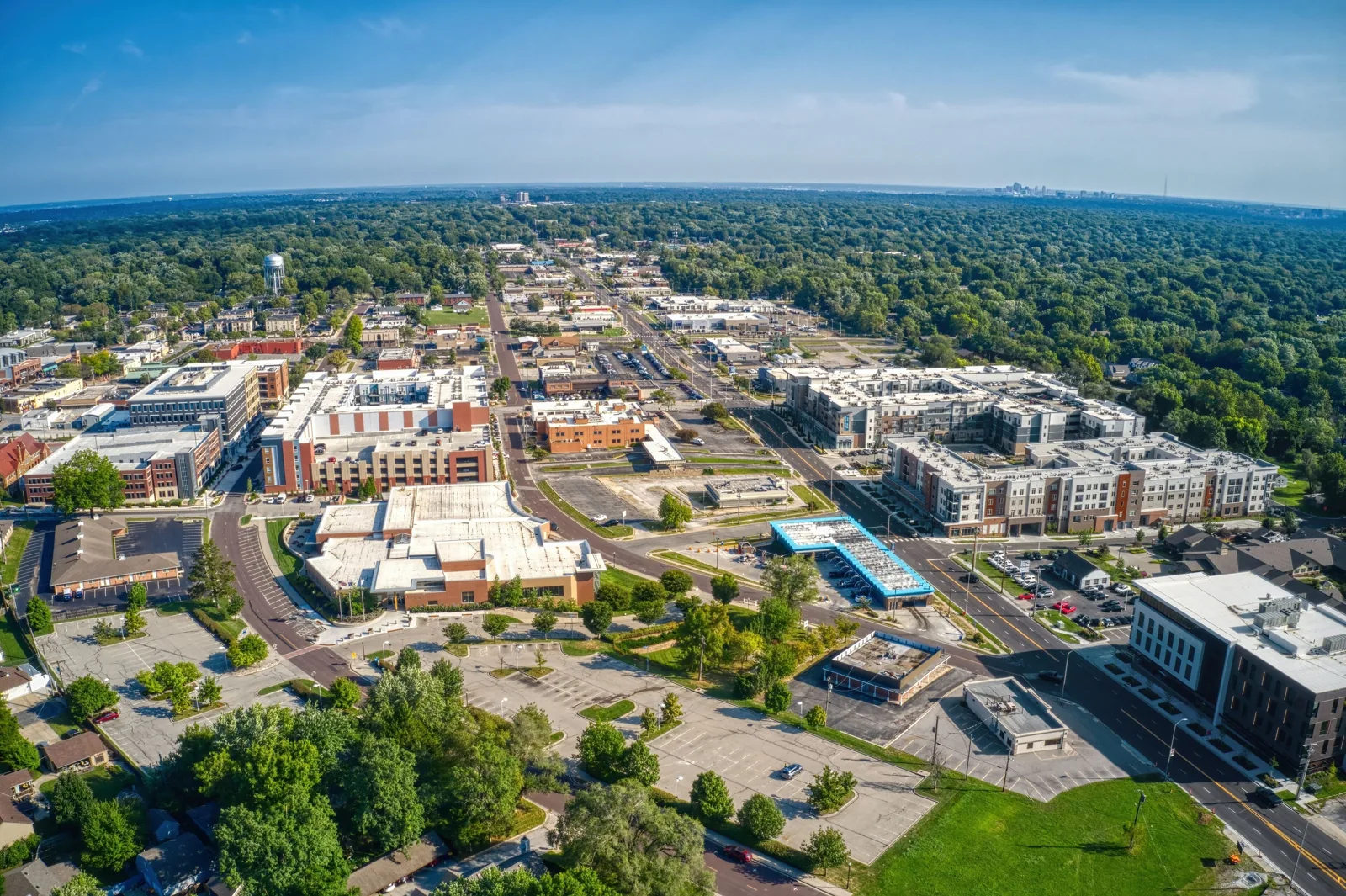
Historic Independence Square and Eastgate Commerce Center are useful route references, but the property address, building plan, and field observations establish roof zones. At Eastgate Commerce Center, a report still needs its own labels, photographs, and repair record.
Where an insurer or lender needs information, organize findings around observed conditions, tests, and work status. Avoid predicting coverage or a transaction decision. The report can provide roof facts for their review. Claim documentation may require dated photographs and a clear separation between storm observation, confirmed roof damage, temporary work, and proposed permanent repair.
Deliver a Record People Can Use
Close each report with the inspected area, conditions found, limitations, recommended actions, and items that need follow-up. Include the roof map and photos in a consistent order. If the work is urgent, identify the protection needed now and the permanent scope to develop next. A concise report can still be technically complete when it records evidence and uncertainty with equal care. When a recommendation changes after testing, retain the earlier observation and note why the decision changed. This gives the owner a clear record of the information that moved the repair boundary or altered the sequence. A reader should be able to follow the photograph, roof zone, finding, and proposed action without guessing which section connects them.
Schedule a commercial roof inspection in Independence for a condition report tied to the roof itself. We will identify the assembly, map findings, photograph defects, and state which recommendations are ready to price and which require testing.
Commercial Roofing Questions
What should a commercial roof condition report include?
It should identify the area and assembly inspected, show mapped photos, list observed defects, record tests, and state limitations and next actions. Useful reports also separate urgent protection from planned maintenance and capital work. Tie each recommendation to a photo, roof zone, and reason so the owner can compare priorities without treating every observation as an immediate repair.
Can a report confirm hidden moisture without opening the roof?
A survey can guide investigation, but direct testing may be needed to verify moisture extent and the layer condition. We identify scan and test limits. A visual inspection cannot confirm concealed moisture. Infrared or other non-destructive methods can identify areas for follow-up, but findings need direct verification when removal quantities depend on them. The report should label screening results as such and show the test locations that would resolve uncertainty. This lets the owner decide whether to authorize openings before approving a larger repair.
Will the report say whether insurance will pay?
No. It can document observations, photos, and work status. The insurer makes coverage decisions under the policy.
Can you prepare a report for a roof with limited access?
Yes. We state which areas were inspected, which were not accessible, and what alternative review or return visit is needed. Yes, with the access limit stated clearly. The report should map which areas were inspected, what observations came from ground or interior views, and which details remain unseen. Do not treat an inaccessible zone as sound simply because no leak has been reported there. Facilities staff can use the limitation to arrange safe access or authorize a follow-up inspection before committing to a repair or replacement boundary.