Repair commercial roof seams, flashing, membranes, and drainage in Independence, MO with a field-checked scope tied to the failure mechanism.
A loose termination, split seam, or puncture can admit water long before a ceiling shows a stain. On commercial roofs in Independence, the repair begins with the failed interface and the condition around it. We check the membrane, substrate, attachment, flashing, and drainage route, then identify the boundary that needs work. Properties near the 23rd Street and Sterling retail area and the industrial sites at Eastgate share the same need for a repair that matches the assembly, even when the roof layouts differ.
Failure Mechanism
Surface wear is evidence, not a complete diagnosis. We inspect seams for separation, membrane for punctures or abrasion, flashing for movement, and metal edges for loose fasteners or open joints. At penetrations, we look for a break in the seal and for movement between the curb and roof. Inside, we compare ceiling conditions with the roof above, but we do not assume the wettest interior spot sits directly beneath the opening.
Water can travel along insulation, deck flutes, steel, or framing before it appears. We trace the route toward drains, wall lines, curbs, and transitions. When multiple symptoms appear, we test the likely paths and record where each one begins and ends. A leak investigation can focus on active entry; planned repair work can address seams and flashing that have not yet produced interior damage.
Independence's commercial stock includes retail centers, medical campuses, industrial employers, and older business districts. Those descriptions help plan access, but the roof inspection decides repair details. Medical buildings may require coordination with facility operations, but their use does not tell us the roof's membrane or condition. We identify the actual assembly before selecting a patch, flashing material, or fastening method.
System-Compatible Repair
Membrane repairs need clean, sound material around the damage. We remove incompatible or deteriorated material as needed, prepare the surface, and install a patch suited to the system. Thermoplastic seams may be heat-welded when the membrane and conditions allow. EPDM repairs use compatible adhesives and flashing details. Modified bitumen and built-up roofs call for their own repair materials and surface preparation. A patch that bonds to the wrong surface can lift at the first thermal cycle.
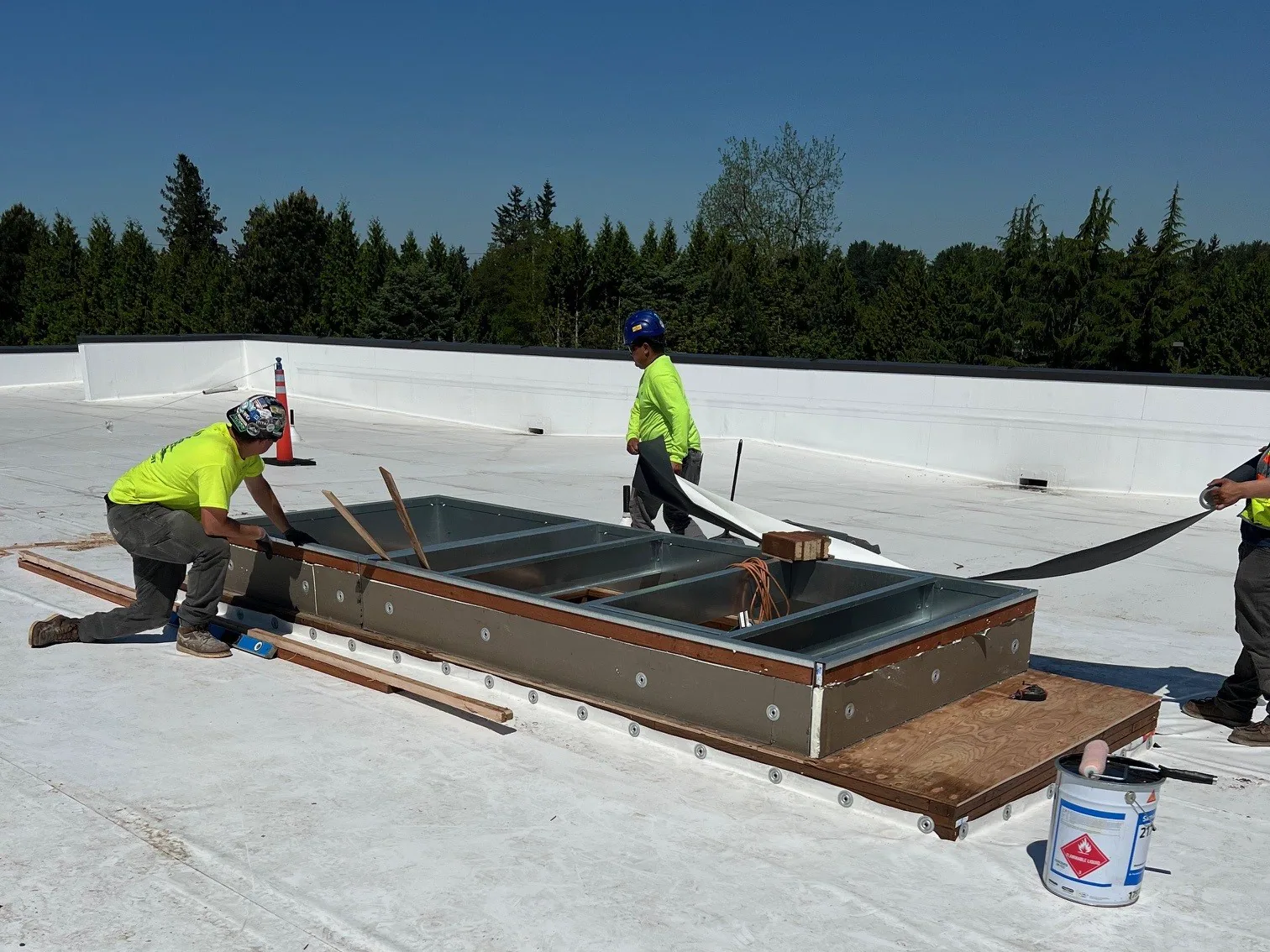
Flashing is often the more complex part. Curbs, pipes, wall bases, drains, and roof edges combine different materials and movement. We check the termination height, surface preparation, counterflashing, and attachment so water does not pass behind the repair. A detail can need metal work as well as membrane work. Related coping and edge repairs should be included where the perimeter is part of the failure.
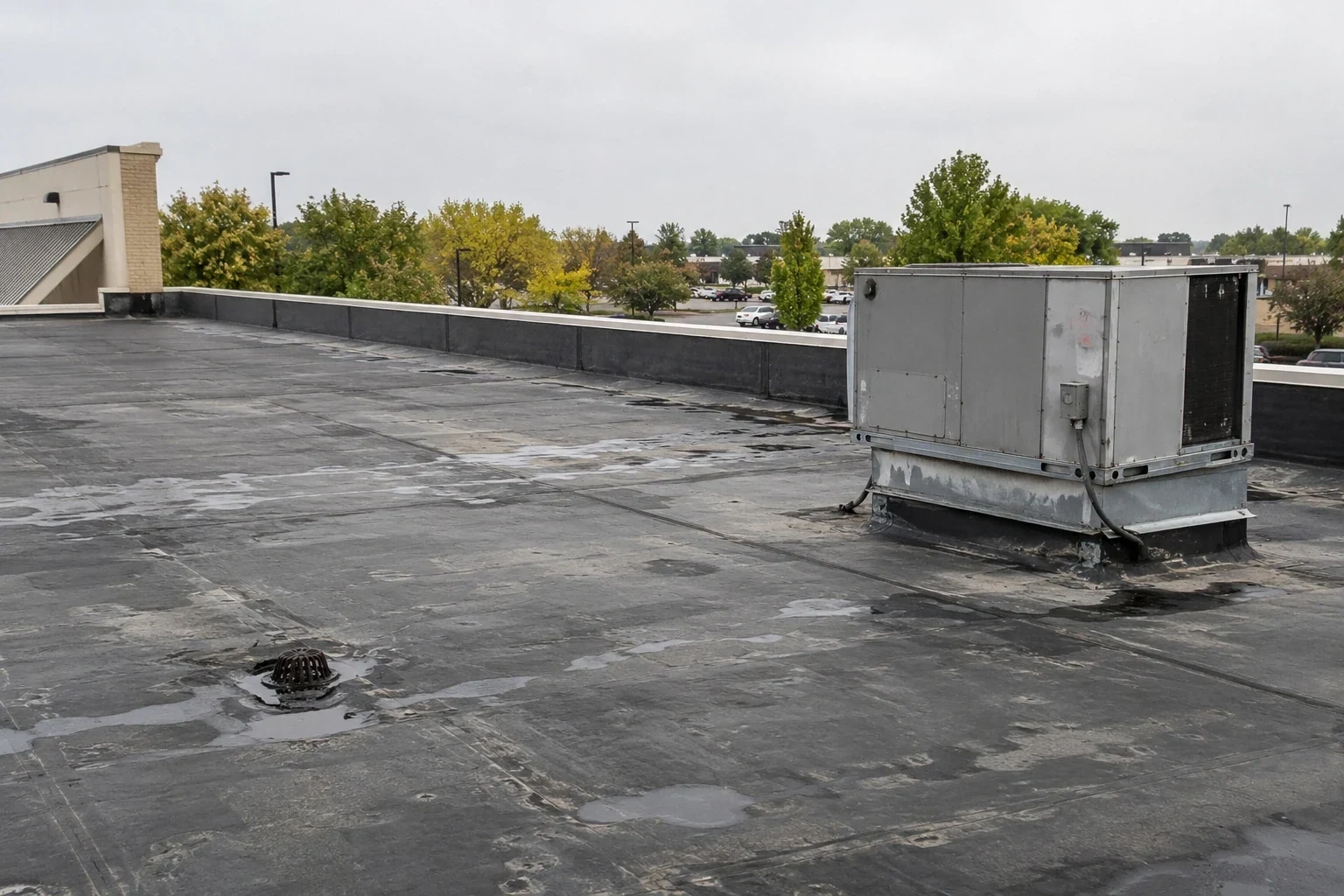
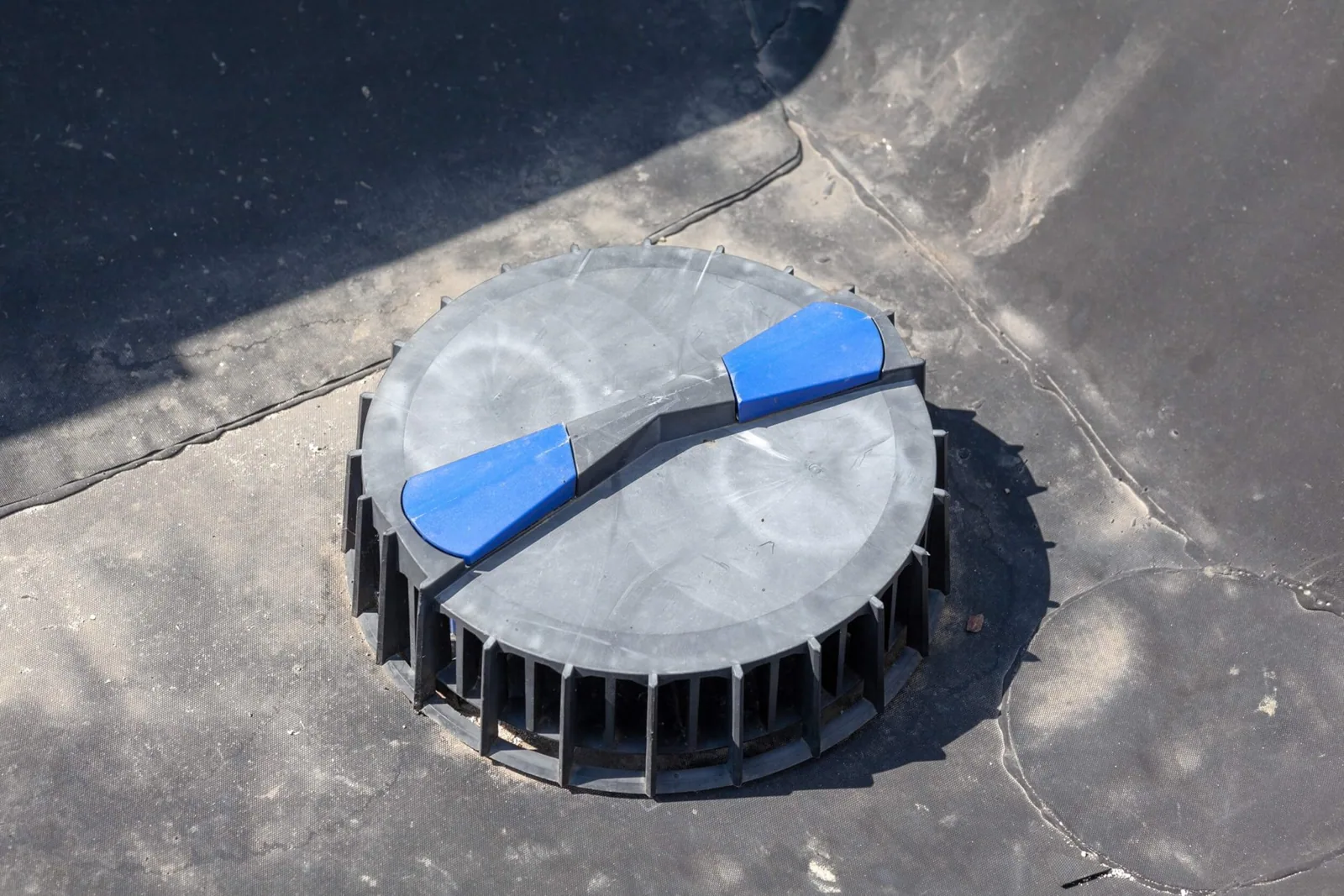
Repairs also need to preserve drainage. We clear outlets as part of inspection, check whether debris or displaced material is holding water, and review overflow paths. If a low area reflects a slope or deck issue, a surface patch will not correct the condition. We can coordinate drain and scupper repairs when the outlet or adjacent flashing is involved. The repair limit should include enough surrounding roof to restore the water path.
Independence Exposure
Freeze and heat cycle roof details. Kansas City climate normals show a January normal low around 20 degrees and a July normal high around 89. Metal moves as temperatures change, while membranes and sealants respond differently. A repair at a metal-to-membrane transition needs compatible materials and enough movement allowance. We inspect nearby fasteners and seams for a repeating pattern instead of treating each split as unrelated.
Storm records offer another inspection cue. On March 6, 2017, 1.75-inch hail was observed two miles east-northeast of Independence. That report does not establish damage across the city. We look for actual impact marks, cuts, displaced flashing, and openings at rooftop equipment. A hail damage inspection should distinguish cosmetic marks from a breach or loss of function.
The city's redevelopment areas include Noland Road, Fairmount, Englewood, Maywood, and Historic Independence Square. A commercial roof near Noland Road may have different delivery and tenant coordination from a shop near the Square, but the repair method still follows the installed roof. We keep the local property context tied to access and operations, then base the actual repair on field findings.
Repair Boundaries
A useful repair scope names the location, material, preparation, and termination point. It should say whether work includes membrane, insulation, cover board, metal, sealant, or drainage components. Photos show the condition before it is covered. Where a concealed condition could change the work, we explain the likely discovery and how the repair boundary may expand after opening the assembly.
Cost and timing follow access, roof height, setup, number of penetrations, required material compatibility, moisture extent, and weather. A small puncture in a sound membrane is different from a wet area that reaches a curb and parapet. A repair that needs a temporary dry-in or tenant coordination may take longer than the material work alone. We describe the sequence so the building contact knows which areas must remain clear.
For owners with repeated service calls, a roof condition record helps connect the current repair to prior findings. If several roofs are involved, a multi-site program can track locations and priorities without assuming they need identical work. A repair should leave a clear record of the assembly, the observed defect, and any maintenance item that remains.
Post-Repair Review
After the work, we inspect the repaired seam, patch, flashing, or edge and check the adjacent drainage route. We record what was repaired and any nearby condition that still needs attention. On a roof with multiple membrane types, the closeout notes should identify the system and materials used so later work can be selected for compatibility.
Repair can extend roof service when the assembly remains sound and the affected area is limited. It is not a substitute for replacing saturated insulation or correcting a broad attachment failure. When inspection shows a larger problem, we explain the evidence and compare the repair with a recover option or full replacement. That lets the owner make a decision based on condition rather than on the appearance of a single defect.
Schedule a roof review with Commercial Roofing Independence. We will inspect the affected area, trace the water path where needed, and define a repair boundary that fits the roof assembly and the building's operating requirements.
Commercial Roofing Questions
Can a roof repair be made before the leak reaches the interior?
Yes. An open seam, split flashing, or puncture can be repaired before it produces a ceiling stain. We verify the defect and surrounding substrate so the repair is attached to sound material.
Why does a leak appear far from the roof opening?
Water can move along insulation, deck flutes, steel, or framing before it drops into the space. We compare interior signs with roof details and test likely paths instead of placing a patch above the stain alone.
Do you use the same patch material on every roof?
No. Membrane chemistry and attachment differ. We identify whether the roof is TPO, PVC, EPDM, KEE, modified bitumen, built-up, or metal, then select compatible repair materials and preparation.
What if the repair exposes wet insulation?
We document the opening and check how far the moisture extends. The scope may expand to remove affected layers and rebuild the substrate, or we may stop and price the added work for approval. Before closing the area, photograph the opening, mark where the exposed material remains firm, and note how the wet layers meet the dry roof. That record separates the approved repair from added removal. If the affected area reaches a drain, curb, or wall base, include that transition in the revised scope so the completed patch does not leave another entry path beside it.