Commercial roofing for the Sterling Avenue retail area in Independence, MO, with building-specific inspections, drainage review, and access planning.
The Sterling Avenue retail area sits within Fairmount, where US 24 is the central roadway between Sterling Avenue and Cedar Avenue. The corridor includes neighborhood businesses and public improvements, while the historic Mount Washington School is being adapted for new use. Sterling Apple Market is one nearby shopping destination, not a proxy for the area's other buildings. Each commercial roof needs its own assembly, drainage, access, and operating review.
Retail sites have deliveries, customer routes, and interior operations that can affect a roofing schedule. The property contact identifies those constraints before we plan staging or lift work. Our inspection checks seams, flashings, penetrations, roof edges, drains, and signs of moisture below the membrane. We photograph the condition, mark each roof zone, and distinguish a confirmed defect from a location that needs testing.
Plan Safe Retail Access
A grocery-market setting makes delivery timing and pedestrian routes important, but we confirm the details with the property manager rather than infer them from the business name. We identify where a crew can enter, where materials may be staged, and whether any public improvement changes the approach. If a lift is required, its position and operating window are approved before the delivery arrives. Barriers protect the ground area below any overhead work.
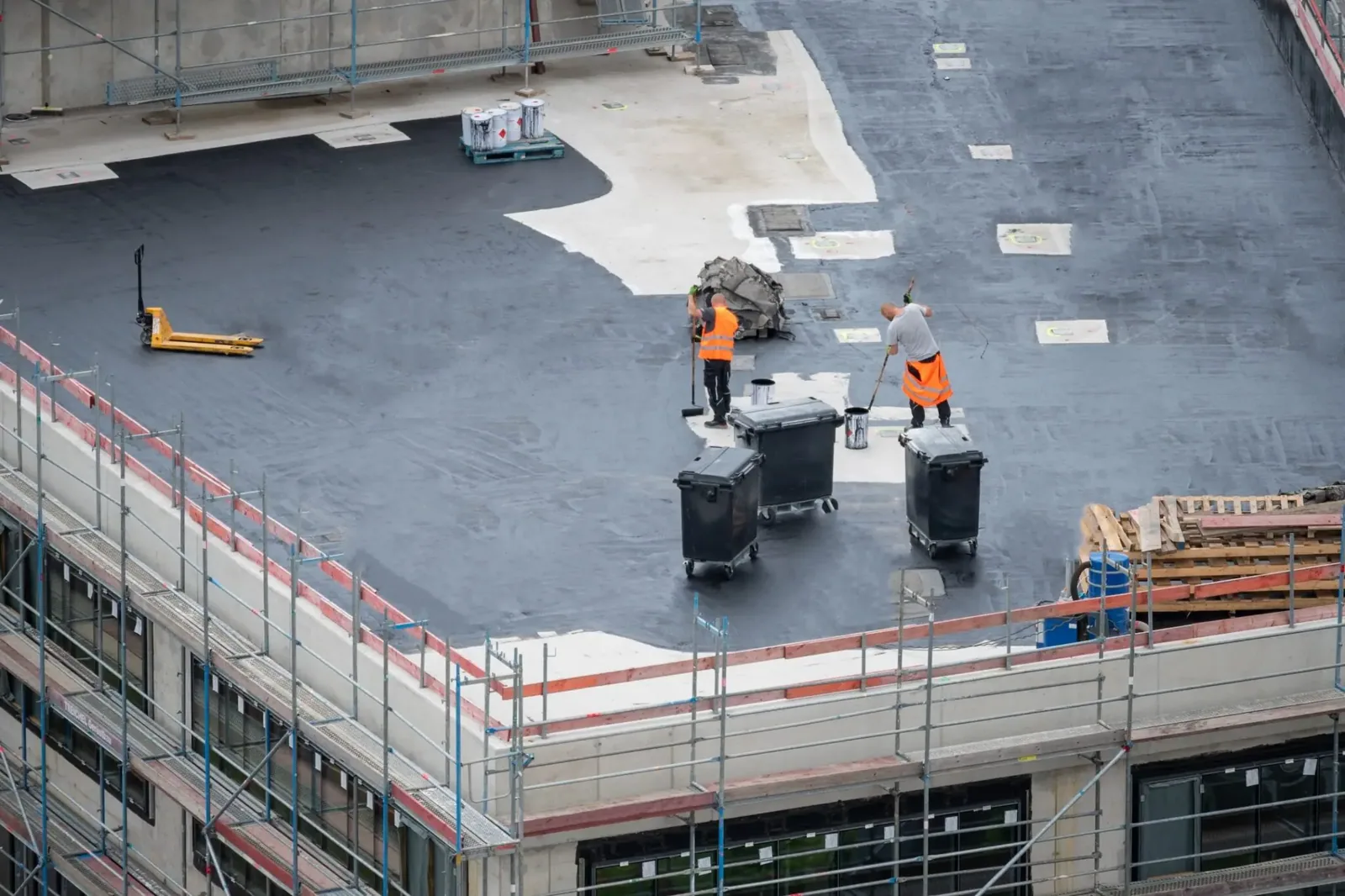
When a roof is opened, the exposed section must be secured before the crew leaves. We plan the daily removal limit, temporary dry-in, material handling, and interior protection in advance. If a repair is above food preparation, storage, or sales space, the site contact defines any additional controls and work periods. Occupied-building sequencing can keep the work zone limited and coordinate noisy tasks with deliveries and store operations.
Identify the Surface and Layers
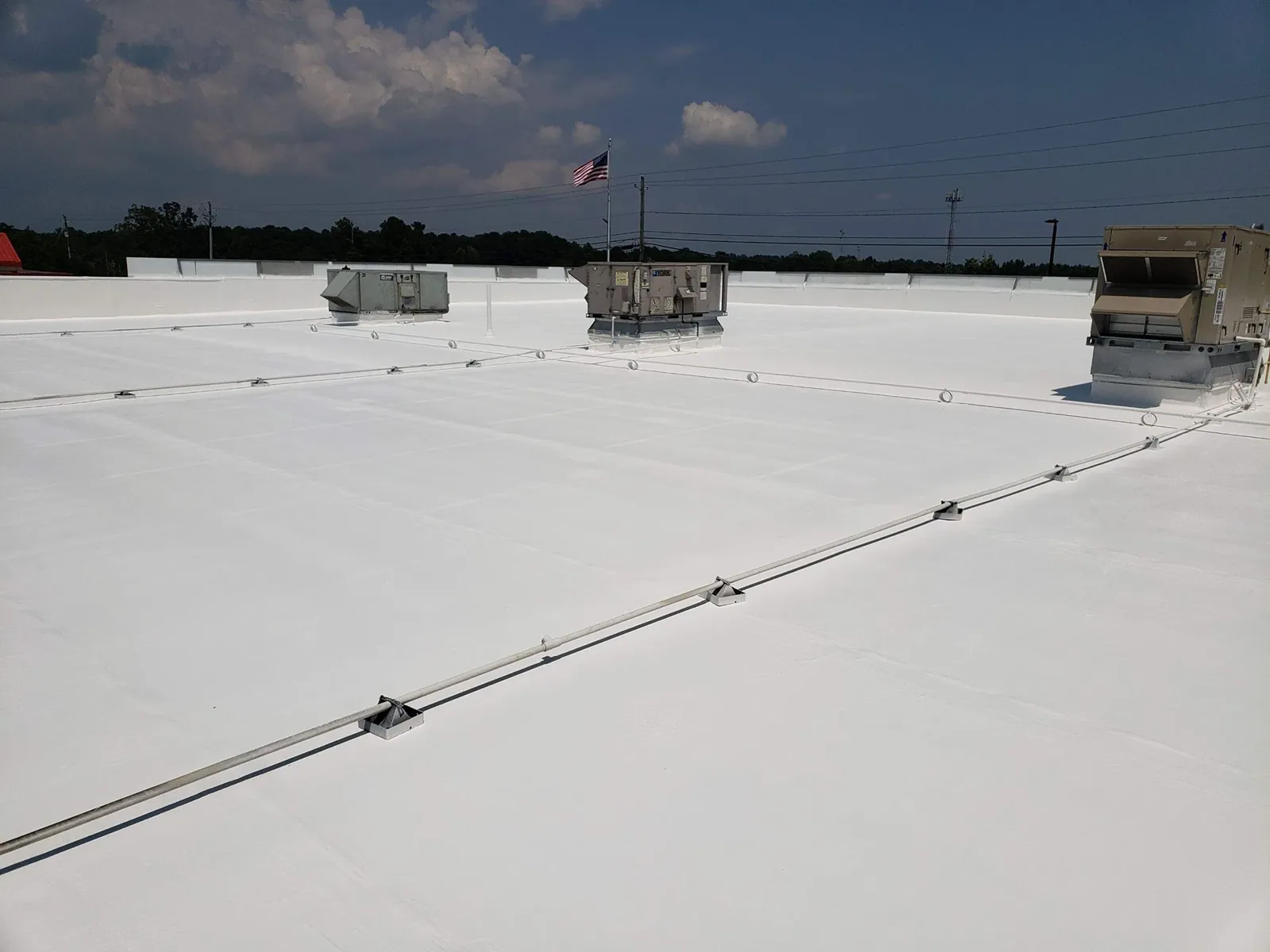
A shopping-district address does not show whether a roof is TPO, EPDM, modified bitumen, built-up roofing, or metal. We establish the system by checking how field sheets join, how material terminates at the perimeter, and how previous patches meet the surface. Records are compared with those observations. If layers are hidden, a small inspection opening may be needed to confirm the base before a repair method is selected.
Every repair needs material compatibility and a sound tie-in. A patch should bond to prepared, dry material; a metal flashing repair must retain attachment and allow movement. If wet insulation is present, sealing the top layer will not resolve it. A photo inspection record shows the observed material, repair history, and areas that remain unverified. It gives the owner a basis to choose between local maintenance, a larger repair, and replacement.
Keep the Water Route Open
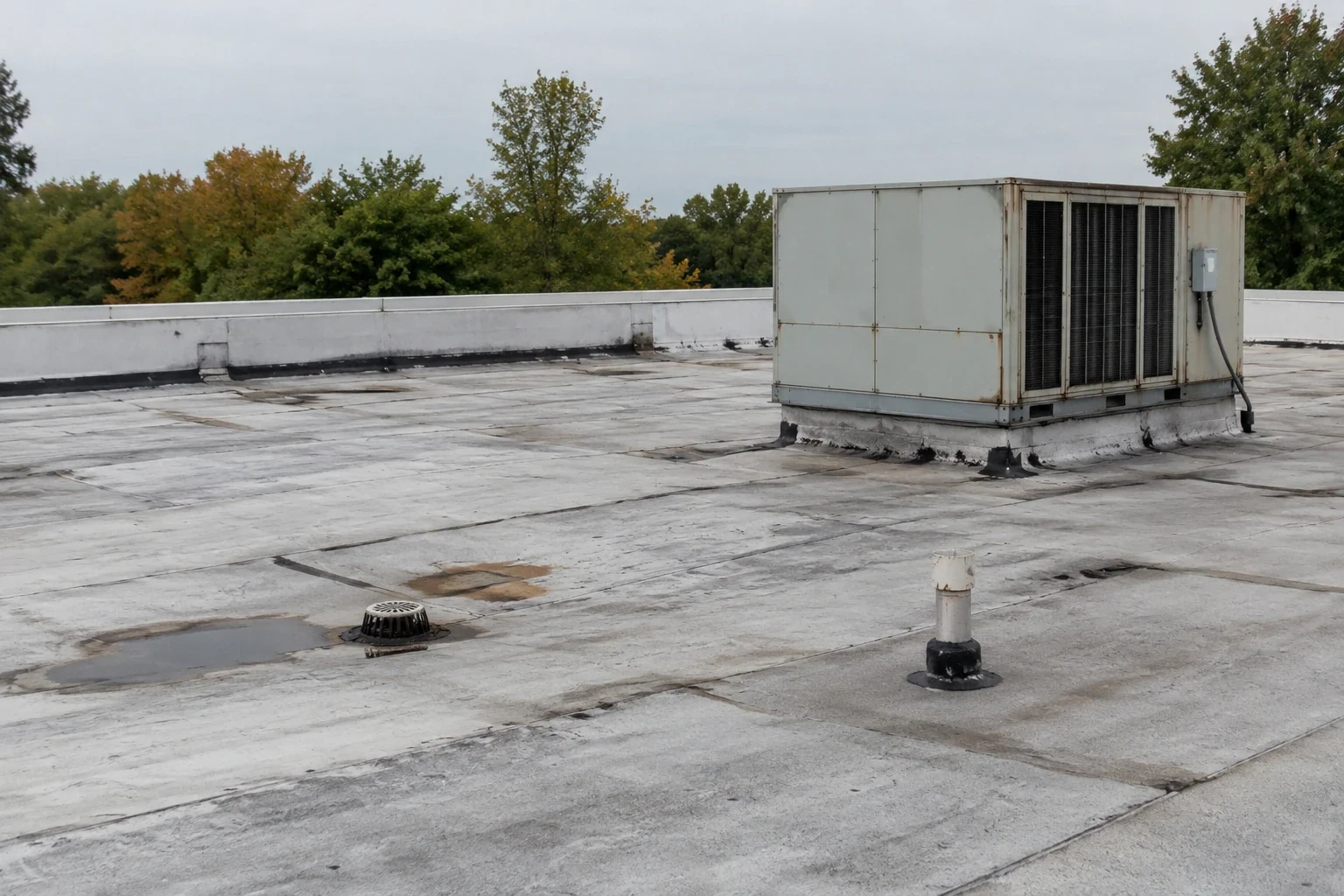
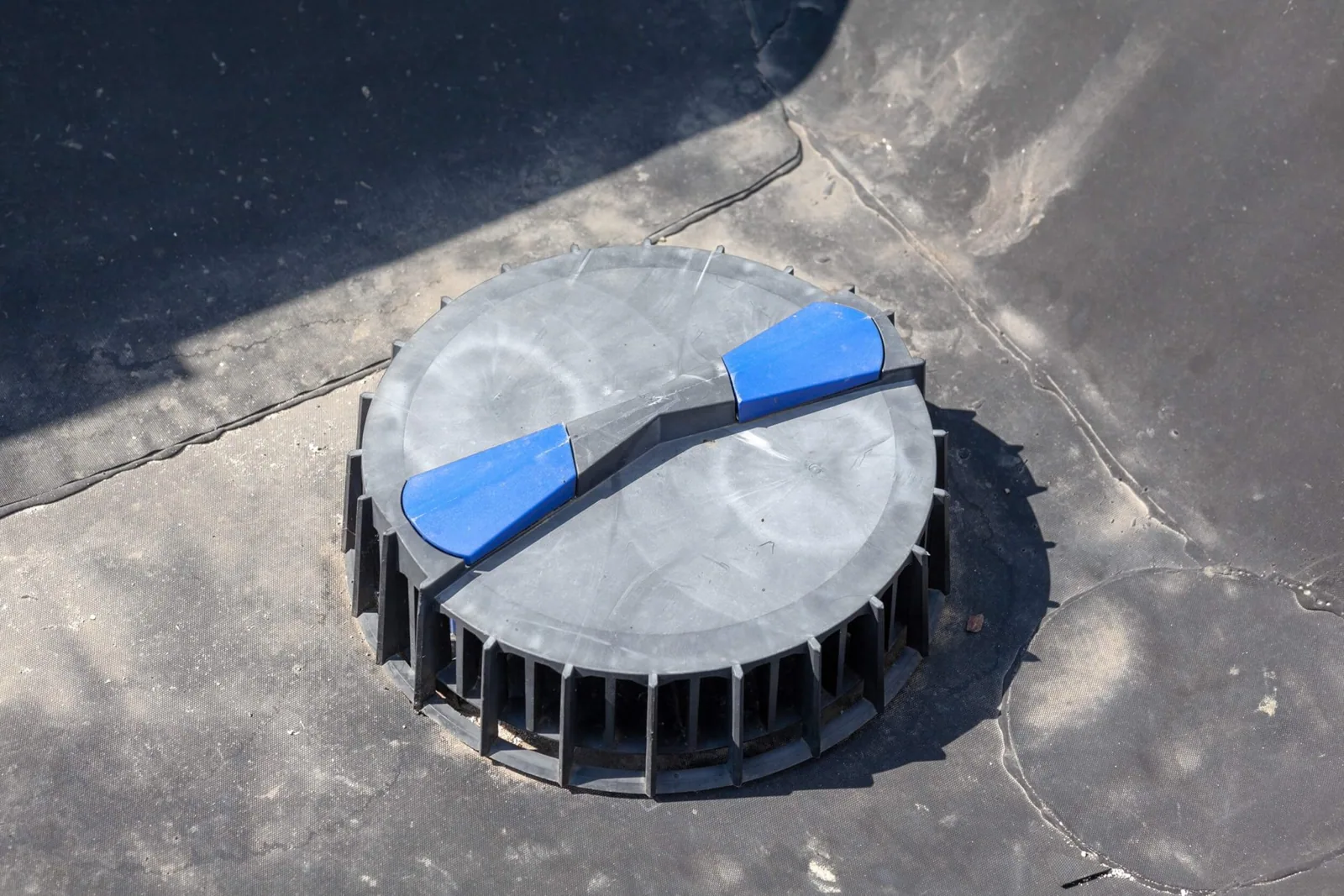
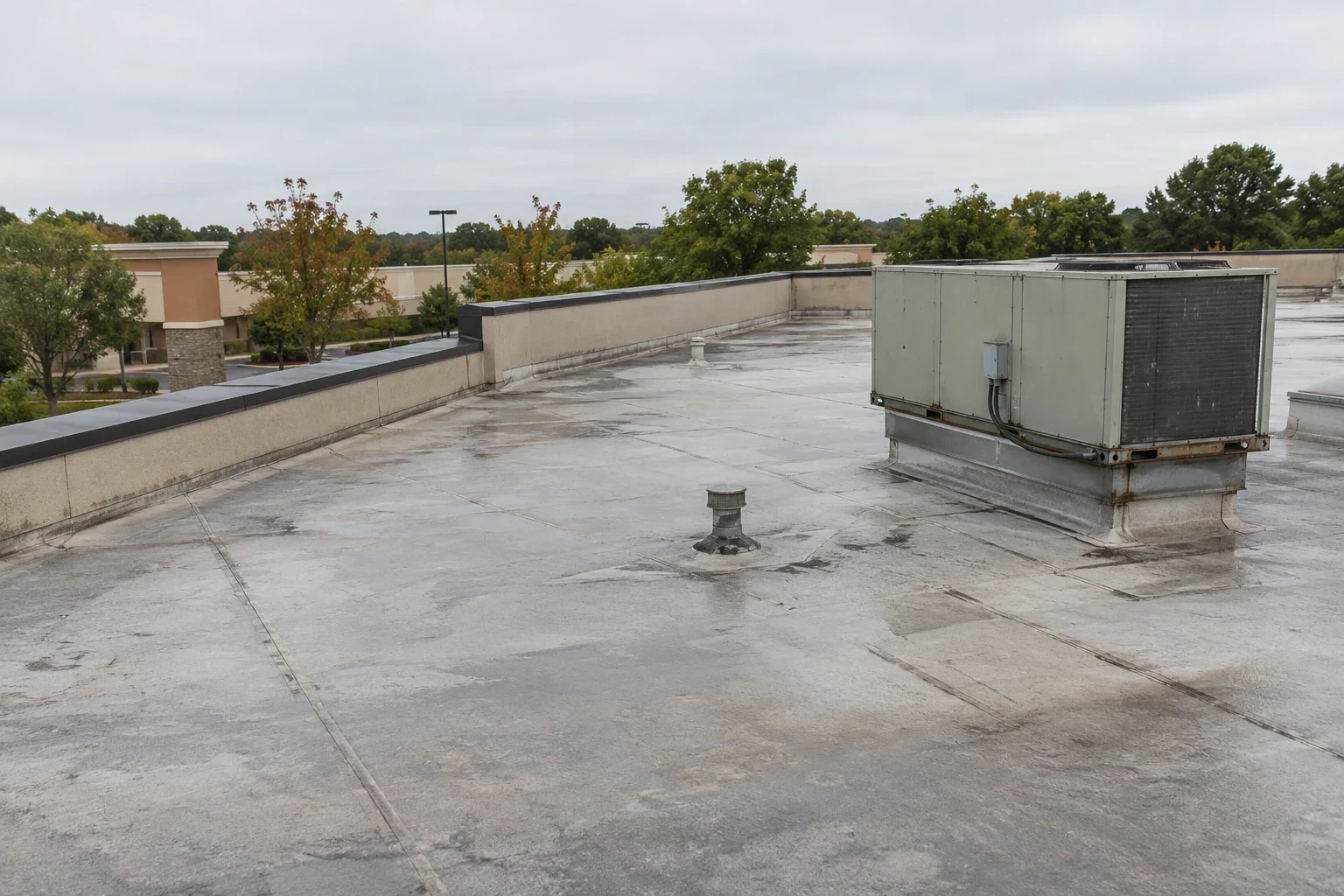
We trace water from the roof field to its drain, scupper, overflow, or discharge point. The review covers strainers, drain bowls, clamping rings, leaders, and the membrane around each outlet. We measure persistent ponding and inspect for a blocked connection, low slope, or deflected deck. A low spot can look like a drain problem while requiring a different correction, so we record both the footprint and the outlet condition.
If water appears indoors, the entry point may be uphill from the stain. We inspect the route through curbs, walls, seams, and old repairs. An infrared moisture survey can help select test locations where moisture may be trapped. A test cut confirms the finding. Drain and scupper work repairs a failed outlet detail when the surrounding roof remains sound. The scope states where flow is restored and what remains to be monitored.
Check Weather-Driven Damage
Quarter-size hail was observed at Centerpoint Medical Center in March 2017, while a separate observation east-northeast of Independence measured 1.75 inches. These events provide regional context; they do not establish roof damage anywhere in the Sterling Avenue retail area. We inspect the roof for punctures, open seams, and flashing damage, then apply materials under their specified surface and temperature limits.
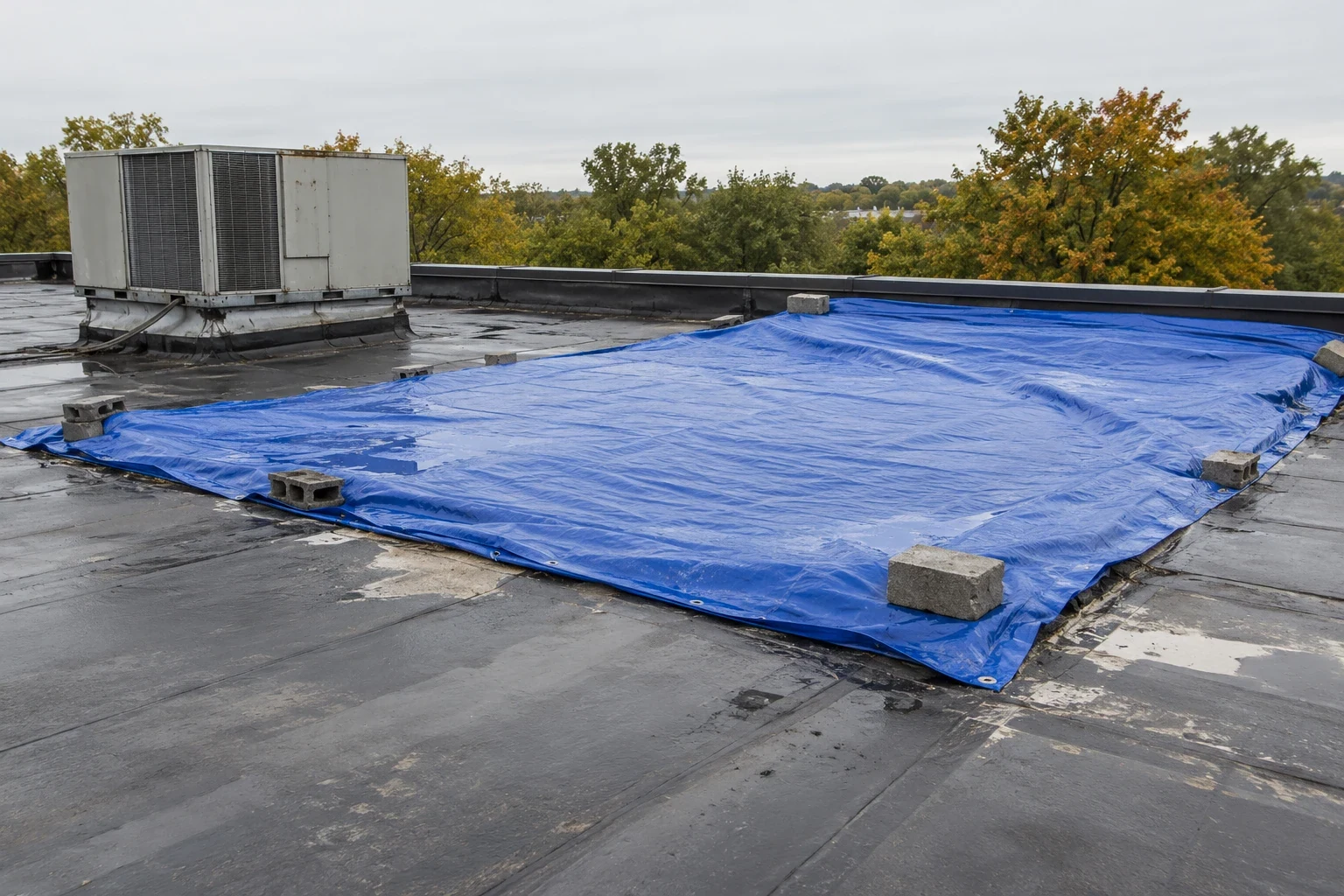
During repair, a secure dry-in detail is ready before tear-off begins. If weather shifts, the crew reduces the exposed area and checks temporary protection before leaving. After a storm, emergency protection can limit water entry while a full inspection follows. Emergency service is available around the clock, with permanent work defined after the roof source and repair boundary are confirmed. A follow-up visit verifies the detail and the adjacent seams.
Set a Repair Boundary
A small puncture over firm, dry insulation may need only a compatible patch. Failed flashing, repeated seam separation, broad moisture, or loose edge metal may call for a larger work area. We inspect and test to establish how far the defect extends. If tear-off reveals additional damage, we photograph it, measure the affected area, and request approval before expanding the work.
Replacement is considered when local repair no longer addresses the roof's broader condition. A recover can proceed only if layer count, deck capacity, drainage height, code, and attachment support it. The scope should identify material, edges, drains, curbs, interior protection, and access requirements. Localized repair and replacement construction both need a defined tie-in to sound material. We also document anything that remains outside the authorized area.
Maintain a Site-Specific File
A useful record connects each photo to a roof location and lists the material, observed failure, work completed, and any follow-up. That helps a manager schedule future maintenance around the actual assembly. If a mechanical contractor changes a curb or penetration later, the closeout record can show where the roof tie-in was completed and which details should be rechecked.
Sterling Avenue and Cedar Avenue frame the Fairmount commercial corridor along US 24. The broader retail area includes multiple properties with different roofs, access needs, and operating schedules. We also inspect Fairmount Business District and Raymore, Missouri. Each property receives a separate access plan and report. For this retail site, the closeout should note drains checked, temporary barriers removed, and any roof zone that still needs testing or authorization.
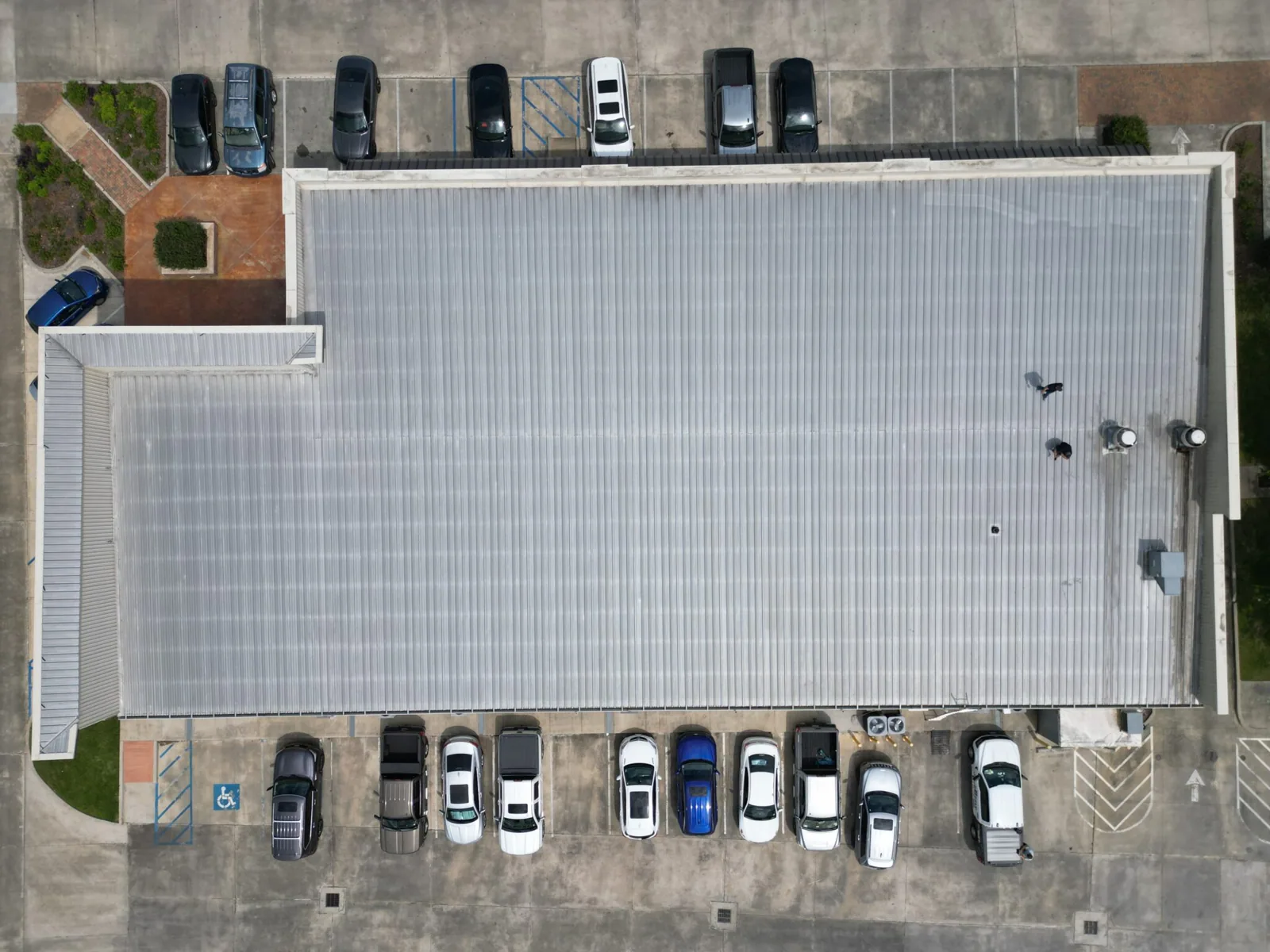
Retail activity in this part of the city makes access and staging worth resolving before work begins. The building manager can identify delivery periods and the customer routes that should remain clear. The roofer should confirm a safe material path, define where removed roofing will be contained, and state how each open section will be made watertight if the shift ends before installation is complete. At the roof level, note the actual assembly and each detail included in the repair; nearby stores may have entirely different construction. A site-specific photo record lets ownership compare later service calls without treating one property's findings as evidence about the rest of the shopping area.
Where a repair is close to a storefront edge, examine the wall flashing, coping, and membrane termination together. A surface patch alone may leave the path open if water can pass behind loose metal or a failed fastener line. Record which component was corrected and which remains outside the roofing scope. The owner can then route any wall, sign, or electrical work to the appropriate contractor before the permanent roof tie-in is considered complete. Marking that boundary is especially useful when a property has more than one tenant or service entrance.
Commercial Roofing Questions
Does the Fairmount plan show the roof at Sterling Apple Market?
No. It describes corridor planning and public improvements. We inspect the actual roof and confirm the system and condition at the site.
How do you keep deliveries moving during a roofing project?
The property contact confirms delivery windows and routes. We plan staging, lift placement, barriers, and material movement around those approved conditions.
Can a roof repair be scheduled without interrupting store operations?
Often, when the work zone, noise, interior protection, and weather closure are coordinated. We set those controls with the site representative before mobilization.
What if a leak affects a storage or sales area?
We protect the interior as needed, inspect the roof route above it, and document the source and repair limit. The visible stain alone does not locate the opening.