Review manufacturing plant roofs in Independence, MO with process penetrations, deck condition, attachment, and production phasing documented for the scope.
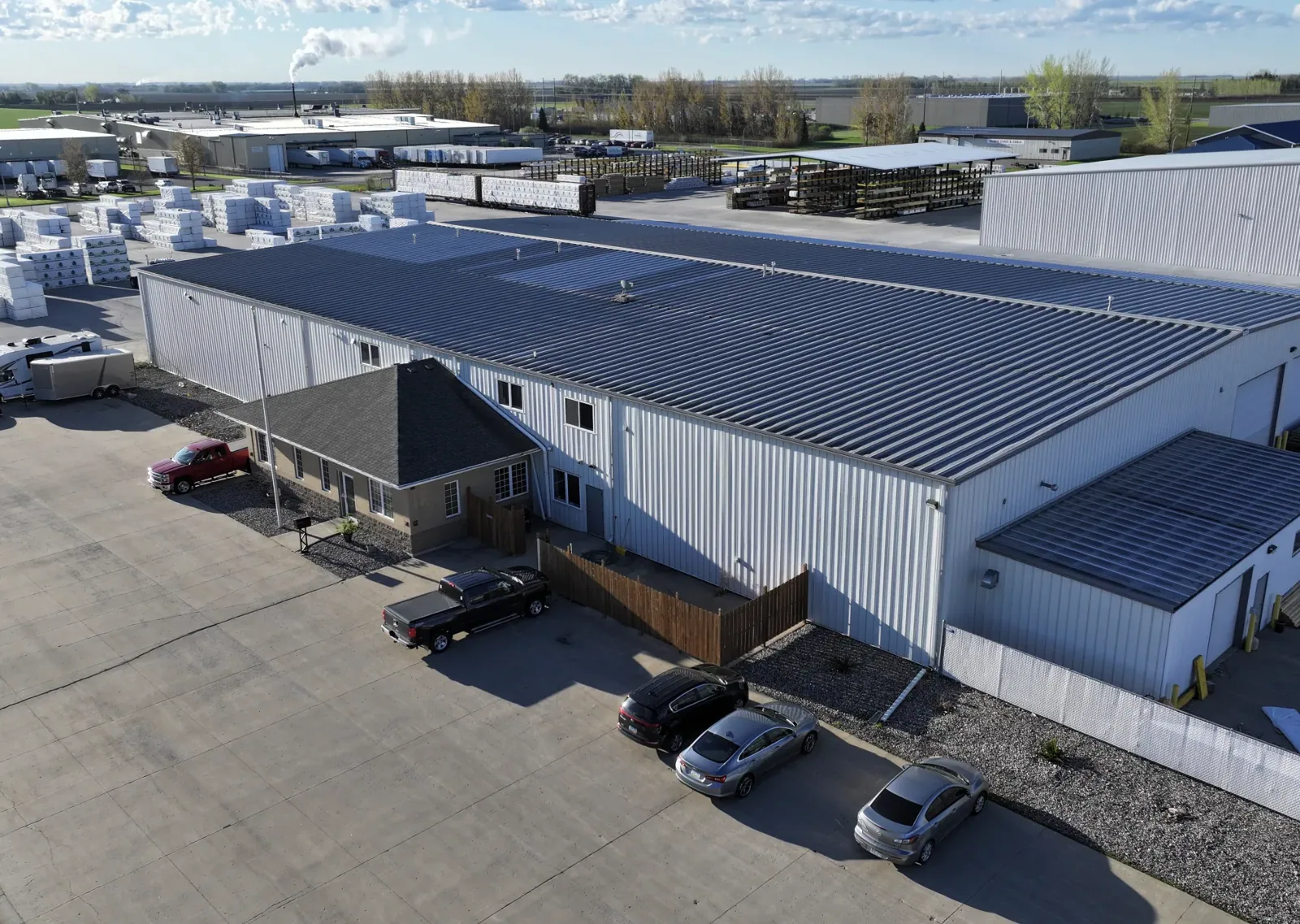
A manufacturing roof is part of the building's production envelope. Exhaust, process piping, make-up air, and equipment supports cross the membrane and create interfaces that need inspection. Independence has manufacturers including the Adams Dairy Parkway Corridor, Blue Springs, which makes folding cartons and formed paper cups, and the active production site at Buckner, Missouri. Their operations are local context, not evidence of roof conditions. We verify the assembly and its penetrations at the property, then coordinate repair limits with plant access and production needs.
Process Lines Create Roof Interfaces
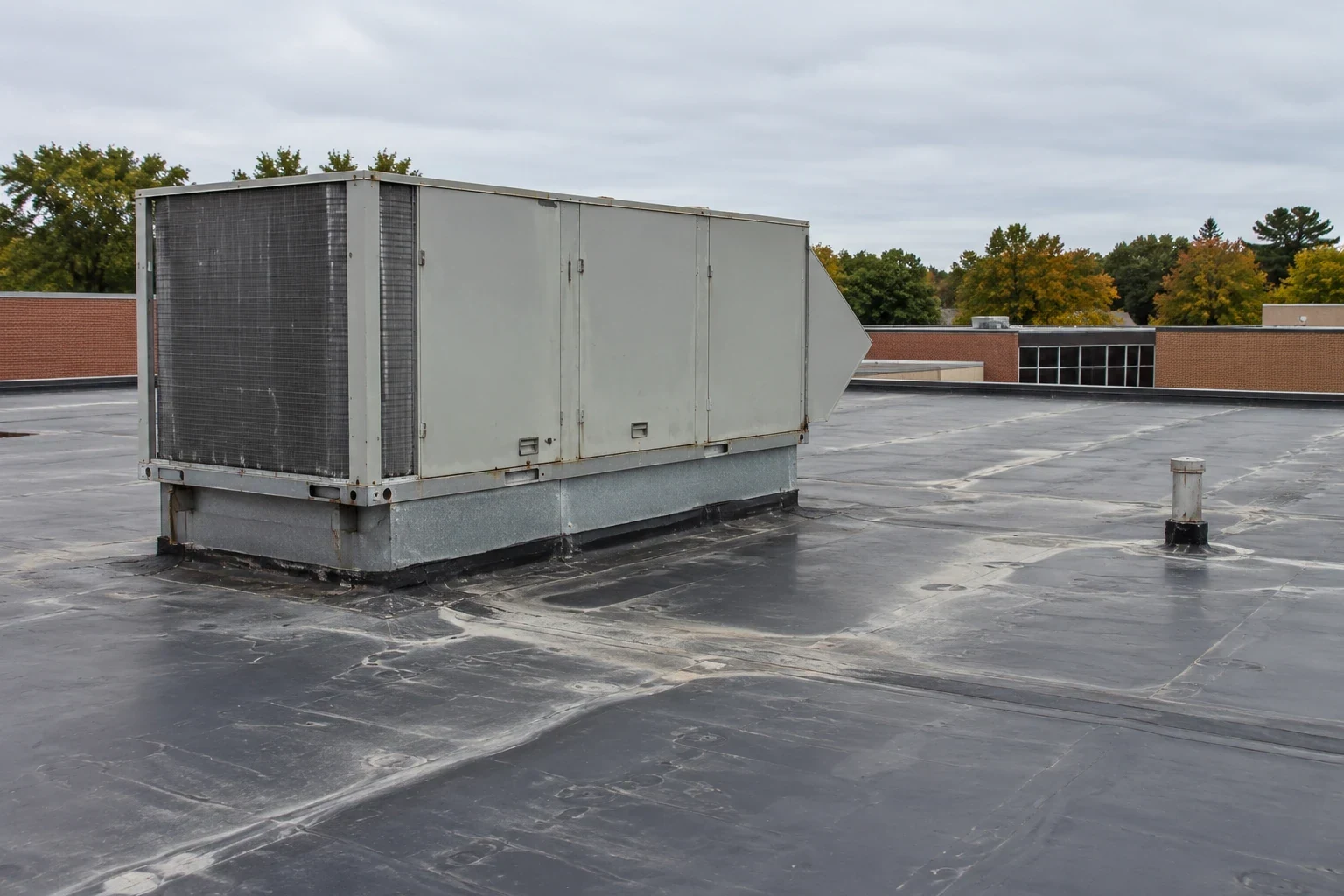
A roof walk starts by identifying how each process line crosses the roof plane. We record curbs, exhausts, pipes, cable supports, expansion joints, drains, and any routes technicians use. Each opening is checked for flashing condition and movement. A pipe that shifts with operation can fatigue a membrane boot; a curb with loose counterflashing can direct water into the insulation. The detail has to suit both the roof material and the movement at the equipment.
Production changes can leave abandoned supports and penetrations behind. We distinguish active equipment from unused curbs, then note which details need removal, closure, or protection during reroofing. A capped line is not automatically watertight. Its closure must connect to a stable substrate and preserve drainage around it. For new equipment, we locate the proposed support relative to seams and drains before work begins. Curb and support details are coordinated with the mechanical scope.
Substrate Condition Controls the Repair
The visible surface can conceal moisture or movement below. We identify the membrane and attachment, check cover board and insulation, and confirm deck condition at representative locations. Core cuts help show the layer sequence and whether insulation is wet or compressed. If deck corrosion, fastener withdrawal, or damage appears, the affected area is mapped before it is covered. Repairing the surface without resolving a weak substrate can leave the same failure mechanism beneath a new patch.
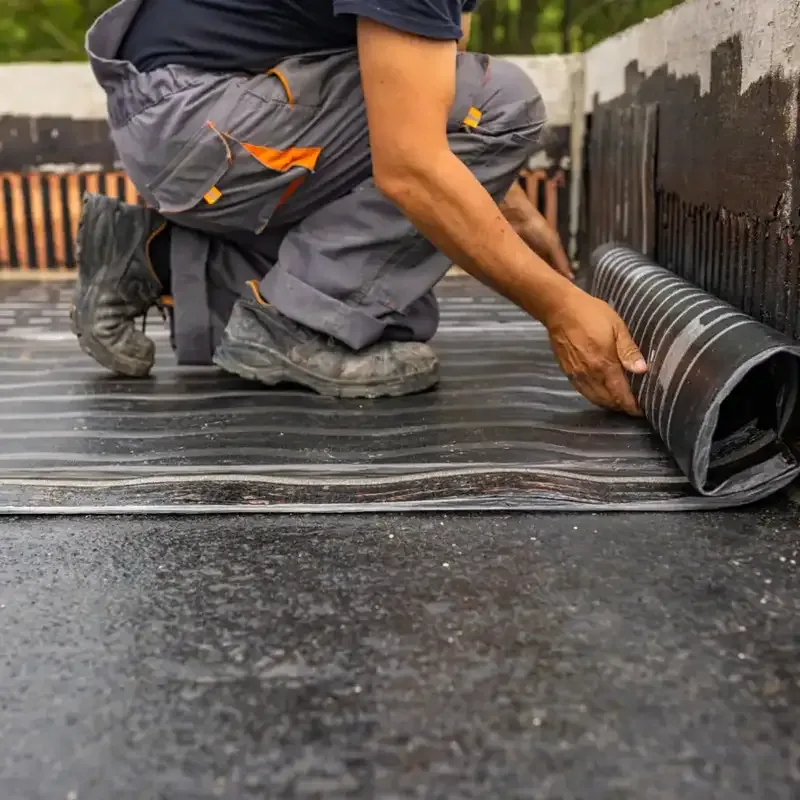
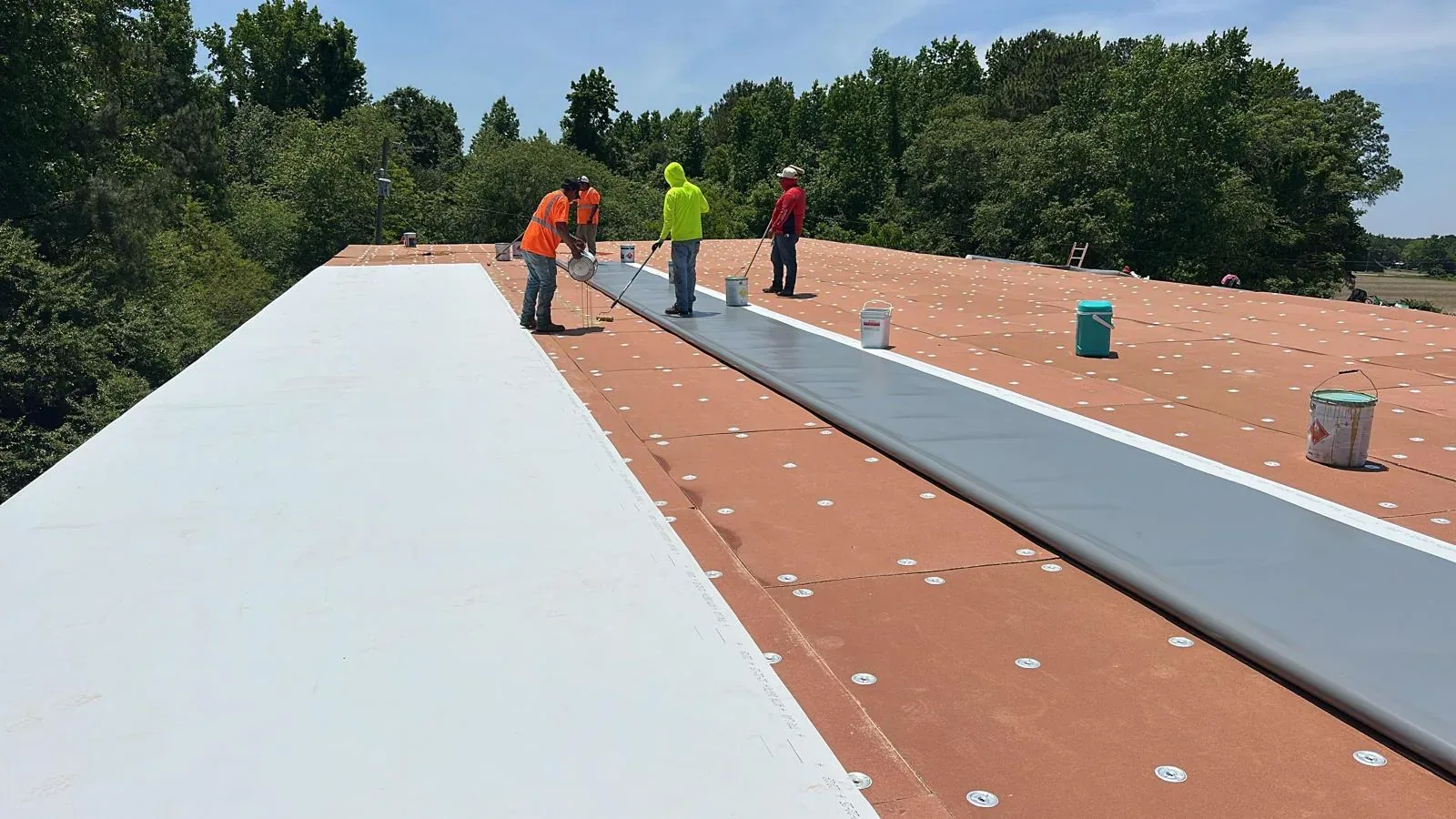
Plant roofs can also include different construction periods and repair layers. We compare the assembly at additions, old equipment bases, and transitions to vertical walls. Those changes are where the water path can jump from one material to another. A repair that bonds to the original membrane may not bond to a coating or an incompatible patch. We test the actual surface, prepare it, and choose a compatible detail. The same check matters when comparing modified-bitumen assemblies with thermoplastic membranes.
Attachment Preserves the Load Path
Mechanical attachment transfers wind force through fasteners into the deck. An adhered roof depends on bond quality and edge securement. A metal roof transfers force through panels, clips, and the supporting structure. We identify the existing method and inspect perimeter terminations before recommending changes. A loose edge, corroded fastener, or unsupported transition can interrupt the load path. If fastening is considered, the deck type and pullout condition matter more than a generic pattern.
For construction review, Independence provides its 2024 IBC and existing-building provisions with local amendment documents. The proposed assembly and alteration determine what the design professional must verify. We record the deck, insulation, and attachment assumptions so the project team can coordinate wind resistance and fire requirements with the roof detail. The roof plan should state attachment assumptions and the details that need review. It should also show how the scope handles rooftop equipment without limiting service access.
Local Cycling Stresses Interfaces
Kansas City's July 20 normal daily high is 89 degrees. That regional air temperature is not a measurement over a production line. We inspect metal edges, membrane laps, and sealant joints for movement visible in the assembly, then select details that retain adhesion.
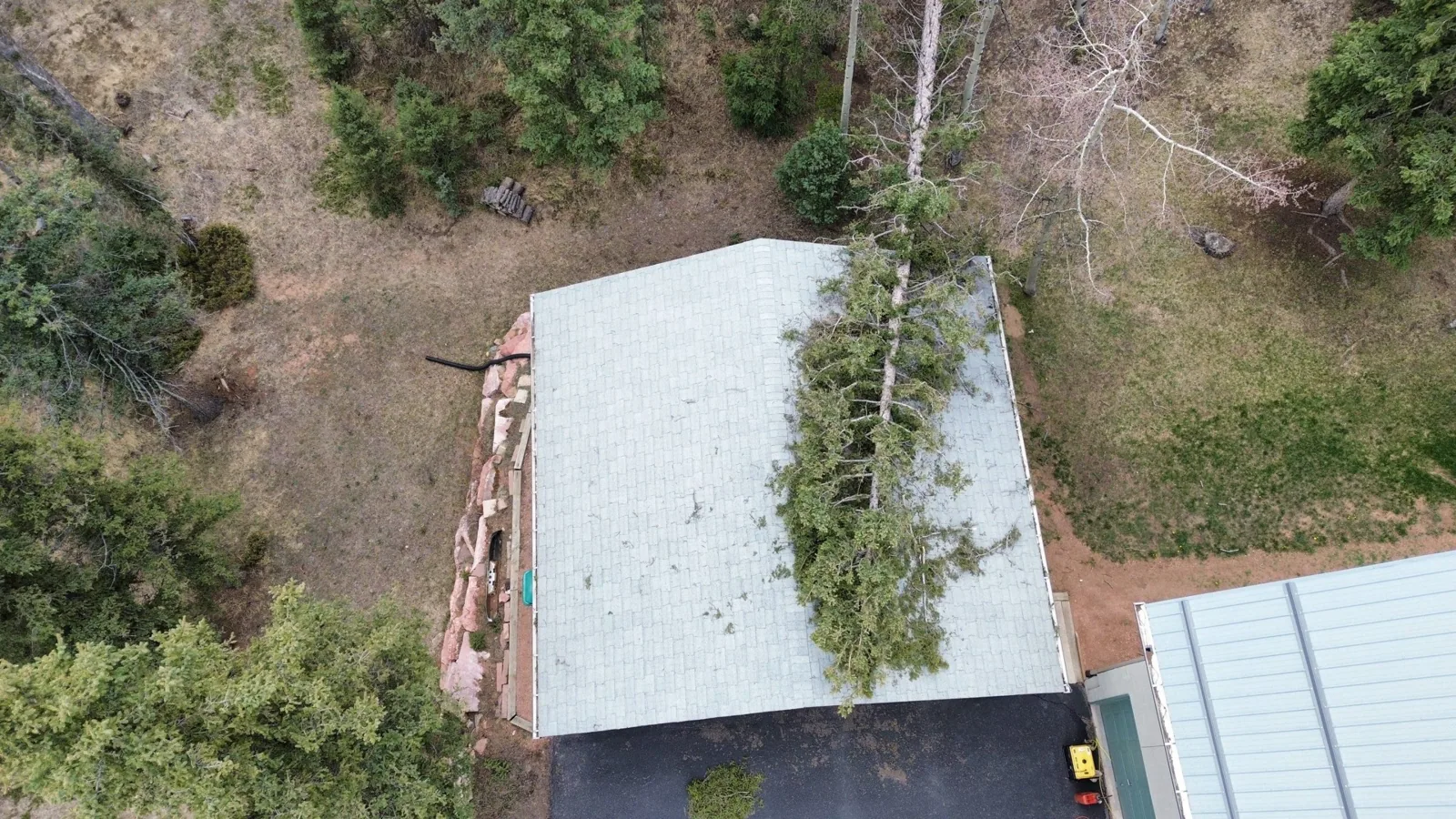
A plant roof also needs a post-storm check based on observed conditions. On June 8, 2022, a tornado near Buckner reached EF-2 intensity and observers recorded wind damage north-northwest of Independence. The report gives a regional event location, not evidence at a specific manufacturer. We photograph displaced edge pieces, open seams, or damage around roof openings when present. Wind damage documentation follows the physical findings.
Production Sets the Work Sequence
Removing an entire roof at once can expose too much area and disrupt plant access. We divide work into manageable phases, set a daily dry-in boundary, and plan how removed material leaves the site. The sequence accounts for roof access, lift placement, overhead protection, and any process ventilation that must remain active. We confirm shutoff and restart responsibilities with the facility team instead of assuming equipment can be moved during roofing work.
Heat from manufacturing processes, air discharge, and routine service traffic may affect local roof conditions, so we inspect the points where they meet the assembly. We do not infer temperature or contamination from an industry label. If the owner reports a condition, we compare it with field evidence and define any cleaning or compatibility test needed. Warehouse roof planning and cold-storage work share access questions, but their interior conditions and details should be evaluated separately.
We provide photos, measured repair locations, and a sequence the project team can use. If removal reveals a different deck or additional wet insulation, we pause at a secure limit, document the finding, and update the quantity and schedule. That keeps the construction decision tied to the substrate actually present rather than a bid assumption.
Commercial Roofing Questions
Can roofing continue while production stays active?
The phases can be set around operating areas when the facility provides a workable access and protection plan. We limit open roof area, agree on equipment restrictions, and establish the end-of-shift dry-in condition. Some phases may need a planned outage if equipment or process interfaces prevent safe separation.
How do you handle unused curbs and penetrations?
We confirm whether the equipment is abandoned, identify the curb and deck condition, and decide whether removal or a permanent closure gives the sounder assembly. The closure must tie into a stable substrate and shed water. A loose cap or sealant bead alone is not a complete roof detail.
What roof information should be available before a plant expansion?
Existing system type, deck, insulation, drainage, attachment, and the location of active penetrations give the design team a useful starting record. We also mark repairs and transitions that may affect the tie-in. The proposed structure and equipment loads still need project-specific review.
When does a patch stop being the right repair?
A patch has a narrow role when the nearby membrane is stable and the substrate is dry and bonded. Widespread moisture, repeated open seams, attachment loss, or deck deterioration point to a larger boundary. We show the evidence and compare the repair with recover or replacement options. A patch is less useful when leaks recur at unrelated details, repairs overlap across a large field, or test openings show moisture extending beyond the visible defect. At a plant, that decision should include production exposure below the work, equipment movement, and the point where roof access is available. We compare the repair boundary with the condition of adjacent membrane and substrate, then separate immediate stabilization from the larger repair or replacement scope. The owner should compare the repair allowance with a mapped condition survey, not with one isolated leak ticket. Repeated work in the same zone deserves a larger inspection boundary, including penetrations and drains that share the same water path. If repairs are accumulating, compare their locations on a roof map. A cluster along one expansion joint suggests a different scope from defects spread across the entire field. That comparison helps owners decide whether to isolate one transition, investigate a broader assembly, or schedule capital replacement around production.