Get around-the-clock commercial roof response in Independence, MO for active leaks, wind openings, and storm damage, with temporary dry-in and repair planning.
A roof opening during a storm can threaten inventory, equipment, and occupied rooms before a permanent repair is possible. For an urgent roof opening, the first objective is to limit water entry with a safe temporary dry-in, tarp, or other protective measure. At a property near North Kansas City, Missouri or along US 24, the response begins with roof access, active hazards, and where water is entering the building.
Immediate Exposure
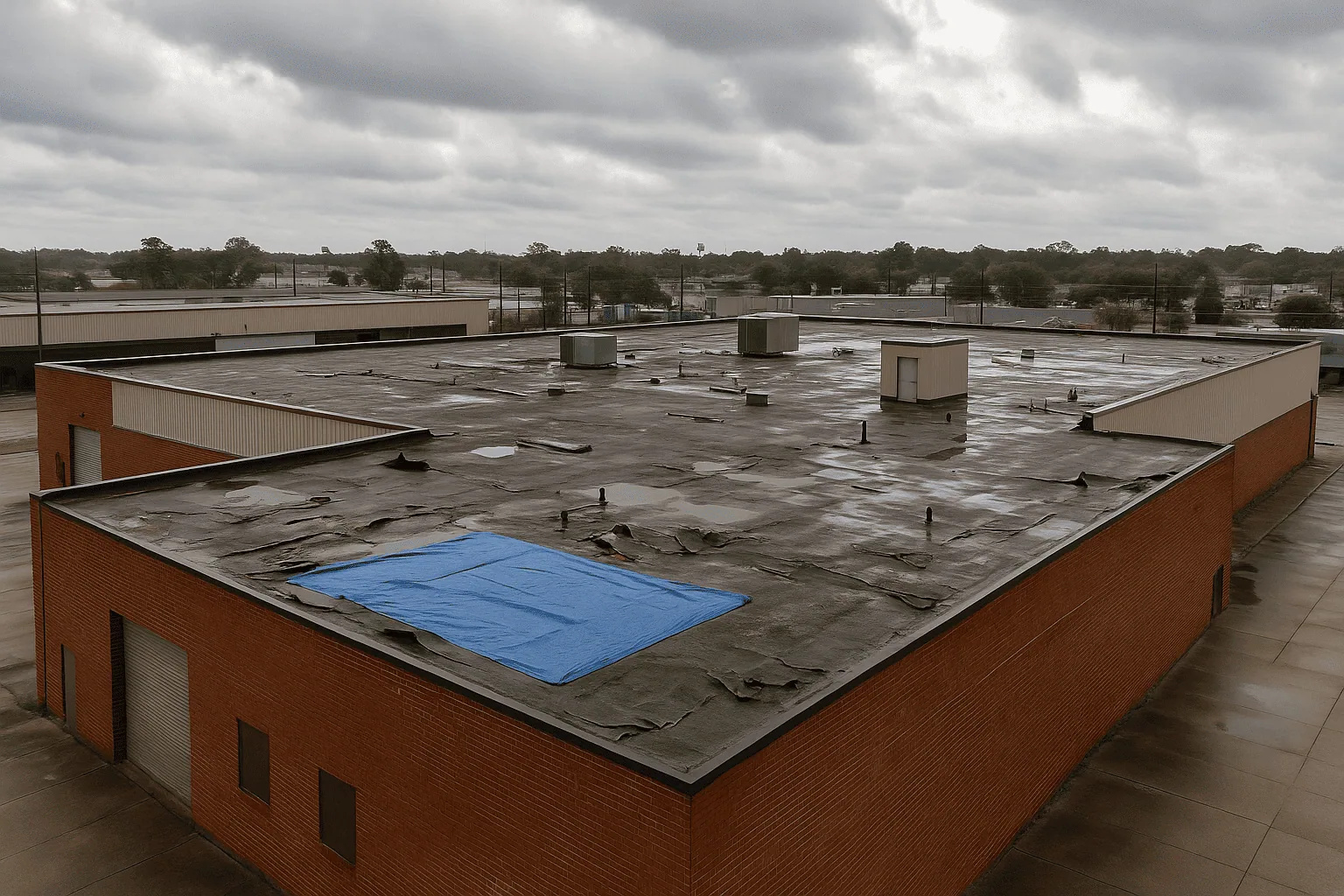
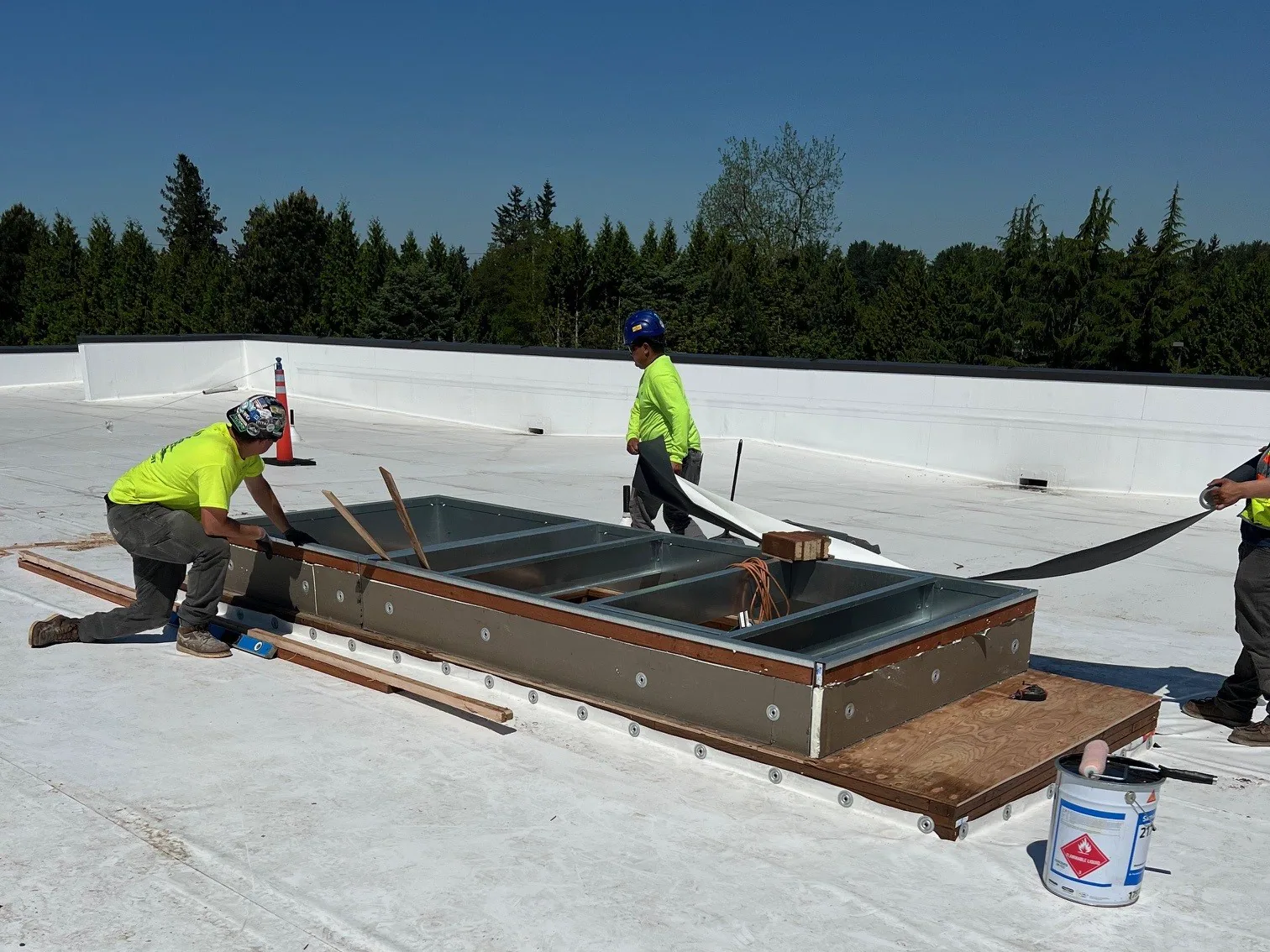
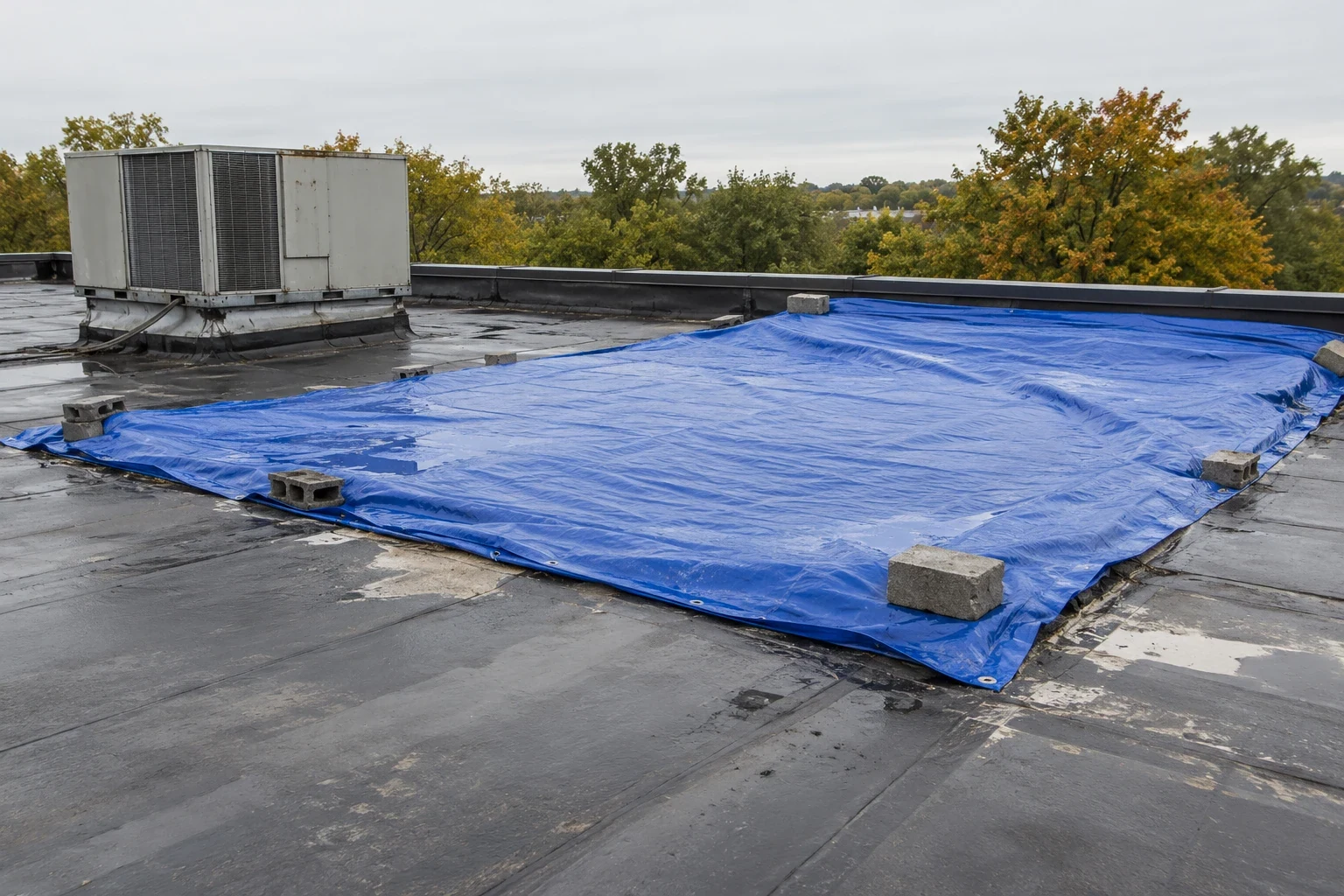
The first visit is about stabilizing the condition. We determine whether water is still entering, whether materials or power are exposed, and what parts of the roof can be reached safely. Temporary protection may include covering an opening, securing a loose section, or redirecting water away from a vulnerable interior area. A tarp must be secured against wind and arranged so it does not dam water behind it. The method follows the roof geometry and current conditions.
We ask the site contact to identify affected rooms, equipment, and access limits. Photos from inside can help direct the first inspection, but they do not replace roof review. If the interior is unsafe or the roof cannot be accessed safely, the response may begin with precautions below and return when conditions allow. Safety and weather determine what can be done on the first visit.
Independence serves manufacturing, healthcare, retail, education, and civic uses. Emergency work at a medical campus or a production facility may require clear routes and coordination with building operations. Commercial response near Grandview, Missouri or Buckner, Missouri begins with the same field checks: confirm the affected roof area, the safe access route, and the site's operating limits. We confirm who controls roof access before setting the work boundary.
Roof Opening
After immediate protection, we inspect the damaged area and surrounding roof details. Wind can lift perimeter material or pull at a transition. Hail can bruise a membrane or damage a piece of flashing. A fallen branch or displaced rooftop component can puncture the surface. We check the membrane, seams, edges, penetrations, drains, and equipment curbs, then trace the path water could have followed below.
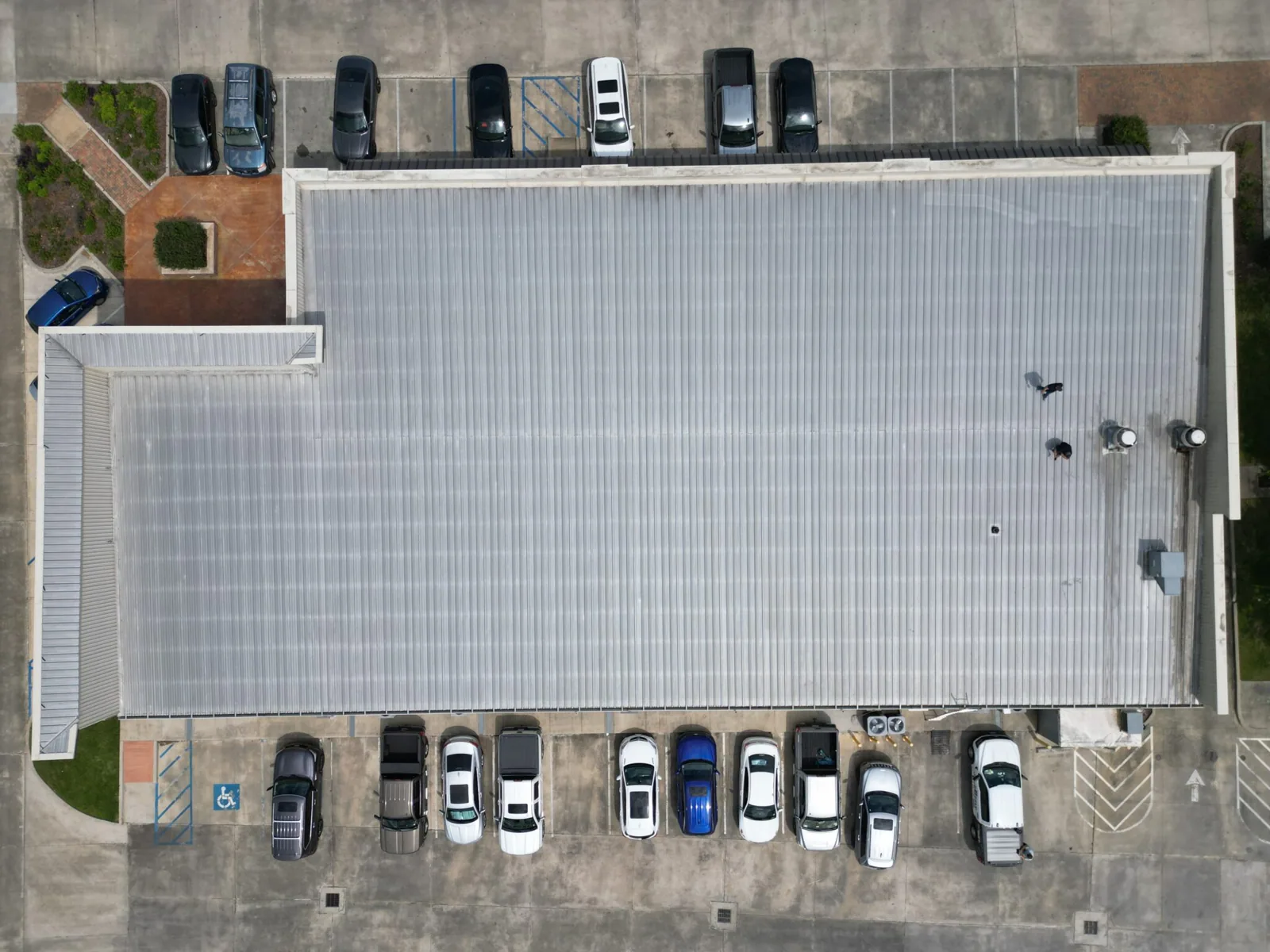
The visible opening may not be the only failure. We look for stretched attachment, loose metal, separated flashing, wet insulation, and displaced debris. On a low-slope roof, water can travel along deck flutes or under insulation. On a metal roof, it can enter a side lap, fastener, ridge, or penetration detail. The inspection records observable damage and distinguishes it from areas that still need testing once weather clears.
An EF-2 tornado crossed Jackson County near Buckner on June 8, 2022, with wind damage observed one mile north-northwest of Independence. That event gives the market a known severe-weather reference, but it does not establish damage at a particular building. We inspect the actual property and use wind indicators there to set the repair limits. A storm damage repair plan can follow after temporary water control.
Temporary Protection
A temporary cover protects the building while a permanent scope is prepared. We record where it begins and ends, how it is attached, and what roof details remain exposed. Temporary materials are not a replacement for compatible membrane flashing. If wind changes the cover or water begins to pool beside it, the protection may need adjustment. The site contact should know that a temporary measure has a defined purpose and requires follow-up inspection.
We avoid hiding a broader moisture condition. When access and weather permit, we check the surrounding insulation and deck. Moisture mapping or core samples can show whether water entered beyond the opening. If wet material remains under a permanent patch, it can affect adhesion, attachment, and the assembly's drying behavior. The next work step depends on what the roof reveals after it is safe to inspect.
When the membrane is repairable, we use a permanent patch or flashing detail suited to its chemistry. A metal edge may need reattachment or replacement. A drain issue may need clearing or rebuilding along with the opening. For a roof recover or replacement discussion, we review the entire assembly instead of converting an emergency tarp into a long-term roof system.
Local Weather Conditions
Independence sees winter freezing as well as summer heat. Metro station normals place January lows near 20 degrees and July highs near 89. Emergency materials must suit the roof temperature and surface condition on arrival. Adhesives, sealants, and membrane welds have application limits; a cold or wet substrate can change what is workable that night.
Centerpoint received quarter-size hail during the March 2017 outbreak; a separate observation east-northeast of Independence measured stones at 1.75 inches. After hail, we inspect for punctures, fractured coating, displaced flashing, and water entry. Impact marks alone do not establish a leak, and a storm report is not a damage finding for every nearby building.
Work logistics matter during a regional event. Access constraints vary by property and weather. We confirm the site contact, safe parking, roof access, and operating restrictions before mobilizing. If power, structural stability, or falling material creates a hazard, those issues need control before roof work proceeds.
Permanent Repair
Once the weather clears and the roof can be examined, we remove or open temporary protection as needed and inspect underneath. We identify the permanent repair material, preparation, and tie-in points. If damaged insulation or deck is present, the scope includes restoring the assembly instead of covering the defect. Photos record the original opening, the temporary control, and the completed work.
Timing depends on weather, access, material compatibility, and whether the damage extends under the membrane. A small opening in a sound roof may be completed quickly after conditions improve. A wider area with displaced insulation or damaged perimeter metal needs more preparation and may require a phased repair. We explain the findings and the work boundary so the property contact can coordinate interior cleanup separately.
For active leaking, leak tracing identifies the water route. A complete roof inspection can check nearby conditions after a storm. Owners who need a record for insurers can request claim documentation with photos and observed conditions. If the incident shows broad system failure, we compare planned repair with replacement based on the assembly evidence.
Commercial Roofing Questions
What should I do if a roof opening occurs outside business hours?
Report the building address, active water entry, affected rooms, roof access instructions, and immediate hazards. Response timing and safe roof access depend on conditions at the site.
Will a tarp permanently repair the roof?
No. A tarp or dry-in is temporary protection that limits exposure until the roof can be inspected and repaired with compatible materials. We document the cover and schedule the permanent work.
Can the crew work during lightning or high winds?
Roof access depends on safe conditions. Lightning, wind, wet surfaces, and unstable materials can make work unsafe, so immediate steps may focus on protecting the interior until roof access is possible.
What information should I provide during the call?
Give the building address, affected rooms, current water entry, roof access instructions, and any electrical or structural hazard. Photos from a safe interior location can help guide the response.
Do you handle the permanent repair after the emergency visit?
Yes. After temporary protection, we inspect the opening and surrounding assembly, then define compatible permanent repairs. If moisture or deck damage extends beyond it, we document that added condition.