Repair wind damage on commercial roofs in Independence, MO with attachment checks, water-path tracing, temporary protection, and documented scope decisions.
Loose edge metal, lifted membrane, and a new ceiling mark can follow the same wind event, but they do not prove one continuous failure. The first task is to map the roof zones and identify where attachment or a transition changed. Independence has commercial buildings along Noland Road and the US 24 corridor, with different edges, parapets, and equipment layouts. A repair plan starts with the assembly at the affected building, not a weather label. We secure openings, photograph visible movement, and trace the water path before setting the permanent repair boundary.
Locate the First Separation
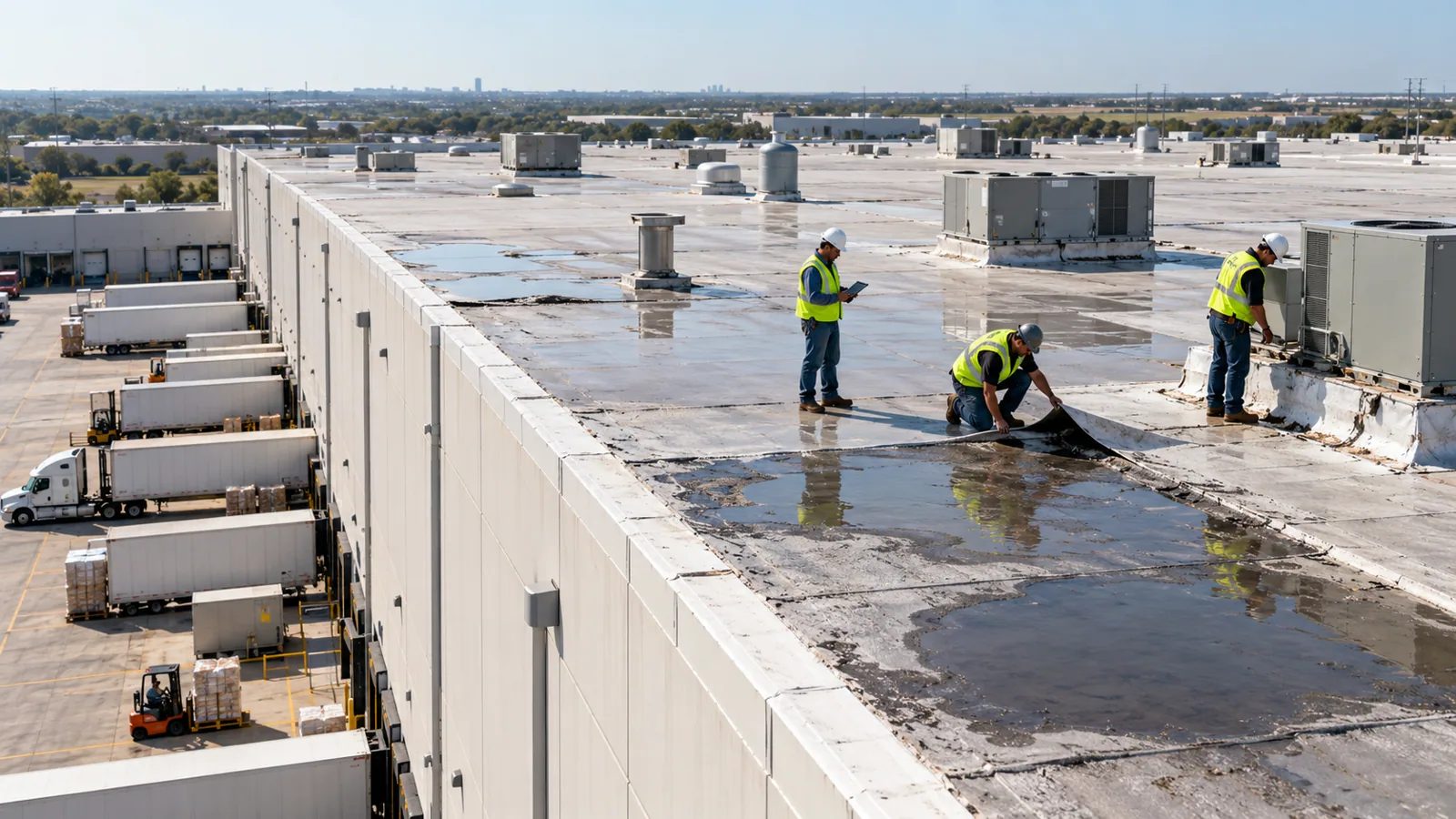
Wind pressure changes across a roof. Perimeters, corners, rooftop equipment, and changes in height can see different forces from the field membrane. A lifted edge can expose insulation or let water travel below an otherwise intact surface. We check membrane termination, coping, fascia, fastener lines, seams, and the substrate holding each component. The movement pattern matters. A short release at one termination calls for a different repair than repeated attachment loss across several roof areas.
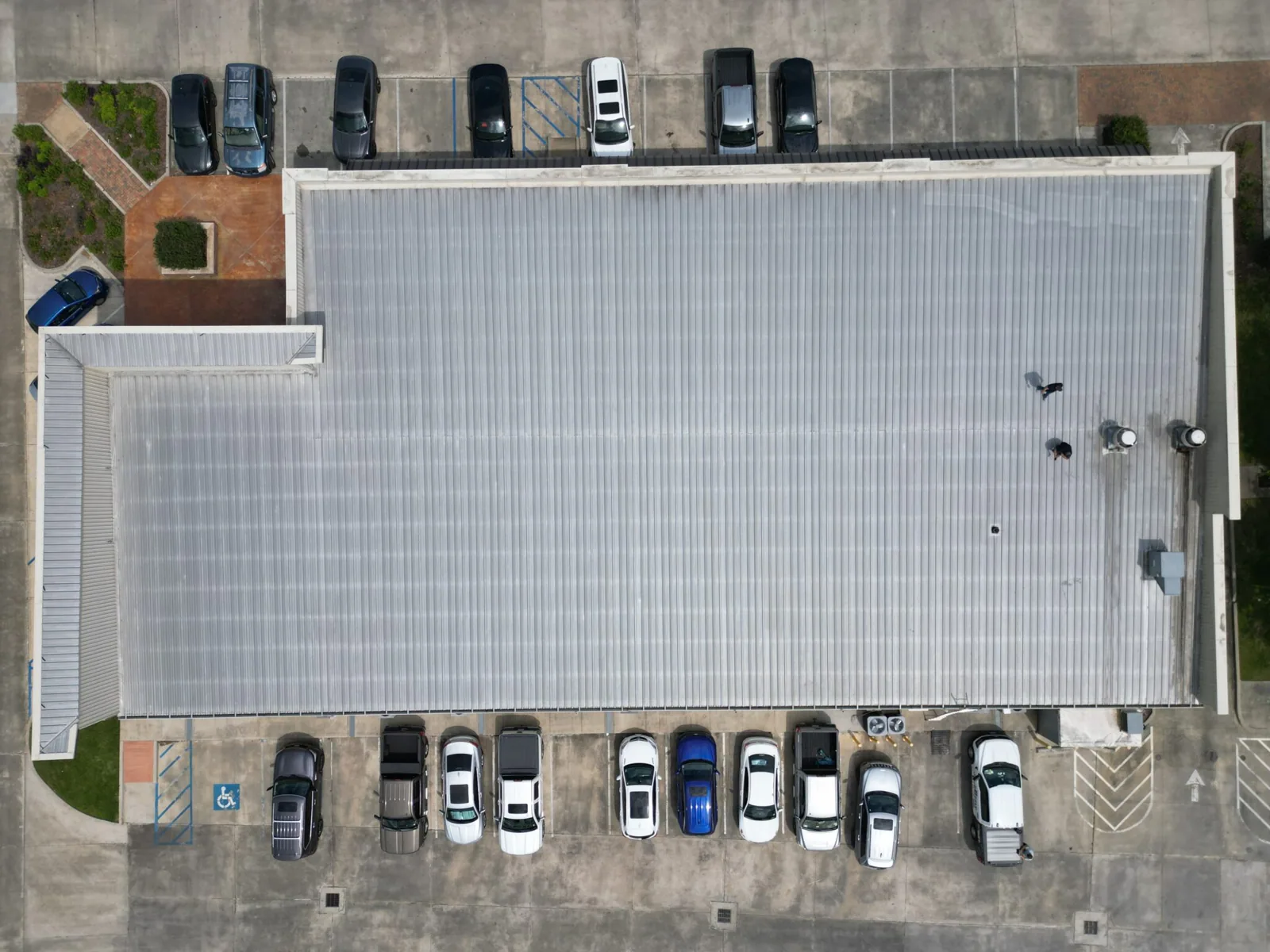
At an occupied property near Independence Center or Eastgate Commerce Center, the work map should identify access points, operating areas, and temporary protection limits. Those places show the city's retail and commercial mix; they do not establish the roof construction at a particular address. We record actual field conditions by elevation and roof zone. A roof inspection can document the assembly before repair scope is priced.
Check Attachment and Transitions
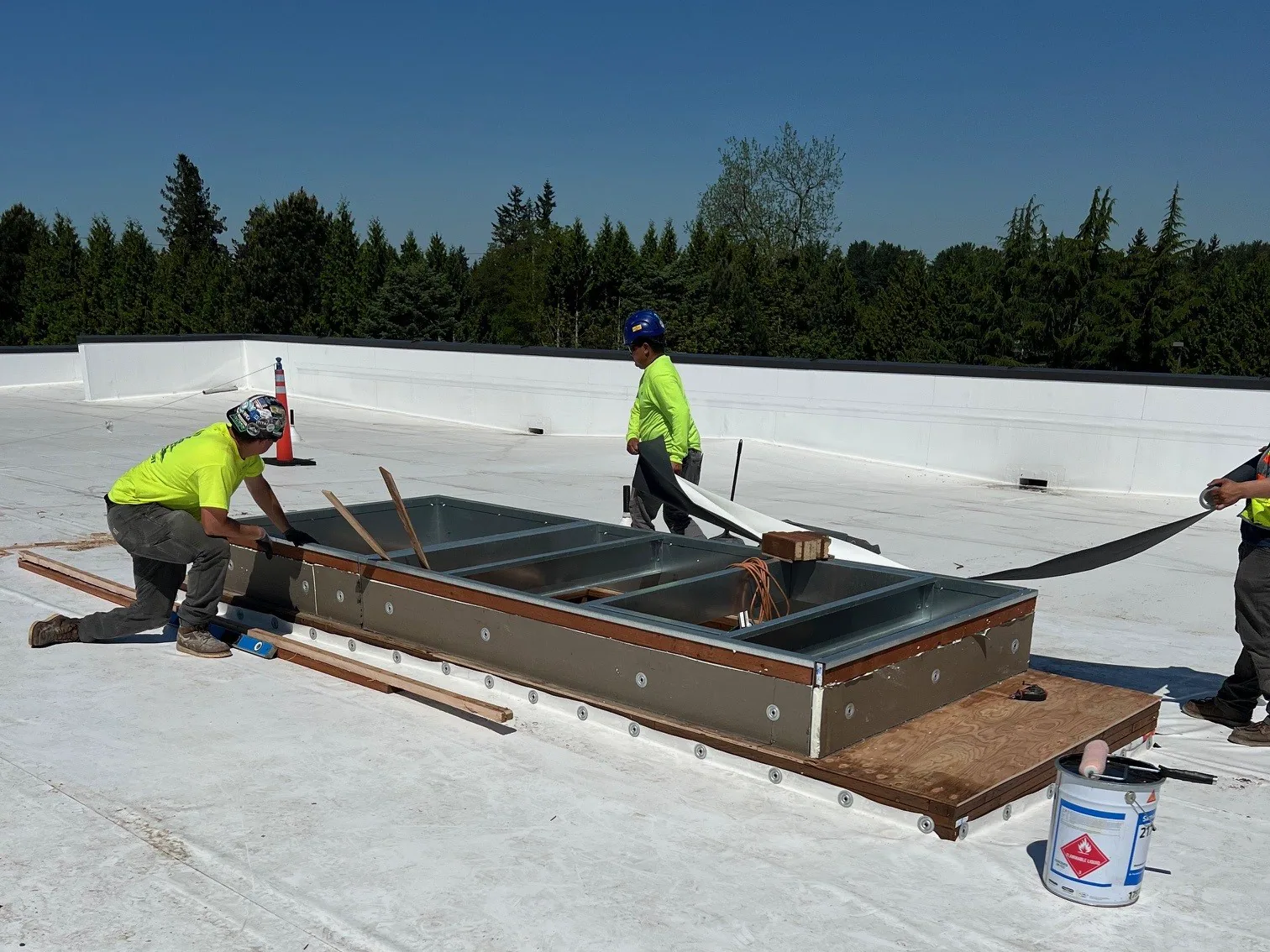
Start at corners and perimeter edges, then compare them with the field of the roof. Look for pulled fasteners, open plates, displaced edge metal, split sealant, wrinkles that terminate at a seam, and membrane that has lost bond. Verify whether the substrate is firm and dry where the repair will land. If the roof has multiple layers, determine which layer moved and whether the separation reaches the deck. A surface patch cannot restore a loose substrate or a failed load path.
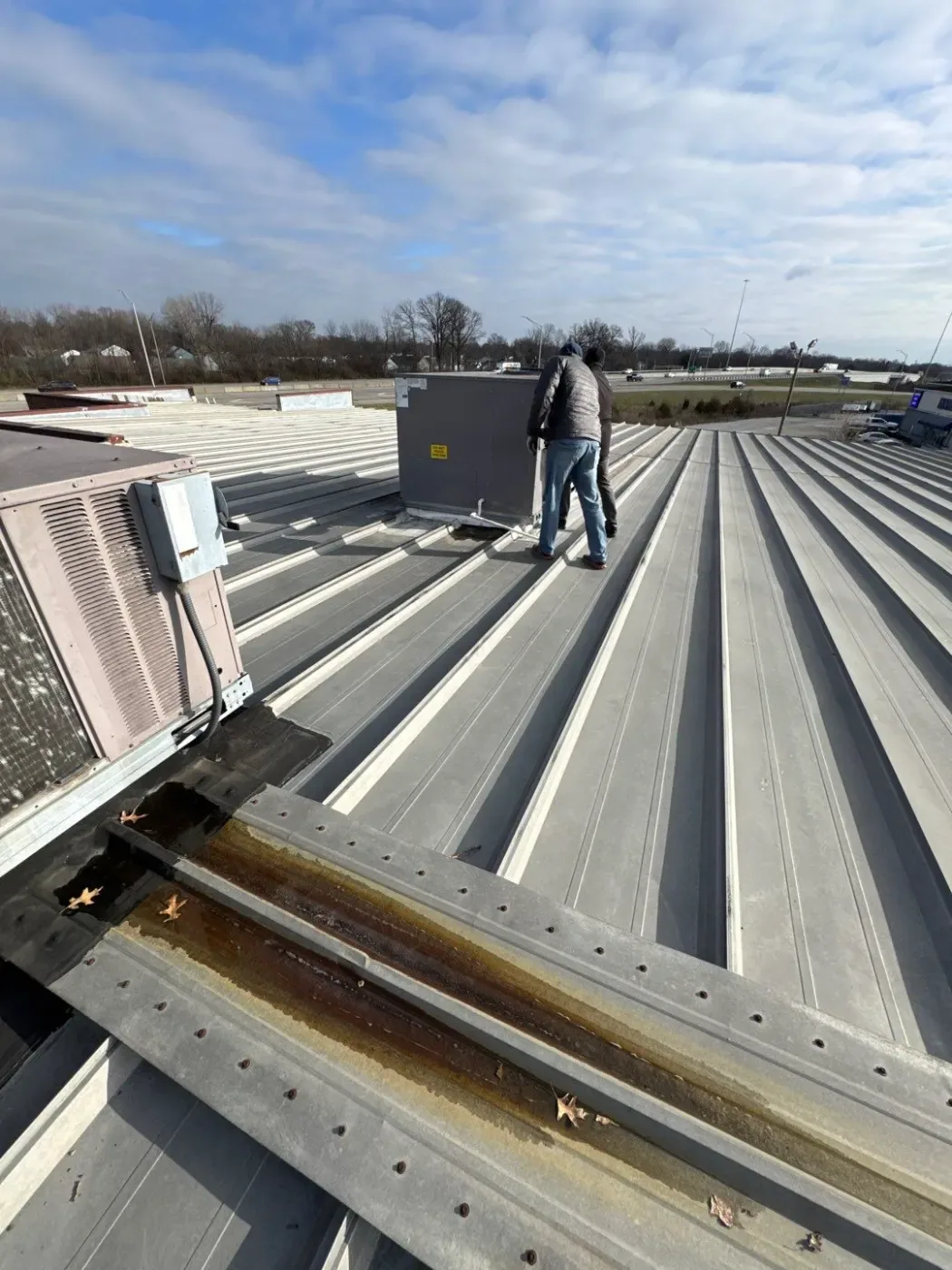
At a metal roof, inspect panel clips, sidelaps, end laps, ridge and eave details, and penetrations. Thermal movement can work a fastener loose or enlarge an opening at a transition. A standing-seam assembly needs a repair compatible with its panel movement and coating. On a membrane system, confirm the surface is weldable or bondable before choosing material. Flashing work should return the detail to a continuous drainage plane.
Protect the Opening First
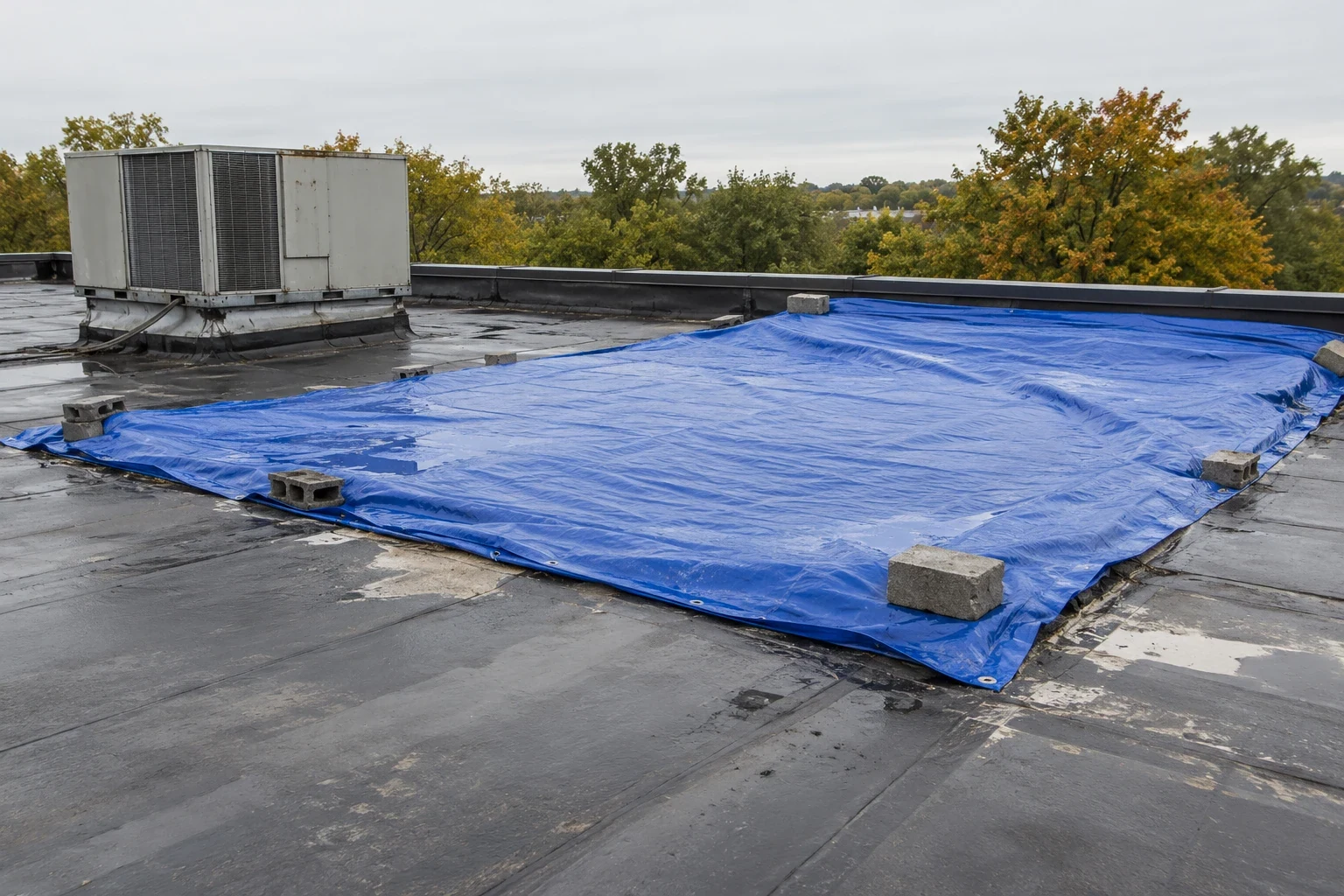
If water is entering, isolate the interior area and cover the exposed roof section with a method suited to the wind and surface condition. A temporary measure needs a clear limit and a check interval. Loose sheets or unweighted materials can create another hazard. We document where the opening sits, what was secured, and what weather exposure remains. Around a busy site near Truman Road or the Noland and US 24 junction, coordinate material movement and roof access with the property contact before crews cross tenant routes.
Emergency response is available around the clock, including weekends and holidays. The first visit controls active water and identifies the next inspection need. It does not substitute for a permanent repair review. Emergency roof service can stabilize an opening, while leak investigation traces water that has moved from the entry point. Keep interior protection and roof repair records tied to the same location map.
Set a Repair Boundary
A localized repair can make sense when the membrane or panel remains sound around the displaced detail and the attachment below it is secure. Broader work may be needed when fasteners have pulled through, wet insulation extends beyond the visible opening, or several edges have released. The proposal should name the roof zone, materials to remove, substrate condition to verify, replacement layers, tie-in method, and final test. Separate observed work from concealed conditions that become visible only after opening.
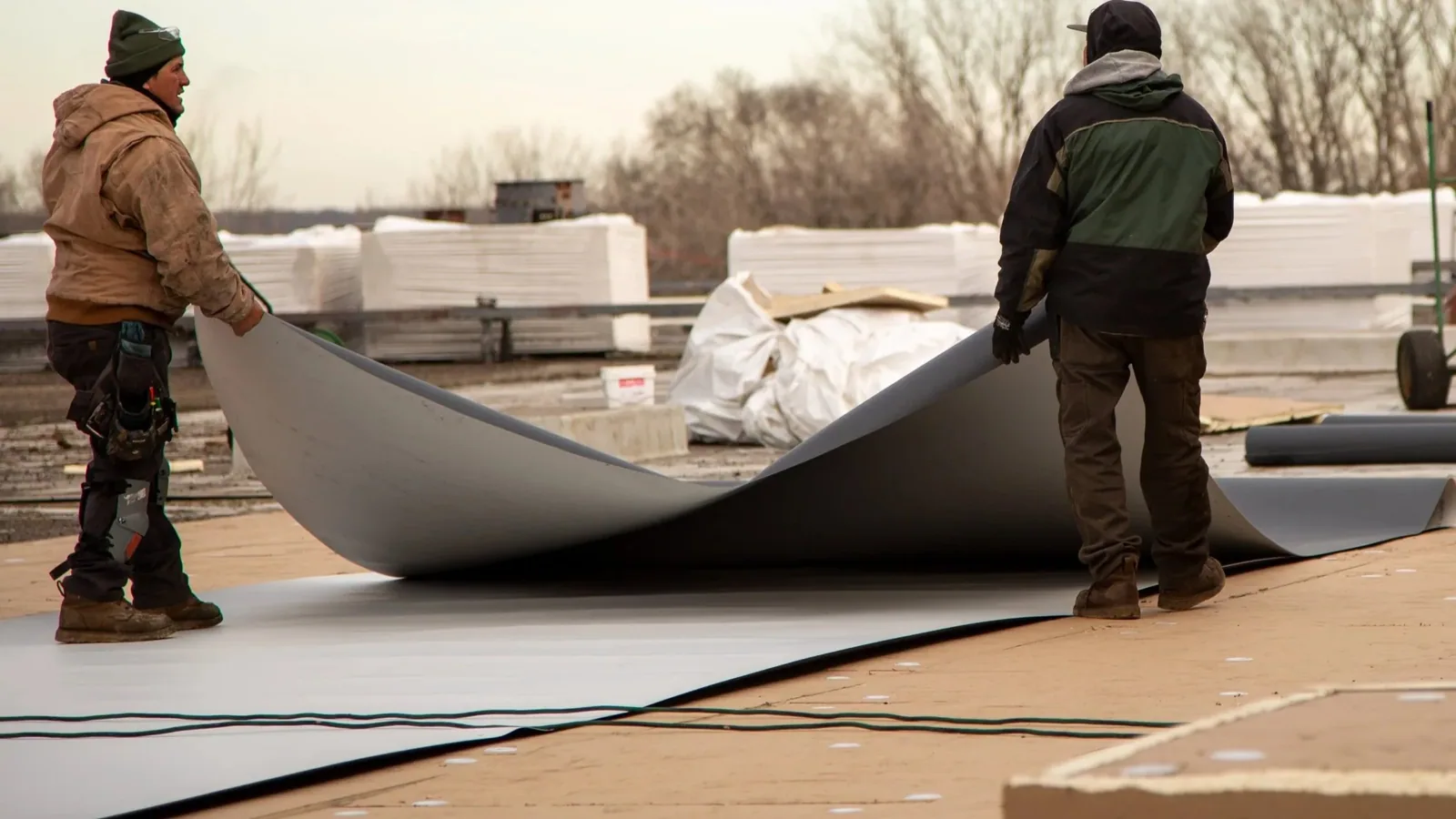
For a recover or replacement decision, compare the existing layer stack, moisture evidence, attachment, and drainage. A new surface over unstable material carries the original movement forward. Recover feasibility depends on a dry and compatible assembly. If the deck or insulation is compromised, replacement planning should define removal depth and daily dry-in. We photograph repaired details before they are covered and leave the owner with a map of completed and pending areas.
Timing depends on access, weather, and the size of the area that can be kept dry during each shift. A small repair still needs a stable work surface and enough time to prepare the substrate and complete the tie-in. For larger work, divide the roof into sections that can be opened and closed the same day. Coordinate equipment shutdowns and tenant access before delivery. The schedule should show the weather stop point and who confirms the temporary closure if conditions change.
Read Storm Reports Carefully
During the June 2022 tornado outbreak, observers noted wind damage just north-northwest of Independence, and the EF-2 track passed near Buckner in Jackson County. The report places those observations; it does not assign damage to surrounding properties. We inspect the building in question and map evidence by roof zone. The 2017 hail observation east-northeast of town belongs to a separate event and needs its own impact review. At an Eastgate Commerce Center property, confirm access and staging with the site contact while the inspection establishes whether wind moved the roof assembly.
When the repair is complete, verify edge security, seam continuity, drainage, and water shedding at the repaired interface. Record remaining damage separately so a sound local repair does not get confused with unrelated maintenance. Schedule a roof review in Independence to identify the assembly, wind-related separation, and a measurable repair limit.
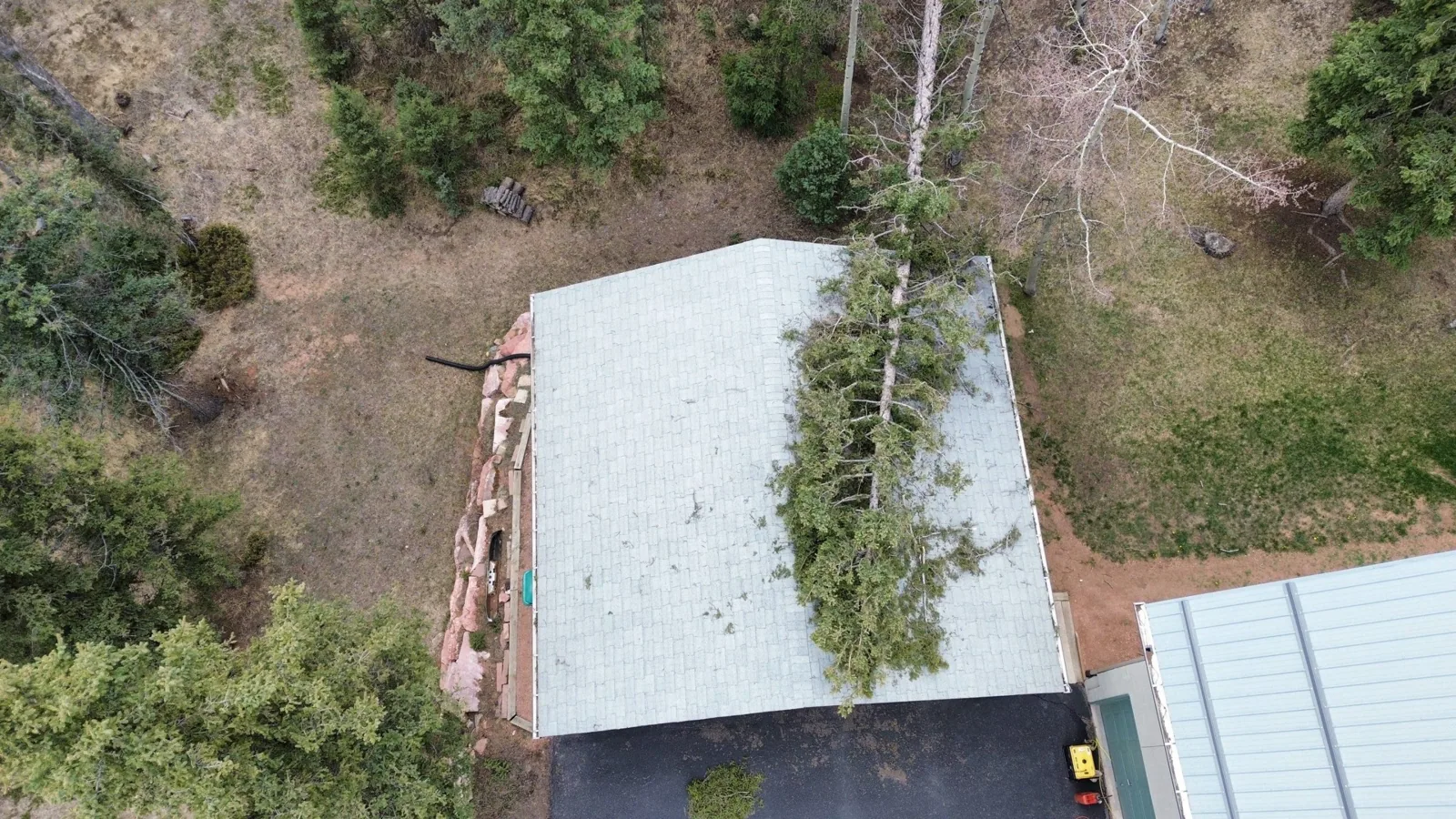
Wind and impact can appear together, but they call for separate observations. If hail is also reported, document dents, membrane bruising, punctures, and displaced accessories by zone rather than combining them into a single storm allowance. Hail damage review follows the impact evidence. This distinction helps the owner compare urgent stabilization with the permanent scope and preserves a clear record for later maintenance or claim documentation.
Commercial Roofing Questions
Can a lifted edge be patched without replacing the field membrane?
Yes, when the field remains sound and the perimeter substrate holds new attachment. We inspect the transition and surrounding area before defining a local repair.
Does the 2022 tornado record prove my building was hit?
No. The reported observation has a specific location. We inspect your roof for direct evidence and document the affected zones.
What should a wind-damage scope include?
It should name the roof area, failed components, removal limit, substrate check, replacement materials, tie-in, and closeout test. Concealed conditions need a separate approval path. It should separate temporary protection from permanent repair, identify each affected roof zone, and name the components to be reset or replaced. Include seams, edge metal, flashings, fasteners, and any interior protection needed below the active work. Photos should show the defect before repair and the completed tie-in. If the inspection could not reach a section, identify that limit so the owner understands what remains unverified.
Can operations continue during the repair?
Usually the work can be phased, but access, lifting, noise, and interior protection depend on the building. We set those boundaries with the facility contact before opening the roof. Establish a protected route for staff and keep material handling away from emergency exits. If the crew has to change the work zone, tell the building contact before access shifts. At closeout, confirm that temporary protection is secure and drains remain clear.