Correct ponding water on commercial roofs in Independence, MO by tracing drainage, checking deflection and insulation, and defining a durable repair scope.
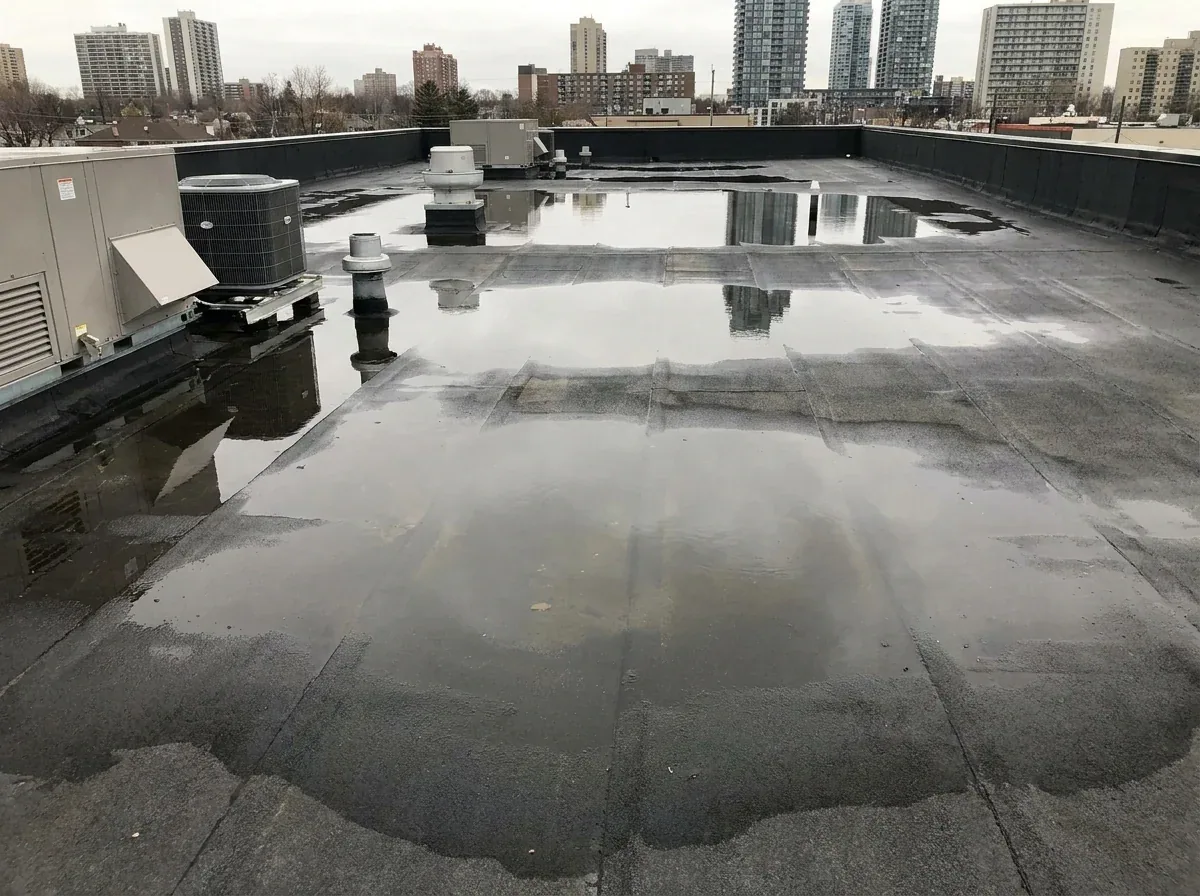
Ponding at Eastgate Commerce Center, as at any commercial property, needs to be measured and traced at the roof itself. We map the water, identify the outlet, and verify the layers before changing slope or adding material. Measured depth and drying time help distinguish a blocked outlet from a persistent slope problem.
Trace the Drainage Plane
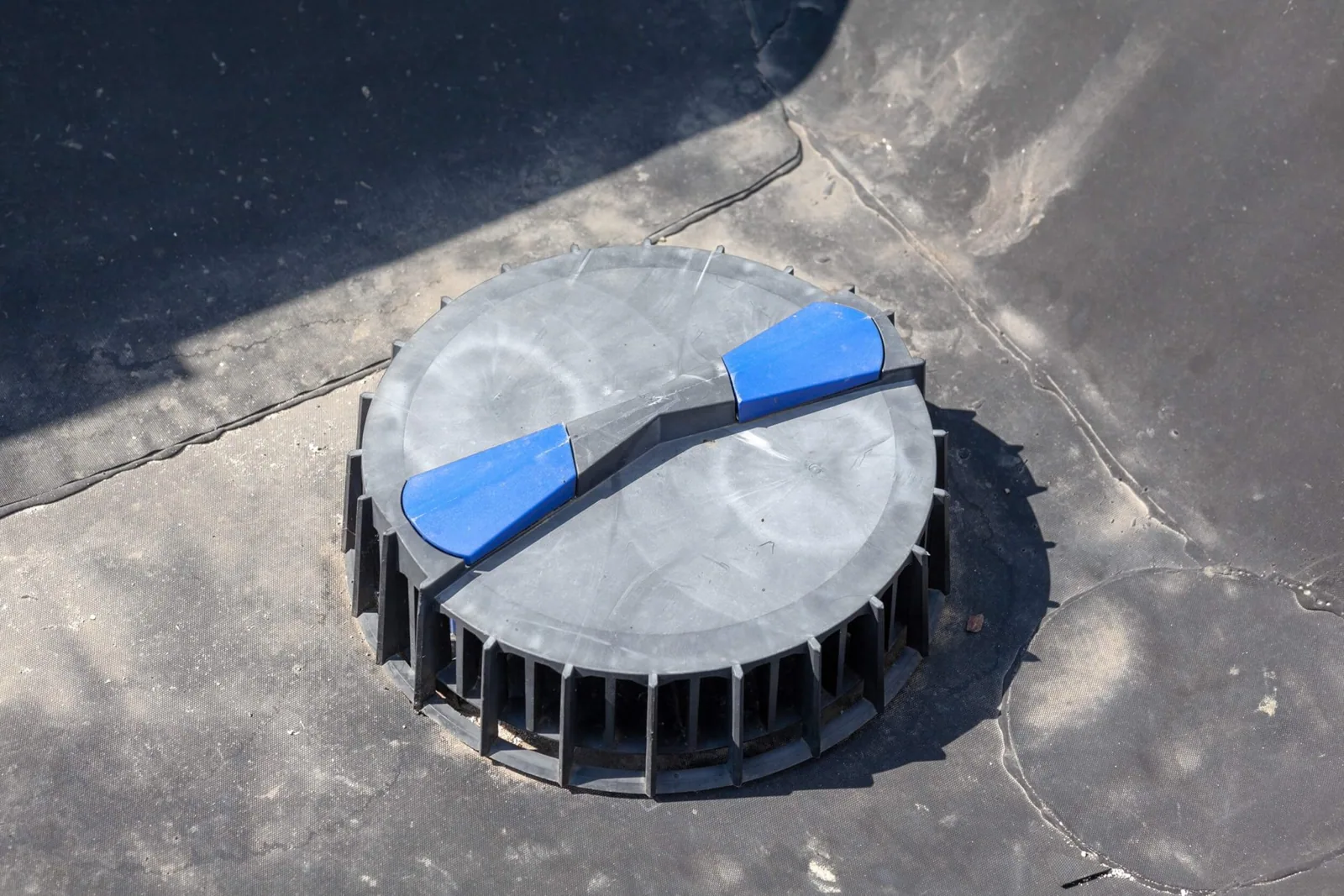
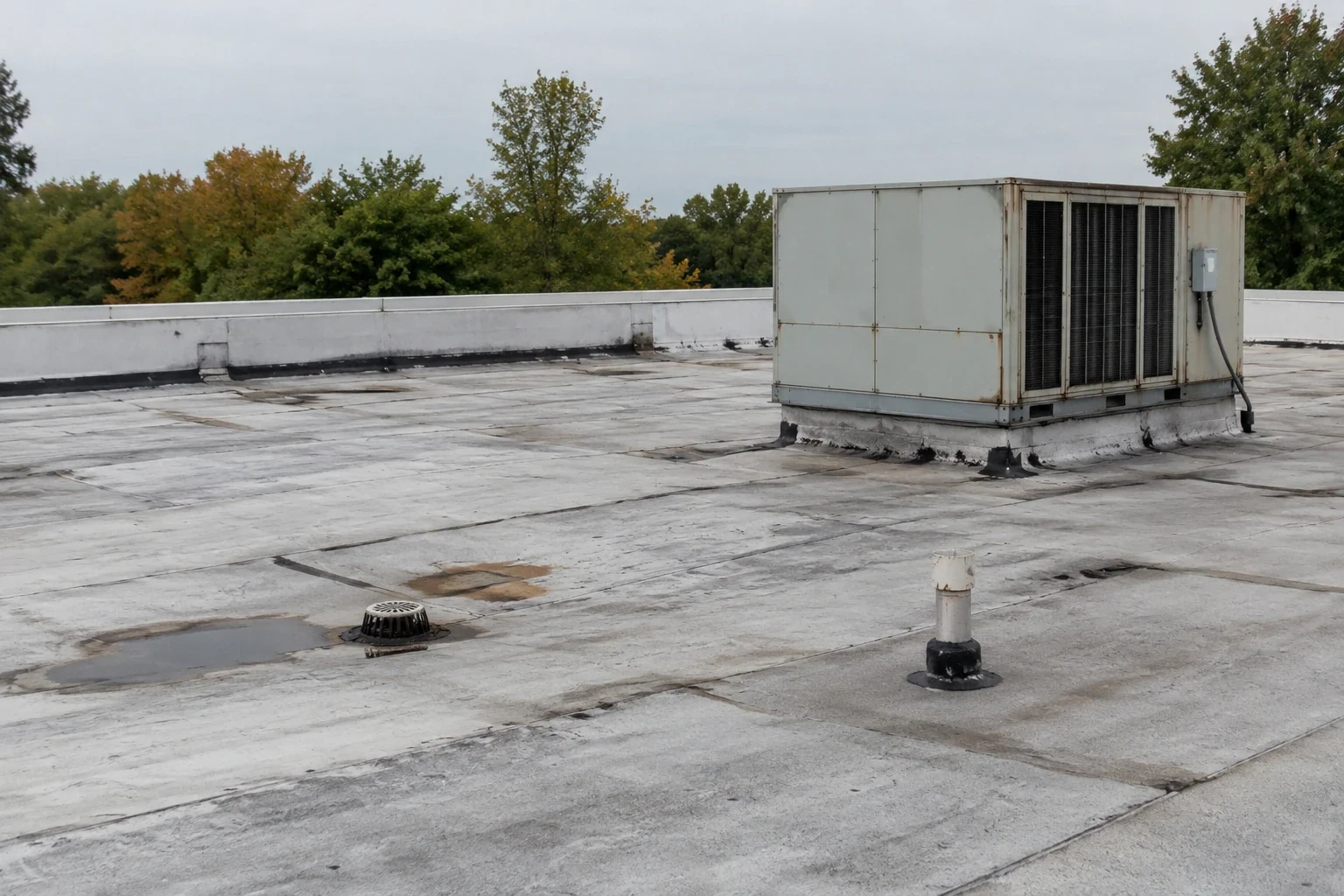
Walk the path from the high roof area to the outlet. Check drain bowls, strainers, sumps, scuppers, overflow openings, and downspout connections. A blocked strainer can make a sound roof appear to have a slope defect. A drain set too high can leave water around its bowl even when the deck has adequate pitch. Record the depth and outline of the pond after rainfall, then compare it with the roof plan and nearby transitions.
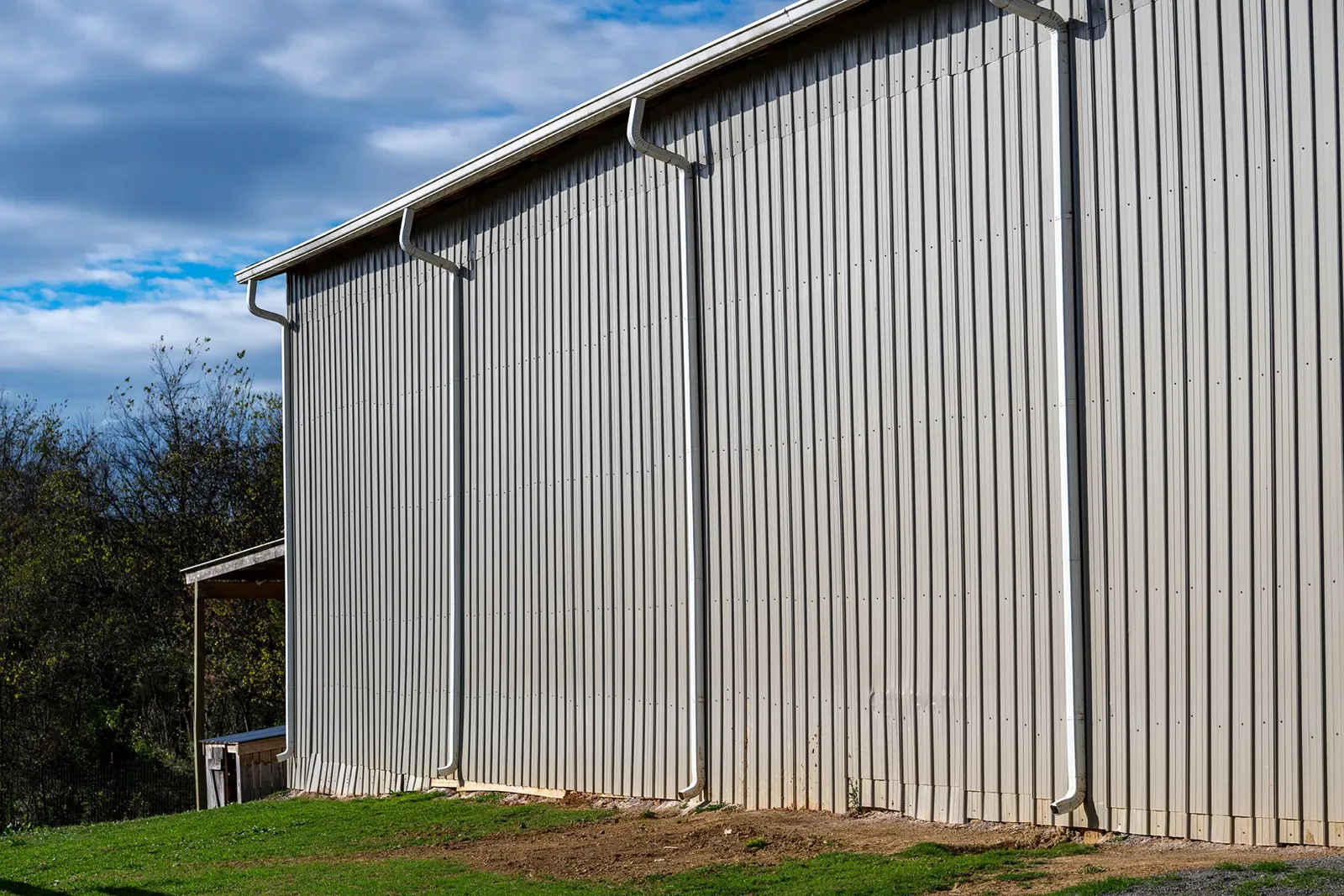
At a low-slope membrane roof, inspect seams and penetrations that remain submerged. Standing water can expose weak laps and old patches for longer periods. A drain and scupper review can determine whether the outlet is restricted or incorrectly set. Where the water gathers near an edge, check coping and gutter transitions for a blocked discharge path. The repair must restore a continuous route to an outlet, not simply hide a low spot.
Check the Roof Below the Pool
Soft insulation, crushed cover board, or deck deflection can create a depression that grows over time. Probe the surrounding area and compare its firmness with dry sections. Confirm whether moisture has spread beyond the visible pond. Infrared imaging can help select test locations, but a core or other direct check may be needed before removal limits are set. Moisture mapping helps separate a drainage correction from wet-assembly replacement.
A drainage correction should preserve a clear overflow route as well as the primary outlet. Check the path from the low point to the drain, then inspect nearby curbs, equipment rails, and wall flashings for a raised lip that holds water back. If the deck is stable, tapered insulation can change the plane, but transitions need to meet drains without burying the bowl. Where substrate movement or wet insulation created the depression, rebuilding only the surface leaves the underlying cause in place.
Roof load matters when water collects over a broad area. A localized pond on a stable deck differs from widespread deflection or saturated insulation. If the deck moves underfoot, cracking appears at the interior, or pond depth increases, keep people and stored material away from the affected zone and arrange a structural review. We document the observed roof condition; a roofing repair should not substitute for an engineer's assessment of structural capacity.
Testing should distinguish a surface depression from a change in support below it. We compare the pond perimeter with nearby drains, probe only where the assembly permits, and mark any area that feels soft or moves under foot. A measured profile helps explain why water remains and whether the correction must extend beyond the visible outline. After construction, verify drainage under controlled water flow when feasible and photograph the outlet and transitions for the maintenance record.
At Historic Independence Square and commercial properties along Noland Road, public redevelopment records help organize site context. At each building, we identify the membrane, slope, deck, insulation, and drain arrangement before selecting a repair. Field measurements govern the correction.
Compare Drainage Corrections
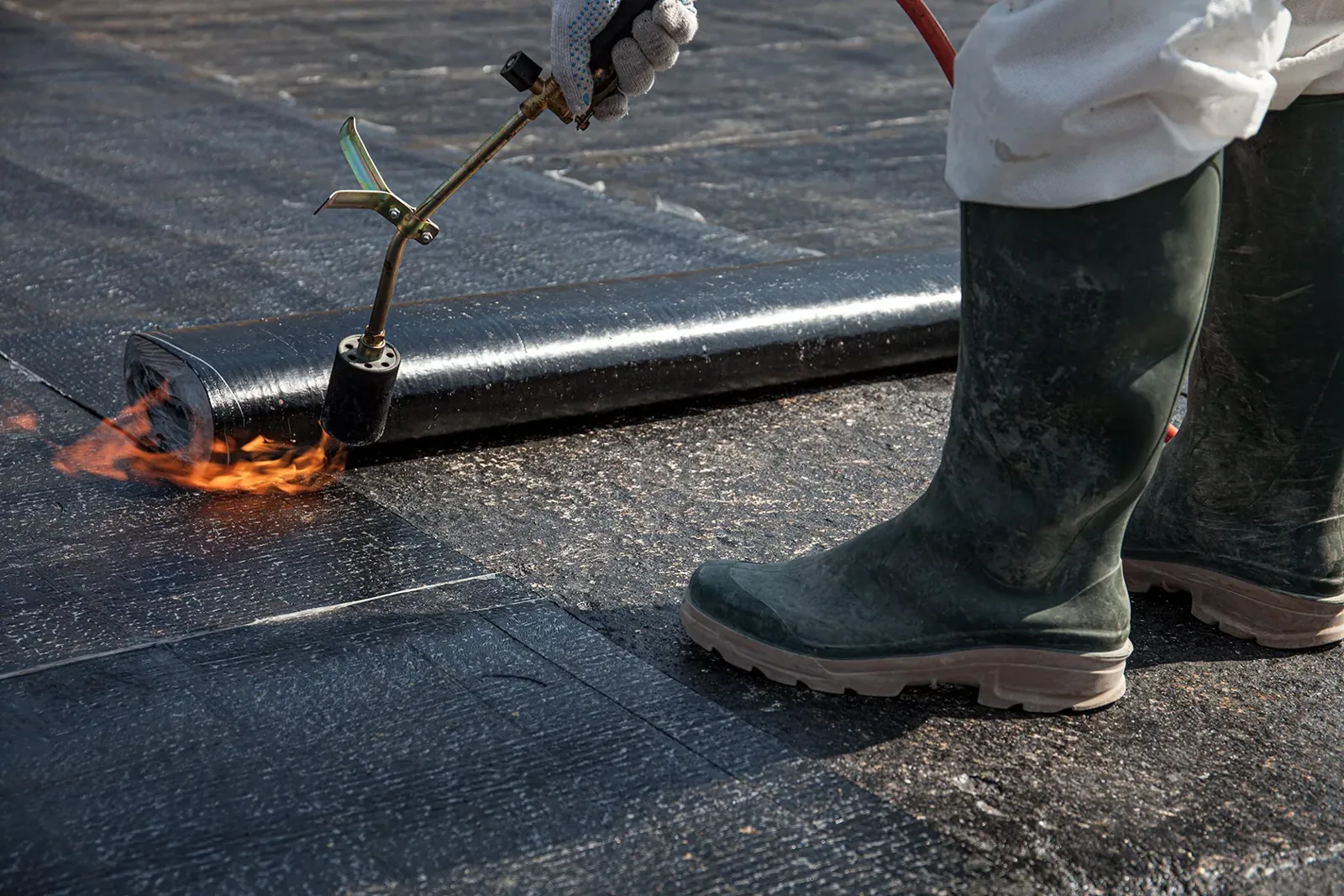
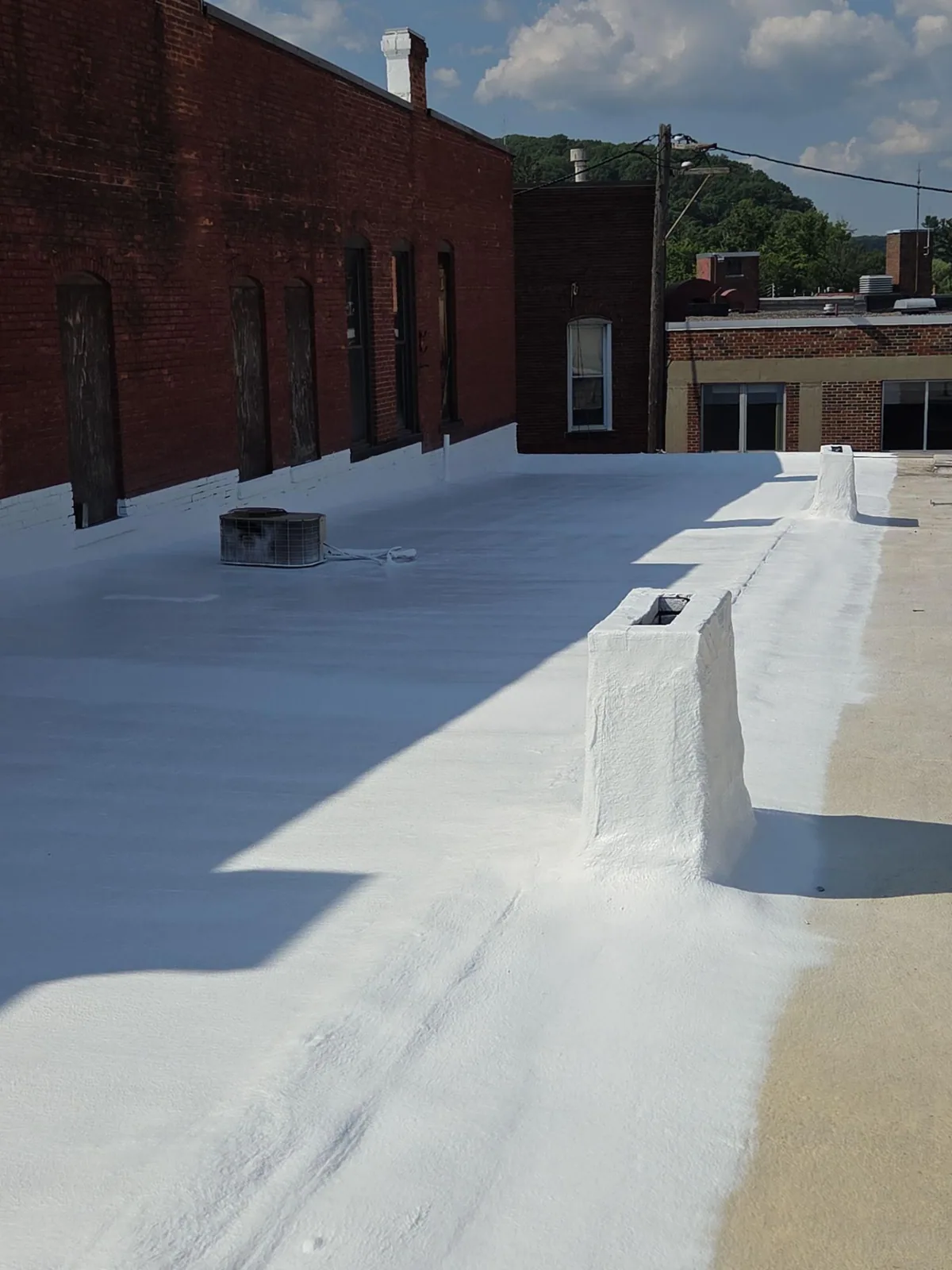
Where a sound assembly has a small low spot, a tapered insulation package or localized crickets may redirect water toward the drain. The transition needs enough height to avoid a new dam at the drain bowl, curb, or parapet. Reworking the outlet can help when its elevation or connection is the limiting point. A coating or membrane patch alone does not correct a depression in the deck or insulation.
If moisture extends beneath the pond or the substrate has lost support, remove the affected layers and rebuild the plane. The work scope should define the test area, removal depth, deck repairs if encountered, insulation layout, membrane tie-ins, drain elevation, and water test. A cover-board replacement can be part of that assembly when conditions call for it. A full replacement becomes more practical when wet areas or drainage failures are widespread.
Recovery is a separate option only if existing materials remain dry, stable, and compatible. Recover evaluation should include drain height, load, attachment, and the resulting roof elevation. Adding another layer without checking those conditions can leave the original pond in place and reduce the freeboard at drains and edges.
Account for Seasonal Exposure
Kansas City January climate normals show typical daily highs near 39 degrees and lows near 20. Freeze and thaw cycles can stress seams, drain flashings, and low areas that hold water. Summer normals also reach the upper 80s, so exposed membranes cycle through substantial seasonal temperature changes. Those station readings describe the metro climate, not the surface temperature or slope of an individual roof. TPO roof repairs and EPDM work still depend on the actual membrane and compatible materials.
When a repair is complete, confirm that water flows to the intended outlet and that the new transition does not create a secondary dam. Photograph the area before and after correction. We provide around-the-clock response for active roof emergencies, including nights, weekends, and holidays. Schedule a review in Independence to measure the pond, trace the drainage plane, and choose a correction that addresses the cause.
Commercial Roofing Questions
How long can water remain before it becomes a repair issue?
The roof design and drainage conditions set the evaluation. We measure the pond after rainfall, check the outlet and substrate, and compare the observed condition with the roof assembly.
Will a coating remove a low spot?
No. A coating can renew a compatible surface, but it does not rebuild a depressed deck or insulation plane. Correct the slope or replace failed layers first.
Could ponding water mean the deck is unsafe?
It can indicate a concern when the area is broad, growing, soft, or visibly deflected. Restrict access and obtain structural review when those signs appear.
What determines whether a drain should be reset?
Drain height, sump depth, connection, and surrounding slope determine the correction. We inspect those details together before changing the outlet or adding tapered insulation. First compare the drain bowl elevation with the surrounding sump and the path water follows to the outlet. Check for debris, a blocked leader, a loose clamping ring, displaced insulation, and deck deflection. Then note whether the pond recurs after the outlet is clear and whether it sits at a seam, curb, or broad low area. That evidence separates routine maintenance from a drainage correction. A drain reset can correct an outlet set too high, but it will not flatten a depressed deck. Where slope must change, the scope may call for tapered insulation or localized reconstruction. Keep the outlet and overflow path open while work is underway, and verify the membrane tie-in around the bowl before the roof is returned to service. Interior stains should be tracked separately from the surface-water map because water can travel before entering the building. Include an overflow route in the review; a primary drain repair should not obstruct the backup path. Record the water depth and boundary after drainage has had time to occur, then repeat the observation under similar conditions if the pattern is unclear. A persistent low area can direct water toward a seam or curb even after the drain itself is working.