Plan a commercial roof replacement in Independence, MO with a clear assembly review, drainage plan, removal sequence, and occupied-building schedule.
A manufacturing roof in Independence has to do more than cover a wide span. It has to move water past curbs, vents, drains, and changes in deck elevation without interrupting production. We begin a replacement by identifying the existing assembly and how it is attached. Then we trace drainage, inspect the substrate, and mark details that need rebuilding. That sequence matters near the industrial activity around Eastgate Commerce Center and along the eastern routes toward Little Blue Valley. New construction and older roofs have different tie-in conditions. A roof replacement should account for both before material is ordered.
The Existing Assembly
A membrane can look worn while the failure sits below it. We check the roof surface, seams, edge conditions, penetrations, insulation, cover board, and deck. Core samples can confirm how many layers are present and whether insulation has retained moisture. We also look for movement around equipment supports and transitions. The findings tell us whether the current deck can receive a new assembly, whether wet material must come out, and where attachment needs to change.
Independence has industrial employers, medical campuses, retail buildings, schools, and civic facilities. Those uses can call for different work sequences. Independence has major employers across manufacturing, healthcare, education, social services, and retail. We inspect each building's actual assembly rather than infer roof conditions from its use, and document what is present.
The Removal Boundary
A tear-off is not automatically the right answer at every square foot. We define what must be removed based on moisture, adhesion, trapped layers, and the condition of the deck. Wet insulation left under a new roof can keep moving moisture through the assembly. A sound section may be treated differently if the governing code and system design permit it, but the boundary must be supported by inspection. We record core locations and repair transitions where old and new construction meet.
Independence follows the 2024 International Building Code and International Existing Building Code, with city amendments also published for building and energy rules. The project team needs to check the applicable requirements for the specific scope, including insulation and attachment. We account for those requirements before finalizing the assembly. For an existing commercial roof, that can affect tear-off depth, edge details, penetrations, and how work connects to equipment curbs or walls.
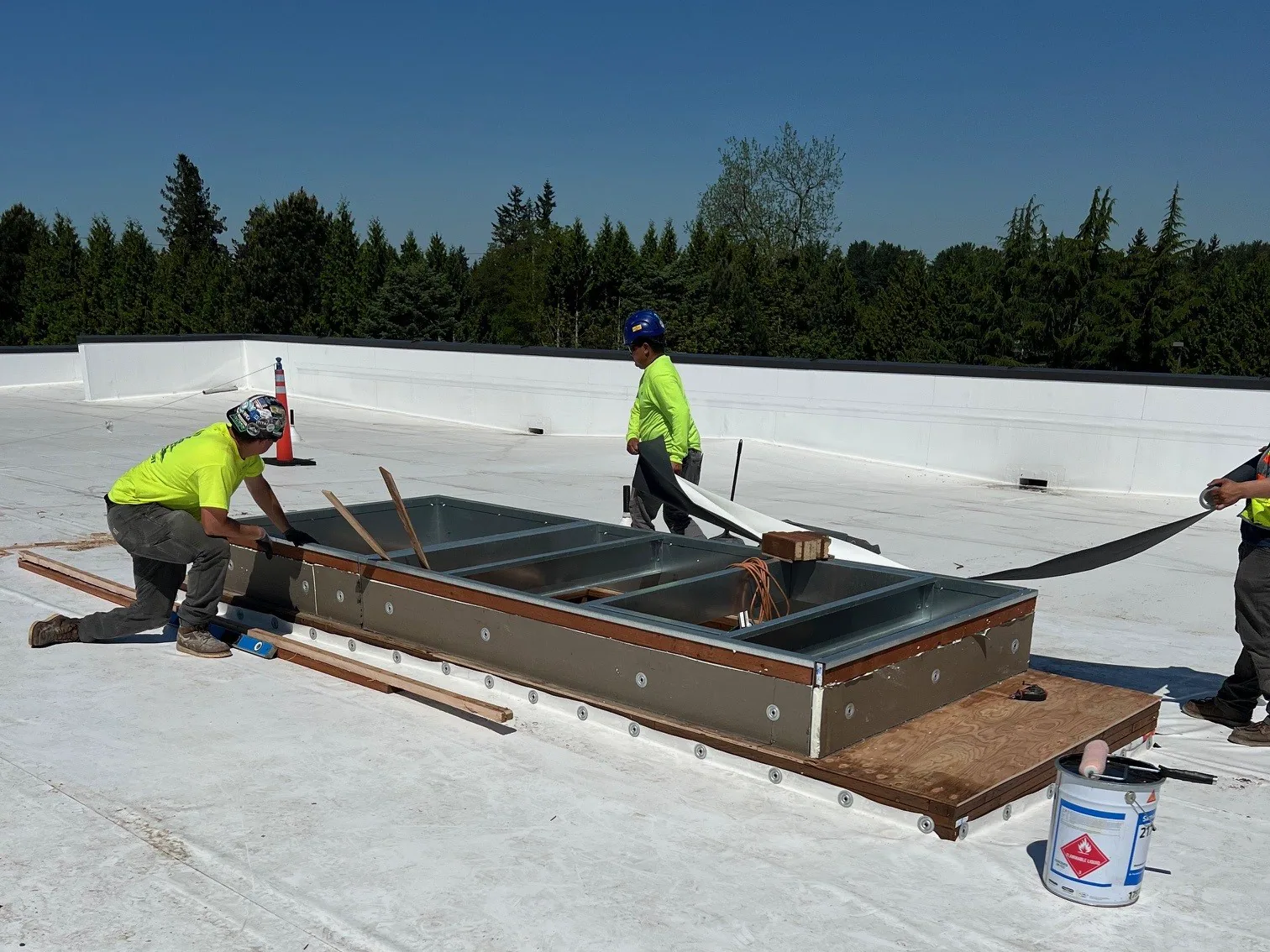
Drainage belongs in the same decision. We inspect drains, scuppers, crickets, and low areas while the roof is open. A new membrane cannot correct a blocked outlet or a deck that holds water without a design response. Roof drains and perimeter details are addressed as part of the roof's water path, with related work coordinated through drain and scupper repairs and edge metal and coping work where needed.
Local Exposure
Independence roofs see seasonal movement. Kansas City metro normals put the January low near 20 degrees and the July high near 89 degrees. Those figures describe the metro observation record, but they help explain why expansion joints, seams, and flashing transitions need a compatible detail. Winter moisture can freeze in a weak interface. Summer heat can increase movement at metal edges and around rooftop equipment. We check each transition and select materials that can move with the roof assembly.
Hail and wind records also inform inspection priorities without proving damage at a particular property. On March 6, 2017, 1.75-inch hail fell east-northeast of Independence and quarter-size hail was observed at Centerpoint. After a documented event, a replacement assessment should distinguish surface marks from punctures, fractured coating, or damaged flashing. The storm record is a reason to inspect, not a substitute for findings on the roof.
Work Phasing
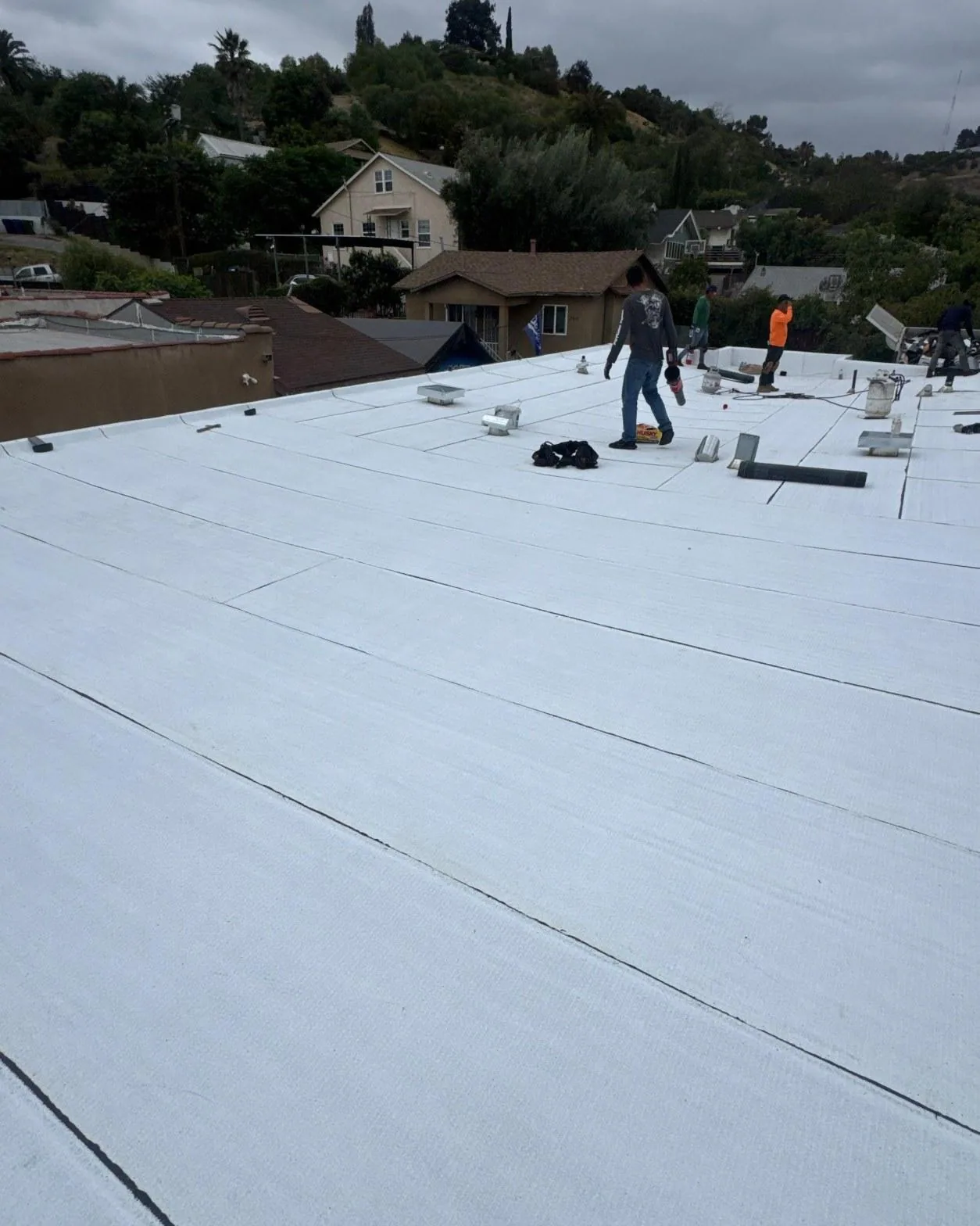
Occupied buildings need a sequence that protects the work area from weather and keeps critical operations accessible. We divide removal and installation into manageable sections, establish temporary dry-in points, and plan how materials reach the roof. The daily boundary matters. The crew should not leave an open assembly exposed while another area is being prepared. Rooftop exhaust, electrical feeds, and service access need coordination before equipment is moved or flashed back in.
Deliveries, material placement, and lift access need property-specific review along US 24, Noland Road, or Truman Road. We confirm restrictions, occupant notices, noise windows, and temporary protection with the site contact before mobilization.
Weather can alter a tear-off schedule. We watch the forecast and keep a secure end-of-day condition in the plan. If rain threatens, the open area is limited to what the crew can close and dry in. If hidden deck damage appears, we document it and explain the effect on the repair boundary and sequence before covering it. That keeps the construction record tied to actual conditions.
Scope Drivers
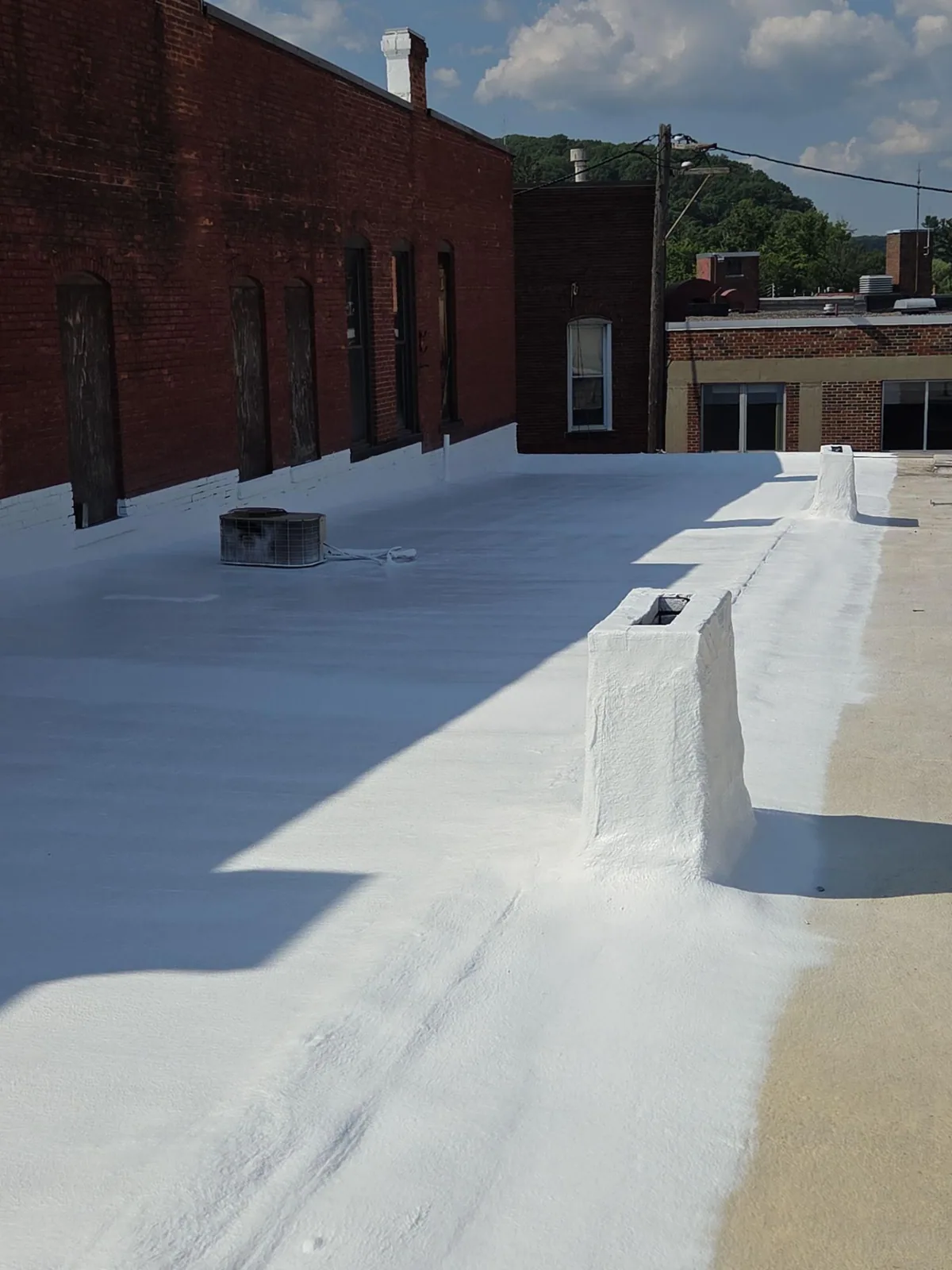
Our inspection records the assembly and repair limits with photographs and condition notes. We identify what is included in the replacement, what remains, and which transitions need separate treatment. If the roof contains moisture, we locate its extent rather than assume the whole surface is equally affected. When a coating or partial repair remains viable, we explain the conditions that would make it workable and the limitations it leaves in place. Replacement is recommended when the assembly evidence supports that scope.
Owners managing more than one facility can use the same information to compare urgency and sequence. A roof capital plan can separate immediate water control from replacement timing, while a condition report keeps photos and repair boundaries together for review. That is useful when a portfolio includes a large industrial site, a retail property at Independence Center, and neighborhood buildings with different access needs.
Final Construction Details
Independence permits and code amendments can affect a replacement's required details. We coordinate the scope with the applicable permit path and document assembly choices for the owner and project team. If the building stays active during construction, we include the planned phasing and access controls in the work sequence. The result is a roof scope that can be reviewed against the building's actual needs and future maintenance.
Schedule a roof review with Commercial Roofing Independence. We will identify the assembly, map the failure or wear conditions, and define the replacement boundary before the work is priced and staged. For a roof with recurring leaks, start with active leak tracing; for a larger project, review the options for a recover assembly when the existing roof, moisture results, and code allow it.
Commercial Roofing Questions
What tells you the roof needs full replacement instead of another repair?
Full replacement is more likely when moisture is widespread, attachment has failed, insulation has deteriorated, or detail failures recur. We inspect the deck and layers, then mark what can be repaired and what needs removal.
Can an Independence building stay in operation during reroofing?
Phasing can keep parts of a facility operating when the roof layout permits. We plan daily work limits, temporary dry-in, material routes, and equipment access with the site contact, especially around active medical or production uses.
How do you handle wet insulation under the membrane?
Core samples and visual checks establish the moisture boundary. We mark wet material for removal, then inspect the exposed substrate before rebuilding. Saturated insulation can trap moisture and weaken attachment.
Does Independence code affect a commercial roof replacement?
Independence applies the 2024 International Building Code and Existing Building Code, with local amendments for building and energy requirements. We review applicable provisions before finalizing insulation and assembly details.
Will storm history determine whether my roof is replaced?
No. The 2017 hail record near Independence and Centerpoint gives local context but does not establish damage at another property. We inspect marks, punctures, seams, and flashing on the building.