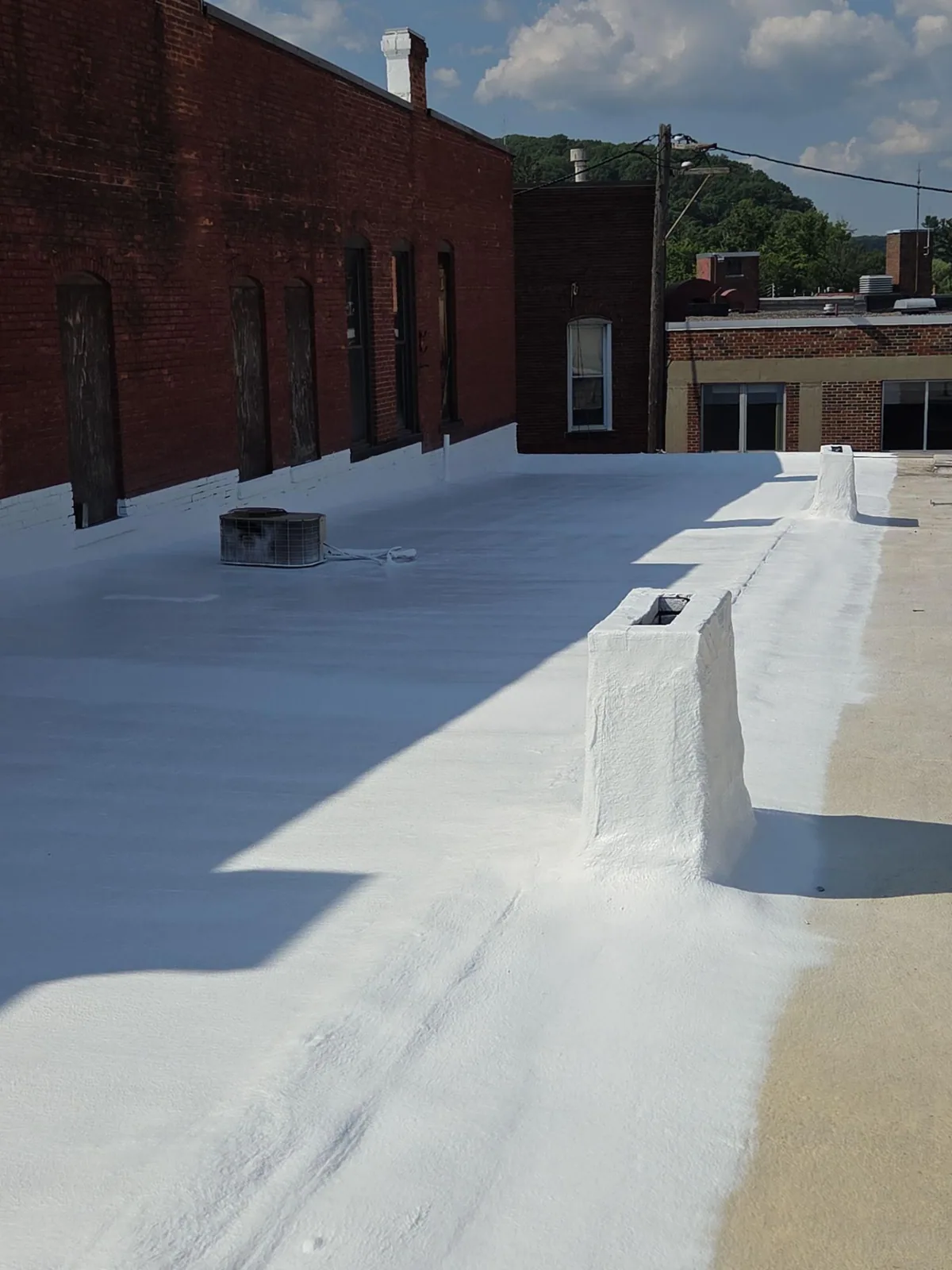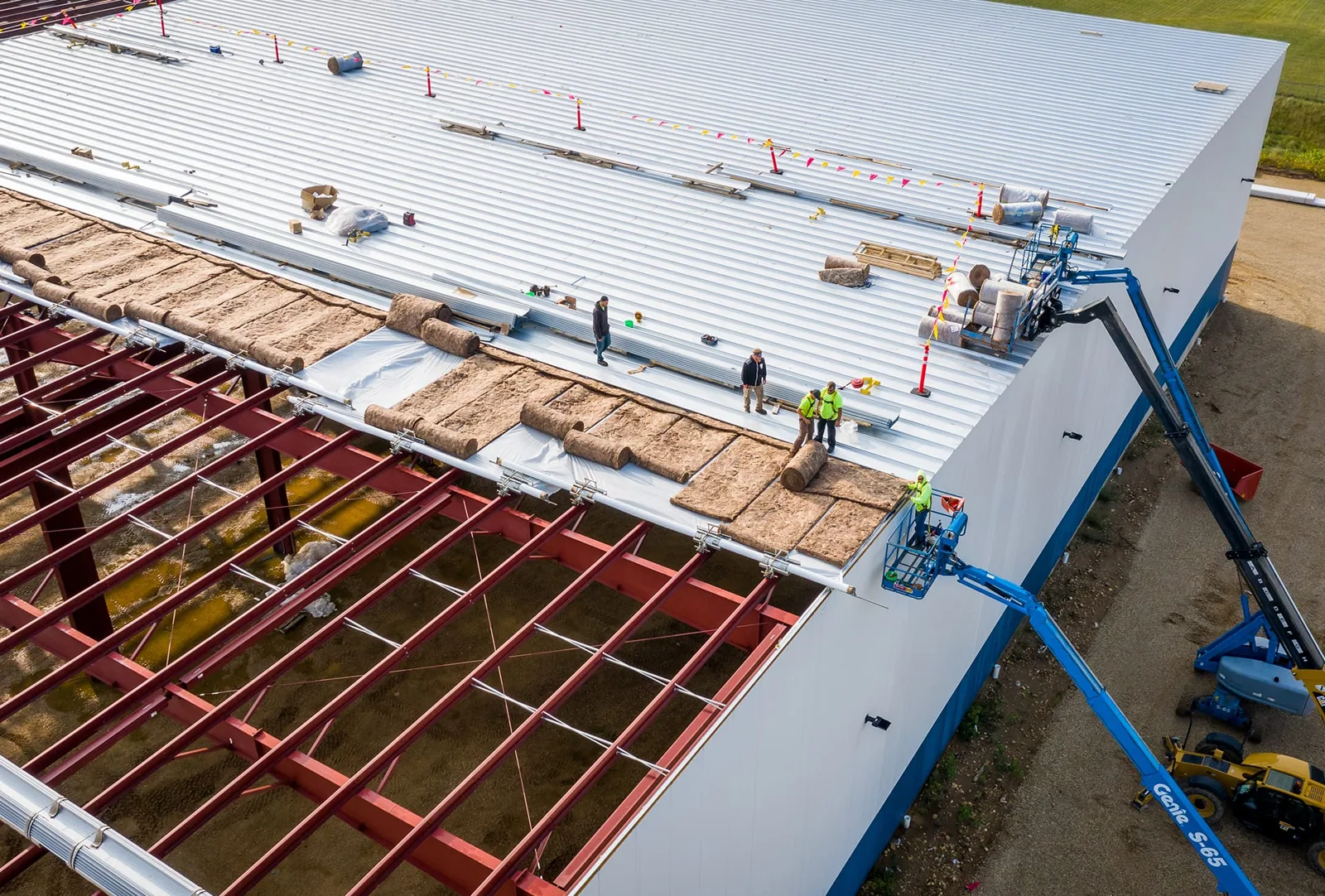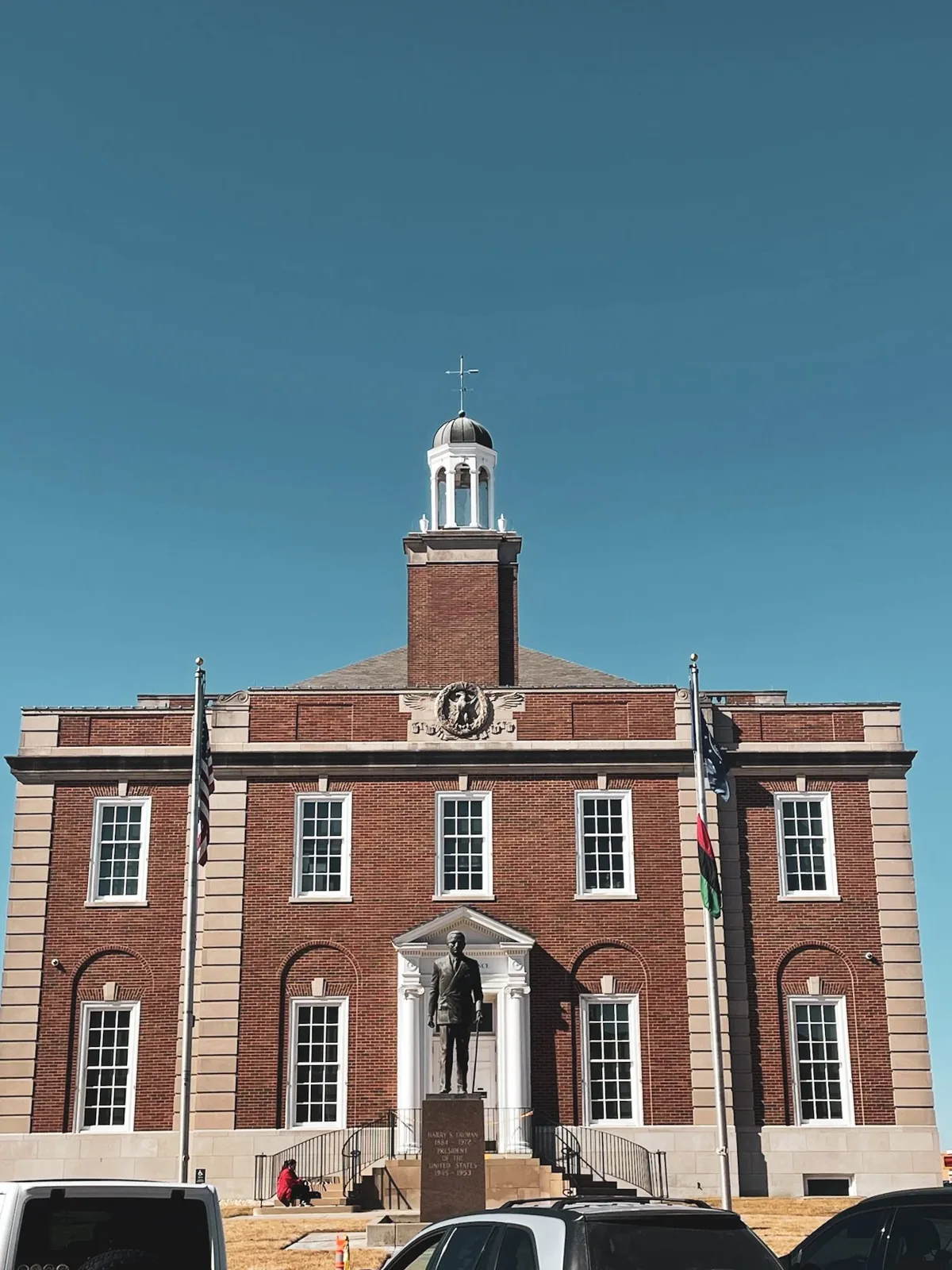
Roof repair and replacement at Historic Independence Square in Independence, MO, begin with storefront access, drainage, and assembly details.
A storefront roof at Historic Independence Square has to protect the business below while fitting the conditions of the individual building. The Square is a city redevelopment priority. The City reports private commercial redevelopment and commitments for historic façade improvements, while local boutiques, restaurants, specialty shops, and gathering places share the district. Those facts make coordination important. They do not establish a roof’s age, material, structure, or current condition.
We inspect the specific property before recommending a patch, restoration, or replacement. The first walk checks visible roof layers, drainage, parapets, wall transitions, penetrations, and interior evidence of water. For older or altered buildings, we compare available records with what is exposed in the field. Then we identify where the water enters, what substrate remains sound, and what work can be completed without disrupting the occupied space unnecessarily.
Read the Building Before the Roof
The Square’s commercial character includes independent retail and food uses, but each roof assembly remains a field question. A low-slope membrane, built-up roof, modified bitumen, or metal system needs its own inspection method. We record seams, laps, edge metal, drains, roof-to-wall transitions, and prior patches. From inside, we look for stains, active moisture, and conditions near the roof line. A ceiling mark is evidence of a water route, not proof that the roof opening sits directly above it.
Where a building has been remodeled, the visible membrane may not tell the whole story. We check for changes in height, added curbs, abandoned penetrations, or layers that conceal the original edge. A test opening may be needed to confirm insulation and deck condition. The inspection record names observed facts and separates them from questions that require testing. This keeps the repair scope tied to the actual assembly instead of assumptions based on appearance or a neighboring building.
Trace Leaks Through Each Transition
At a storefront, water can follow a parapet, flashing joint, drain line, conduit, or old roof patch before appearing indoors. We trace the path uphill and check the interface where each material changes. Open coping joints, loose flashing, split membrane, and blocked outlets have different remedies. A bead of sealant may hide a joint briefly, but it will not restore failed attachment or correct drainage.
We mark the affected roof zone and inspect beyond the visible stain. If the substrate is dry and sound, a localized tie-in may be sufficient. If moisture extends under the membrane, the repair limit grows to include the wet material and a sound transition. For urgent water entry, commercial leak repair can stabilize the interior while the source is confirmed. Coping and edge-metal details deserve particular attention where the roof meets a parapet or changes elevation.
Keep Storefront Operations in View
Retail and dining businesses operate on customer schedules, deliveries, and staff access. A roofing plan should identify which entrance or service area is affected, how materials reach the roof, and whether interior protection is needed below the active work. We coordinate noisy tasks, lift placement, debris removal, and temporary closures with the property contact. If several tenants share a building, the scope should state which bays or roof zones are included.
Historic façade work and streetscape planning can bring contractors into a compact commercial district at the same time. We confirm the property-specific staging and access arrangements rather than assuming the public work plan controls roof access. When tear-off is necessary, we sequence the opening so each section can be dried in and inspected before operations resume below. Occupied-building reroofing can divide the work into manageable phases and identify temporary protection before the first layer is removed.
Compare Repair and Replacement
A roof with isolated damage and sound surrounding material may be repaired without replacing the full assembly. Repeated leaks, widespread wet insulation, failed seams, or deteriorated edges can change that decision. We test questionable areas and document the limit. An owner can then compare a localized repair with broader removal, replacement, or an eligible recover system. The existing layer count, deck, drainage height, code requirements, and tie-ins all affect whether a recover is suitable.
Cost and schedule depend on confirmed quantity, roof access, material selection, protection requirements, weather, and tenant coordination. We do not price an unknown concealed condition as if it were already measured. The written scope identifies the base work and a process for conditions found after opening. Replacement work should include details at walls, drains, curbs, and edges, not just the field membrane. A finished roof is only as dependable as those transitions.
Check Seasonal Movement
Independence sees winter freeze-thaw exposure, spring hail, and summer heat. Temperature swings can work at metal edges and roof-to-wall interfaces. Hail impact can bruise or puncture some surfaces, while a brittle flashing can split under movement. We inspect the material and detail after an event rather than assuming that a weather report proves damage at a particular address. The finding should describe the mark, the affected zone, and whether water has entered.
Before work, we check application requirements for the selected repair product and plan around suitable weather. During cold conditions, adhesive and self-adhered products can require specific substrate temperatures and handling. Heat changes working time and can affect safe access. A seasonal inspection can clear debris, check seams and drains, and photograph edge conditions before a small defect spreads. A maintenance visit can record these items with a priority and follow-up date.
Protect the Building Record
Commercial redevelopment at the Square makes a reliable roof record useful for owners, managers, and contractors handling future improvements. We document the assembly we could verify, repaired areas, materials used, concealed conditions, and details still requiring attention. Photos should show both the close-up and its location. If a later façade or mechanical project changes a roof penetration, the record gives the next team a starting point for reviewing that interface.
Every building gets its own notes. A condition at one storefront does not establish a condition next door. We can also schedule commercial roof reviews at Englewood Arts District and Noland Road Corridor, with each property inspected independently. At the Square, the final closeout should show where water drains, how the repair ties into existing materials, and what maintenance item remains open.
For a building near the Square, a practical work plan starts with the particular storefront or commercial property and the roof area above it. The manager can confirm operating hours, delivery access, and which entrance must remain clear. The roofer should identify the planned lift or material route, the daily work boundary, and how an open section will be protected if weather interrupts installation. Before work begins, agree on who can authorize a change if concealed materials are damaged. Those details help keep shops and food businesses informed while the repair remains tied to observed conditions at that building.
Commercial Roofing Questions
Does historic façade work tell you how the roof is built?
No. The façade program describes exterior improvements. We inspect the roof layers, deck, edges, drainage, and transitions at the individual building.
Can a leak be repaired without closing a shop?
Often the work can be planned around business hours, but access, noise, lifting, and interior protection determine the sequence. We confirm those constraints with the property contact.
How do you locate a hidden roof entry point?
We map plausible routes from the reported room and inspect each relevant roof detail. The confirmed entry and suspected path are recorded separately, so further work follows field evidence.
How do you decide whether to replace a storefront roof?
We compare the repair boundary with the verified condition of the surrounding assembly. Widespread moisture, recurring failures, and incompatible layers can support a larger scope.