Install, repair, or inspect commercial TPO roofing in Independence, MO with attention to welded seams, attachment, flashing, and drainage.
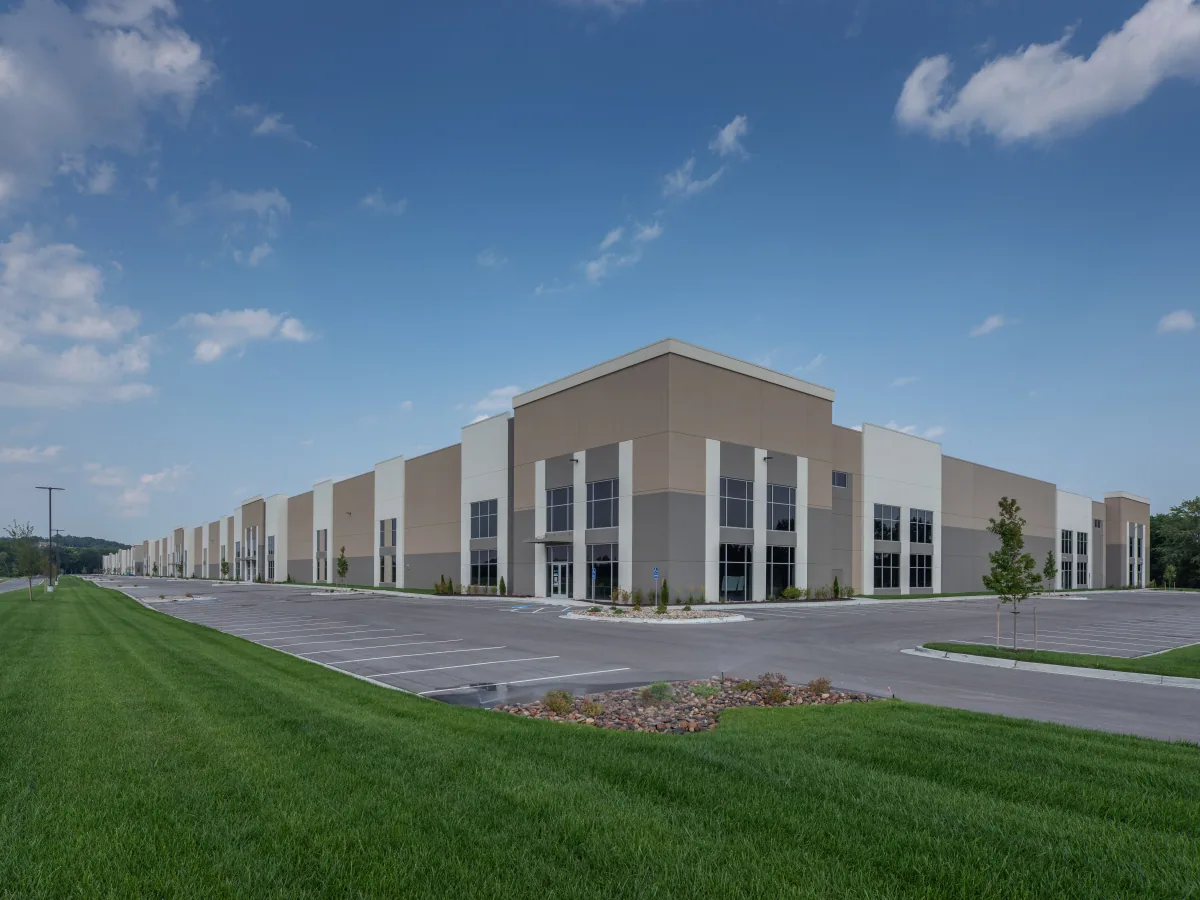
A TPO roof is a reinforced thermoplastic membrane with seams fused by heat. It can be compared with a KEE/PVC alloy membrane when chemical exposure or system specification affects selection. The seam weld, perimeter attachment, and flashing transitions determine whether the sheet assembly remains continuous. We inspect those interfaces along with insulation, cover board, and drainage before recommending a repair or replacement. Independence, MO has commercial activity at Eastgate Commerce Center and redevelopment along Noland Road. Those properties do not share one roof condition. The membrane and deck must be checked at the building.
Read the Welded Seam
TPO sheets are joined with hot-air welds. A strong weld fuses the surfaces; a weak or contaminated weld can separate under movement or water exposure. We check seams for open edges, fishmouths, wrinkles, skipped welds, and damage from rooftop traffic. Probe testing helps locate separation, but we also inspect the substrate and sheet condition around the seam.
Repairs require clean, dry membrane and compatible material. We prepare the surface and weld a patch or strip with the correct overlap. A patch should extend beyond the defect onto sound sheet and remain clear of a drainage obstruction. If multiple seams have failed or the membrane is brittle, a spot repair may leave the system's broader condition unresolved. A membrane repair assessment can define the boundary across adjoining sections.
Independence's climate ranges from winter freeze exposure to summer heat. Kansas City station normals place a typical January low near 20 degrees and July highs near 89. Thermal movement can stress a lap, curb, or edge detail. We look for the seam defect and the movement that may have opened it. The climate record explains the seasonal range, but field conditions determine the cause at a particular roof.
Hail marks need separate evaluation. In the March 2017 outbreak, 1.75-inch hail was measured east-northeast of Independence and quarter-size hail was noted at Centerpoint Medical Center. Neither observation establishes damage at a separate site. We check TPO for cuts, punctures, broken welds, and displaced flashing before tying a claim or repair to roof evidence.
Check How the Sheet Is Held
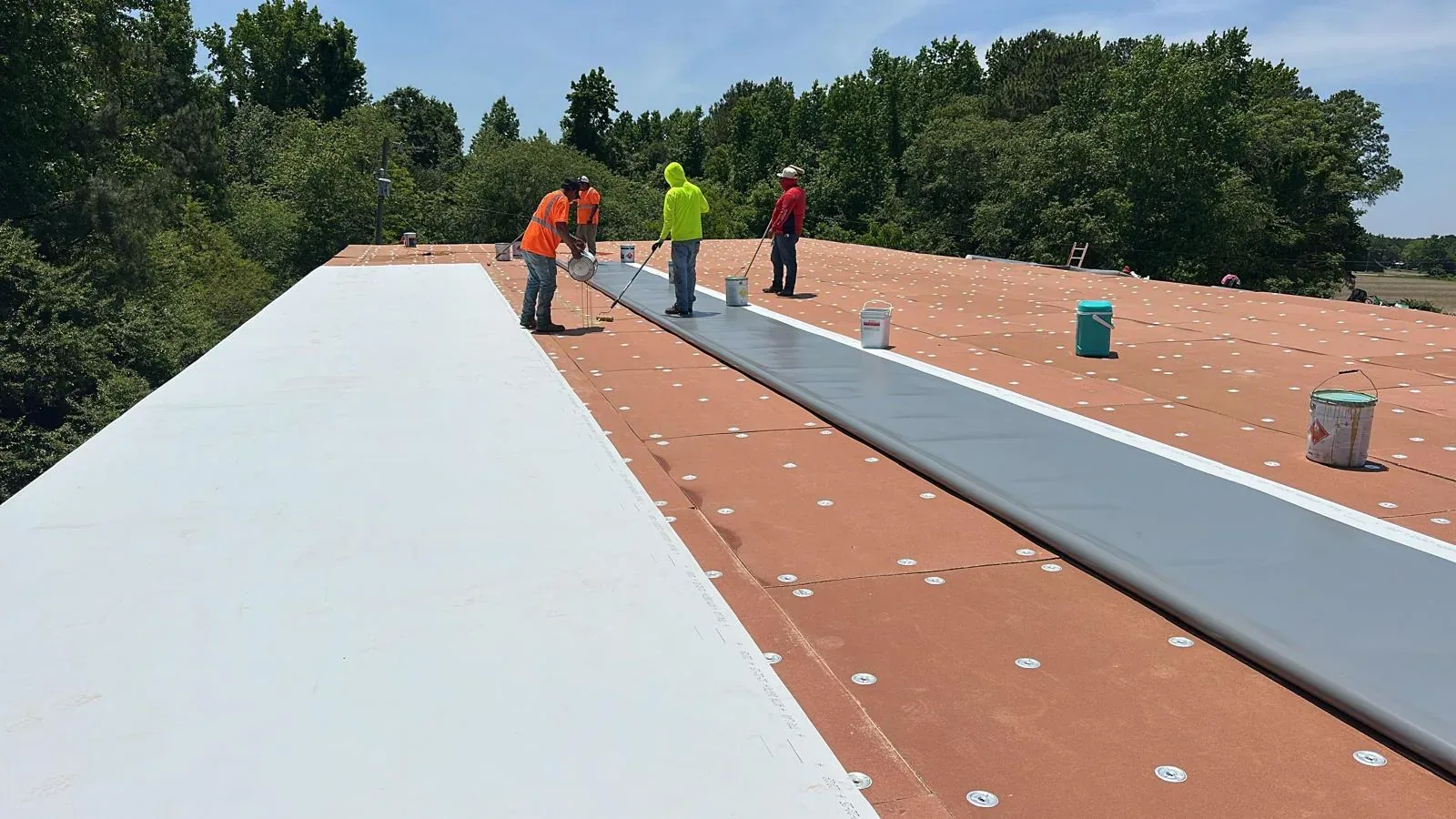
TPO can be mechanically attached, adhered, or ballasted under the system design. Each method transfers wind loads differently. On mechanically fastened roofs, we review fastener rows, plate engagement, substrate pullout, and perimeter and corner zones. For adhered systems, bond depends on surface preparation, adhesive compatibility, and application conditions. Ballast needs the approved weight and distribution and must leave water routes clear.
Edge conditions matter because the membrane terminates at parapets, gutters, curbs, and roof edges. We inspect the securement and the connection to metal or wall flashing. A loose edge can expose the system to uplift even when field seams look intact. Coping and edge-metal work may need to be coordinated with membrane repair so both pieces form one watertight termination.
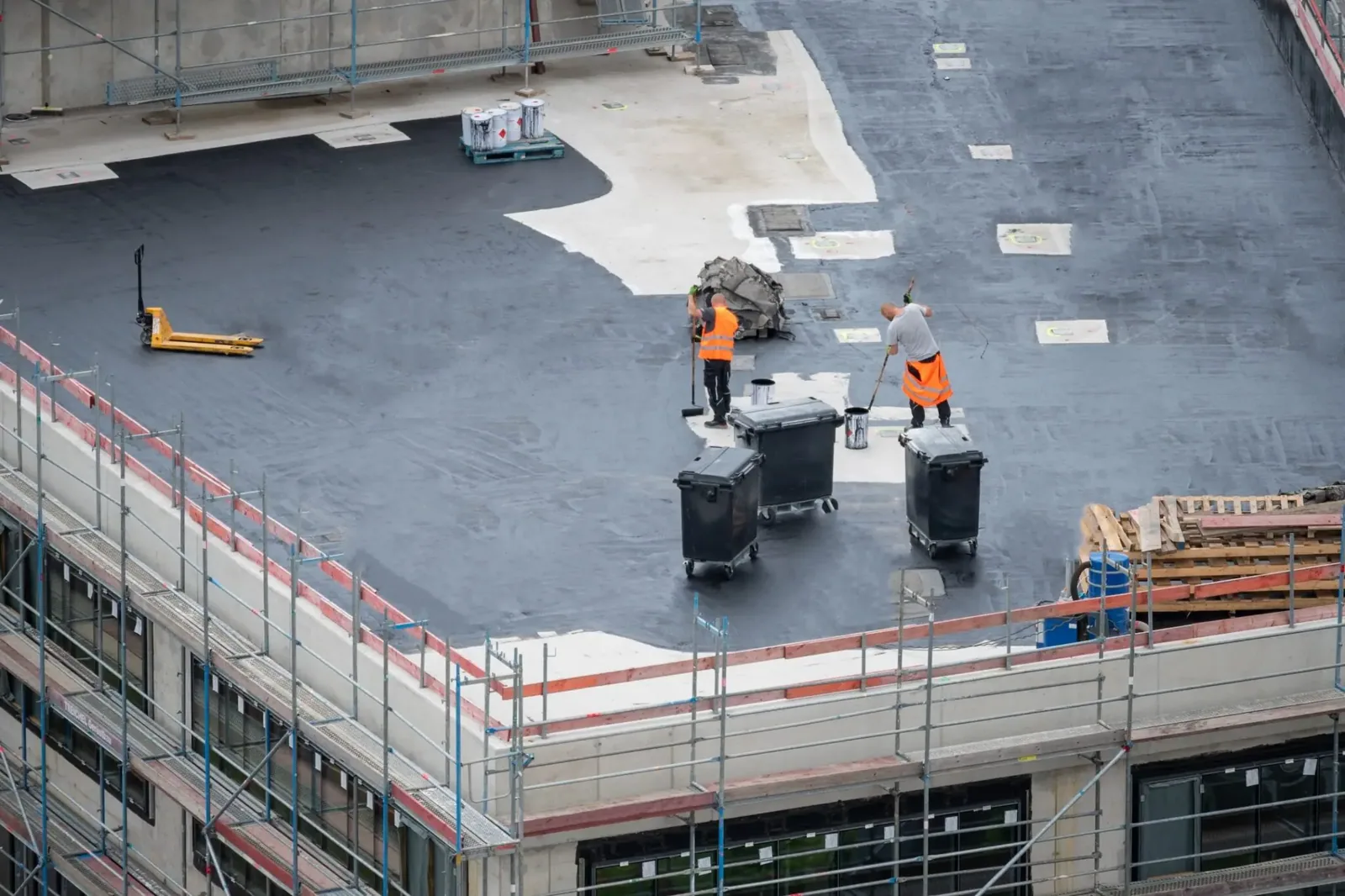
Added layers change the assembly. Before a recover, we check whether existing material is dry, attached, and compatible with the proposed TPO system. We also review finished elevations at drains and curbs. Insulation and cover-board planning can address wet layers, slope, and substrate support before the membrane is installed.
Centerpoint Medical Center received a commercial remodel permit in 2025. That record establishes building activity, not its roof assembly. In an occupied facility, the installation sequence should preserve safe access, protect interior areas, and keep temporary tie-ins secure while each section is completed.
Detail Curbs and Penetrations
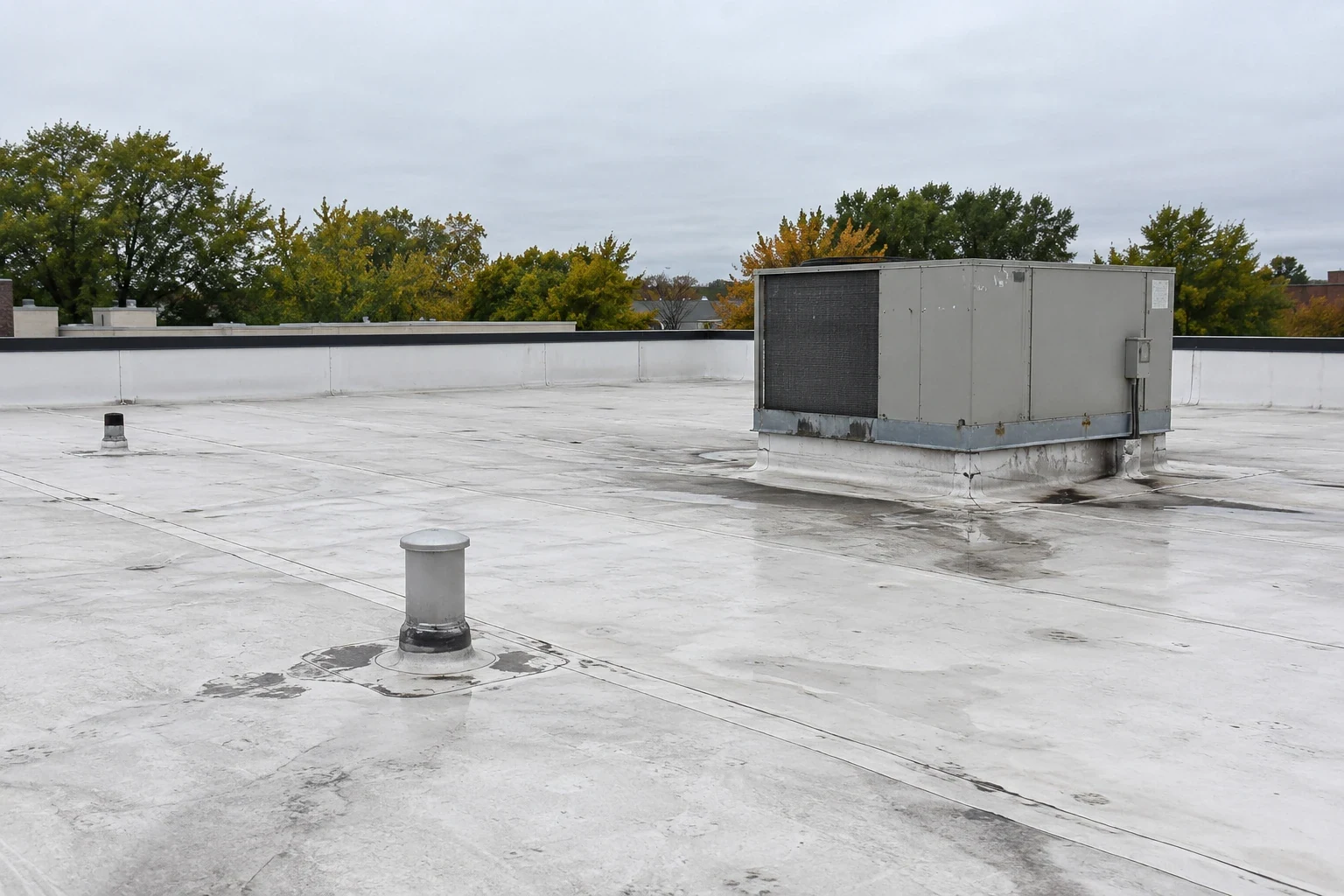
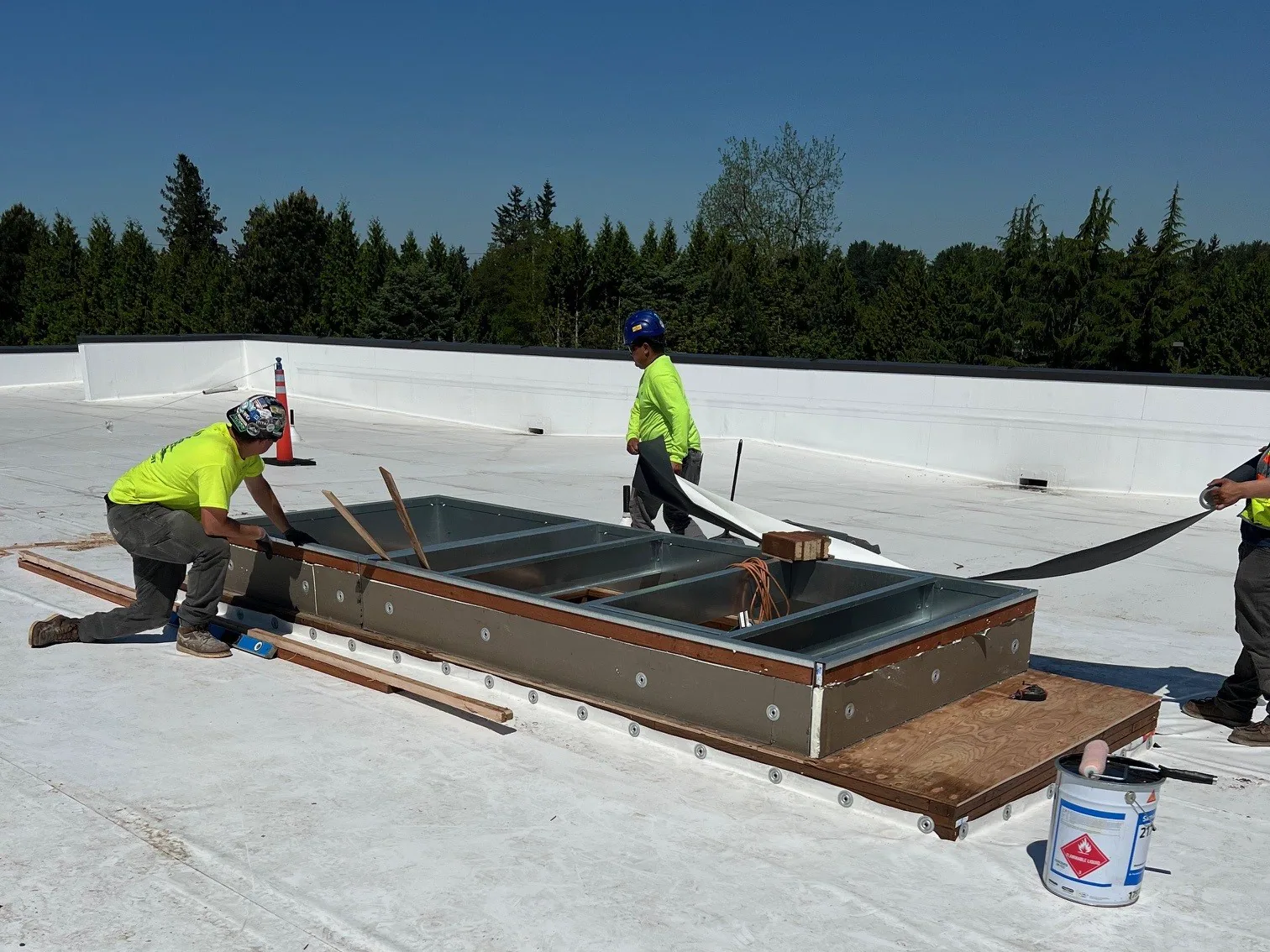
TPO flashing at a pipe, skylight, curb, or equipment base needs to match the membrane and penetration geometry. We inspect corners, preformed boots, field-fabricated details, termination bars, and sealant joints. A new rooftop unit can leave an old curb or opening that needs closure. A sealant bead does not replace a membrane transition or correct a loose support.
Water can travel beneath the sheet before it appears indoors. We compare interior reports with seams, drains, wall interfaces, and penetrations in the suspected area. A leak near a curb may begin at an upslope seam or at a different transition. Leak tracing documents the path before we open the assembly.
Drain bowls, scuppers, and overflows require compatible flashing and clear access. TPO should not bridge a moving joint or cover a blocked outlet. We check for ponding, reverse slope, loose clamping rings, and gaps between the membrane and drain assembly. Drain repair can be coordinated where outlet details and membrane work meet.
Maintenance can find small seam or flashing defects before water reaches insulation and deck. Scheduled roof maintenance records weld condition, penetrations, and drainage points. After major weather, a storm inspection can separate visible damage from the system's preexisting wear.
Compare Repair and Replacement
A localized repair can make sense when the surrounding sheet is flexible, the substrate is sound, and seams remain secure. Compare TPO specifications with a PVC membrane when the design calls for different chemical resistance. Broad cracking, widespread seam failure, wet insulation, weak attachment, or repeated repairs can support a replacement scope. We inspect representative areas and use selective cores where concealed layers need confirmation.
Cost depends on removal depth, insulation, cover board, attachment, roof height, access, curb count, edge work, and disposal. A simple field repair differs from replacing a roof with many rooftop units and perimeter transitions. We photograph the defects and list included areas so the owner can compare a patch, larger repair, and replacement using the same evidence.
Independence publishes local amendments to its building and existing-building codes. The design team and permitting authority determine how those apply to a TPO replacement or recover. We coordinate the specified membrane, insulation, fastening pattern, drainage details, and closeout requirements with the approved design.
For a larger property record, a photo-based condition report can map weld repairs and remaining concerns. Where the existing assembly supports a recover, overlay review can compare the added layers with removal and replacement.
Verify the Completed Assembly
After installation or repair, we inspect welds, patches, terminations, penetrations, and drainage. The closeout record notes the membrane area, repairs, materials, and open items. This gives the next maintenance visit a baseline for checking seams and flashings against the completed work.
Arrange a TPO roof review with Commercial Roofing Independence. We will identify the system, test the relevant interfaces, and set a repair or replacement boundary from the observed conditions.
Commercial Roofing Questions
How can a TPO seam be tested?
We inspect and probe the weld, then use a compatible test method to confirm whether the sheet surfaces fused. The seam condition and surrounding substrate both affect the repair.
Can a TPO roof be repaired after hail?
A repair is possible when damage is localized and the surrounding membrane remains suitable. The 2017 Independence-area hail report is regional context; inspection documents conditions at the property.
Does a white TPO roof need less maintenance?
Color does not remove the need to check seams, flashings, drains, and attachment. Dirt and debris can also collect at low areas and penetrations.
Can new TPO go over an existing membrane?
A recover depends on moisture, attachment, surface condition, added load, and transition heights. We verify those conditions before specifying another layer.
What causes a TPO seam to open?
Contamination, incomplete welding, substrate movement, or stress at a transition can weaken a seam. We inspect the surrounding assembly to distinguish the visible split from its cause. A seam can fail when welding conditions, surface cleanliness, pressure, or the overlap are inconsistent. Repairs start by checking the full seam length, not only the point where water appears inside. We probe the weld, mark areas that release, and check nearby transitions and fasteners for movement. The patch should extend onto sound, clean membrane and be tested after welding before the area is returned to service.