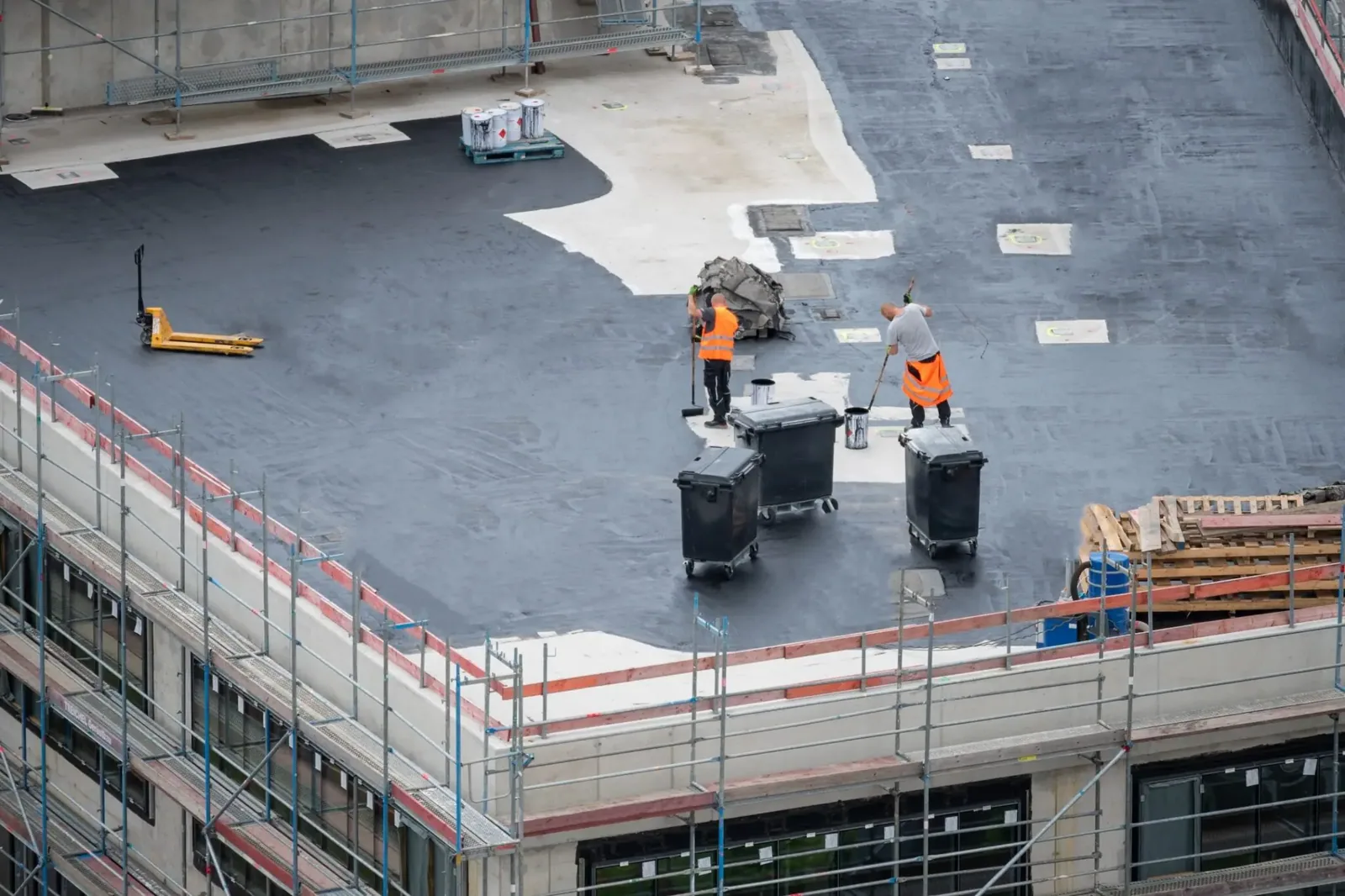
Commercial roofing in Grain Valley, MO, starts with verified roof conditions, safe access planning, and a scope based on the property itself.
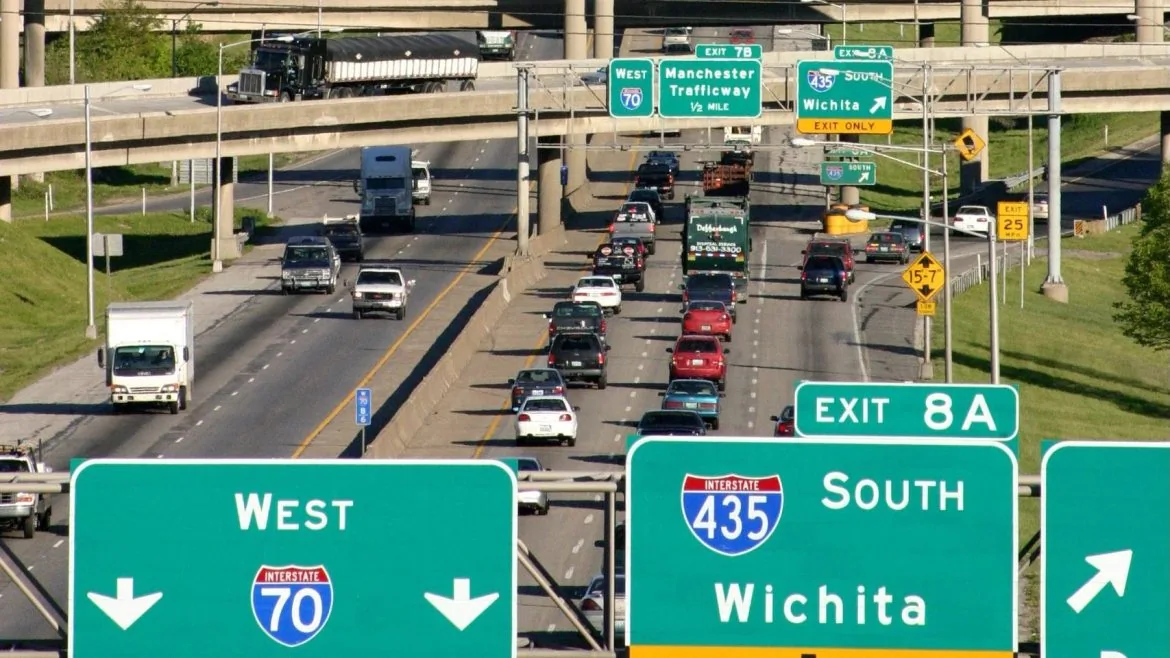
Grain Valley sits on Interstate 70 about 24 miles east of downtown Kansas City, reached from Independence along the US 24 and US 40 regional corridor. The city maintains an available-buildings and development-sites search, and nearby aviation connections include East Kansas City Airport and Lee's Summit Municipal Airport. These facts orient a commercial roof visit, but they do not establish a building's roof area, system, or condition.
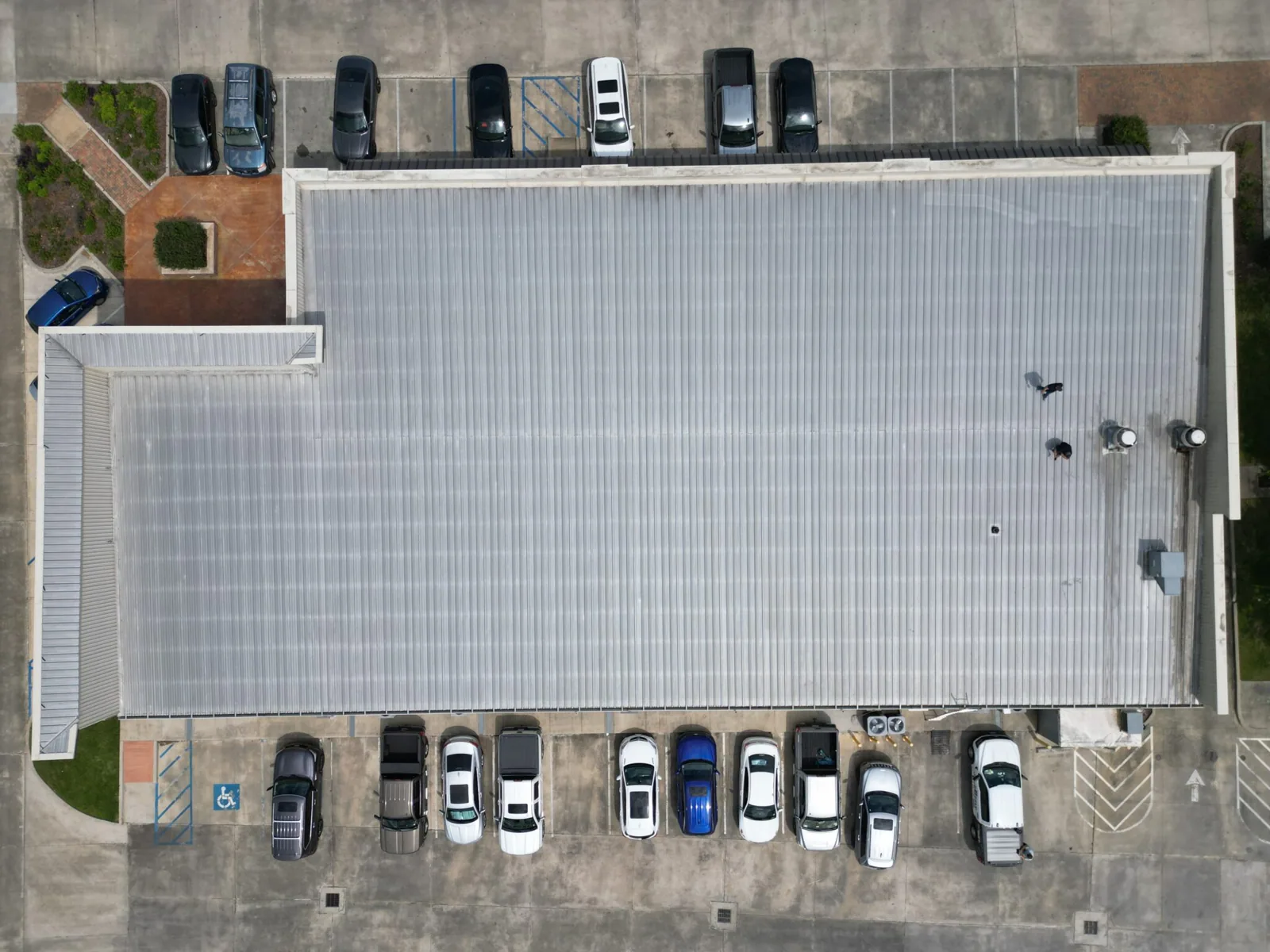
We inspect the address under review, identify membrane or metal, follow drainage, check penetrations and roof edges, and compare the interior leak report with the roof above. The owner or manager confirms loading, roof access, operating hours, and any site restrictions. The resulting scope names observed issues, test areas, and the repair boundary. It can support a planned property improvement without assuming that a development listing implies a particular building structure.
Verify the Property Before Planning
An available-site listing can help a prospective buyer identify a property, but it is not a roof inspection. Before acquisition or construction, we confirm address, roof access, available drawings, repair history, and any occupant or seller restrictions. A vacant building still needs review of exposed membrane, edges, drains, curbs, and interior evidence. If records describe a recent replacement, field details should confirm its current condition and tie-ins.
Grain Valley's location along I-70 and its connection to Independence through US 24 and US 40 can help route crews and deliveries. We verify the actual site entry and material path with the property contact. If the building is near an airport connection, the address alone does not imply aviation use or special roof requirements. The roof assembly, building function, and project documents determine the appropriate system. A due-diligence roof survey can organize visible conditions and open questions for an acquisition or capital decision.
For a prospective tenant or owner, we also note available roof access equipment, parapet protection, and the route to drains. These observations do not replace a structural review or a test of concealed layers. They show what a roofing crew can inspect and what access preparation may be needed. If the property changes hands, the owner can use that list to arrange a second visit with the right keys, records, or safety equipment.
Identify the Installed System
Commercial sites vary. We do not infer a warehouse, office, or industrial roof from the town's development search. We inspect exposed field seams, sheet edges, metal joints, penetrations, previous patches, and roof-to-wall details to identify the existing system. If several roof layers or a coating conceal the deck, a test opening may be needed before the owner chooses repair, recover, or replacement.
Repairs need compatible materials and a stable substrate. A seam weld, adhered lap, bituminous patch, and metal-panel repair use different preparation. We check whether insulation is dry and attachment remains sound around the defect. A photo inspection identifies the visible assembly, the area accessed, and sections that remain unverified. The report helps a new owner compare the actual roof with documents and track follow-up work by location.
Trace Drainage and Interior Reports
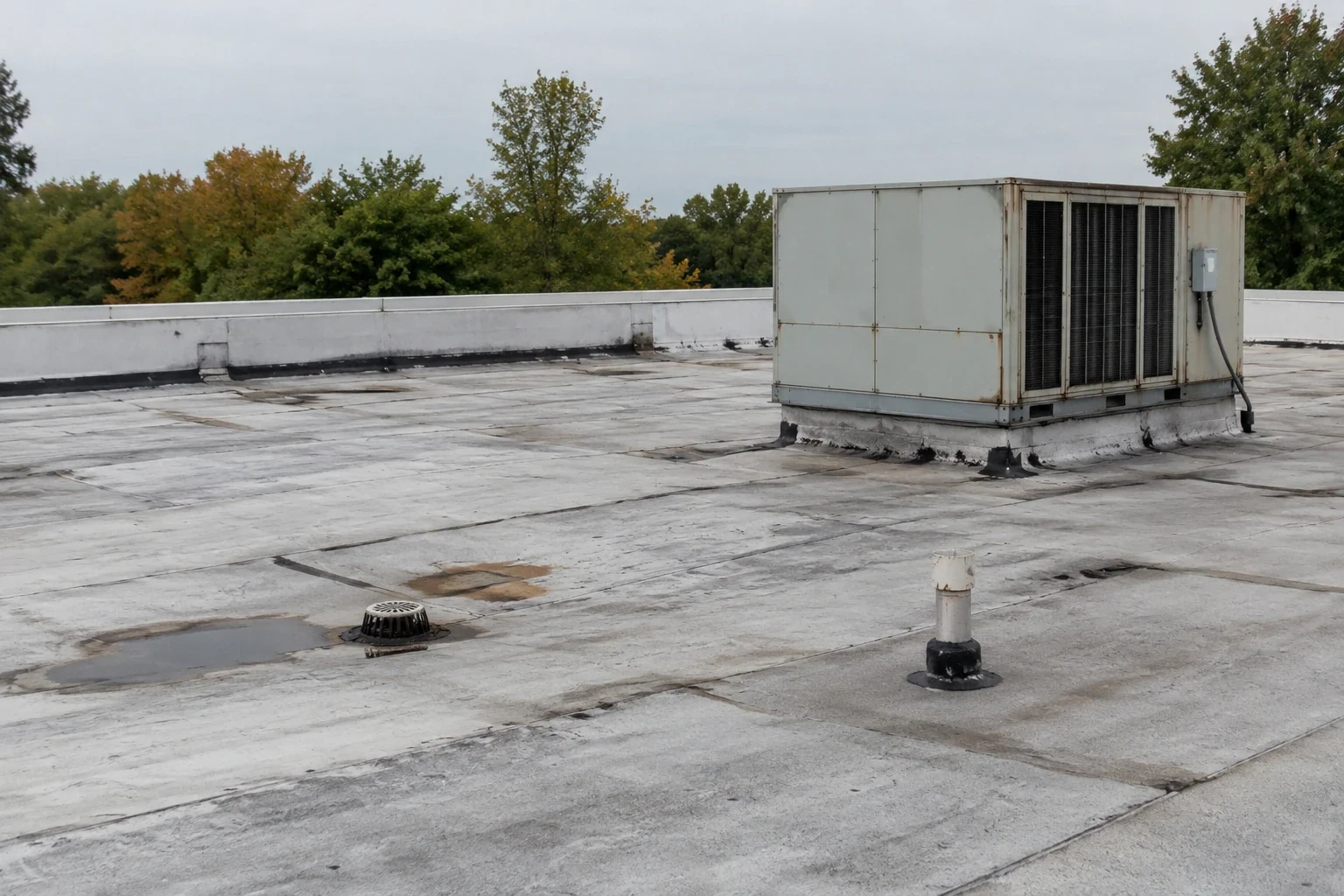
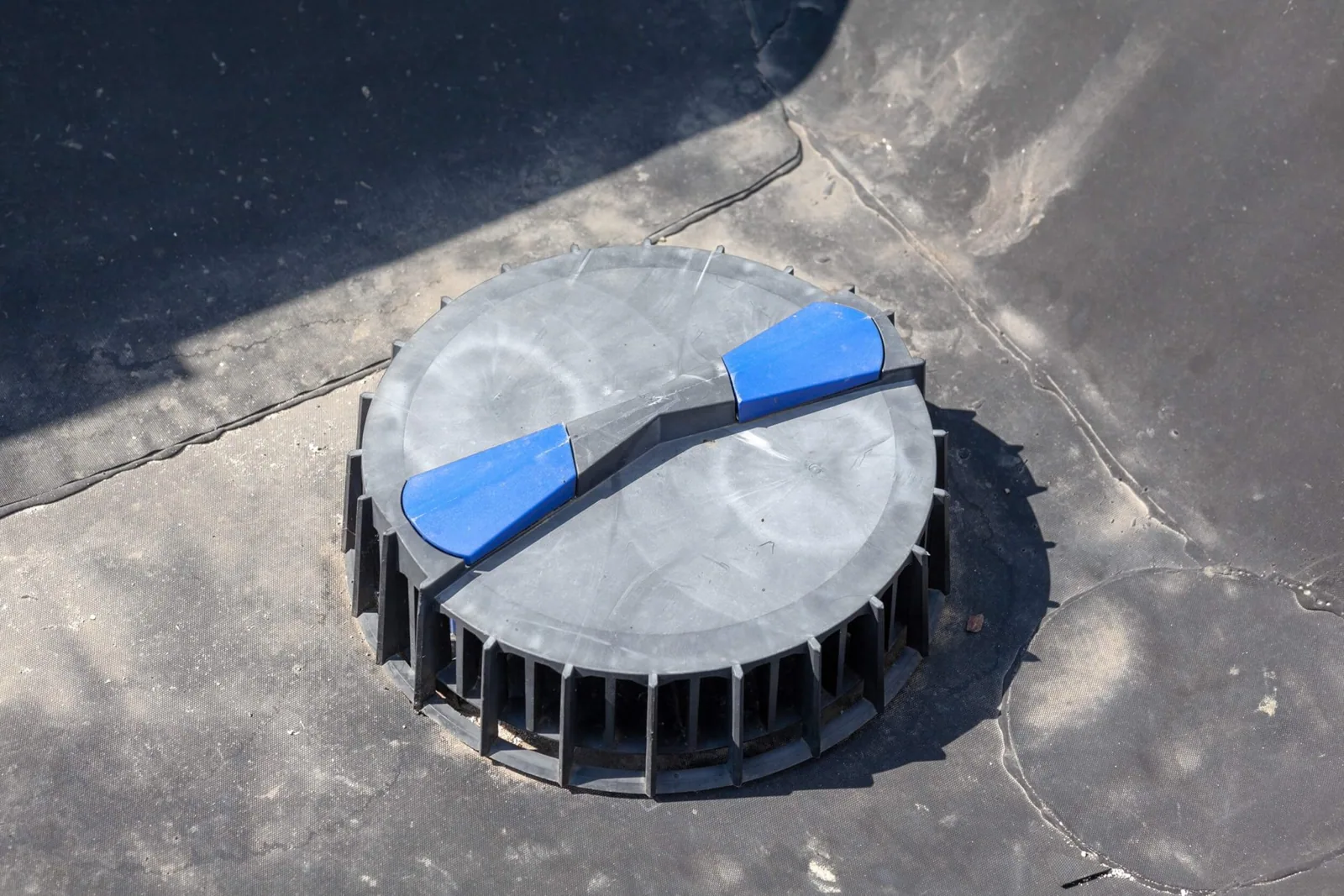
Water should follow the roof's drainage plane toward drains, scuppers, and overflow outlets. We inspect strainers, bowls, clamping rings, leaders, and the membrane around each connection. Persistent ponding is measured after ordinary drainage time. The cause may be debris, a low area, or movement in the deck, and each one leads to a different correction. We also check that added equipment or past patches do not interrupt the route.
Interior moisture may appear away from the opening. We compare the room report with roof geometry and examine the likely path through curbs, seams, walls, and old repairs. If concealed moisture is suspected, infrared mapping can identify test locations. A test opening confirms whether insulation is wet. For a failed drain interface, drain and scupper repair can restore the connection when the surrounding assembly remains serviceable.
Plan Around Regional Weather
Centerpoint Medical Center was the site of quarter-size hail during March 2017. That observation concerns a different property from a Grain Valley roof. We survey the actual building for visible impact, displaced metal, open seams, or water entry.
Application methods also respond to temperature and substrate moisture. Before using adhesive, coating, or membrane accessories, we check product instructions and current conditions. If weather changes during tear-off, the crew reduces the open area and secures a temporary closure. Storm-related repairs should identify the material affected and the observed damage rather than assume impact across the whole service area. Planned maintenance can check drains and edges before seasonal stress.
Compare Repair With Replacement
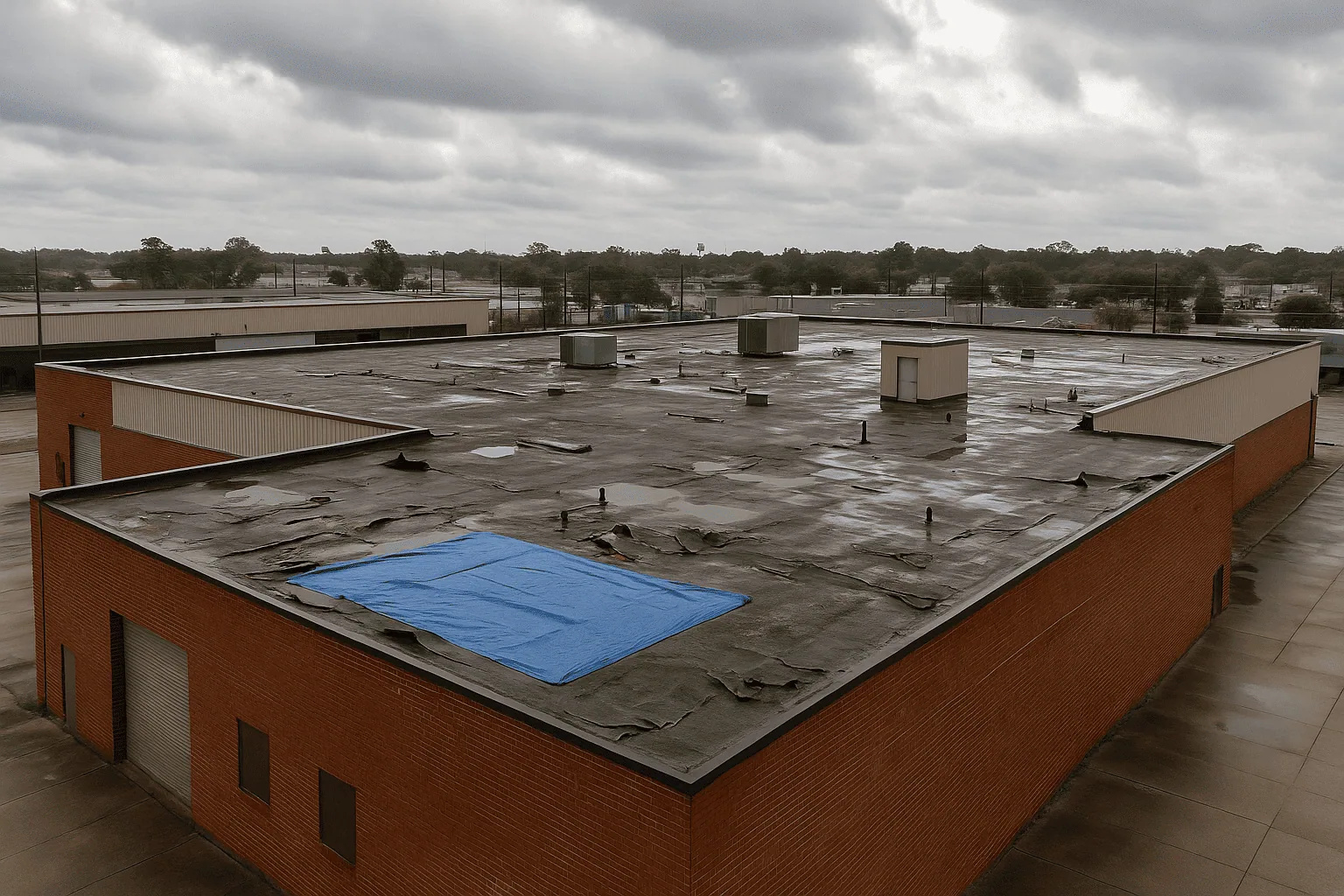
A localized puncture or seam defect may be repaired where surrounding material is dry and attached. Recurring leaks, broad wet insulation, corrosion, or a failed deck can call for larger work. We use test openings to establish what lies beneath the surface and mark the confirmed limit. If tear-off exposes more damage, we document it and obtain approval before increasing the work area.
Recover is considered only after reviewing existing layers, deck capacity, drainage heights, code, and attachment. Replacement may be needed to reach a sound base. Cost and timing follow measured roof area, access, materials, disposal, protection below, and weather. A repair plan describes the defect and tie-in; replacement work names insulation, membrane, edges, drains, and curbs. A purchase or development schedule should include time for testing concealed conditions.
Keep Records for Future Development
A closeout report gives a future owner or facilities manager a record of roof zones, materials, completed details, drainage checks, and unresolved tests. Photos show the repaired section in context. If a later tenant or building project adds equipment, the record points to the closest curb or seam and helps plan the next inspection. It distinguishes a completed repair from an area that was not accessed.
Site availability and nearby airport connections help orient the market, but the roof file remains tied to the property inspected. We also review eastern Independence locations at Eastgate Commerce Center and Buckner, Missouri. For a Grain Valley project, the owner receives an address-specific report and a recommended next step based on confirmed conditions, access, and intended building use.
For a commercial property near the I-70 corridor in Grain Valley, the site contact should confirm where a service vehicle can park and how materials reach the roof without crossing active customer or delivery lanes. The roofing scope can then identify the work boundary, temporary protection, and any coordination needed before a lift or equipment move. At closeout, note the assembly observed, repaired details, and outlet conditions, with photographs that show their locations. If the inspection covered only one roof plane, say so in the record and list any area that remains unexamined. This gives the owner a reliable starting point for later maintenance without overstating what the visit covered.
Commercial Roofing Questions
Does an available-building listing include a roof assessment?
No. We inspect the property and review drawings or maintenance records to identify roof layers, drainage, defects, and concealed test needs.
Does the nearby airport connection mean a building has aviation requirements?
No. A nearby airport listing does not establish a property's use. We base the scope on the actual building and applicable project documents.
Can a roof be inspected before purchasing a Grain Valley property?
Yes. We can document visible system, drainage, repairs, and access limitations, then identify questions that need testing before closing or budgeting.
How do regional weather reports affect a roof decision?
They inform the inspection timing. The repair scope comes from impact and water entry found at the address, not from a regional report alone.