Plan school roof repairs in Independence, MO around student schedules, secure access, classroom protection, drainage, and documented summer work phases.
District roof work has to fit the academic calendar, building access, and rooms that remain in use during breaks. One campus may have classrooms, offices, a gym, kitchens, and additions with different roof systems. The Independence School District is one of the city’s major employers. William Chrisman High School is listed in the Benton neighborhood, while MCC Blue River in Independence hosts technical and public-safety training. We inspect each district building and plan the work with facilities staff. School properties across the regional service area, including Kearney, need separate roof records for each campus and building.
Keep Each Campus on Its Own Map
Start with a roof plan for each school. Label wings, additions, elevations, drains, scuppers, equipment, roof edges, and access points. Record membrane or panel type, deck where known, insulation, prior repairs, and any area that cannot be reached. A district may use similar buildings, but each roof still has its own maintenance history and field condition.
Compare interior leak reports with the roof map. A ceiling stain in a classroom does not necessarily sit below the entry point. Trace the route through seams, drains, curbs, parapets, and changes in plane. Mark whether the source was confirmed or whether more access or testing is needed. The condition report can preserve findings, photographs, and future test locations in a record a facilities team can revisit.
When core cuts are allowed, identify them by campus and roof area. Use representative spots near additions, prior leaks, and suspected moisture. If destructive testing is not approved, state the limitation and avoid treating a visual survey as confirmation of concealed layers.
Use the Calendar Without Rushing
Summer break may open longer work windows, but district schedules also include staff days, summer programs, athletics, food service, and community use. The facilities contact identifies which spaces remain active and when. A scope should connect the school calendar to each roof phase, material delivery, noisy work, and daily dry-in. The contractor's production rate does not replace the district's access plan.
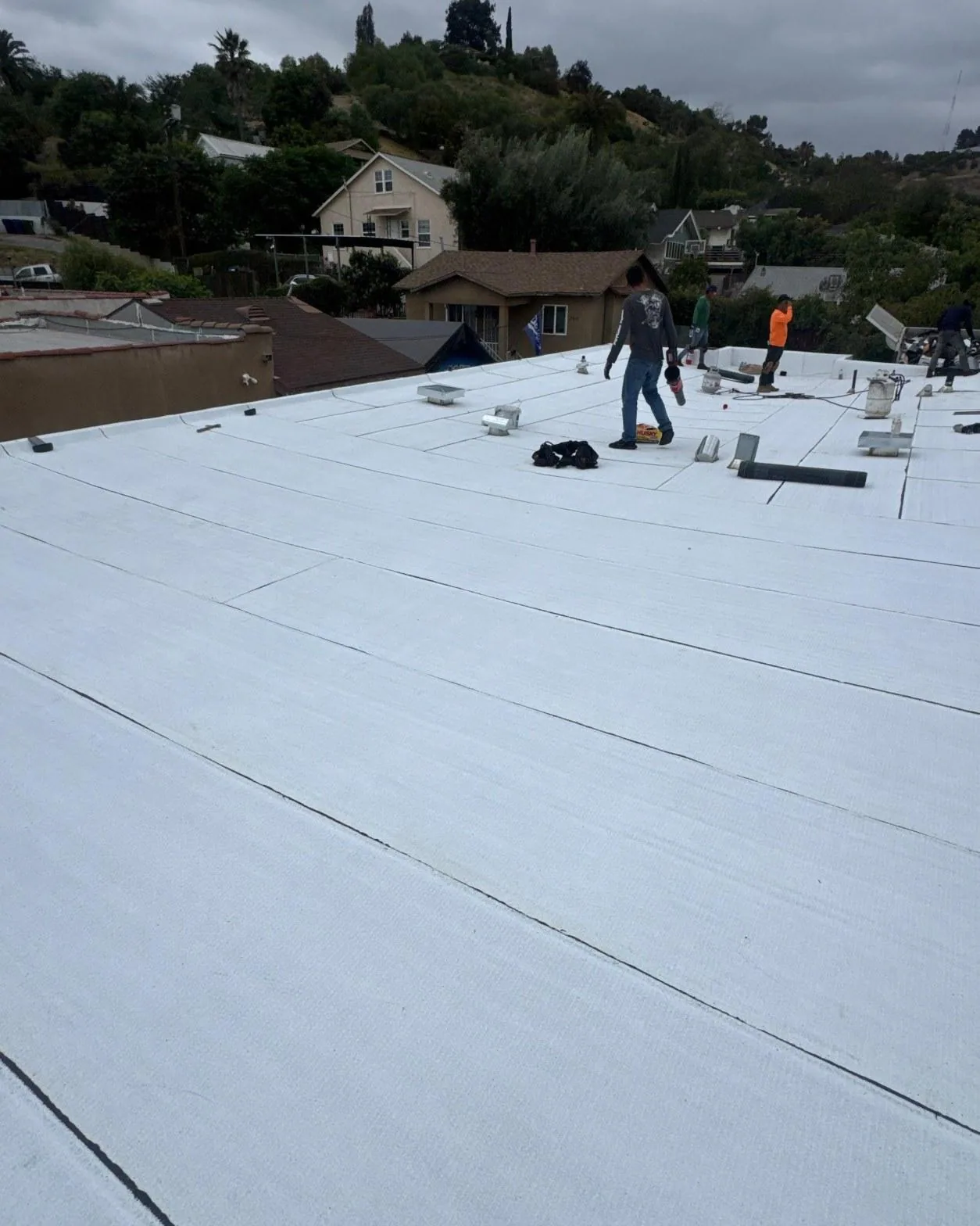
Divide removal into sections that can be made watertight before a shift ends. Note where crews enter, where lifts stage, and how students and staff stay outside the work zone. If work occurs while a building is occupied, isolate the area below and check for debris, odor, vibration, and water before reopening. Occupied-campus phasing can define closure points across a wing or roof elevation.
Plan the long lead items early. Equipment shutdowns, replacement curbs, custom metal, and weather delays can alter the schedule. If concealed damage changes the work quantity, photograph it and get direction through the district's approval path before adding scope. Keep a contingency window for weather rather than exposing more roof than the crew can close.
Protect Rooms Below the Roof
Classrooms, libraries, labs, gyms, and cafeterias have different interior conditions. The district identifies room use, equipment, finishes, and protection needs. Do not infer sensitive spaces from a school name or a room's appearance. Confirm where ceilings can be opened, what contents must move, and who approves interior access.
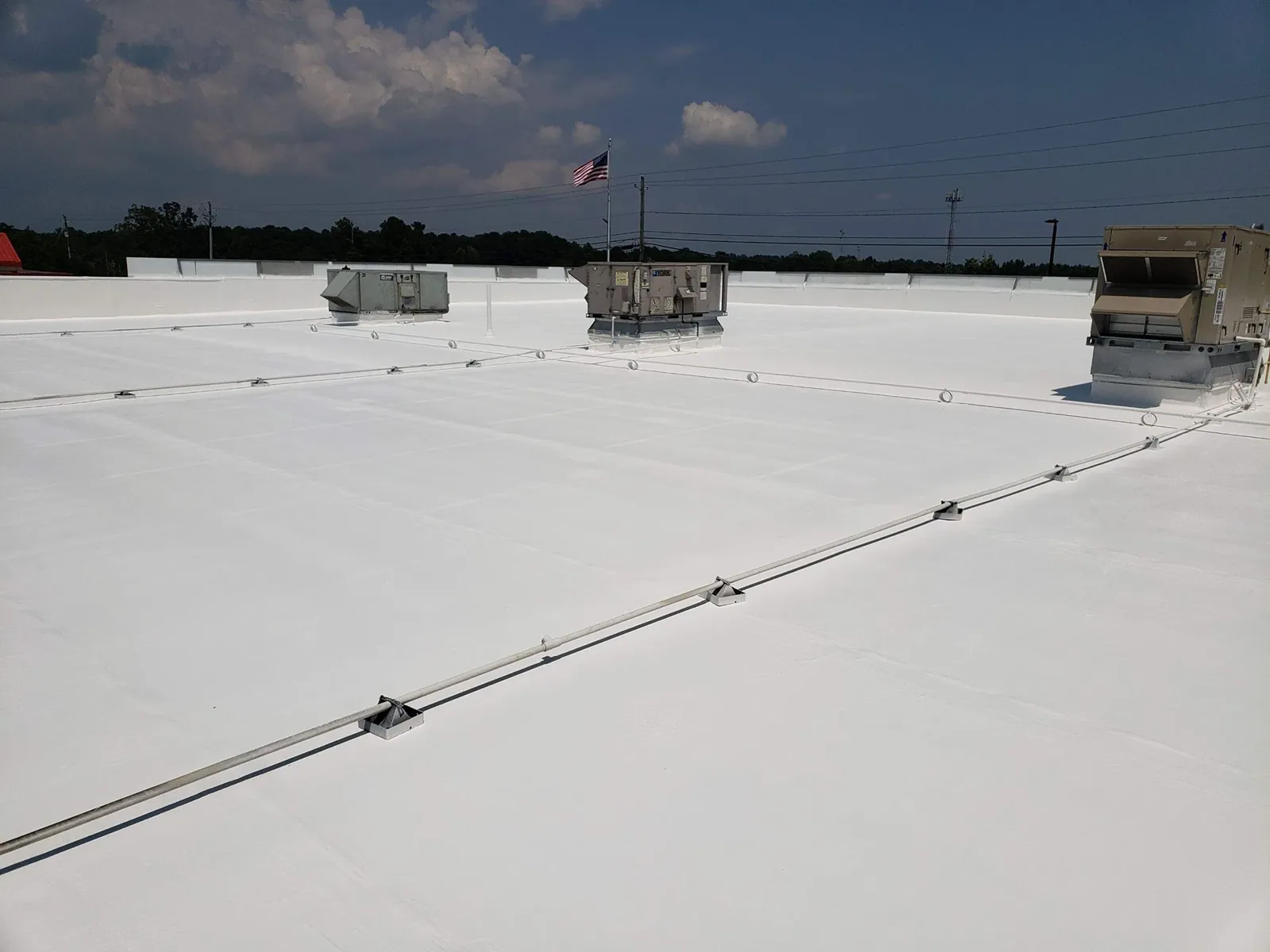
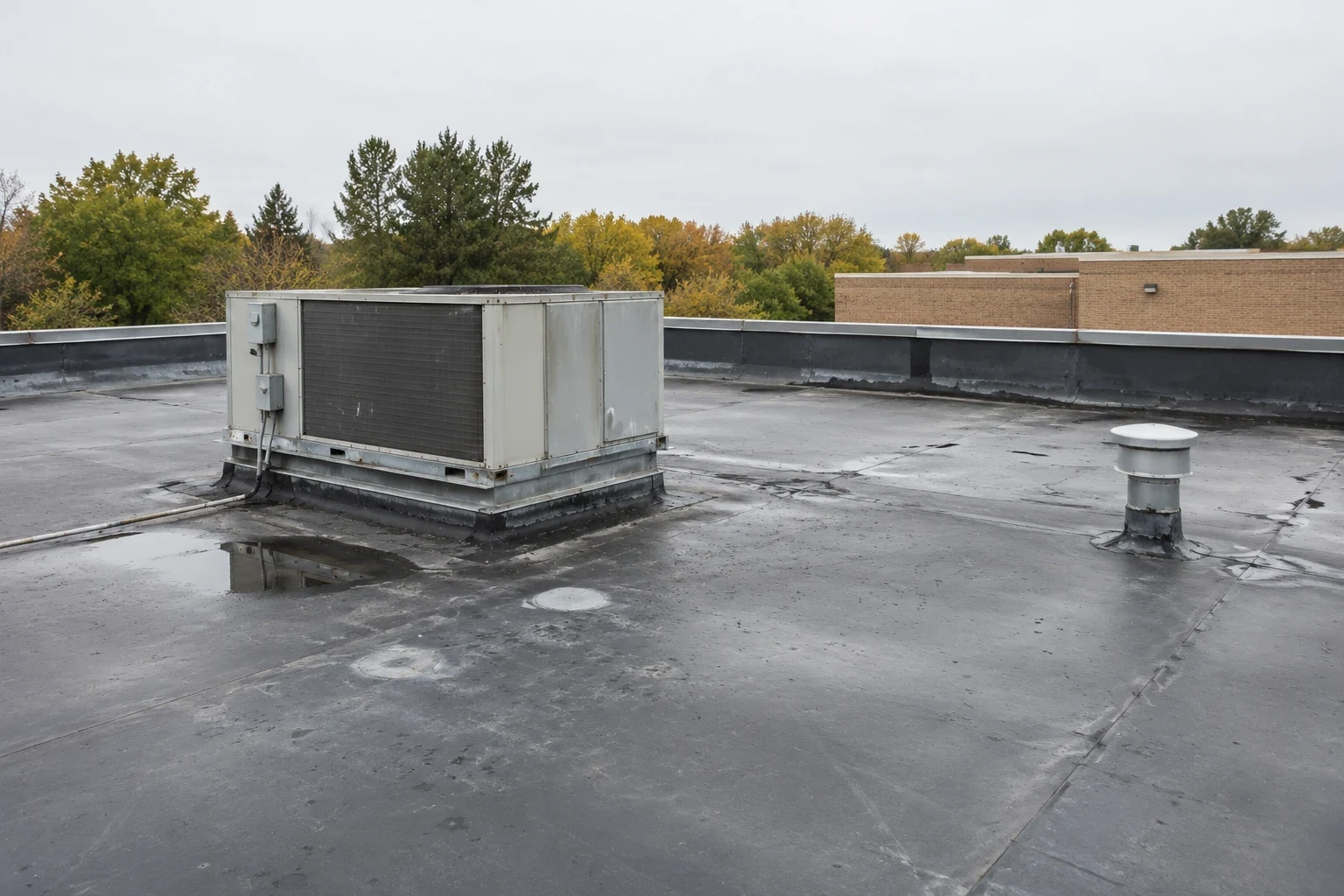
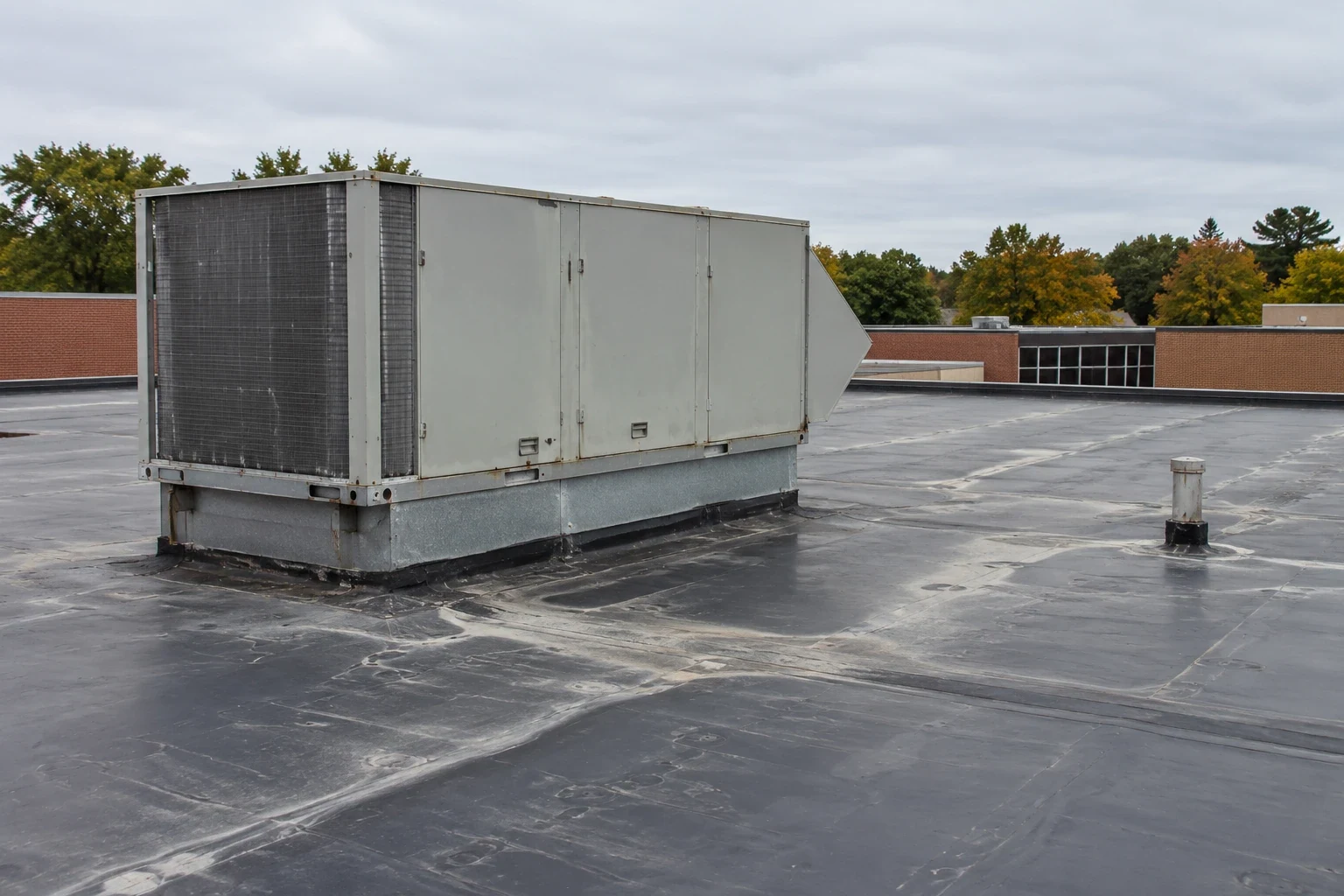
Rooftop units and exhaust equipment can affect occupied rooms if shutdowns or lifts are not coordinated. Inspect curbs, flashing height, penetrations, support bases, and service paths. Assign mechanical and roofing responsibilities for temporary protection and final flashing. If a unit is removed, inspect the curb and substrate before closing the roof. An abandoned penetration needs a permanent closure, not a surface patch that can separate with movement.
For each school, the facilities team identifies the spaces below the work area, contents that need protection, and mechanical systems that require coordination. The roof map and interior plan use the same building and room labels, so the crew can close the correct section and staff can verify which rooms may reopen.
Use Local Weather as a Prompt
Kansas City climate normals use the airport observation station. Winter freeze and summer heat put movement cycles on roof edges, seams, and sealants. Those station readings are regional air temperatures, not roof-surface measurements. Severe-weather observations near Independence include hail and tornado-related wind damage at specific locations. A storm record can prompt inspection, but it does not prove damage at every school.
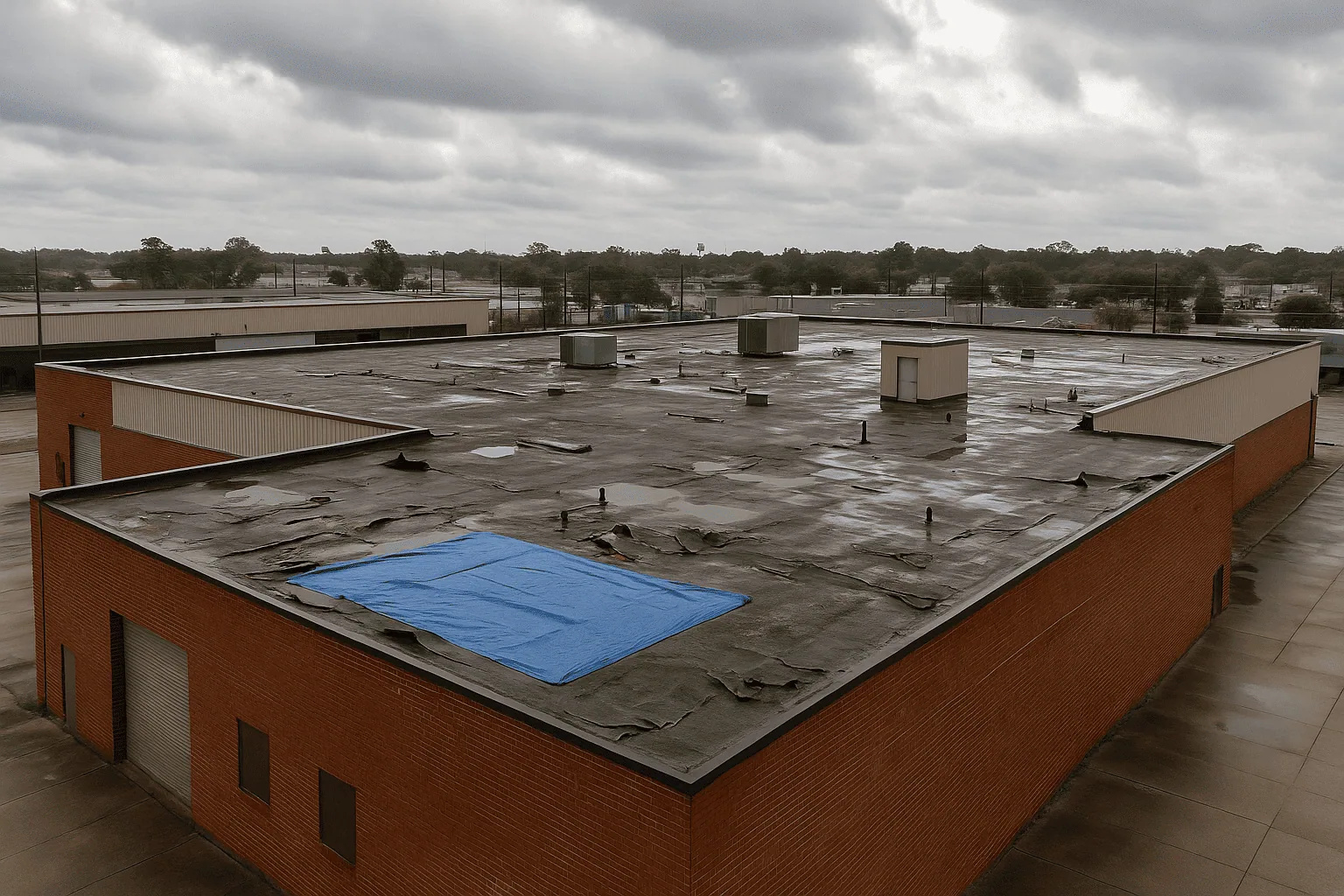
After a reported hail or wind event, inspect the roof for punctures, membrane bruising, displaced edge metal, open seams, loose fasteners, and damage at equipment supports. Record direct findings by building and area. Keep any insurer or district claim file tied to photographs, dates, and test results. Storm inspection can document observed conditions before permanent work obscures them.
Local school and higher-education institutions contribute to Independence's workforce and services. The district's public facilities share a city code environment, but project requirements depend on scope, adopted code, and the authority having jurisdiction. Review those details with the design team before procurement.
Make Bid Scopes Comparable
A district scope should name each roof zone, material, removal limit, substrate assumption, insulation work, edge details, drains, equipment moves, protection, and closeout. Separate verified base work from alternatives for wet insulation, decking, or concealed framing. If two bidders make different assumptions about removal depth or daily dry-in, their numbers are not comparable.
Repair is appropriate when the defect is localized and the surrounding material remains sound. Widespread moisture, recurring seam failure, corroded metal, or loss of attachment can require a larger plan. Recover only when existing layers are stable, dry, and suitable for the new system. If testing is not permitted, state the uncertainty and its effect on the scope.
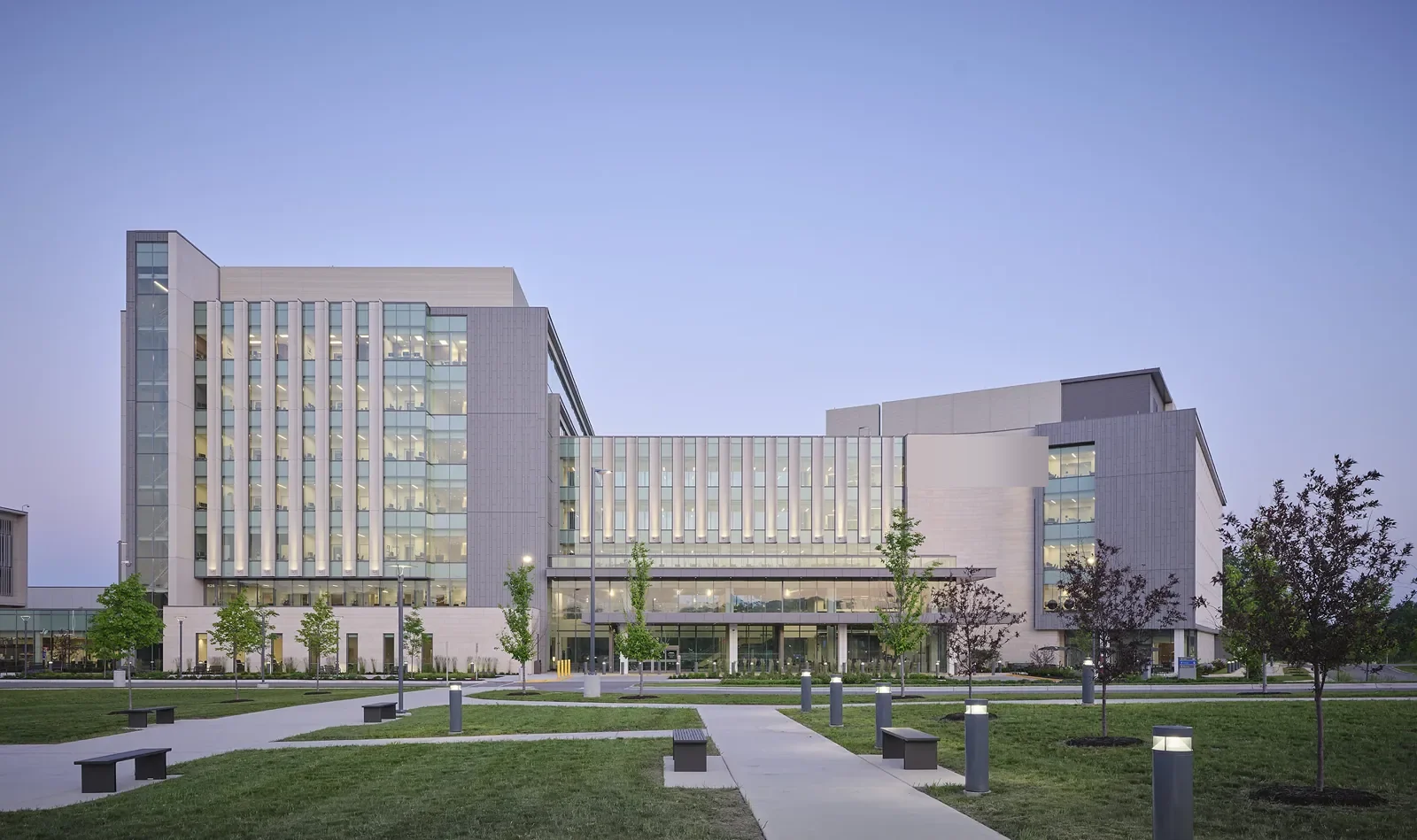
At completion, provide roof maps, photographs before concealment, materials, testing, warranty information when applicable, and unresolved maintenance items. Public agencies and health systems also need controlled access and occupied-building coordination, but student schedules and district approvals set this sequence. School building reviews can be scoped by assembly and campus. Schedule a district survey to prioritize observed needs and prepare a clear work plan.
A district-wide plan should compare schools using common fields but keep each roof recommendation tied to its own inspection. For every building, record the system, area, drainage, reported leaks, access limits, and work needed before the next school term. Then separate projects that can be completed during a short closure from those requiring design, procurement, or trade coordination before a construction window. Review the proposed sequence with facilities and school leadership, including where crews will stage and how interior spaces will be protected. If a condition changes after removal, provide a location-specific photograph and revised quantity for approval. The district can then prioritize capital work across campuses while retaining a clear record of what remains unexamined.
For an individual school, confirm the room, roof zone, and staff contact before treating a service request as ready for closeout. This makes the repaired area traceable when facilities reviews work across the district.
Commercial Roofing Questions
Can a roof replacement be finished during summer break?
The schedule depends on roof area, removal, material lead time, weather, access, and concealed conditions. District programs may continue during summer, so facilities staff identify the spaces and dates available for each phase.
How should the district handle a leak during the school year?
Protect the occupied room, notify facilities, and record the location and time. A roof inspection follows the water path, secures active entry, and states whether the action is temporary or permanent.
Can one school inspection represent the entire district?
No. Each campus needs its own roof map, system identification, repair history, and test locations. Shared construction details can guide sampling but do not establish identical condition.
What happens if crews find wet insulation?
Photograph and map the exposure, protect the opening, and follow the district's approval process before expanding removal. The added scope should state the measured area and replacement materials.