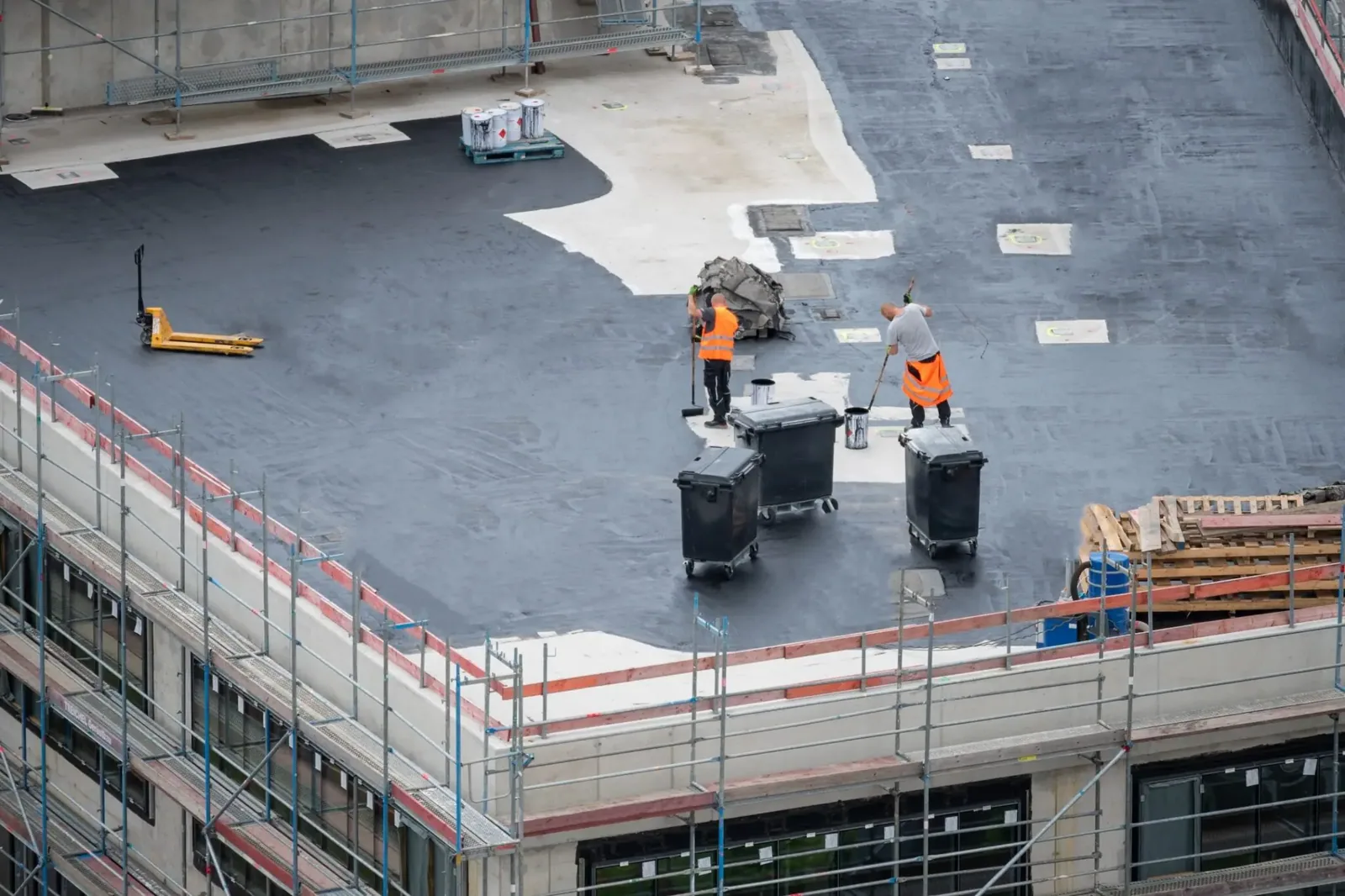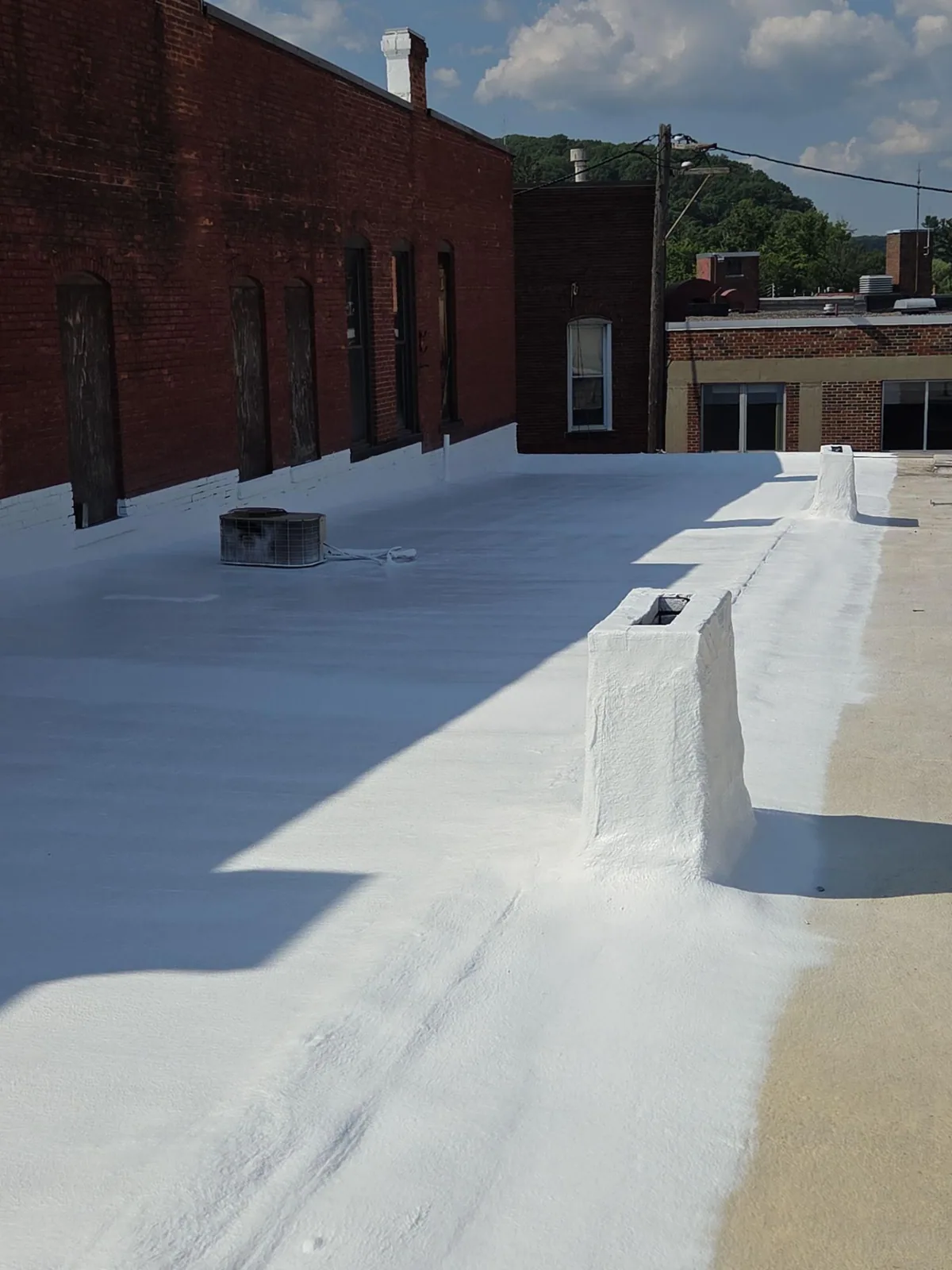
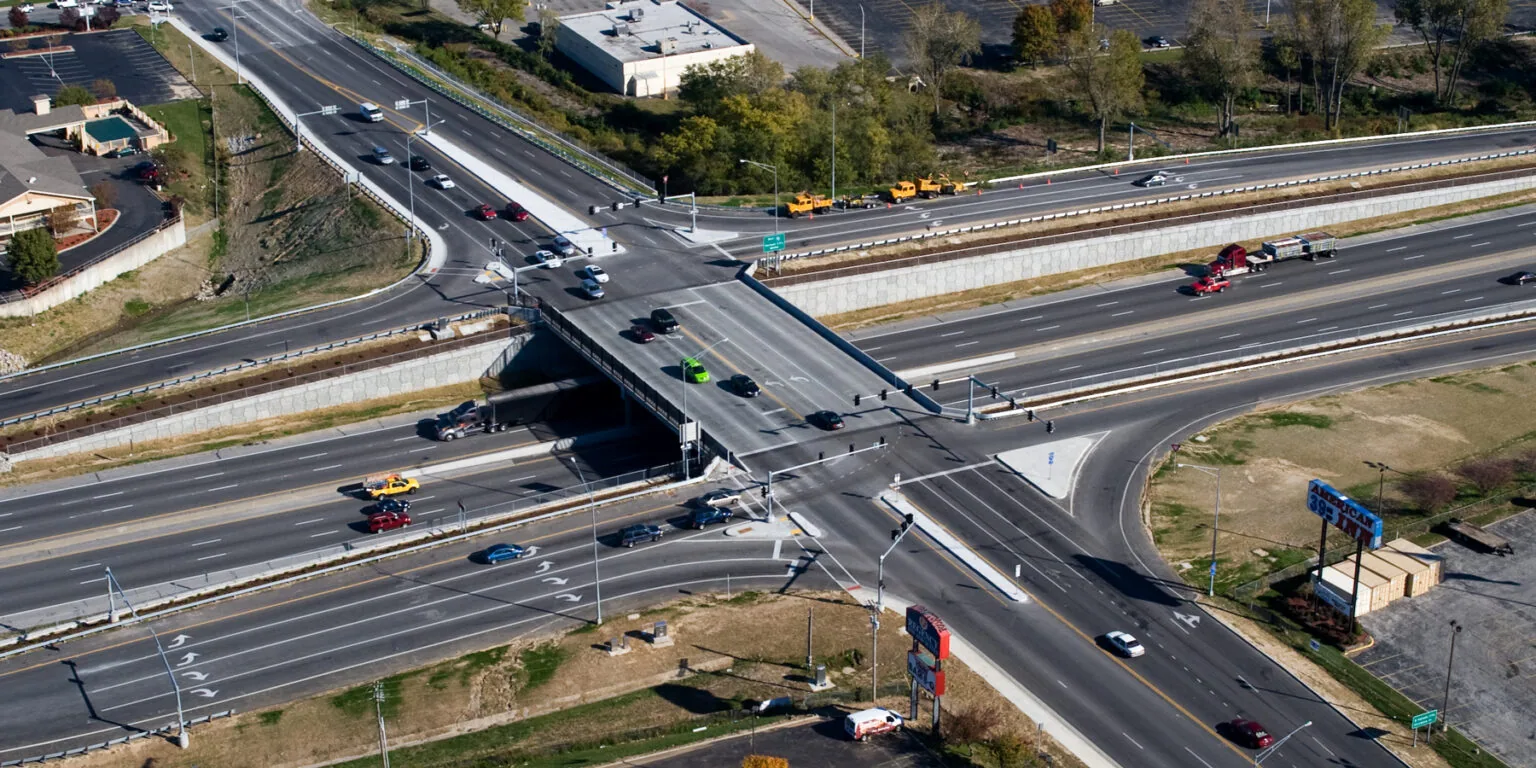
Roofing along Noland Road in Independence, MO, needs an assembly-specific scope that accounts for drainage, access, and active corridor work.
Noland Road is one of Independence's core redevelopment areas, and the City is upgrading a 1.7-mile section between US 24 and Fair Street. That corridor work covers sidewalks, trails, intersections, and lighting. Commercial roof work nearby also needs a clear access and staging plan. The street project does not reveal what any building's roof contains, so we begin at the property: identify the membrane or metal system, trace drainage, and mark the work boundary before materials arrive.
A roof visit starts with the building contact's route, roof access, operating hours, delivery needs, and any planned street restrictions that affect the specific address. We inspect seams, drains, flashings, equipment curbs, edges, and interior water evidence. Then we distinguish active defects from routine maintenance. A well-scoped repair can address the roof condition while keeping the building's daily use and nearby access in the project sequence.
Coordinate Access Along Noland
Work on a north-south commercial road can involve vehicle entry, material lifts, waste removal, and deliveries. Noland Road is a major corridor, and Independence prioritizes major commercial roads for maintenance. We verify the current property-specific conditions with the site contact and confirm any permits or traffic controls required for the planned work. A general road project schedule is not a substitute for checking the actual work zone and entrance.
Before mobilization, we set a material staging area, protect pedestrian paths, and schedule lifts to avoid blocking a tenant entrance longer than necessary. If the roof is occupied below, we identify sensitive rooms and interior protection. For replacement, we plan each opening so tear-off, installation, and dry-in can be completed within the weather window. Phased reroofing can keep the work area smaller and provide a clear end-of-shift closure check. Coordination is part of the scope, not a last-minute field adjustment.
Confirm the Roof System
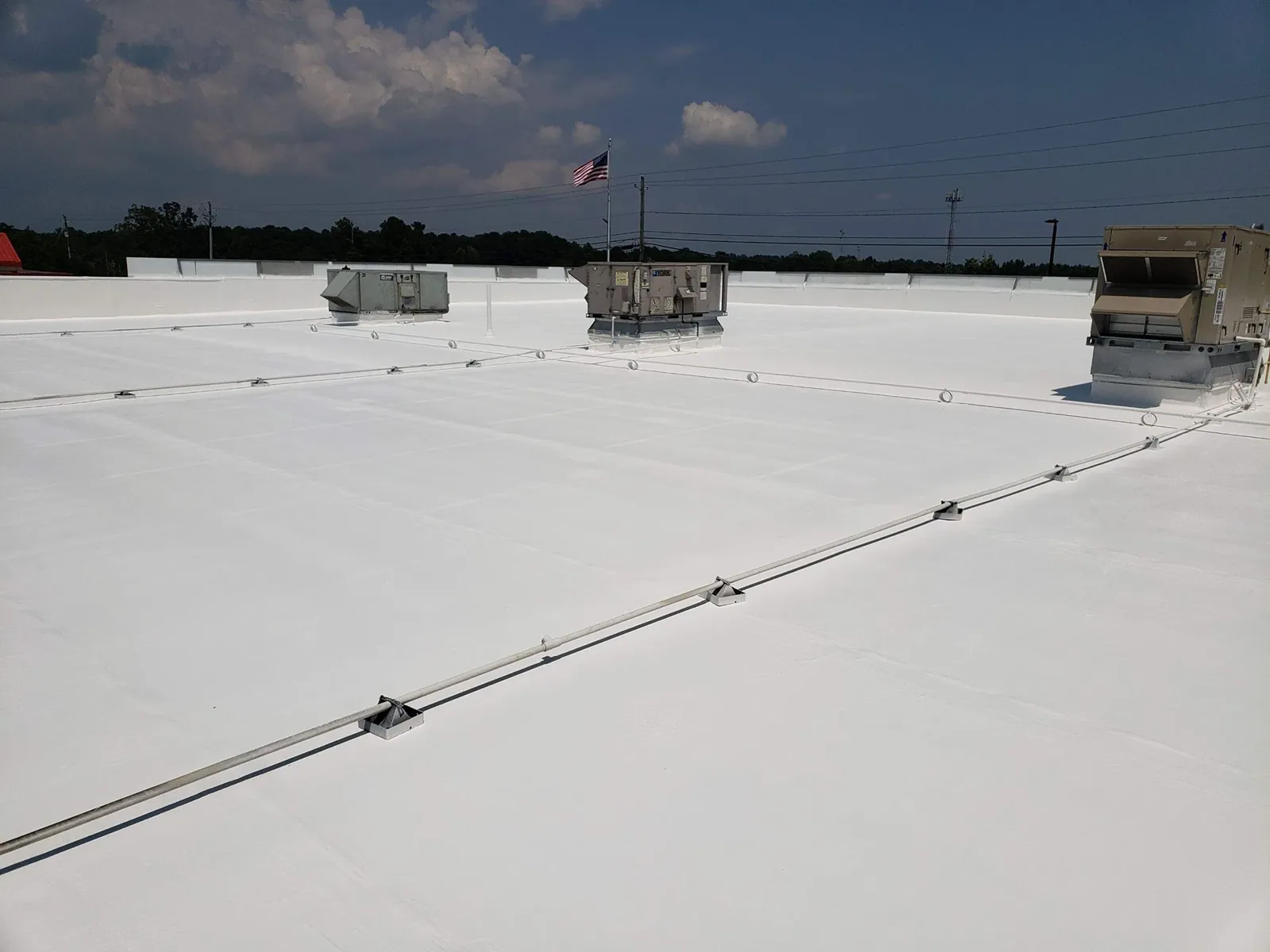
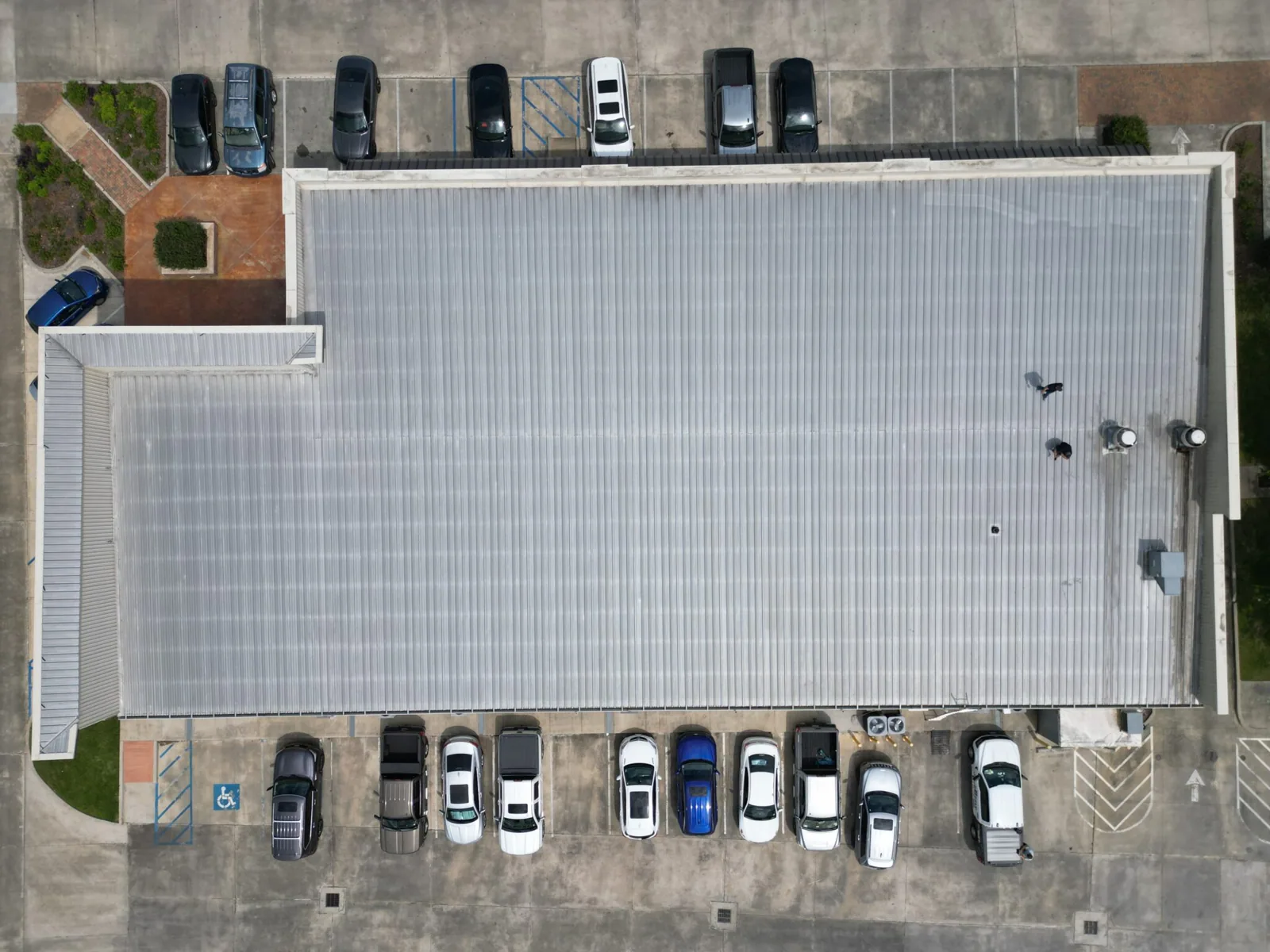
Road frontage does not predict the roof. A building can have a single-ply membrane, modified bitumen, built-up roof, metal panels, or a mixture from prior additions. We identify the visible material at field seams, walls, penetrations, and edges. If documents list a system, we compare them with site conditions. A coating or patch can conceal an older layer, so the assembly may require a test opening before repair materials are selected.
Compatible repairs depend on a sound substrate and the actual seam method. TPO and PVC seams are heat-welded; EPDM uses compatible seam products; modified bitumen and built-up systems have their own ply and surfacing details. Metal panels require attention to fasteners, laps, sealants, and thermal movement. We record roof zones and components rather than applying one solution across an unverified area. An inspection with photographs provides a baseline for the owner and identifies items that need testing before a larger construction decision.
Check Drains and Water Routes
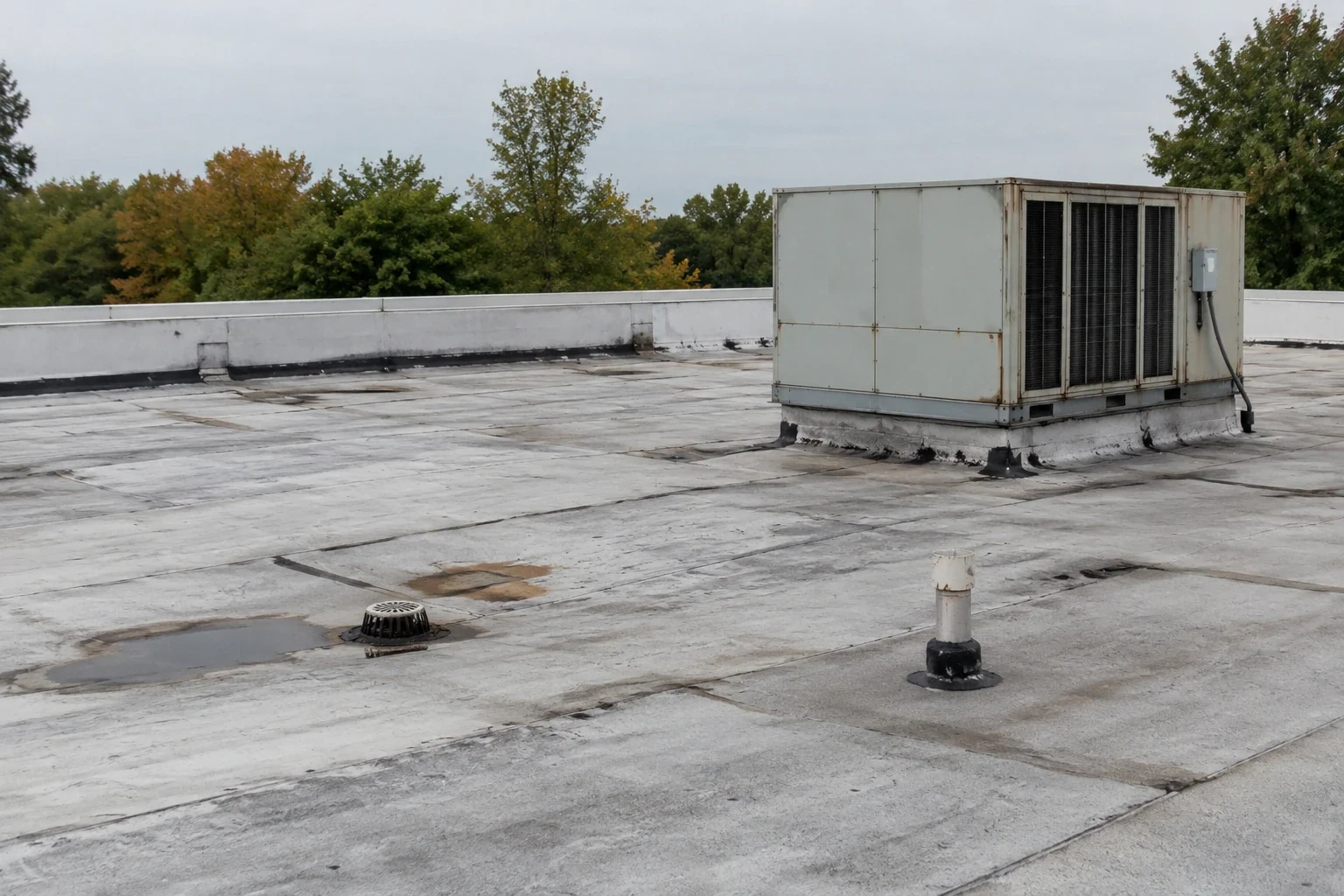
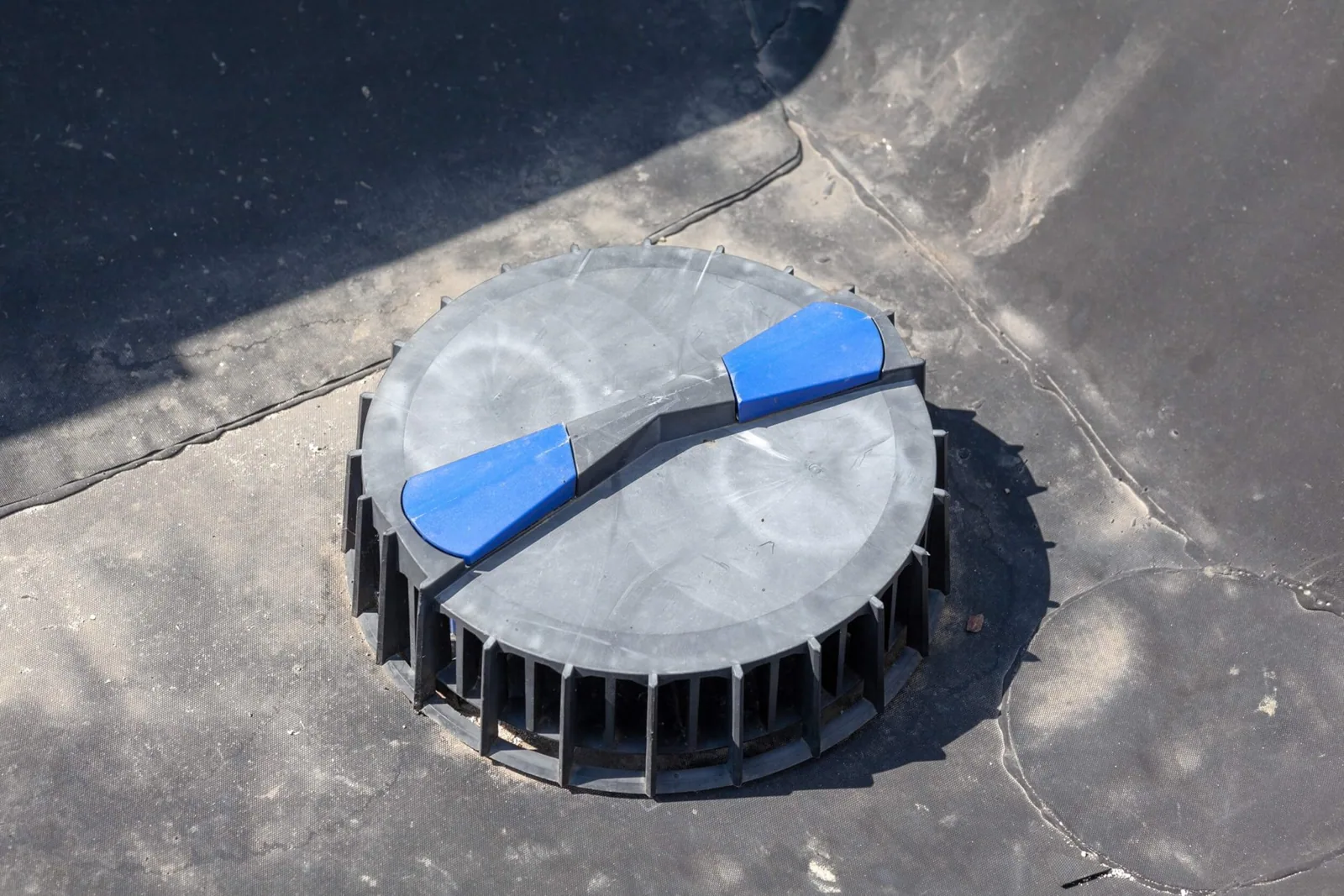
Drainage problems can become more visible after work changes roof edges or nearby grades, but we evaluate the roof itself. We follow the surface slope to drains and scuppers, check strainers and overflow points, and look for a curb or repair that dams water. We record ponding after the roof has had time to drain. A low spot may reflect deck deflection, insulation layout, or a blocked outlet, and those causes require different corrections.
Interior staining is another clue. Water can run along the deck before reaching a light, wall, or ceiling joint. We inspect upslope transitions and penetrations before patching the visible location. If moisture may be trapped under a membrane, infrared survey work can locate anomalies for confirmation. When an outlet or roof drain detail has failed, drain and scupper repairs can restore the water path if surrounding materials are sound. The repair record states what was verified and what remains open.
Set a Measured Repair Scope
A repair should stop at sound, compatible material. We remove failed membrane or flashing, prepare the substrate, and tie in the patch using the proper method for that roof. If wet insulation or failed attachment extends beyond the initial opening, we photograph it and define the added area before reconstruction. This avoids burying an unaddressed defect beneath a new surface layer.
Repeated leaks or widespread deterioration can support replacement rather than another local patch. A recover may be possible only if existing layers, deck condition, drainage heights, code, and attachment requirements permit it. We compare those choices with the confirmed field condition. Commercial roof repair can address isolated defects; full replacement rebuilds the assembly where the existing system no longer provides a dependable substrate or water path. The scope describes transitions, edge details, and the limits of the work.
Time Work for the Local Season
A quarter-size hail observation was logged at Centerpoint Medical Center in March 2017. For a Noland Road property, the roof surface and flashing show whether damage occurred there. We photograph punctures, displaced edges, split seams, or open laps and then set the repair boundary. Temporary protection can limit interior exposure during investigation.
Before applying adhesives, primers, or coatings, we check substrate condition, temperature, and the manufacturer's instructions for the selected product. Forecast changes can require a shorter work section and a revised dry-in step. A maintenance visit can clear drains, check attachment and flashings, and document any deterioration before the next season. A preventive roof maintenance plan assigns follow-up priorities without confusing planned work with a confirmed failure.
Keep Road and Roof Records Separate
The City's corridor improvements and a private roof project may proceed on different schedules. We keep the roof scope tied to the building, owner authorization, and inspected conditions. Closeout photos should show the repaired roof zone, materials, seams or fasteners checked, water route, and any deferred item. If a street-access condition changes, we record the updated staging or delivery plan without changing the documented roof diagnosis.
Noland Road's project limits run between US 24 and Fair Street. A commercial property elsewhere in Independence receives a separate site review; our service area also includes Eastgate Commerce Center and Historic Independence Square. At each address, the property team confirms access and operating requirements. For Noland Road work, a clear contact and daily closure plan help keep the roof protected while roadway improvements continue nearby.
For a property along Noland Road, distinguish the private roof work zone from any public corridor work nearby. Confirm the contractor's entrance, staging area, and delivery route with the property contact, especially if work affects a customer driveway or loading area. On the roof, identify each drain group and transition within the proposed scope so water is not redirected toward an unchecked low point. If the repair requires a temporary tie-in at day's end, include who will inspect it before the next shift. A written boundary and daily closeout make it easier to coordinate building access as surrounding road activity changes.
Commercial Roofing Questions
Will the Noland Road street project block roof access?
That depends on the current work area and the exact property entrance. We confirm access, staging, and any traffic controls with the site contact before scheduling a lift or delivery.
Can you tell the roof material from the building's road frontage?
No. We inspect seams, edges, penetrations, and records, and use a test opening when concealed layers affect the repair choice.
What should be checked after roof replacement near active road work?
We verify drain flow, flashing and edge transitions, membrane seams, temporary protection removal, and the repair zones shown in the closeout photos.
Can a recurring leak be solved with another patch?
Only when the substrate is sound and the source is local. Repeated leakage can indicate wet insulation, failed attachment, or a water route beyond the visible stain.