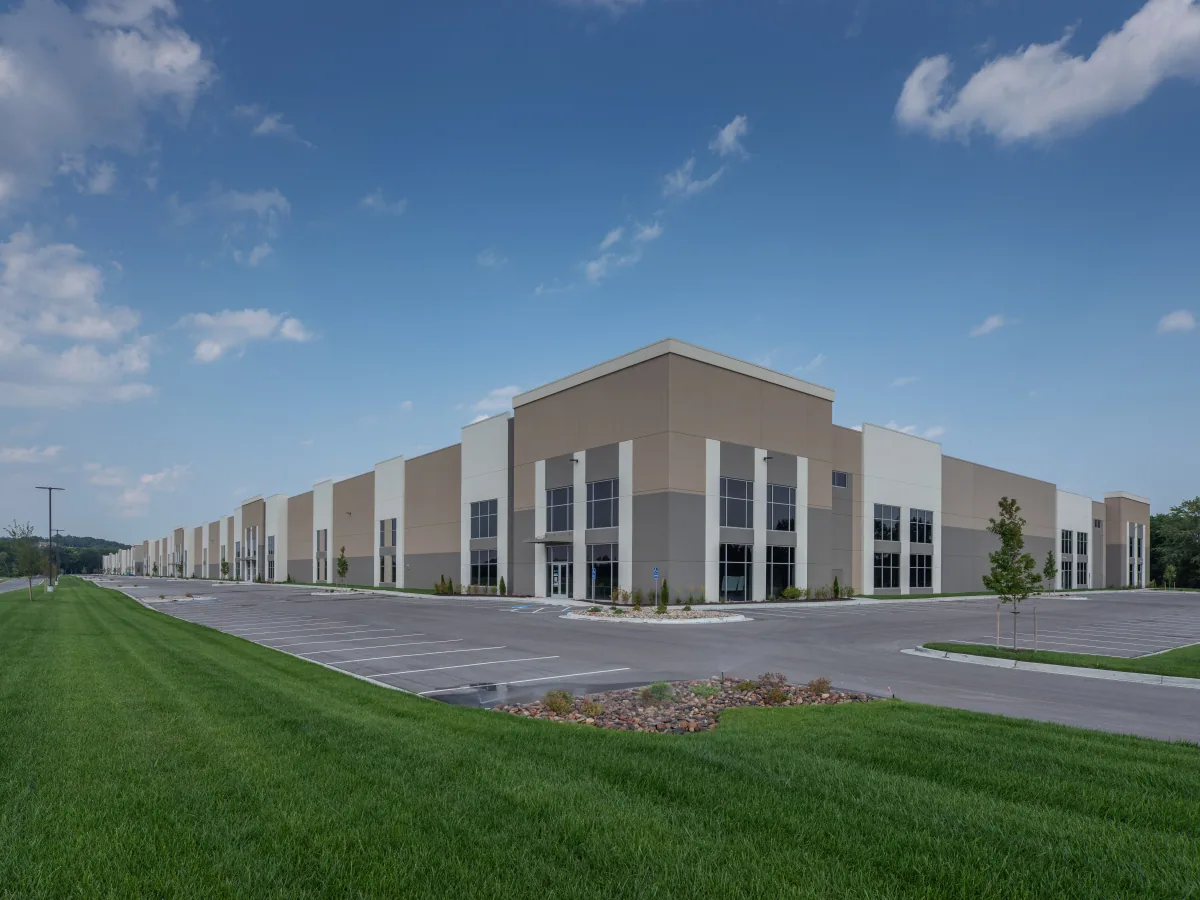
In Liberty, MO, we assess the roof assembly, drainage, flashing, access, and repair or replacement needs before setting a commercial roofing scope.
Liberty’s commercial and industrial base spans properties with different roof footprints and operations. We begin at the specific building, confirm the existing system, and note the edge, curb, drain, and expansion-joint details that govern a repair. A roof’s tenant mix does not determine its membrane or condition; field inspection sets those limits.
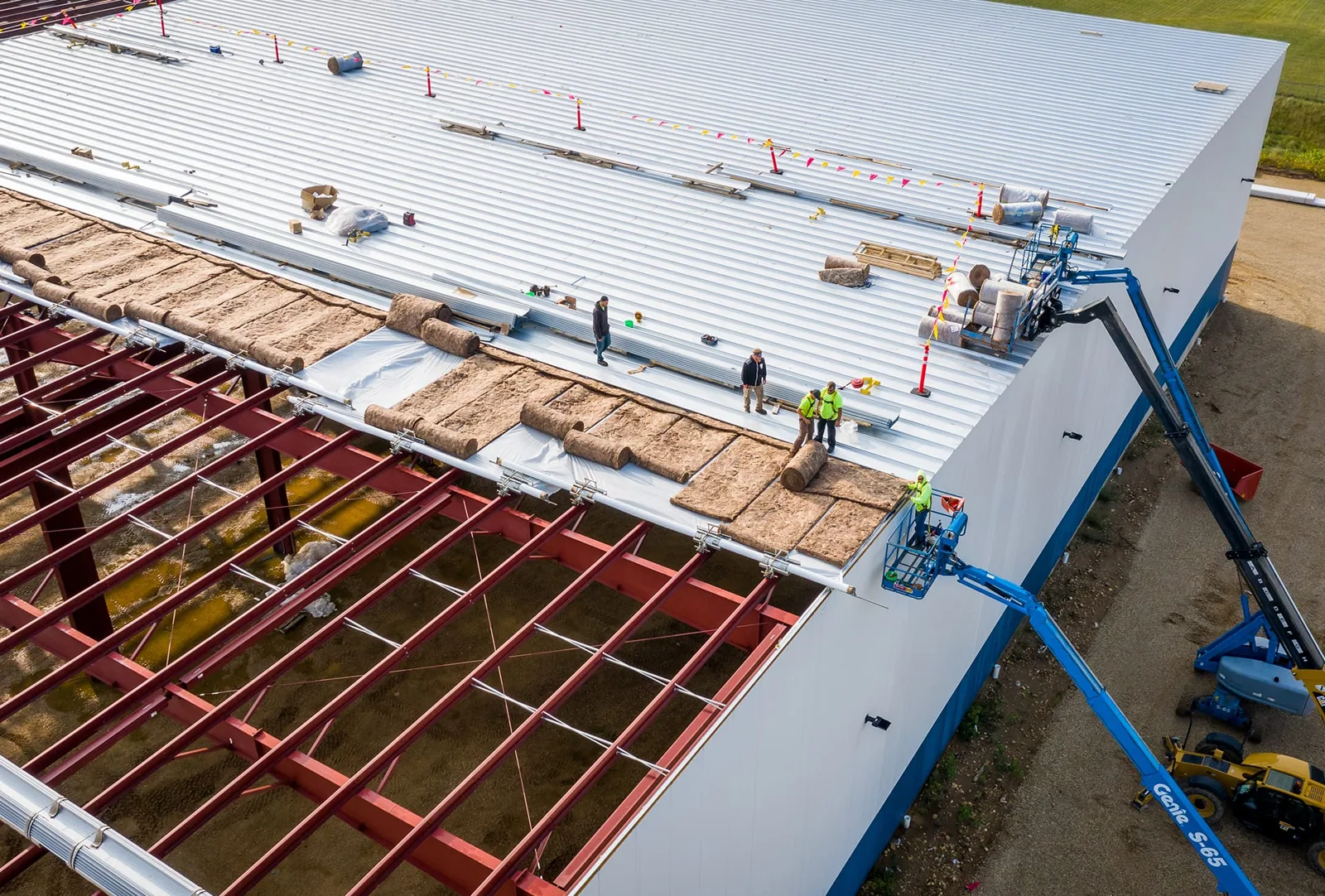
The City supports business expansion and site selection, and roof work may coincide with an active building improvement. We coordinate deliveries, lift placement, access, and interior protection with the property representative. Before any tear-off, the crew and owner agree on the daily work boundary and a secure temporary closure.
Map the Roof Zones
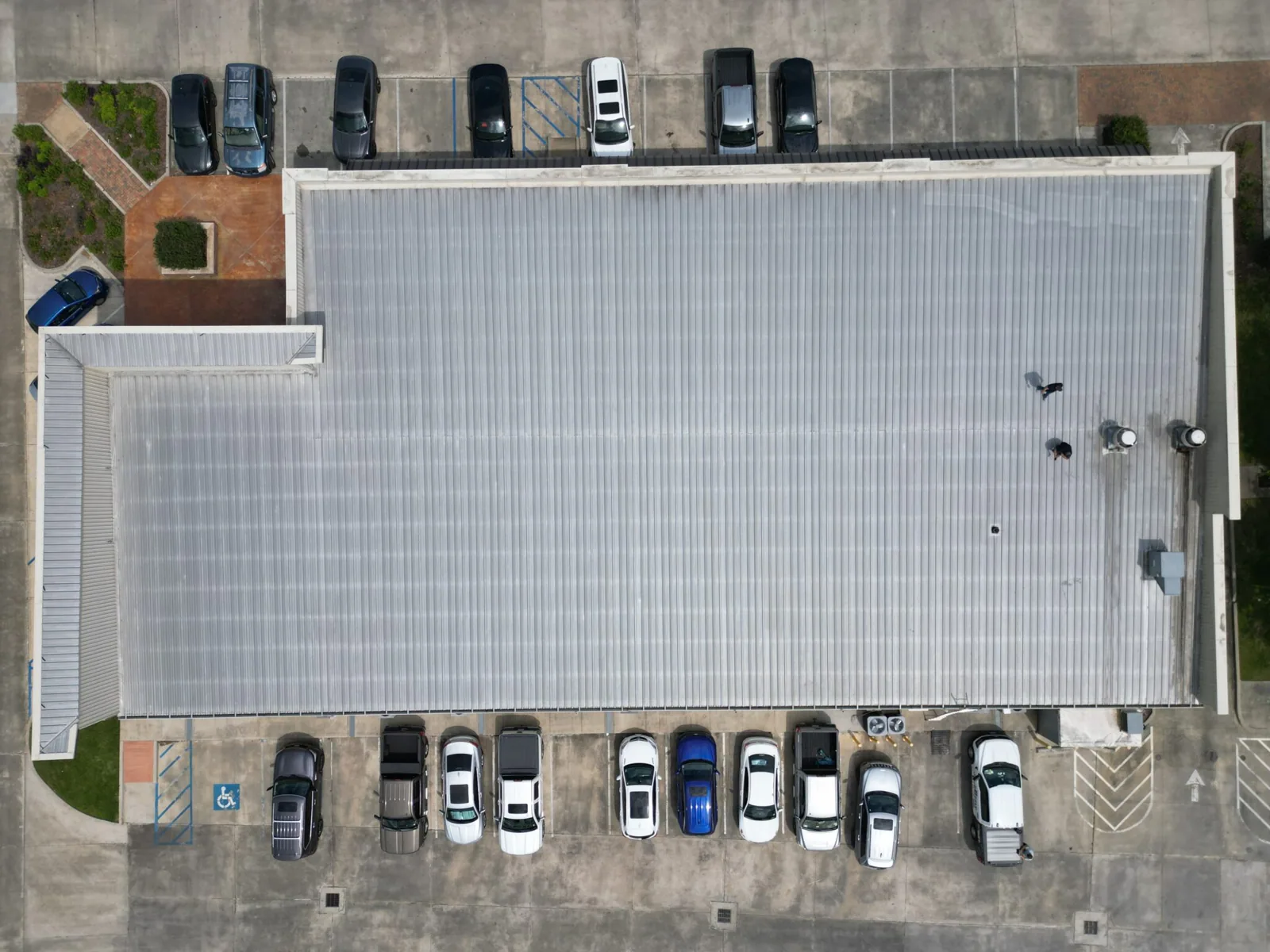
Large commercial roofs are easier to manage when observations are tied to a clear zone map. We divide the inspection by roof area, access point, drain group, or other fixed reference that the property team can recognize. For each zone, we record surface condition, seams, flashing, rooftop equipment, edge details, and visible repairs. A photograph without a location reference is difficult to use later; the record should show where the detail sits in the larger roof field.
We identify the actual system by examining seams, exposed edges, patches, and available records. A roof can contain different materials after additions or phased repairs. If concealed layers affect the repair decision, a test cut may be needed. A roof inspection with zone-based photos can separate active repairs from maintenance items and budget questions. The property team can then assign work without treating a localized failure as proof that the full roof has failed.
If a repair is approved, the closeout should show the prepared substrate, compatible patch or flashing, seam tie-in, and completed edge detail. If the repair cannot be inspected before it is covered, the owner should know what evidence will be available at completion. Clear records help maintenance staff compare later changes without assuming that a nearby building used the same assembly.
Check the Water Path
Drainage performance determines whether water exits through the intended outlets or collects around a seam, curb, or low point. We inspect drains, scuppers, strainers, overflow paths, and the membrane at each connection. Where standing water remains, we note its extent and check for blockage, deck deflection, or an interruption in the drainage plane. A temporary puddle after rainfall and a persistent low area are different conditions; measurements and follow-up establish which one is present.
Liberty’s I-35 corridor connects commercial properties with regional movement. At a working site, that makes arrival, laydown, and debris routes worth confirming before mobilization. We record the chosen route, inspect roof access points, and preserve a clear separation between the approved work zone and areas that remain occupied.
Liberty's I-35 location and business-development work place commercial and industrial properties across a broad market. On each building, we check transitions between roof sections, because additions may leave different insulation depths, seam methods, or drain elevations. A new membrane should not bridge a loose termination or cover wet material without a documented assembly decision.
Sequence Around Retail Use
Active work near customer entrances or delivery routes needs a defined material path. We confirm the lift location, debris route, temporary barriers, and hours when noisy work can proceed. The property representative can then notify tenants before a roof section is opened.
Before tear-off, we stage the replacement material and agree on a daily dry-in boundary. If the forecast changes, the crew closes a smaller area and protects the exposed assembly rather than leave an unfinished transition. The closeout notes what was completed and where work resumes.
Match the Repair to the Failure
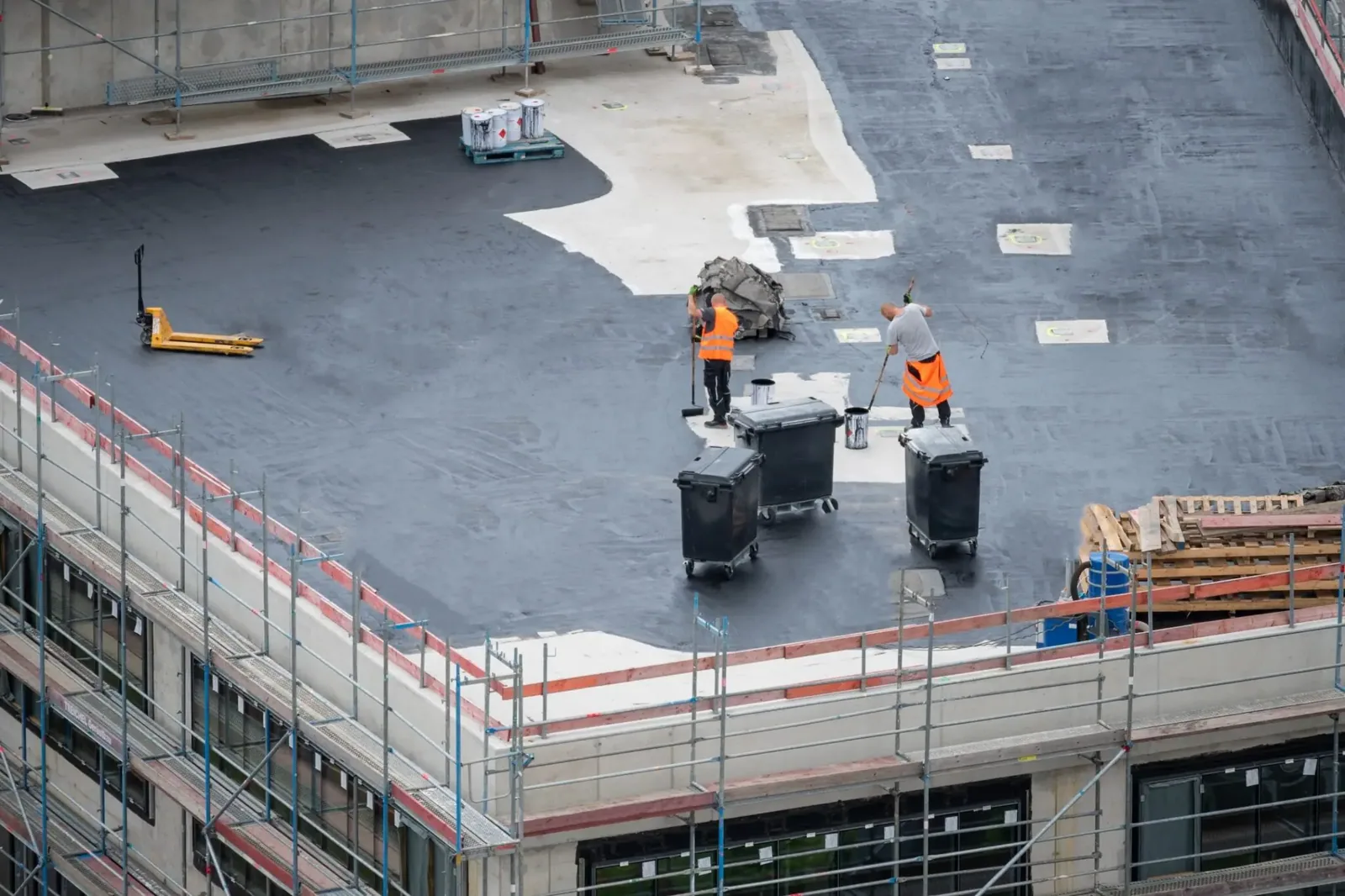
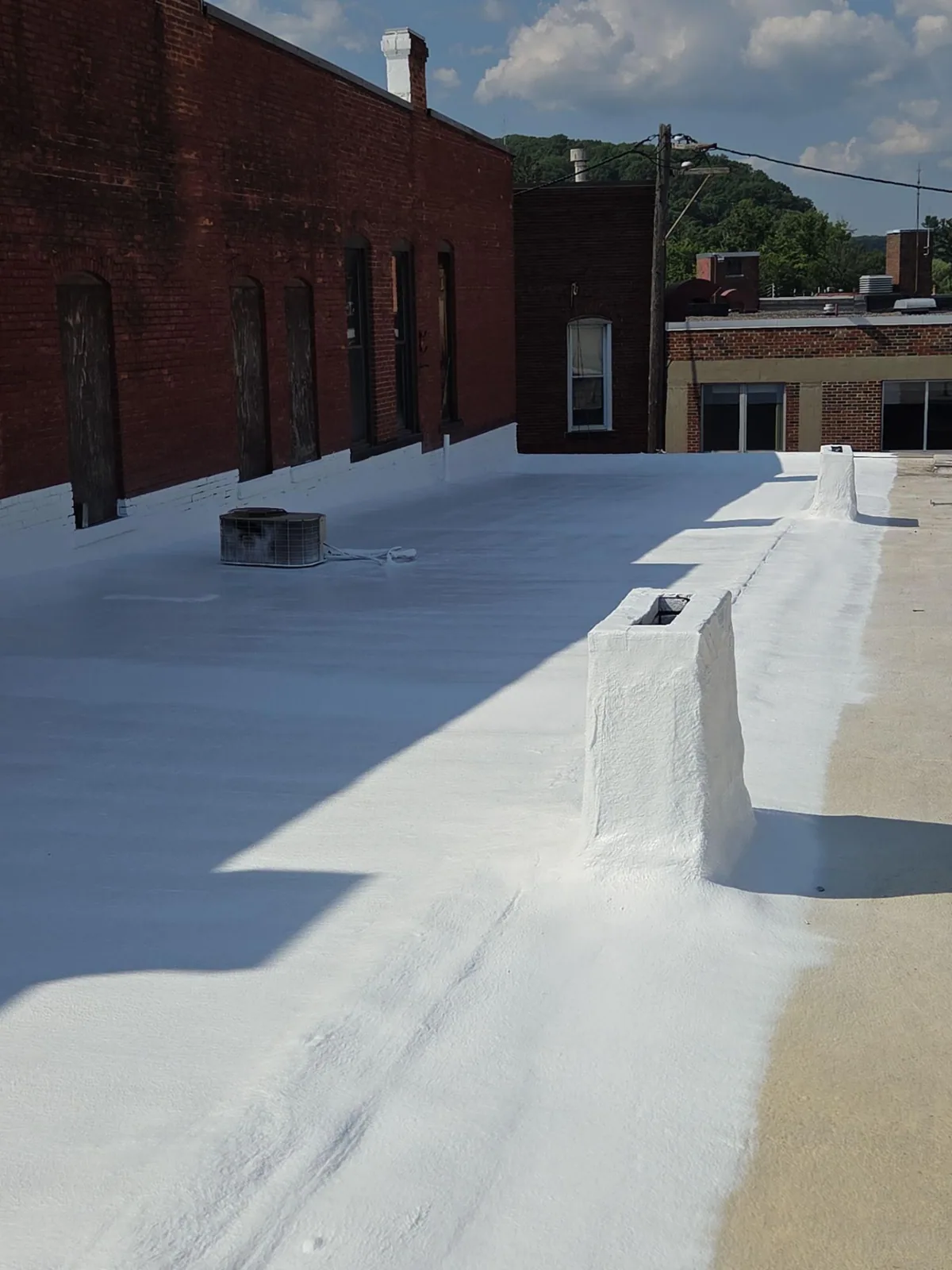
A puncture, split seam, failed flashing, and blocked drain need different work. We remove loose or damaged material to reach a sound substrate, prepare it for a compatible repair, and tie the patch into the existing assembly. A surface coating over a failed seam or wet insulation does not correct the underlying condition. If testing shows a larger damaged area, we document its size and explain the change in scope before rebuilding.
Recurring leaks or broad deterioration may make replacement a better option than repeated local repairs. A recover is considered only after checking existing layers, deck condition, drainage heights, code requirements, and attachment. The scope should identify the membrane, insulation, edge details, curbs, and drain tie-ins. Targeted repair work can extend the serviceable area when the assembly supports it; replacement addresses systemic failure with a rebuilt roof plan.
Water testing and moisture mapping answer different questions. A controlled hose test can reproduce an entry path when conditions permit; infrared readings can help select test cuts, but an anomaly still needs confirmation. The report identifies the method, location, and result rather than treating a single reading as proof that a whole roof is wet.
Inspect After Seasonal Stress
Seasonal checks focus on the roof itself: open seams, loose edge metal, sealant condition, blocked drains, and coating wear. We compare the findings with prior repairs and identify any area where a change in temperature or water exposure may have opened a detail. The maintenance record separates observed damage from work that still needs testing.
For scheduled work, we check substrate temperature and the selected product's application instructions. Weather changes can affect adhesive, primer, coating cure, and the size of a safe open section. A preventive visit can clear debris, inspect drains and edges, and document wear before it turns into an interior leak. A maintenance schedule should reflect observed roof condition, drainage, repair history, and access planning rather than a fixed assumption about every section.
Keep One Record Per Roof
A closeout file should identify the inspected area, installed repair materials, drainage checked, and any condition that remains unresolved. We connect each photo to a roof zone and mark any access restriction. If follow-up testing is needed, the owner can see which question it should answer and where the test belongs.
For a later repair, the record should show the actual patch material, seam preparation, flashing tie-in, and any adjacent area left untouched. We mark those details on the roof plan and note the condition of nearby drains, curbs, and edge metal. This gives a maintenance team a useful starting point without assuming the same repair method fits another roof section.
For context, Eastgate Commerce Center has two City-permitted commercial buildings, while the Noland Road Corridor is a distinct Independence project area. A Liberty property receives its own inspection and scope. We record actual roof dimensions, material transitions, drain locations, and existing penetrations before calculating removal or replacement quantities.
A coating or membrane decision should also account for access after installation. Mechanical contractors need a protected service route; tenants need a clear process for reporting a new leak; and the property manager needs a record of repairs and limits. We identify which roof areas can be walked and where traffic protection is required. If future equipment work is planned, mark its route and support points before the roof is closed so later work does not cut into a new membrane without a coordinated flashing detail.
Commercial Roofing Questions
How does a retail tenant mix affect roof scope?
Tenant use helps set the access and interior-protection plan, but not the roof diagnosis. We inspect the installed assembly, drainage, and each work zone before setting the repair boundary.
What should be checked before a recover?
Confirm deck strength, existing layers, moisture, attachment, drain height, and code requirements. If concealed conditions remain uncertain, use a documented test opening before selecting the assembly.
How do you protect an occupied property during replacement?
Agree on access, staging, interior protection, and a weather-safe daily stopping point. Limit tear-off to the area the crew can rebuild or secure in the approved window.
What belongs in the roofing closeout?
Record roof zones, materials, completed details, drain checks, photographs, test limits, and open maintenance items so the property team can plan the next inspection.