Inspect or install commercial standing seam metal roofing in Independence, MO with attention to concealed clips, panel movement, flashing, and drainage.
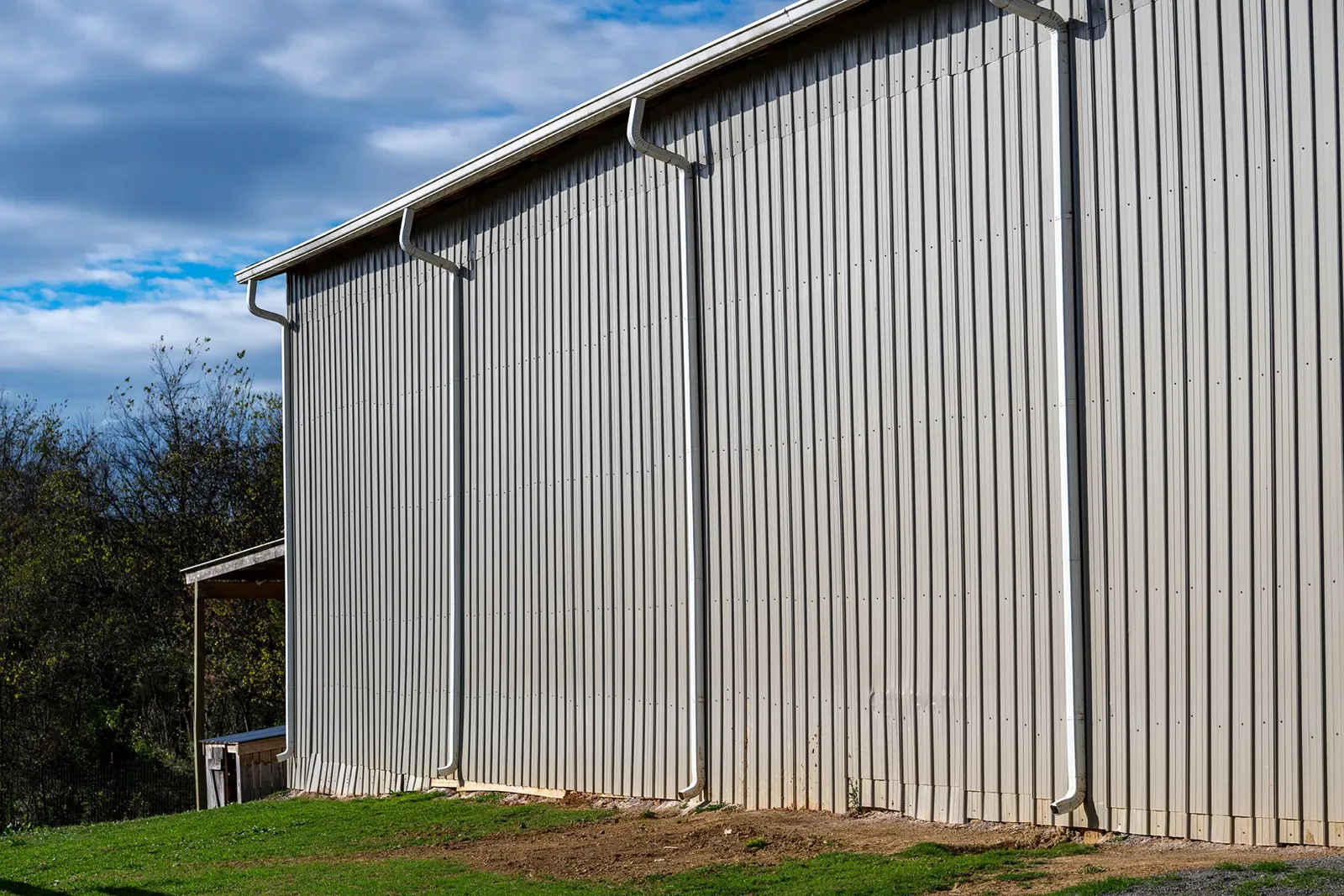
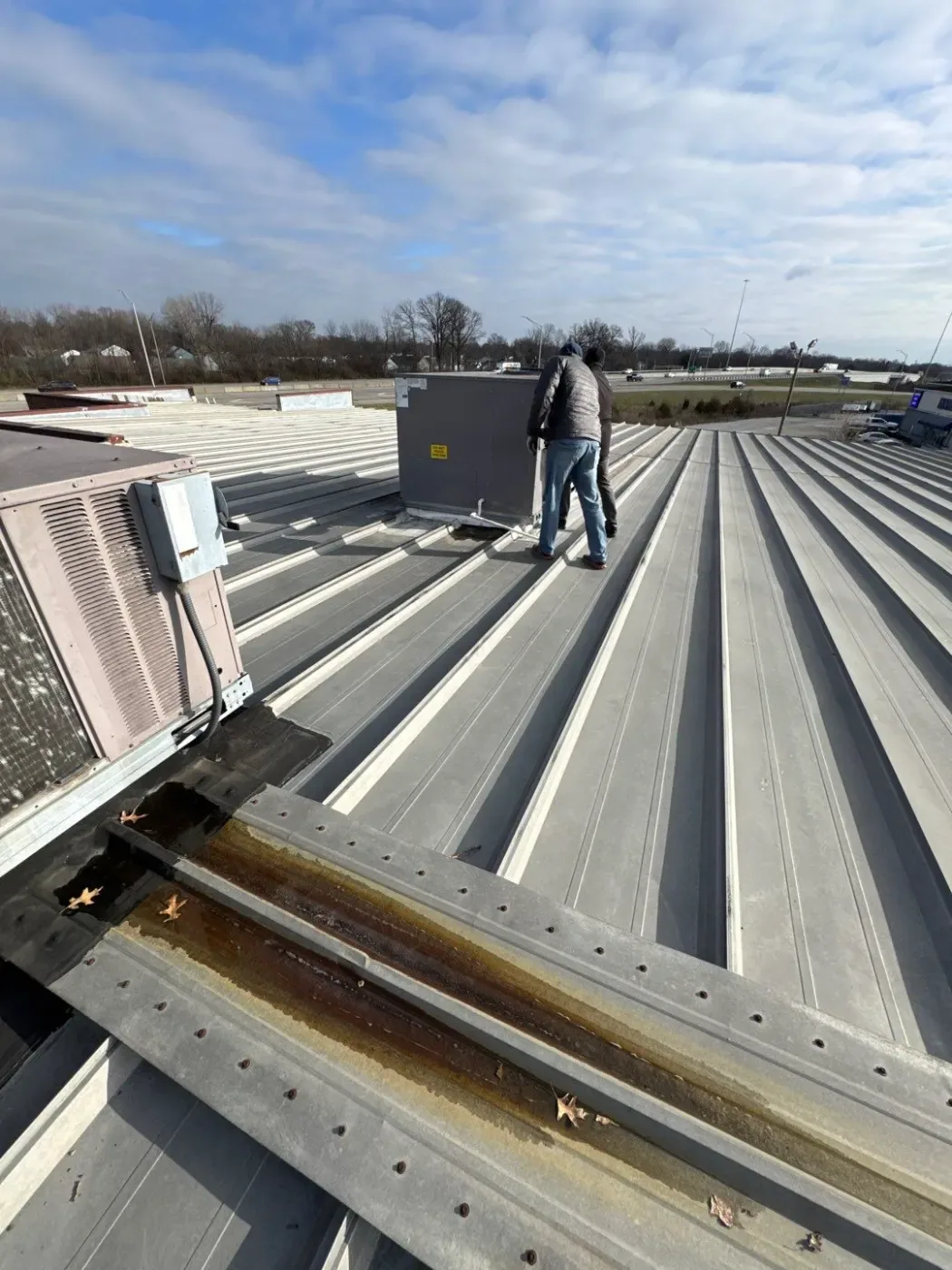
Standing-seam panels connect through raised seams, with many systems using concealed clips rather than exposed fasteners across the field. The clips restrain wind loads while allowing designed thermal movement. We inspect panel seams, clip attachment, eaves, ridges, and penetrations before recommending repair. In Independence, MO, the Noland Fashion Square area and Belton, Missouri sit along active commercial routes. Site access affects staging, while panel geometry and substrate determine the roof detail.
Follow the Panel Layout
Panel width, seam profile, clip spacing, and substrate make up a system. We identify the profile and gauge where records or exposed edges allow, then inspect the seams for separation, distortion, and damage. A panel can appear intact while a clip or concealed fastener has loosened below it. Water stains around a seam also need tracing because the entry may sit uphill or at an eave transition.
Standing seam accommodates movement along the panel length. Fixed points, clips, and expansion details must be located as designed. A repair that locks a sliding panel or bridges a moving joint can transfer stress into a seam or fastener. We review the roof layout and correct detail before replacing a panel or adding a closure.
Independence has winter freeze exposure and warm summer conditions. Kansas City station normals show a normal January high near 39 degrees and July highs near 89. Metal expands and contracts across that range. We look for oil canning, buckling, seam distortion, and movement at clip locations. Those marks guide inspection but do not alone establish a leak or structural defect.
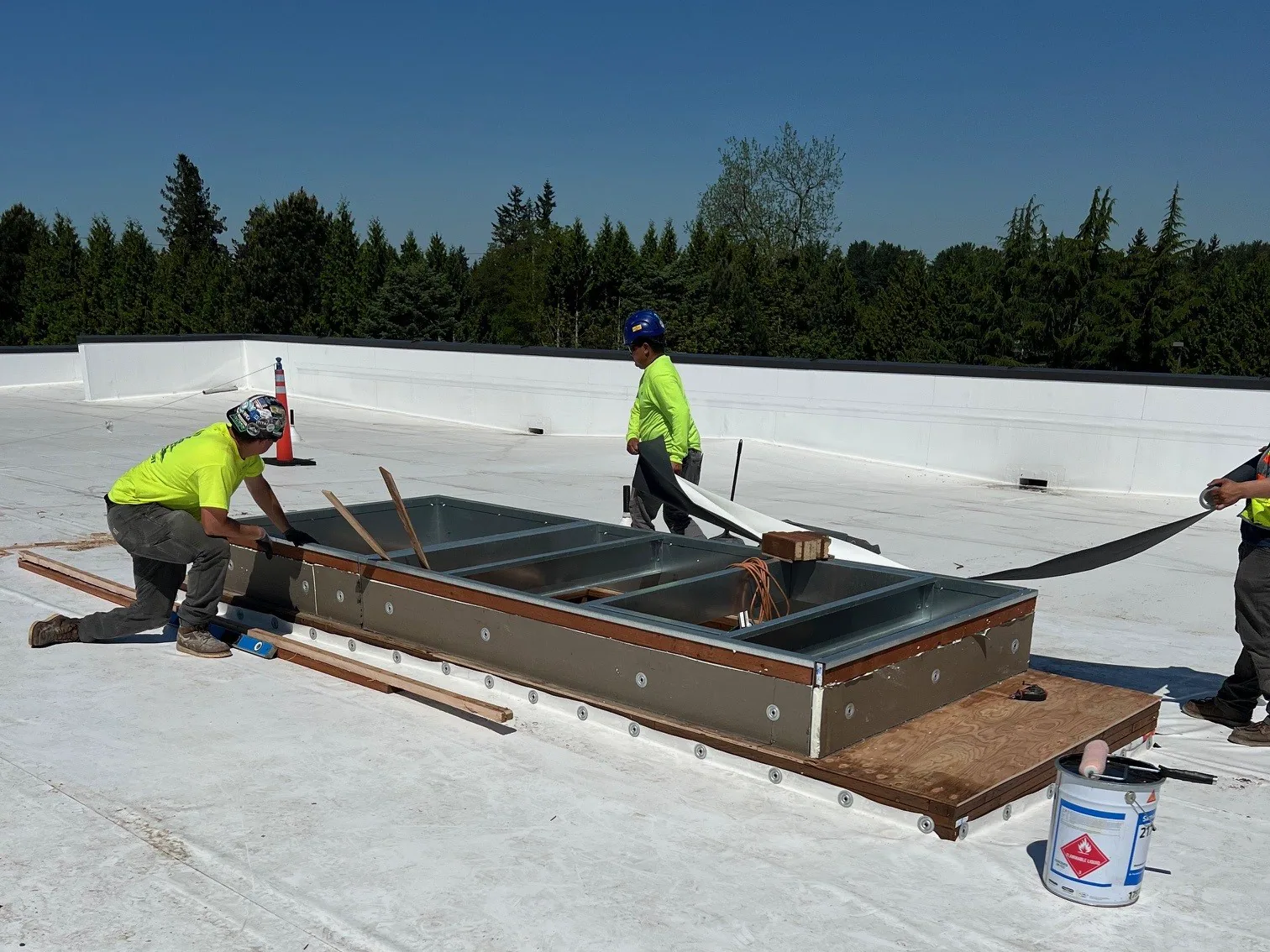
Sheet-metal details are sensitive to incompatible sealants and metals. We check for galvanic contact, failed coatings, corrosion at cut edges, and trapped debris. Where a curb cuts through the panel field, the flashing must preserve drainage and allow adjacent panels to move. Penetration flashing review can address a curb or opening without treating the standing seam as a flat membrane.
Inspect Clips and Perimeter Zones
Concealed clips connect panels to the deck or framing. We inspect exposed fastener lines at eaves and rake edges, check for missing closures, and review any panel that has lifted or shifted. Wind uplift forces vary by roof zone. The approved design sets clip type and spacing, and field conditions determine whether the existing substrate can continue to hold them.
At a parapet or transition, panel ends need a secure water-shedding detail. We check valleys, ridges, eaves, gutters, and wall interfaces for backflow or a gap under the trim. A loose rake or damaged eave can let water enter behind the panel system. Edge-metal and gutter repair can be coordinated when the perimeter and panel termination fail together.
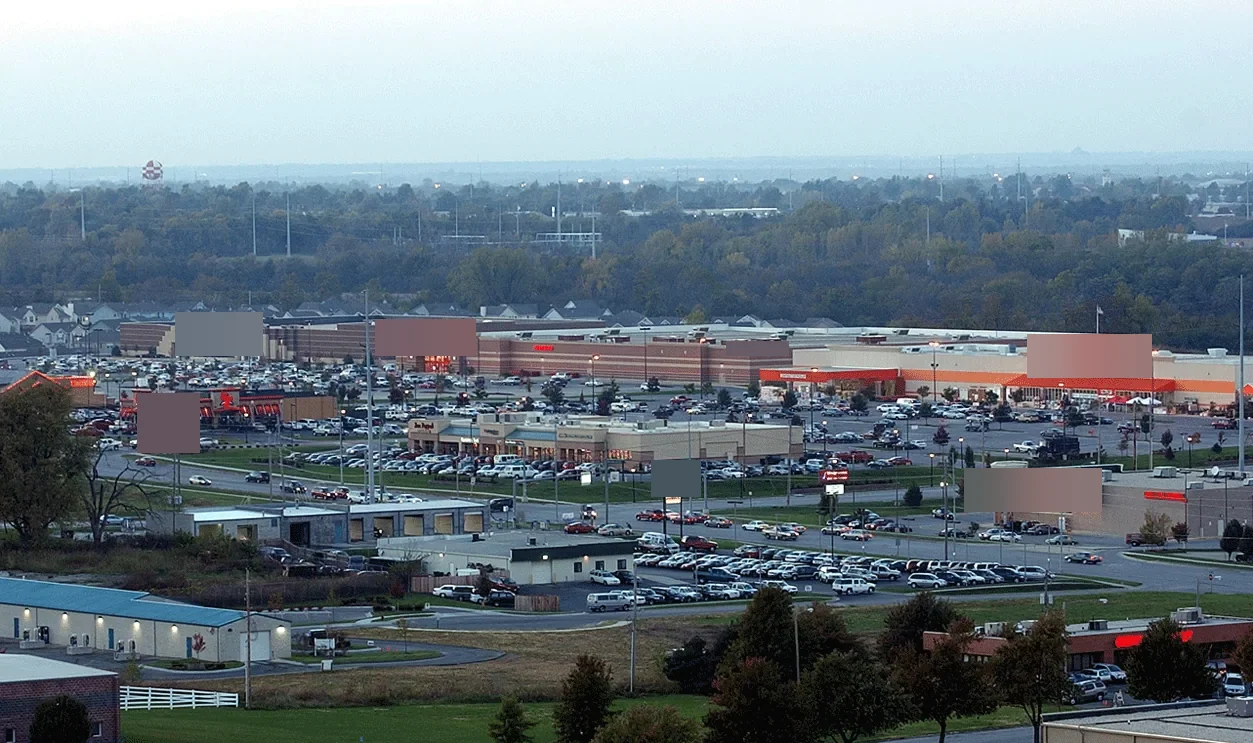
The Noland Fashion Square area is a city-listed community improvement district on the Noland corridor. The Independence Transit Center sits at North Noland Road and Truman Road and connects with regional transit. Those place facts can help establish delivery and pedestrian access around a commercial site. They do not determine the roof's wind design, clip arrangement, or condition.
After the June 2022 tornado near Buckner, an observer noted wind damage north-northwest of Independence. That report is tied to its observation point. We inspect a building's panels, closures, and clips directly before calling a condition storm damage.
Keep Water Out of the Seams
Standing seams shed water by geometry and continuity. Panels need correct slope, end laps, closures, and flashing at changes in plane. We check for sealant relied on as the primary water barrier, open end dams, missing closures, and debris that holds water against a seam. Low-slope metal roofs require especially careful review of panel profile and tested system limits.
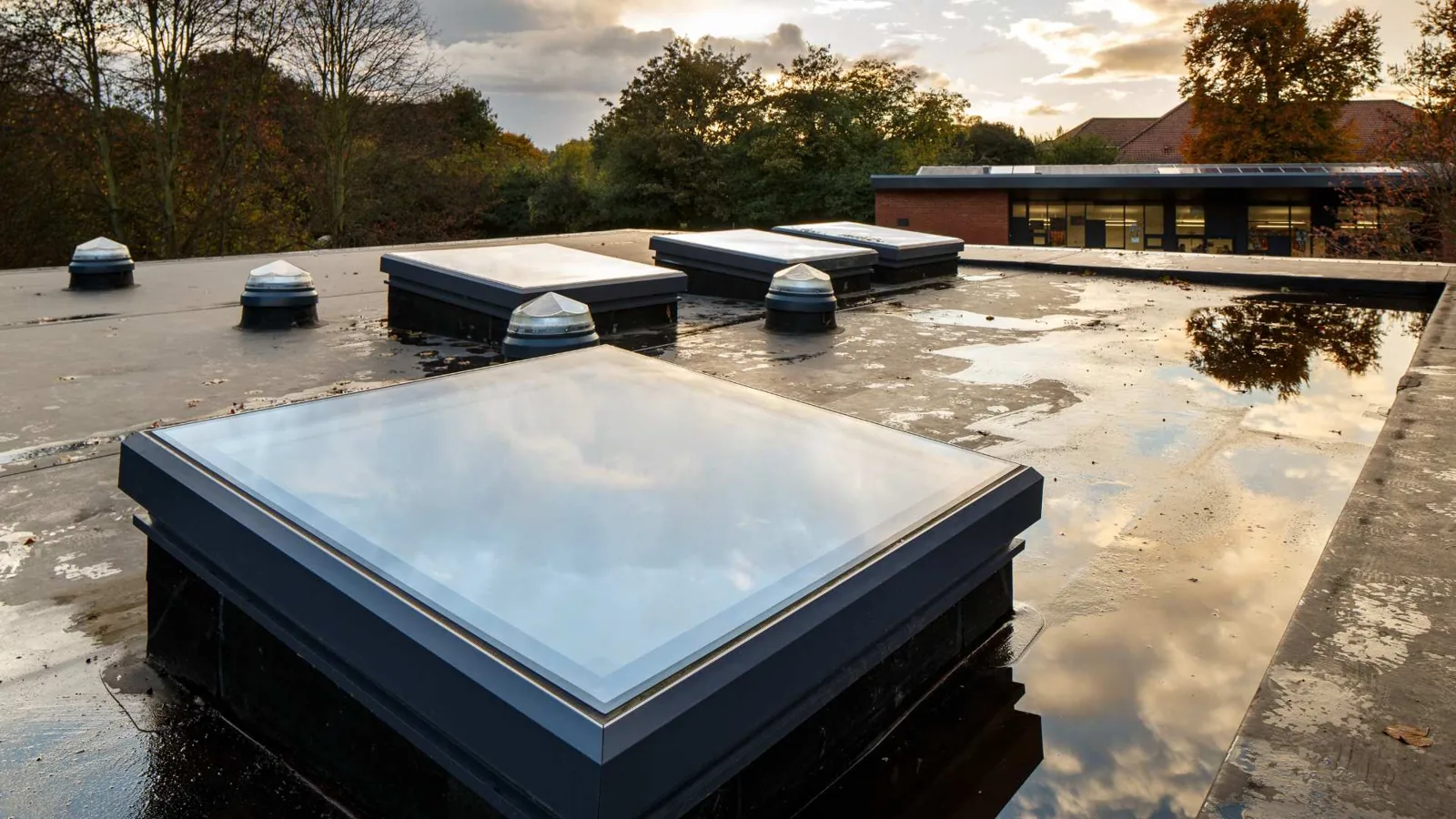
Penetrations interrupt the sheet field. Curbs should direct water around their uphill side without cutting through a panel seam in a way that traps flow. Piping and conduit need supported flashings designed for movement. We examine both the metal trim and the underlayment or membrane transition beneath it when accessible.
Water at a fastener or lap can migrate along the panel and show up inside a different bay. We compare the interior stain with panel direction, roof slope, gutters, and wall conditions. Leak tracing can establish the entry route before the repair cuts into the metal. Drainage inspection can confirm whether gutters or internal drains contribute to the water path.
Snow and ice can collect at eaves or behind rooftop obstructions. We look for displaced snow guards, bent trim, ice-damaged gutters, and evidence of water backing beneath an edge. The repair should match the roof profile and structural design rather than attach a generic bracket through the panel.
Repair the Detail or Rebuild the Run
A loose trim, isolated puncture, failed flashing, or small panel section may be repairable if adjoining seams and clips remain sound. Widespread corrosion, repeated seam separation, incorrect panel slope, or failing substrate can point to a larger replacement. We assess the panel run and termination, not only the visible spot.
Exposed-fastener metal has a different failure pattern. Metal retrofit roofing may be considered when the existing panel system is suitable for a new assembly. Standing-seam repairs preserve raised seams and concealed attachment; they are not interchangeable with a retrofit over exposed fasteners. A single-ply membrane uses a different drainage and attachment approach.
Cost depends on panel length, profile, metal type, access, clip replacement, trim transitions, safety equipment, and whether interior protection or insulation work is needed. Replacing one panel can require opening adjacent seams and rebuilding several details. We define the extent and material finish before work so the repair matches the existing system as closely as possible.
A roof plan and condition record can locate panel runs, penetrations, and prior repairs. Maintenance inspections can then monitor fasteners, seams, coatings, and gutters on the next visit.
Record the Metal System
After work, we inspect seams, clips where accessible, closures, flashing, trim, and discharge points. The record identifies panel profile and repair locations, then notes any movement or corrosion that remains under observation. That baseline supports later inspections and helps avoid a repair that restrains panel movement.
Schedule a standing-seam roof review with Commercial Roofing Independence. We will identify the panel system, inspect attachment and water routes, and set a repair boundary from the field conditions.
Commercial Roofing Questions
Can a standing-seam panel be replaced without removing the whole roof?
A localized panel replacement may work when the profile, clip system, and adjoining seams permit a controlled opening. We inspect the run and termination before defining the area.
What causes a raised metal seam to leak?
An open seam, damaged closure, movement restraint, or poor end detail can admit water. We trace the leak along panel direction and inspect the related flashing.
Are exposed screws normal on a standing-seam roof?
Many standing-seam systems use concealed clips in the panel field. Exposed fasteners can occur at trim and terminations, where gasket and metal condition need inspection.
How do you handle panel movement at a curb?
The curb detail must shed water while allowing the panel system to move as designed. We review the panel profile, curb position, and flashing connection before repair.
Will a coating fix corroded metal seams?
A coating cannot restore a failed clip or missing closure. We assess corrosion, attachment, and water entry before deciding whether a coating belongs in the repair plan. A coating is not a substitute for restoring loose seams, failed fasteners, or metal that has lost section. We identify whether the panel is structurally sound, then address corrosion, movement, and attachment before considering a coating as a surface renewal layer. The evaluation also checks end laps, penetrations, and panel-to-wall transitions, where water entry can continue even after the broad panel field appears covered.