Repair commercial skylight, curb, pipe, and equipment flashing in Independence, MO with details matched to the roof assembly and water path.
A roof penetration interrupts the membrane, so its flashing has to connect the opening to the surrounding roof without leaving a path for water. Commercial skylights, vents, conduit, and equipment curbs each create a different transition. We inspect the curb, counterflashing, membrane tie-in, sealant, and nearby drainage before recommending work. For a commercial property along US 24, the owner's access plan determines how inspection is staged. Road location does not establish roof condition; we verify the detail at the opening.
The Curb Controls the Transition
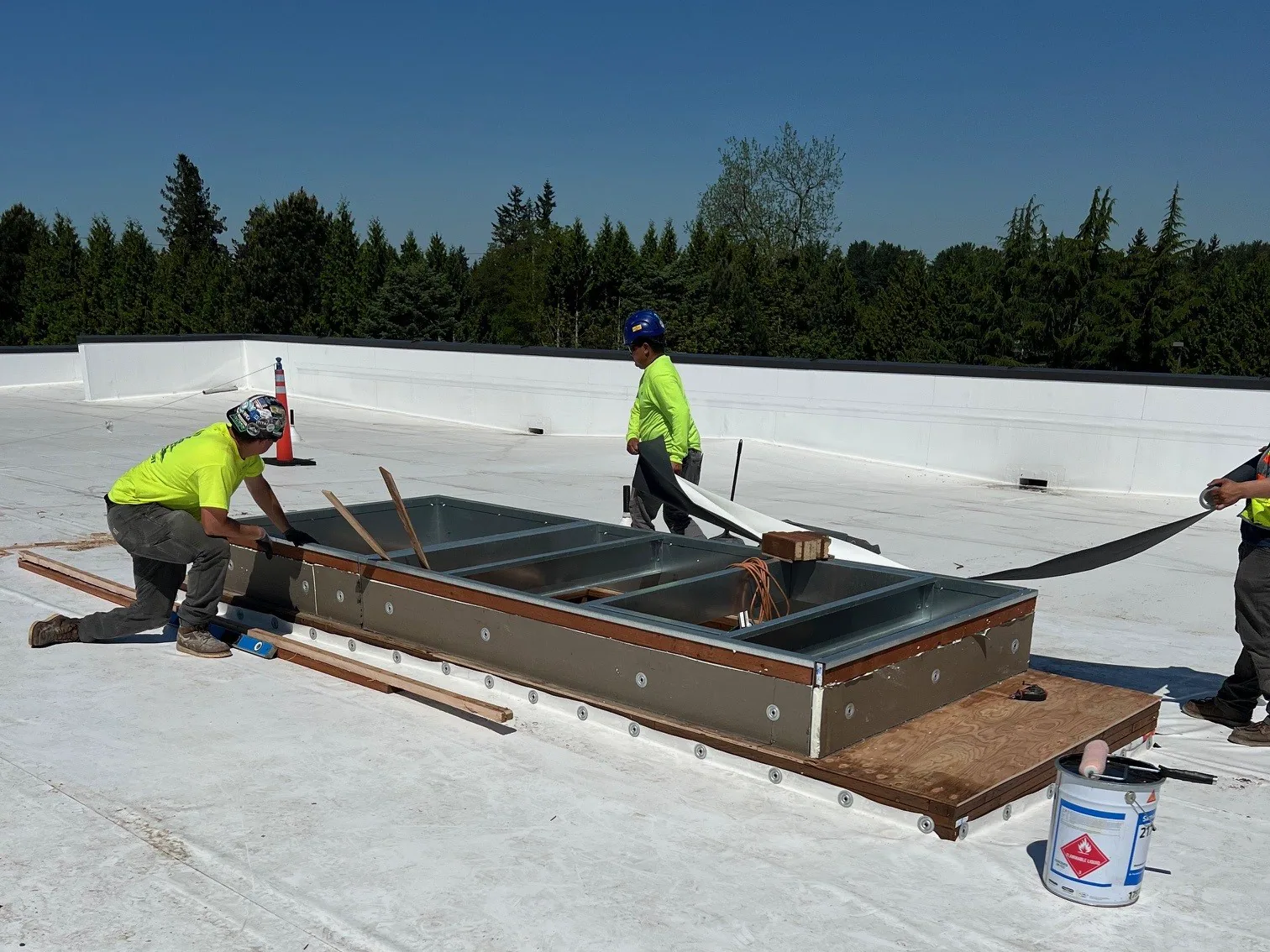
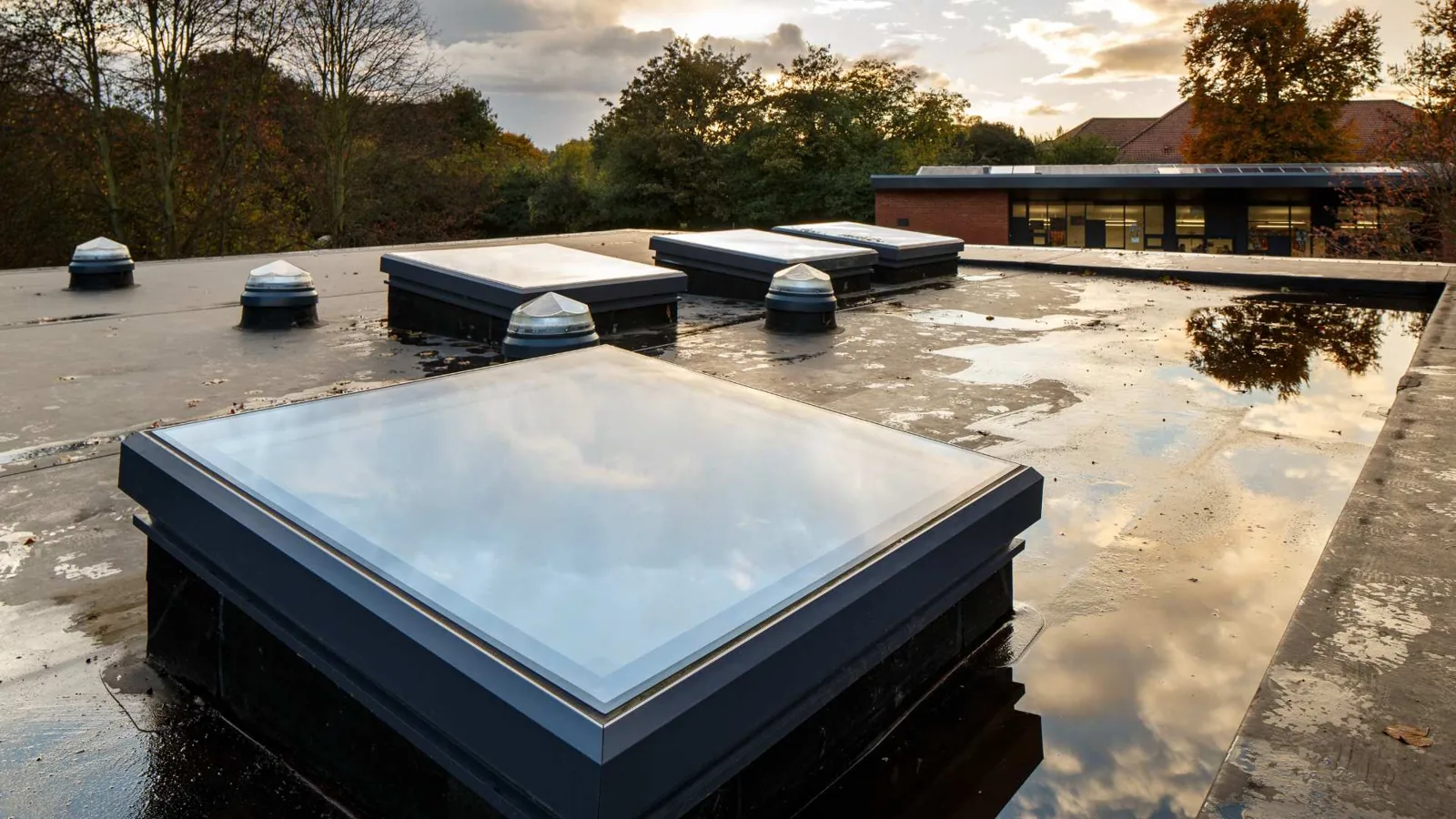
A skylight curb raises the glazing above the roof plane and provides a surface for flashing. We check curb height, corners, fasteners, the frame-to-curb joint, and the transition from membrane to vertical flashing. A low curb, loose frame, or deteriorated substrate may require more than a sealant bead. We note whether the curb is sound and whether water can collect against its uphill side.
At a membrane roof, the flashing method depends on the system and the curb material. We inspect for compatible primer, membrane, cover strip, and termination bar, then look for wrinkles, open corners, fishmouths, and exposed fasteners. With metal roofing, the panel profile and movement affect the closure and flashing detail. A repair that bridges a moving seam can split as the panel changes length.
Independence has commercial, civic, medical, industrial, and education properties. The fact that the Harry S. Truman Presidential Library contains a 100,000-square-foot, one-story building with a basement and museum and research spaces is relevant to understanding building use, not its roof assembly. We do not infer a roof system from a place's function or age. We inspect the actual curb and assembly, then specify materials that can bond and move together.
If water appears near a skylight, the entry point may be uphill or at an adjacent seam. We trace staining, surface flow, and the interior opening before defining the repair. A leak investigation can include the penetration and surrounding field rather than treating the visible drip as proof that the skylight itself failed.
Each Penetration Needs Its Own Detail
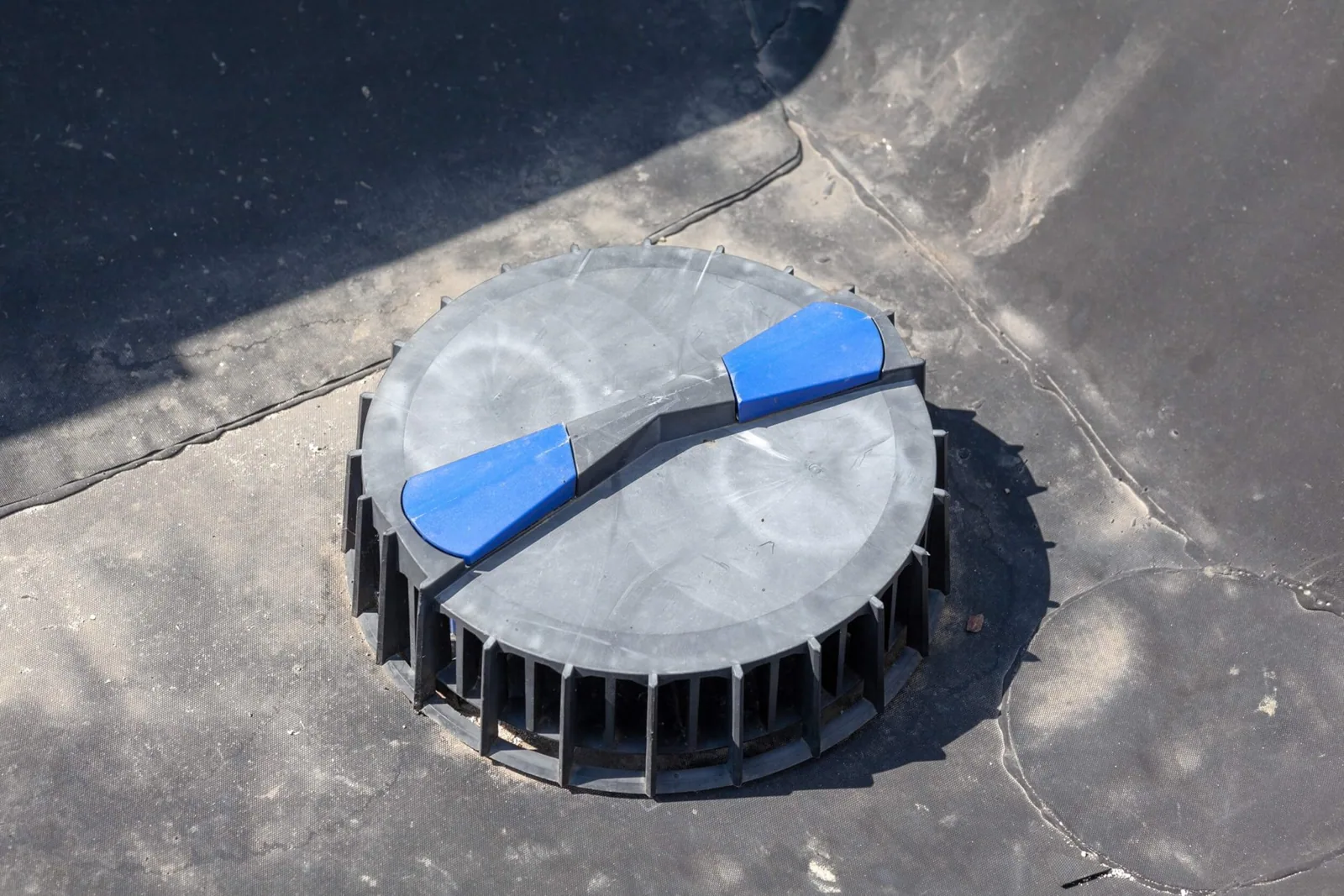
Pipes, conduits, exhausts, and equipment supports vary in diameter, spacing, temperature, and movement. We inspect the boot, pitch pocket, curb, or field-fabricated flashing used at each opening. A split boot may need replacement; a loose pitch pocket may need to be rebuilt; a crowded cluster may need a curb or coordinated detail. The right scope follows the opening geometry and membrane compatibility.
We look for unsupported conduit, abandoned penetrations, sharp edges, and equipment movement that can stress flashing. If rooftop service work moved a pipe or removed equipment, the roof opening should be closed with a compatible, mechanically sound detail. Applying mastic around an unsupported line can hide a gap without fixing the movement that reopened it.
At campuses such as Pleasant Hill, Missouri, public-safety and career programs operate within active facilities. For any occupied property, the work plan should identify roof access, equipment shutdown coordination, and protection around the work area. Those are project logistics, not assumptions about a particular roof. For broader asset records, a condition report can identify penetration locations and distinguish urgent defects from monitored details.
Where several openings sit together, we map each one rather than combine them into a generic allowance. A shared photograph and numbered location list help the owner match a repair to the right unit. We also check whether nearby curbs, drains, and seams affect the water route. drainage repairs may be needed when standing water is stressing an otherwise repairable flashing detail.
Water Path and Movement
Flashing details face both water exposure and movement. We check the upslope side of curbs for debris and ponding, the downhill edge for drainage, and the corners for separation. A sealant joint needs clean, compatible surfaces and geometry that allows it to work. Sealant cannot compensate for a missing membrane tie-in or an unstable curb.
At the Kansas City observation station, January's normal low is near 20°F and July's normal high is near 89°F. This seasonal range can affect metal, sealant, and membrane interfaces; the curb inspection determines whether movement contributed to failure. We look for hardened sealant, open laps, loose counterflashing, and evidence that the assembly has moved. These regional normals describe the climate; they do not prove the cause of a particular leak.
Roof drainage also shapes the inspection. Water can travel beneath a loose lap or follow a deck slope before appearing indoors. We compare the leak location with the roof opening, adjacent seams, drains, and wall transitions. If the evidence points to a wider membrane condition, commercial roof repair can address the related field seam or termination within one coordinated scope.
Repair Scope Follows the Assembly
A localized repair may replace a boot, reseal a compatible joint, rebuild a curb corner, or patch a membrane tie-in. A larger repair may require a new curb, replacement skylight, or membrane work extending into sound material. We document the limit and identify hidden conditions, such as wet insulation or deteriorated blocking, that could change the work once opened.
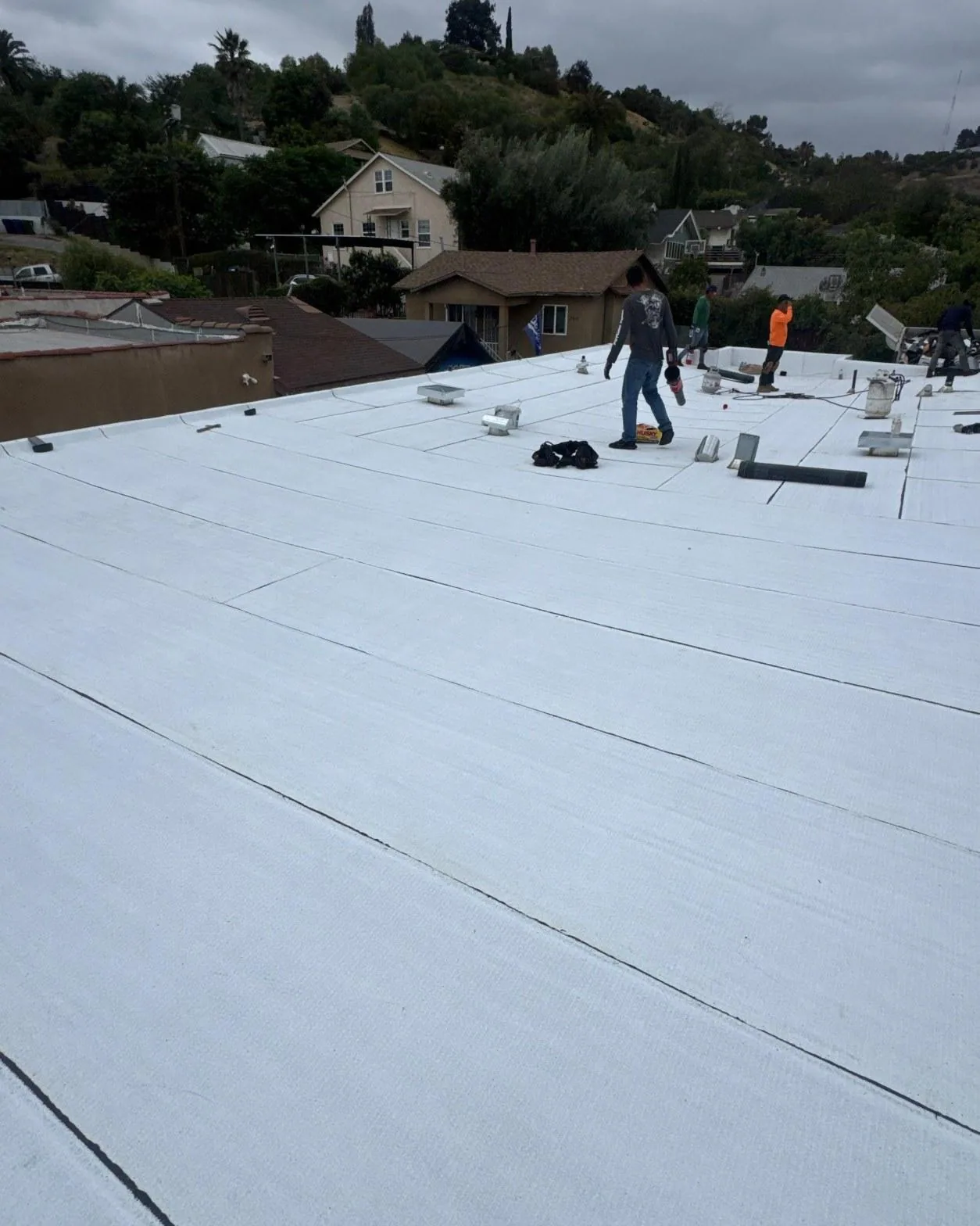
For older openings, a replacement detail should be designed around the existing roof system rather than copied from a different building. We verify membrane type, curb dimensions, fastening, drainage, and the frame connection. Where a coating or restoration system is being considered, the existing surface and penetration compatibility need to be established first. Coating over loose flashing does not repair the transition.
Access matters when skylights are above occupied or sensitive work areas. The project plan can account for interior protection, fall protection, lift placement, and any operational coordination provided by the owner. It should also say whether the glazing remains in service during the repair. Around retail corridors such as Noland Road, customer and delivery traffic can affect staging; actual access is confirmed for the property rather than presumed from the corridor.
Cost depends on the number and type of penetrations, curb height, roof system, access, interior protection, and whether hidden materials need replacement. A photo alone may not show the membrane termination or substrate. We inspect and measure, then separate the immediate leak repair from optional upgrades. If damage followed a storm, storm assessment can document the wider roof before repairs are authorized.
Document the Finished Detail
After the repair, we check the flashing tie-in, corners, terminations, fasteners, and nearby water route. The closeout record identifies the opening, material used, work performed, and any condition that remains under observation. Where glazing was involved, the inspection also records whether the frame and curb connection were part of the scope.
Maintenance can identify cracked sealant, loose boots, blocked uphill channels, and equipment changes before they become active leaks. A preventive maintenance visit can add numbered penetration checks to the roof record. For multiple facilities, a multi-site program can use consistent labels while preserving the distinct conditions of each roof.
Arrange a commercial skylight or penetration review with Commercial Roofing Independence. We will identify the opening, trace the water path, and recommend a repair compatible with the roof system at that building.
Commercial Roofing Questions
Can a leaking skylight be fixed without replacing it?
Often, if the frame and curb remain sound. We inspect the flashing, glazing connection, and membrane transition before deciding whether a localized repair is adequate.
Why can water appear far from a roof penetration?
Water can move below the membrane or along a deck before it becomes visible indoors. We compare interior evidence with the roof opening, seams, and drainage path.
Can you flash around a group of pipes together?
A shared curb may be appropriate when spacing and service access support it. We review each line, movement, temperature, and roof material before selecting a combined detail.
Does hail history mean a skylight needs replacement?
No. A local weather report does not establish damage at a property. We document glazing cracks, impact marks, displaced flashing, and other conditions found during inspection.
Will a roof coating stop a penetration leak?
A coating is not a substitute for a sound flashing transition. We verify the curb, boot, membrane tie-in, and substrate before considering a restoration system.