Plan shopping-center roof work in Independence, MO with tenant phasing, shared drainage, equipment interfaces, and documented repair limits.
A shopping-center roof connects tenant bays, parapets, signs, rooftop units, and shared drainage. A detail that leaks may sit above another tenant's ceiling, so the repair boundary has to follow the assembly rather than the lease line. In Independence, MO, the directory at Liberty, Missouri lists large department stores, apparel, food, and service tenants. The mix illustrates the coordination a retail property can require; it does not describe roof construction. We inspect the actual membrane, deck, and drainage before setting scope.
Separate the Tenant Zones
We record the reported leak, the tenant space below it, and any adjoining area where water may travel. Roof seams do not follow interior demising walls. Water can cross insulation joints, drain toward a lower bay, or enter at a shared curb before appearing in a storefront. Our roof plan marks the visible condition and the likely path so the owner can coordinate access without treating each ceiling stain as a separate roof defect.
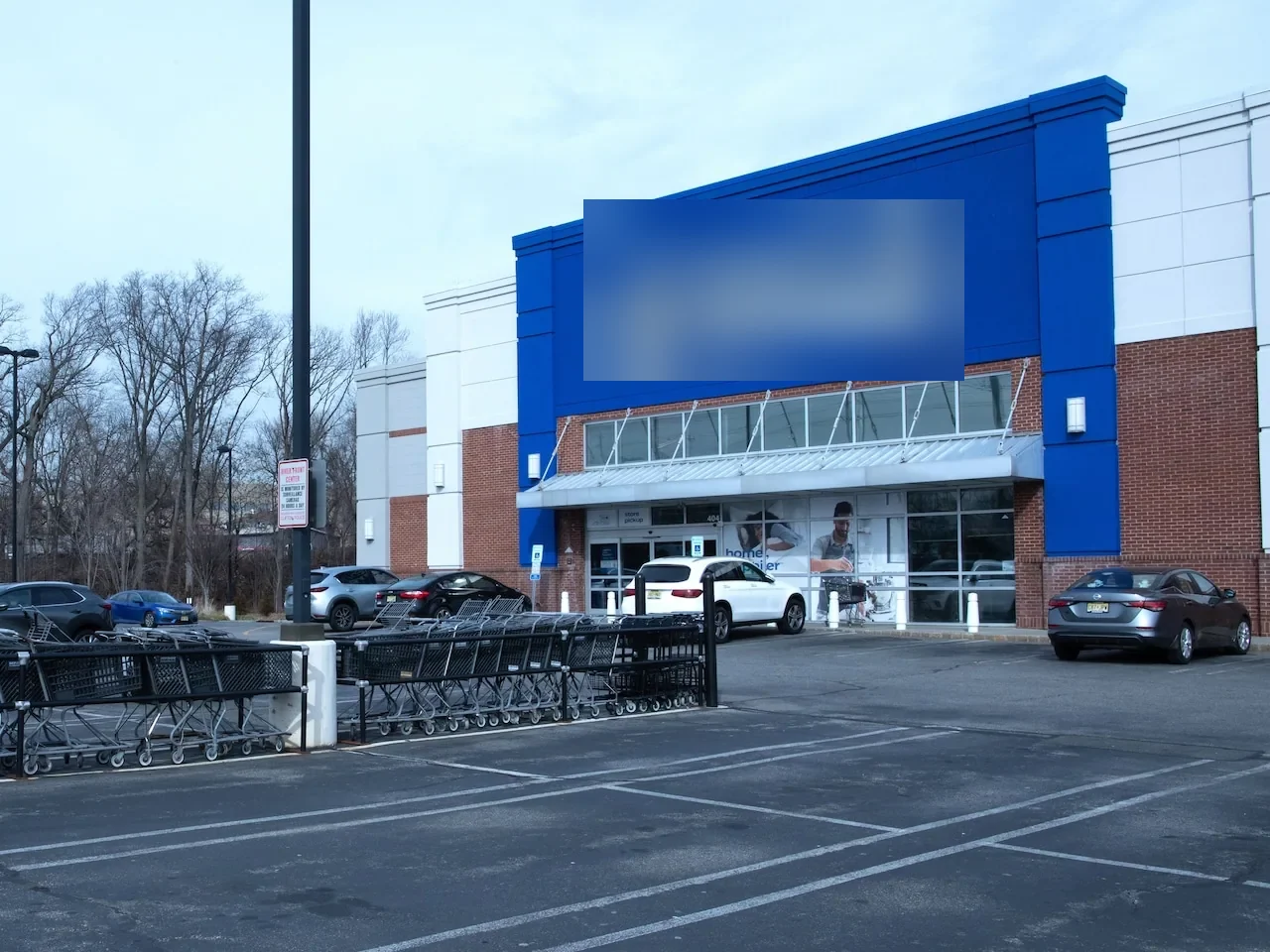
Tenant hours, delivery routes, signage, and public entrances affect staging. Before a repair, the property contact confirms which walkways stay open and where lifts or materials can be placed. Work over an entrance may need barricades or a separate phase. We establish who communicates with each tenant and who confirms interior protection. An occupied retail reroof is divided into secure sections the crew can close during the shift.
Retail work also needs a clear debris path and a secure roof-access route. We coordinate freight lift or ladder use where applicable, then protect the roof membrane from repeated cart traffic. The closeout walk checks the completed seams and the nearby drain route. Photos identify which tenant area sat below each phase so later maintenance can locate the work without relying on a lease map.
Shared Drainage Needs One Plan
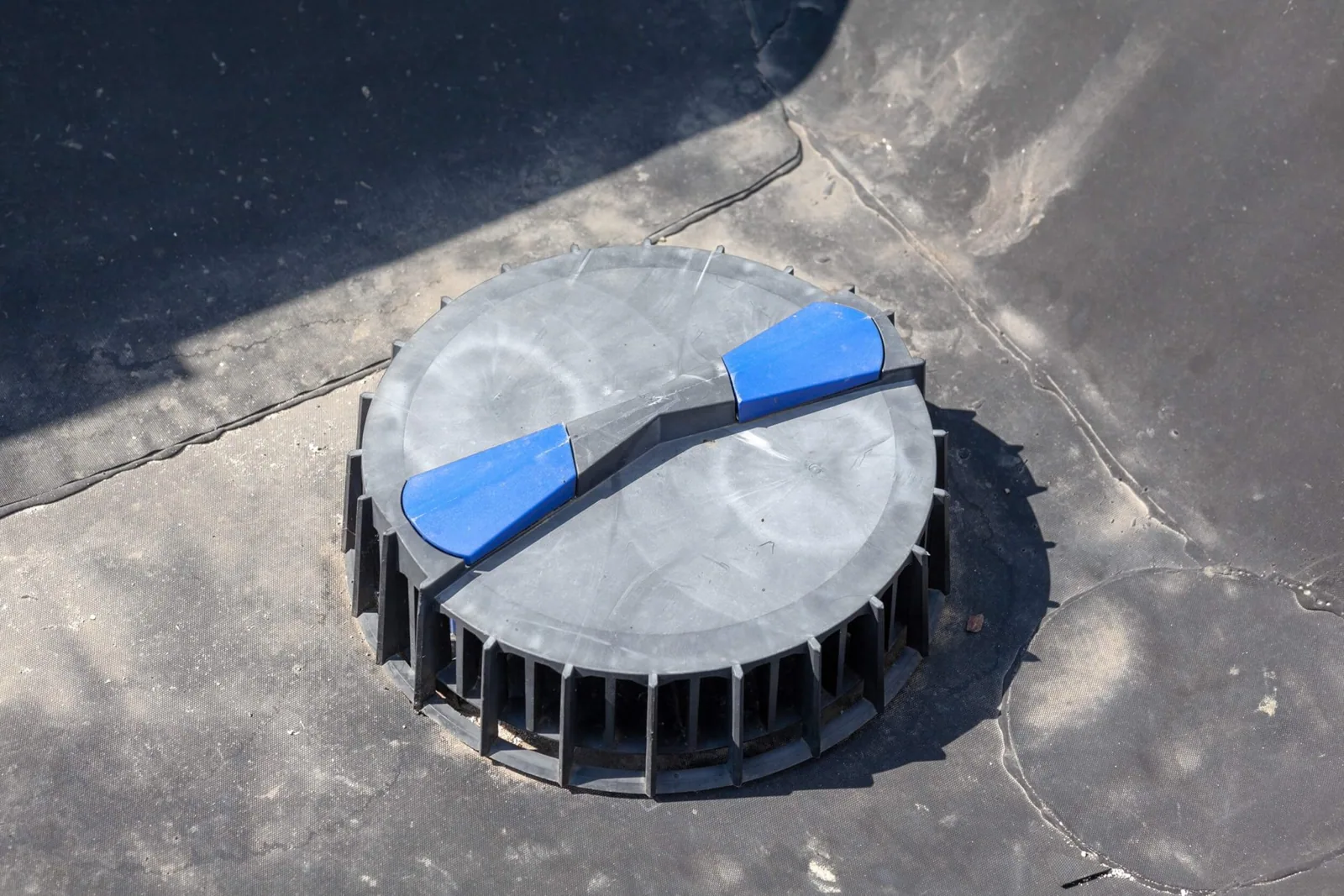
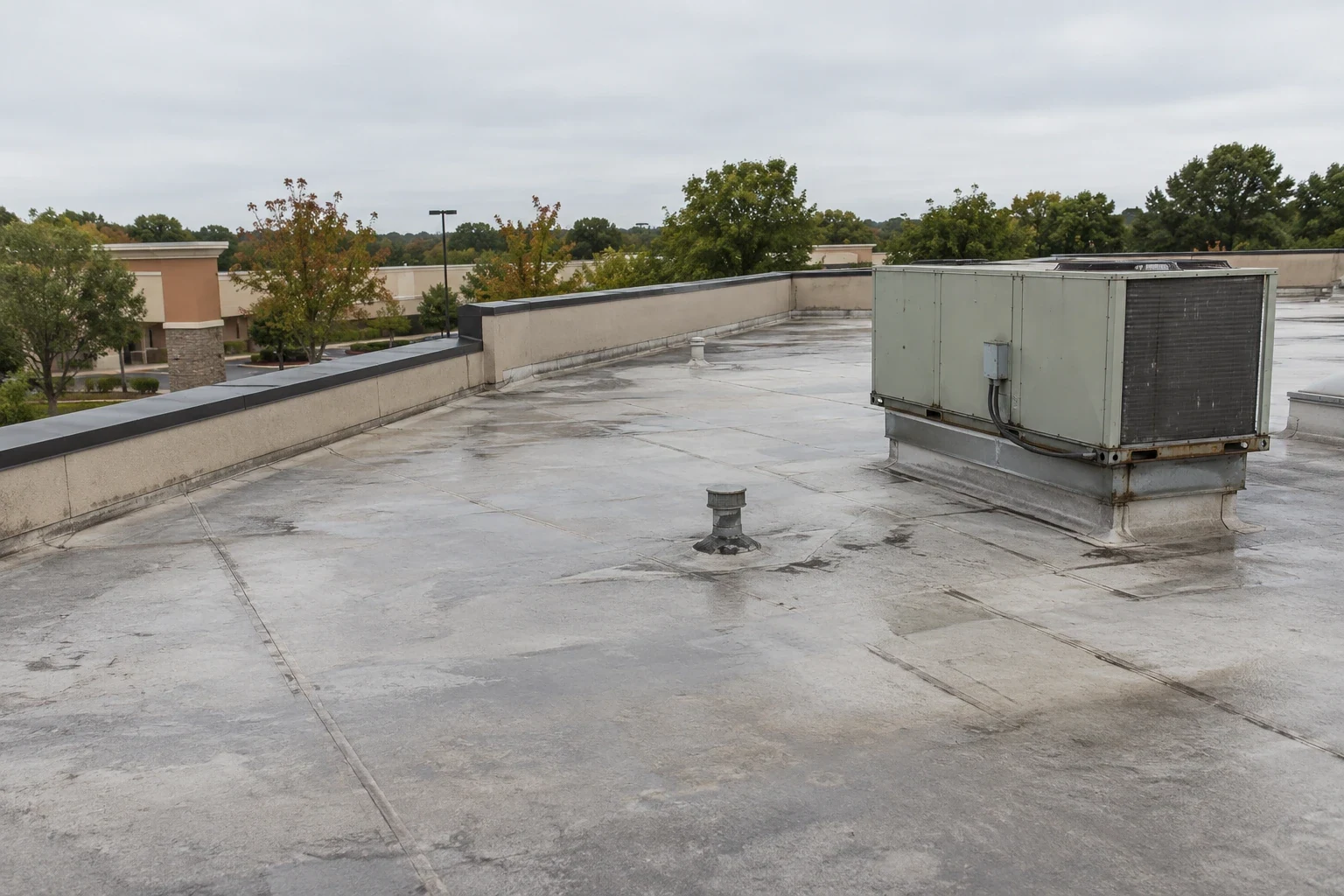
Retail roof water often converges at internal drains, scuppers, and low points near walls. We inspect strainers, drain bowls, overflow routes, and the surrounding membrane. A clogged outlet can produce ponding that keeps a seam under water. A low area may reflect compressed insulation or a deck condition, which calls for more than a surface patch. We measure the basin and confirm the layer condition before deciding whether the correction is local or broader.
Parapets and party-wall transitions are checked with the same care. We look at counterflashing, termination height, and how membrane turns up at adjoining sections. If a neighbor's roof is lower, the overflow detail needs to move water away from the shared wall. The repair must preserve that route. Drain and scupper repairs can be combined with membrane work when the outlet interface is part of the failure.
Equipment Creates Roof Interfaces
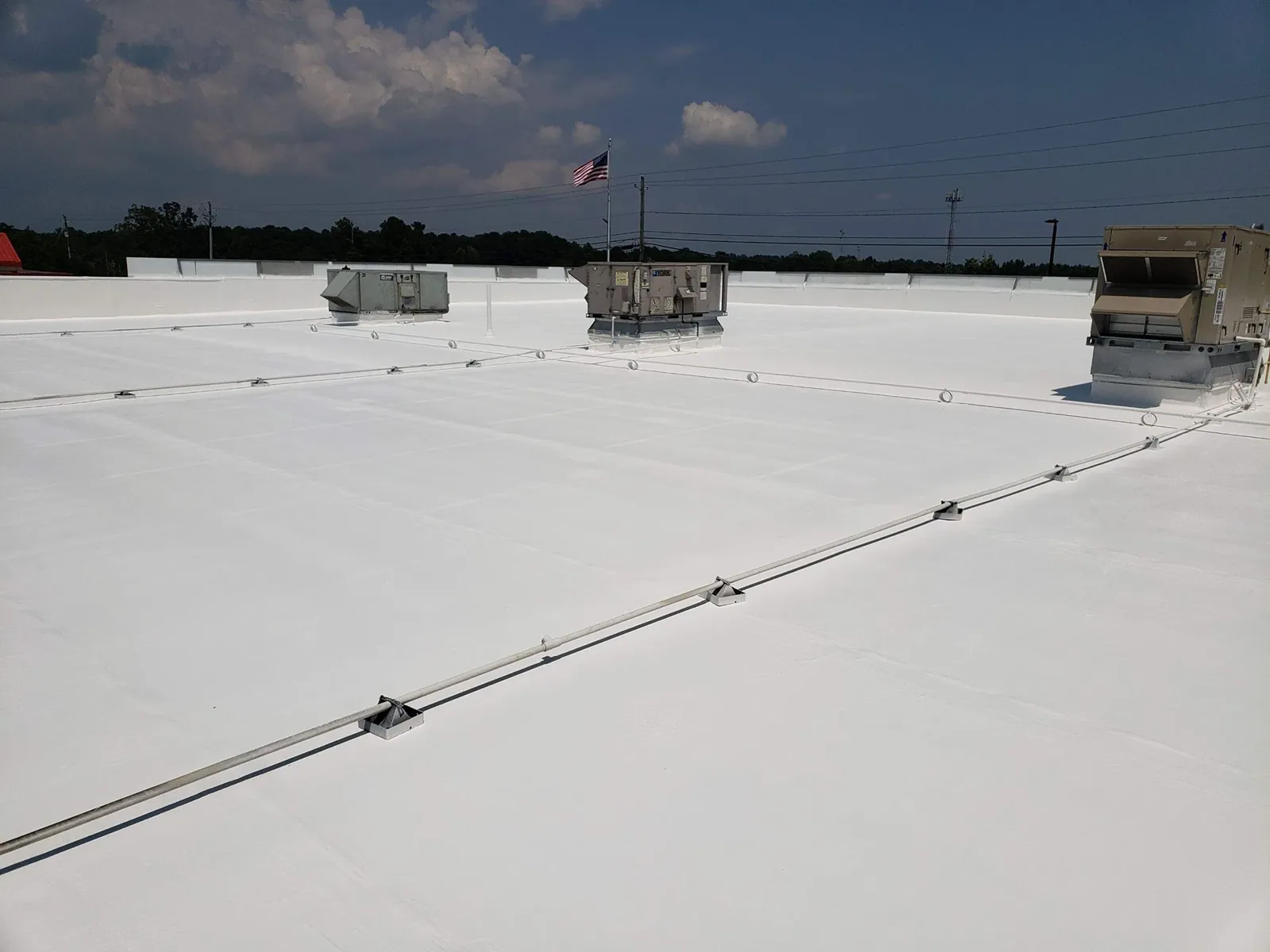
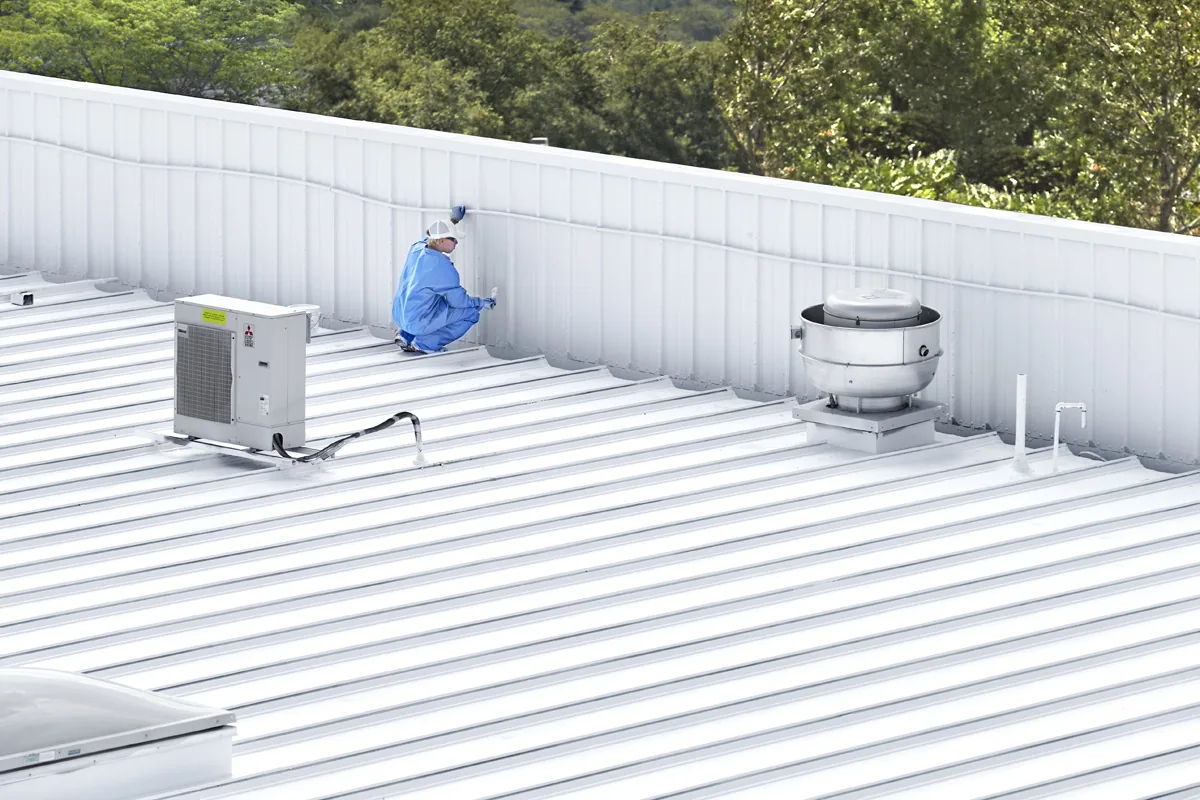
Retail buildings can have HVAC units, exhausts, skylights, sign supports, and service conduits. Each penetration creates a flashing joint. We inspect corners, membrane bond, counterflashing, and support attachment. A curb that has shifted or a pipe that rubs across the membrane can open a water path. New equipment should be located with drains and seams in view. The roof team and mechanical contractor coordinate lifting, flashing, and equipment reset before removing material.
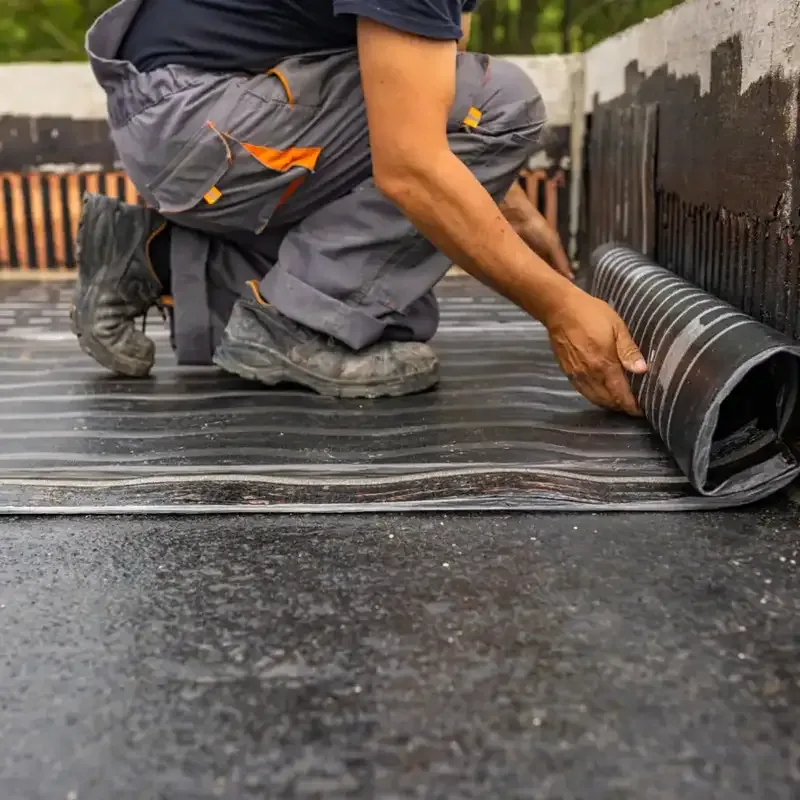
System type determines the repair method. Heat-welded seams on thermoplastic roofs, adhesive transitions on EPDM, and coated surfaces require different preparation. We identify the surface, remove incompatible patches, and test bond when the material history is unclear. A silicone restoration can only be considered when the substrate is dry, stable, and compatible. A modified-bitumen assembly needs its own seam and flashing detail. Property areas such as big-box stores or grocery tenants have different interior uses, but no roof scope is inferred from the tenant label.
Local Retail Adds Access Constraints
Independence retail is spread across several corridors. Merchant Square Antique Marketplace brings more than 400 vendors into one specialty-retail destination, while Historic Independence Square has shops, restaurants, and redevelopment activity. These facts describe tenant coordination needs in the market, not specific roof size or condition. We plan public access, deliveries, and material staging with the property's actual layout and hours.
Storm records help set inspection priorities. On March 6, 2017, hailstones measuring 1.75 inches were reported northeast of Independence, with smaller hail at Centerpoint Medical Center. The report does not show damage to any shopping center. After a storm, we inspect the field membrane, roof edges, curbs, and exposed accessories for direct impact or displacement. A hail damage inspection documents what is visible on the actual property.
Work Follows the Condition
A localized repair is appropriate when the surrounding membrane is bonded, the insulation is dry, and the defect can be isolated. If several seams have opened or moisture extends beyond one tenant bay, we map the larger area. Recover or replacement may be considered when the assembly cannot support another patch. We show the conditions behind the recommendation, including core locations, edge details, drainage, and any work needed at equipment.
Timing and cost depend on the number of tenant zones, access hours, lift setup, removal depth, and interior protection. We list each driver so the property manager can coordinate notices and compare phases. Photographs and a condition report help separate urgent water control from capital work. Independence Center's retail directory includes multiple tenant types; a mall operator can use the same record format across buildings while keeping each roof condition distinct. Schedule a review to identify the assembly, failure mechanism, and repair limit.
Before pricing, we confirm if temporary fencing, night work, or a dedicated loading window is needed. Those choices affect labor and mobilization. A work plan should also state which storefront remains accessible during each phase and who receives the daily closeout note.
Commercial Roofing Questions
Can one tenant's leak be caused by a defect outside its lease space?
Yes. Roof seams and drainage paths do not necessarily line up with interior tenant boundaries. We inspect the roof above and around the report, then mark the likely route. The property manager can coordinate access to adjoining spaces if testing or repair needs it.
How do you keep storefront entrances open during repairs?
We confirm entrances, deliveries, and lift placement with the site contact before work. If a roof edge is above public access, the phase includes barriers or a different work window. The daily boundary must be secured before the route is reopened.
Can a coating solve a ponding problem at a shopping center?
A coating does not correct lost slope or a blocked drain. We inspect the basin and outlet, then determine whether the cause is debris, compressed insulation, or a deck issue. Coating is considered only when the surface is stable and drainage functions as intended.
What should be documented before a retail reroof?
We record the assembly, water path, tenant access plan, drains, curbs, and removal boundary. Photos should include reference points for each roof zone. The project record also lists any concealed condition that could change the quantity after removal. Record the existing roof zones, tenant boundaries, drains, rooftop equipment, access routes, and any areas where work must avoid customer entrances. Note who approves temporary closures and equipment shutdowns. During construction, keep a daily log of completed areas, concealed conditions, temporary protection, and open decisions. A clear record helps ownership and tenants understand when each section is watertight and which follow-up work remains. Confirm responsibility for roof access keys, tenant notice, overnight security, and temporary closures. Those decisions belong in the mobilization plan alongside material staging and daily dry-in.