Resolve grocery roof leaks in Independence, MO by separating condensate from rain, checking refrigeration penetrations, and protecting receiving operations.
Grocery-store roofs sit above refrigeration equipment, produce coolers, food preparation, and a steady receiving cycle. A roof leak and a refrigeration condensate problem can leave similar signs inside, so the investigation has to separate the water sources. In Independence, MO, the Golden Acres guide names Hy-Vee, Price Chopper, and Walmart Neighborhood Market among nearby retail destinations. The 23rd Street and Sterling Avenue area also includes Sun Fresh Market. These facts establish local grocery activity; they do not describe a particular roof. We inspect the assembly and trace the source before repairing it.
Separate Condensate from Rain
Water near a cooler or mechanical room is not automatically coming through the roof. Refrigeration lines, condensate drains, and roof penetrations can all contribute. We map the interior report, ask when it appears, and inspect the roof above the area for failed flashing, open seams, or blocked drainage. A core sample can show wet insulation beneath the membrane. The findings help the facility distinguish an exterior entry point from a plumbing or equipment issue.
When a roof opening is confirmed, we trace the water path beyond the first visible wet spot. Water may travel laterally through insulation before reaching a ceiling. We inspect nearby curbs, drains, pipe boots, and wall transitions, then document the likely route and tested points. A targeted repair should reach dry, stable material. Leak investigation can be paired with infrared moisture scanning when the roof layers require further mapping.
Coordinate Refrigeration Lines
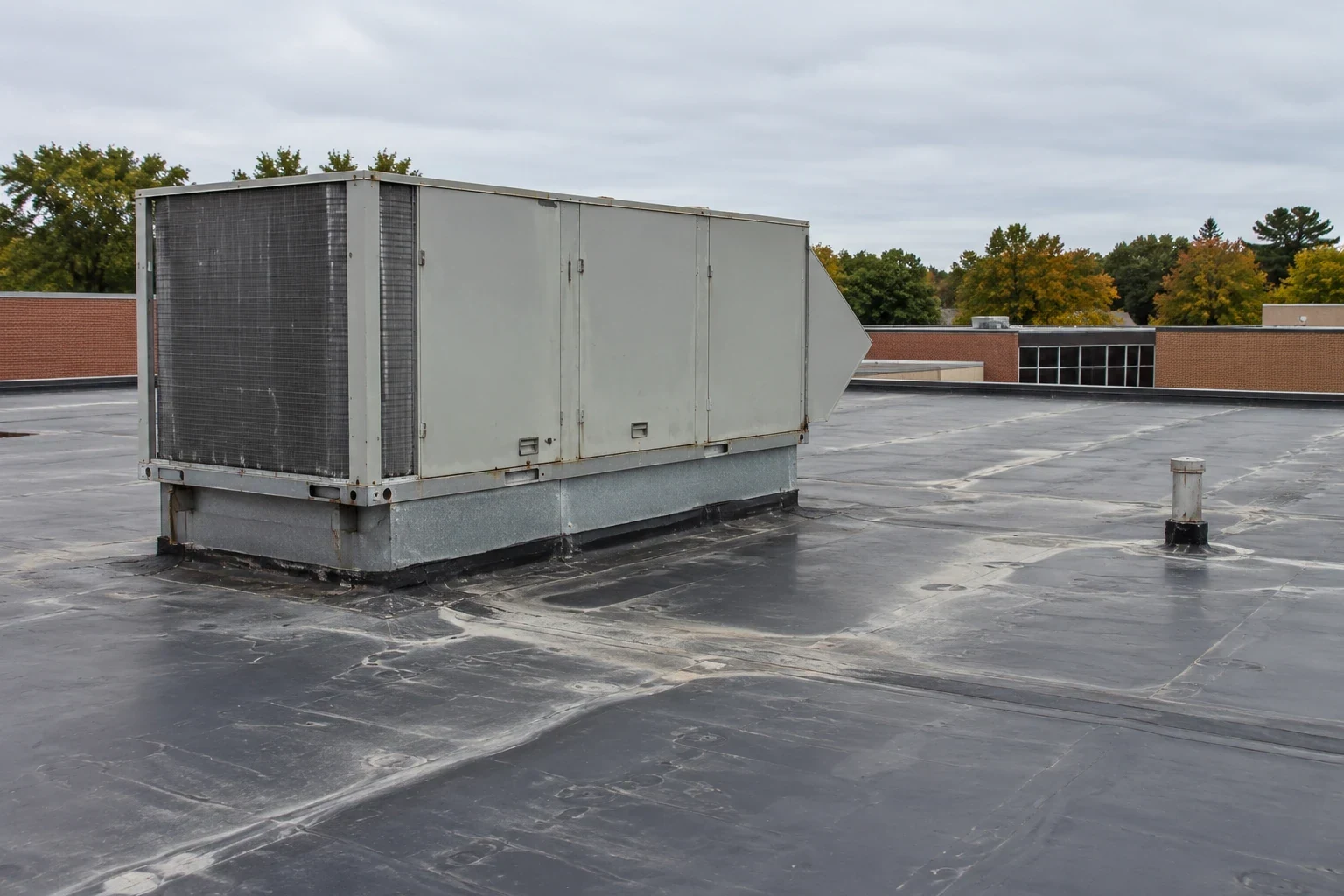
Refrigeration piping needs support and clearance without creating a dam across the roof. We check line stands, boots, sealant, and membrane wear where technicians service the equipment. Movement can pull at a flashing connection or abrade the surface. A replacement detail should allow access for future maintenance and keep the line from resting on an unprotected seam. If a unit is relocated, the old curb needs a permanent closure tied into the deck and roof membrane.
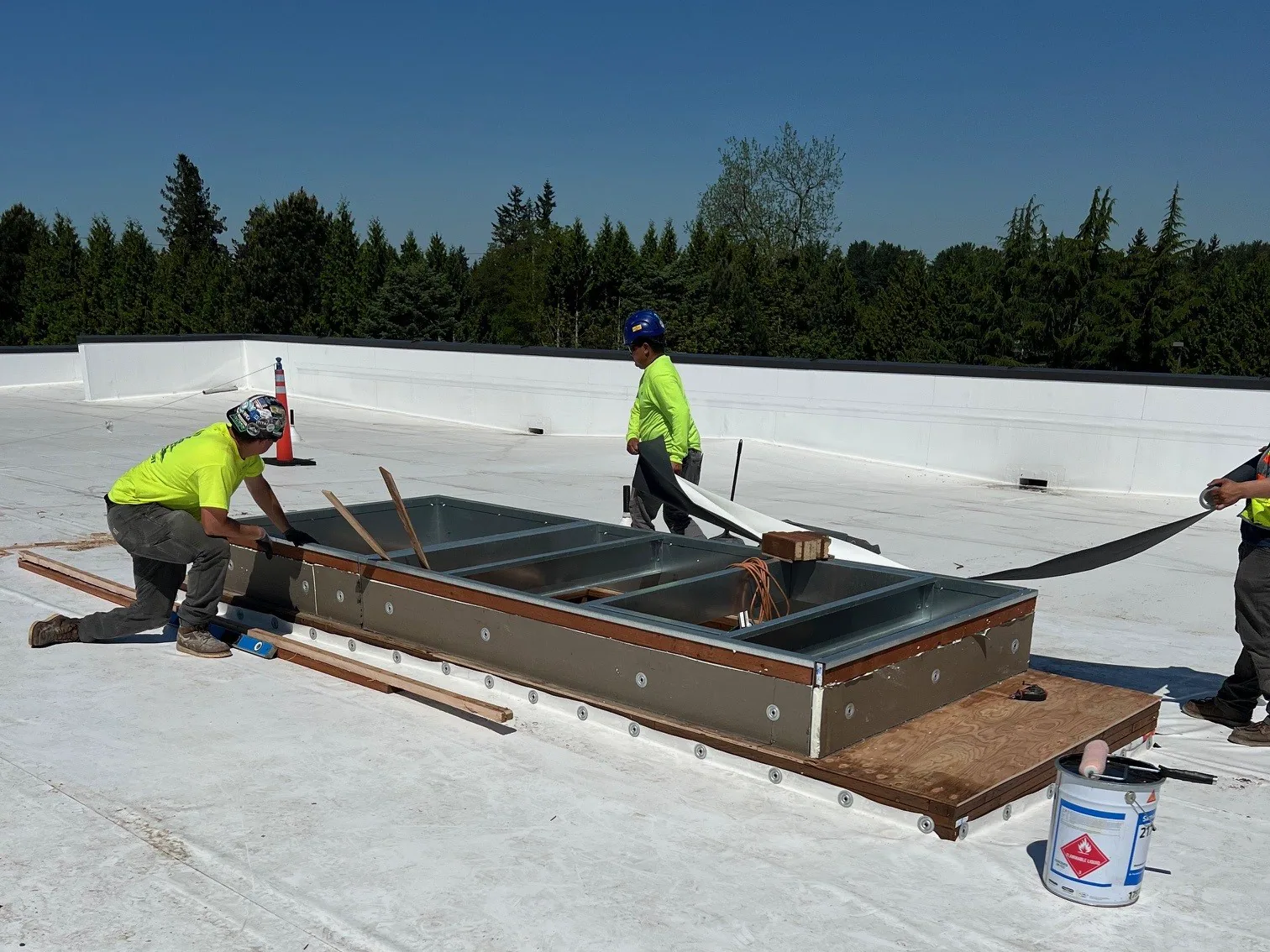
Kitchen exhaust, rooftop HVAC, electrical conduit, and ventilation also create interfaces. We record each curb and opening before a reroof phase. The mechanical contractor confirms which units stay running, which can be lifted, and how services are restored. The roofer specifies the transition and dry-in sequence. Equipment-curb repairs should preserve the assembly's water path as well as service clearance.
Keep Drains Clear
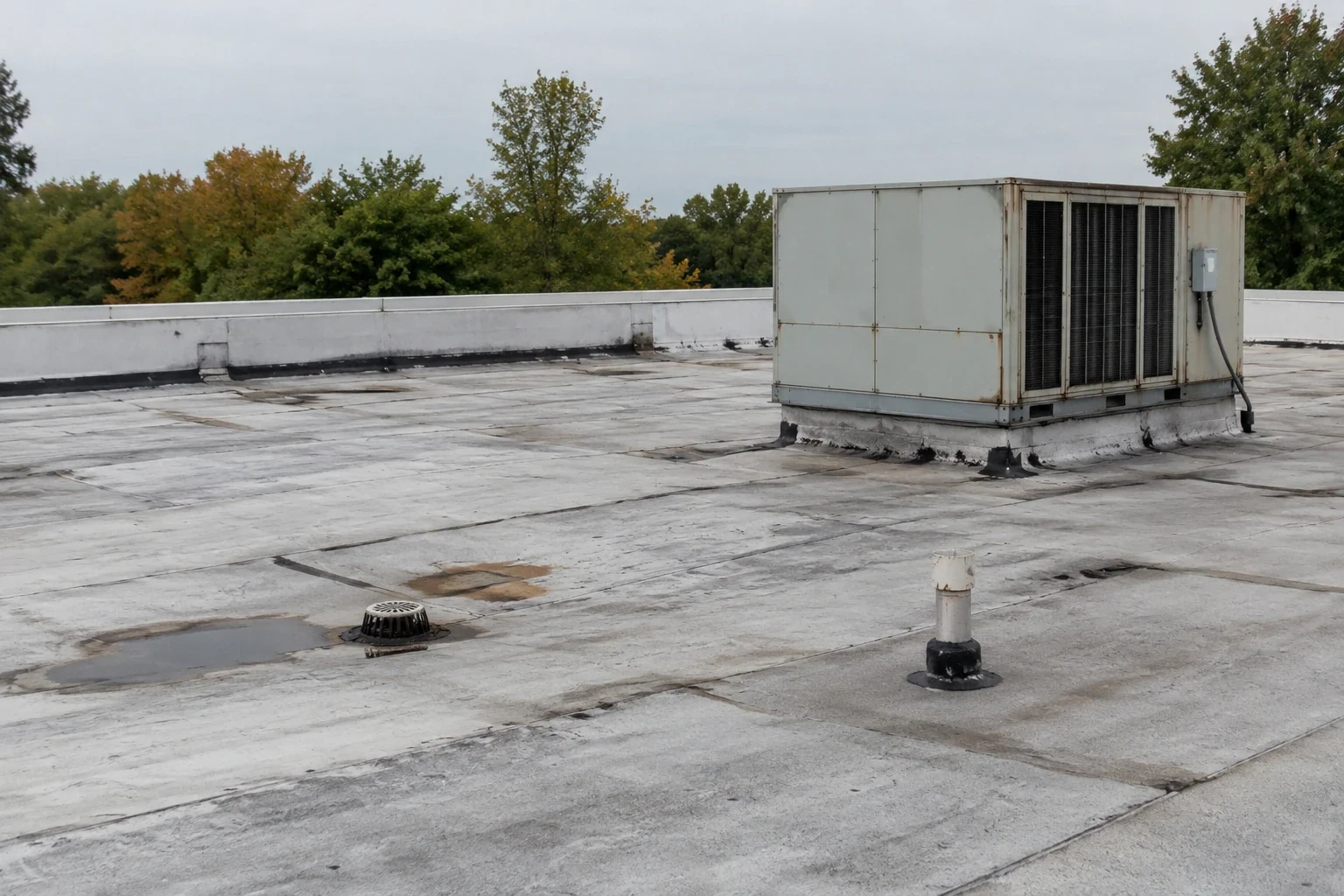
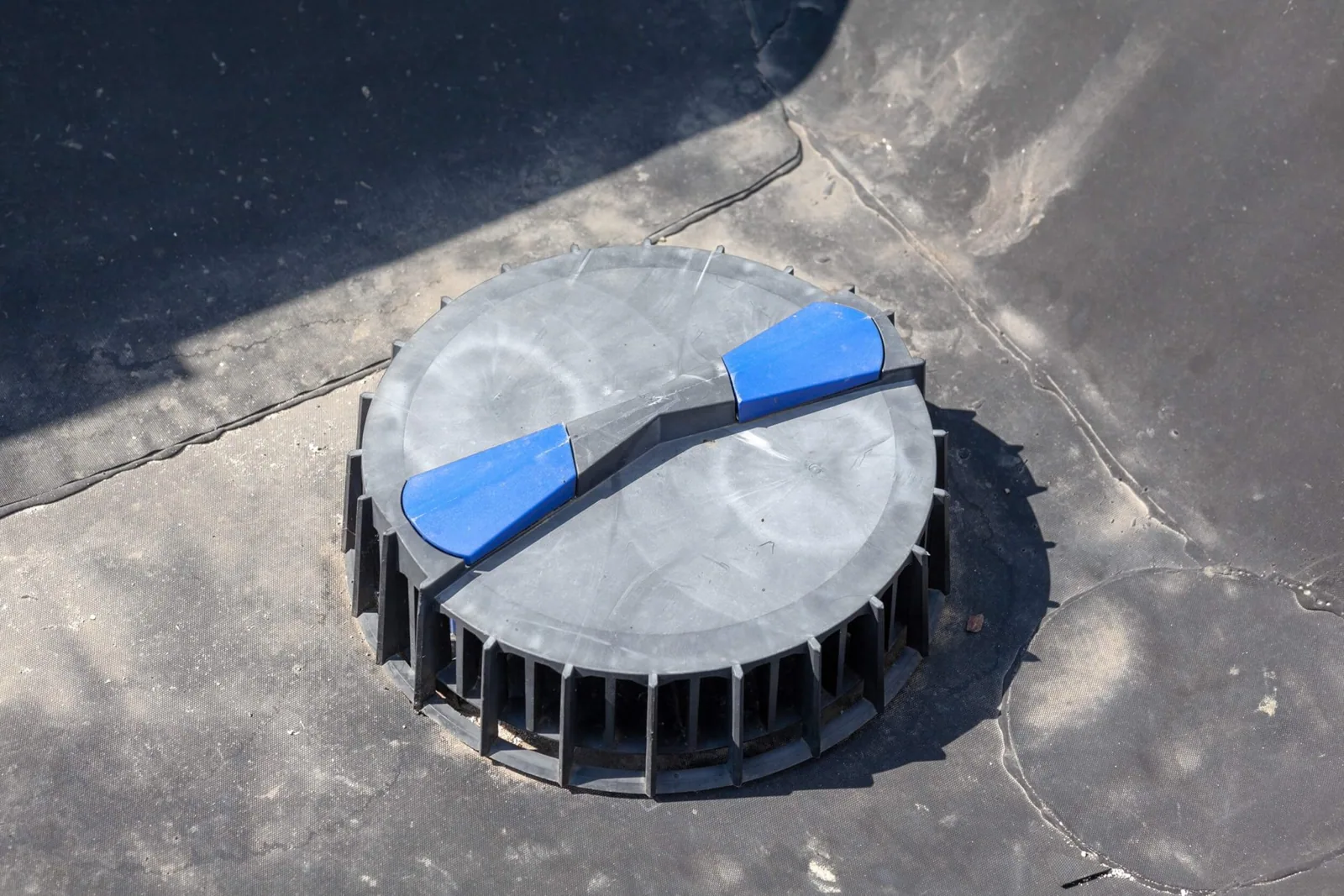
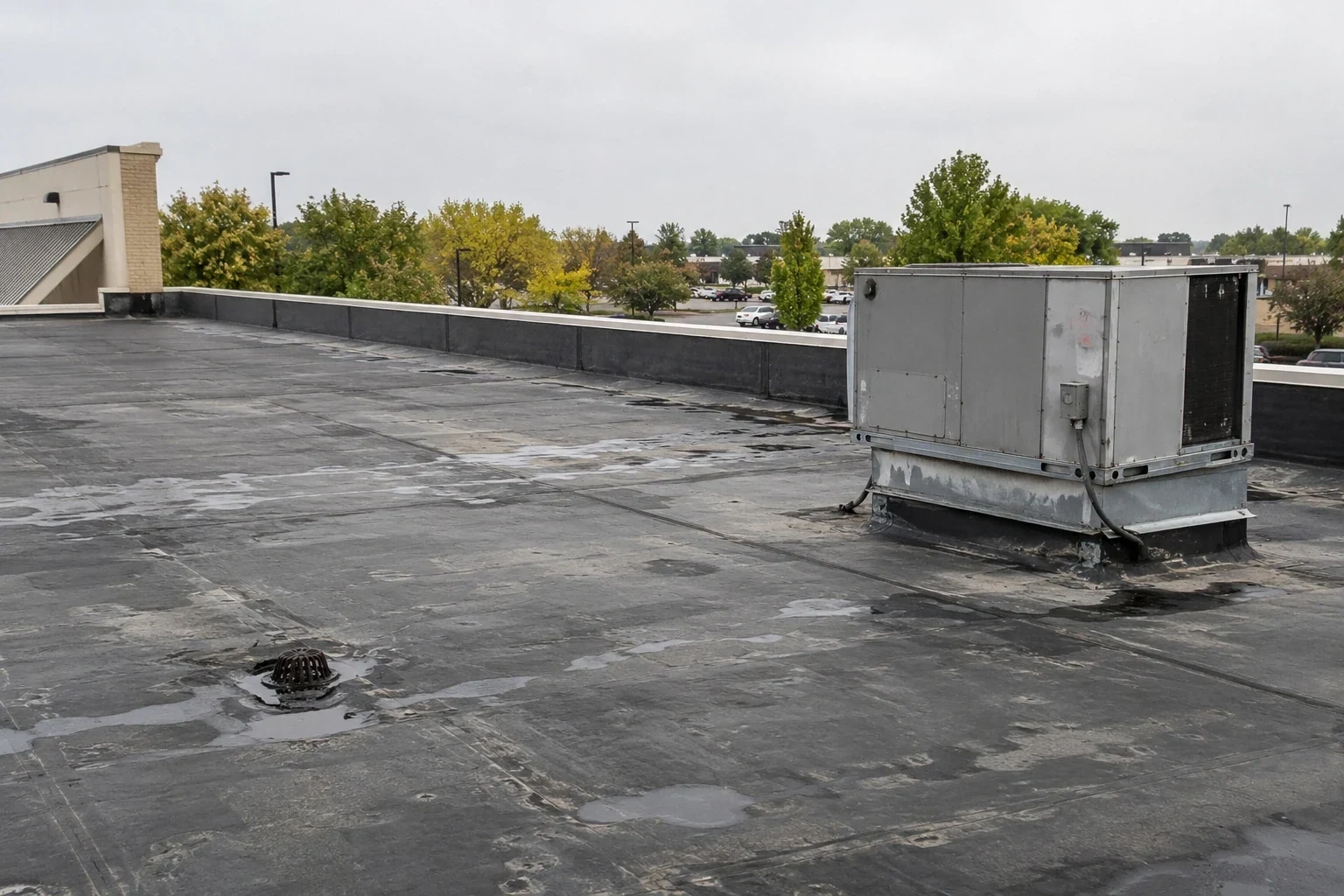
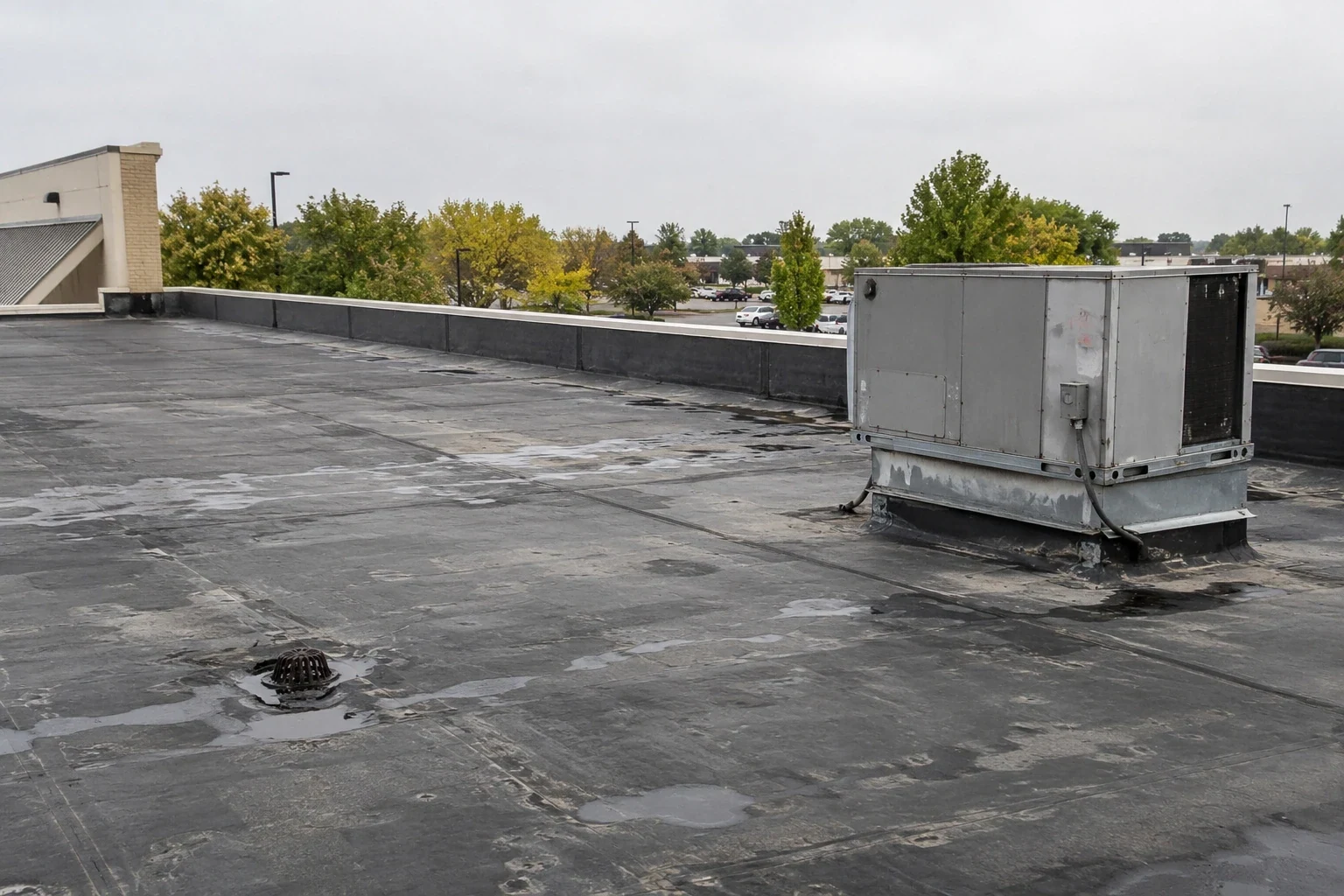
Grease, leaves, packaging, and debris can collect near outlets or behind equipment. We inspect strainers, drain bowls, scuppers, and overflow openings, then check slope around each one. A blocked outlet may cause ponding; a depressed area can signal compressed insulation or a deck issue. The repair depends on the cause. Cleaning a drain will not correct a low deck, and a coating cannot create positive slope where none exists.
Roof drainage must stay distinct from interior plumbing. A reported floor or ceiling leak may originate at a roof drain, a pipe penetration, or a mechanical condensate line. We check the roof side and coordinate with the facility plumber when the source is unclear. For membrane damage around an outlet, drain and scupper work includes the adjoining flashing. The completed detail should send water into the outlet without leaving a raised patch edge.
Plan Around Retail Access
Independence has grocery activity along several commercial corridors. The city places Sun Fresh Market in the Sterling Avenue and 23rd Street retail area; Golden Acres lists multiple grocery destinations within its shopping mix. That context makes receiving and public access important schedule questions, but the actual dock and entrance layout is confirmed on site. We plan truck deliveries, lift placement, customer paths, and roof entry with the store contact before materials arrive.
The regional winter record includes freeze exposure. The Kansas City January table lists a normal daily high of 39 degrees and low of 20 degrees for January 1 at the metro station. Those are not roof readings. We check actual sealant, curb, and membrane transitions for seasonal movement, then record whether a repair has lost bond. A storm observation is also specific to its location: hail at Centerpoint Medical Center in 2017 does not establish impact at a grocery roof. We inspect the subject property after a storm and photograph direct evidence.
Protect Stock and Operations
Work above refrigerated storage requires a controlled opening, interior protection, and a daily dry-in boundary. We coordinate timing with receiving, sanitation, temperature monitoring, and equipment service. If removal uncovers wet insulation, we secure the roof and identify how far the material extends before widening the phase. The facility team decides what product or room protection is required below; the roofing scope defines the opening and roof repair.
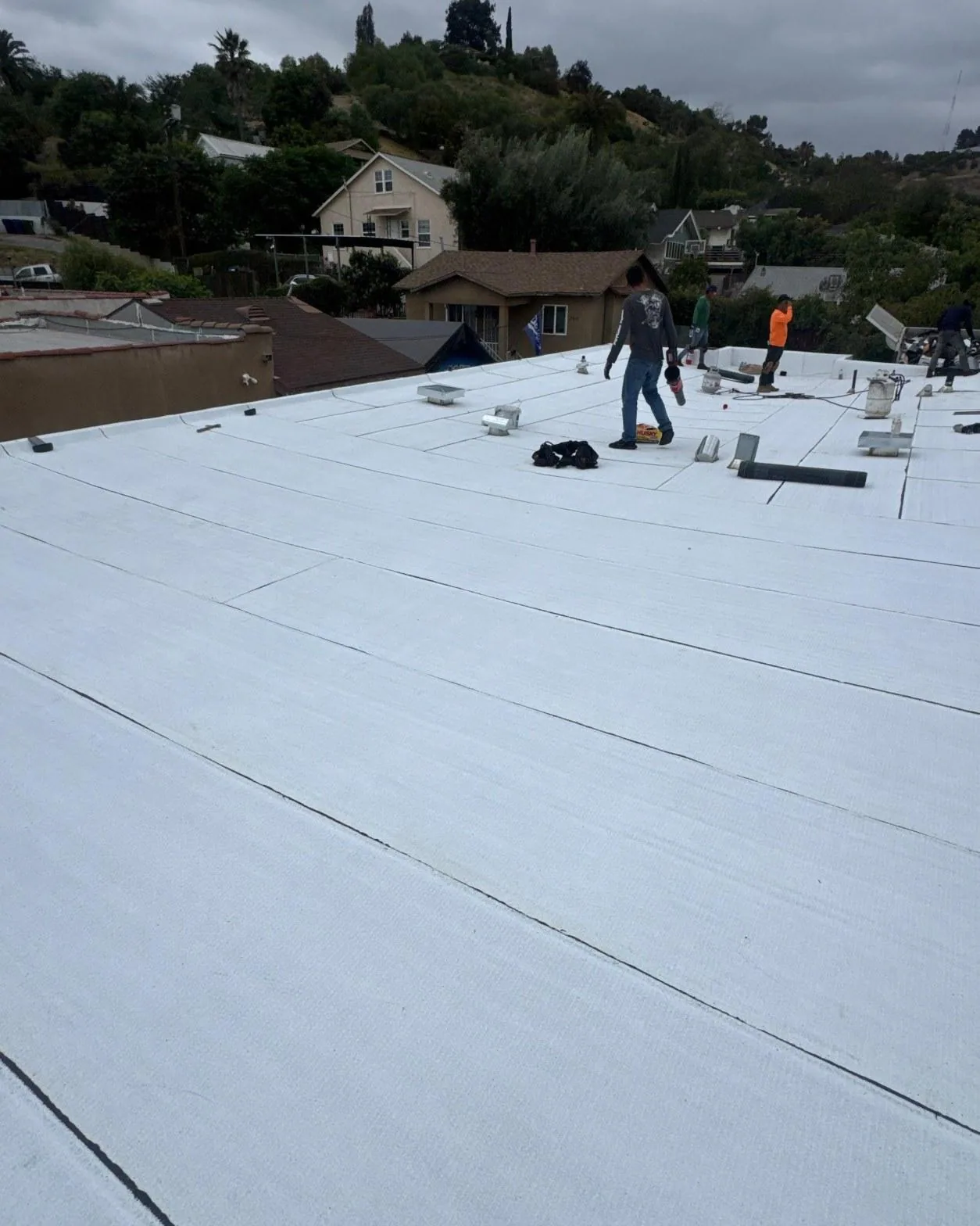
Repair is appropriate when the membrane is stable around the defect and moisture is limited. Widespread wet layers, repeated seam failure, weak attachment, or deck deterioration can call for a broader replacement. Cost changes with tear-off depth, line and equipment coordination, drain corrections, and temporary coverage. We provide photos and test results to show the boundary. A roof condition report helps the owner track the next maintenance item. For comparison, big-box roofs and restaurant roofs have different equipment and interior demands. Schedule a grocery roof review in Independence to identify the assembly and failure mechanism.
Closeout records identify the materials installed, the limits of the repaired section, and nearby conditions that remain open for monitoring. We check the drain route and adjacent curb after work, then share photographs with the store contact. That lets the next service visit compare the roof with a known baseline.
The record also notes the work date, access limits, and any temporary dry-in material removed at closeout.
Commercial Roofing Questions
How can a store tell whether water is from the roof or a cooler line?
We compare the timing and location with refrigeration lines, condensate drains, roof penetrations, and membrane seams. A core sample can confirm moisture in the roof layers. If the roof path is intact, the facility can focus on equipment or plumbing sources.
Can grocery operations continue while a roof section is open?
The work is phased to a secure dry-in boundary, with receiving, sanitation, and interior protection addressed with the store contact. The roof opening remains limited to what the crew can close during the shift. Some areas may need a restricted work window around equipment service.
Why does water pond around rooftop equipment?
A unit, support, or conduit can obstruct drainage, while compressed insulation or deck slope may create a low area. We inspect the outlet, surrounding plane, and layer condition. The repair depends on which condition is holding water.
What roof details should be checked when refrigeration equipment is replaced?
We inspect the curb, line supports, flashing, old penetrations, and the path to nearby drains. The mechanical team confirms lifting and reconnection. The roof detail needs a sound substrate and must preserve service clearance after the unit is reset. New or relocated equipment changes curb dimensions, piping routes, service access, and sometimes the drainage path. Before mechanical work, confirm the curb height, membrane termination, and whether service personnel will cross vulnerable seams. Coordinate roof and mechanical scopes so an opening is protected between trades and final flashing is inspected after the equipment is set. Ask the mechanical contractor for curb and pipe layouts before ordering roof materials. A small change in equipment footprint can shift the flashing boundary and create a new collection point for water. Verify that the new unit will not cover a drain, pinch a service path, or create a low pocket around its curb. These checks let the mechanical and roofing scopes resolve their interface before the opening is made.