Coordinate big-box roof repair in Independence, MO with loading access, drainage runs, rooftop equipment, and wind-resistant perimeter details.
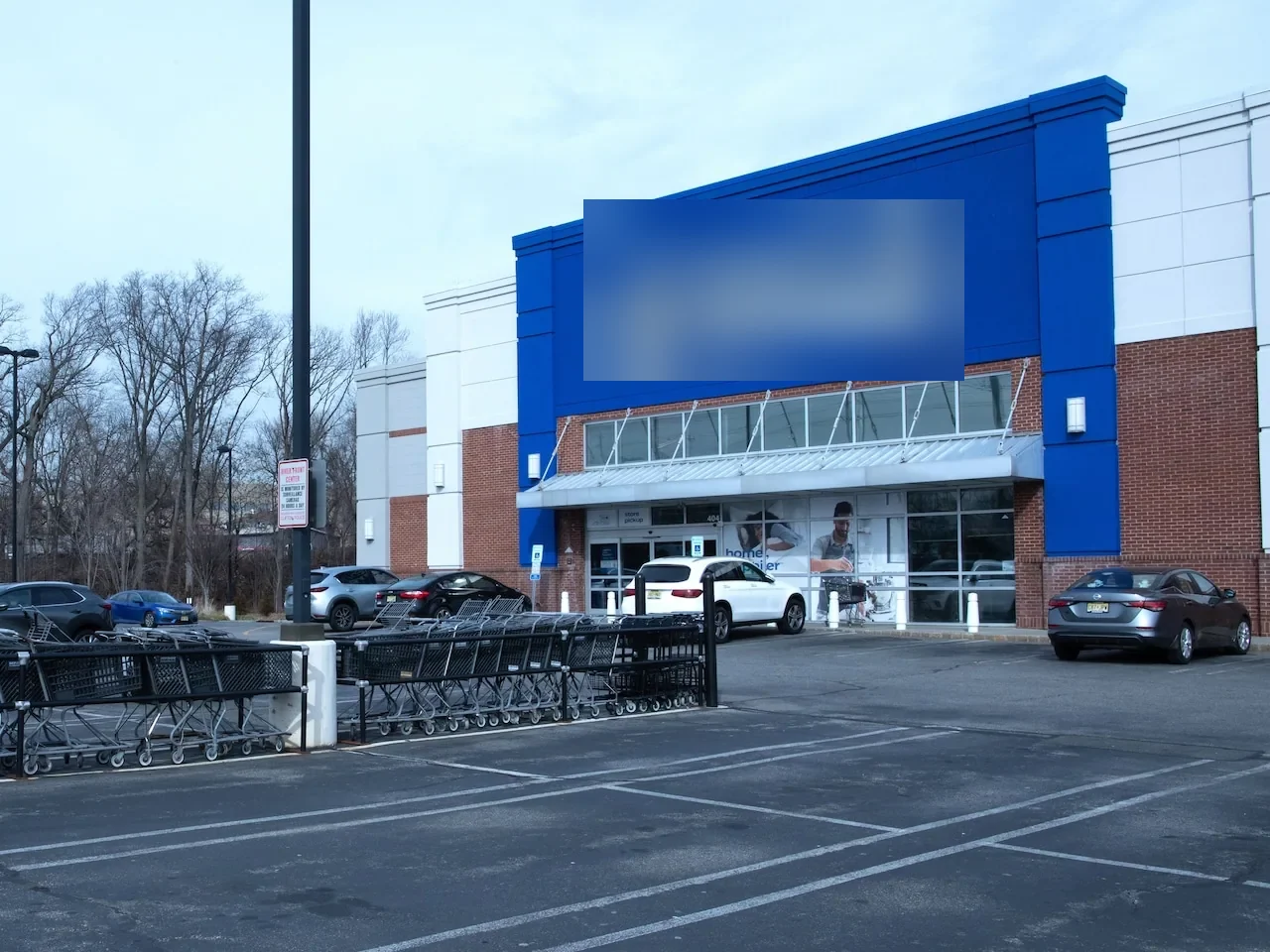
Big-box retail roofs carry extensive mechanical equipment and long drainage runs above sales floors, stockrooms, and loading areas. A blocked outlet or failed curb can affect a large interior zone before the entry point is obvious. Independence, MO has retailers near North Kansas City, Missouri and at Raymore, Missouri along US 24. Those locations establish market context, not roof construction. We inspect the specific assembly and map its water path before recommending work.
Loading Areas Set Roof Access
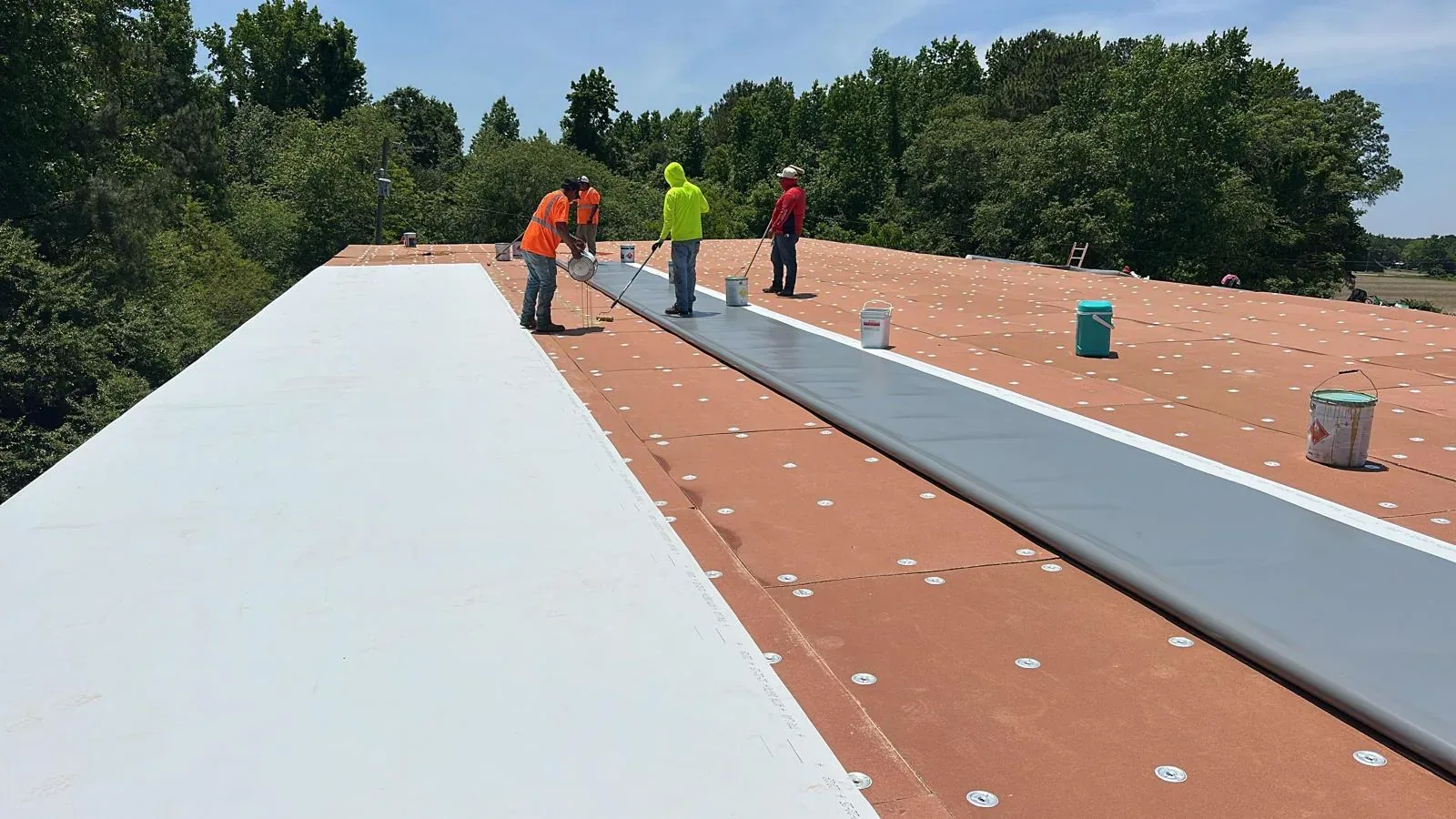
Material delivery, receiving schedules, and public access affect where a roof crew can stage. We confirm truck paths, overhead clearances, loading door activity, fire routes, and the lift location with the property contact. Roof access should avoid interrupting customer routes and keep the work zone clear of stored materials. The daily area is sized to the crew's ability to remove, install, and close the assembly before weather can reach it.
Large-format stores can have distinct sales, stock, and service zones. We coordinate interior notifications and temporary protection where the roof is opened. If operations continue, we mark each phase and the time it will be restored. A phased reroof can progress by roof section while maintaining a secure weather line. Delivery timing, night work, and material handling are listed as schedule drivers rather than hidden assumptions.
Trace the Long Water Run
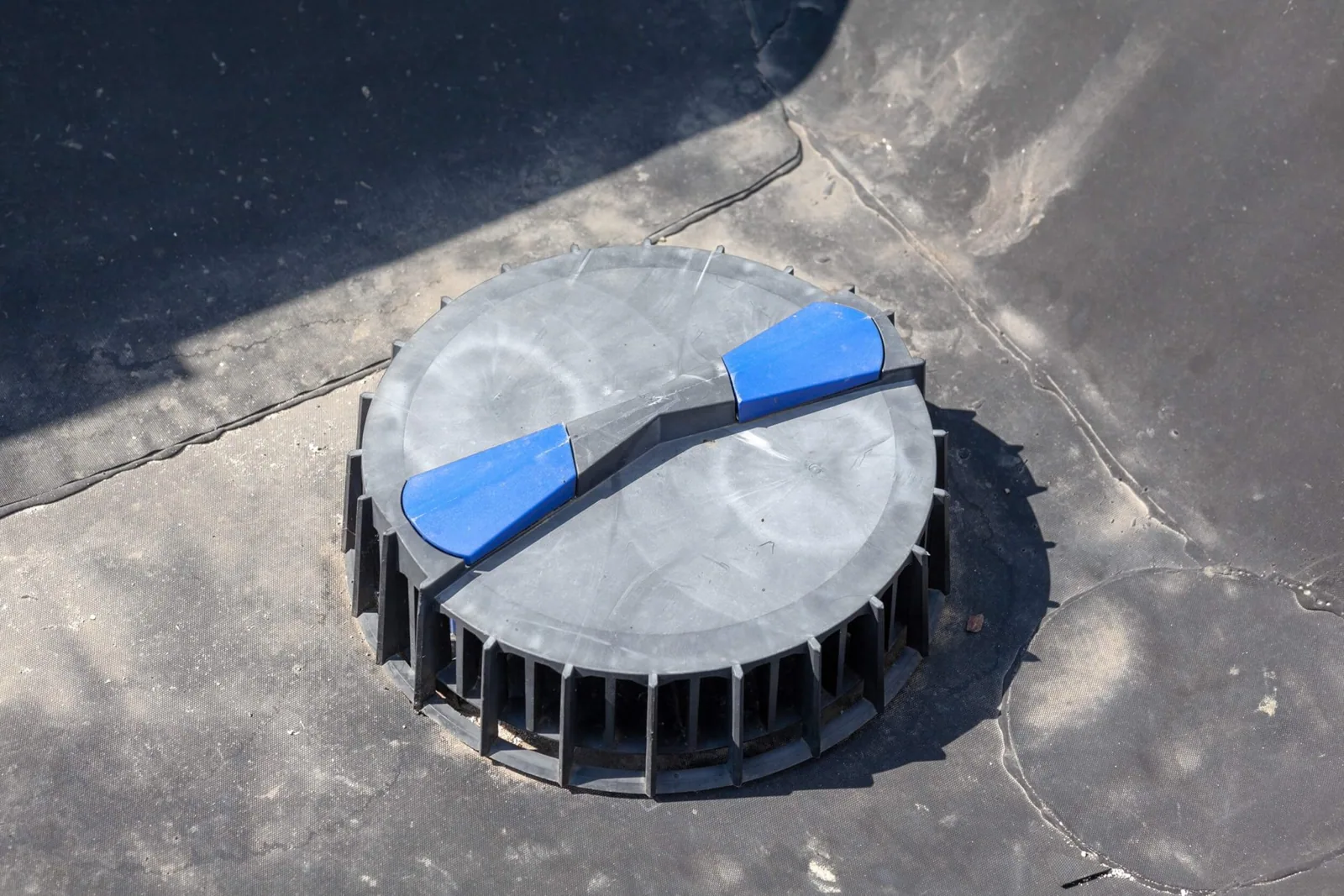
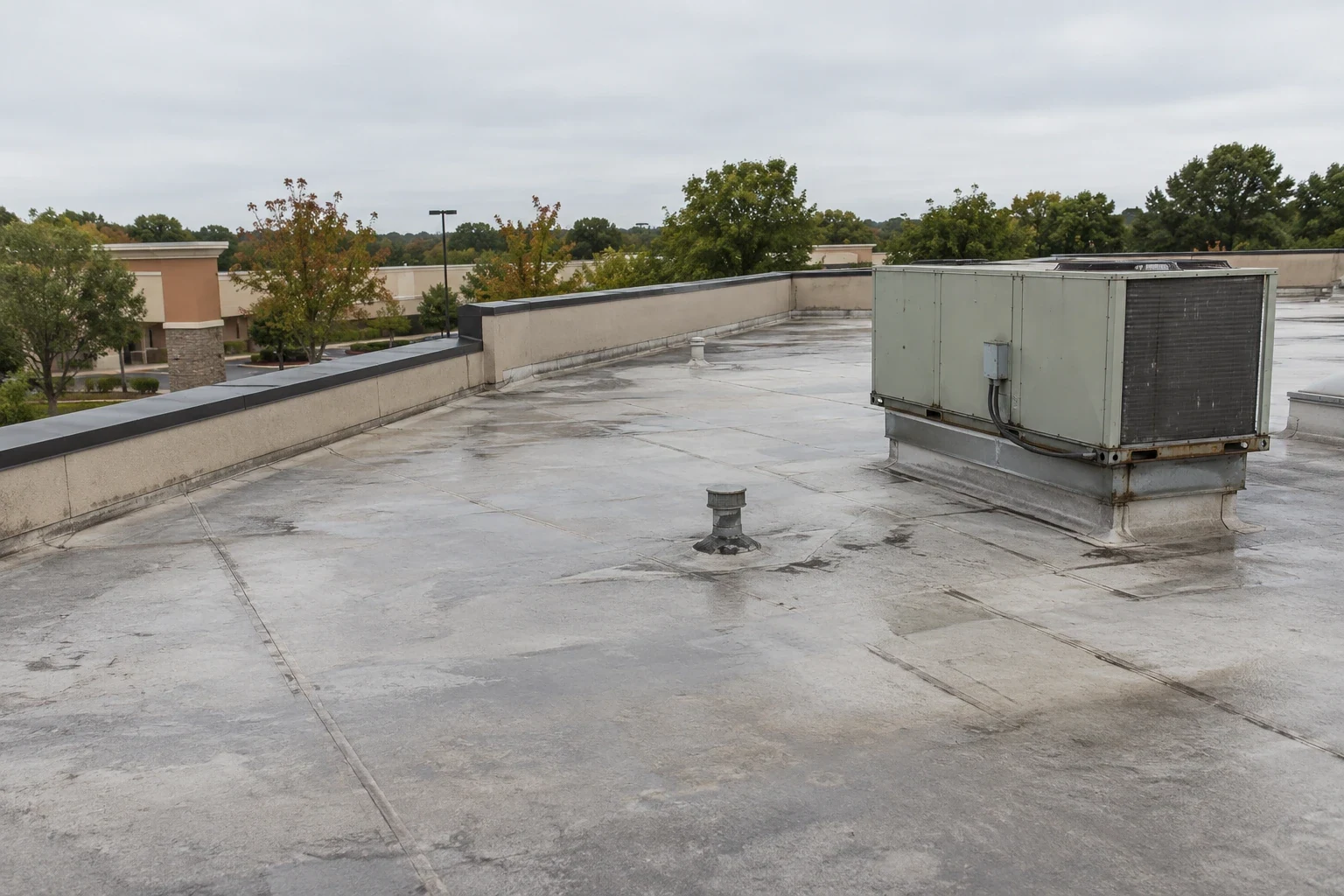
Low-slope roofs often carry water toward internal drains across a broad field. We inspect drain spacing, overflow openings, crickets, and low areas, then check for debris or insulation compression. If ponding repeatedly covers a seam, a patch alone may not address the cause. We identify whether the issue is a blocked outlet, a low deck, or a damaged membrane, and set the correction based on what is visible and tested.
Water also runs laterally beneath some roof membranes. A leak at a stockroom ceiling might begin at a curb, wall transition, or seam farther upslope. We compare the interior report with rooftop details and use a core where needed to establish layer condition. The roof sketch records the suspected route and tested points. If the drain or scupper detail has failed, drainage repairs are coordinated with membrane and flashing work.
We also compare roof observations with the store's maintenance tickets and any ceiling repairs already made. A repeat stain after patching can indicate that the surface detail was repaired without opening the wet layer below. We mark prior repairs, check the substrate at their edges, and identify whether a new scope should include insulation or cover board. This avoids pricing a second surface patch when the assembly needs a deeper correction.
Support Equipment Without Blocking Water
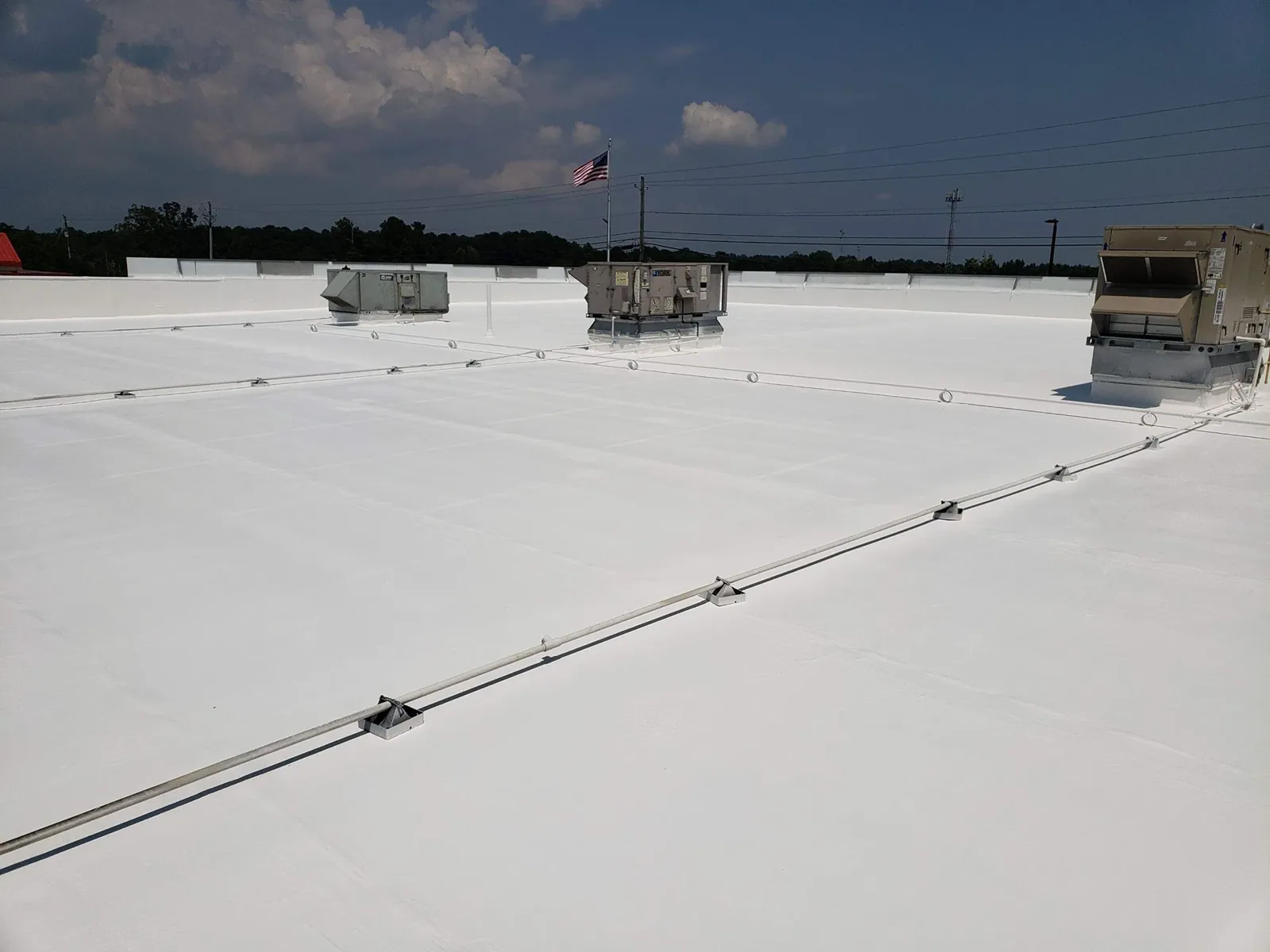
HVAC units, exhaust fans, conduit, and sign-related services create roof interfaces. We inspect curb corners, flashing, supports, and clearances for service access. A new unit can block a drain or force a pipe across a seam if the layout is not coordinated. We review the proposed equipment position before roofing work and establish who will lift and reset the unit. The final detail must preserve access and keep water moving to the outlet.
We identify whether the roof is membrane, coating, or metal before selecting repair materials. A patch should bond to stable substrate and remain compatible with the existing system. If coating, grease, or old sealant is present, we prepare a test area rather than assume adhesion. TPO membrane and metal panels require different transitions. A shopping-center roof can share tenant access concerns, while a warehouse roof may have different loading patterns; the actual property defines the construction sequence.
Check the Perimeter After Wind
Wind pressure is concentrated at roof edges and corners. We check edge metal, terminations, fastener rows, and transitions where the roof meets parapets or walls. A loose cover or opened seam can allow water entry during a later storm. The load path has to connect the membrane or panel into the deck. If attachment has failed, we verify deck type and condition before choosing a fastening repair.
During the June 2022 Jackson County EF-2 tornado near Buckner, wind damage was observed one mile north-northwest of Independence. That regional account does not show damage at a retail property. A post-event walk identifies displacement or openings on the actual roof. We document field membrane, parapet, curb, and accessory conditions. A wind damage review records any emergency stabilization needed before permanent repair.
Separate Immediate Work from Renewal
A repair is appropriate when the defect is limited and the surrounding assembly is sound. Broad moisture, repeated attachment loss, or a deteriorated deck may support recover or replacement. We identify the affected area with photographs and core results, then compare options by removal depth, equipment coordination, schedule, and temporary protection. We do not infer the roof's age or condition from the store format or tenant list.
Local retail planning can affect construction access. Fairmount and US 24 corridor planning addresses business access, sidewalks, and stormwater. We confirm actual entry routes and staging at each project instead of assuming a standard retail layout. A capital plan can prioritize active leaks and upcoming renewal across a portfolio. For larger multi-tenant facilities, the first report should establish the assembly, failure mechanism, and work boundary, then set a sequence that fits the store's operation.
The bid should state the area opened, the material removed, the new layer sequence, and how the edge of the phase is protected. If the deck is not visible at every location, that limitation is noted. Those specifics make an allowance for concealed work measurable and give the store operator a usable closeout record.
Commercial Roofing Questions
How do you repair a leak when the interior area is large?
We first locate the roof entry point and the route water follows. A large ceiling stain may collect water from a smaller opening elsewhere. We inspect drains, curbs, seams, and transitions above the affected area, then use testing to confirm the repair boundary.
Can the store remain open during reroofing?
Work can often be divided into sections, subject to roof access, customer routes, loading activity, and weather. We establish barriers and interior protection where needed, then close each area at the end of the shift. The property contact confirms which entrances and deliveries take priority.
What is checked before replacing rooftop equipment?
We locate drains, seams, flashing, and service paths before the equipment layout is fixed. The curb and support detail needs a sound substrate and compatible membrane transition. The mechanical team confirms equipment loads and reset requirements.
When is a full reroof more practical than a repair?
The decision follows moisture extent, attachment, deck condition, and how often similar failures recur. If the assembly is broadly wet or unstable, repeated patches may leave the cause intact. We document the evidence and compare selective repair, recover, and replacement. Compare the number and spread of defects with the amount of sound membrane and substrate that remains. If repairs recur across multiple zones, or test openings reveal widespread wet insulation, replacement may provide a clearer boundary and planning horizon. The decision also depends on drains, perimeter metal, rooftop equipment, and how much work can be phased around store operations. We describe repair and replacement options separately so owners can weigh immediate stabilization against broader capital work. A replacement plan should identify the work limits around roof hatches, vents, drains, and high-traffic areas below. Those details drive the sequence as much as the membrane field. The condition report should separate immediate leaks from defects that can be scheduled with a larger project. This keeps an isolated repair from being treated as proof that the whole roof is sound, and it prevents routine renewal from delaying protection for an active opening.