Plan hotel roof repairs in Independence, MO with guest access, drainage, rooftop equipment, and work phasing documented around occupied spaces.
Hotel roofing is controlled by the guest areas below and the access routes around the building. Water above a room can interrupt occupancy, while a leak near a service corridor may travel beyond the first ceiling mark. Independence, MO connects commercial activity along US 24, a regional roadway that leads to Riverside, Missouri. Historic Independence Square also combines shops, restaurants, and gathering places. These local destinations help frame public access, not hotel roof conditions. We inspect the actual assembly and plan work with the property team.
Keep Guest Areas in Service
Before opening a roof section, the hotel contact identifies occupied rooms, housekeeping routes, loading access, and spaces that need a quiet work window. We coordinate lift placement, material staging, and debris movement so the work does not block guest access. When a roof opening sits above an active room, the protection plan is set before removal. The daily boundary must be small enough to close and restore before the crew leaves.
Guest reports can help locate a leak, but they do not show where water entered. We record the room and time, inspect the roof plane above, and trace the path through seams, curbs, drains, and wall transitions. Water can travel across the deck before it drops into a room. The inspection report connects the interior location to tested roof areas and identifies any uncertainty. Occupied-building phasing can sequence roof work without treating every guest room as a separate repair.
Map the Water Route
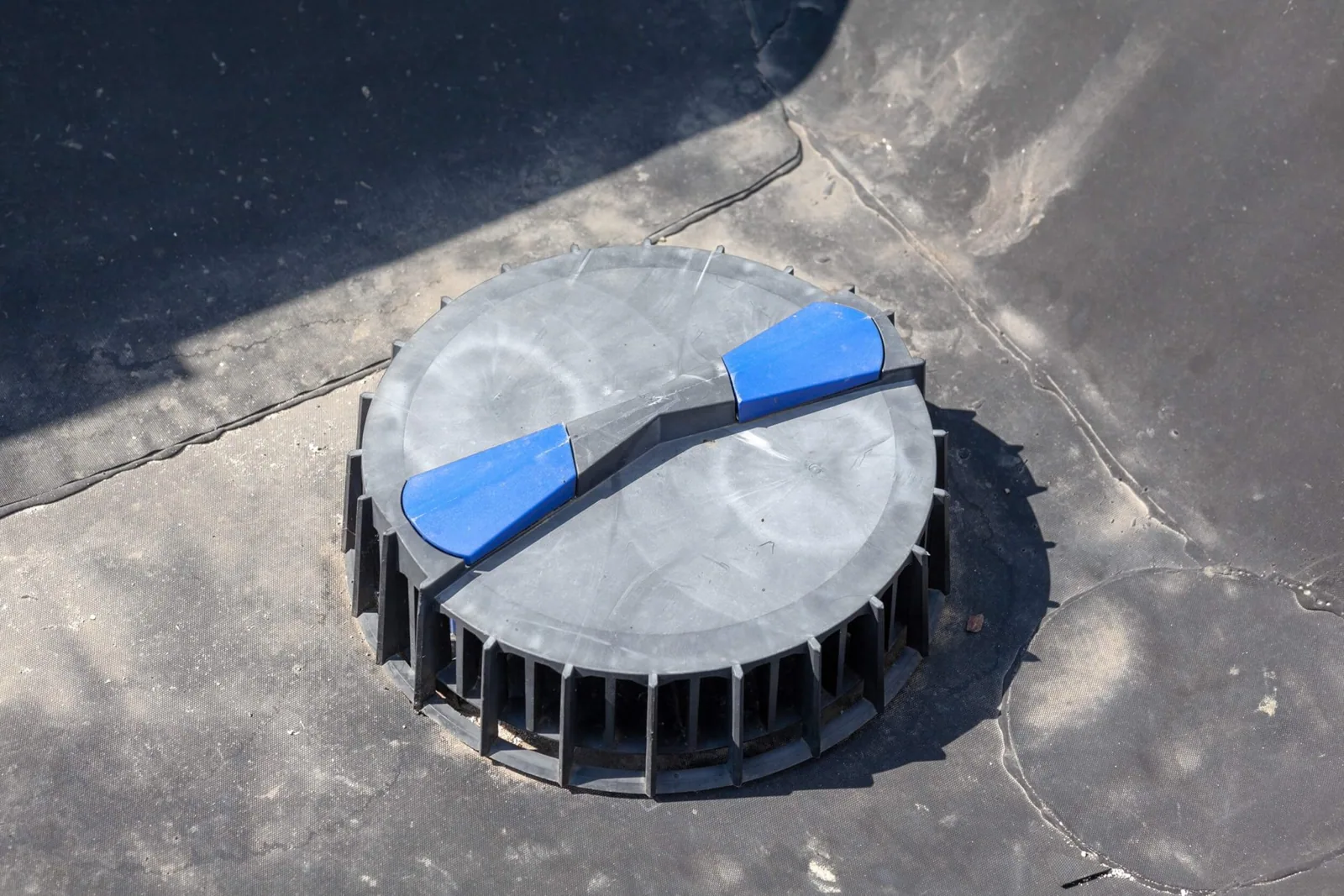
Low-slope hotel roofs can collect water around rooftop units, parapets, or drain bowls. We check strainers, scuppers, overflows, crickets, and visible low areas. If water remains after rain, we look for blocked outlets, compressed insulation, or a deck slope issue. The repair changes with the cause. Clearing an outlet can restore flow; a depressed roof plane may need a designed correction that a surface patch cannot provide.
At a tower or stepped building, the leak may originate on a higher plane or behind a vertical transition. We inspect each roof level that could feed the reported area and check the wall-to-roof interface. A selective cut reveals the layer build-up and whether moisture has reached the insulation. Where drains or scuppers are part of the failure, outlet repair is coordinated with flashing and membrane work so the water reaches the intended discharge point.
Preserve Equipment Access
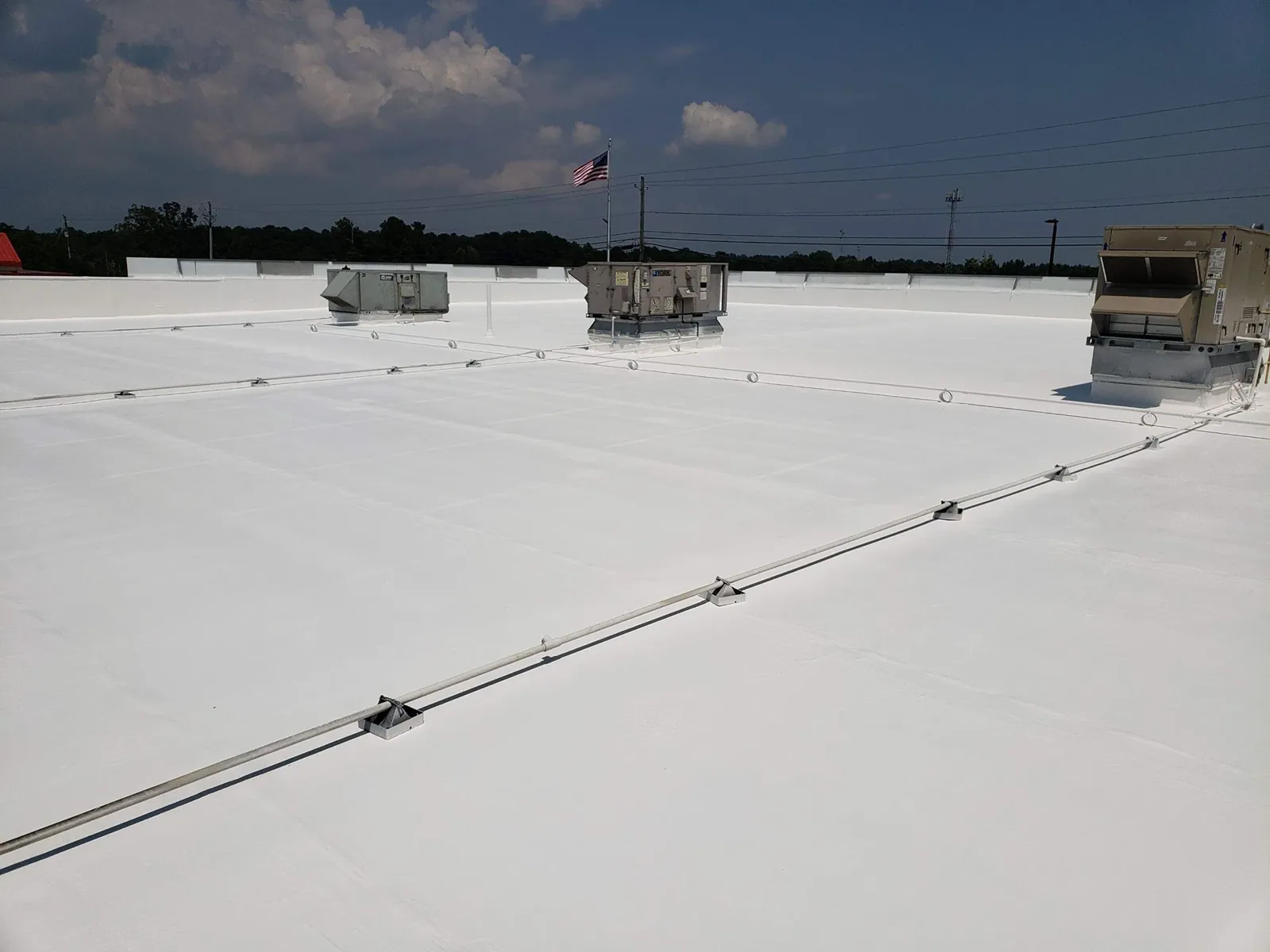
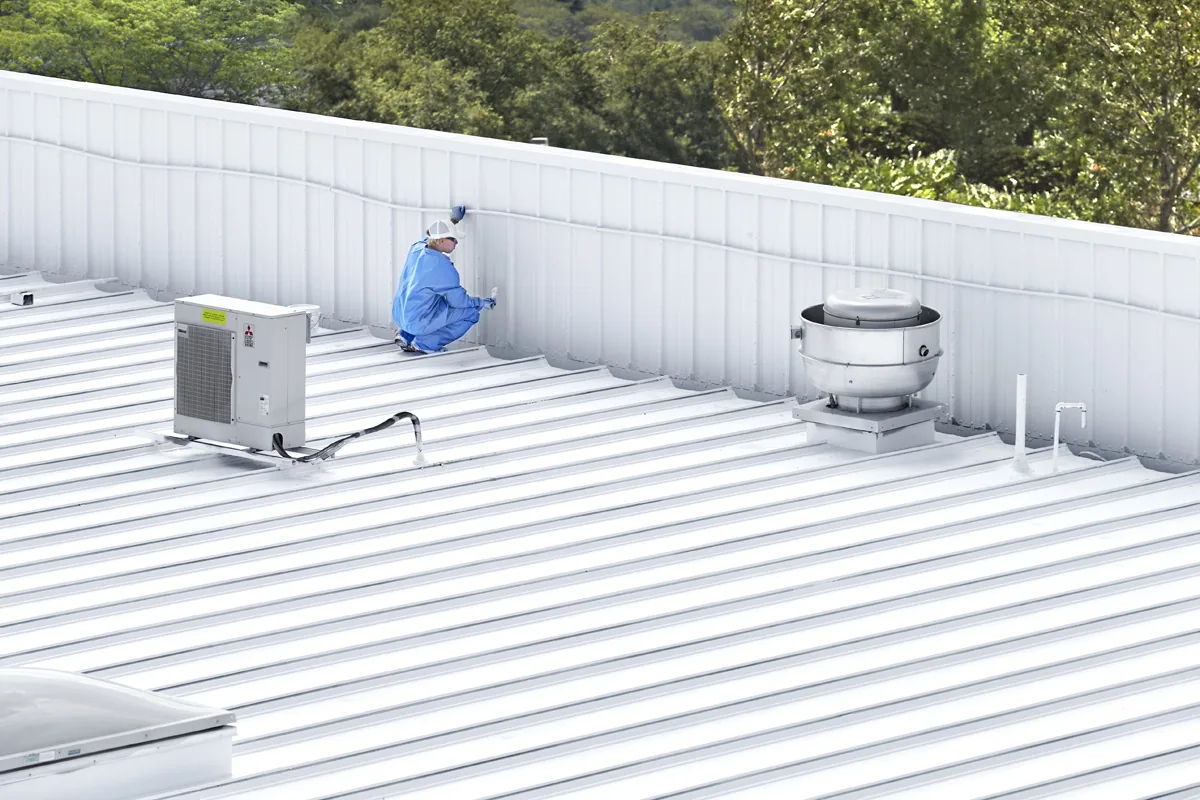
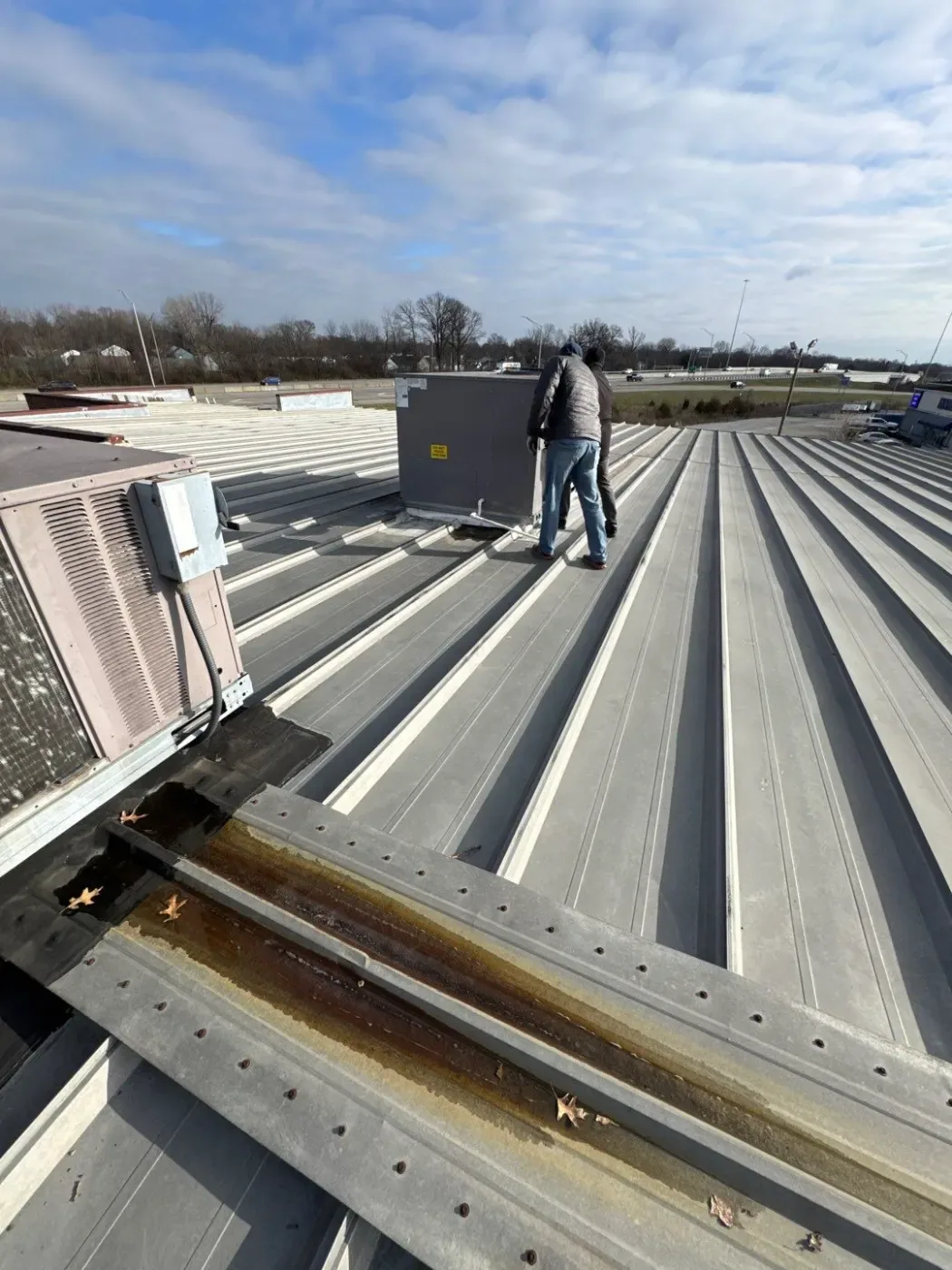
Heating and cooling units, exhausts, conduit, and service platforms create roof details that need inspection. We check curb flashing, support attachment, pipe boots, and the membrane around technician paths. Repeated foot traffic can wear a surface, while movement at an unsupported line can pull a boot from its base. The final repair should leave a clear route for maintenance and avoid blocking drainage. If equipment must be lifted, the mechanical contractor confirms disconnection and reset responsibilities.
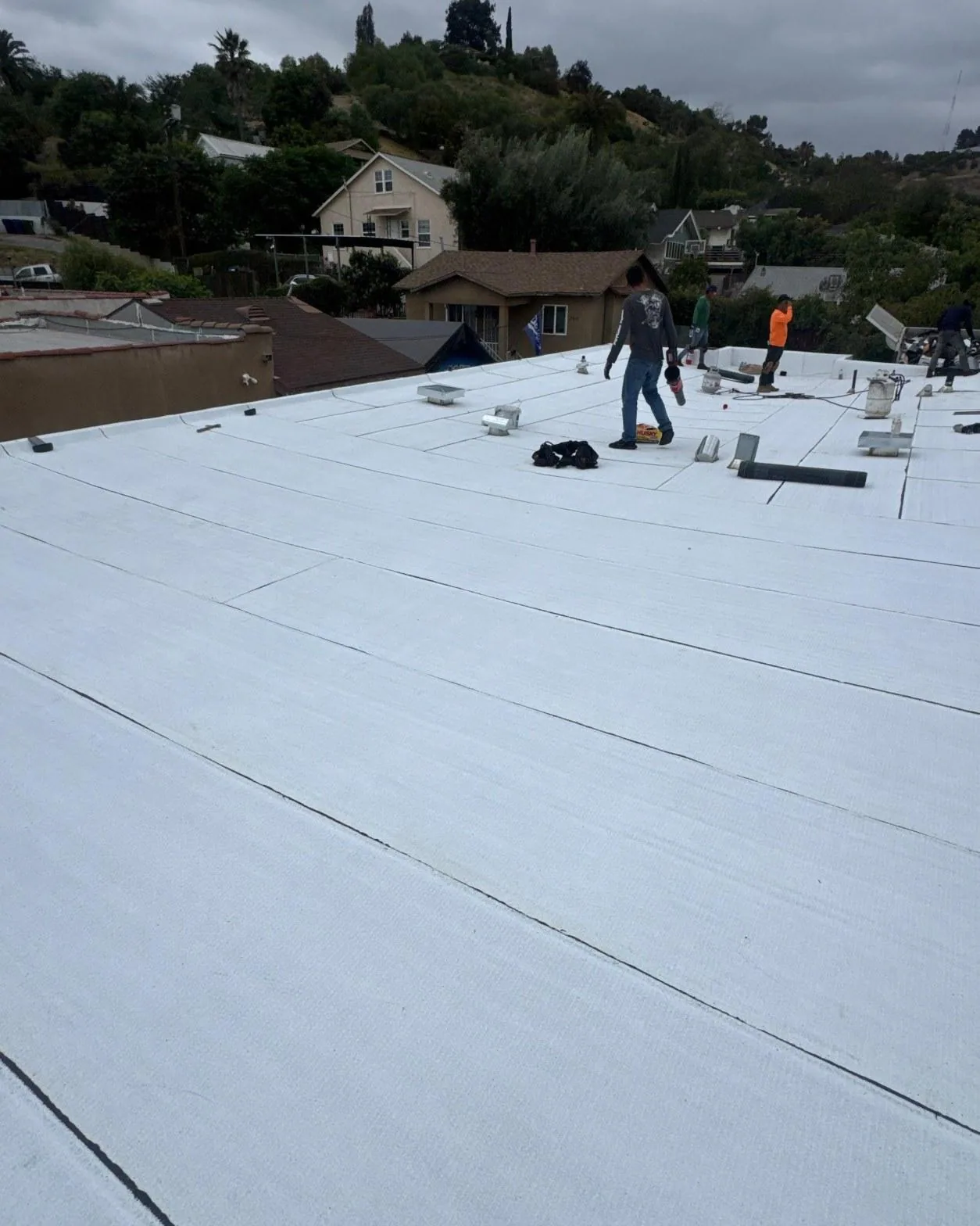
Material selection follows the installed system. We identify the membrane or metal roof, remove loose or incompatible material, and test adhesion when the repair history is uncertain. A roof coating is an option only if the substrate is dry and sound and the existing material can accept it. Silicone restoration and standing seam assemblies use different surface and transition details. The roof review records the actual system before a material is priced.
Stage Work Along Public Routes
US 24 crosses Independence and links commercial areas toward Lee's Summit, Blue Springs, and Grain Valley. The City identifies the corridor as a gateway to the Truman Library and has adopted redevelopment planning for the route. Where a hotel project uses a US 24 entrance or lift location, access and pedestrian routing should be confirmed with the property contact. We inspect the actual delivery path rather than assume the roadway determines roof access.
Independence Square has active shops, restaurants, and public gathering places. A hotel in a nearby commercial district may need work barriers, delivery windows, or noise limits that differ from a property on a quieter route. We document the site-specific conditions, then set the work zone and daily closeout. Local event or corridor context informs scheduling only when it intersects with the actual project location.
Price the Observed Condition
A small repair is suitable when the membrane is bonded, the substrate is dry, and the water path can be isolated. Repeated leakage, wet insulation, attachment loss, or deck damage can require a larger removal area. We show the test locations and the evidence behind each option. Recover is considered only when the existing layers are stable and suitable for the new assembly. Replacement scope defines which details are rebuilt and how they connect to walls and equipment.
Cost and schedule depend on guest access, roof levels, equipment moves, tear-off depth, temporary protection, and weather. We identify those drivers and note which quantities may change when removal exposes concealed layers. A condition report gives ownership a record of photos, findings, and remaining maintenance. For an adjoining apartment property, multifamily roof work also needs occupied-space coordination; a retail roof often has different public-access controls. Schedule a hotel roof review to identify the assembly, failure mechanism, and repair boundary.
When hidden layers could change quantities, we identify the likely discovery and how it will be measured. A roof section that reveals wet cover board can require removal beyond the visible stain. The hotel team receives a photo and revised boundary before the crew proceeds. That process keeps schedule and cost tied to confirmed conditions instead of a blanket allowance.
The closeout also lists the zones completed and any temporary protections removed.
Commercial Roofing Questions
Can a roof repair be phased around occupied guest rooms?
Yes, when roof access and protection allow the work area to be isolated. We agree on room notices, quiet windows, and the end-of-day dry-in condition with the hotel contact. A specific room may need a short restriction when equipment or an opening is directly above it.
Why does a ceiling leak appear far from the roof opening?
Water can move across insulation or along a deck before it reaches the room below. We inspect roof levels, seams, drains, curbs, and wall transitions that could feed the route. Core testing can clarify the layers when the source remains hidden.
What should a hotel check before coating its roof?
The membrane or metal, moisture condition, adhesion, drainage, and prior repairs need review first. Coating does not correct wet insulation or a low roof plane. We test compatibility and prepare the surface before recommending restoration.
How do you plan roof access without blocking guests?
We confirm entrances, loading areas, lifts, material routes, and barriers with the property team. The project sequence accounts for guest circulation and the hotel's service hours. Each work zone is secured before the route is reopened. Map loading areas, guest entrances, service access routes, fire routes, and roof access shared with hotel operations before materials arrive. Schedule deliveries away from peak check-in periods, and stage work so debris does not cross public paths. The roofing sequence should identify where noise or odor may affect rooms and how temporary protection closes each day. Coordination gives staff time to redirect guests before access changes. Give front-desk and housekeeping teams the daily work window, the affected entrance, and an escalation contact. Clear communication matters when a delivery or weather change shifts the planned route. Before starting, agree on how staff will report a change in guest traffic or a service route. A quick contact chain lets the superintendent shift material movement without leaving a public path blocked.