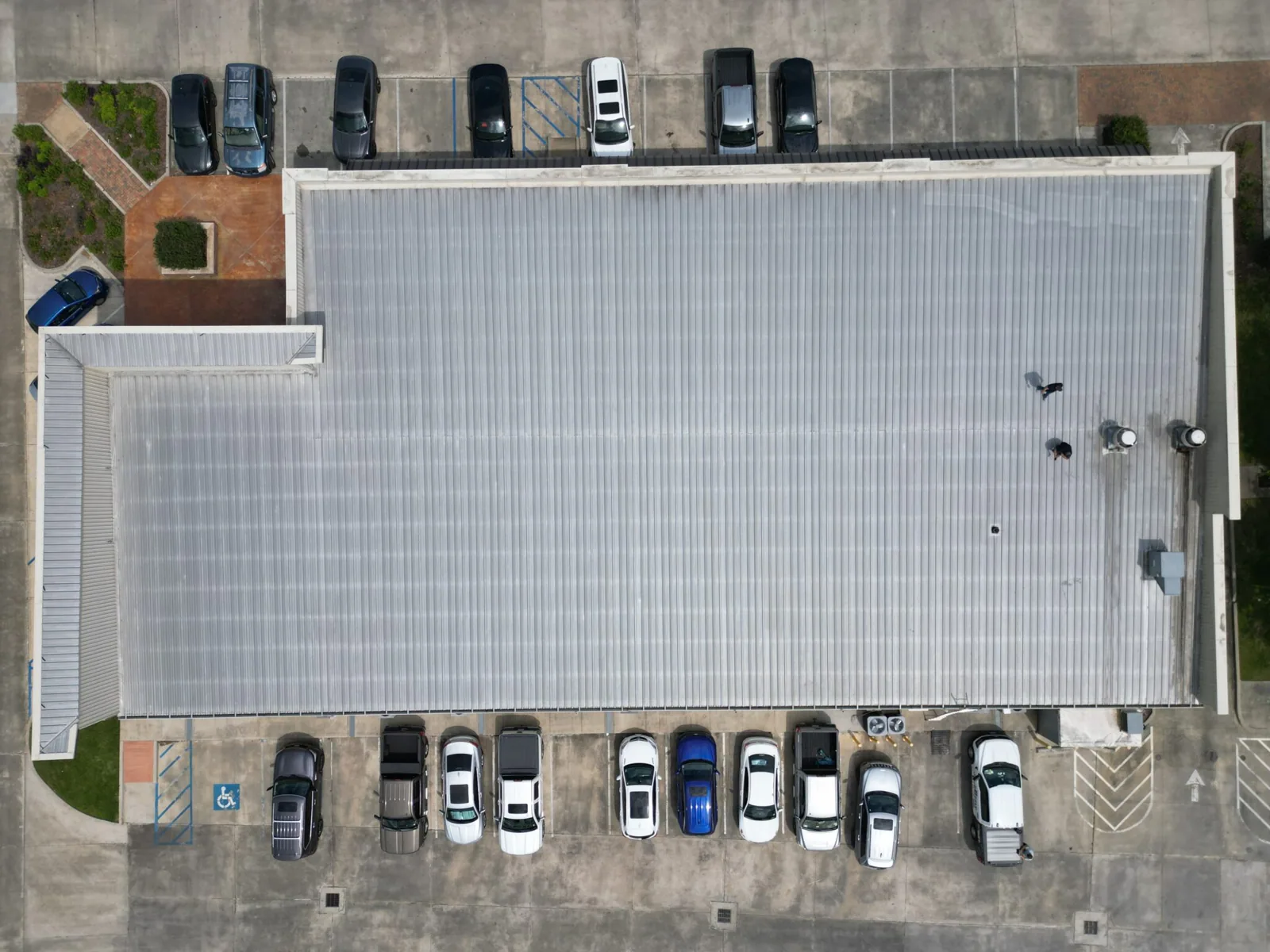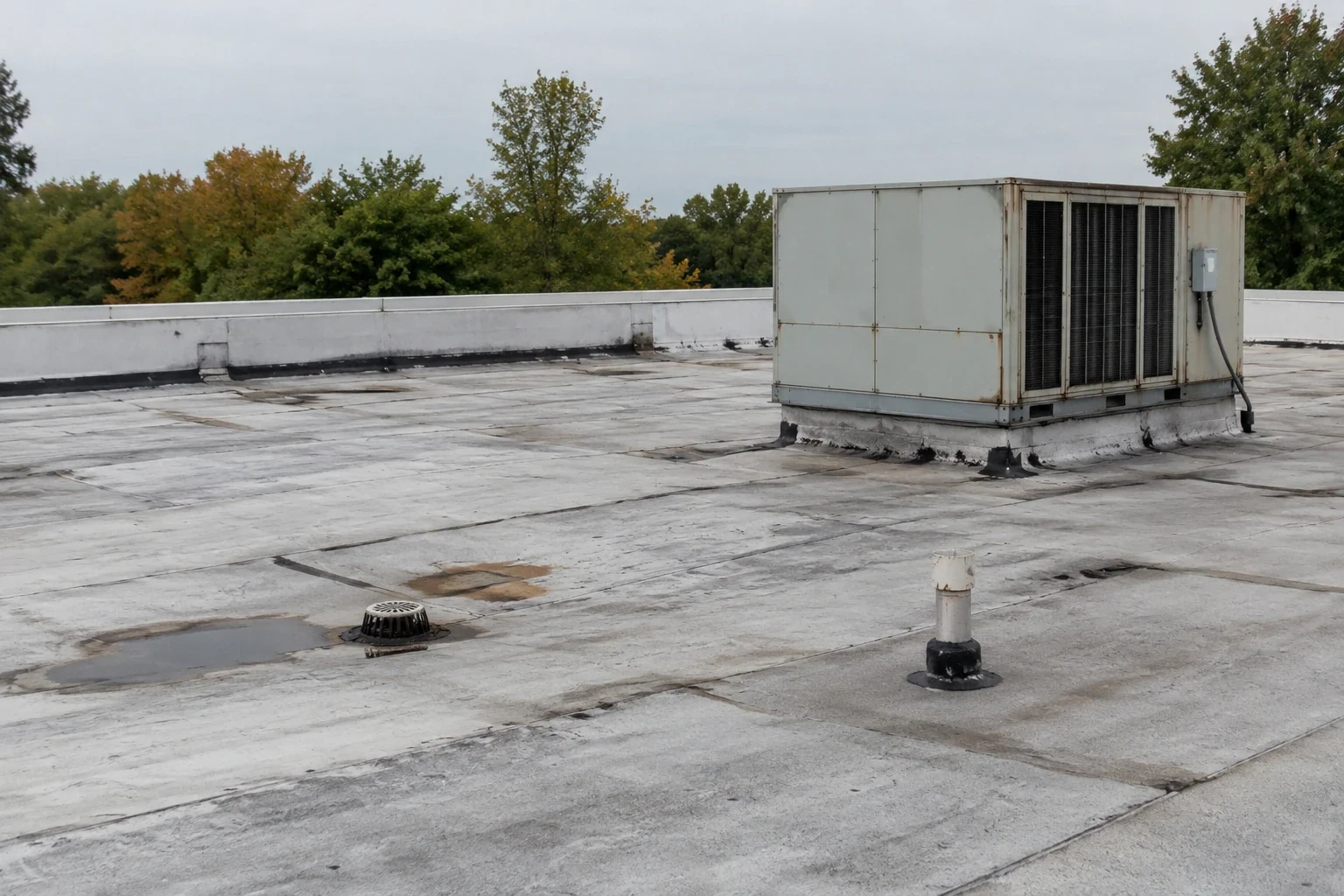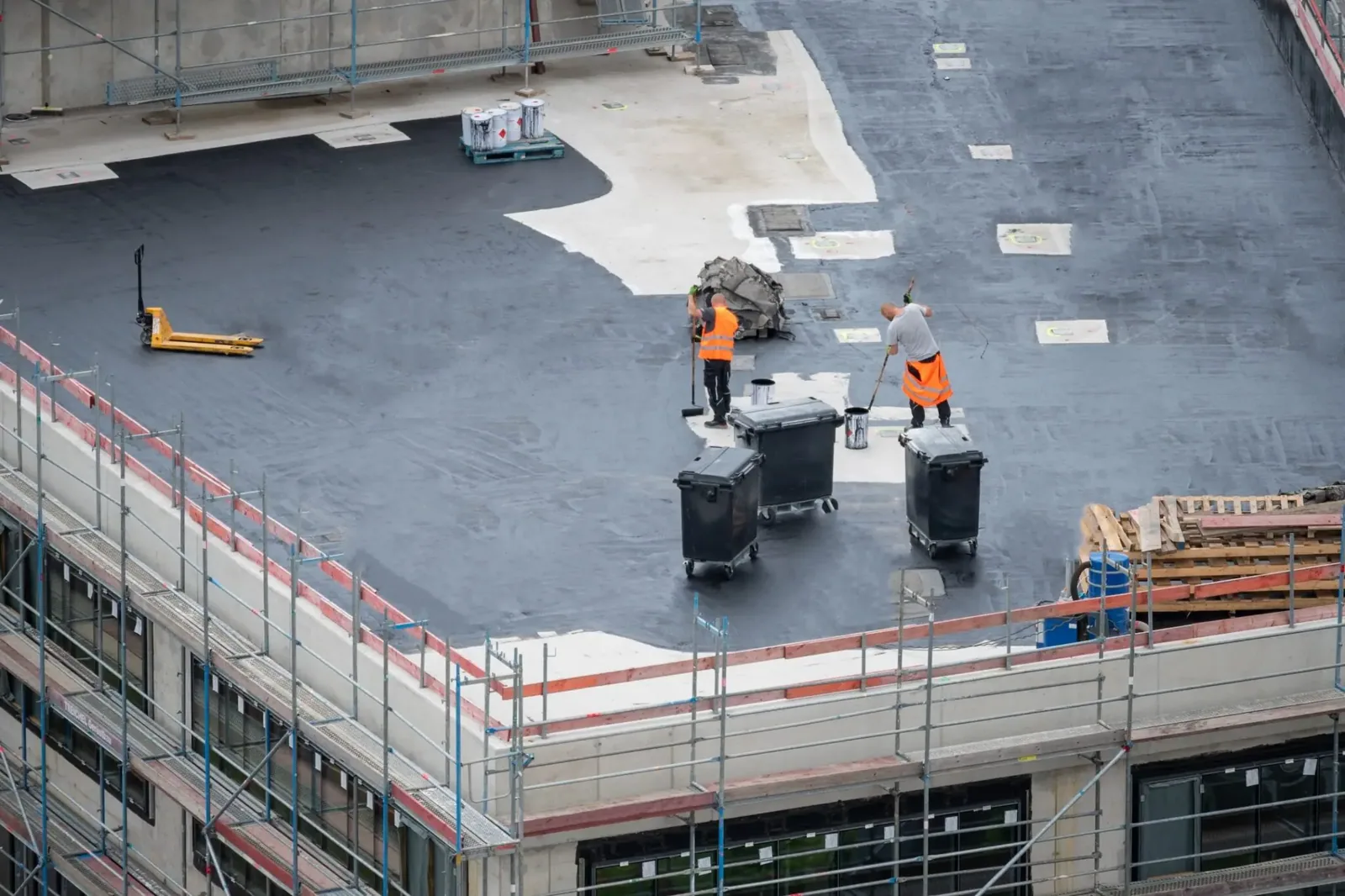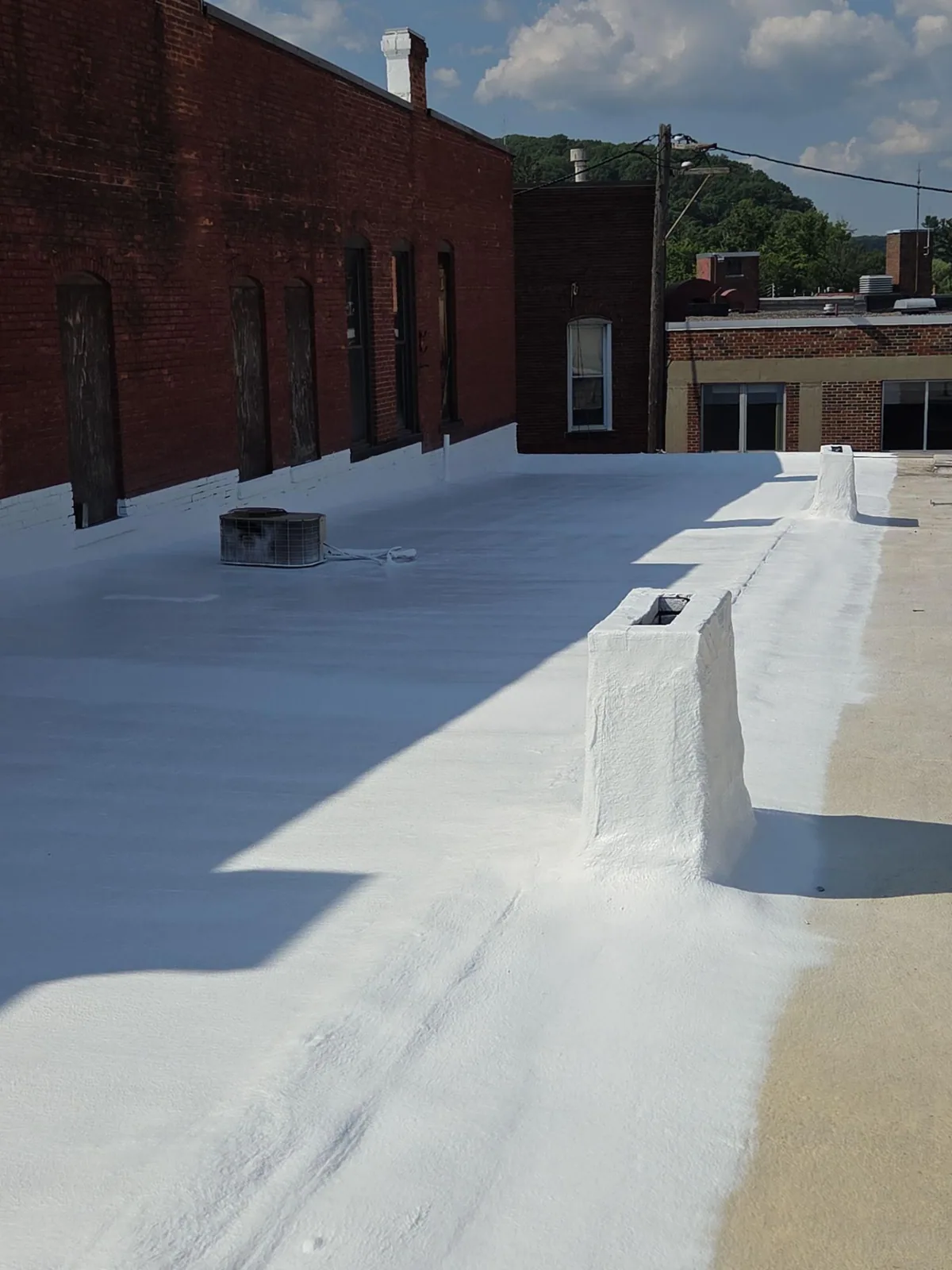
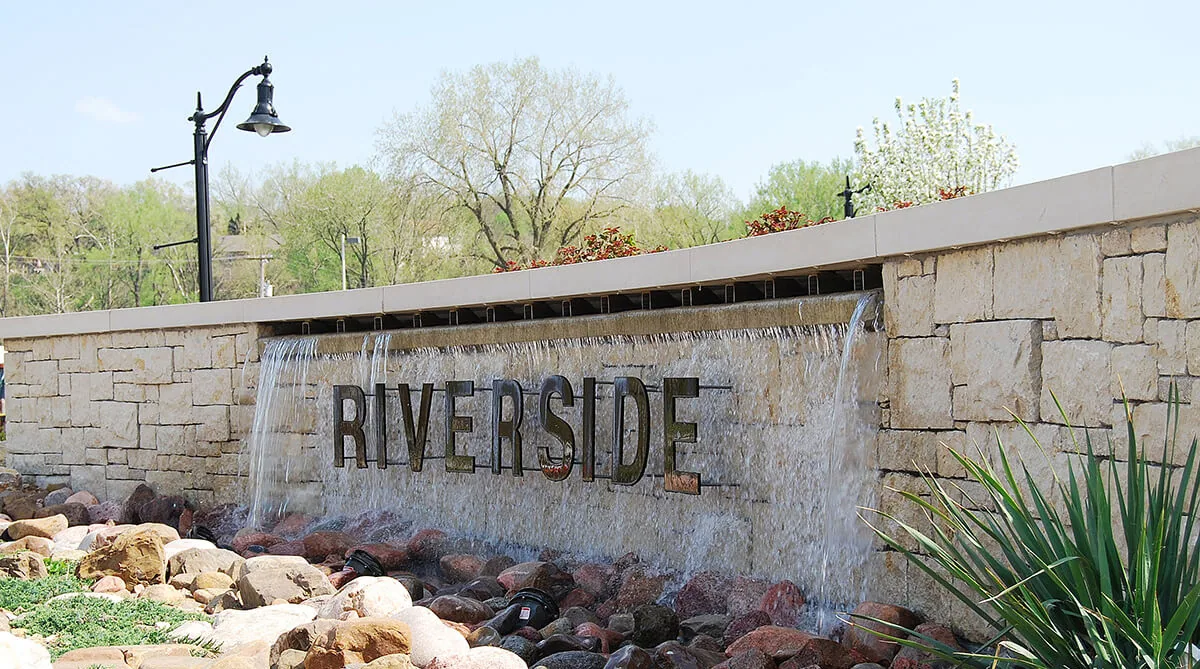
In Riverside, MO, we assess the roof assembly, drainage, flashing, access, and repair or replacement needs before setting a commercial roofing scope.
Horizons Business Park had 22 manufacturing and distribution buildings totaling more than four million square feet in FY2021. Those figures describe the park, not any one roof. We inspect the authorized building, confirm its system and drainage layout, and record each zone so a repair does not rely on an area-wide assumption.
In FY2021, Horizons buildings housed more than 35 companies and employed over 4,500 people. For an occupied property, the facilities contact sets access, loading, noise, and interior-protection needs. We establish a daily opening limit, stage temporary dry-in materials, and leave a written note of any section that could not be reached.
Plan Around Tenant Operations
Commercial expansion has also occurred elsewhere in Riverside, including projects supporting retail services. Retail, warehouse, and office roofs need separate inspection plans. We trace reported leaks upslope, check penetrations and perimeter details, and compare interior evidence with the roof above before deciding whether the water path is confirmed.
The Horizons employment figures describe multiple companies and buildings, not one facility's work schedule. We confirm the active loading areas, tenant hours, and interior protection needs with the property contact. If an operation cannot pause, we set roof-zone limits and a dry-in point that keep the affected area secure at each shift change.
Verify the Roof Assembly
Building size and use do not reveal whether a roof is membrane, built-up, modified bitumen, metal, or a combination. We inspect exposed edges, seams, curbs, penetrations, flashings, and previous repairs. Available drawings and closeout records can help identify the original design, but field conditions establish what remains today. If an overlay or coating conceals the layers, a test opening may be needed to confirm insulation, deck, and attachment.
Material compatibility matters because repair products interact with the existing membrane and substrate. A patch must bond to a sound, prepared surface. Metal details must allow thermal movement while keeping fasteners secure. A coating does not correct wet insulation or a failed deck. A roof inspection record should identify the observed system and any unverified condition. It also gives facilities staff a reference for future mechanical work, roof access, and preventive maintenance.
The FY2021 Riverside report counted more than four million square feet across 22 manufacturing and distribution buildings at Horizons Business Park. That area total is not roof area. A bid needs field dimensions, slope transitions, perimeter conditions, and equipment counts. We verify those quantities on the roof or against reliable drawings before pricing insulation, membrane, metal, and edge details.
Trace the Water Path
At an occupied Riverside property, the facilities contact sets access, loading, noise, and interior-protection needs. We establish a daily opening limit, stage temporary dry-in materials, and leave a written note of any section that could not be reached. This keeps a roof scope tied to one operating building even when a business park has many employers.
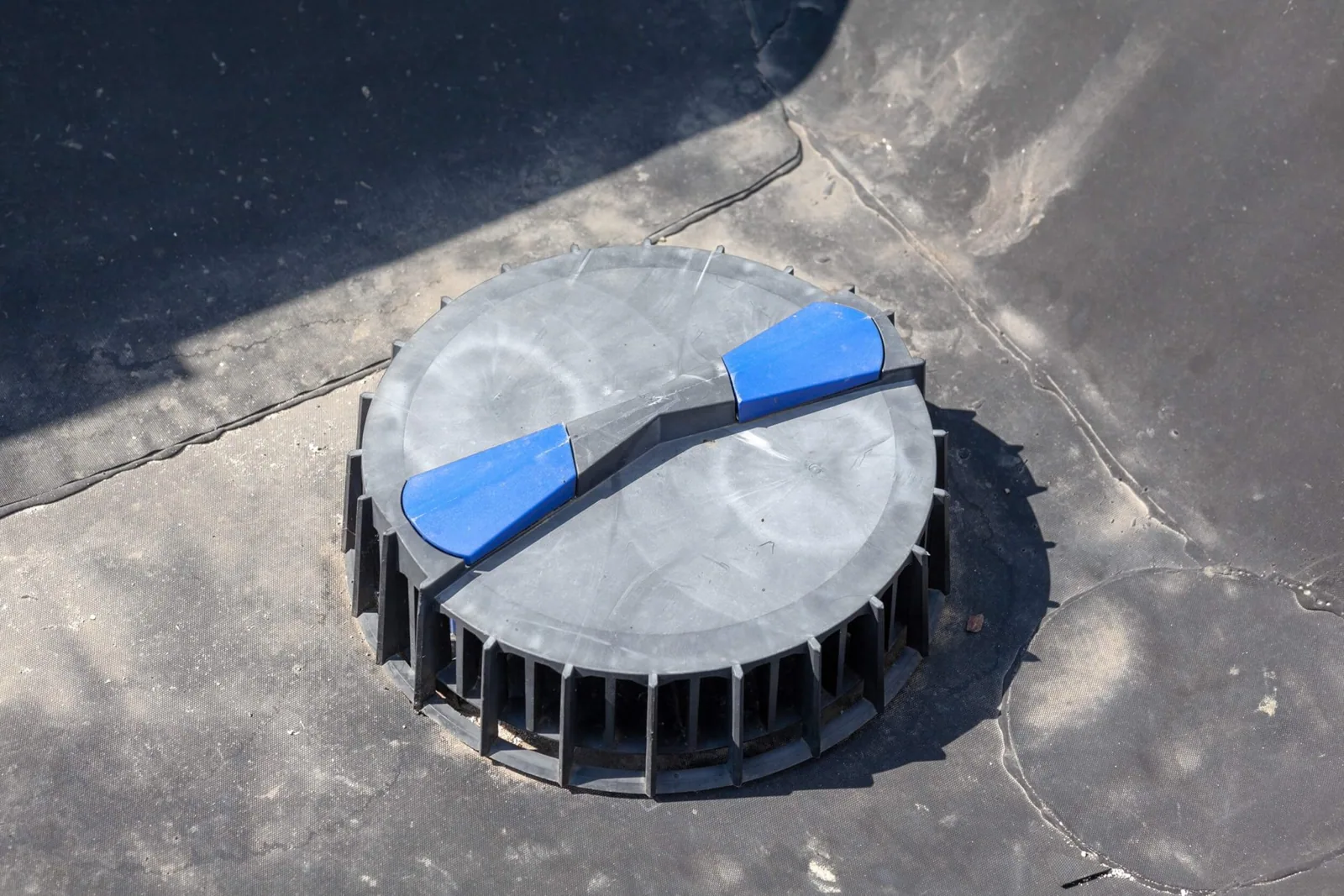
Drainage review checks strainers, drain bowls, clamping rings, leaders, and the membrane around each fitting. If moisture may be trapped under the surface, infrared moisture mapping can help choose test locations. A test cut confirms wet insulation. If a drain or scupper interface is failing, outlet repair can restore the connection when adjoining materials remain sound. We document any area that has not been tested rather than marking it clear.
Control Weather Exposure
Weather reports can help set an inspection window, but they do not establish roof damage. We examine the actual surface for impact, open seams, displaced material, and moisture, then document the condition by roof zone. The scope follows the findings at the Riverside property rather than a report from another location.
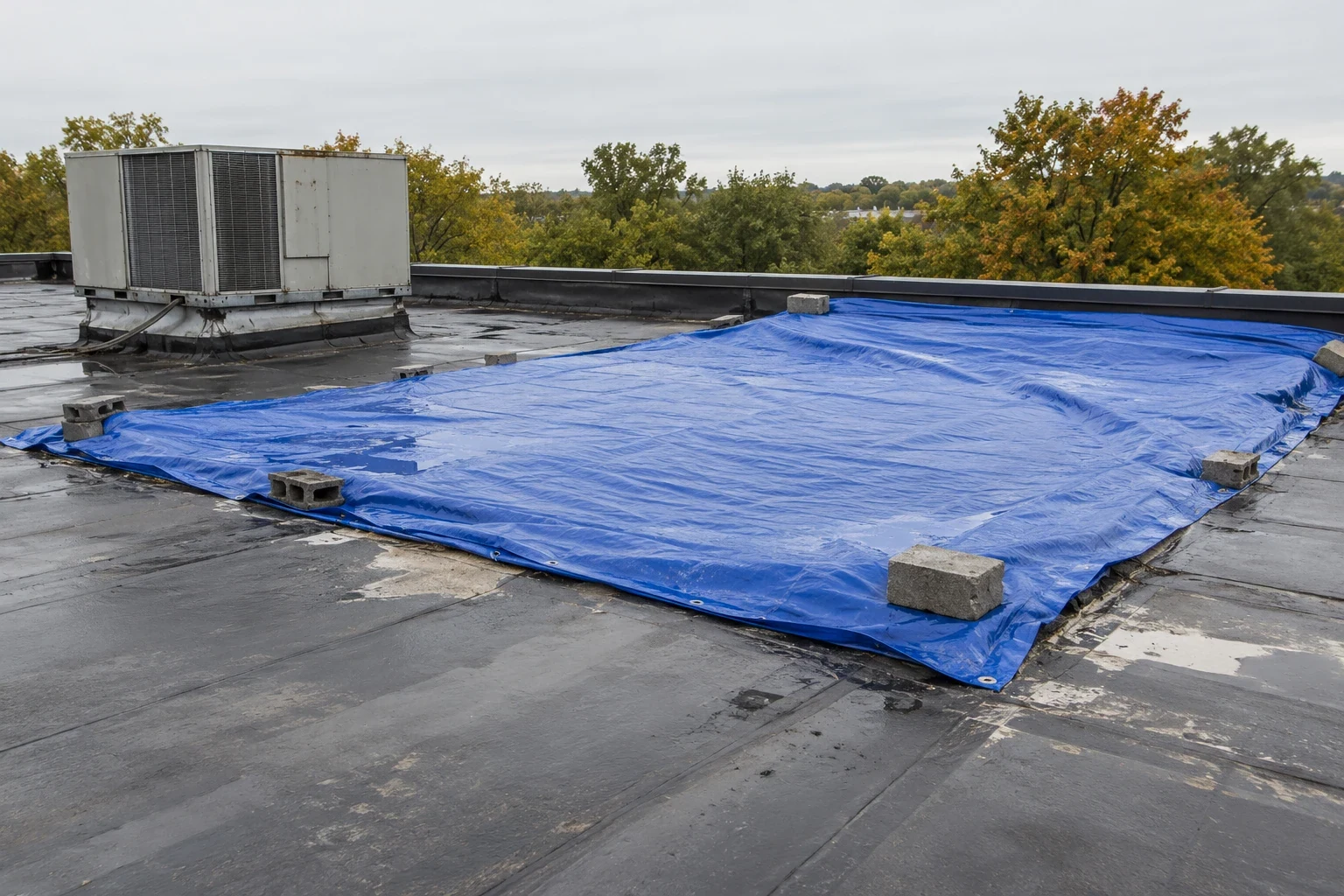
During repair, product temperature requirements and substrate condition guide installation. A forecast shift may require a smaller open area or a temporary closure detail. We protect any exposed assembly before leaving and verify that the work zone remains watertight. A leak requiring immediate action can be stabilized while a complete scope is developed. Emergency roof response is available at any hour, followed by a permanent repair once the source and damage extent are confirmed.
For a large facility, divide the roof into zones that follow drains, expansion joints, deck changes, or different construction phases. Record the system and condition in each zone, then identify where an old and newer assembly meet. This is particularly useful when a leak is reported in one area but water can travel beneath the membrane from another point.
Choose a Defensible Scope
A localized flashing split or seam defect may be repaired if the surrounding membrane and substrate are dry and attached. Widespread wet insulation, repeated leak paths, failed attachment, or deck damage can call for a broader rebuild. We mark the repair boundary from testing and photographs. If concealed conditions appear during tear-off, we record the material and extent, secure the opening, and obtain approval before the scope expands.
Recover and replacement are evaluated against existing layers, deck capacity, drainage height, code, attachment, and the needs of the facility. A recover is not appropriate when it would cover wet material or compromise drainage. Schedule and cost depend on measured quantities, roof access, interior protection, material, disposal, and weather. A repair plan identifies the failed detail; replacement describes the assembly, edge conditions, drains, curbs, and inspection points.
Document the Completed Work
Commercial expansion in Riverside has included projects supporting additional retail services. Each roof still needs its own closeout record, with the measured work area, assembly, drainage checks, repairs, and any concealed condition that remains unresolved.
Horizons Business Park included 22 manufacturing and distribution buildings in FY2021. The figure describes the park’s building count, not roof area or a single project quantity. We measure each scoped roof and record boundaries, penetrations, drains, and changes in assembly before preparing a repair or replacement total.
A separate roof file also applies to commercial properties in North Kansas City and Parkville. Each report stays tied to the inspected address, its access conditions, and the roof work completed there. We compare closeout photos with the marked roof plan, list outstanding maintenance separately, and note when the next review should include a test opening or drainage check.
When several tenants or operations share a roof, a leak can cross property or department boundaries. The owner should identify who can approve access and who receives notice when a roof section is opened. We record those contacts and the areas included in the work order, then keep adjoining zones separate in photos and reports. This is useful when an addition, expansion joint, or parapet separates assemblies that look continuous from the ground but drain differently.
Commercial Roofing Questions
Does the Horizons building-area total tell you the roof size?
No. The reported total combines many manufacturing and distribution buildings. We measure each roof area in scope and document its assembly, slopes, and equipment independently.
How do you keep tenant operations informed during roof work?
The property contact identifies active loading, operating hours, and areas that need protection. We set a work boundary for each shift, secure the exposed roof before leaving, and record any access limit for follow-up.
Can tenants continue operating during roof work?
The site contact identifies which areas remain active and any route that must stay open. We coordinate noisy work, deliveries, and protection around that plan, then close each roof zone at the agreed stop point.
What happens if tear-off reveals a wet deck?
We secure the opening, photograph and measure the condition, notify the facility contact, and present a revised scope before continuing beyond the authorized boundary.