Map suspected roof moisture in Independence, MO with infrared imaging and targeted core cuts, then use verified findings to set repair boundaries.
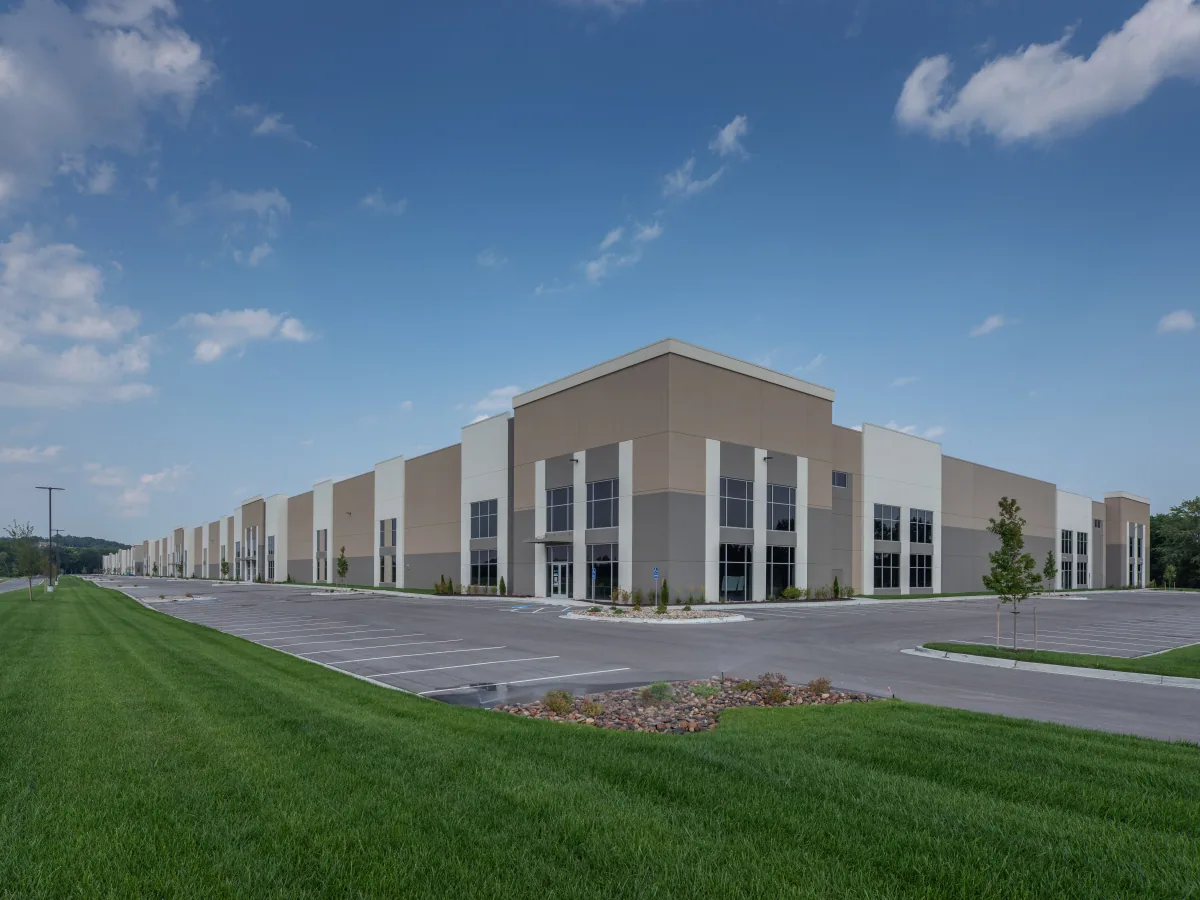
A broad commercial roof can hold moisture below a membrane without showing a clear surface break. An infrared survey can locate temperature patterns that help focus the next inspection. Independence has newly permitted commercial buildings at Eastgate Commerce Center, including a 2025 commercial remodel at Centerpoint Medical Center, alongside medical campuses, industrial employers, schools, retail properties, and civic facilities. Those building uses do not identify a roof assembly. We review the actual roof area and construction, then plan imaging for conditions that can reveal thermal contrast. A thermal image is a screening tool. We interpret it alongside surface condition, weather, and core samples before marking insulation for removal.
Thermal Patterns
Infrared cameras detect differences in surface temperature. Moisture may retain heat differently from dry insulation after the roof has warmed during the day, so a survey taken under suitable conditions can reveal suspect zones. That pattern is not a direct picture of water. Shadows, ballast, repairs, metal components, rooftop equipment, and changes in insulation can also create temperature differences.
We first review the roof assembly and survey conditions. The membrane type, insulation layers, deck material, and recent weather affect what the camera can show. A reflective or heavily shaded surface may limit the useful window. We plan the scan for conditions that create measurable thermal contrast and record the limits. The image is then interpreted against roof details and visible symptoms, not as a stand-alone answer.
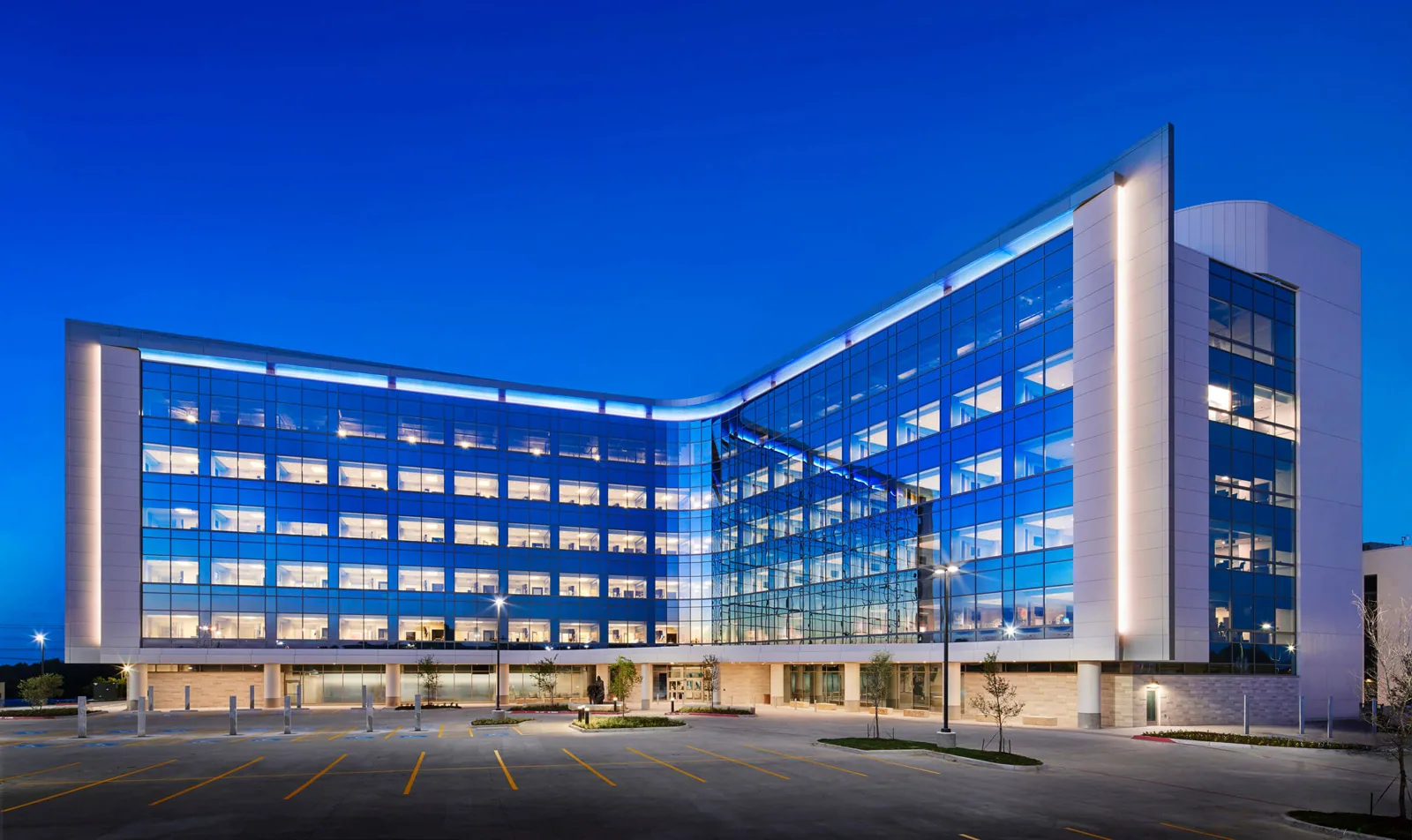
The city's commercial building mix includes medical campuses, industrial employers, schools, retail centers, and civic facilities. Their uses vary, but none identifies the roof layers above them. We map each roof section and confirm the assembly before selecting survey conditions or interpreting a thermal pattern. A hospital roof may include additions and equipment zones that hold different layers, so we compare each section with the same care.
Verification
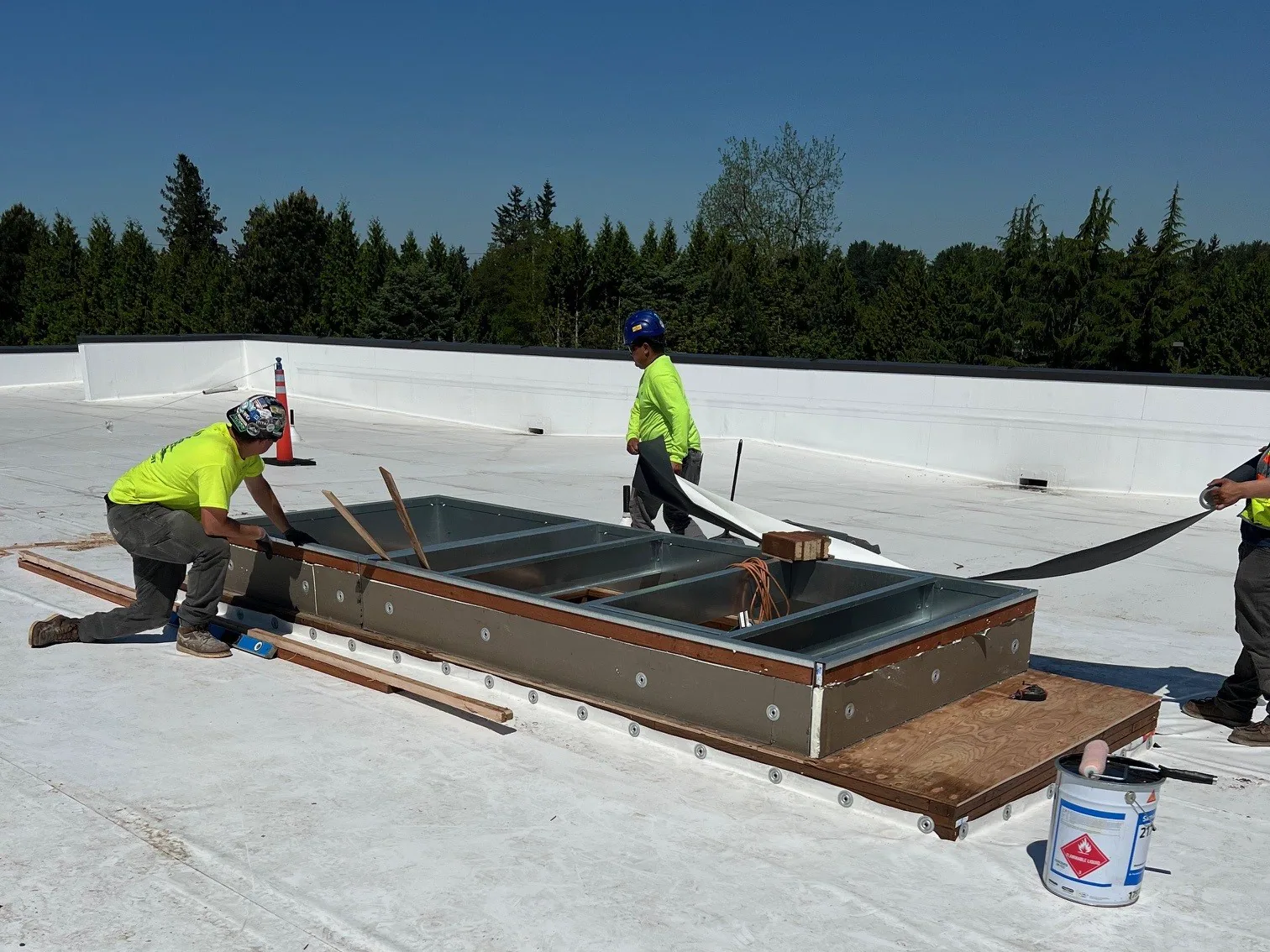
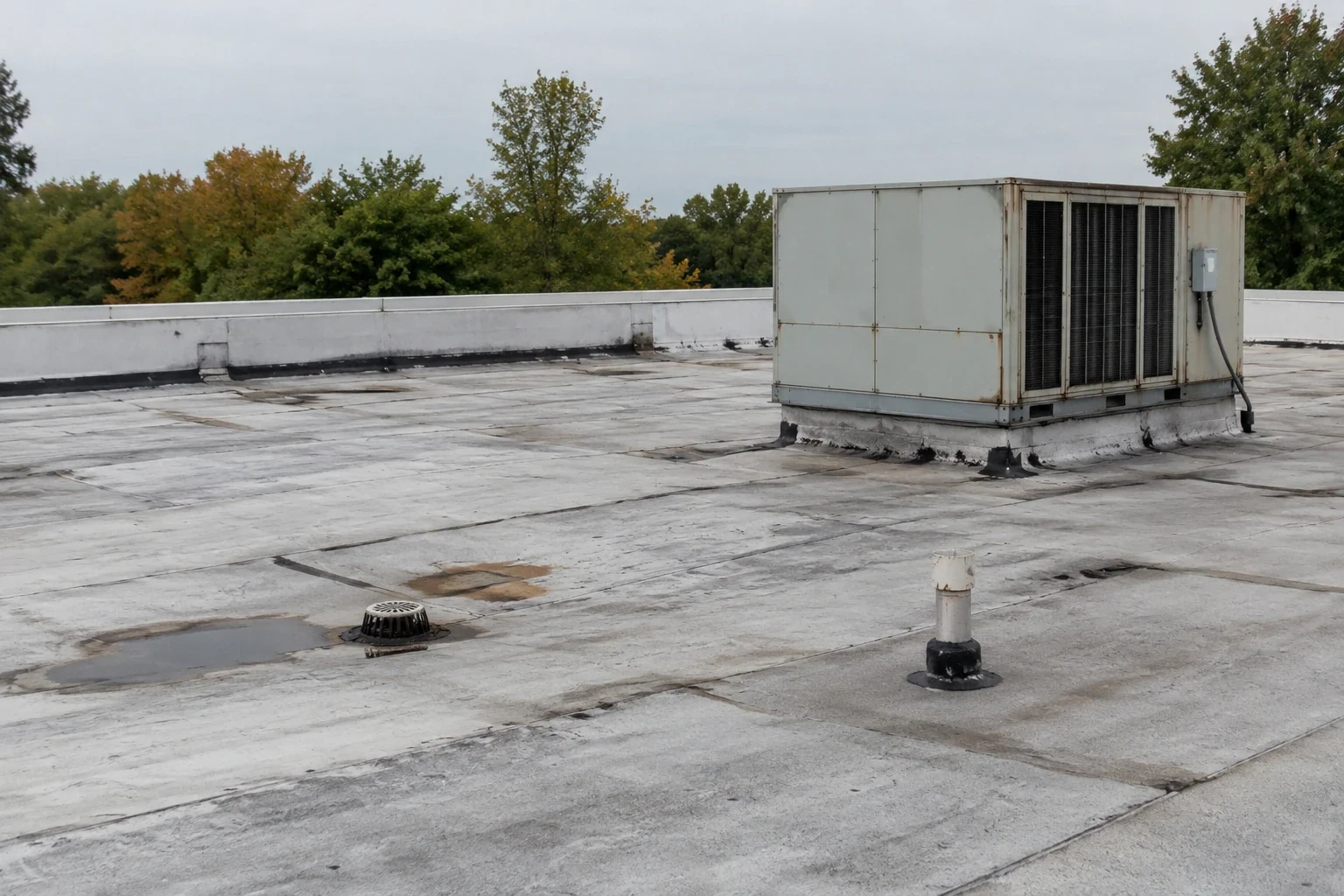
After imaging, we mark thermal anomalies on a roof map and compare them with seams, drains, penetrations, and known leak locations. A pattern that follows a deck flute may call for a different test than a broad area near an equipment curb. We select representative points for core cuts, inspect the insulation layers, and record whether moisture is present. If readings and cuts disagree, we revisit the interpretation rather than label the entire zone wet.
Core samples show the assembly at specific points. They can reveal membrane, cover board, insulation, vapor retarder, and deck condition, but they do not automatically define moisture between those locations. We combine sampling with visual checks and, where appropriate, additional cuts. The result is a defensible map of verified wet areas and zones that remain uncertain.
Where a leak is active, infrared can support but not replace water-path tracing. The interior stain may be downstream from the wet insulation. We inspect the roof details above and around the mapped zone, then compare surface findings with interior evidence. If a puncture or failed seam is confirmed, a compatible roof repair can address that entry point.
Survey Conditions
Weather and recent solar exposure influence thermal contrast. Kansas City climate normals show July highs near 89 degrees and January lows around 20. Those values are metro station data, not a measurement of a particular roof. They do show why the survey plan differs by season. A summer roof may retain heat into evening, while a cold winter surface can provide limited contrast or raise access concerns.
Rain, snow, wind, cloud cover, and daytime shade also change what can be interpreted. A wet surface or recent precipitation may create misleading thermal behavior. We record the conditions and postpone or limit the scan when the pattern cannot be read reliably. Infrared work should answer a moisture question, not produce an image for its own sake.
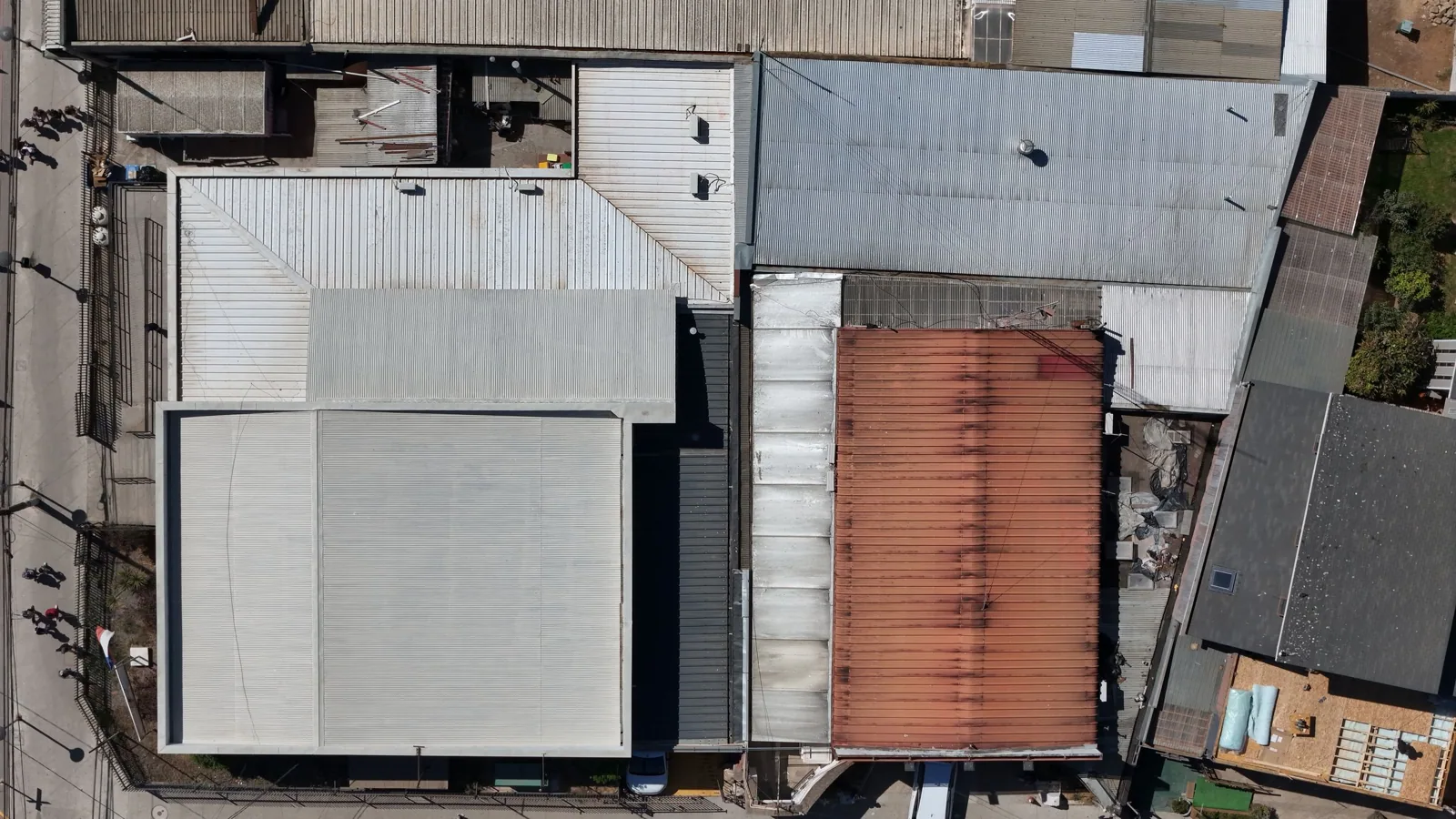
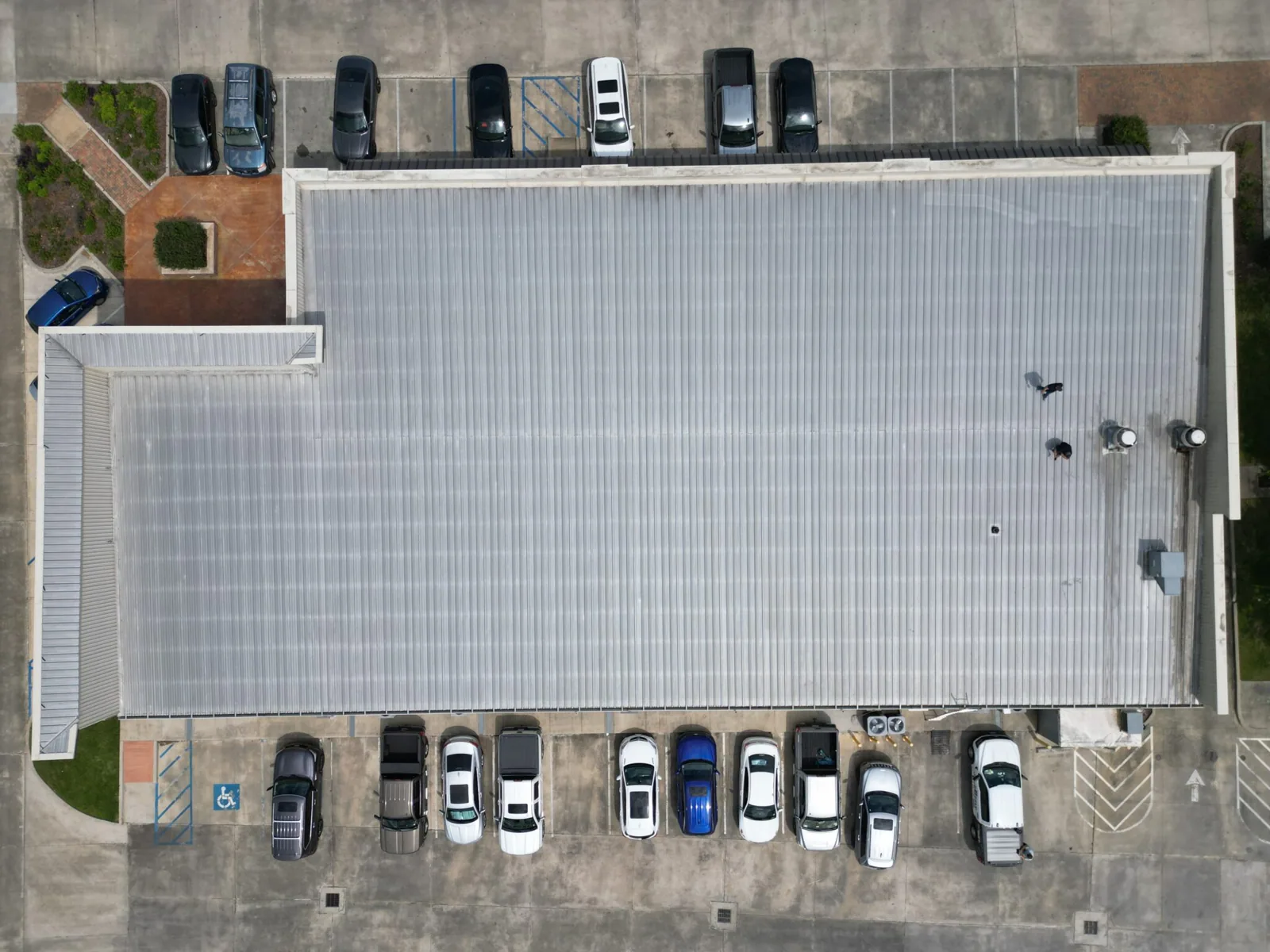
For a large roof, drone images can add a broad visual map of penetrations, surface repairs, and drains. They cannot reveal moisture below the membrane. A drone roof review may help label roof sections before infrared sampling. A hands-on inspection remains necessary for attachment, seams, and details.
Moisture and Work Limits
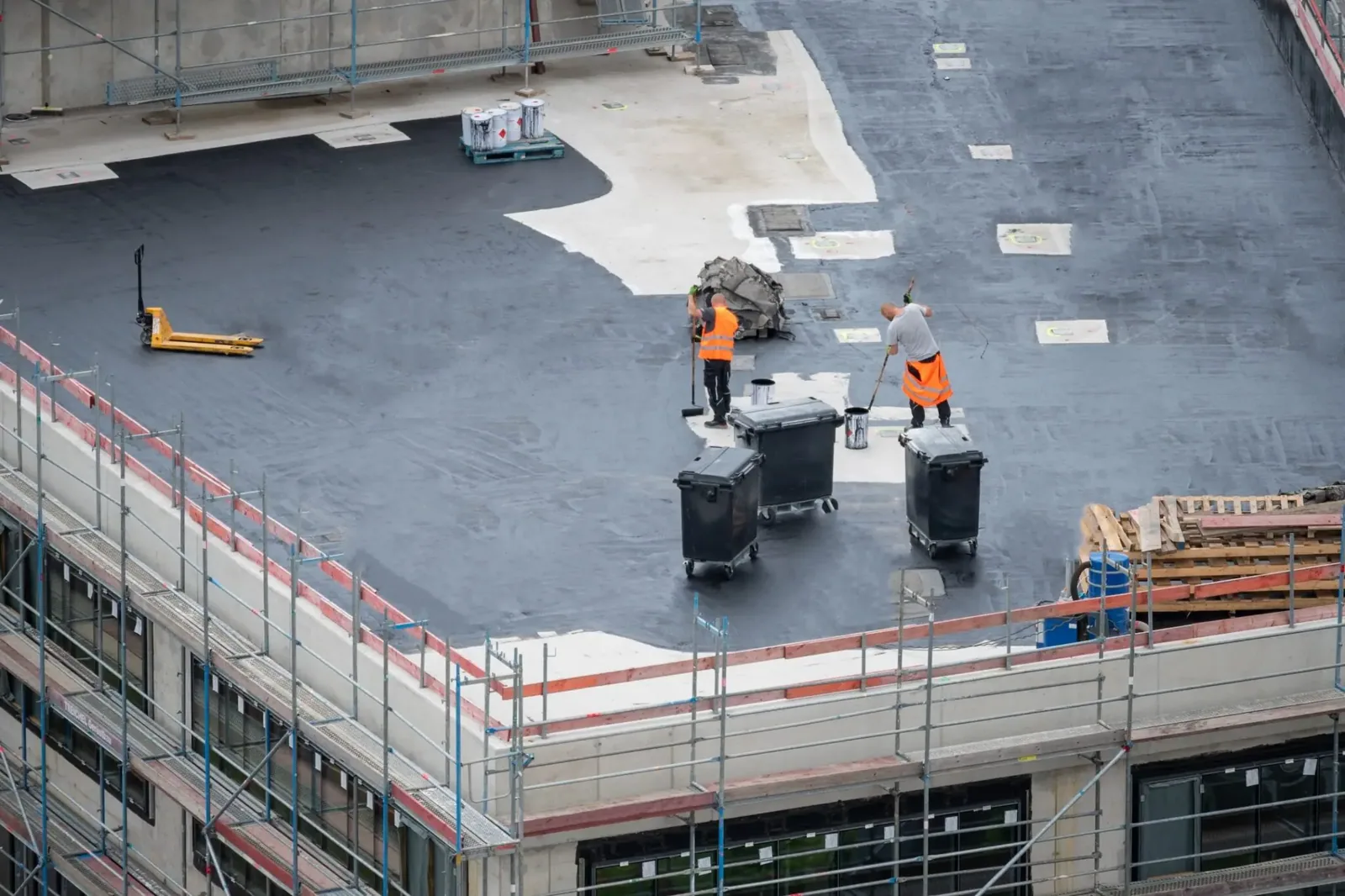
Verified moisture can change the repair boundary. A localized wet area may need selective removal and rebuilding. A wide moisture pattern, multiple roof layers, or an unstable deck can make a recover unsuitable and shift the comparison toward full replacement. Dry material can remain in place only when it is sound and the proposed assembly is compatible. We show the test locations and tie the recommendation to what those openings revealed.
Moisture extent is one cost driver, alongside roof access, removal depth, deck repair, insulation replacement, flashing, drainage changes, and temporary protection. If test cuts expose unexpected conditions, we photograph the assembly and explain the effect on scope before covering it. The map can help divide a larger project into areas with different needs rather than treat every square foot identically.
In Independence, new commercial construction has been permitted along S Little Blue Parkway at Eastgate. Existing roofs elsewhere may have different layers and drainage geometry. We base the survey plan on the actual roof, then prepare a report with images, core locations, verified conditions, and remaining questions. A condition report can connect the results to repair priorities and capital planning.
Survey Limits
Infrared does not tell us how much water is present, whether the deck is corroded, or whether a roof is structurally adequate. A thermal signature can come from several causes. We identify uncertainty and use core cuts or other field checks to confirm moisture. If the roof has a reflective surface, irregular insulation, standing water, or heavy shade, the survey may need a different timing or a more limited interpretation.
We do not use a thermal image alone to support a removal quantity. Each mapped area is compared with test results and the assembly details. The report separates confirmed wet insulation, suspected zones, and areas that appear dry at sampled locations. That distinction helps the owner select a work limit with clear evidence and avoid assuming that one core represents the whole roof.
Schedule an infrared moisture survey with Commercial Roofing Independence. We will review roof construction, choose an appropriate capture window, verify suspect areas with targeted cuts, and document the limits that should guide repair or replacement.
Commercial Roofing Questions
Does an infrared image prove the insulation is wet?
No. It shows temperature differences that may correspond to moisture, but surface materials, shade, and repairs can produce similar patterns. We verify suspect locations with core cuts and inspection. No. Surface temperature can be influenced by shading, ballast, stored heat, wind, and the way the roof was exposed. A useful survey maps anomalies and ties them to visible details so the next test is deliberate. We mark the locations, compare them with drains and seams, and confirm suspect areas by an appropriate verification method before treating insulation as wet or including it in a removal quantity.
Will you cut the roof during the survey?
Targeted core cuts are used when needed to confirm the assembly and moisture. We agree on sample locations, document each opening, and restore the roof detail after inspection.
Can you scan a roof after rain?
Recent precipitation can alter thermal behavior and make readings difficult to interpret. We review weather and roof conditions, then reschedule or limit coverage if the survey window is poor.
How does the result affect replacement planning?
Verified wet areas set removal limits and can show whether a recover remains workable. We compare moisture extent with deck condition, layer stability, drainage, and code requirements.