Coordinate restaurant roof repair in Independence, MO around kitchen exhaust, refrigeration lines, drain performance, and service-hour access.
Restaurant roofs concentrate kitchen exhaust, plumbing vents, refrigeration lines, and make-up air in a small number of roof zones. Grease or cooking residue may be present near exhaust equipment, but its extent has to be inspected rather than assumed. Independence, MO includes restaurants and gathering places on Historic Independence Square, along with retail and event activity near North Kansas City, Missouri. Those places help frame access and operating hours. We inspect the actual membrane, curbs, drains, and substrate before recommending a repair.
Inspect the Hood and Curb
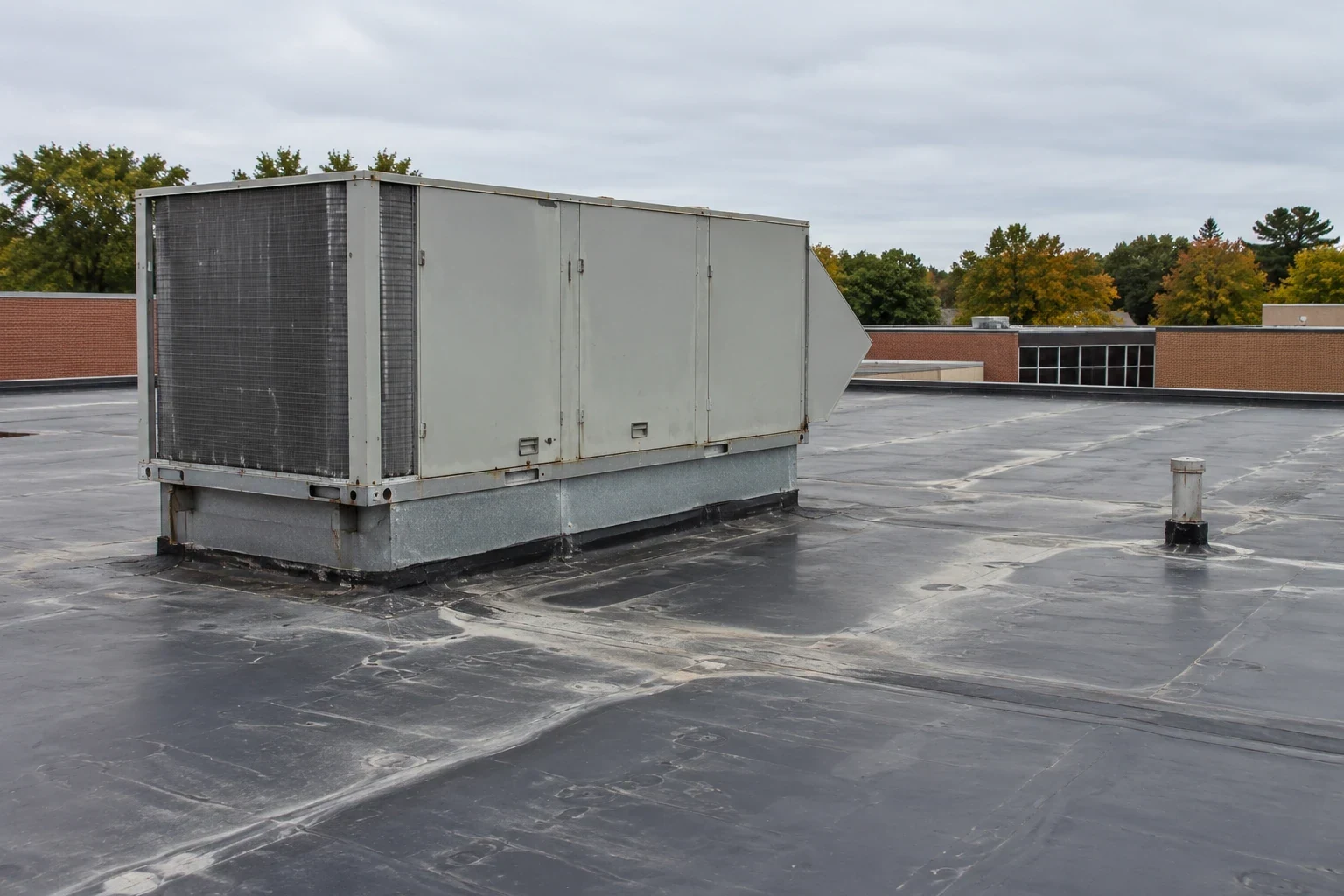
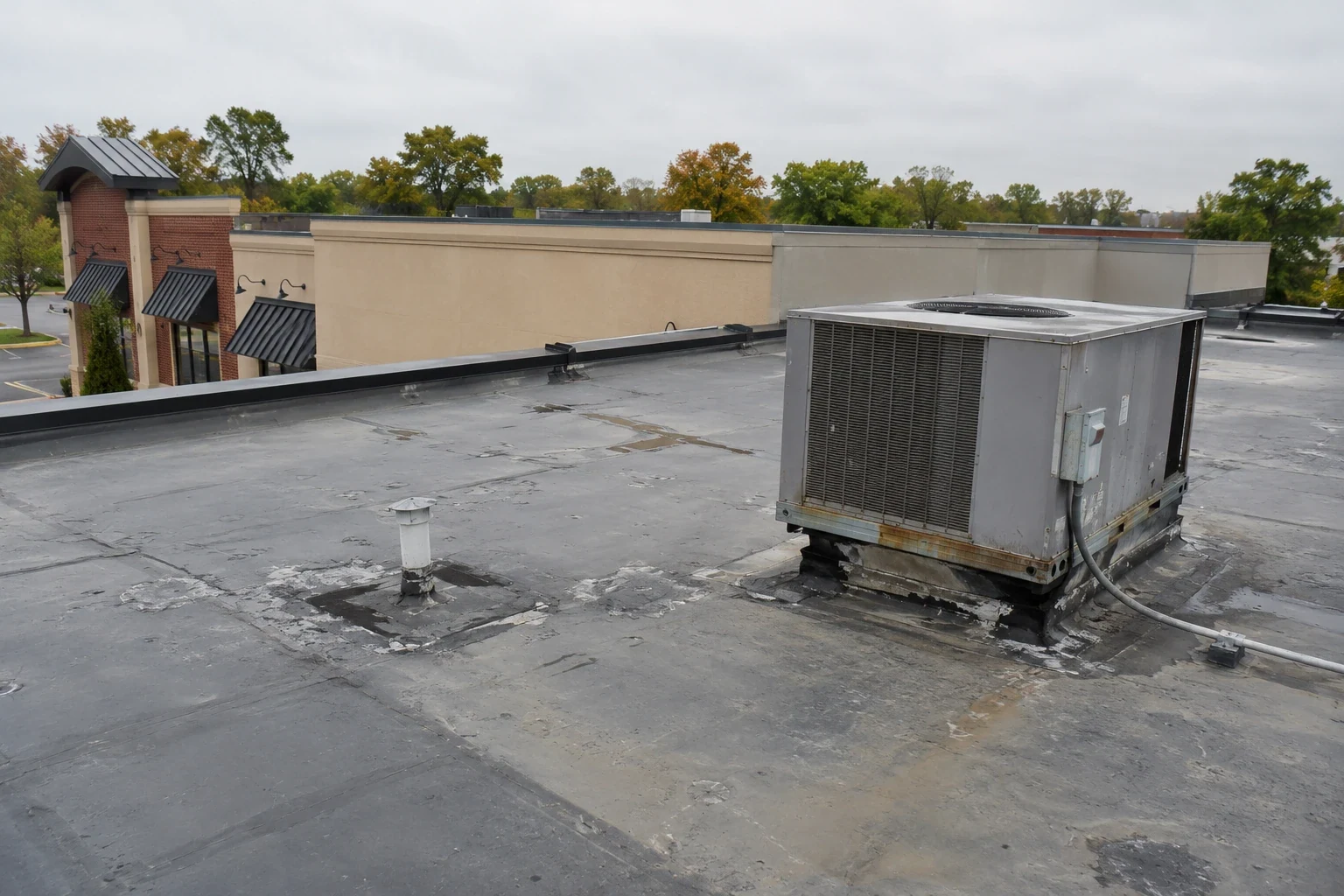
A kitchen hood discharge can expose nearby roof surfaces to heat, residue, and repeated cleaning. We check the flashing around exhaust curbs, the condition of the membrane, and whether equipment service has disturbed a seam. Any residue is evaluated at the surface before selecting a repair material. A patch must bond to a clean and compatible substrate. Where preparation needs more than routine cleaning, we identify the process before coating or flashing work begins.
Hood and fan work often has a separate mechanical contractor. We agree on lift timing, electrical isolation, and who reconnects the unit. A fan that remains active can affect the work zone, while a lifted curb may reveal wet insulation beneath the membrane. The roof sequence includes a secure temporary condition and a clear handoff. Curb and equipment-support work is detailed with the mechanical scope.
Separate Roof Water from Kitchen Water
A wet ceiling near a kitchen can have more than one source. We compare the leak timing with rain, hood cleaning, plumbing, and refrigeration operation. Roof inspection covers seams, drains, curbs, pipe boots, and wall transitions above the affected room. Water can travel along a deck or insulation joint before appearing indoors. We map the roof route and sample layers where necessary. If the exterior assembly is dry and intact, the facility can investigate the interior line or drain.
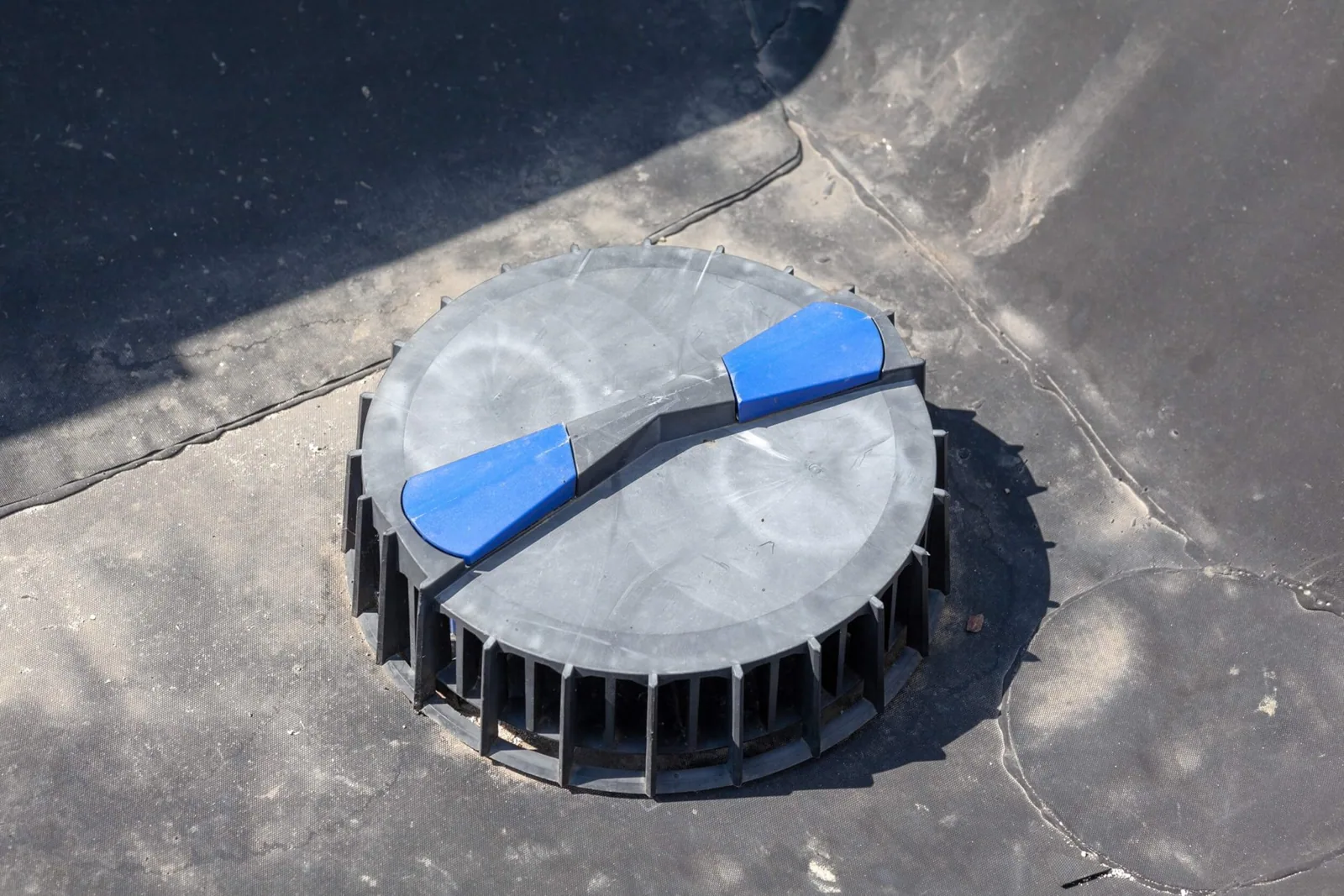
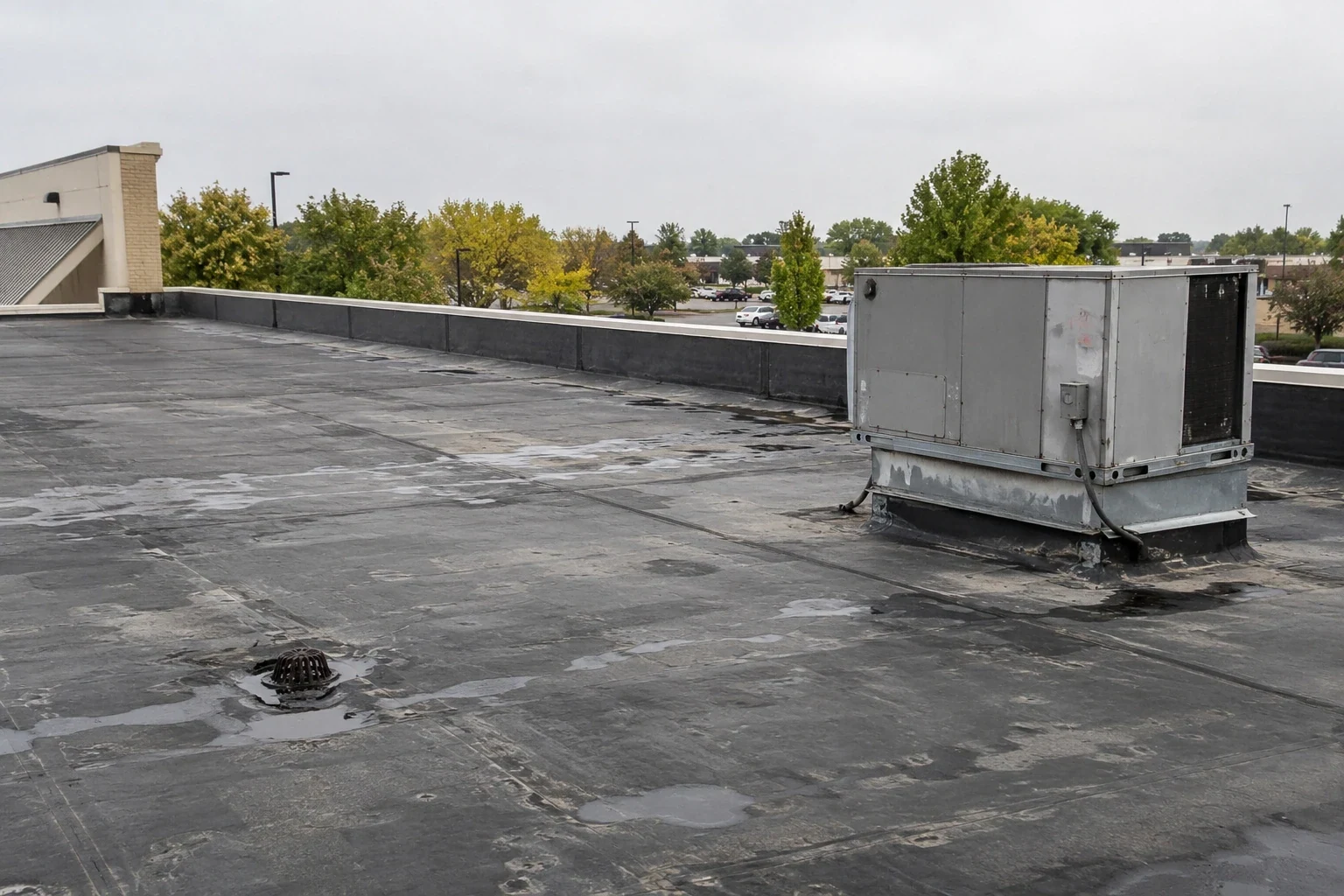
Grease interceptors and plumbing do not replace roof drainage. We inspect the roof outlet and surrounding slope independently, check whether residue or debris is blocking flow, and verify overflows. A low area may come from compressed insulation or deck movement, not a clogged strainer. Drain and scupper repairs address the roof-water route and the flashing at the bowl. The scope should identify what the roof crew repairs and what the plumber handles.
Fit Work to Service Hours
Restaurants work through deliveries, prep, meal periods, and cleanup. We coordinate material staging, lift placement, and noisy work with the operator so the main entrance and delivery path remain usable. If the roof opens above a kitchen or dining room, temporary protection is installed before removal. The daily work area stays within a boundary the crew can close. Any change caused by hidden moisture is documented and reviewed before additional material is removed.
Historic Independence Square is a cluster of locally owned shops, restaurants, and gathering places. That active public setting makes sidewalk access and work barriers relevant to a roof project. The contractor confirms the actual storefront hours and pedestrian route rather than assuming a vacant work zone. On a larger property, a grocery roof may share refrigeration coordination, while hotel roof work may require a different occupant notice plan. The building use informs the sequence; the assembly still determines the detail.
Review Wind and Heat Effects
Kansas City International Airport’s July 20 normal daily high is 89°F. This regional air-temperature record helps with seasonal planning, while inspection at the restaurant establishes whether heat has affected its curbs, seams, or flashing. If residue, prior coating, or an unknown patch is present, we test compatibility before specifying materials. A wind damage assessment records the actual condition and separates emergency stabilization from permanent repair.
Set a Clean Repair Boundary
A localized repair is reasonable when the membrane around the defect is dry and stable. We clean and prepare the surface, restore the seam or flashing, and inspect the patch edge. If heat damage, repeated leakage, wet insulation, or deck deterioration extends beyond one detail, we map the larger zone. Recover or replacement may be more appropriate when the assembly cannot support another surface patch. The evidence and repair limit are shown in photographs.
Price and timing depend on access hours, fan lifting, cleaning or preparation, material removal, and interior protection. We list those drivers so the restaurant operator can plan around service. The closeout report identifies the system, what was repaired, and any nearby detail needing maintenance. A modified-bitumen assembly and a membrane roof have different surface preparation and seam methods. Schedule a roof review to trace the water path and define work that fits the actual kitchen operation.
We also state whether the repair includes hood cleaning, fan lifting, curb replacement, membrane work, or interior protection. These are separate tasks with separate owners when another trade performs them. If tear-off exposes a second membrane or wet insulation, the estimate identifies how the change will be measured and approved. This keeps the rooftop scope tied to the work the roofing crew is responsible for.
We check the finished lap, curb corners, fastening, and drainage after the repair. The closeout notes any access restriction for the next scheduled service visit.
Commercial Roofing Questions
Can cooking exhaust damage a roof membrane?
Heat or residue can affect some surfaces near an exhaust, but the roof condition must be inspected. We check the membrane, flashing, and nearby support details and test compatibility before choosing a repair material. A hood contractor may need to correct the discharge or equipment condition separately.
How do you distinguish a roof leak from a plumbing leak?
We compare the timing of the water with rainfall, equipment use, and cleaning, then inspect the roof above the area. Seams, curbs, drains, and penetrations are checked for a path. If roof layers are dry and intact, the facility can focus on its interior plumbing or condensate line.
Can the kitchen stay open during roof repairs?
A repair can often be phased around prep and meal periods. We coordinate the opening, material route, noise, and interior protection with the operator. Work over the kitchen may need a separate window if equipment or sanitation controls limit access.
What should be checked before replacing a rooftop exhaust fan?
The curb, flashing, attachment, membrane compatibility, and drain clearance should be reviewed before the fan layout is finalized. The mechanical team confirms lift and reconnection. The roofing detail needs a stable substrate and a complete tie-in around the new curb. Check curb size and condition, grease exposure, nearby membrane, the flashing termination, and whether the new unit changes the duct opening. The mechanical crew should not leave an unprotected curb between removal and installation. Roofing work can include a curb extension or new flashing when existing height cannot provide a sound termination. Before the fan is energized, inspect the completed perimeter and confirm that grease discharge does not land on the repaired roof. Also check whether access panels, grease ducts, or service walks direct foot traffic across the repair. If routine service will cross the new flashing, define a protected path or maintenance instruction before closeout. Keep the rooftop unit setting coordinated with the membrane termination so the curb does not end up too low after the roof layers are complete. A short post-installation review with the mechanical contractor can catch loose connections and damaged sealant before the kitchen resumes normal service. The closeout package should include photographs of the finished curb, the membrane tie-in, and adjacent field seams. It should also note who is responsible for keeping the flashing clear of grease and for reporting any future service damage.