Commercial roofing near 23rd Street and Sterling Avenue in Independence, MO, starts with a verified roof assessment and retail access plan.
Sun Fresh Market is at Sterling Avenue and 23rd Street, within the 23rd and Sterling community improvement district. MO 78 runs along the area as a principal boundary road. Retail trade is one of the local employment sectors. That information helps orient a service visit, but it does not identify the roof system or conditions at neighboring properties. We inspect each building before recommending repair work.
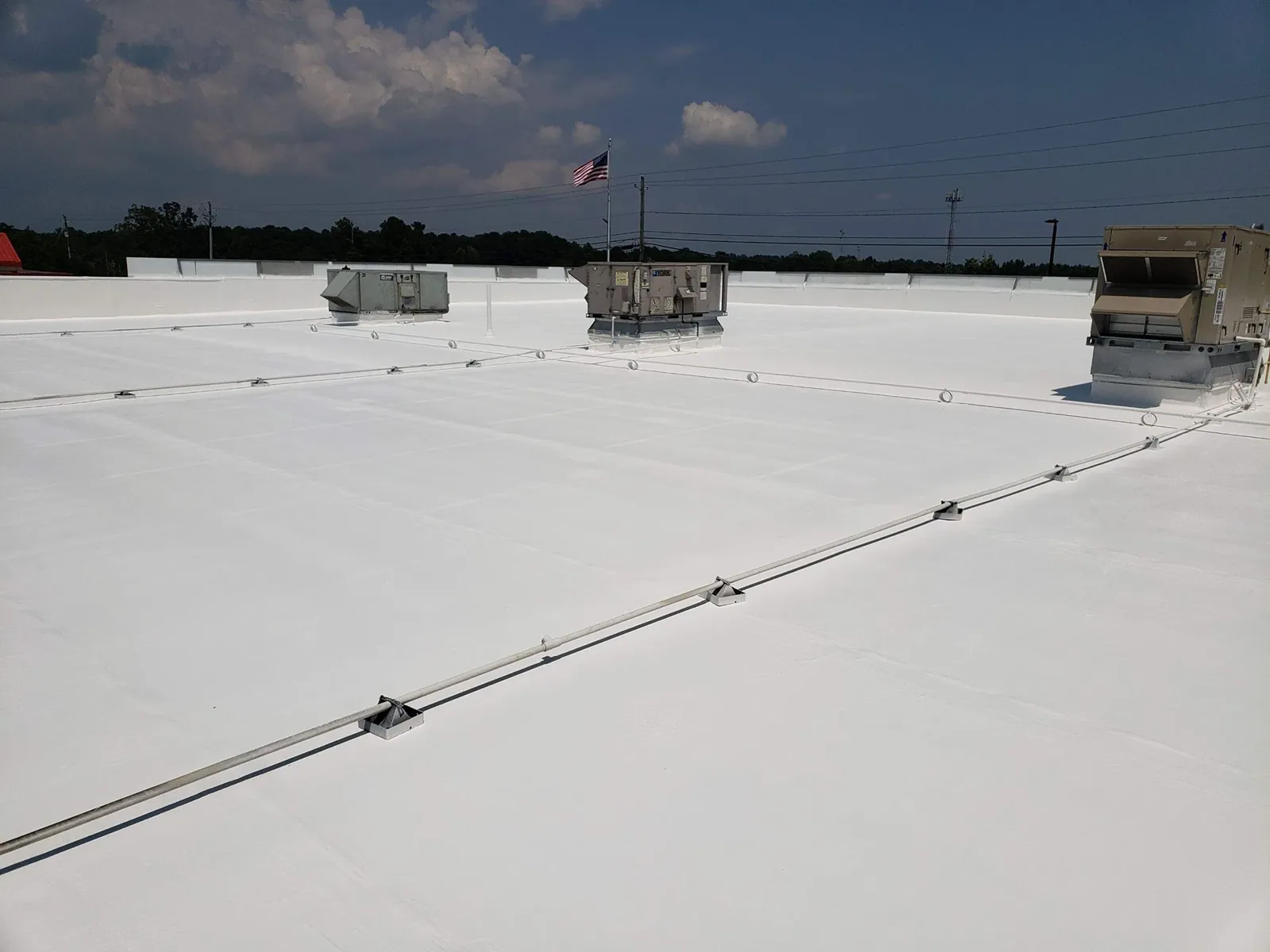
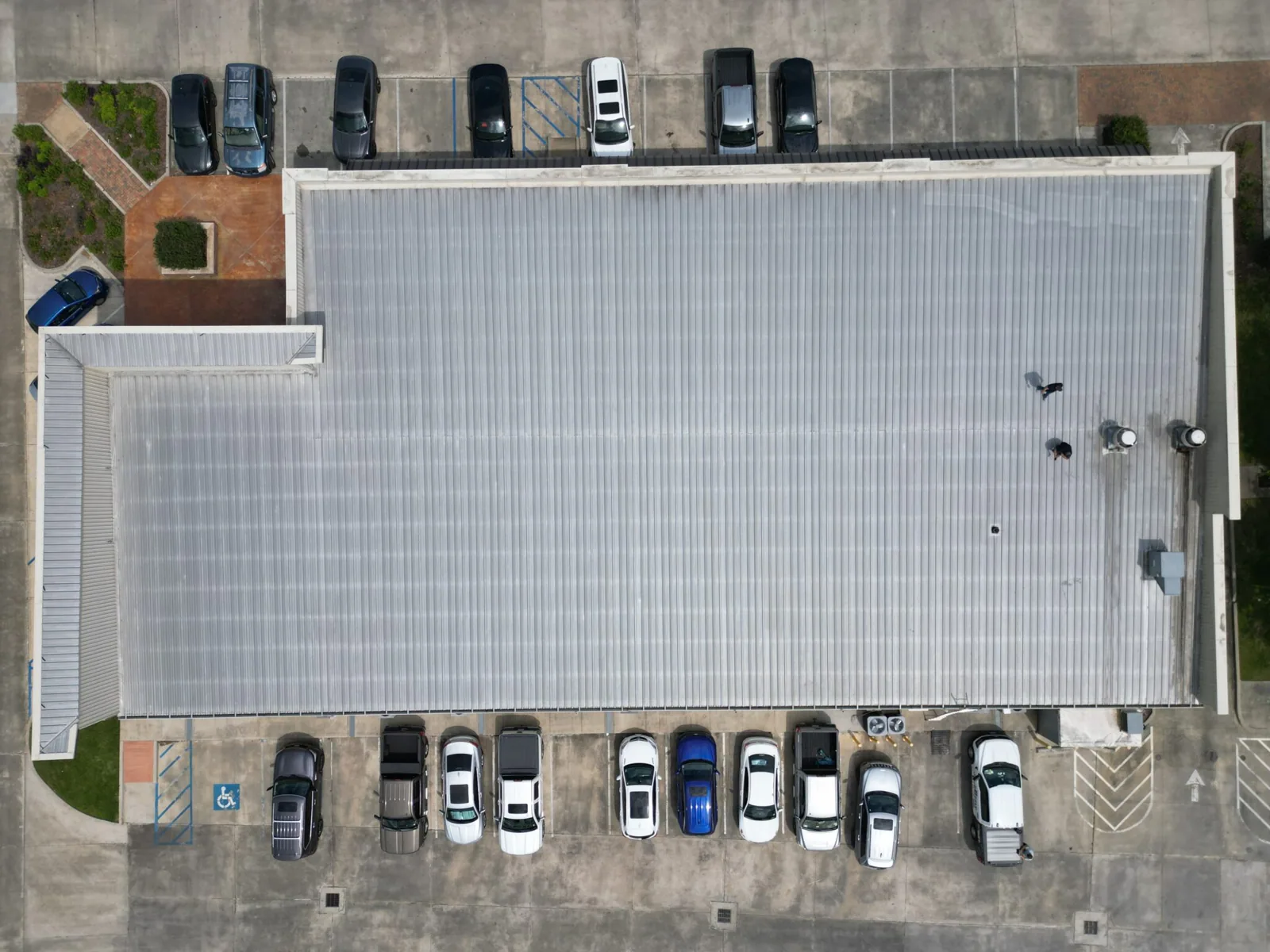
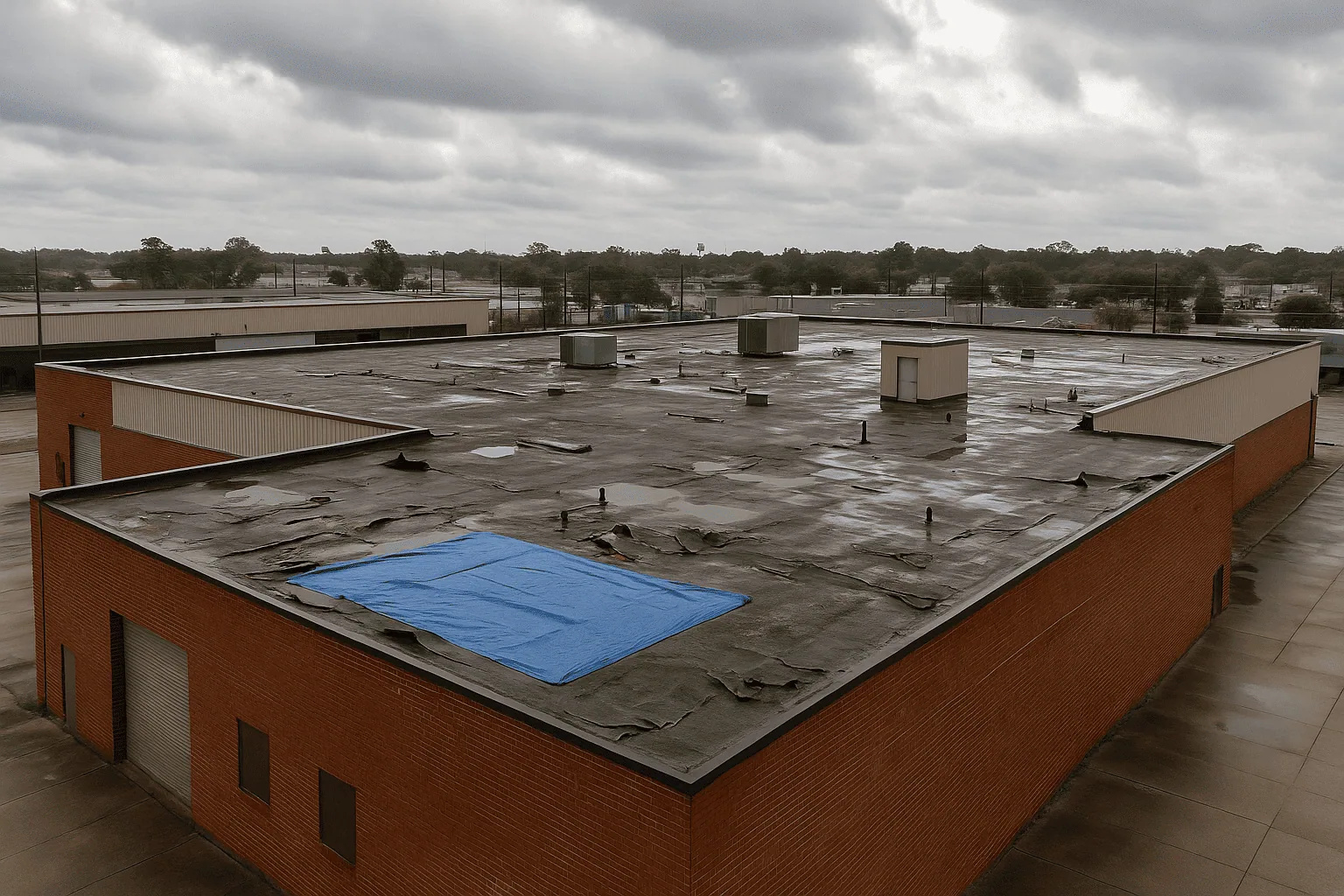
The first walk checks roof material, seams, flashings, drains, penetrations, edges, and signs of water inside. The property representative confirms deliveries, loading access, roof entry, and any current street conditions. We map the roof zones and record what is visible, what was tested, and what remains uncertain. That allows the owner to plan maintenance around actual defects rather than general corridor assumptions.
Protect Retail Access
At an active retail property, customer routes and deliveries must remain clear or be redirected through an approved path. The site contact identifies operating hours, truck windows, material staging, lift placement, and areas below overhead work. We confirm these details before a delivery arrives. The community improvement district and highway boundary provide context, not authorization to close an entrance or occupy a public route.
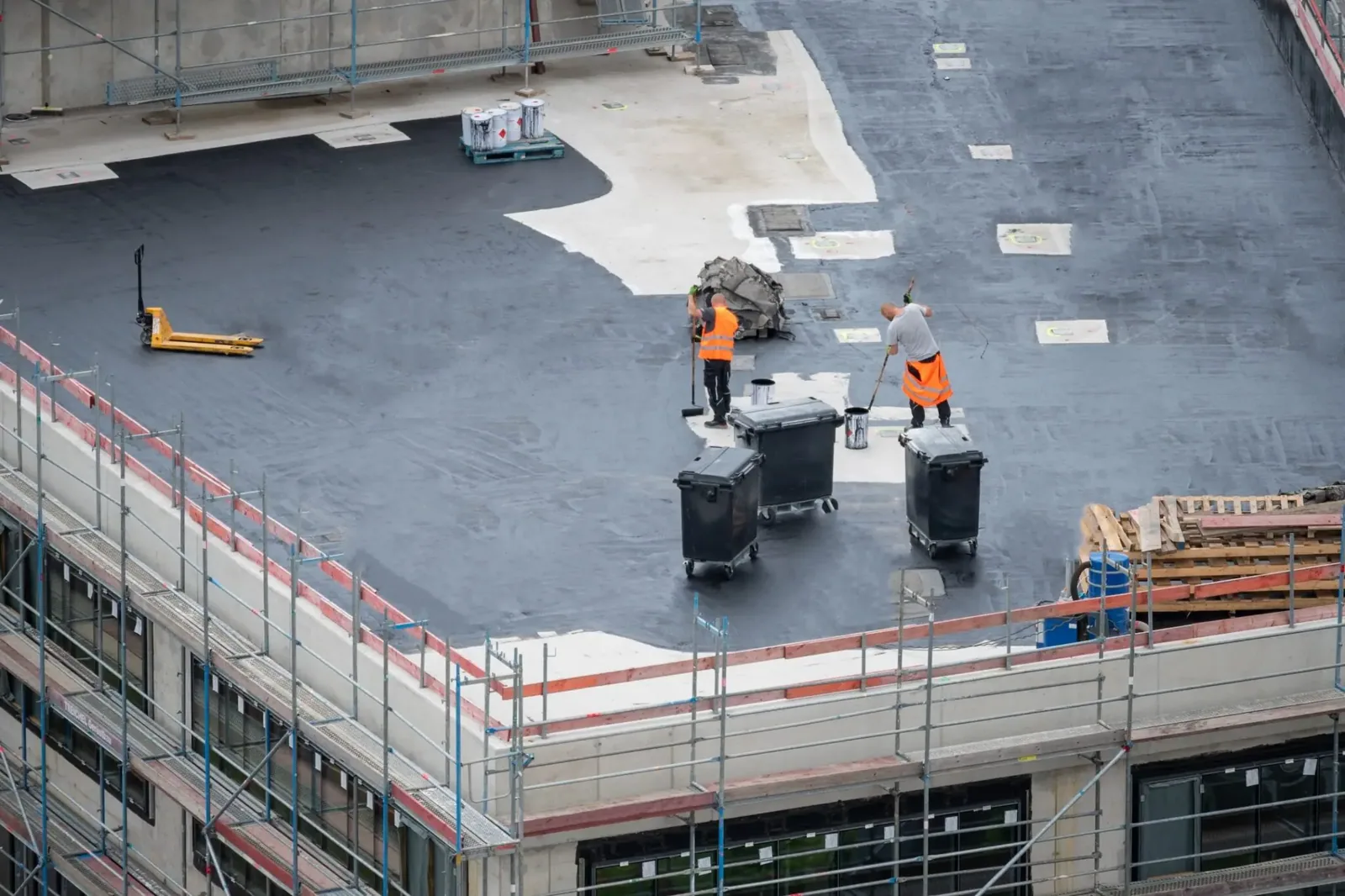
If tear-off is required, we stage materials and set a limit that can be closed before the shift ends. The plan includes temporary protection, debris containment, interior covering, and a final walk. Work above food storage, sales, or service areas may need added controls specified by the property representative. Occupied-building roofing can be phased by roof zone and coordinated with deliveries so the building can continue operating where site conditions allow.
Identify the Existing Roof
A retail address does not show whether the roof uses a single-ply membrane, built-up system, modified bitumen, metal, or multiple layers. We inspect exposed edges, field seams, prior repairs, curbs, and transitions. Available construction records can help identify the intended assembly, but they must be checked against current conditions. If a coating hides the old surface or a patch has separated, a test opening may be required to verify the substrate.
Compatible repair materials depend on the system. A membrane patch needs a prepared bond surface and proper seam treatment. Metal flashing needs secure attachment and allowance for movement. A liquid repair requires a stable, dry substrate. A photo-based roof inspection records the existing material, defect location, and any area requiring more testing. It also provides the manager with a reference when a later improvement project adds equipment or changes a roof penetration.
Trace Water to an Outlet
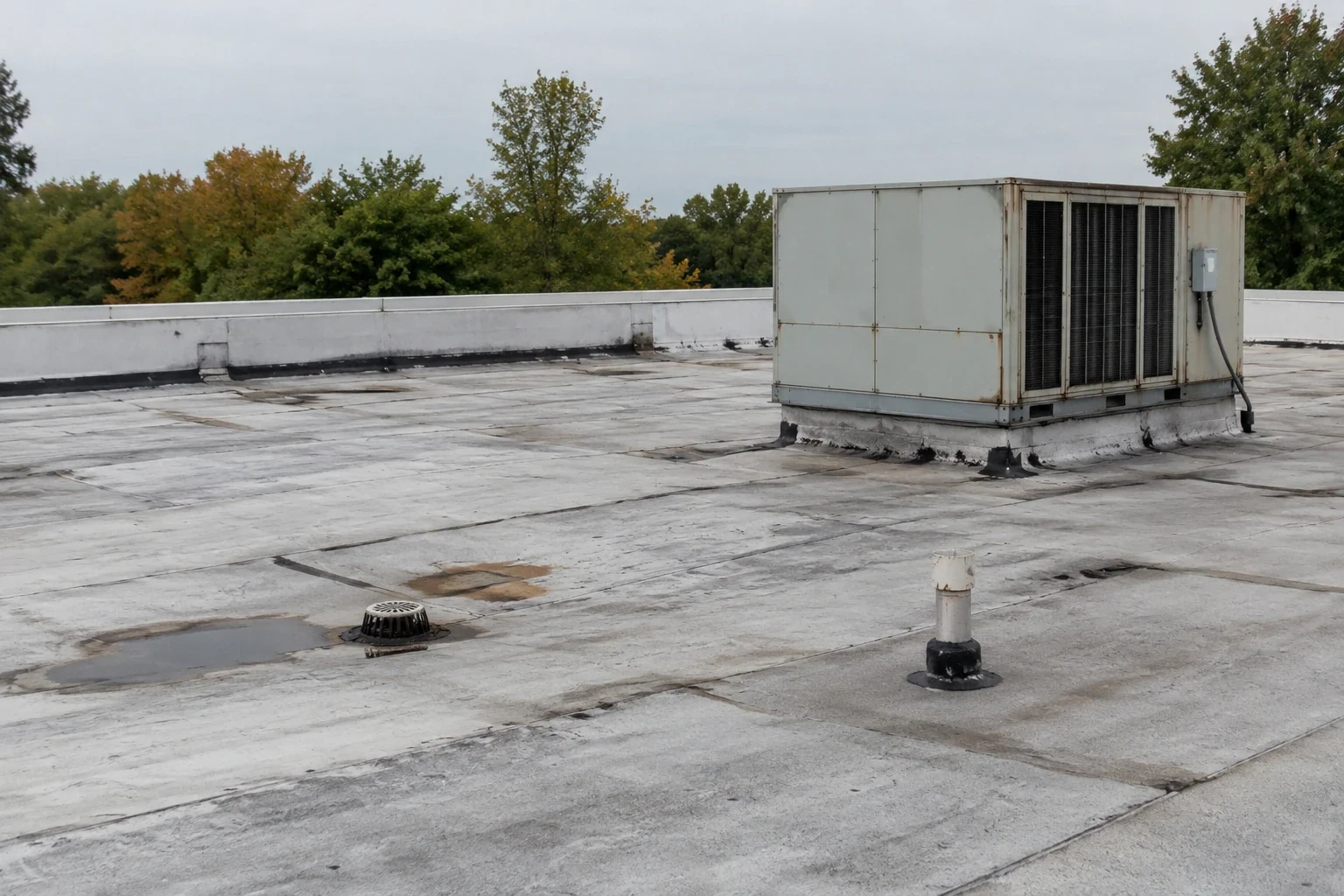
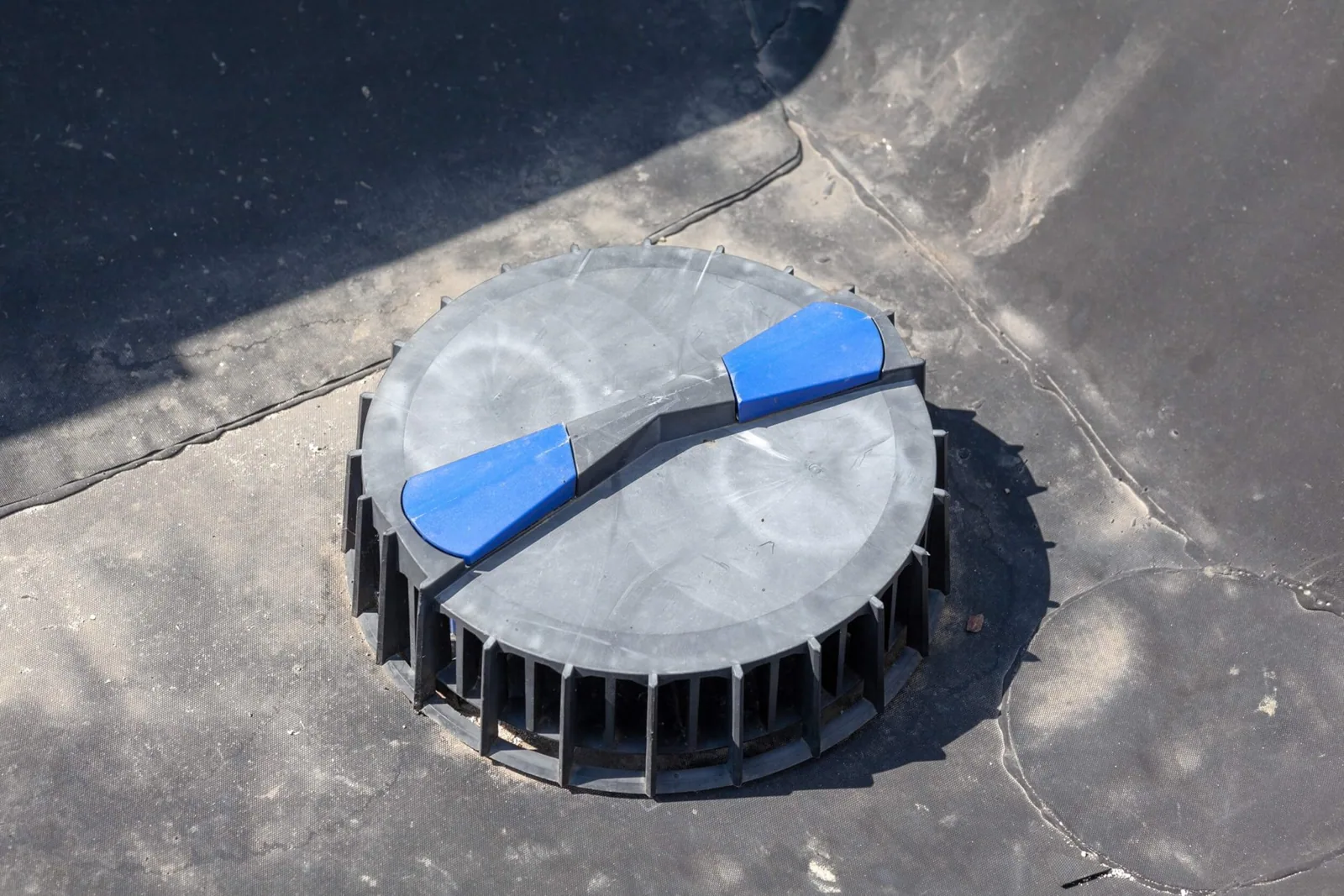
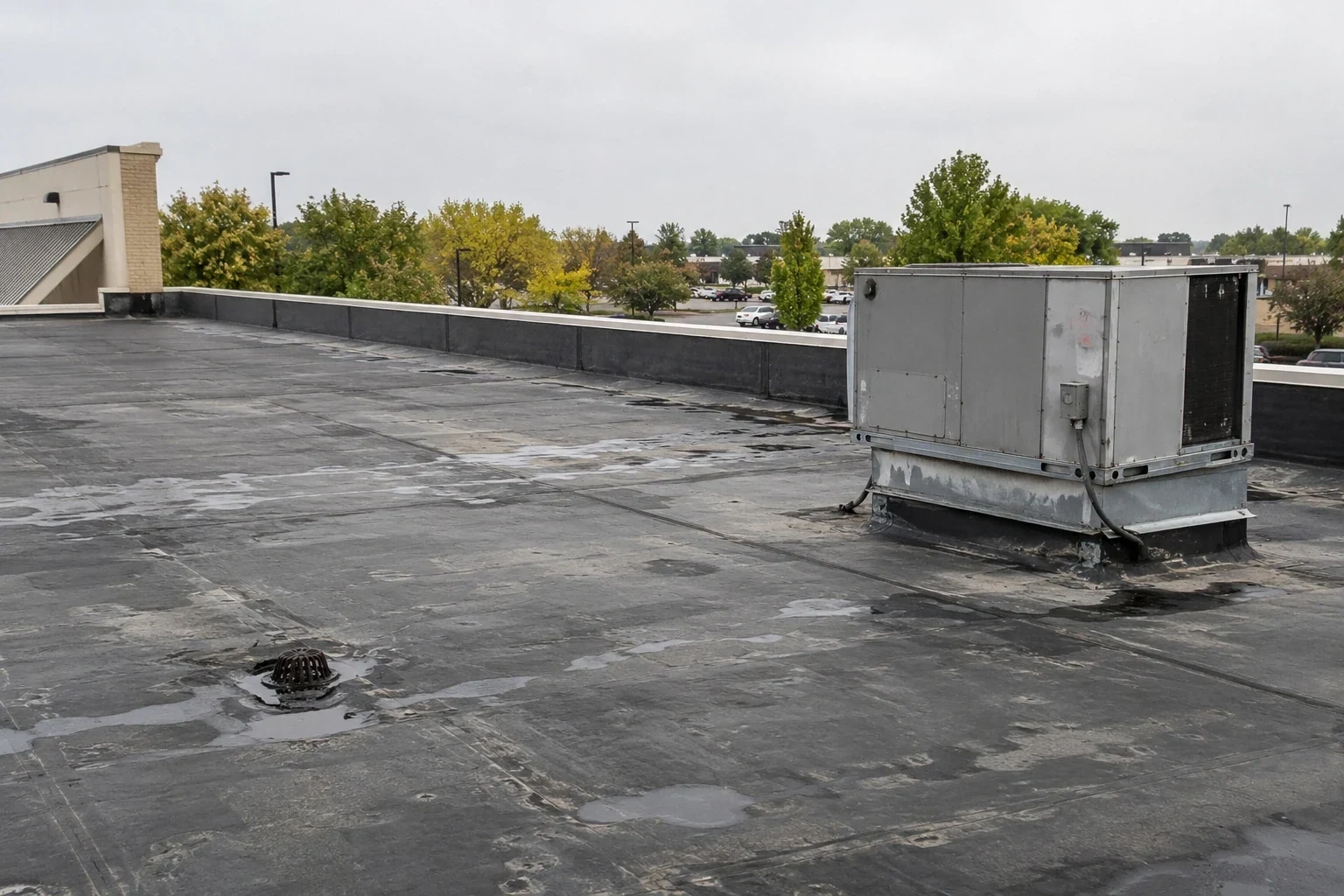
We follow the roof slope toward drains, scuppers, overflows, and leaders. The inspection looks at strainers, drain bowls, clamping rings, and membrane transitions around the outlet. Persistent standing water is measured after the expected drainage period and compared with the surface shape. Debris, low slope, and deck deflection can all retain water, and the remedy depends on which condition is present.
A leak reported inside may enter at an upslope seam or wall detail and travel before it appears. We inspect curbs, parapets, penetrations, and old repairs along that route. If moisture under the field membrane is suspected, infrared moisture mapping can help focus a test opening. Outlet problems may need drain or scupper repair, while wet insulation requires removal to a confirmed boundary. We document the findings separately.
Inspect the Roof After Weather
The closest named hail observation in the March 2017 record is at Centerpoint Medical Center. A property in the 23rd and Sterling area still needs its own inspection for punctures, fractures, or displaced roof details. Repair products must meet their stated substrate and temperature requirements.
Repair products are applied under their temperature and surface requirements. A forecast change can shorten the work window, so the plan identifies how the opening will be closed if the crew must stop. For active water entry, temporary protection comes first, followed by inspection to set the permanent scope. Storm-related repair work should name the observed roof impact, affected zone, and material used. A follow-up review checks whether the repair remains sound.
Select a Proportionate Scope
An isolated puncture or split seam can be repaired when the surrounding membrane and insulation are dry and attached. Repeated leaks, widespread moisture, corroded metal, or a failing deck can require a larger project. We test where necessary and measure the area supported by the inspection. If concealed damage extends beyond it, we photograph and describe the change before the work continues.
Recover and replacement are evaluated against existing layers, deck strength, drainage, code, and fastening. An overlay must not trap water or compromise drain height. Schedule and cost vary with verified area, material, access, disposal, tenant protection, and weather. A defined repair scope covers the confirmed defect. Replacement specifies the new assembly, edges, curbs, drains, and inspection points. The owner can compare those choices using tested conditions.
Keep Records by Address
The closeout record should state which property was inspected, the roof zone, observed system, repairs completed, and maintenance items still open. Photographs need a fixed reference so staff can find the same drain, curb, or seam later. If a tenant or mechanical contractor changes an opening, the next inspection can compare that detail with the earlier repair. Records help separate approved work from a nearby project or public improvement.
The listed Sun Fresh Market is at Sterling Avenue and 23rd Street. Other Independence retail locations receive separate evaluations; we also serve Sterling Apple Market and the US 24 shopping district and 39th Street Retail Corridor, Independence. At the 23rd and Sterling site, the report names the actual address and conditions observed. This keeps maintenance tied to the correct roof rather than to the street intersection alone.
At a retail building near 23rd Street and Sterling Avenue, begin with the manager's view of customer access and delivery timing. Decide where crews can stage without interrupting an entrance, then show how materials and debris will move to and from the roof. The inspection should name the roof zones actually reviewed and map the water route to the drains or perimeter outlets. If a sign, curb, or rooftop unit interrupts that path, explain whether its flashing is included or needs a separate trade. A clear work boundary helps the owner compare repair options and tells staff which part of the property will be affected during each stage.
Plan a short review with the property manager before the crew mobilizes. Confirm the work date, entry and loading arrangements, who can open the roof access point, and how staff will be notified if the work zone changes. The contractor should identify the inspection hold point before new membrane covers the substrate and describe how concealed damage will be handled. For a repair that can be completed in one visit, document the tested drain or seam and the final tie-in. If the condition calls for a larger project, a separate proposal can list its quantities and access assumptions instead of extending the repair by default.
Commercial Roofing Questions
Does the community improvement district cover the building roof?
It identifies a public improvement area. The property roof requires separate inspection and authorization for any repair or maintenance.
Can deliveries continue while a roof is being repaired?
The property contact confirms the delivery route and window. We coordinate material staging, lifts, barriers, and debris removal around the approved schedule.
How do you avoid confusing nearby roof conditions?
We record the inspected address and roof zones, then keep each property's photos and recommendations separate. A condition at one building does not establish a defect at another.
What should a roof report say when some areas are inaccessible?
It should name the areas inspected and list any location that could not be reached. An unviewed section remains unverified until access is arranged.