Plan church roof work in Independence, MO around service times, occupied rooms, stepped roof transitions, and a documented repair boundary.
Worship buildings can place a large gathering room beside offices, classrooms, kitchens, or fellowship space. The roof may have several levels and material transitions, but the assembly has to be verified on site. Independence includes the Community of Christ Temple and Auditorium, alongside the active shops and restaurants on Historic Independence Square. These institutions describe the city's civic and worship context; they do not establish roof construction. We inspect the property, trace water paths, and coordinate work with the congregation's schedule.
Schedule Around Gatherings
Before a roof phase, the facility contact identifies service times, event calendars, entrances, and rooms that need to remain open. We plan material delivery and roof access away from public routes. Work above an occupied hall or classroom may need a separate window from work over a closed office. We set an opening limit that can be closed each day and identify who confirms interior protection and closeout.
Large assembly rooms can be sensitive to interior disruption, but the requirements differ by building. We do not assume an acoustic ceiling, sanctuary arrangement, or room use from a property's name. The owner identifies occupied areas and access controls. A phased reroof can isolate a roof section while other parts of the facility continue operating. The boundary and temporary dry-in plan are part of the work sequence.
Find the Actual Water Path
Water may enter at a roof-to-wall transition and travel before it reaches a ceiling. We compare interior reports with roof drains, seams, penetrations, parapets, and changes in slope. A leak below a tall hall does not prove that the opening is immediately above it. We map likely routes and inspect representative areas. Selective cores help identify layers and moisture when the membrane hides the condition.
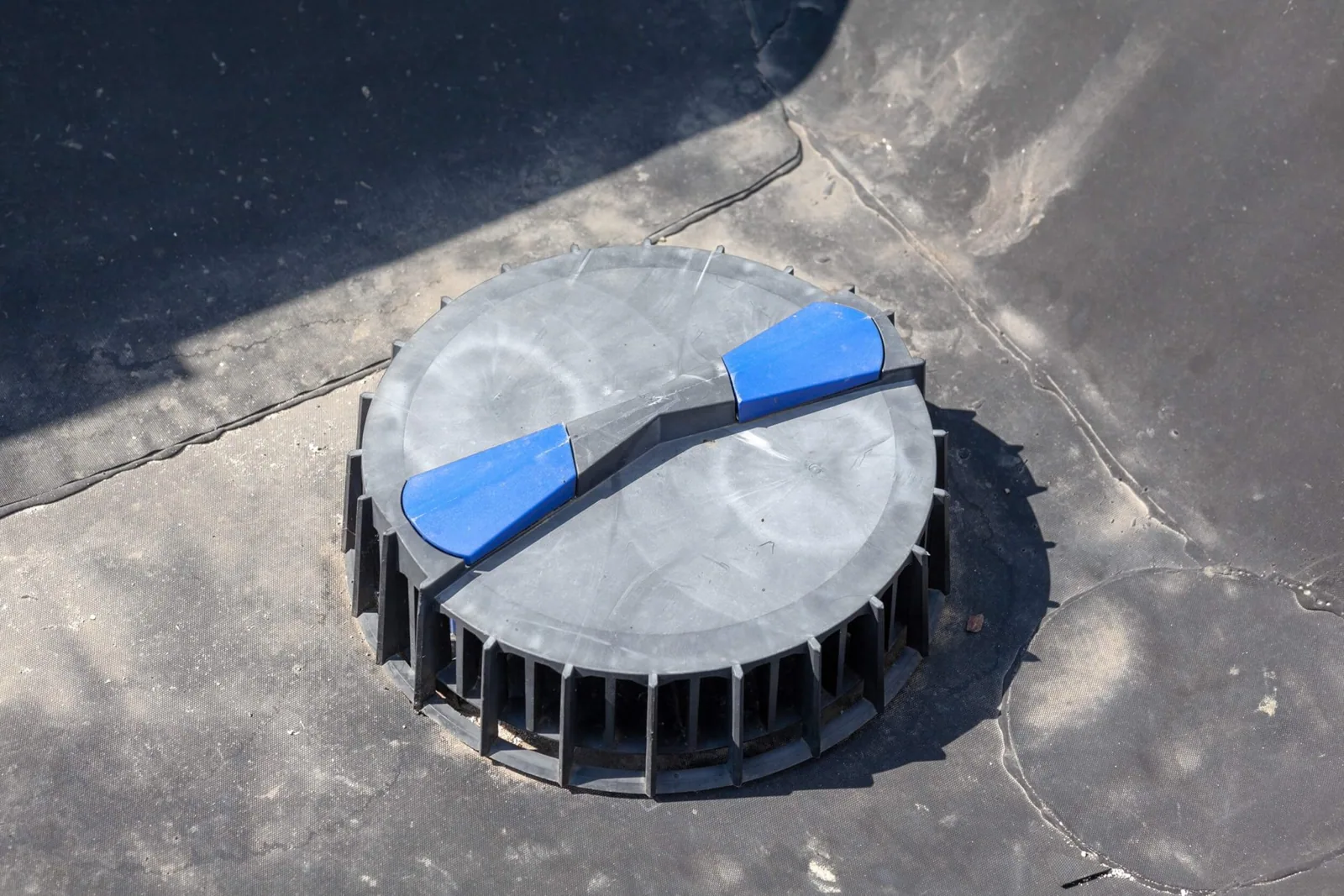
Older repairs need a compatibility check. We identify the membrane, metal, or coating and look for loose patches or failed sealant at their edges. If water is trapped beneath the surface, coating over it can obscure the defect. A repair must bond to stable material and preserve drainage. Leak investigation can include drain and scupper work when the outlet or overflow is part of the problem.
Respect Tall and Stepped Roofs
Worship properties may include a sanctuary, office wing, education rooms, and auxiliary spaces under different roof elevations. We inspect where each plane meets a wall, parapet, canopy, or metal edge. Flashing needs enough height and a stable base. Drainage from a higher surface should not discharge behind a lower wall transition. If a repair crosses two systems, we specify the tie-in separately for each material.
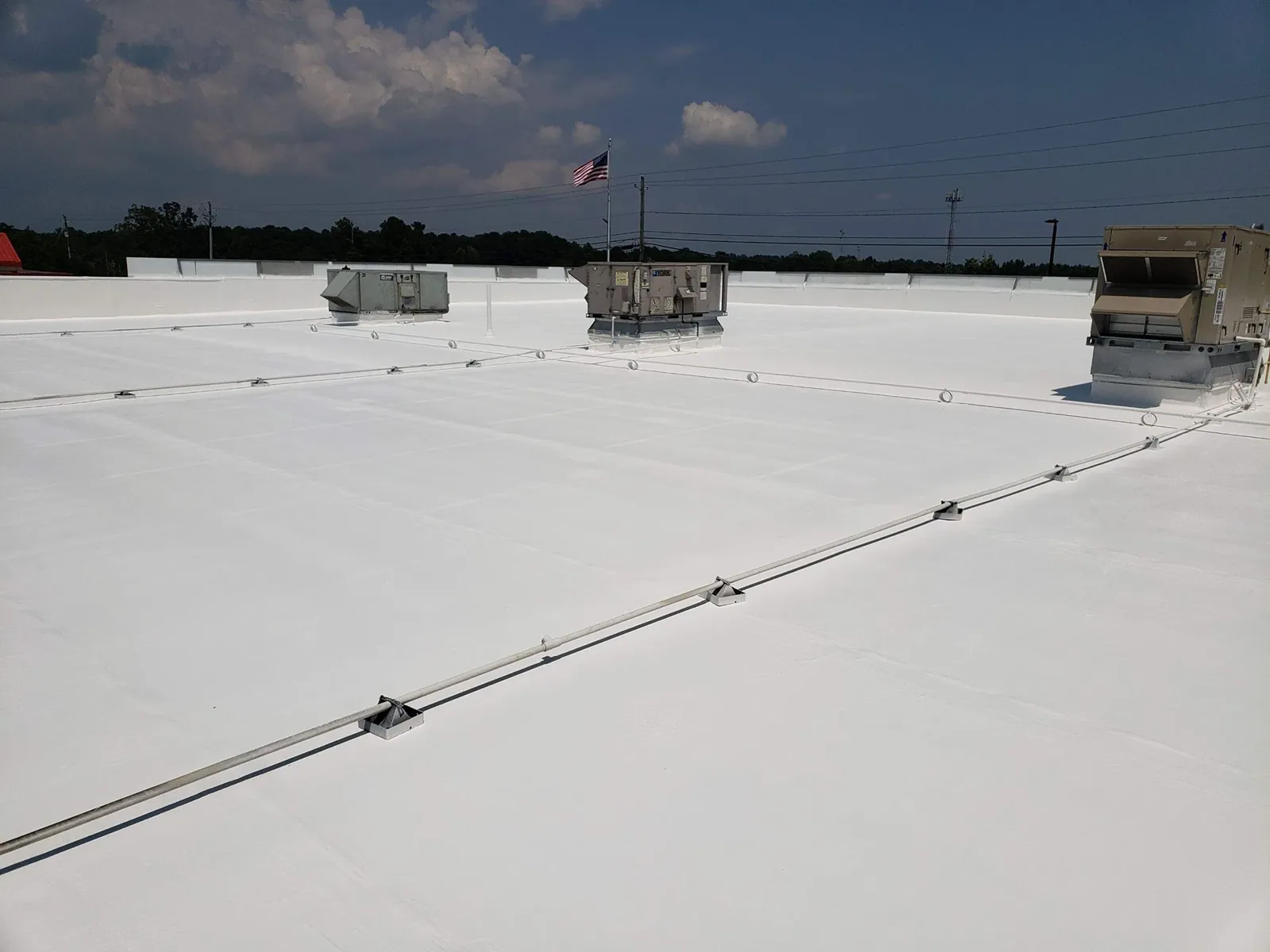
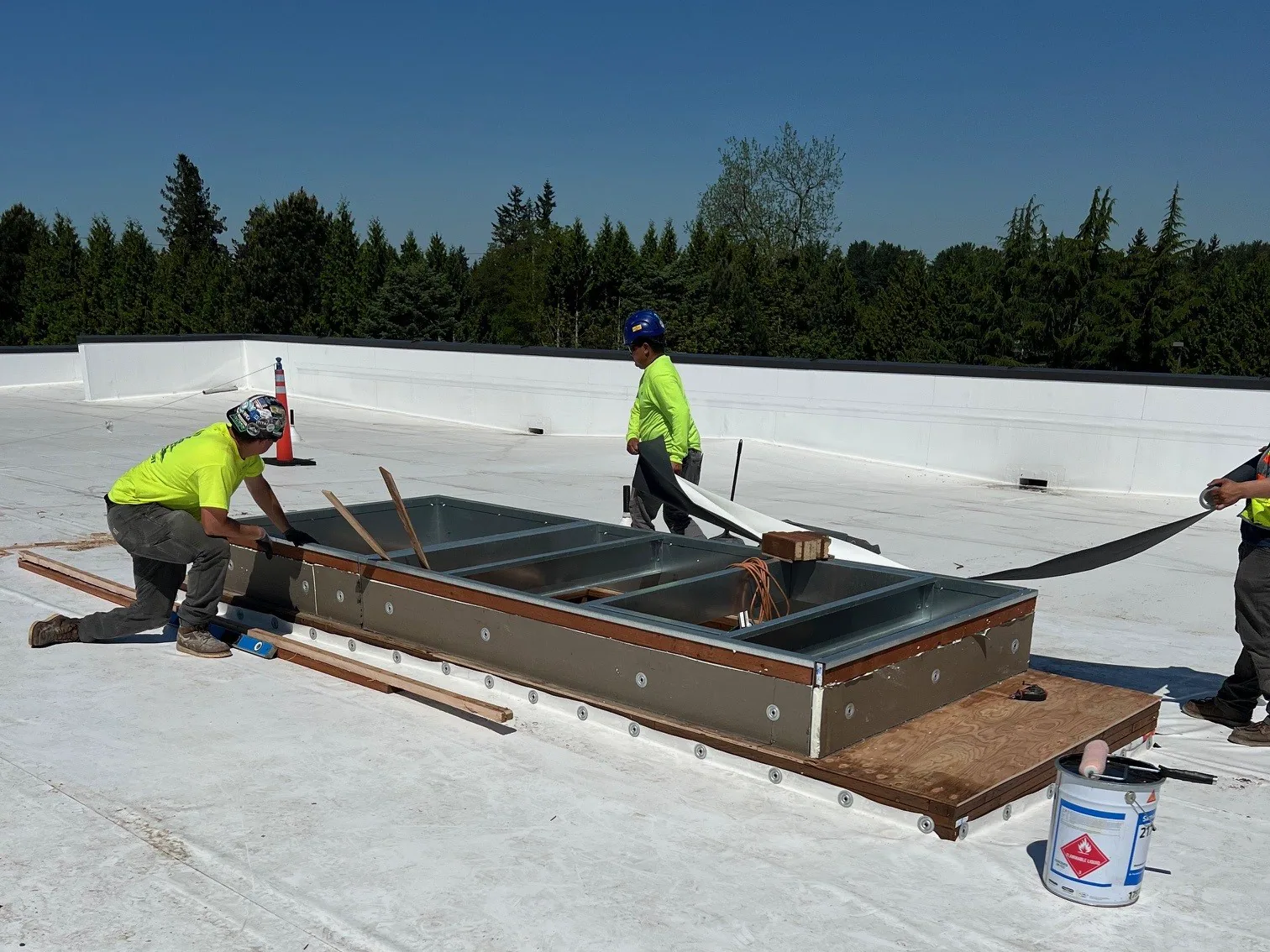
HVAC units, exhaust fans, and electrical routes create penetrations. We inspect curb corners, supports, boots, and service paths for movement or membrane wear. Equipment replacement is coordinated with the mechanical contractor so the roof can be flashed under the curb and closed before the unit returns. A standing seam roof has different movement and attachment than a low-slope membrane. Civic-building projects may also have public access, but each property receives its own assembly review.
Use the Local Setting
Community of Christ International Headquarters includes a Temple whose sanctuary seats 1,600 and rises to a 195-foot ceiling, plus an Auditorium with a 5,800-seat chamber beneath a dome. Those scale details help explain why access, scheduling, and protection plans matter at institutional facilities. They are not roof measurements or roof-condition facts. The roof system and repair boundary must be established through inspection at the specific building. The same assembly-specific review applies to worship properties in Kearney, where the congregation’s schedule and roof details define the work window.
Severe weather also calls for direct observation. A June 2022 EF-2 tornado passed near Buckner, with a separate wind-damage report northwest of Independence. That local record does not identify damage at a church. After a storm, we check edge metal, membrane seams, flashing, and rooftop equipment for displacement. A wind review records the physical condition rather than relying on the event report alone. Seasonal freeze and summer heat can stress roof joints and flashing. We inspect the actual transitions for movement and bond failure.
The inspection record should distinguish observed conditions from items that still need access or testing. We note the roof area, visible membrane or panel type, drainage direction, and any detail that could not be examined safely. Interior observations belong in the same record with their location and date. This keeps a ceiling stain from being treated as proof of a roof opening directly overhead and helps the facility team compare the next visit with the same locations.
Define the Durable Repair
A localized repair can work when the substrate is dry, the surrounding membrane remains bonded, and the failed detail is isolated. Widespread moisture, recurring seam openings, loose attachment, or deck damage can require a larger area. We show core locations, photographs, and the limits of each option. Recover is considered only when existing layers are stable and suitable for the new assembly. Otherwise, removal exposes the substrate for a direct repair.
Cost and timing depend on roof access, occupied-room protection, equipment movement, removal depth, and any work that must be completed between events. We list those drivers with the repair boundary. A condition report helps the congregation or facilities team plan maintenance after the work. Senior-living facilities can share access constraints, but a worship facility's calendar and assembly determine its own sequence. Schedule an inspection to document the roof and prepare a scope the site can use.
For a planned reroof, the survey should identify the deck type, insulation condition, drainage plane, edge details, and any existing layers that affect attachment. Core locations are selected to test representative areas, not to promise that every concealed condition is known. The written scope should explain what is included, where removal stops, how exposed areas are protected, and how concealed damage will be reviewed before added work proceeds. That detail gives the board a practical basis for comparing proposals and setting a work window.
Commercial Roofing Questions
Can roof work be scheduled between worship services?
The work can be phased around the calendar when access and weather allow it. We agree on noisy tasks, public routes, and the daily dry-in boundary with the site contact. Large openings or equipment moves may need a longer window.
How do you protect a sanctuary during roof repairs?
The facility contact identifies interior areas and contents that need protection. We cover the area before opening the assembly, keep removal within a secure section, and document the roof zone at closeout. Any concealed moisture is reviewed before the opening expands.
What if the building has more than one roof system?
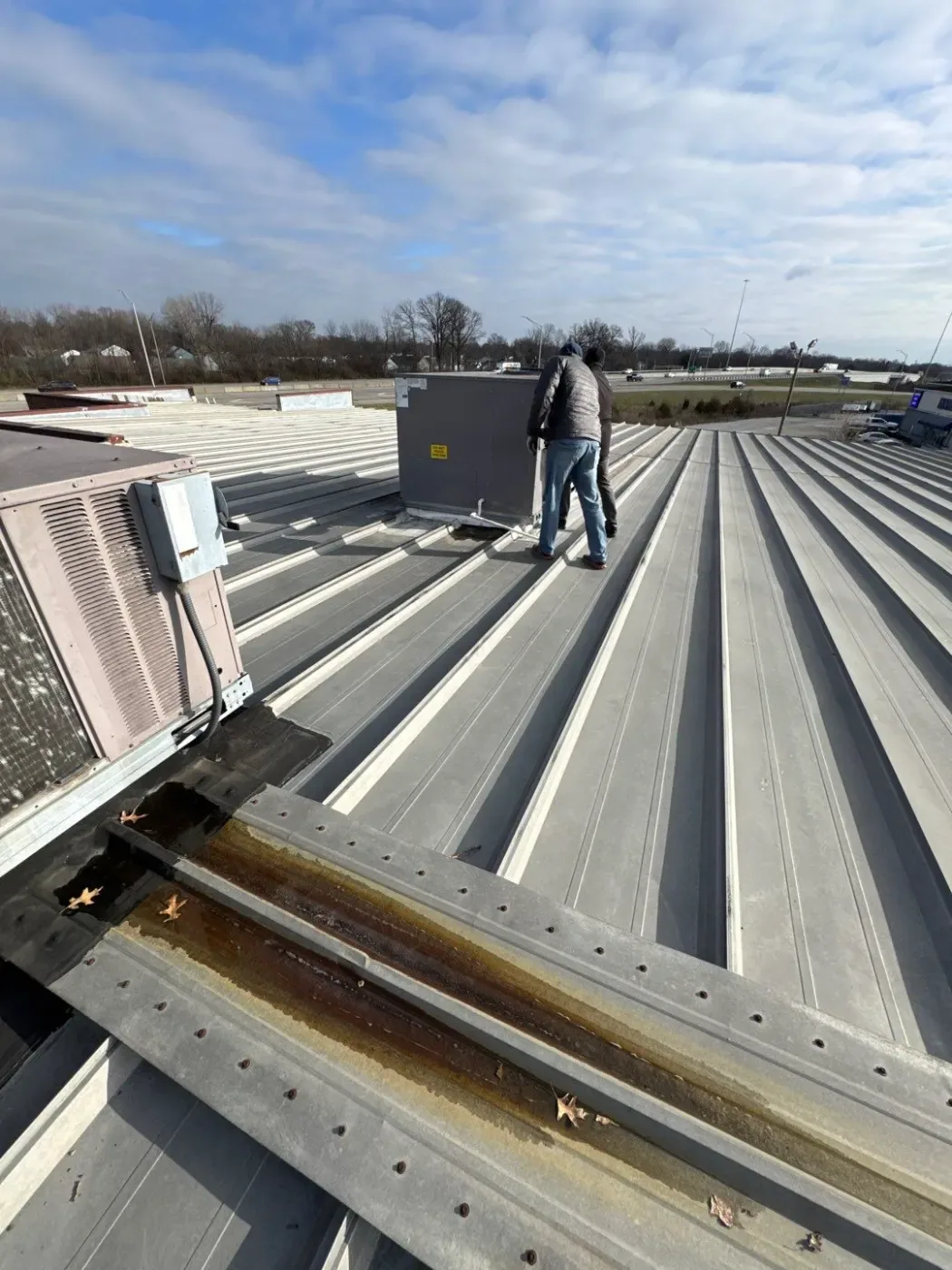
We map each material and transition separately. A metal roof, coating, and membrane need different preparation and repair details. The report identifies where systems meet and which detail is part of the current scope. Treat each assembly as its own condition even when sections connect at a shared wall or drainage path. Identify the membrane or metal profile, attachment, known repair history, and transition details for each zone. A low-slope repair may need different materials and preparation than a sloped metal section. A roof map lets the congregation compare priorities without treating the whole building as one uniform system. Record each system separately in the maintenance file, including repairs that cross between them. A later leak investigation can then start with the right material and transition instead of treating the full building as one roof.
Does a nearby tornado report prove storm damage to our roof?
No. It provides regional weather context only. We inspect the property for displaced edge pieces, open seams, and damaged flashing or equipment, then photograph direct findings. The repair recommendation follows what is present at that roof.