Coordinate senior-living roof repair in Independence, MO with resident access, leak tracing, equipment interfaces, and a documented work boundary.
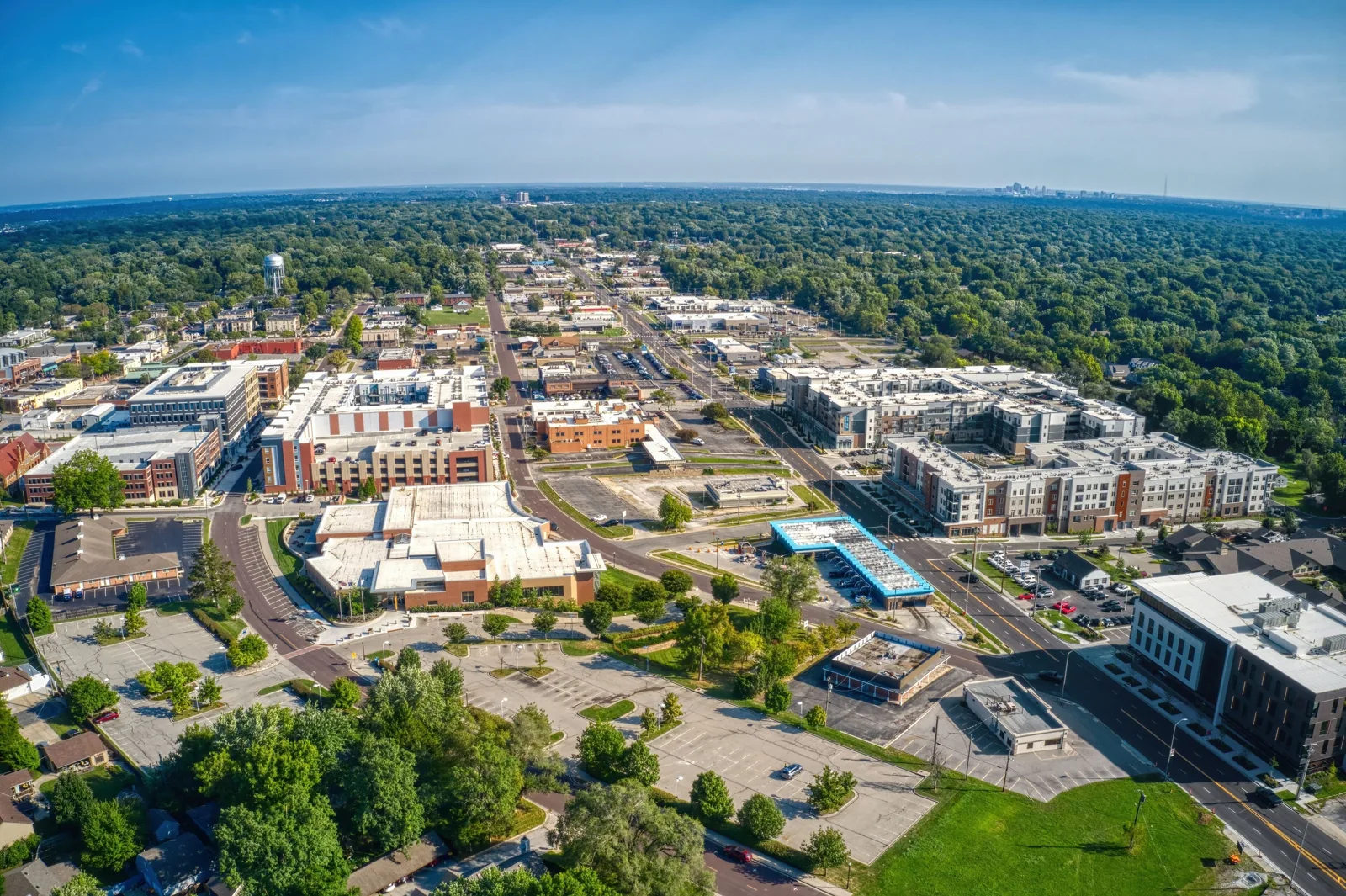
Health and social services are among Independence's major employment sectors. The Groves and Crossroads Hospice are major employers in the city. These facts show local institutional activity, not the construction or condition of a senior-living roof. We inspect each assembly and coordinate a safe work boundary with the facility contact.
Resident Access Shapes Each Phase
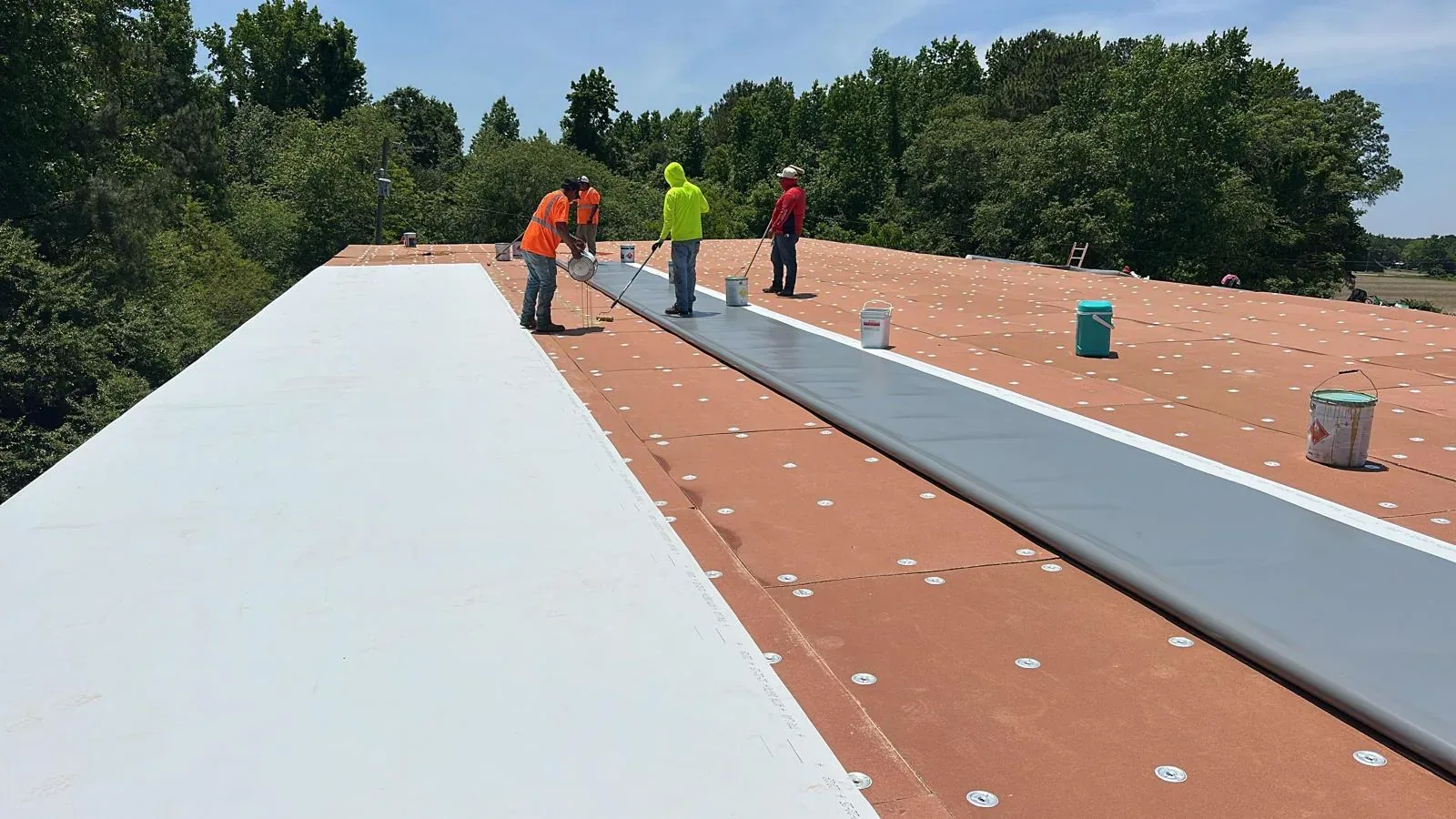
Before work begins, management identifies occupied areas, care schedules, service entries, and routes that need to stay clear. We coordinate roof access, material staging, and any lift position with that plan. If the crew works above a resident area, interior protection is placed before removal starts. Each day's opening stays within a limit the crew can close. The site contact receives a clear update about the roof zone and any temporary access restriction.
Noise and movement can affect common areas even when no resident unit sits below the work. We discuss timing for courtyards, dining areas, and visitor entrances based on the actual facility layout. For a roof replacement, each phase needs a dry-in boundary and a route for debris. Occupied-building reroofing can be sequenced by wing or roof section when the assembly allows it. Management confirms resident communication; our scope defines the roofing work.
Trace the Leak to Its Entry
An interior stain records where water appeared, not necessarily where it entered. We compare its location and timing with roof drains, seams, curbs, and wall transitions. Water can move along insulation or a deck before dropping into a room. We inspect the roof plane above the report and mark the likely route. If layers hide the path, selective cores or infrared scans can direct further testing. The final report distinguishes confirmed moisture from areas that need another check.
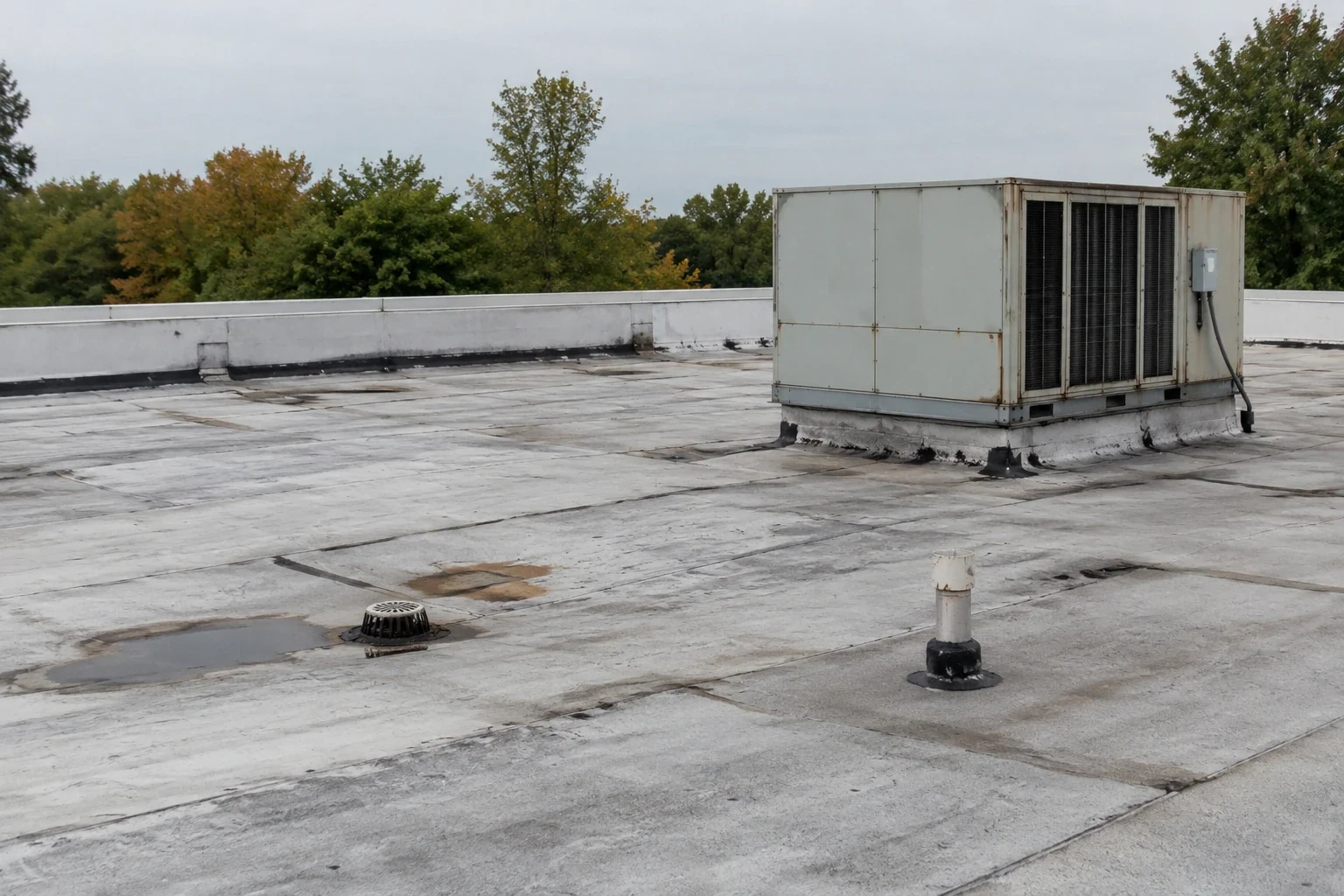
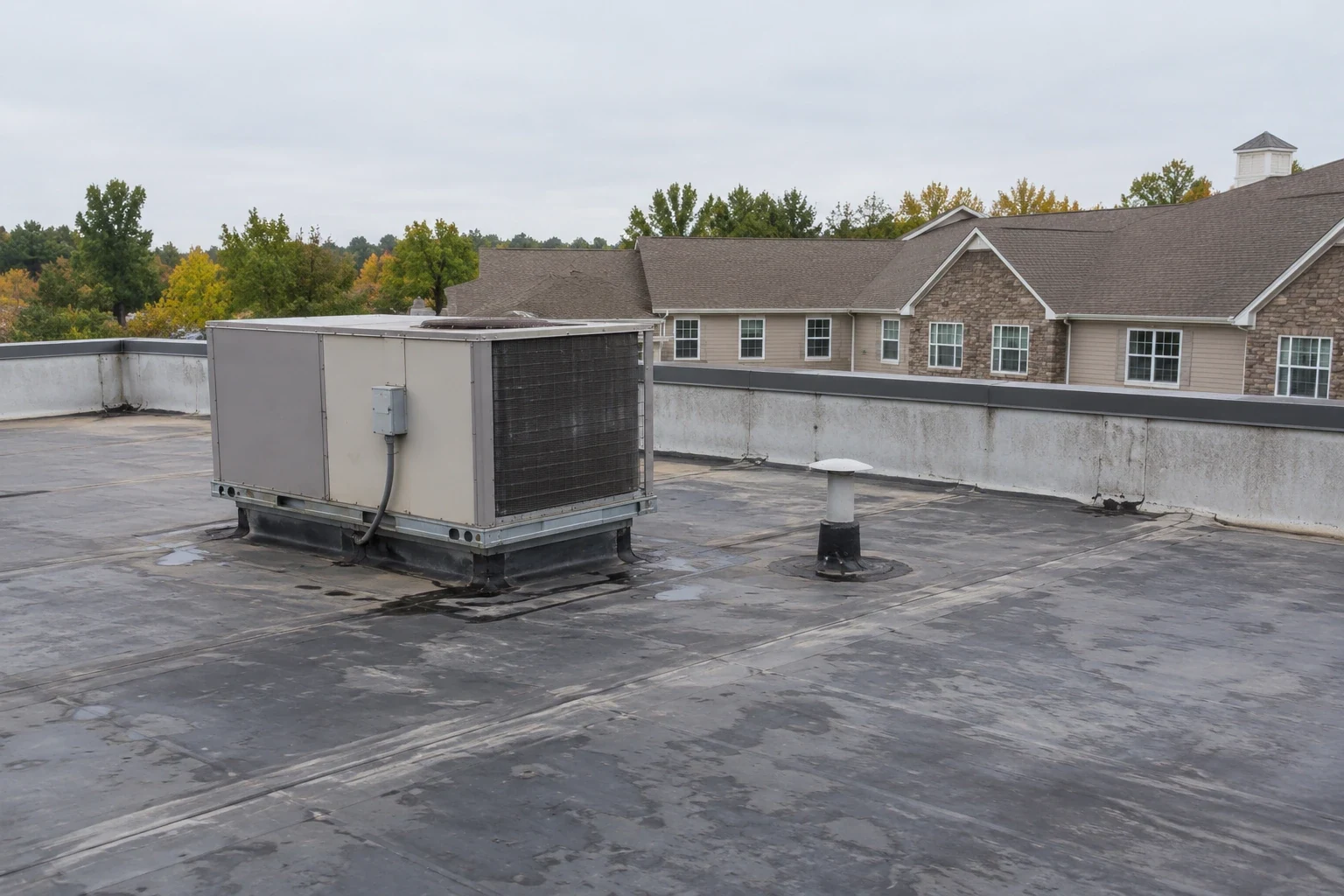
Shared drains and plumbing penetrations deserve separate attention. We inspect the roof drain bowl, overflow, pipe boot, and nearby membrane for an open interface. A clogged outlet and a leaking stack may produce similar interior symptoms but require different trades. We show where the roofing condition ends and where plumbing review is needed. Leak investigation can be paired with moisture mapping when the assembly is not visible.
Review Equipment and Transitions
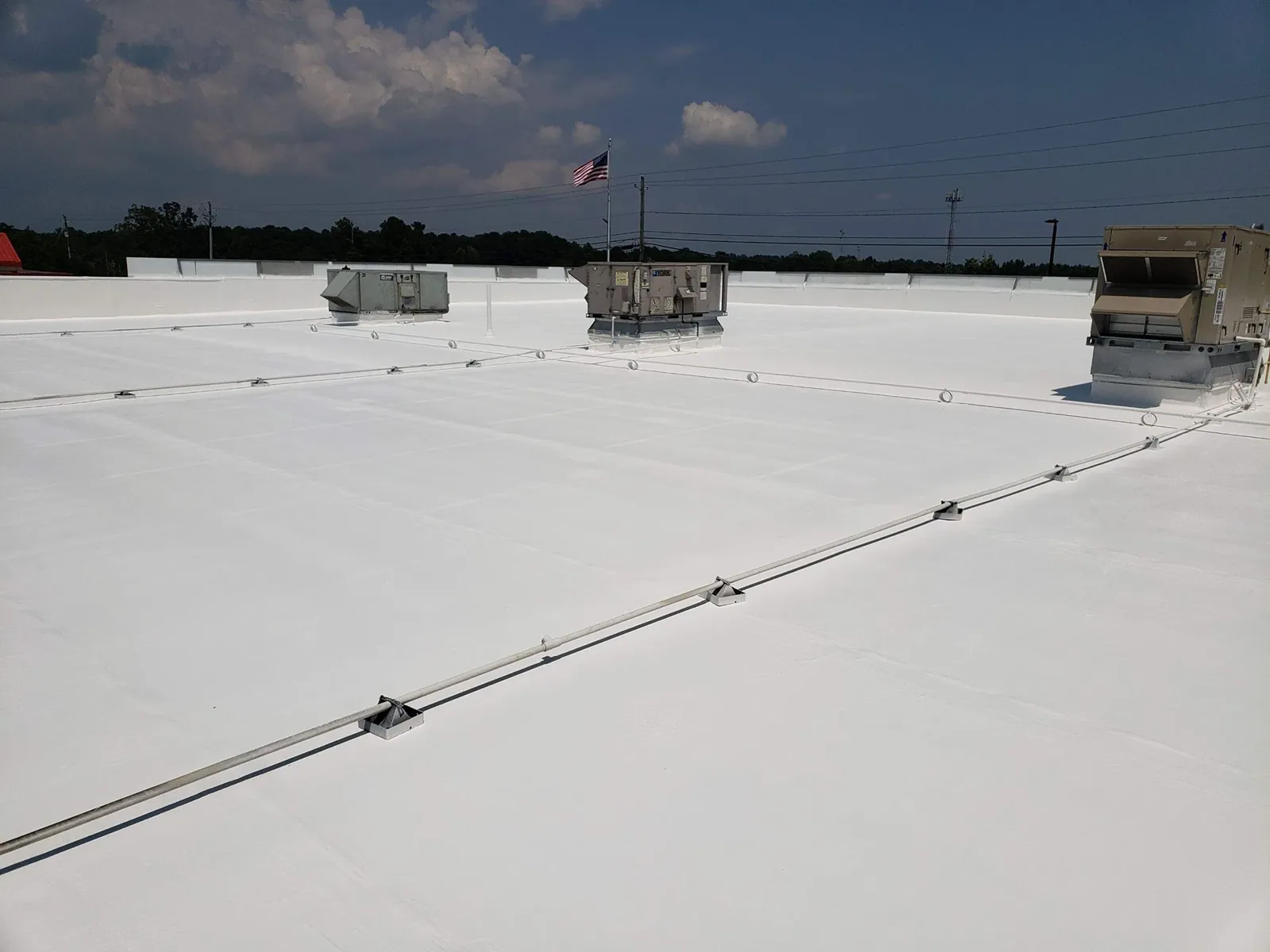
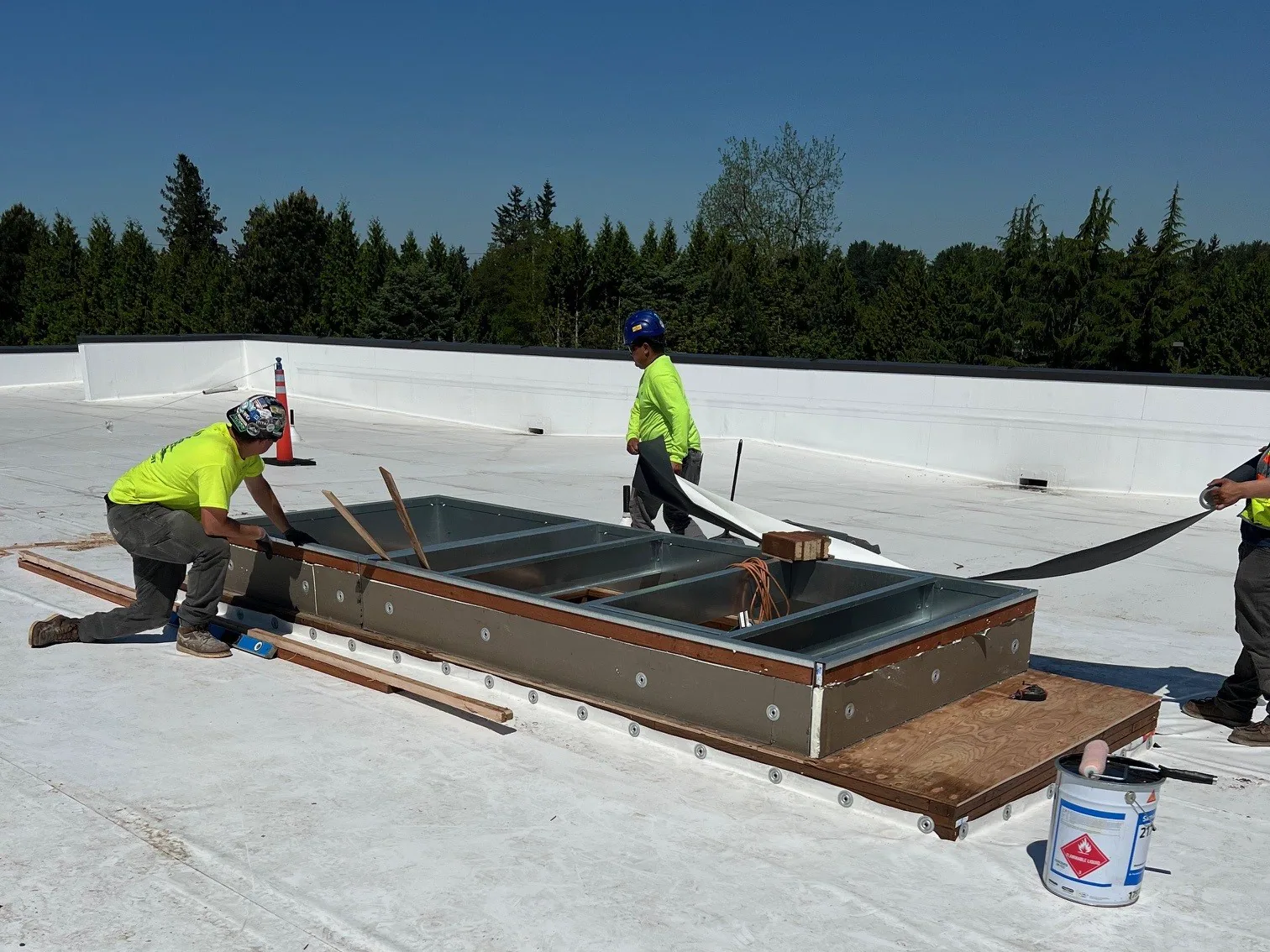
Rooftop HVAC, exhaust, conduit, and pipe supports create flashing details that move under temperature and service loads. We inspect curb corners, flashing height, attachment, and the condition of the surface beneath the patch. Unsupported lines can rub across a membrane. A curb that shifts can split its boot. The repair needs compatible material and enough stable substrate to bond. Some repairs require a rooftop unit to be raised. Before mobilization, the mechanical trade identifies disconnect and restart steps; roofing scope covers temporary protection and final flashing.
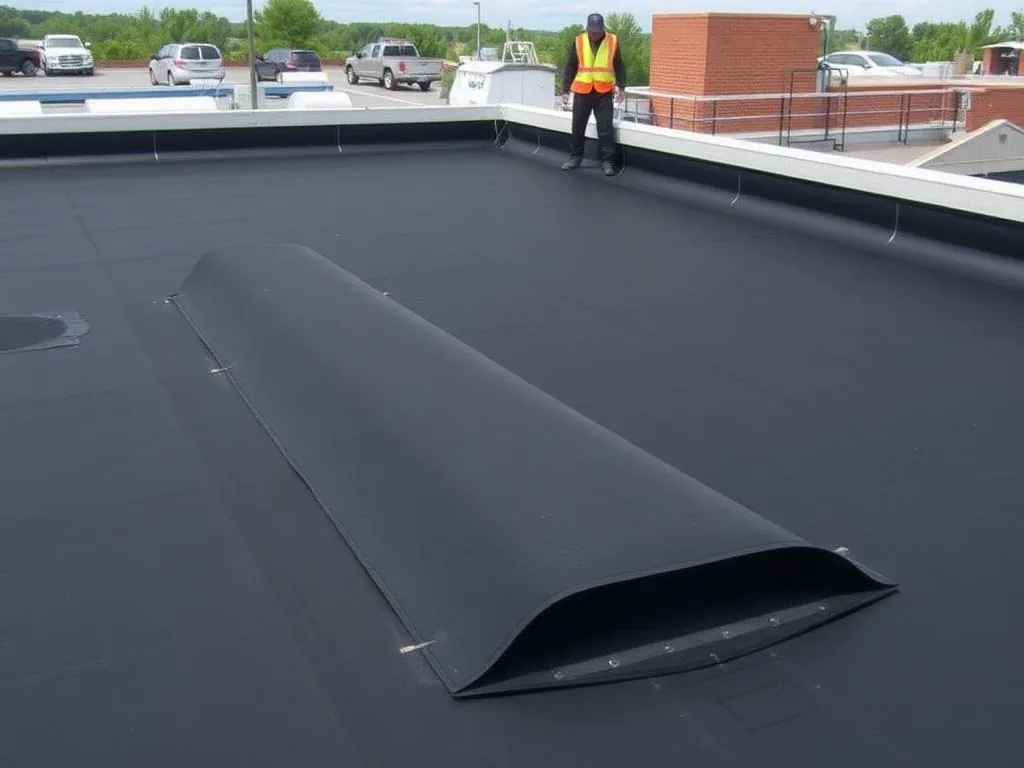
A coating or membrane repair is chosen after identifying the existing roof. Silicone, TPO, EPDM, and metal details are not interchangeable. Prior patches or unknown coatings may require a test area before a new material is applied. We mark drains and service paths so the repair does not obstruct water flow or future access. EPDM assemblies and TPO membranes have different seam and flashing requirements.
Use Local Health Context Carefully
Centerpoint Medical Center is a major employer in Independence, and the city recorded a commercial remodel permit there in 2025. Graceland University Independence Campus houses nursing and other programs in a three-story building. These institutions help describe the local health and education economy. Their listed use does not tell us how a senior-living property is assembled. We use the property manager's access details and inspect the actual deck, insulation, membrane, and drainage.
The Kansas City weather record comes from its airport observation site, not from an individual facility. Winter freeze exposure and summer heat cycle sealants, metal edges, and membrane transitions. We look for material movement that is visible at the roof, then compare it with leak history. After a severe-weather report, direct inspection establishes whether the roof has punctures, opened flashing, or loose edge pieces. A Grandview, Missouri is context for the market, not a substitute for that inspection.
Set a Resident-Safe Repair Limit
Localized repair fits when the surrounding membrane is stable and the substrate is dry. If moisture extends beneath several seams or the deck is deteriorated, the repair boundary may need to widen. We document cores, photos, and the material removed before continuing. Recover can be considered only when the existing layers are suitable. Replacement may be needed when attachment, insulation, or deck condition prevents a reliable tie-in.
Cost and timing depend on access hours, resident protection, equipment coordination, removal depth, and the amount of dry-in work. We list those drivers before mobilization and record any concealed condition that could change quantities. A condition report helps management compare immediate water control with future capital work. Hospital roof planning and medical-office work may also require occupied-building coordination, but resident access is set for this facility's routines. Book a field review to document the membrane, trace water evidence, and set the area for repair.
We also identify the resident areas that need notice and the roof zones that can be completed without interior access. A dated photo set records the condition before it is covered. Management can compare those images with later work orders and schedule follow-up without reopening a repaired area. If the roof contains several system types, each boundary is labeled so the next material choice matches the assembly already in place.
Work estimates separate interior protection, mechanical support, and removal quantities for management review before final pricing.
Commercial Roofing Questions
Can roof repairs happen while residents stay in the building?
Work can often be divided into secure sections. Management identifies resident access and any rooms needing notice; we set a daily opening limit, interior protection, and closeout point. A particular area may need temporary restriction if the roof work is directly above it.
How do you respond to a leak in a resident room?
We record the room and timing, protect the interior as directed, then inspect the roof path above it. Drains, penetrations, seams, and walls are checked because water can travel between layers. Testing confirms whether the insulation or deck is wet.
What if a roof opening reveals more wet insulation?
We stop at a secure boundary, photograph the exposed layers, and map the additional moisture. Management reviews the revised scope and any interior protection before removal expands. The repair record states what was confirmed and what remains outside the opening. Stop at a stable boundary, cover the opening, and coordinate with facility staff before enlarging the work zone. Document the location and extent of newly exposed conditions, then confirm whether interior protection or access restrictions are needed below. The revised scope should identify what can proceed under existing approval and what requires owner direction. A phased plan helps isolate the affected area while preserving safe access for residents and staff. Keep the response simple for staff: identify the affected wing, the temporary protection in place, and the next decision time. That avoids uncertain hallway reports becoming the only record of work above residents. Photograph the work from a location facility staff can identify later, such as a roof zone or wing label. This grounds the repair record and makes follow-up inspection more useful than a note that only says water was found.
Can a coating fix repeated leaks at several roof details?
A coating is not a substitute for rebuilding failed flashing or removing wet layers. We identify the existing surface and test compatibility. If the substrate is sound and drainage works, coating may be evaluated; otherwise the assembly needs a different correction.