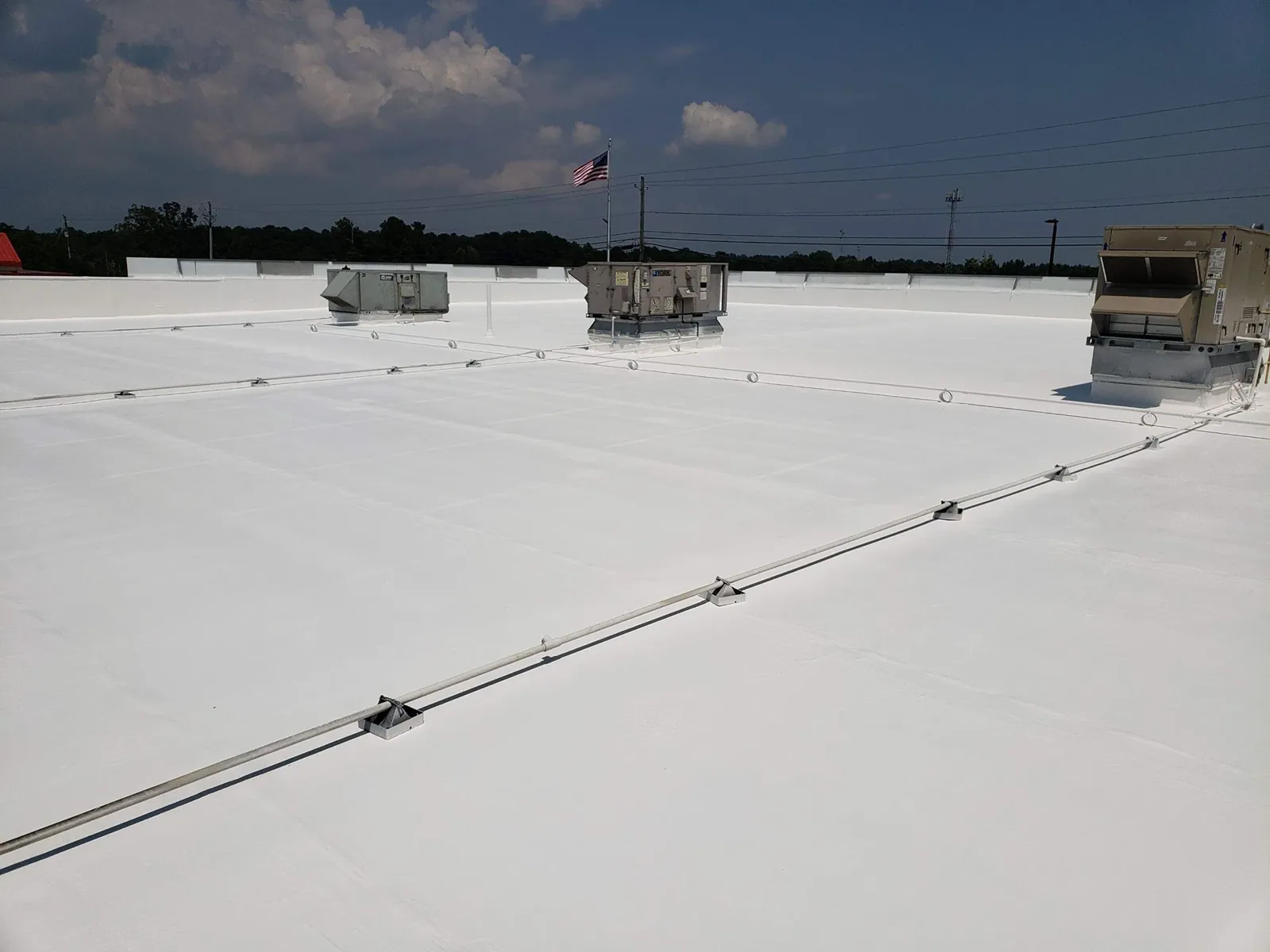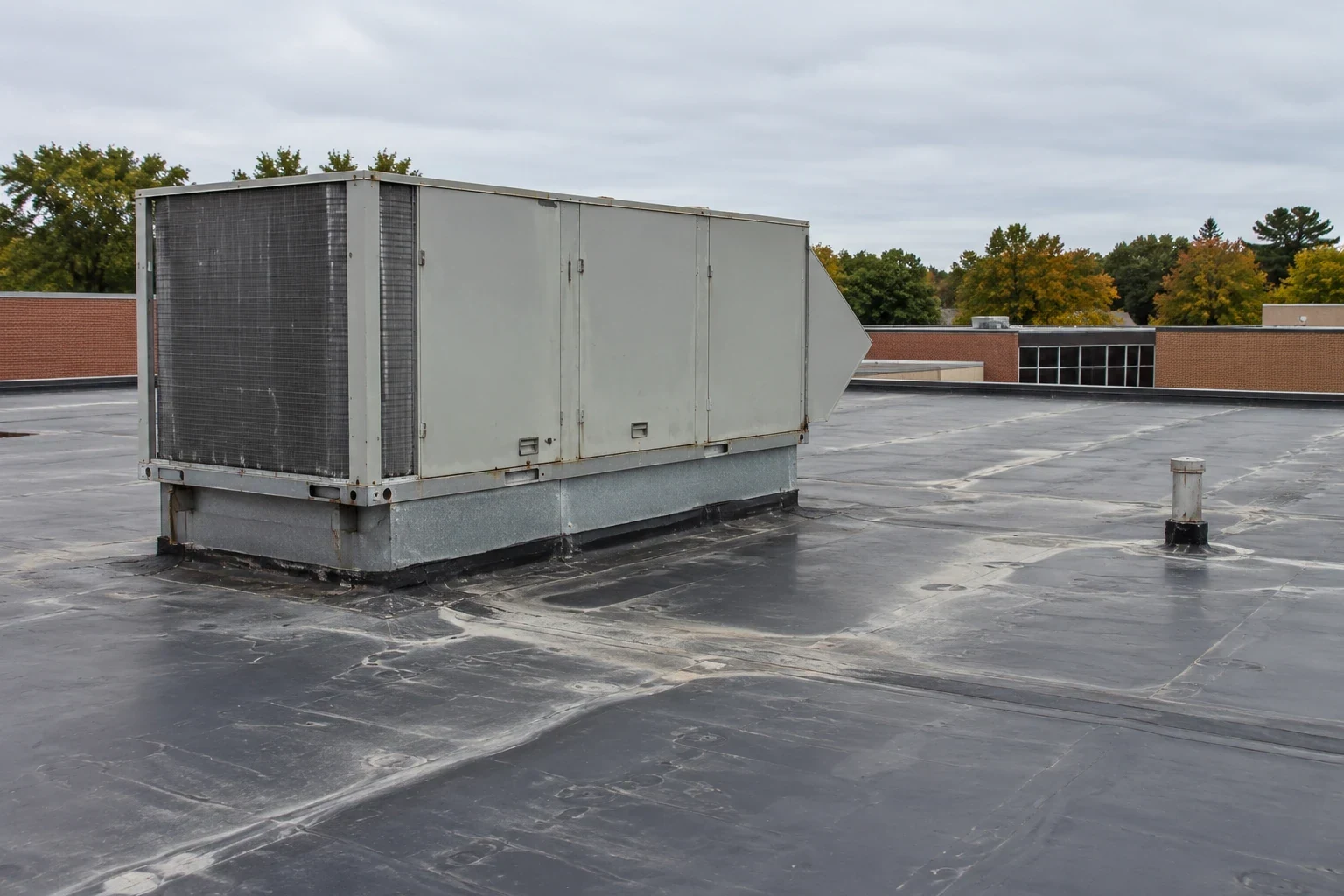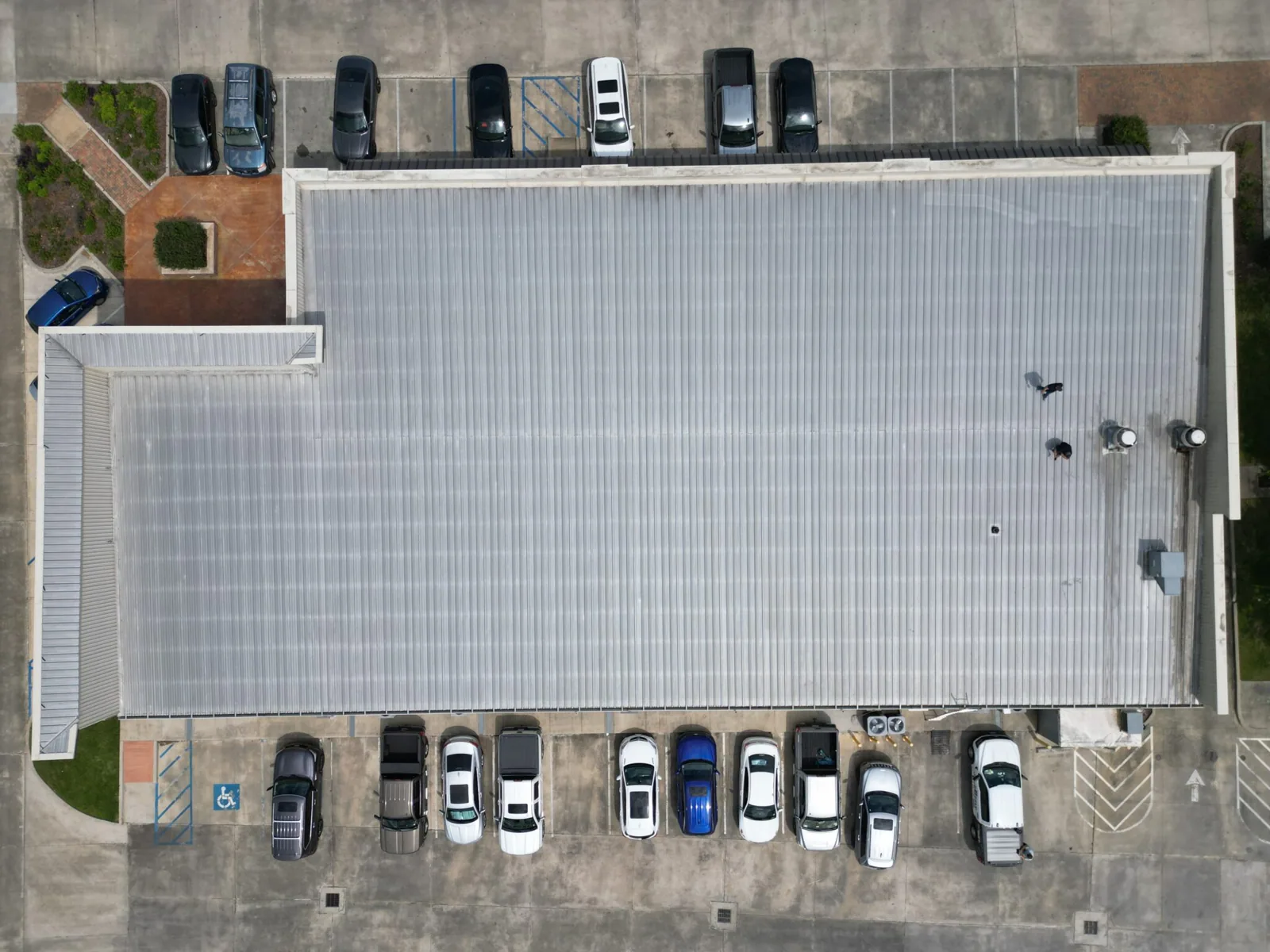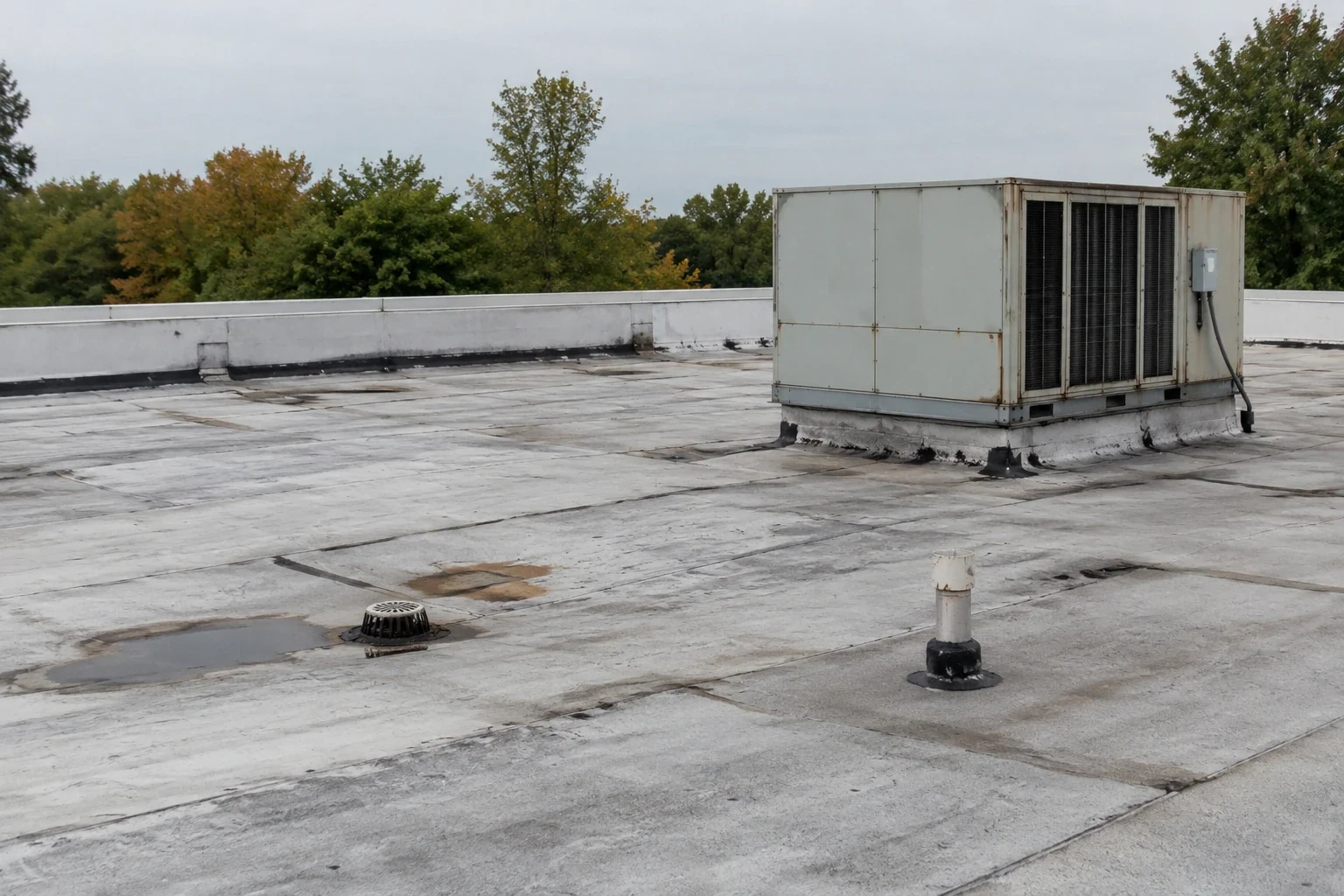
Commercial roofing in Adams Dairy Parkway, Blue Springs, MO begins with an assembly, drainage, flashing, access, and repair-scope review.
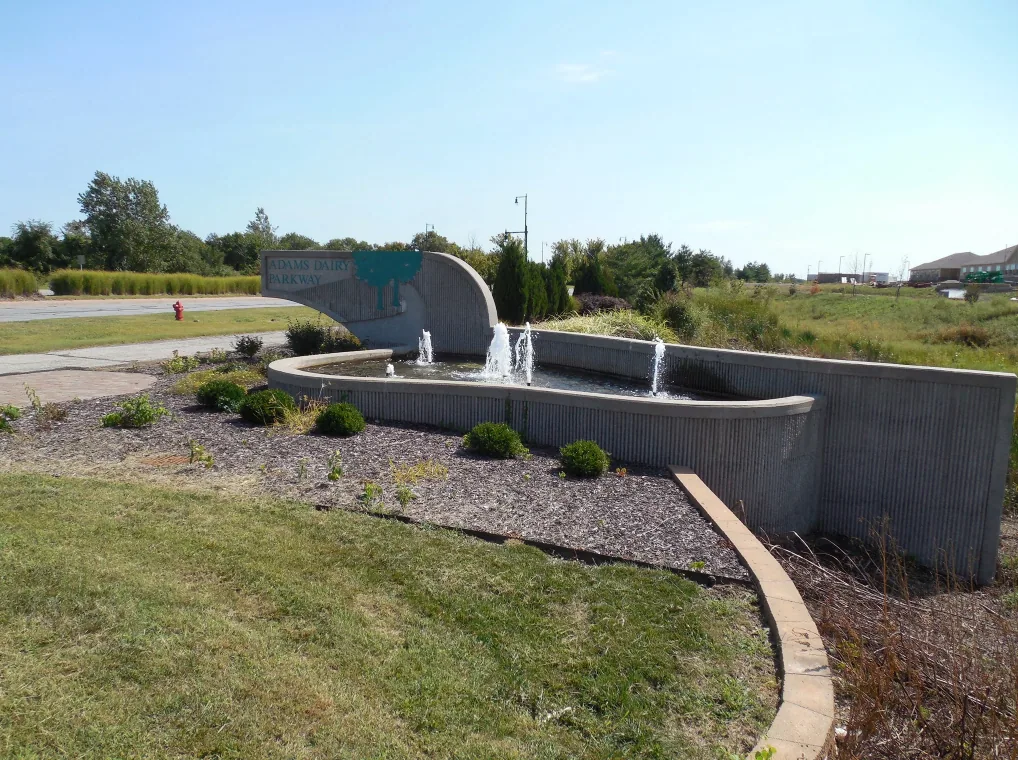
Blue Springs identifies Adams Dairy Parkway as a major corridor with retail, office, flex, and light-industrial uses. That mixture calls for a building-specific roof survey: we record roof height, system, equipment, outlets, edges, and access points before selecting a repair or replacement detail. The corridor’s land-use plan does not determine any one roof assembly.
The first review checks seams, membrane or metal, curbs, edges, drains, and interior leak evidence. We compare roof details with available records and identify where process equipment or later additions may meet the roofing system. Any condition that cannot be verified without testing is recorded as such. The work plan identifies the affected roof zone, material, protection below, and how the opening will be closed.
Coordinate With Production
Manufacturing schedules, deliveries, and equipment movement can affect when a crew can work above or beside an active area. The facility representative identifies production windows, loading rules, safety orientation, work permits, and any restrictions on tools or material odors. We confirm the route and staging location before delivery. If the roof sits above a sensitive process space, the contact specifies interior protection and any required notice before work begins.
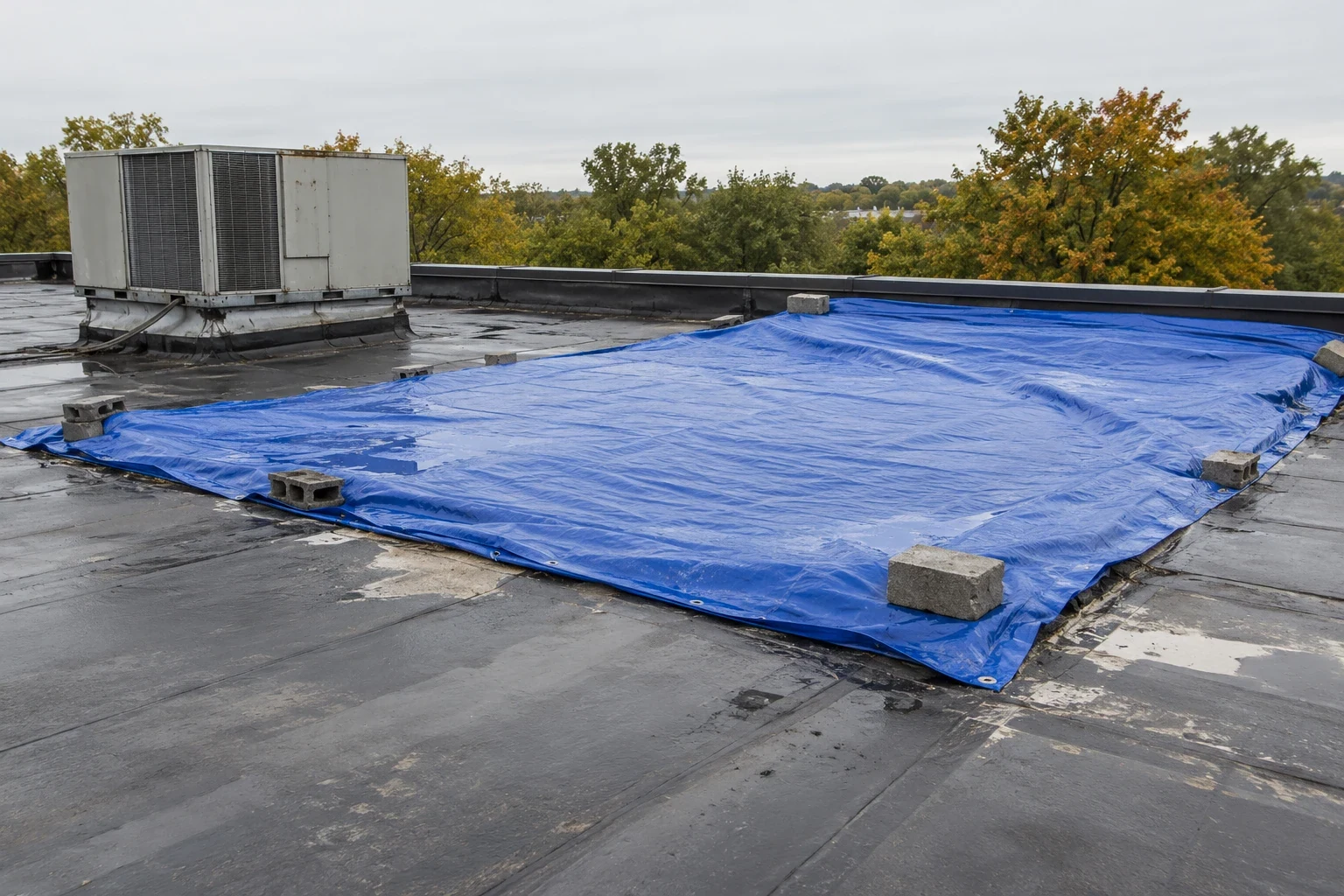
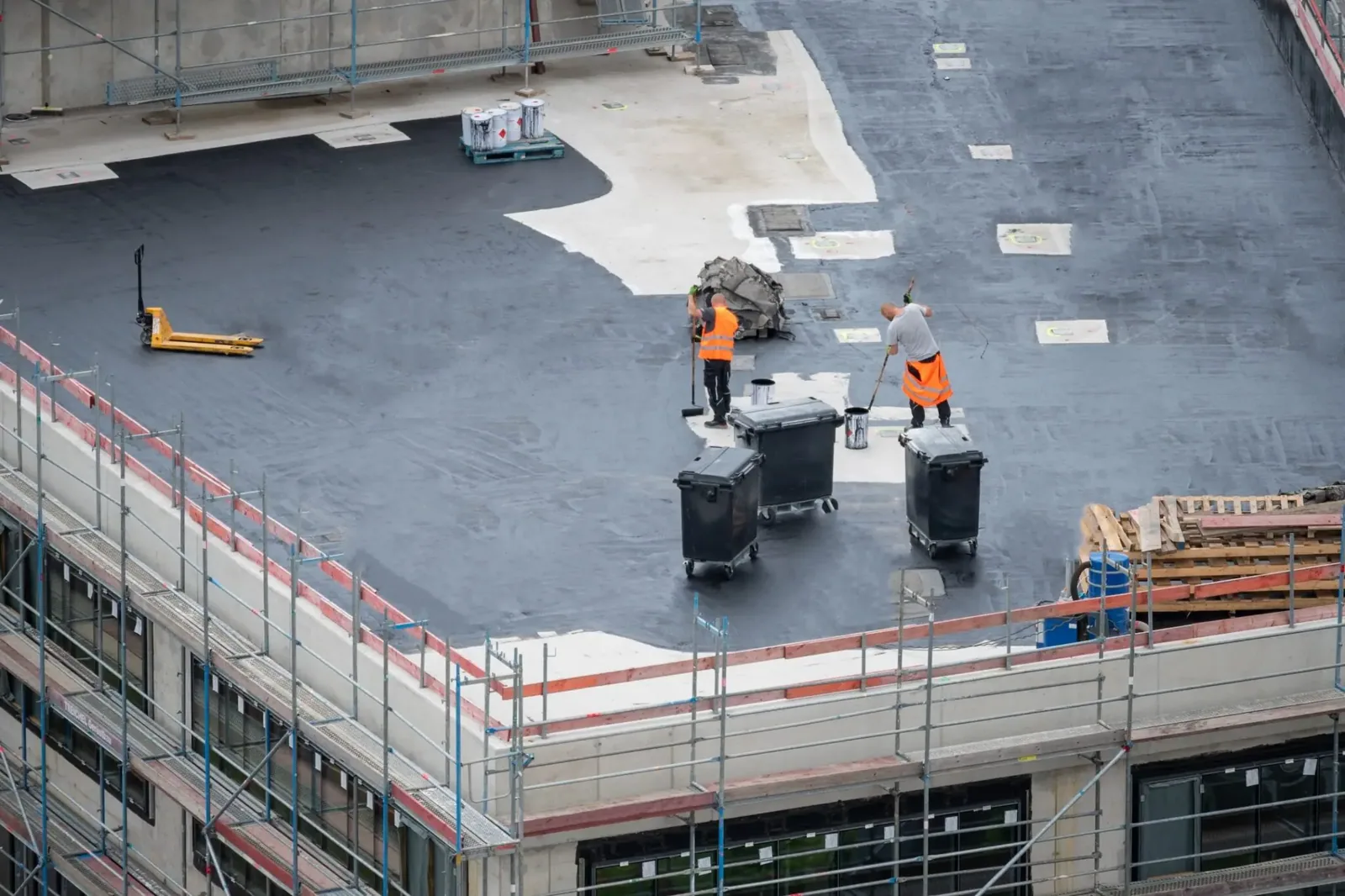
Roof openings are sized to the approved window and expected weather. We stage replacement materials, prepare temporary dry-in, and set a stop point before removing layers. At shift end, the area is secured, drains checked, and debris removed from the roof. Phased industrial reroofing can align zones with production and limit the time an assembly remains open. Changes in operation or weather are communicated before the sequence shifts.
Inspect Equipment Interfaces
Manufacturing equipment may require rooftop ducts, curbs, conduits, or supports, but the actual penetrations must be confirmed at the building. We inspect each interface for flashing height, attachment, movement, sealant condition, and water paths. A new or abandoned penetration can leave an incomplete detail. We compare the roof opening with project drawings and identify which trade owns the final tie-in before a new unit is set.
The field membrane and substrate also need review. We identify the system through seams and exposed edges, and check for prior patches or an overlay that hides old layers. A repair product must be compatible with the installed assembly. Roof equipment curb and support work can coordinate attachment and flashing details, while a roof inspection documents existing conditions before mechanical work changes them.
The Adams Dairy Parkway overlay covers more than 1,750 acres and includes retail, office, flex, and light-industrial uses. That scale does not mean every property shares a roof type. We begin with roof-zone measurements and document panel or membrane seams, edge conditions, curbs, drains, and the access route. Equipment changes should be coordinated before a new penetration is cut.
Track Moisture and Drainage
Water should follow the roof's designed plane to drains, scuppers, and overflow outlets. We check strainers, drain bowls, membrane around clamping rings, and the area where equipment curbs interrupt flow. If water remains, we record its depth and extent and look for a blockage, low point, or deck movement. A process pipe or conduit can also create a path for water to travel before it appears inside.
Interior stains are mapped against the roof above. We inspect upslope seams, flashing, wall transitions, and penetrations instead of treating the stain as the leak source. Where wet insulation is suspected, infrared moisture survey work can identify test areas. A test opening confirms the condition before material is removed across a larger zone. If water is entering an active production area, emergency stabilization is available around the clock while the permanent repair is scoped.
Choose Compatible Repair Materials
Different roofing systems use different seam and flashing methods. A single-ply membrane may need a welded or adhered patch. Modified bitumen and built-up surfaces need compatible plies and surfacing. Metal panels need secure fasteners and details that allow thermal movement. We identify the installed surface, prepare a stable substrate, and tie the repair into material that remains sound. A generic sealant bead does not correct failed attachment or trapped moisture.
Manufacturing operations can generate heat, exhaust, or process conditions that deserve review, but we do not assume what reaches the roof. The facility contact identifies known exposure and equipment changes. We check product data for compatibility before choosing a coating, adhesive, or membrane accessory. If the material is uncertain, we test or specify a compatible system only after confirmation. That keeps the repair suited to the roof and the environment documented for this facility.
For a flex or office building, separate active tenants from the roof area being opened. Identify deliveries, lift location, noise limits, and the person who can approve a scope change if wet insulation or a weak deck appears. A written stop point keeps the building weather-tight when a hidden condition changes the day's work.
Define Repair Versus Replacement
An isolated split seam, puncture, or flashing failure may be repaired when surrounding material is dry and attached. Widespread wet insulation, recurring leakage, corrosion, or deck deterioration can call for a larger scope. We measure the confirmed area and document concealed findings. If opening the roof reveals a condition outside the base scope, the facility team receives photos and a defined approval request before work expands.
A recover is possible only if existing layers, deck capacity, drainage height, code, and attachment permit it. Replacement may be needed to reach a stable substrate or correct several system failures at once. Work duration and price depend on measured area, material, access, production restrictions, protection, disposal, and weather. A repair plan states the affected area and tie-in; replacement planning lists the new assembly and inspection steps.
Document the Facility Condition
A useful closeout names roof zones, installed materials, repaired interfaces, drain checks, and any issue left for a later decision. Photos should show whether work occurred near a curb, duct, or production-related penetration. If access limitations prevented a full review, the record identifies that boundary. The facility can use this information when equipment changes or maintenance schedules are planned.
The Adams Dairy Parkway development overlay district covers more than 1,750 acres. A large planning area can contain separate parcels and operating schedules, so the work plan must name the building and roof zone authorized for service. We coordinate staging and deliveries with the property contact, and keep temporary protection matched to the day’s opening boundary.
The permit record at Eastgate Commerce Center identifies two commercial buildings, and the City's project area on the Noland Road Corridor addresses transportation improvements. Both are different places from Adams Dairy Parkway. The service record remains tied to the inspected parcel, so the owner can follow roof condition without confusing nearby construction with roof work.
Commercial Roofing Questions
Does the product line identify the roof system?
No. Paper packaging and printing operations do not establish roof construction. We inspect the roof and compare available drawings with field details.
Can roof work continue during manufacturing shifts?
The facility contact sets safety and operations limits. We coordinate work zones, access, deliveries, noise, and protection below within the approved schedule.
How do you coordinate a new exhaust curb or conduit?
We inspect the roof interface, confirm which trade completes flashing, and document the final tie-in after the equipment work is complete.
When should a roof be replaced instead of patched?
Testing may show widespread moisture, repeated seam or flashing failures, or substrate damage. We document those findings and compare the broader scope with a compatible repair.