Document commercial roof damage in Independence, MO with dated inspections, measured repair boundaries, temporary protection, and clear claim records.
Restoration work depends on a clear record of what happened at the roof and what condition was present before the event. An adjuster needs the location, date, assembly, observed damage, photographs, and measured repair area. Independence's weather record includes a 2017 east-side hail report and a separate 2022 EF-2 tornado observation near Buckner. Those reports provide event context at recorded locations. We inspect the property and document its actual roof condition.
Stabilize Water Entry First
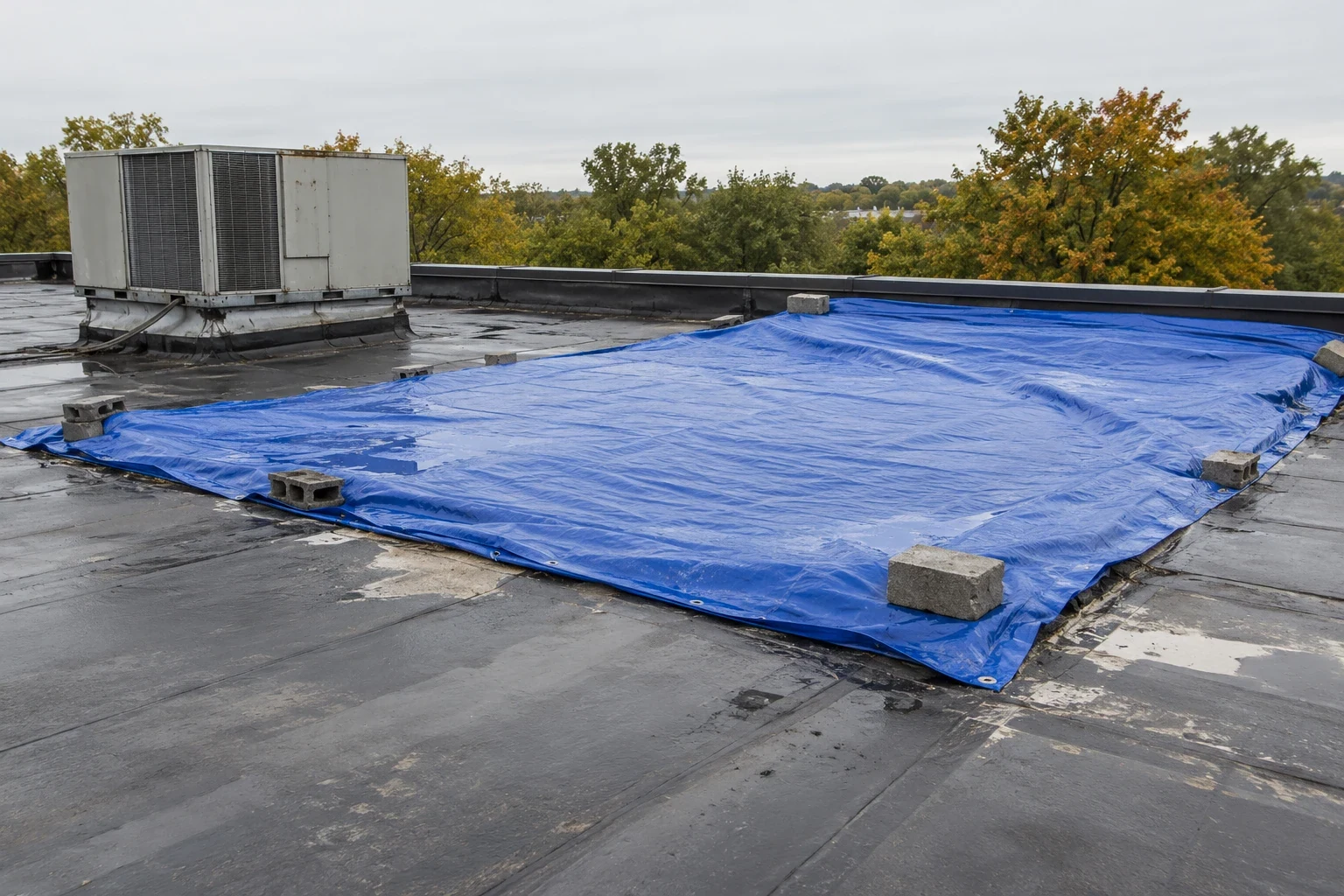
Active water entry needs prompt interior protection and a secure roof closure. Identify the affected room, date, weather, and whether water is continuing. Photograph the interior before moving contents when practical. At the roof, mark the opening, nearby seams, drains, curbs, edge metal, and any damage to equipment. A temporary measure should be labeled as temporary with its location and return work.
A stabilization response can limit additional exposure while the permanent repair is evaluated. The work record should say which materials were applied and whether the roof remained watertight after the crew left. If the source is uncertain, keep that question open and schedule the additional access or testing needed to trace it.
Emergency access, tenant notice, and site safety affect timing. The owner or property manager sets entry and protection rules. A property manager can coordinate interior access and tenant communications, while the restoration team documents the roofing work. Keep those roles clear in the file.
Separate Event Damage from Existing Wear
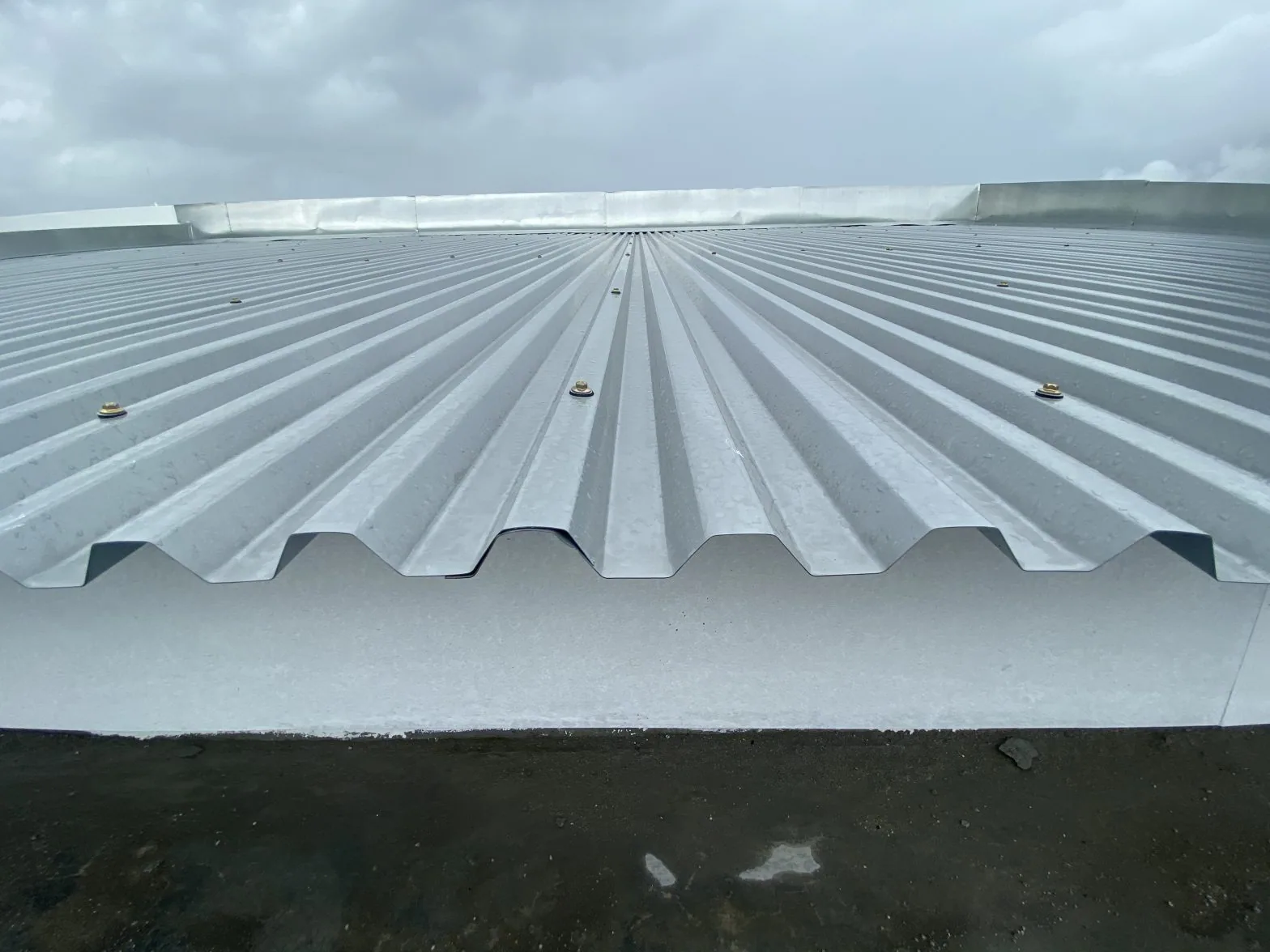
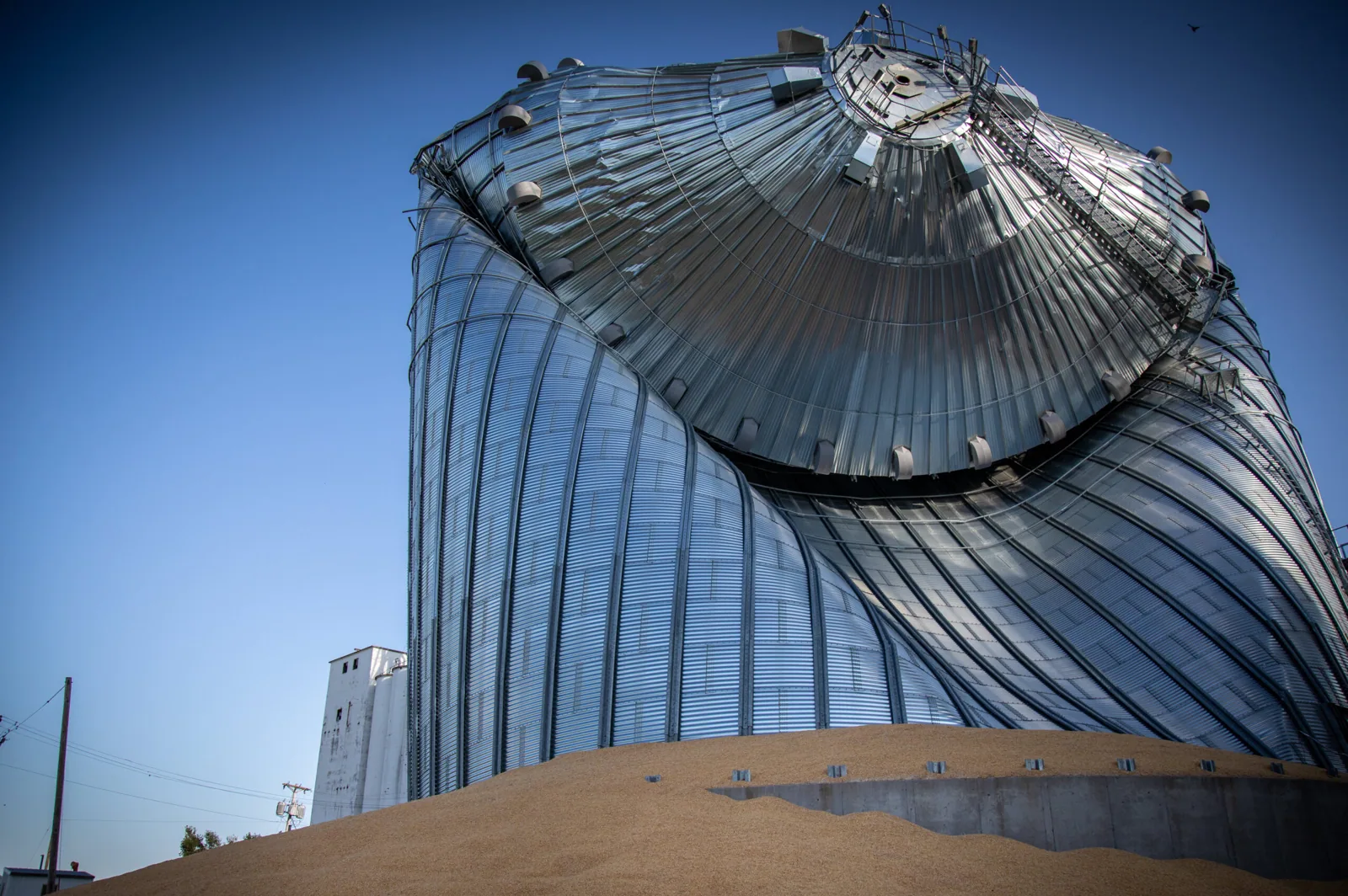
Inspect the roof by area and system. Record membrane punctures, seam openings, panel dents, displaced edge metal, damaged flashing, broken supports, and impacts at rooftop equipment. Compare affected details with adjacent areas that appear undamaged. A storm's proximity does not show which roof received impact, and ordinary aging can exist alongside a new event.
On March 6, 2017, 1.75-inch hail was observed northeast of Independence, with quarter-size hail at Centerpoint Medical Center. In June 2022, an EF-2 tornado crossed near Buckner, and wind damage was observed northwest of Independence. Neither event record proves damage to a different property. At a site near the event path, photograph direct findings and identify the roof section and elevation.
Use a consistent photo log: overall context, close detail, scale where useful, roof-area label, direction, and date. Do not photograph only the damaged spot; adjacent system conditions help show the repair boundary. An infrared scan or core can evaluate concealed moisture when authorized. A condition report can preserve those findings alongside the test limits.
Connect Evidence to the Repair Scope
A claim estimate should identify the damaged component, quantity, access method, removal depth, material, and the tie-in needed to restore the assembly. If only one panel or membrane section shows impact, define the area and how replacement connects to surrounding material. If attachment or substrate damage is suspected, state the test and evidence that support a larger scope.
Separate event-related work from deferred maintenance and code or design upgrades. A changed condition does not automatically make every adjacent component part of the same repair. The owner and claims representative review applicable coverage; the roofer documents the physical work and quantities. For each measured quantity, retain the sketch, dimension, roof-area label, and a photograph that shows the feature being counted. Separate perimeter flashing, field membrane, curb work, and removal so review does not collapse them into one lump sum. Identify any work that remains an allowance and the observation that would convert it to a measured item. Claim documentation can organize roof photos, measurements, and a scope without promising a coverage decision.
Where the same roof has prior patches or coatings, identify them before selecting material. A repair must bond to a stable substrate and remain compatible with the installed system. If concealed moisture is found during removal, photograph the exposure, measure the affected area, protect it, and request direction before expanding the work.
Keep Independence Event Records in Context
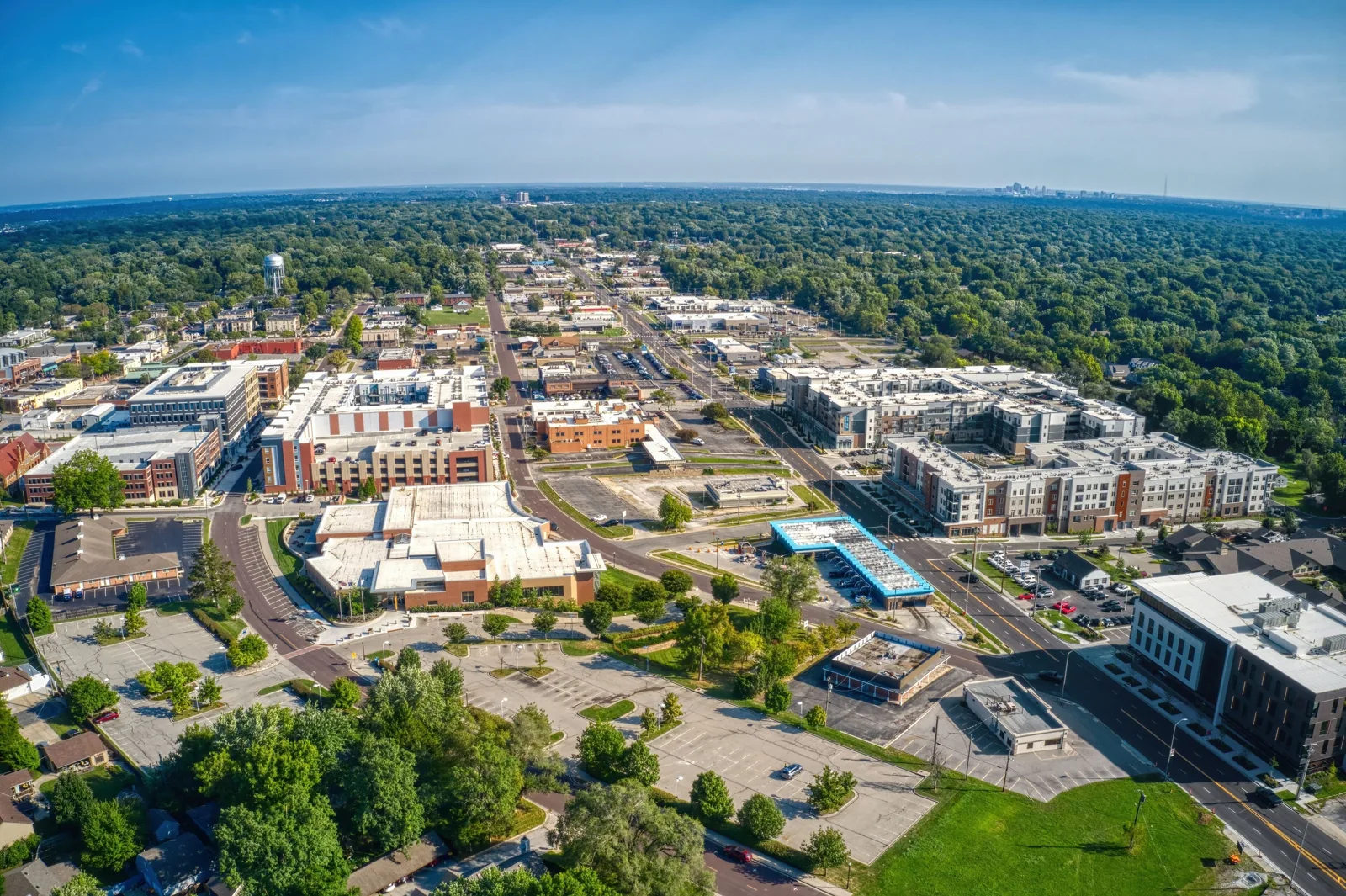
Centerpoint Medical Center is a major employer in Independence. The 2017 hail observation at that facility does not establish damage at another property. Retail around Historic Independence Square and medical operations at Centerpoint Medical Center both require the inspection record to identify the exact address and roof zone.
Kansas City climate normals come from the airport observation station, not from a roof or a storm claim. Temperature and seasonal weather help explain why metal, sealants, and membranes move. They do not identify the cause of a particular tear or leak. A property in Grandview, Missouri needs its own inspection; event records for other locations do not establish its roof condition.
When weather reports cite several nearby observations, retain the exact reported location and date in the claim file. Do not broaden an event radius or describe impacts that the report does not document. A property survey can then establish the connection, if any, between the event and observed conditions.
Close the File with Measured Work
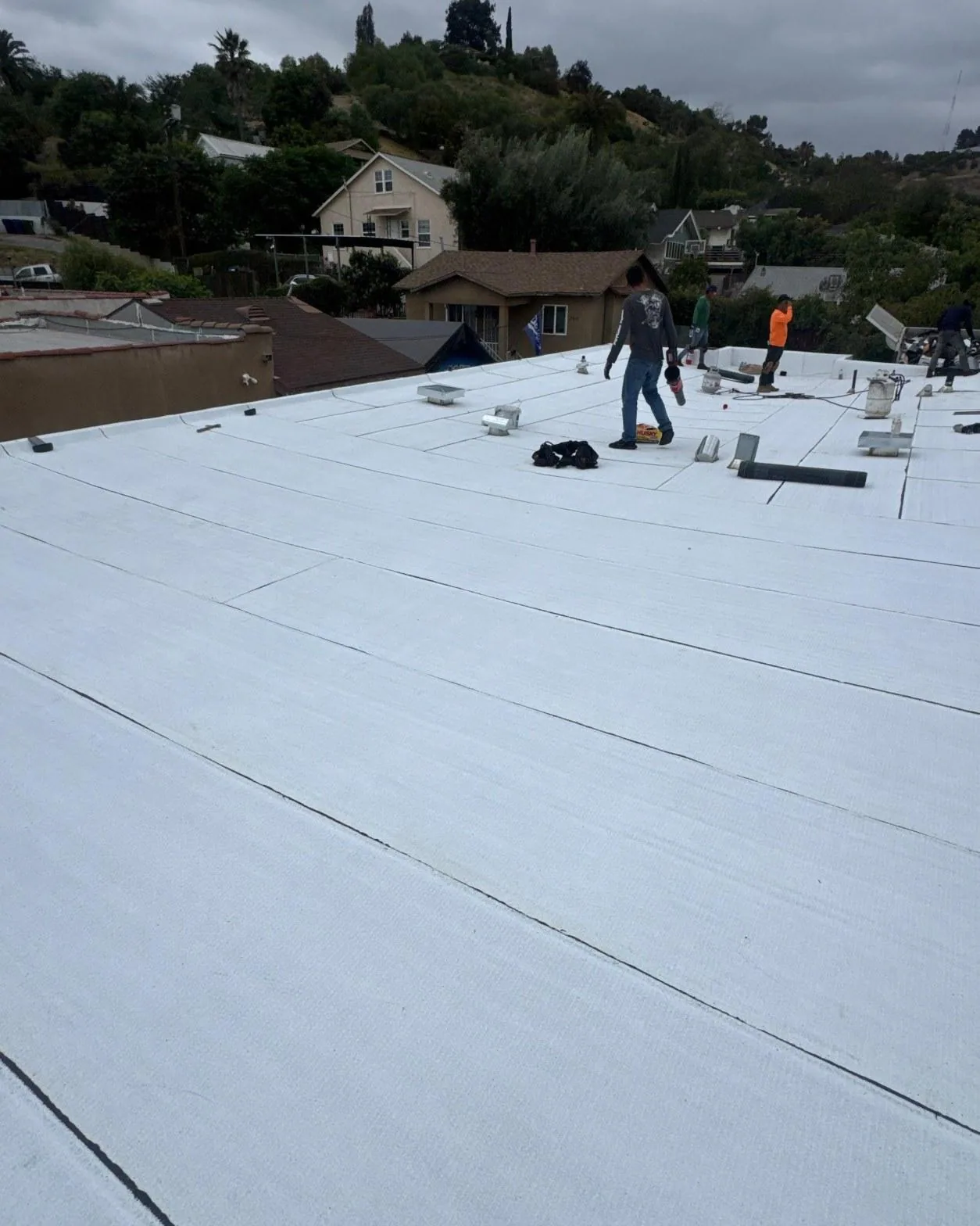
Permanent repairs should restore the assembly, not only cover the visible mark. Confirm compatible patch materials, seam preparation, flashing terminations, fastener replacement, and edge detail. If the substrate is wet or unstable, expand the repair only where inspection supports it. Replacement may be needed when damage affects a larger section or the system cannot accept a durable repair.
The estimate should disclose assumptions about access, removal, protection, equipment lifts, disposal, and hidden layers. A replacement scope should say whether wet insulation and damaged deck are included or measured after exposure. Testing can reduce uncertainty, but the report must show where tests were taken and what they revealed. Hail repair planning follows observed impact and system compatibility.
Closeout includes before-and-after photographs, repair locations, materials, test results, temporary measures removed, and any open condition. General contractors can use the same evidence for schedule and change review; the claims representative controls coverage decisions. Schedule a roof inspection in Independence to document cause-related conditions and prepare a measured scope.
A useful restoration file preserves the sequence from first report through permanent repair. Keep the original interior description, inspection date, weather information available to the owner, roof-area map, and photographs together. Mark which damage was visible without opening the assembly and what became apparent only after removal. When emergency protection is installed, record its location, extent, and any return visit needed; do not describe it as a permanent repair. If additional scope is proposed, show the newly exposed condition and measured quantity so the owner and carrier can review the change. Once permanent work is complete, document the materials, tie-ins, and any area not repaired. The resulting record supports a clear discussion of construction performed while leaving policy interpretation to the insurer.
Commercial Roofing Questions
Does a nearby storm report prove my roof was damaged?
No. It locates a reported weather observation. The assigned roof must be inspected for direct impact, and the report should distinguish fresh damage from existing wear.
What should be included in the first response record?
Record the affected room, date, active water, roof area, temporary material, photographs, and any return work. Keep the permanent repair scope separate from initial stabilization.
Can the roofer determine whether insurance will cover a repair?
The roofer documents roof conditions, repair methods, and quantities. The insurer and policy terms determine coverage. A scope should avoid treating a technical finding as an approval decision.
How is concealed damage handled during tear-off?
Photograph and measure the exposed condition, keep the area protected, and follow the owner's approval process before adding removal or replacement. Record the test location and material found.