Compare a commercial roof recover with tear-off in Independence, MO. We check moisture, attachment, drainage, code, and the added roof load first.
A second roof layer can shorten a project, but only when the existing assembly can carry it. The Adams Dairy Parkway development area in Blue Springs includes retail, office, flex, and light-industrial uses. On any roof, overlay eligibility turns on the observed deck, fasteners, insulation, and equipment load. We inspect the current roof before recommending a recover. Moisture, trapped layers, poor drainage, or loose attachment can make a new surface hide a problem instead of correcting it. The decision is specific to the assembly and the applicable code.
Existing-Roof Condition
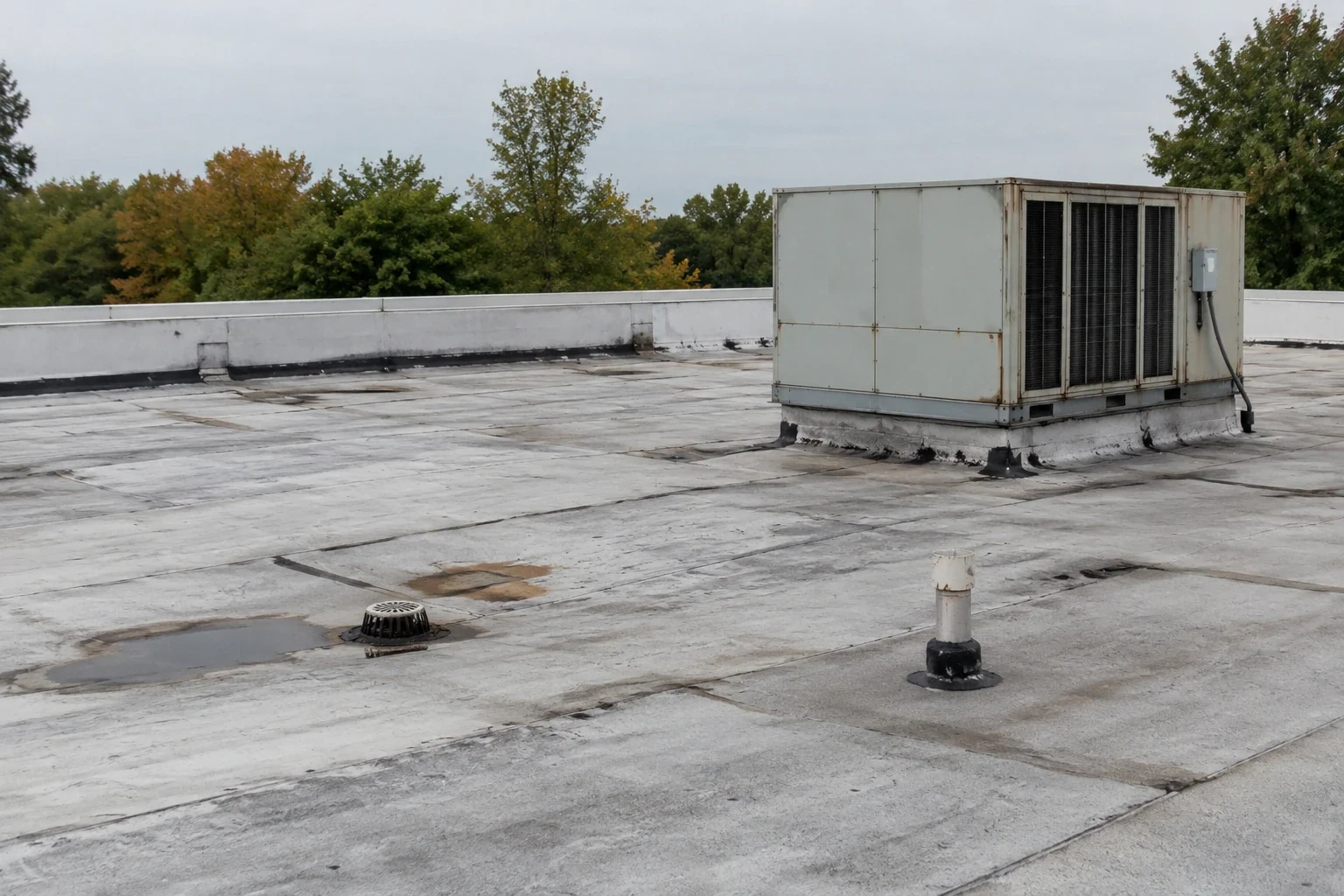
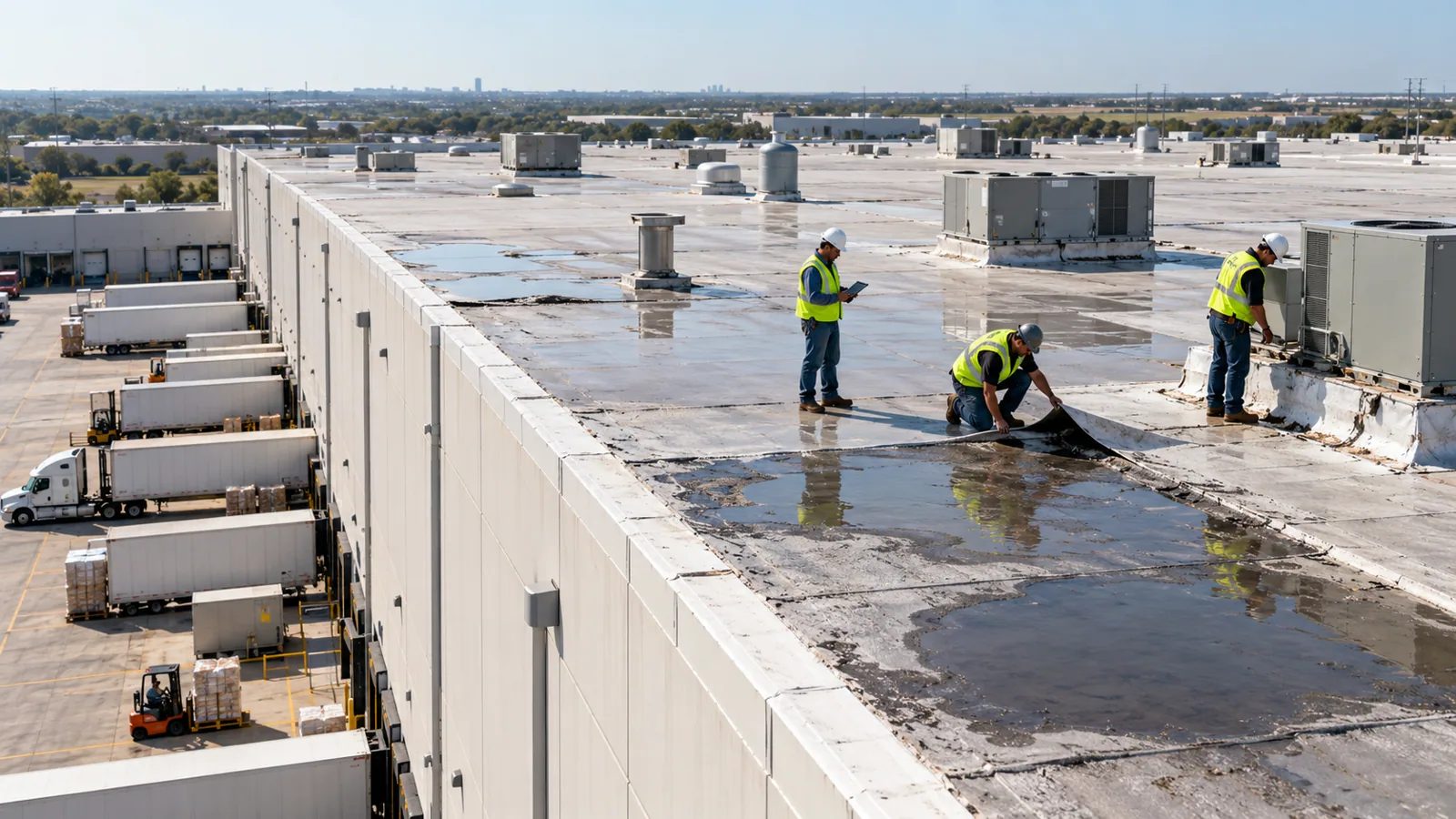
We first identify how the current membrane is attached and what layers lie beneath it. A recover requires a stable surface and a substrate that can support the proposed assembly. We examine seams, blisters, ridges, penetrations, perimeter edges, and areas where ponding suggests a drainage issue. Core samples help reveal wet insulation and the condition of lower layers. If water has migrated between layers, the visible leak point may not show the full removal boundary.
Moisture changes the answer. Wet insulation can lose thermal value and compromise attachment. Covering it adds another layer without removing the cause. We map test locations, compare readings with visible conditions, and identify areas that require opening. An infrared moisture survey can help target suspect zones on a large roof, but confirmation may still require a core cut. The proposed recover must address the verified condition, not just the surface appearance.
Independence has a mix of industrial, medical, retail, education, and civic buildings. That variety matters because loading and access differ from one structure to the next. MCC Blue River in Independence hosts career programs and public-safety training. Those uses inform access coordination, but do not establish what the roof can accept. We inspect the actual deck and rooftop layout.
Code and Added Load
A recover adds weight and changes the roof assembly. We review the deck capacity, existing layers, insulation plan, and attachment method before proposing it. The new system must transfer wind forces through the existing structure. Fasteners cannot perform as intended if the substrate below them is deteriorated or the old assembly has separated. Perimeter conditions, corner zones, and rooftop transitions need a design that works with the whole load path.
Before choosing an overlay depth, we compare the existing roof with Independence’s adopted 2024 building and existing-building codes; the city separately publishes local amendments for energy and construction. We coordinate the scope with permit review. Existing layers and proposed insulation can affect the compliance path. If the recover cannot meet structural, energy, or fire requirements, removal may be the viable route.
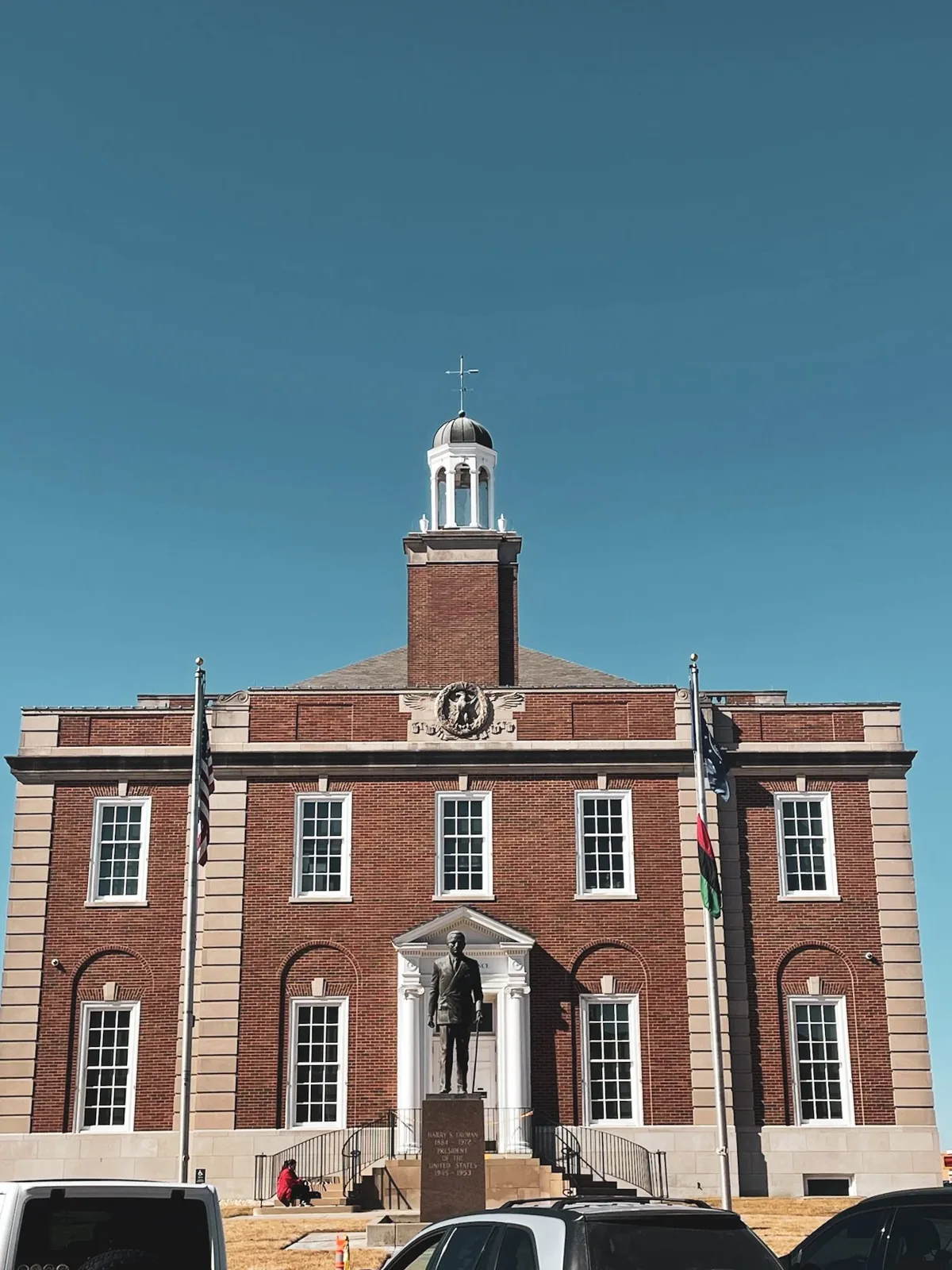
The city’s redevelopment work includes the Historic Independence Square and the Noland Road corridor. These areas include varied commercial properties and active investment. For a building near Historic Independence Square or Noland Road, the work plan should also account for staging and tenant access. A recover may reduce demolition debris, but it still requires controlled installation and safe access around roof edges, mechanical equipment, and public-facing entrances.
Drainage Plane
New membrane cannot flatten a roof that holds water. We inspect drains, scuppers, overflow paths, crickets, and the slope toward each outlet. A recover can bury a low point if the new insulation layout does not correct it. We compare the existing drainage plane with the proposed build-up and verify that edges, curbs, and door thresholds retain the required clearances. If the roof has chronic ponding, that condition belongs in the scope instead of being left under a fresh surface.
Freezing conditions add another demand. Kansas City climate normals list a January normal low near 20 degrees, while summer normal highs approach 89 degrees in July. That movement tests flashing and changes how water behaves at seams and transitions. We check whether the added layers will affect expansion joints, metal terminations, and equipment curbs. A recover detail should maintain drainage and allow compatible materials to move together.
Hail exposure also belongs in the roof history. A March 2017 severe-weather report describes quarter-size hail at Centerpoint and a larger stone report east-northeast of Independence. Neither observation establishes roof damage at another site. During evaluation, we document punctures, fractures, impact marks, and displaced flashing on the roof under consideration. Suspect areas should be tested before they are concealed.
Recover or Tear-Off
A recover can reduce tear-off work when the existing layers are dry, attached, and suitable for the new system. It may also reduce disruption inside an occupied facility. Those benefits depend on the roof's condition and assembly. A roof with wet insulation, multiple unstable layers, deteriorated deck, or unresolved leakage generally needs more investigation and may require removal. We explain the construction limits so the owner can compare initial work with the remaining service and maintenance needs.
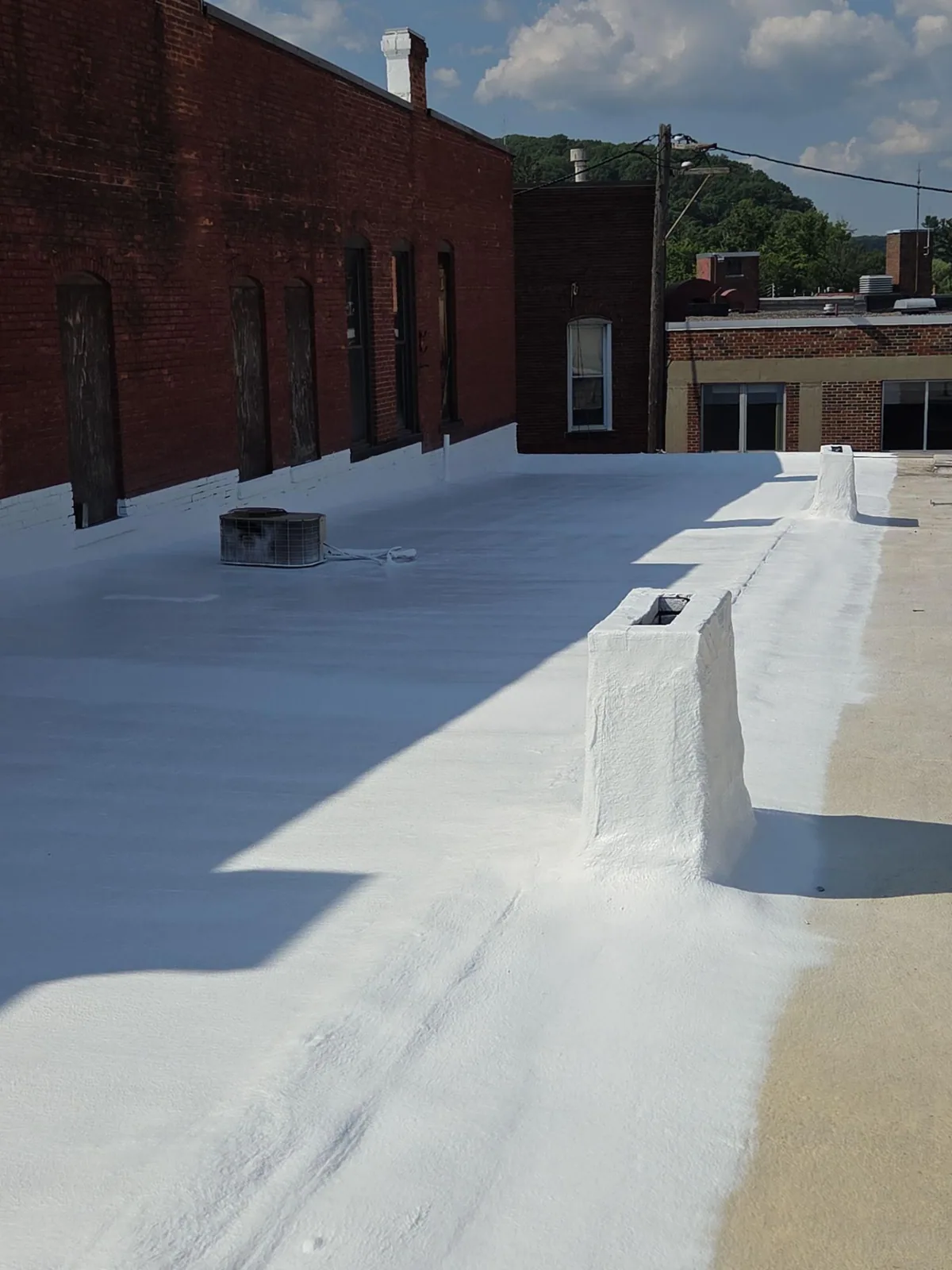
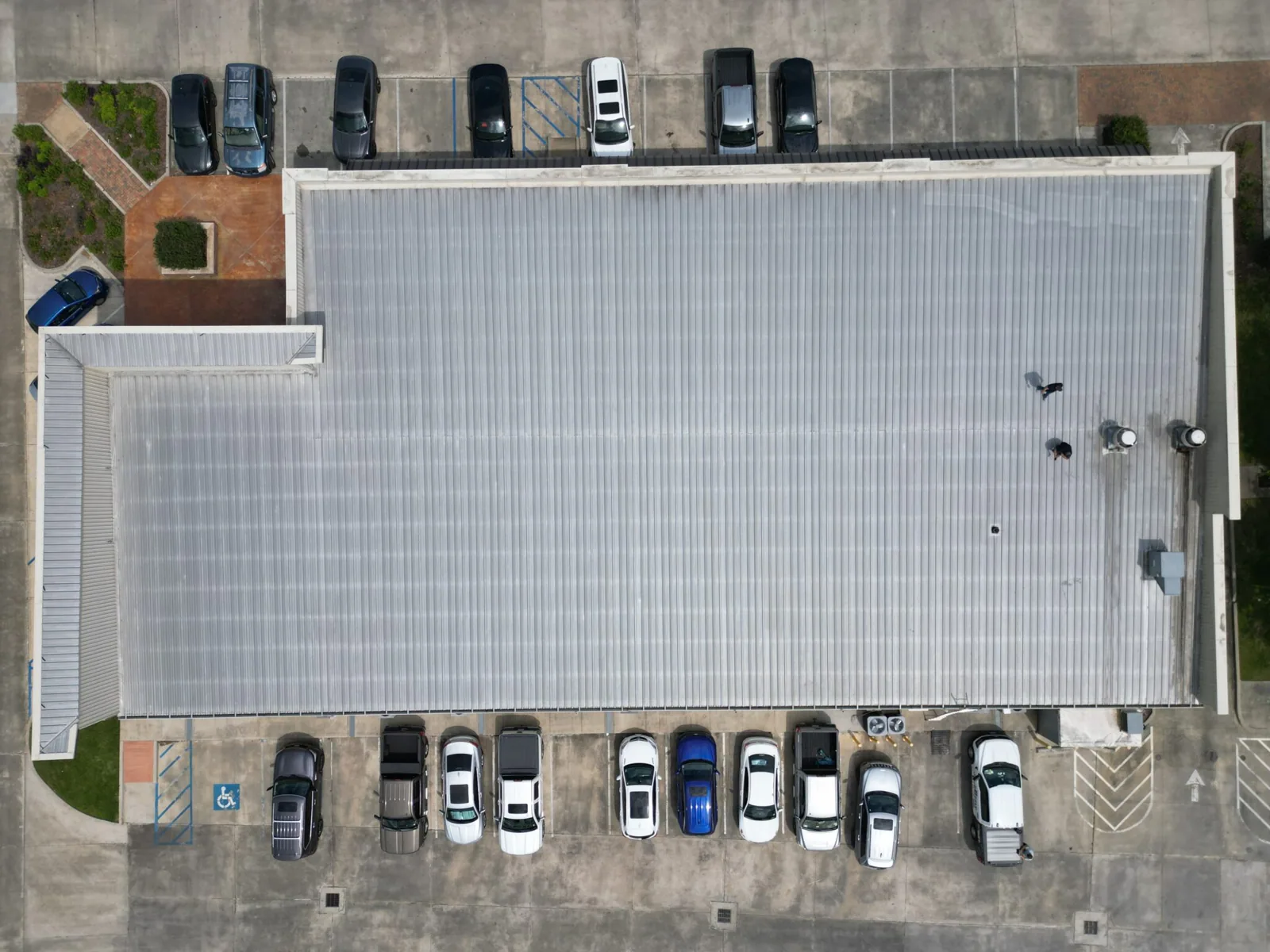
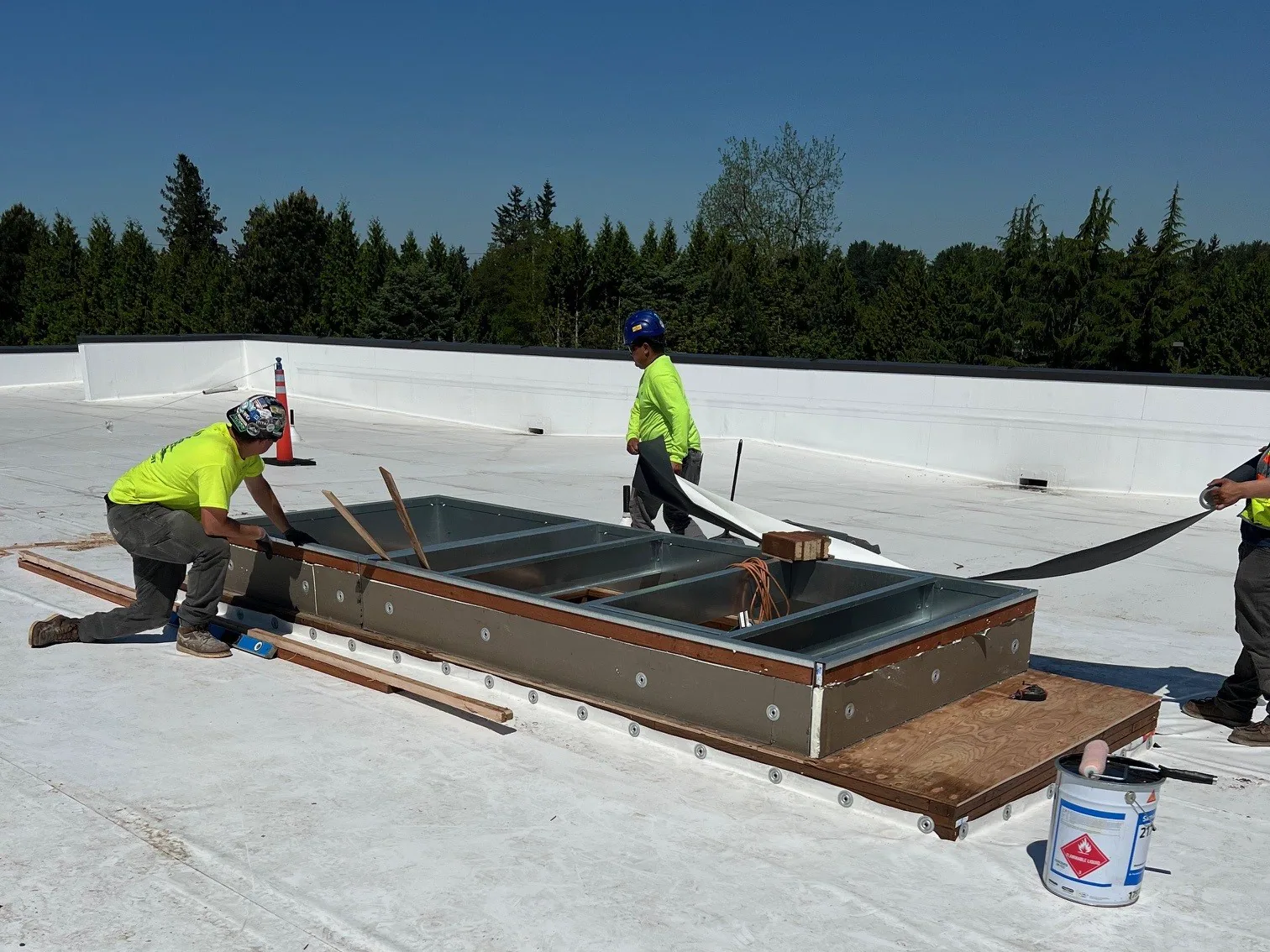
Material compatibility matters at the interface. The overlay may require a separator board or other approved substrate between old and new materials. Fastener selection, adhesive behavior, and manufacturer requirements depend on the specific system. We review TPO, PVC, EPDM, KEE, modified bitumen, and coating options only where they fit the existing roof. For an older metal roof, a retrofit assembly may address panel geometry differently than a membrane recover.
Where full removal is justified, roof replacement provides access to the deck and insulation for repairs. A hands-on inspection sets the condition record. If active water entry is part of the decision, leak tracing can locate the water path before we define a larger project.
Installation Sequence
Recover work still exposes the roof during preparation and installation. We divide the surface into work zones, clean and prepare the substrate, repair defects that would telegraph through, and install new layers in a controlled sequence. Open sections are limited to what can be secured and closed under the day’s conditions. Penetrations and equipment curbs need tie-ins that do not trap water between the old and new surfaces.
Occupied facilities need clear routes for materials, lifts, and maintenance staff. US 24 connects Independence with eastern Kansas City, Lee’s Summit, Blue Springs, and Grain Valley. Along that route, as elsewhere, property access and public activity can shape staging. We coordinate work limits with the site contact, protect roof openings, and keep critical service paths available where the project allows. When conditions change, the crew documents the revised boundary and dry-in plan.
After installation, we review seams, terminations, drains, and transitions. The owner receives photographs and notes that identify the assembly and any remaining conditions. A roof condition report helps keep that record useful for later maintenance. For multi-building portfolios that include Independence Center or industrial properties east of town, consistent documentation makes differing roof decisions easier to compare.
Commercial Roofing Questions
What conditions rule out an overlay?
Wet insulation, unstable layers, weak deck attachment, unresolved drainage problems, or added load beyond the structure's capacity can make a recover unsuitable. We verify each condition before designing the new roof.
Can a recover fix ponding water?
It can improve drainage when the design adds appropriate slope and preserves outlet capacity. We inspect drains and low areas first. Simply covering a depression can leave water standing at the new surface.
Does a recover avoid checking the deck?
No. Attachment and load pass through the existing assembly to the deck. We inspect or test the layers and substrate so the new system has a sound base and a documented removal boundary.
How do you compare a recover with full replacement?
We compare moisture, deck condition, layer stability, code, added weight, drainage, and tie-in details. If those conditions support an overlay, we describe its limits; if they do not, we price removal as the corrective path.