Repair open seams on commercial roofs in Independence, MO with system-specific testing, substrate checks, and a documented boundary for permanent work.
A seam is a narrow joint carrying a large share of the roof's water control. On a membrane assembly, the lap joins adjoining sheets. On a metal roof, sidelaps and end laps accommodate a different panel system. At an Independence property near Truman Road or Independence Center, a visible split tells us where to begin, not how far the separation runs. We identify the roof material, inspect the length of the joint, and test the attachment before selecting a repair.
Identify the Seam System
Heat, cold, foot traffic, poor preparation, and movement can weaken a seam. A membrane lap may have contamination in the weld area, a short bond, or an edge lifting from the sheet below. Metal panel joints may loosen as panels move or fasteners back out. A coating can crack at a seam when it bridges a joint that still moves. These conditions need different repair details. We do not apply one patch method across every material.
First we identify whether the surface is TPO, PVC, EPDM, modified bitumen, coating, or metal. We look for prior repairs, changes in sheet direction, drains, curbs, and movement joints nearby. Independence's commercial uses include manufacturing and retail, but an employer category does not establish the roof at a particular address. The field survey records the actual assembly. A hands-on roof inspection helps document where a seam opens and what holds the surrounding layers.
The seam must be dry and clean enough for testing. On a thermoplastic membrane, a probe can find an unbonded edge, and a test weld helps establish repair settings. On EPDM, the splice tape and primer condition matter. Metal laps require attention to fasteners, sealant, panel movement, and water direction. The selected repair needs a sound bond surface and support beneath it. If moisture or soft cover board reaches the lap, a surface patch will not restore the assembly.
Follow the Opening
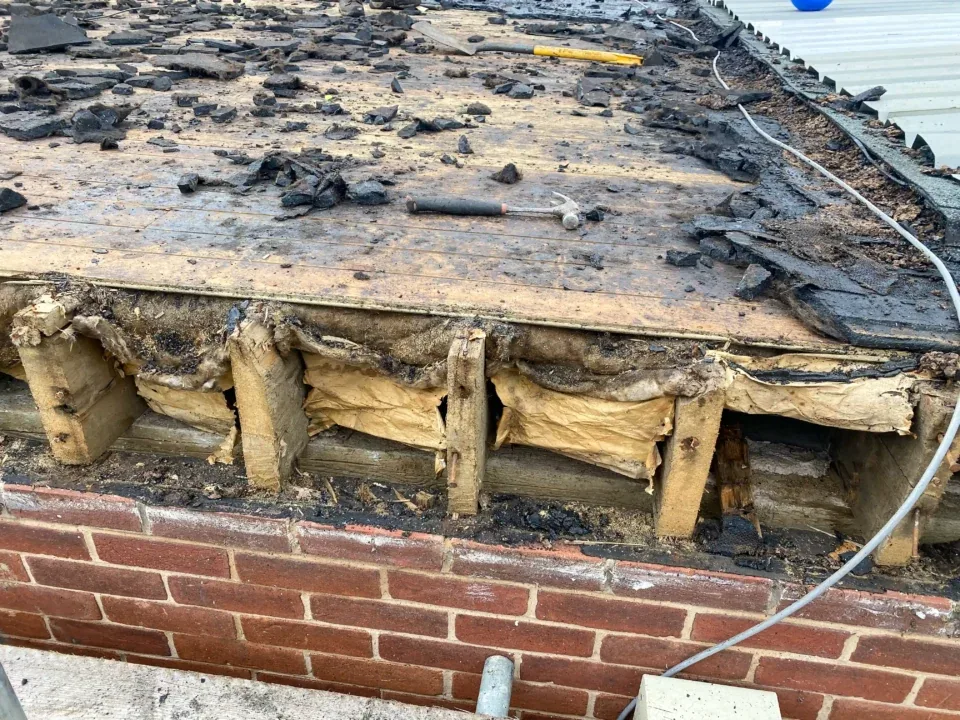
We map the full joint and note where it changes direction or crosses a curb. Then we compare the opening with interior evidence. Water may enter at a seam and travel across the deck or insulation before reaching a room. A stain close to a joint is useful, but not conclusive. Infrared imaging, test cuts, or selective removal can show whether moisture has spread. The inspection record separates a confirmed open lap from an area that still needs testing.
Kansas City metro climate data describes repeated seasonal change: a normal January low is 20 degrees, while normal summer highs approach the upper 80s. Expansion and contraction can strain transitions and exposed laps. Those are regional station records, not measurements at this roof. We use them as context, then check the panel, sheet, attachment, and substrate in front of us. At higher-risk areas around equipment or parapets, the water path may cross seams and flashing together.
If water is active, control interior exposure and arrange temporary protection suited to the surface and weather. Emergency calls are answered around the clock, including holidays. Temporary protection can limit further water entry when safe access is available. We mark any temporary repair and the condition it covers, then return to complete the system-specific test when the roof is dry and safe. Leak-path investigation can connect an interior report with roof evidence before permanent work is priced.
Match the Repair to the Material
A thermoplastic lap may need cleaning, controlled hot-air welding, and a probe check after cooling. A field patch needs rounded corners, sound weld width, and no trapped debris. EPDM often needs removal of failed material, primer, splice tape, and a cover patch sized for the movement and water exposure. Built-up or modified bitumen seams call for compatible bituminous materials and attention to the granule or surfacing condition. Metal joints may require re-fastening or replacement of a failed panel detail. The material manufacturer's published procedure governs product-specific installation.
Repair limits should extend beyond loose or unbonded material to a verified sound edge. If a seam repeatedly opens, inspect attachment, substrate movement, and ponding before closing it again. A TPO assembly and an EPDM assembly use different joining methods. We check compatibility and prepare enough surface for a dependable tie-in. If the joint sits beside a drain or parapet, correct the adjacent drain detail or perimeter metal within the scope when it also interrupts drainage.
Cost and timing depend on seam length, roof height, access, material, preparation, and any wet layers that must be removed. A few short openings on a dry roof may fit a local repair. Repeated separation across roof zones may point to broad attachment or aging. In that case, compare local work with recover feasibility or replacement planning. A recover only makes sense when the existing roof is sufficiently dry, stable, and compatible with the new system.
Keep the Scope Measurable
The repair scope should identify each seam by roof zone, length or count, membrane or panel type, preparation, material, and testing method. It should describe how adjoining flashings and terminations will be treated. We photograph the failed lap before work, show the substrate where opened, and record the completed tie-in. Concealed wet insulation or a damaged deck may require a separate decision after removal. Keeping that boundary explicit prevents a local seam repair from being mistaken for correction of every roof condition.
At a property near Truman Road or Independence Center, operating hours and access routes can shape how roof work is staged. The address does not establish a storm-related seam failure. If weather may have contributed, we record direct evidence such as impact marks, displaced flashing, or a lifted lap. Wind-related separation and impact damage should remain distinct observations in the repair record.
A roof near Independence Square may have access and staging limits shaped by nearby commercial activity. A manufacturing property may have work-zone restrictions around active operations. The site contact confirms those conditions before mobilization. We can divide a larger repair into dry-in sections and record each completed seam before crews move to the next area.
Verify the Joint
Before calling the work complete, we verify the seam with the method suited to its material. A probe checks a welded edge. A visual and hand check can identify an incomplete splice or lifted patch. Metal repairs need fastener and water-shedding review. The final record shows the repair boundary, test results, and any adjacent condition that remains open for follow-up. That evidence helps the building team distinguish repaired work from roof areas that were not part of the scope.
Schedule a commercial roof review in Independence to identify the seam system, check the substrate, and set a measurable repair limit. If openings continue after repair, the next inspection should test the cause: movement, adhesion, attachment, moisture, or drainage. A new cover over an untested seam can bury the same failure mechanism.
Where seam failure overlaps a visible leak, we coordinate the roof-level repair with interior observations and water-path tracing. A repaired lap should not close off a path for water already held in the assembly. We identify whether drying, insulation removal, or a follow-up moisture check is needed before the roof zone returns to service.
Commercial Roofing Questions
Can an open seam be sealed with a surface coating?
A coating is not a substitute for a sound joint. We identify the material and movement first, then use the compatible splice, weld, or panel detail.
How do you test a membrane seam?
A probe can locate an unbonded edge, and a test weld helps set equipment on thermoplastic material. EPDM and metal joints require their own checks.
What if insulation is wet below the seam?
We map the moisture and define removal limits before closing the assembly. The repair scope can include replacement layers and a tie-in to dry, stable material.
Does a local storm report confirm my roof seam was damaged?
No. Reports identify observed weather at specific locations. We inspect your roof and document direct evidence before describing storm-related damage.