Plan commercial roof capital work in Independence, MO with condition evidence, repair comparisons, code checks, and replacement timing based on the assembly.
A capital plan should connect a roof's condition to a decision year, a scope boundary, and the facts still needed before approval. It should not turn an age estimate into a replacement order. For an owner overseeing properties near the Noland Road corridor and Centerpoint Medical Center, roof conditions may differ by assembly, drainage, and past repair. We document those differences and compare maintain, repair, restore, and replace paths using field evidence.
Set the Condition Baseline
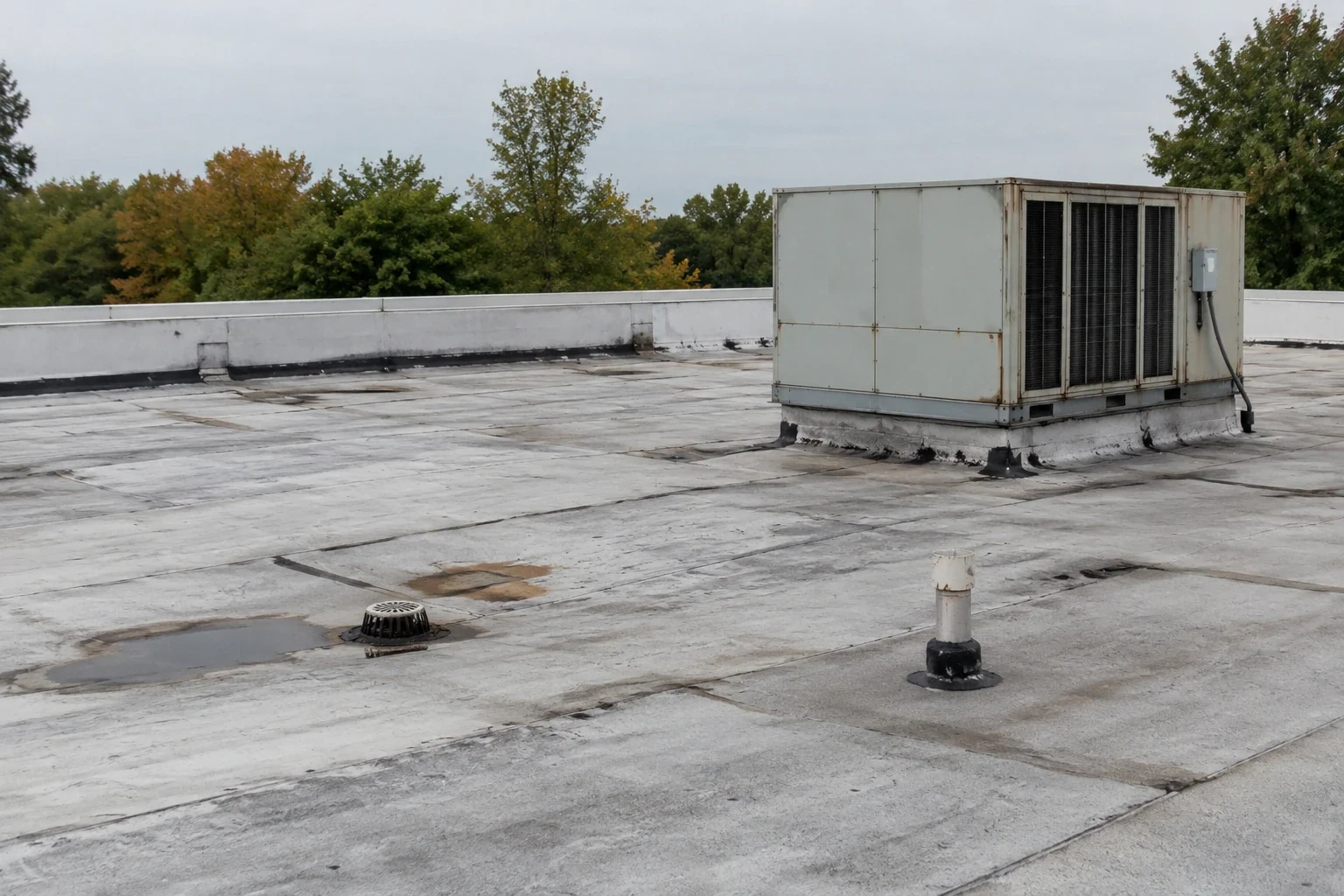
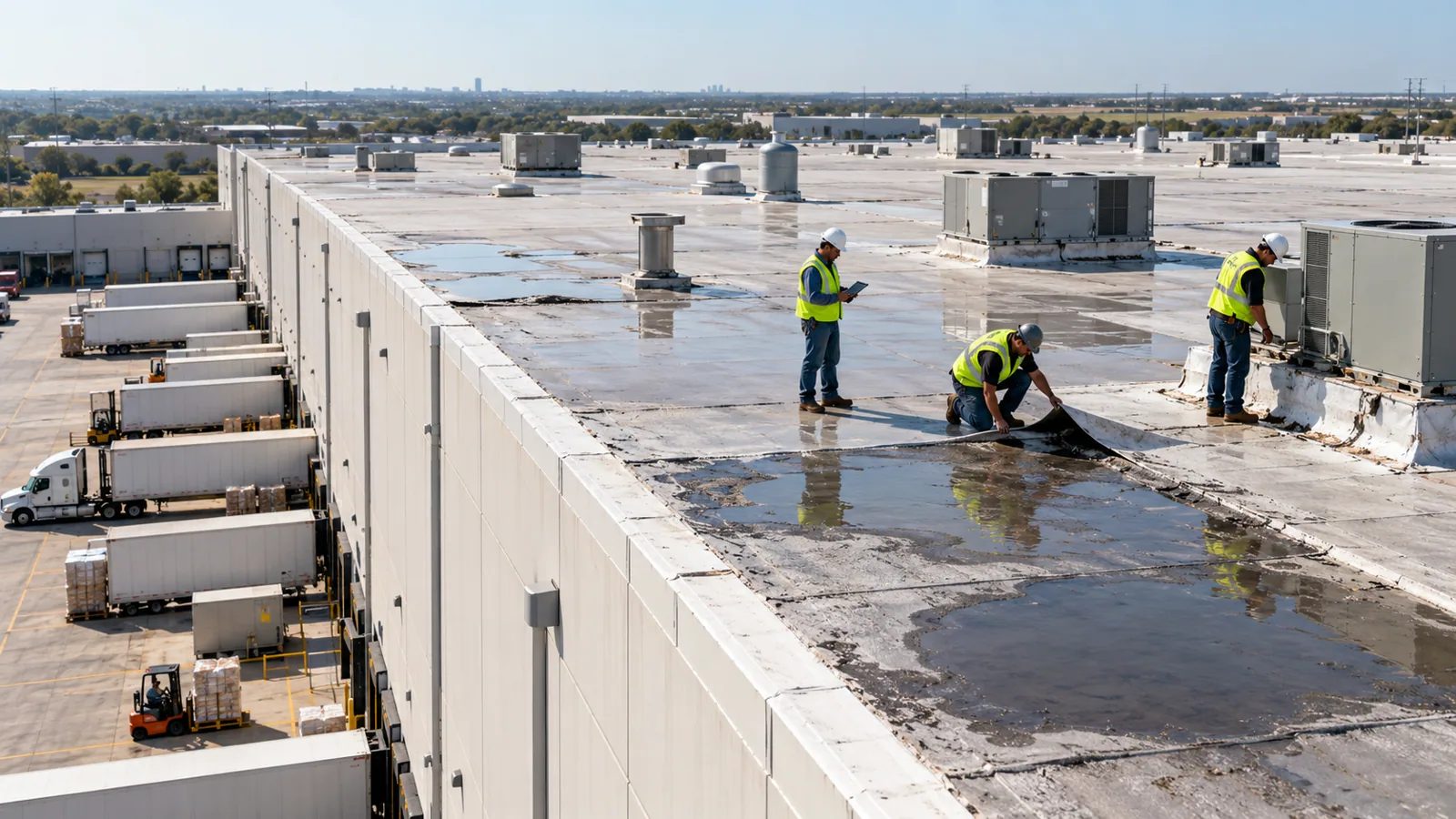
Start with the roof system, visible condition, moisture evidence, drainage, attachment, and history of repairs. Identify areas that are failing now, those that can be monitored, and those that need more testing. A roof with one open curb flashing should not receive the same capital recommendation as a roof with wet insulation across several zones. We map each finding and explain the mechanism instead of assigning a broad condition label.
Use plans, invoices, and earlier surveys as background. Verify them in the field. The roof may have received repairs or overlays that are not shown in the original project record. Condition reports can establish photo locations and open questions. If moisture is suspected, targeted survey work may guide test cuts; direct testing establishes the removal boundary before a capital scope is set.
Kansas City climate normals show winter freeze exposure and summer highs in the upper 80s. These official station records provide seasonal context, not a service-life clock for an individual roof. Heat, movement, hail, and water exposure can affect different systems differently. We base timing on observed condition, the owner's risk tolerance, and the consequences of a failure in the building's operation.
Compare the Work Paths
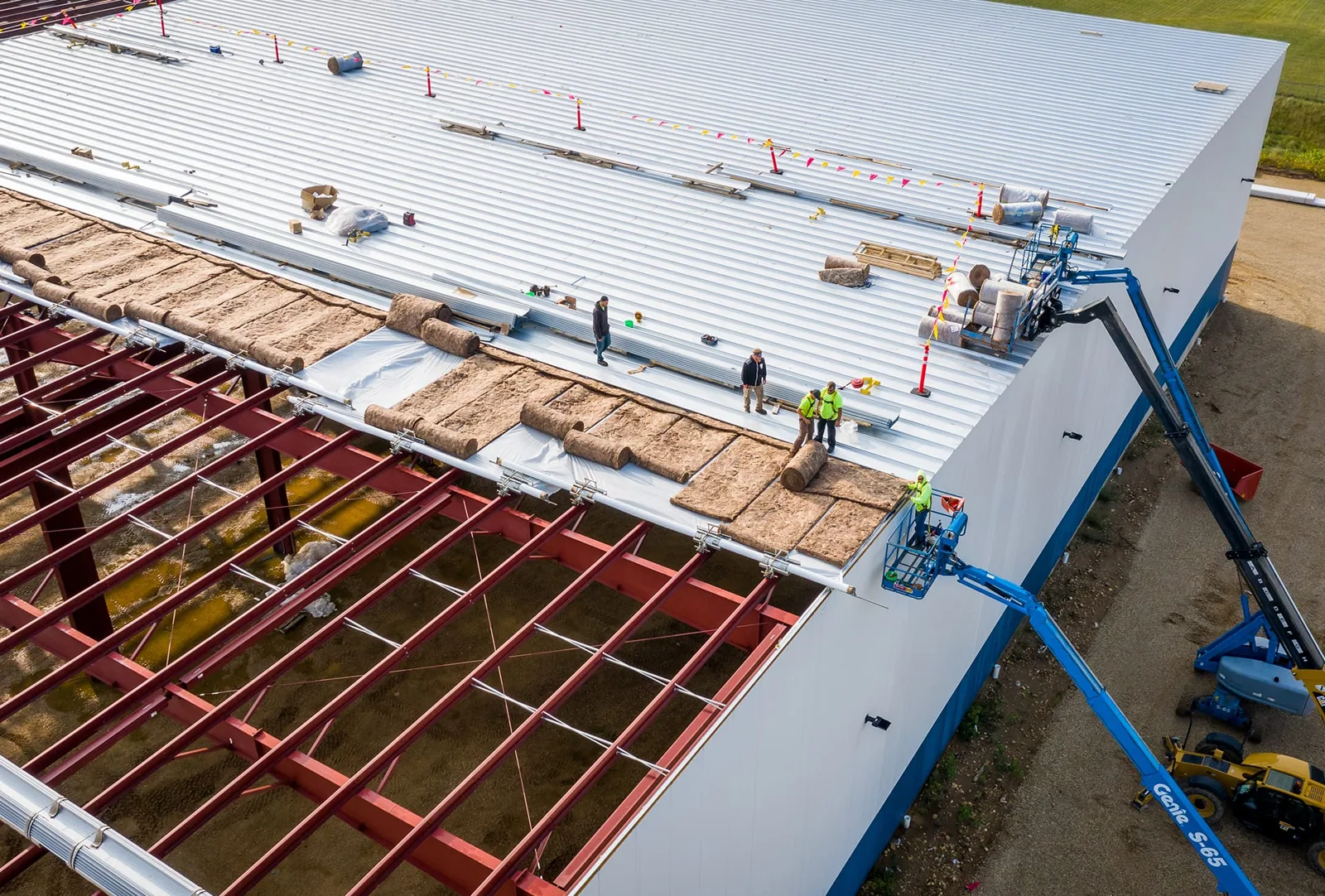
Local repair can be appropriate when the defect is limited and surrounding material is sound. Restoration or coating may fit a compatible roof with a stable substrate and manageable moisture. A recover requires a suitable existing assembly, adequate attachment, and corrected drainage. Replacement is worth planning when failures repeat, wet materials extend widely, or the roof can no longer support an effective repair strategy. Each option should state what it includes and what it leaves in place.
The scope comparison should use the same roof area and assumptions. Include removal limits, insulation, cover board, deck repairs if exposed, membrane tie-ins, edge details, drains, access, and interior protection. For a property with active operations, include staging and phase boundaries. Recover feasibility and replacement planning depend on the same inspection record, but they solve different assembly problems. A maintenance plan can reduce near-term exposure while a larger project is budgeted.
Do not base a budget on a roof area that has not been measured or on a hidden deck condition that was not opened. We describe the assumptions that drive cost and identify allowances or testing needed to firm the scope. This lets an owner compare planning scenarios without reading a preliminary number as a final bid. A planning schedule can also show when a survey, access approval, or design decision needs to happen to preserve the intended construction window. If that dependency slips, the owner can see whether temporary repair or monitoring should be added while the larger project is prepared.
Sequence by Consequence
Prioritize active leaks, unsafe conditions, and failures that threaten equipment or interior operations. Then consider how long a repair can control the problem, whether testing is needed, and when a replacement can be staged. A property near a medical campus may have different access windows than a retail building. The property contact defines operating restrictions; roof findings define the work. A phased schedule can protect occupied areas while moving through roof zones.
For a reroof or alteration, compare the planned scope with Independence's adopted 2024 IBC and Existing Building Code amendments. Confirm permit requirements with the building department. Code review does not set a replacement deadline; it belongs alongside structural review, energy requirements, fire ratings, and system details when relevant.
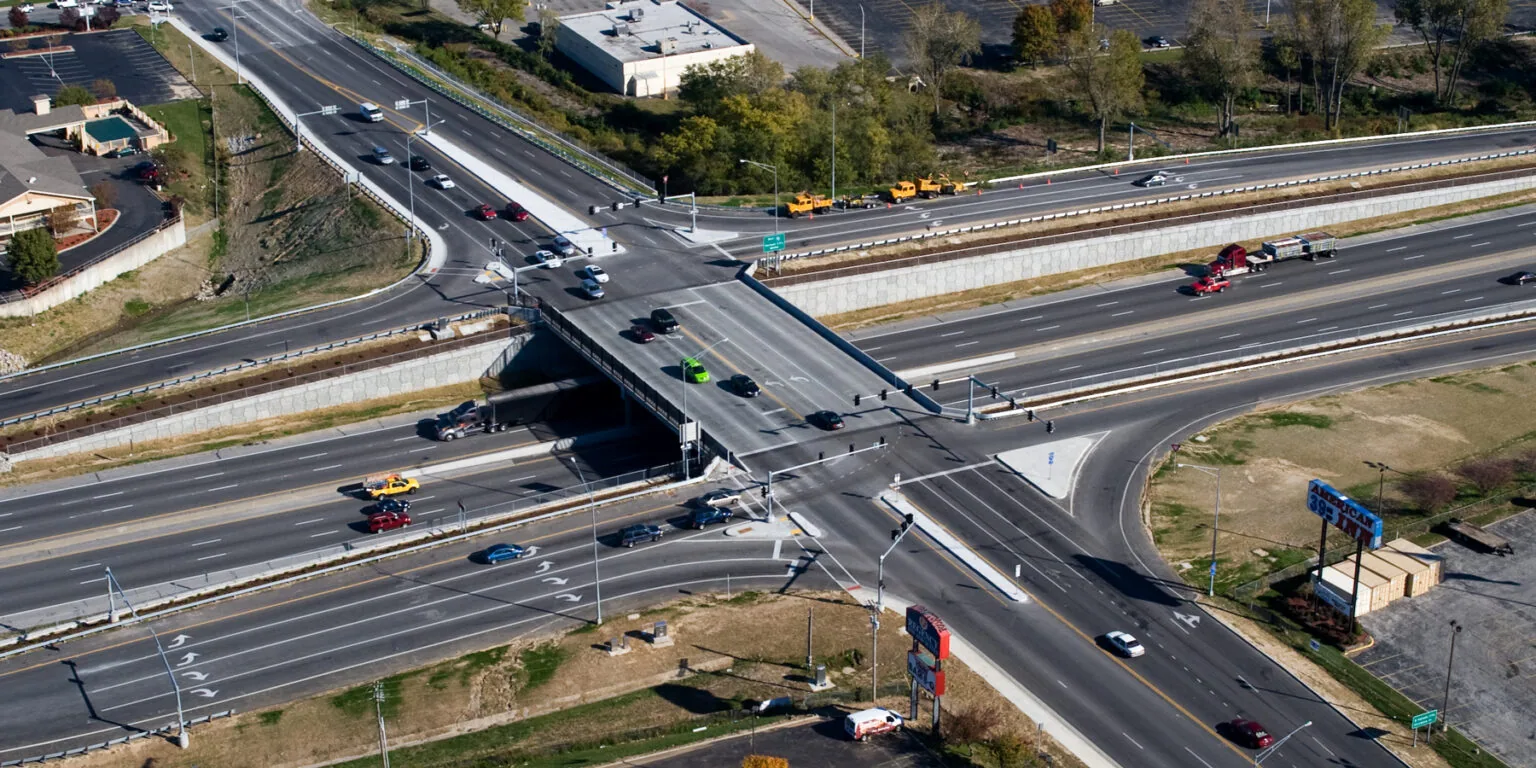
Historic Independence Square and Eastgate Commerce Center are examples of distinct local commercial settings, not evidence of particular roof assemblies. For every address, verify height, access, occupied areas, equipment, and drainage. A Noland Road corridor reference can support geographic coordination. The capital record should identify the site itself and avoid treating area-wide context as a property finding.
Preserve the Decision Record
Keep the inspection map, photos, test results, alternatives, and assumptions with the budget decision. Roof asset management can carry those records between repair cycles and budget reviews. Note the date of the observation and when it should be revisited. If a leak is repaired while a larger project waits, preserve the repair boundary and verify it during maintenance. The next reviewer should be able to see why the owner selected the work and what condition could change the plan.
An event report may explain why an owner requested an inspection, but it does not prove roof damage at a portfolio property. We tie a capital recommendation to direct findings such as fractured coating, detached membrane, or moisture below the surface. Hail findings and wind findings should be recorded as separate conditions.
When a project is approved, convert the planning assumptions into a detailed scope and schedule. Confirm the system, removal, tie-in, daily dry-in area, disposal, site access, and closeout documentation. A capital plan makes that transition easier because it preserves the reason for the project and the roof conditions that must be addressed.
Turn the Plan into a Scope
The useful capital plan is specific enough to guide the next decision and candid about what remains unknown. It identifies immediate repairs, testing, monitoring, and project candidates without implying that all roofs need replacement. We can inspect the assembly, compare feasible work paths, and document the construction limits behind each recommendation.
Schedule a commercial roof review in Independence to build or update a roof capital plan. We will map conditions, identify timing drivers, and separate near-term repairs from longer-range renewal work.
Commercial Roofing Questions
Does a roof's age decide when it should be replaced?
Age helps frame the review, but condition, moisture, attachment, repairs, drainage, and building use inform the recommendation. We verify the assembly before setting timing.
How do you compare repair with replacement?
We compare the affected area, wet layers, repeated failures, system compatibility, access, and work scope. Each option states what remains outside the proposed work. Compare the repair boundary, expected disruption, and remaining sound assembly with the work required for replacement. Separate near-term leak control from long-range renewal so the owner can sequence decisions. Any estimate should state assumptions about concealed layers, equipment coordination, and disposal. Without those boundaries, two prices may describe different scopes even when their totals look comparable.
Should the capital plan include hidden deck repairs?
It should identify where deck condition is unknown and what testing or removal would resolve it. We do not present concealed conditions as verified quantities. Separate confirmed work from allowances for concealed conditions. A survey may identify areas where test openings are useful, but it cannot price unknown deck damage as a fixed quantity before exposure. The plan can state a base scope, a decision process for added work, and the documentation needed when layers are removed. That helps owners compare bids without confusing a contingency with a verified defect. Include transition metal, drainage, and equipment coordination in the project assumptions.
Do city code requirements determine the roof system?
The adopted codes and permit requirements need project-specific review. We coordinate the roofing scope with the applicable building requirements and design decisions.