Assess and repair commercial storm damage in Independence, MO with roof-level findings, temporary protection when needed, and a documented repair boundary.
Wind can pull at a roof edge while hail strikes the open field, so a storm review has to cover more than the first visible opening. We inspect seams, perimeter attachment, flashings, penetrations, equipment curbs, drains, and any impact area. In Independence, a storm report near Little Blue Valley or the route between Eastgate Commerce Center and the city center is a reason to check the roof, not proof that a particular building was damaged. The repair follows observed conditions.
Make the Building Safe
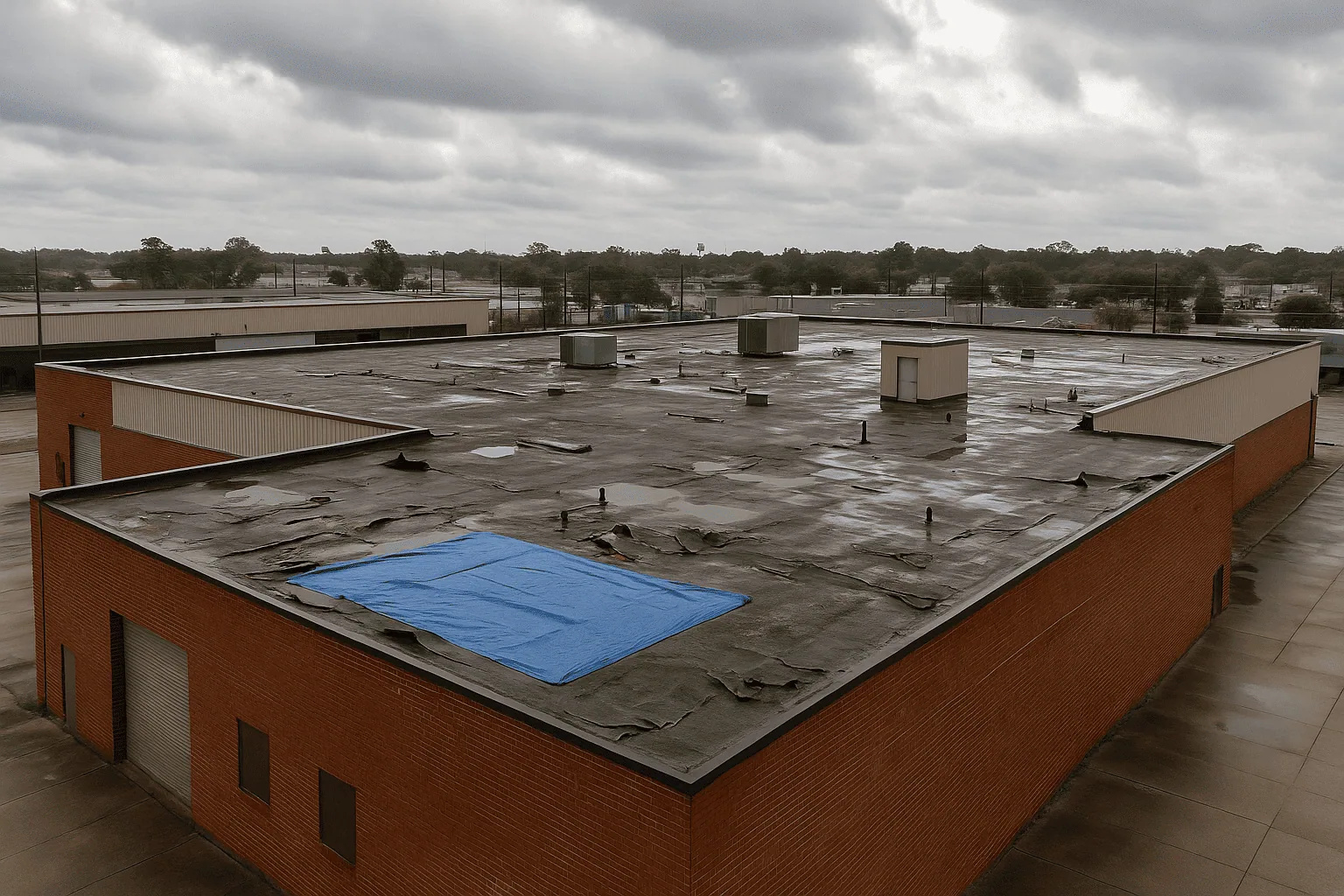
Active water entry comes first. We identify affected rooms, exposed electrical or mechanical equipment, and any roof area that cannot be accessed safely. If water is still entering, contact Commercial Roofing Independence to discuss immediate protection and safe access. We can install temporary protection or dry-in when conditions allow. The temporary cover needs secure attachment and a path for water to drain without loading another roof detail.
Facility contacts help establish roof access, operating limits, and interior protection needs. We mark the temporary boundary and record the condition it covers. Tarping reduces exposure; it does not complete the permanent repair. Wind, lightning, wet surfaces, or unstable material may limit roof access. If safe access is unavailable, we take steps from the building side and return when the roof can be examined.
Independence includes medical, manufacturing, retail, education, and civic facilities. Access and staging differ by property, so we coordinate with the site contact. A storm response near the Noland and Truman intersection may need a different delivery route than a facility east of town. The address and the site's restrictions are confirmed before work starts.
Separate Event Records from Roof Evidence
Storm records place 1.75-inch hail east of Independence in 2017 and quarter-size hail near Centerpoint Medical Center. In June 2022, an EF-2 tornado crossed Jackson County near Buckner, with wind damage reported northwest of Independence. After a storm, we use those regional observations to focus the roof walk on impact marks, seams and perimeter details, then set the repair scope from conditions at the building.
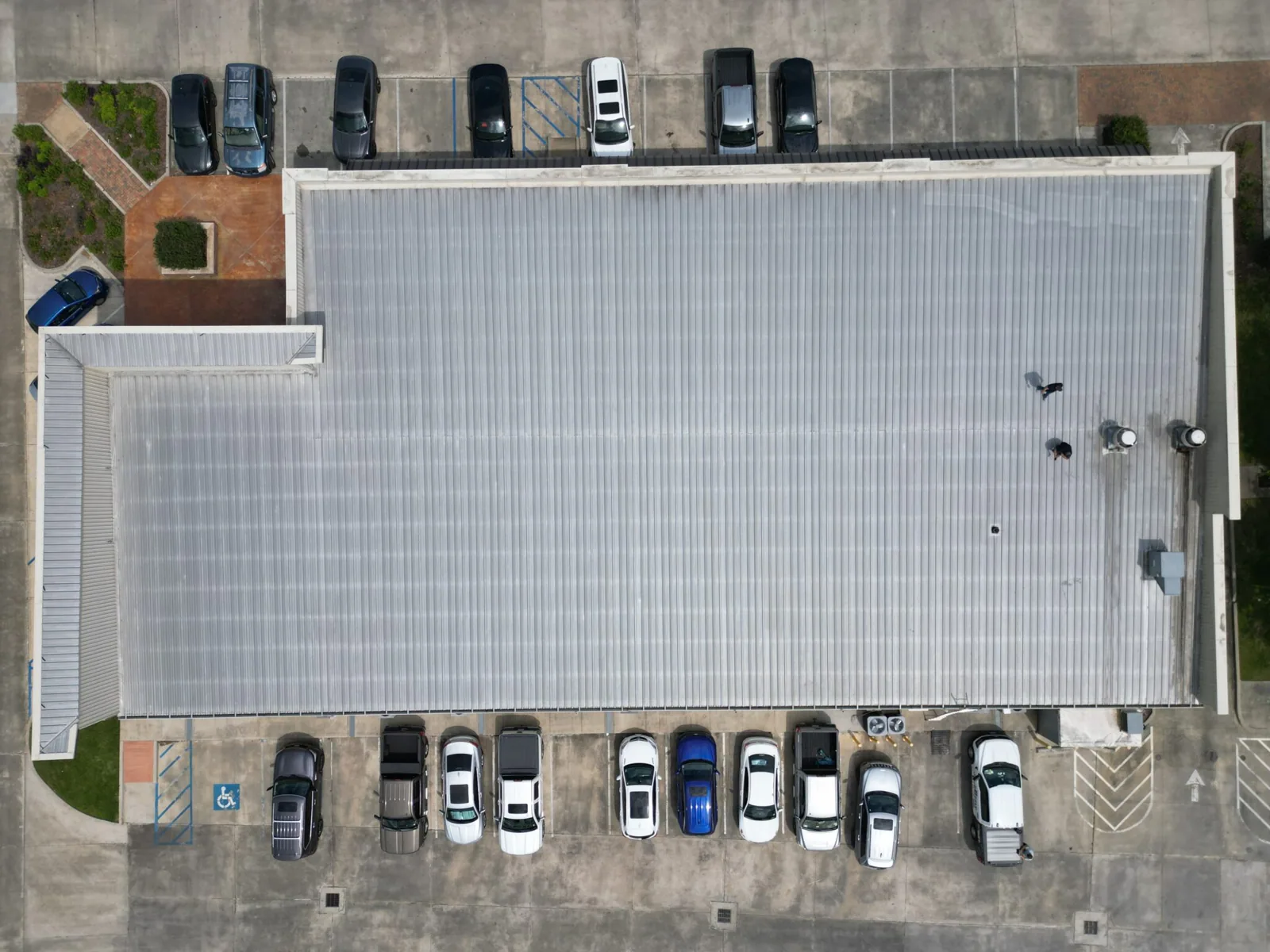
At the building, we check for punctures, fractured coating, membrane displacement, torn flashing, loosened edge metal, debris impact, and broken rooftop components. Hail marks may be cosmetic, or they may expose a cut or weak seam. Wind may lift a perimeter detail while leaving the field membrane intact. We photograph the observed damage and distinguish it from areas that need closer testing.
Water can move below the visible opening. We inspect the interior symptoms and compare them with roof drains, deck flutes, walls, curbs, and transitions. A stain can appear away from the impact point. If water is active, leak-path tracing helps identify where entry occurs. Where an event affects several sections, a hands-on roof inspection can map conditions beyond the first call.
Repair the Failed Interface
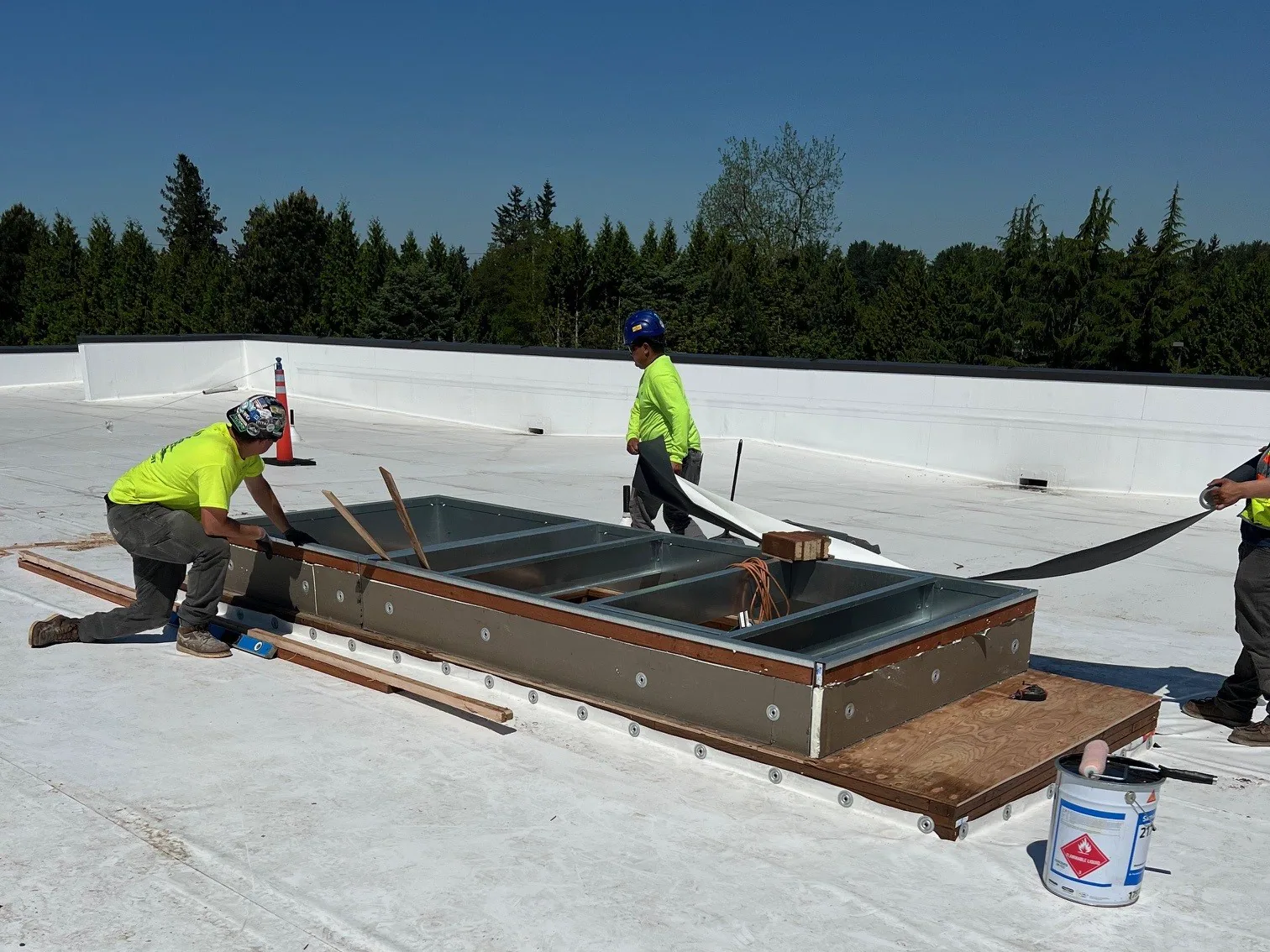
A storm repair must match the material and extent of the damage. We clean and prepare membrane around a puncture, then install a compatible patch with a sound bond line. A split seam may need a weld or a system-specific repair detail. Torn curb flashing requires rebuilding the transition, not a bead over loose material. At metal edges, we check fasteners and substrate before deciding whether to resecure or replace a section.
Insulation or deck may also be affected. If an opening exposes wet insulation, we map how far it extends and remove compromised material before closing the roof. A repair that seals over wet layers can leave moisture in the assembly. The scope records each component included, such as membrane, cover board, insulation, edge metal, or drain flashing, and identifies any concealed condition still requiring evaluation.
Drainage can change after debris or displaced material blocks an outlet. We inspect drains, scuppers, overflow routes, and low areas as part of the review. A blocked drain can be cleared, but a distorted slope needs a separate correction. If edge flashing or a curb is part of the damage, perimeter metal work and drain repairs can be included in the permanent scope.
Keep the Damage Record Specific
Photos should show the damaged detail, its position on the roof, and the completed repair. We record what was visible before work, what temporary protection was installed, and which materials or roof sections were repaired. If the project includes additional investigation, we keep those findings separate from confirmed damage. This helps the owner and any claim reviewer distinguish the event report from conditions verified at the property.
Independence's commercial building mix includes redevelopment districts such as Fairmount and employment sites along Noland Road. A roof repair in a business district may require coordination around storefront activity; a production property may need work zones arranged around facility operations. The site contact confirms those needs. They do not change the material compatibility or repair boundary required by the roof.
Cost and timing depend on roof access, weather, system type, the number of details, moisture extent, and how much material must be removed. When a storm exposes broad membrane failure or wet insulation across several areas, we compare repair with replacement or a recover if the existing assembly allows it. A claim record can include the inspection findings and repair photos without stating that coverage is approved.
Plan the Permanent Work
Once temporary water control is in place, we confirm the permanent repair conditions. The roof must be dry enough for the selected materials, and the substrate must be prepared so the patch or flashing can bond. If weather delays installation, we check the temporary protection and keep the building contact informed about the next inspection window.
Some storm damage can be repaired in a limited area. Other findings call for moisture testing, replacement of insulation, or a larger roof scope. We explain which condition supports each option and what remains uncertain. A repair recommendation should connect the observed failure to its corrective detail instead of turning an event report into a construction assumption.
Schedule a storm-damage review with Commercial Roofing Independence. We will inspect the roof, limit active exposure where conditions permit, and document the repair boundary and any follow-up testing.
Commercial Roofing Questions
Does a storm report mean my roof has damage?
No. Event reports describe conditions at recorded locations. We inspect the building for punctures, displaced materials, open seams, and other visible damage before defining repairs.
Can you respond while it is still raining?
We answer emergency calls around the clock. Safe roof access and material conditions determine what can be done; temporary interior protection may begin before permanent roof work is possible.
What does a temporary dry-in accomplish?
It limits water entry while the permanent repair is prepared. We identify its boundary, attachment, and drainage path, then inspect beneath it when conditions permit. A temporary cover limits further water entry while the roof and affected interior areas are evaluated. It should be secured to the actual assembly without creating a new tear, blocking drainage, or covering evidence needed for the permanent scope. We record where the protection begins and ends, what was accessible, and what still needs inspection once conditions allow. Temporary protection buys time; it does not establish that the underlying roof is dry or repaired.
Will storm repairs include wet insulation?
When testing confirms wet material, we include removal and assembly repair in the scope. The moisture boundary is checked before the roof is closed.
Can you document damage for an insurance review?
We can provide photos, inspection findings, and a description of work completed or proposed. An insurer determines coverage under the policy; our record describes roof conditions.