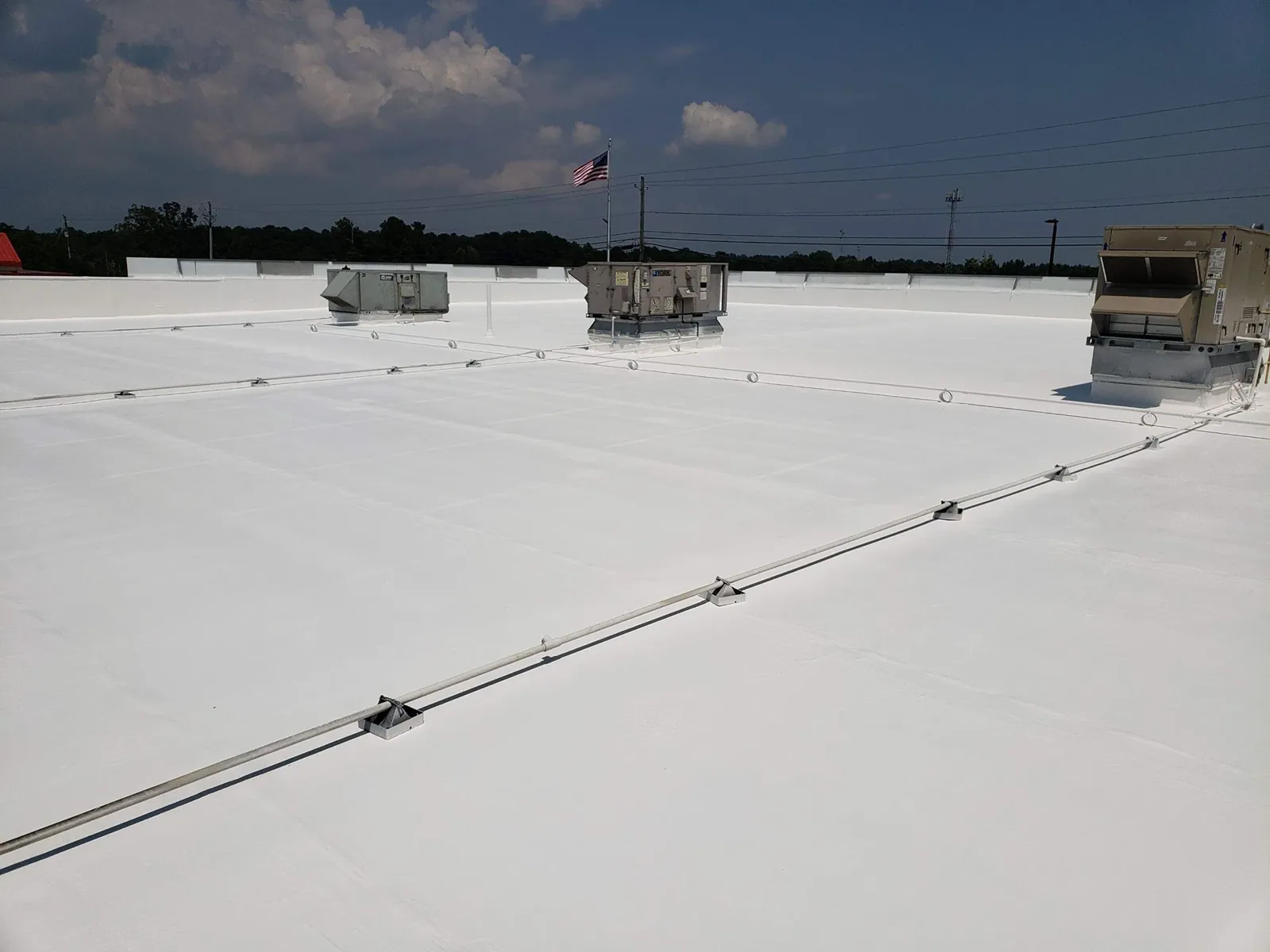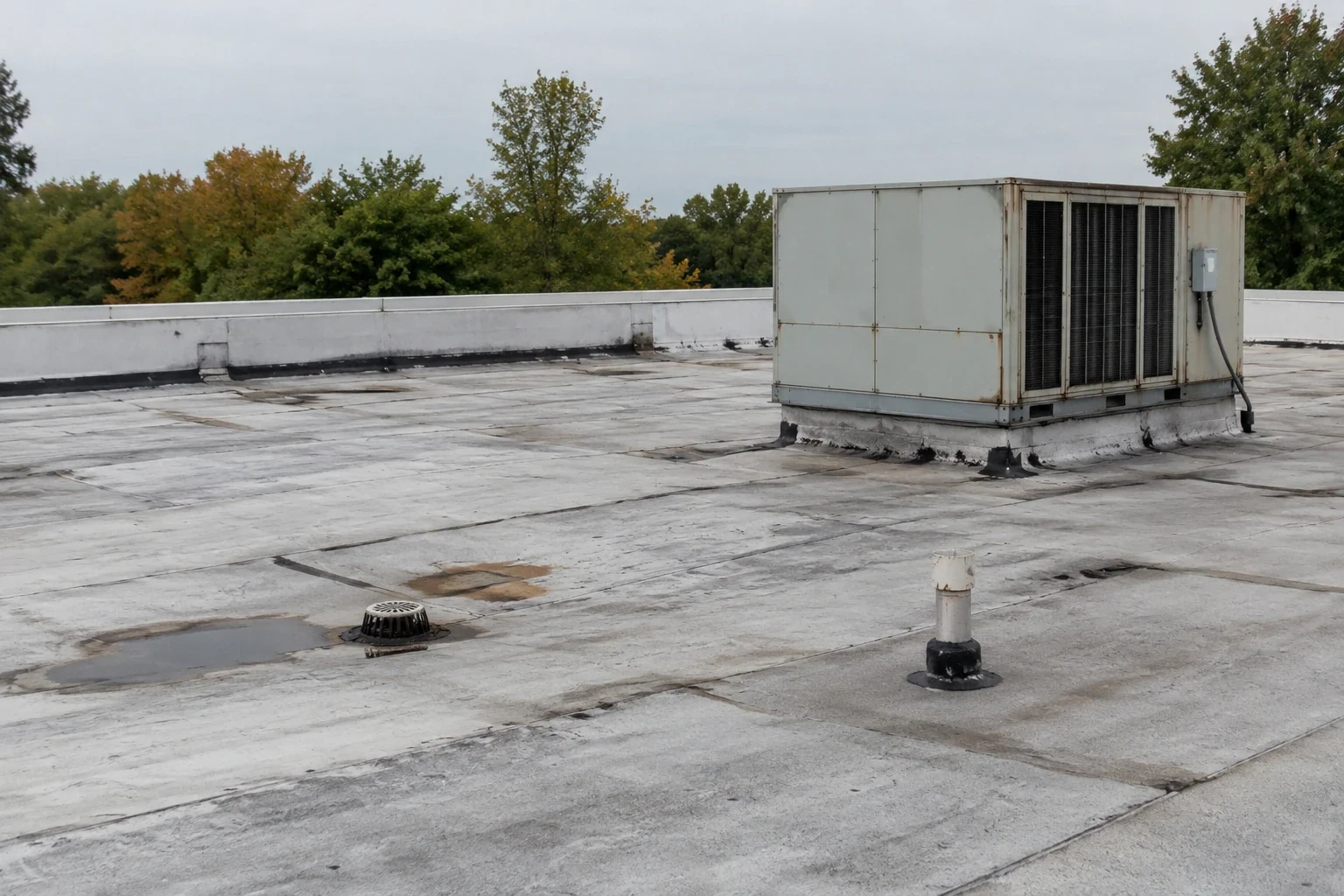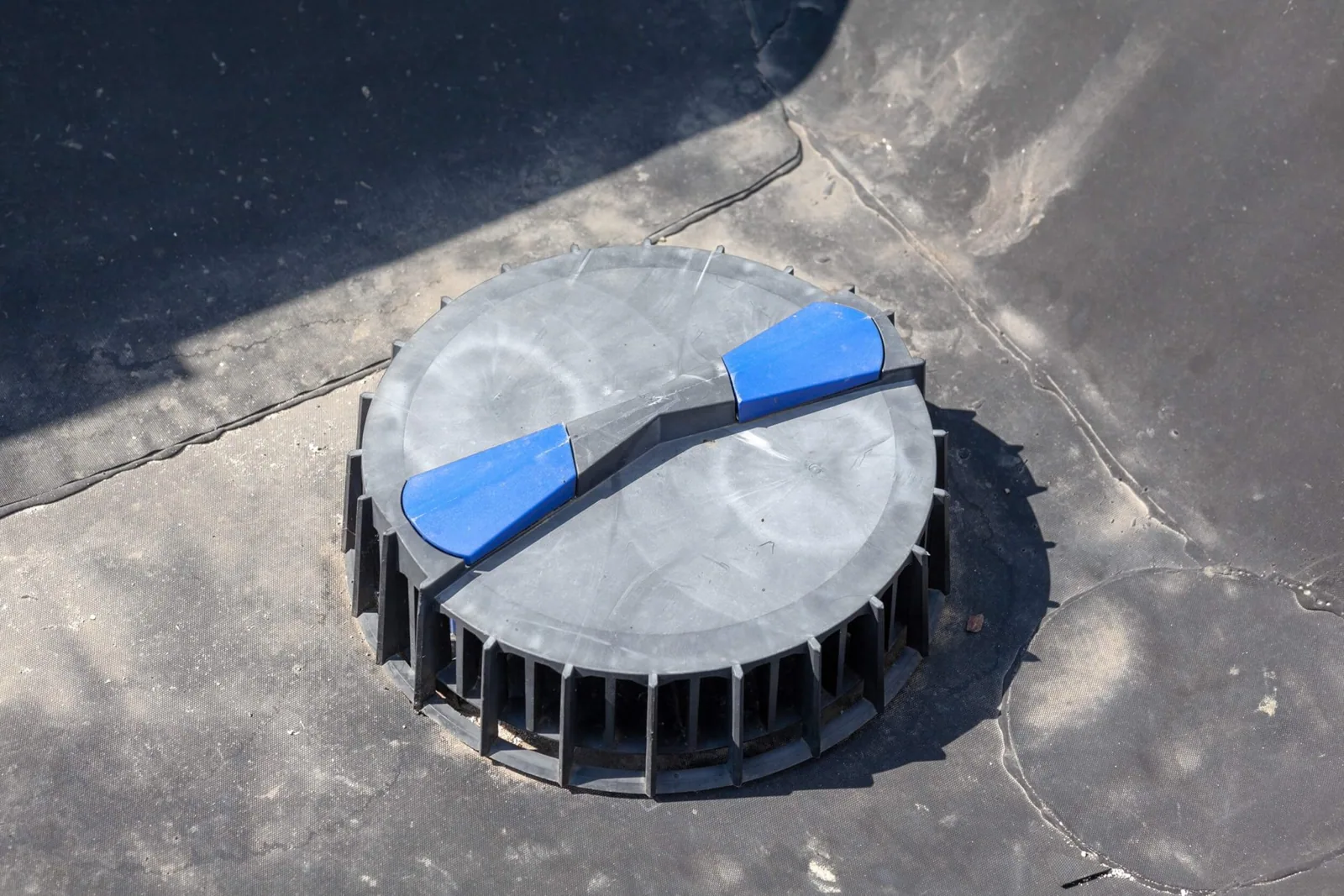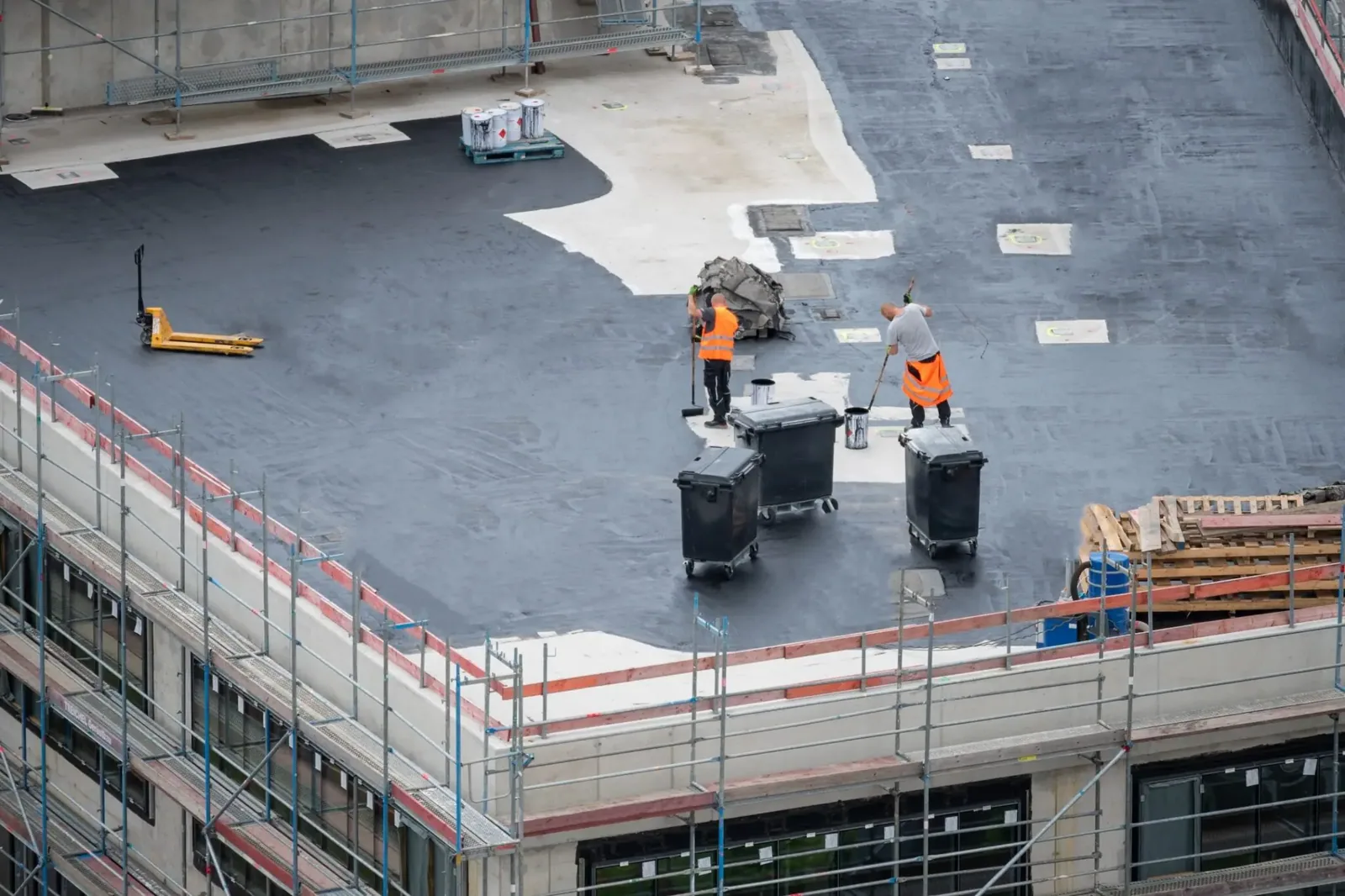
In North Kansas City, MO, we assess the roof assembly, drainage, flashing, access, and repair or replacement needs before setting a commercial roofing scope.
North Kansas City’s adopted plans address redevelopment and business activity across the city. A specific roof still needs its own survey: we identify the system, map transitions, inspect drains and edges, and compare the observed surface with the owner’s maintenance history. That evidence defines whether a local repair can hold or a larger assembly review is needed.
Armour Road improvements reflect active corridor work in North Kansas City. When roofing overlaps with public-facing access or nearby construction, the owner confirms lift placement, pedestrian protection, loading, and work hours. We plan the exposed area around those constraints and verify a watertight stop point before equipment leaves the roof.
Coordinate Building Access
The One North redevelopment area covers about 64 acres and includes planned mixed uses. Its scale illustrates why building boundaries matter: multiple structures can have separate roofs, tenants, and drainage systems. We label each inspected zone and keep the scope tied to the property authorized for work, rather than assuming one finding applies across a development.
Roof replacement involves more than moving materials to the roof. Tear-off can expose insulation and deck, and the open section must be closed before the shift ends or weather arrives. We plan the daily footprint, temporary membrane, debris control, and end-of-day inspection in advance. Phased occupied-site roofing can keep a large work area divided into smaller, closable sections. The sequence also identifies which rooftop equipment or pedestrian zones require protection while crews are overhead.
Inspect the Actual Assembly
At each North Kansas City building, we identify membrane or metal, deck, insulation, attachment, drainage, and previous repairs. Additions can create different roof systems under one property contact. We mark the transitions and compare interior leak locations with the roof area above before selecting repair materials.
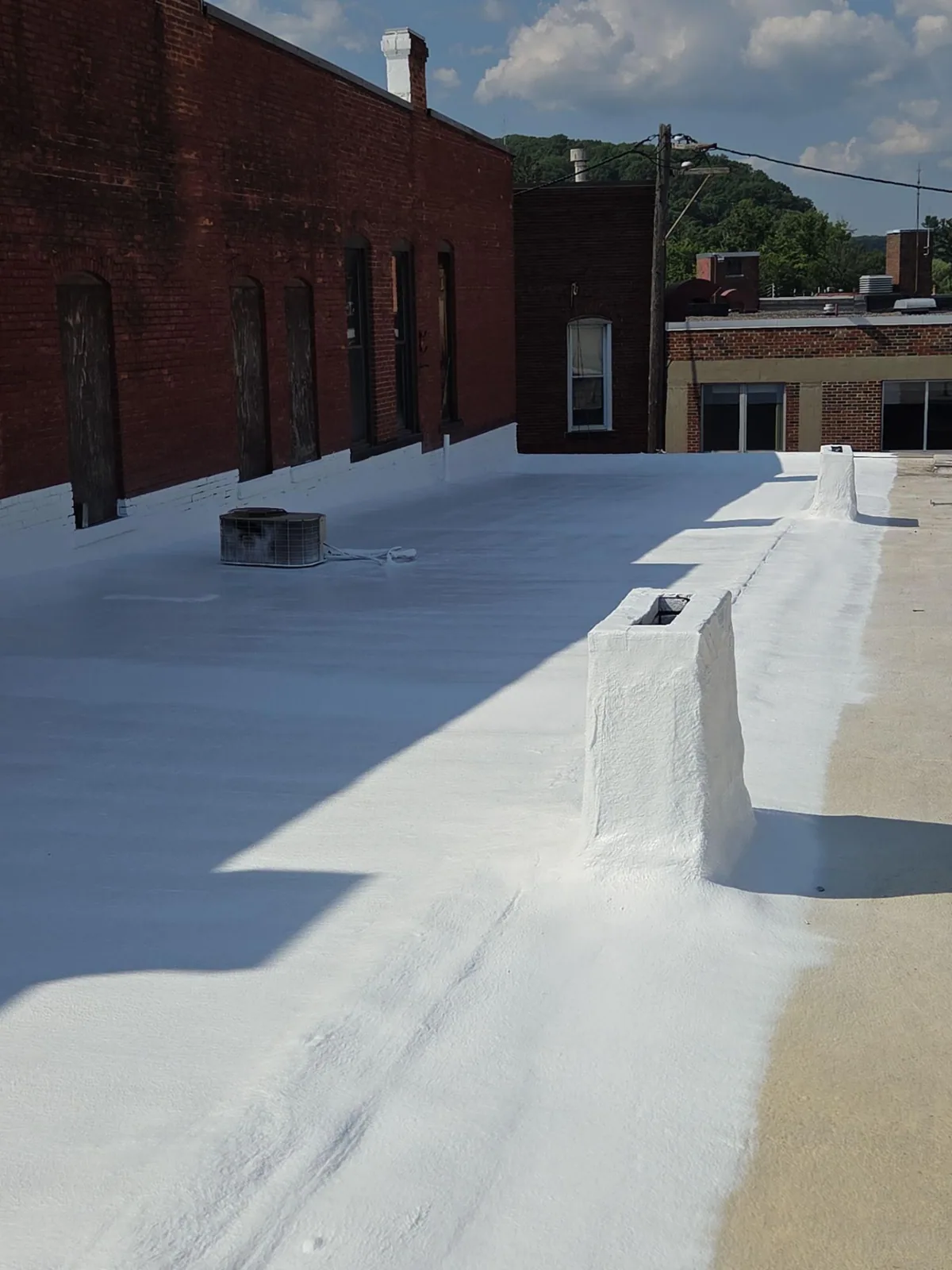
Water entry at a curb, parapet, or mechanical support calls for a detail-specific repair. We check the substrate and fasteners, verify that adjacent layers remain dry and stable, and test compatibility where a coating or older patch is present. A written scope describes the repair limit and the tie-in required to restore drainage.
One North is a planned mixed-use redevelopment area covering about 64 acres. Its multiple buildings and uses make a property-by-property roof map useful for access and maintenance planning, but the development does not reveal any individual building's assembly. We inspect each authorized structure before recommending work.
Find the Drainage Restriction
Large roof areas can have multiple drain groups and overflow paths. We trace the drainage plane to each outlet, check strainers and drain bowls, and look for low transitions or equipment curbs that interrupt flow. If water remains after the expected drainage period, we note its depth and area and inspect for blockage or deck movement. A puddle alone does not prove that insulation below is saturated.
Interior reports should be matched with the roof route above the affected space. Water can travel along the deck or a pipe before it shows on a ceiling. We look upslope at penetrations, seams, parapets, and prior patches before defining a repair. If moisture beneath a membrane is suspected, infrared moisture survey work can help focus test openings. A local outlet defect may be corrected through drain or scupper repair when the surrounding roof remains sound.
Check After Weather Exposure
After strong wind, inspect perimeter attachment, edge metal, panel fasteners, and membrane seams before assigning a repair. Rain can expose a drainage issue that was not visible during dry weather. We record the roof area, visible defect, and interior evidence so storm-related work has a clear boundary.
Armour Road improvements and One North redevelopment create distinct access conditions in North Kansas City. Before mobilization, the property contact confirms current entrance routes, loading, pedestrian controls, and any work occurring next to the building. These details govern staging, while the roof survey determines material and repair scope.
When work intersects a street-facing elevation, protect pedestrians and coordinate equipment movement with the property's approved access plan. The foreman should know which doors, loading areas, and roof hatches remain available and who can authorize a changed boundary. Small, clearly marked work zones make it easier to keep temporary protection and daily closeout consistent.
Decide Between Patch and Rebuild
A localized seam opening or puncture may be repaired where surrounding membrane and insulation are dry and attached. A recurring leak, wet insulation, widespread surface breakdown, or failed edge attachment can need a larger repair. We test questionable areas and show the limit supported by evidence. If opening the roof reveals damage beyond that boundary, we document the condition and request approval before expanding the work.
Replacement or recover depends on the deck, existing layers, drainage height, code, and selected system attachment. Recover is appropriate only when the existing roof can support the new assembly and its details. We compare the cost drivers qualitatively: measured area, access, material, tear-off, protection, and sequencing. A repair scope identifies the patch boundary; a replacement plan describes the new assembly, edges, drains, curbs, and closeout checks.
Leave a Building-Specific Closeout
Closeout records should list the inspected roof area, material, repair performed, drains checked, and any condition that remains untested. A photo shows the detail and its location on the roof plan. The property contact can then use the record to set follow-up without treating an inaccessible section as sound.
When neighboring structures share a drive or loading area, identify the building included in the work order and who can approve access. We label each roof zone separately, then record material, drainage, repair limits, and any access restriction. A citywide or development name is not a substitute for that scope.
Independence has separate work areas at Eastgate Commerce Center and along the Noland Road Corridor. Their building and corridor conditions do not transfer to North Kansas City. For this market, the report records the inspected structure, roof zone, material, water path, and any location left untested, so the next crew does not mistake context for a finding.
A service request anywhere in North Kansas City should identify the individual building and roof section rather than use a redevelopment or venue name as a substitute for scope. The site representative can confirm whether a delivery entrance, occupied room, or shared drive needs to stay available. Inspection should trace water from the reported area to the roof's actual drains and overflow path, then distinguish a surface defect from wet insulation or a substrate problem. When the property has adjoining roof areas, mark their limits before repair so one completed section is not mistaken for a full-building assessment. This creates a useful record for future maintenance and budgeting.
Commercial Roofing Questions
How do you schedule roof work around nearby businesses?
The property representative confirms delivery windows, access routes, lift placement, and areas that must stay open. We set the daily work boundary around those constraints and protect the ground below.
Does a nearby event or redevelopment plan set roof access?
No. The authorized contact confirms roof access, staging, and work hours for the specific property. We record the approved route and do not assume conditions transfer from a nearby site.
How do you separate roof work across a mixed-use property?
Inspect each structure and identify its own assembly, drainage, and work limits. Separate building records prevent one roof finding from being applied to another.
What should the owner receive after a repair?
A closeout should identify the roof zone, materials, seams or flashings repaired, outlets checked, photos, and any location left for later testing.