Commercial roofing in Englewood Arts District, Independence, MO, starts with building-specific inspection, access planning, and compatible repair details.
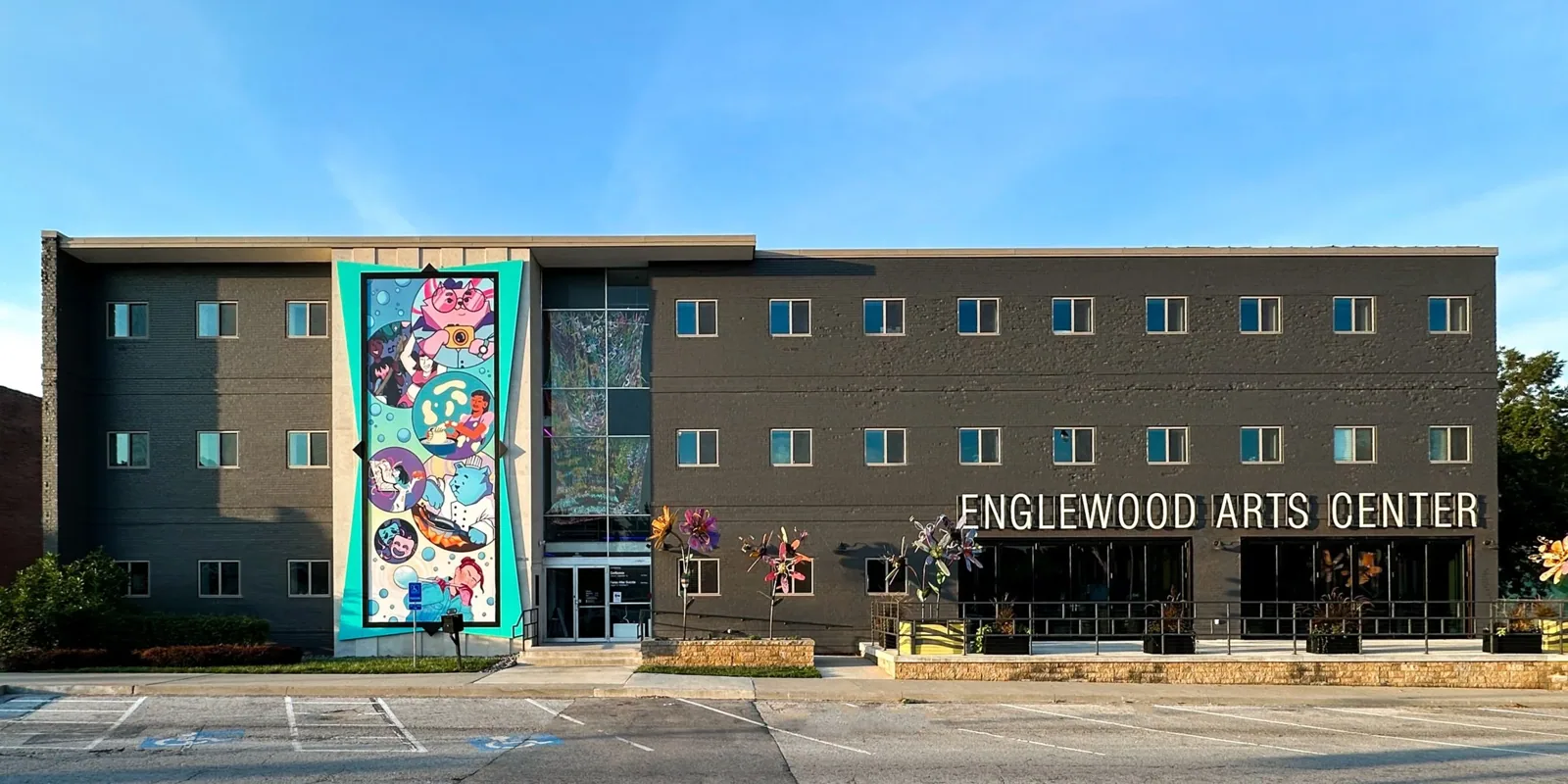
Englewood Arts District brings together shopping, dining, arts, and visitor activity, with Englewood Theater among its retained architecture. Independence also established arts-district zoning, and the area includes the Englewood Arts Center, shops, cafes, and periodic art walks. Those uses make coordination with the property contact important. They do not tell us the roof type or condition. We inspect each commercial building and plan work around its actual occupancy, access, and roof details.
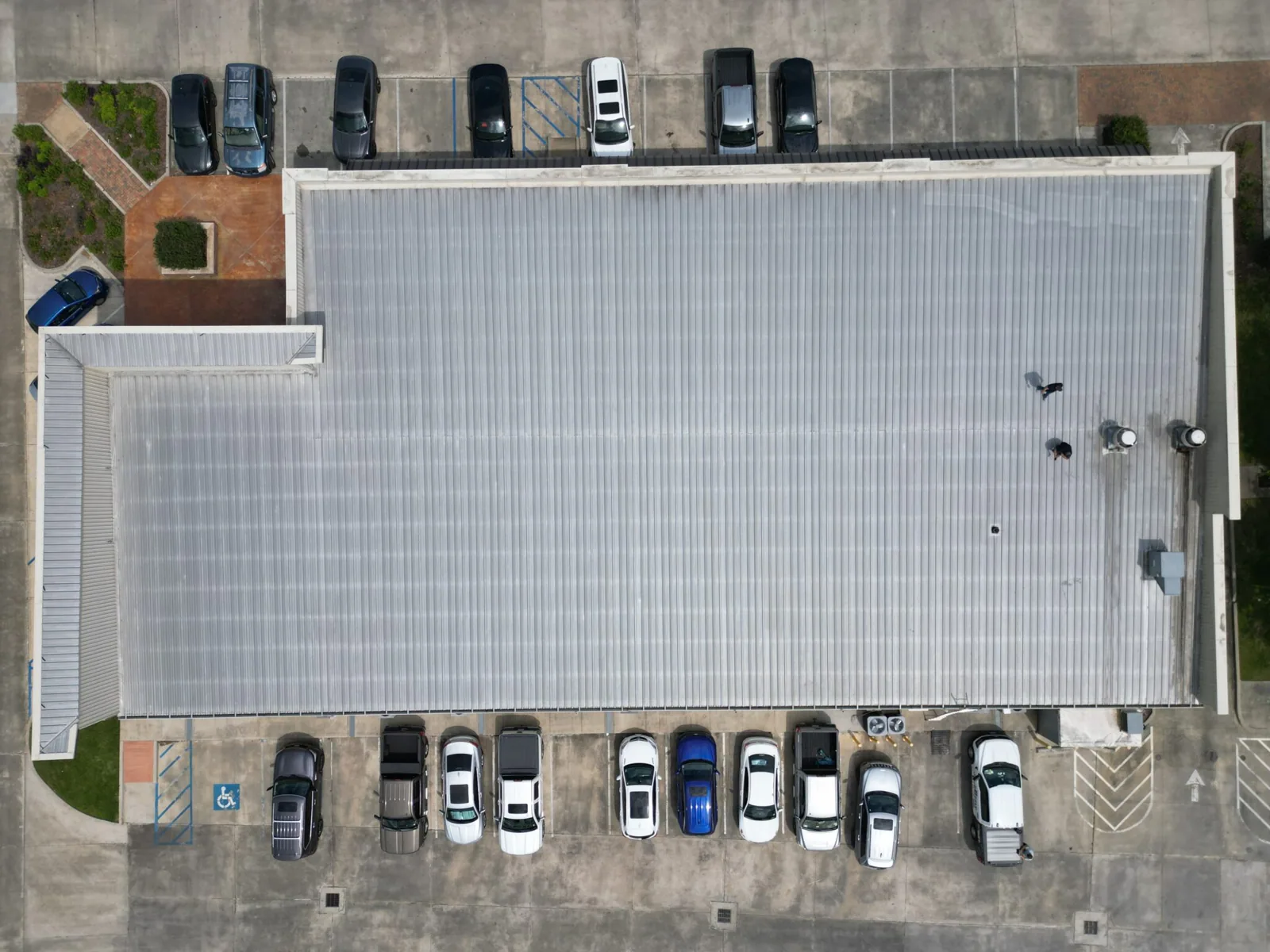
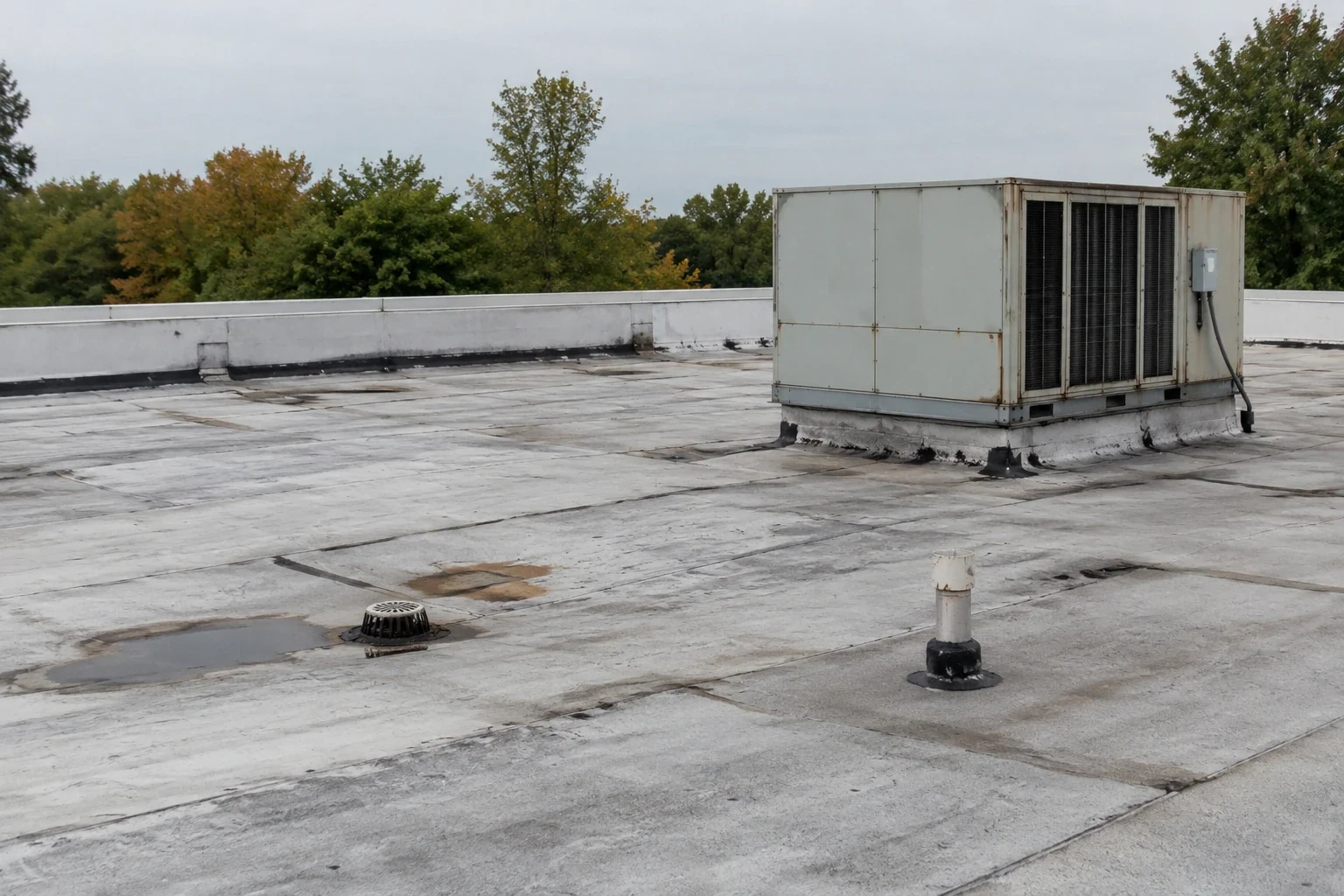
The first visit identifies the visible assembly and the water path. We check roof edges, drains, penetrations, wall transitions, equipment supports, and signs of earlier repair. From inside, we compare leak reports with the area above. If a building has a historic exterior or prior alterations, the roof scope still needs field verification before any material is selected. Photographs and a written limit help the owner coordinate roofing with other improvement work.
Inspect Without Assuming the Roof
A historic district can contain buildings from different periods and alterations. The district description does not establish that a particular commercial roof is historic, masonry, or built with a certain deck. We look at the actual roof: exposed edges, seams, flashing, drainage outlets, and roof-to-wall transitions. Available drawings may identify earlier work, but the field condition determines the repair method.
At a building with limited roof access, we plan safe access and document areas that could not be reached. If concealed layers affect the choice between patching and replacement, we identify a test location. A commercial roof assessment should state the visible system, moisture evidence, and unverified conditions separately. Our inspection service records the components by roof zone so an owner or preservation project team can discuss the scope using the same locations and photographs.
Follow a Leak Through the Detail
Water entering near a wall can travel along framing or a deck before it becomes visible inside. We compare the reported room with the roof geometry and inspect uphill from the stain. The likely route may cross a parapet cap, flashing termination, seam, drain, or old repair. We do not seal the first visible gap until the substrate and path are understood.
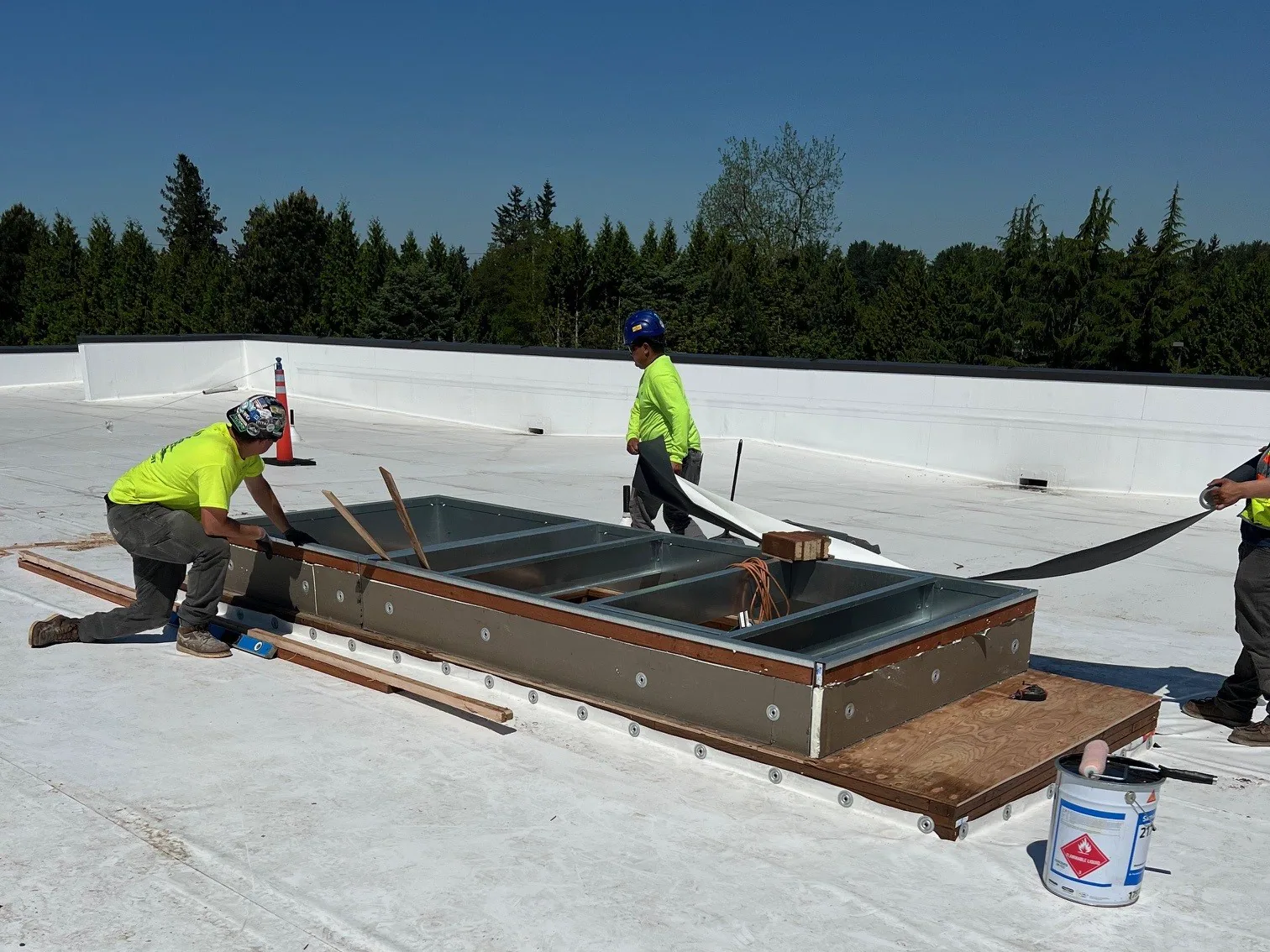
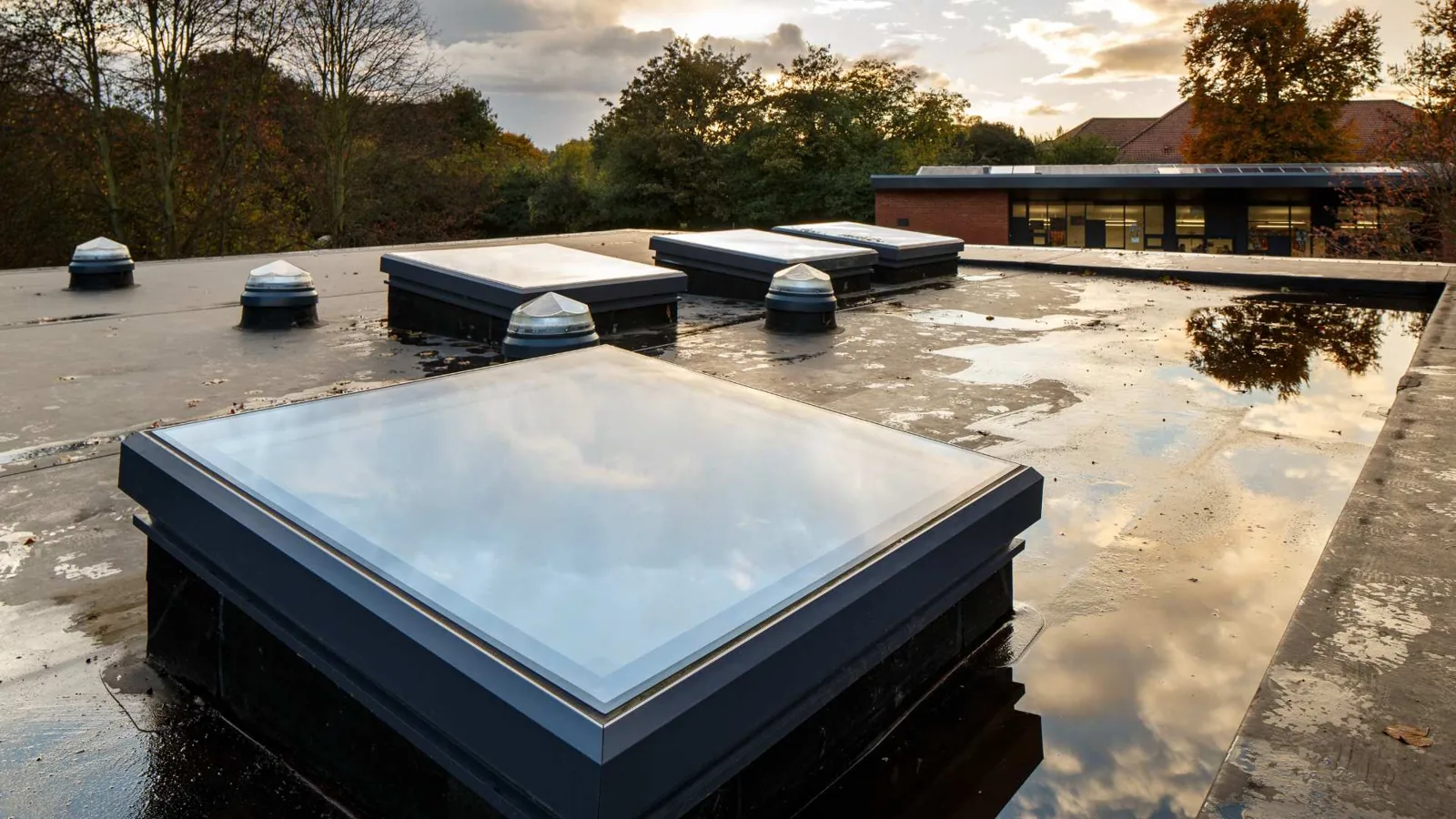
A localized flashing split can often be corrected with compatible material and a sound tie-in. If insulation is wet or attachment has failed, the boundary expands to include that area. We photograph opened conditions and confirm added work before closing the assembly. For active water entry, leak stabilization can protect the interior while we investigate the permanent detail. Penetration flashing work addresses curbs and other roof openings where changes in plane need a continuous water seal.
Coordinate Around Public Activity
Shops, cafes, arts programming, and art walks can bring visitors into shared streets and entrances. The property contact identifies dates, customer routes, delivery times, and any access limits relevant to the building. We schedule lifts, material movement, and noisy tasks with those constraints in view. No district-wide calendar replaces confirmation for the specific storefront or facility.
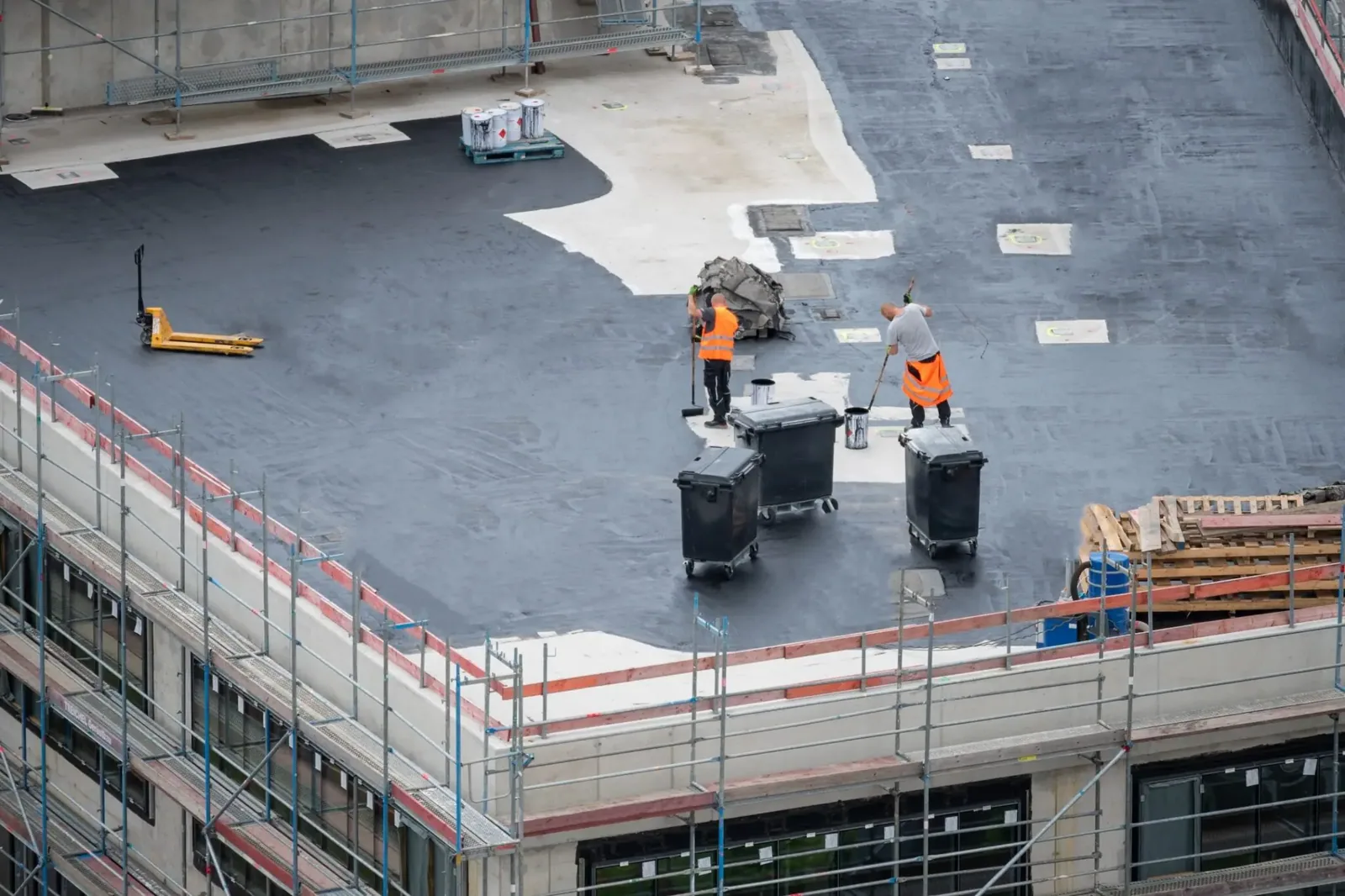
Roof tear-off needs a daily closure plan. We select an area that can be removed, repaired, inspected, and made watertight within the approved work window. Temporary protection should be ready before the first layer is opened. If the owner is coordinating façade, sign, or mechanical work, the scope names which trade completes each roof tie-in. Occupied-building sequencing can coordinate tenant notifications and keep the work zone limited while the building remains in use.
Keep Water Moving Off the Roof
Drainage can fail at the outlet, at the slope, or where an added element interrupts the path. We check strainers, drain bowls, scuppers, overflow routes, and the membrane around the fittings. We also inspect the field for low areas and prior patches that could hold water. A persistent pond is measured and compared with the roof's drainage design before deciding whether correction requires cleaning, a detail repair, or reconstruction.
If the interior report does not match the closest roof drain, we trace the water path rather than treating distance as proof of cause. An infrared moisture survey can help locate anomalies under a membrane; test openings confirm whether the insulation is wet. Any finding is recorded by zone, including parts of the roof that remain untested. This supports a measured repair instead of extending work across an entire surface without evidence.
Choose Work That Fits the Assembly
A small defect over dry, attached materials may be repaired locally. Multiple open seams, wet insulation, failing edge details, or recurring leaks can point to a larger assembly problem. We describe what testing confirmed and where the repair stops. If conditions change after opening, the owner receives photographs and an updated scope before additional material is installed.
Replacement and recover each depend on the deck, layer count, drainage height, code, and attachment design. A recover must not trap wet materials or leave too little height at an outlet. Cost and timing respond to measured area, access, staging, interior protection, weather, and material selection. Localized repair work and replacement construction should both identify the wall interfaces, edge metal, drains, curbs, and closeout checks included.
Maintain a Building-Specific Record
A useful roof file connects photos to a location, records the material used, and distinguishes completed work from a condition awaiting access or testing. That matters when a building also has façade improvements, arts programming, or future tenant changes. If a new sign, conduit, or mechanical item affects the roof, the record can show which flashing detail was altered and who needs to inspect the tie-in.
In March 2017, quarter-size hail was observed at Centerpoint Medical Center; another observation east-northeast of Independence measured 1.75-inch hail. These locations do not establish damage at an Englewood property. Inspect the roof at its address before setting scope. We also serve Historic Independence Square and Maywood Business District, with separate inspection findings at each site.
In the Englewood district, neighboring storefronts and arts uses can have different roof histories even when their buildings share a block. Ask the property contact to identify the structure, roof access, affected rooms, and any public entrance near the work. Then set a repair boundary that crews can maintain during the day and secure before leaving. If the roof has been altered over time, verify how the existing layers meet at walls, drains, and additions before choosing a patch or restoration. Photographs tied to those transitions give the owner a record that remains useful after temporary protection and scaffolding are removed.
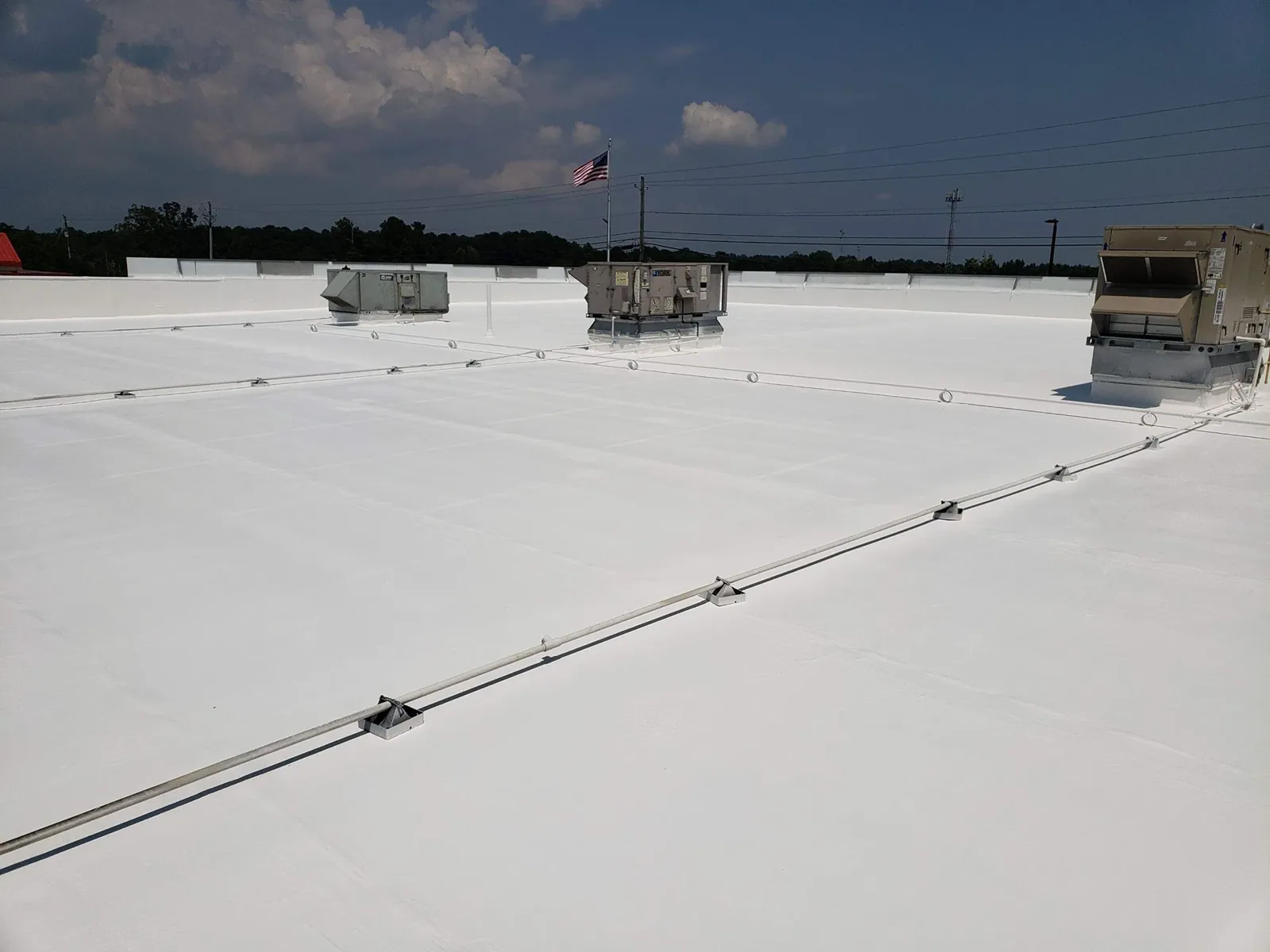
Before selecting a coating or patch, determine whether the existing surface is sound enough to receive it and whether water is being held in a low area. Coating over a wet or poorly attached layer can conceal rather than correct the cause. If testing or a small opening is needed, identify its purpose and include proper restoration in the work plan. For storefronts near the arts district, the manager can also confirm the hours and public paths that need to stay open. These checks connect the repair choice to both the roof evidence and the building's daily use.
Commercial Roofing Questions
Does the district's historic designation establish a roof material?
No. We identify the roof assembly on the individual building and check any available project records against exposed field conditions.
Can roofing work be coordinated with an art walk or public event?
The property contact confirms dates, access routes, and any restricted area. We can set material delivery and noisy work outside the approved activity window.
What if an old roof repair is hiding the original leak?
We inspect the patch edge and surrounding substrate, then open a test area if needed. The repair limit follows the confirmed water route and sound material.
Do you need to replace a full roof after a leak?
Not automatically. We test the affected area and compare its extent with the condition of the surrounding assembly before selecting a repair or larger scope.