Commercial roofing in 39th Street Corridor, Independence, MO begins with an assembly, drainage, flashing, access, and repair-scope review.
The 39th Street Corridor is one of Independence’s local shopping areas. A retail corridor includes distinct properties with different roof designs and tenant needs; a shared street name does not make their assemblies alike. We confirm the property boundary, inspect its roof zones, and connect each leak report to the closest drain, curb, seam, or wall transition.
City neighborhood guides identify several shopping destinations in this part of Independence, including grocery and general-retail locations. Work above active businesses needs a site-specific access route and a clear plan for the ground area below. We coordinate deliveries, lift placement, noise, and temporary protection with the building contact rather than assume one corridor schedule applies to every address.
Coordinate Vendor and Customer Access
Independence Center is a major enclosed retail destination within the broader 39th Street shopping context. That is one landmark in a larger commercial area, not the scope of this route. At the property being inspected, we measure roof surfaces, trace drainage, review flashing and attachment, and write the repair boundary from observed conditions. Before material arrives, we confirm whether roof access is through an interior hatch or an exterior lift and identify the route that stays clear for customers and deliveries. The property manager approves staging and barriers, because corridor-wide traffic patterns do not establish safe access at a particular building.
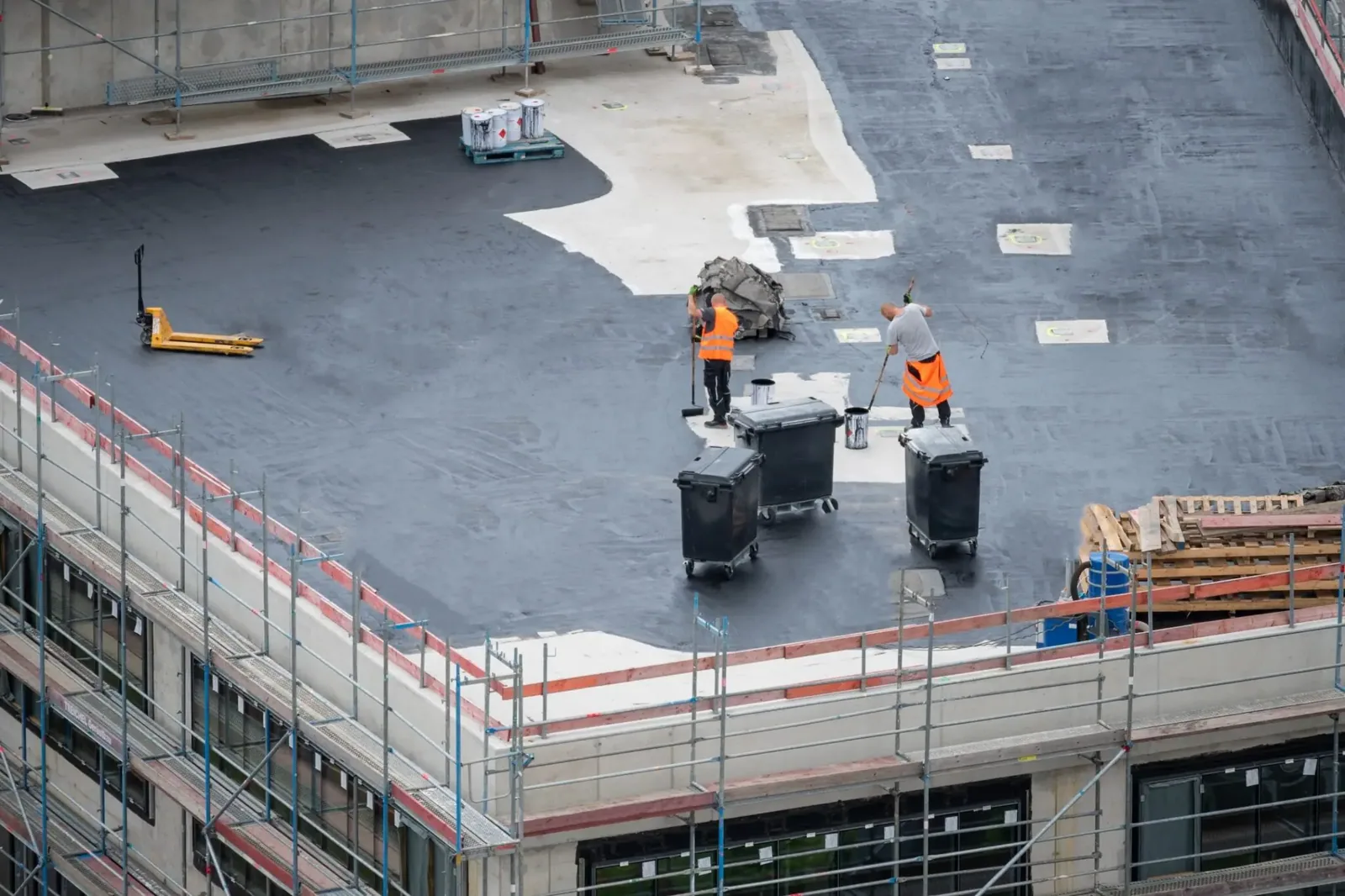
Delivery hours, refrigeration service, customer entries, and tenant work can overlap above an active retail property. We coordinate lift placement and roof access with the site manager, then protect the work area below. Each shift ends with a closed roof section, clear drains, and a confirmed route for the next day's work.
A useful closeout is specific enough that another maintenance person can find the repaired detail. Include a roof-zone identifier, photo orientation, material used, seam or flashing method, and any nearby area not inspected. Note whether drains were clear at completion and whether a planned test was deferred. Those details give the next inspection a stable reference when a new leak or tenant improvement comes up.
Inspect the Existing Roof System
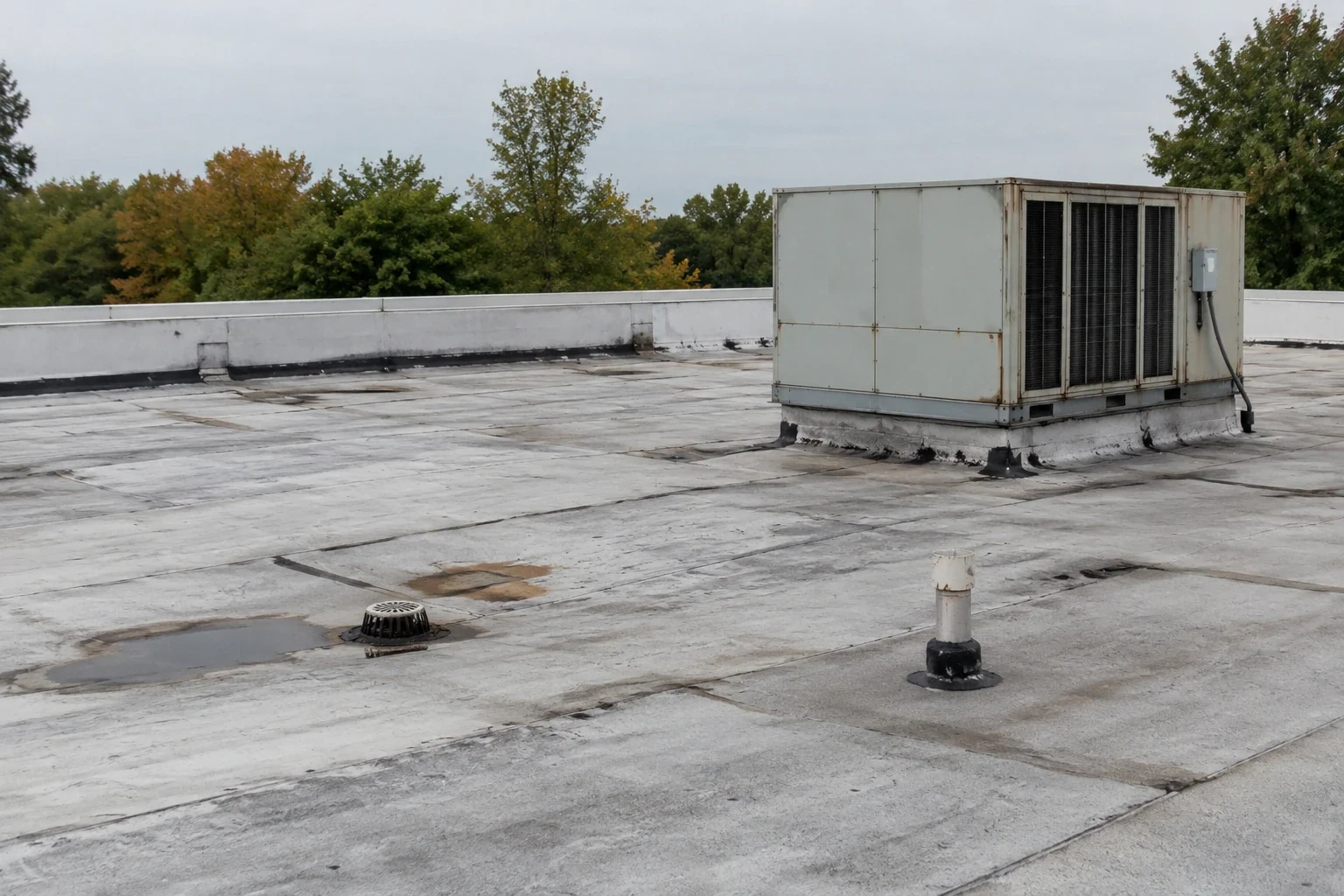
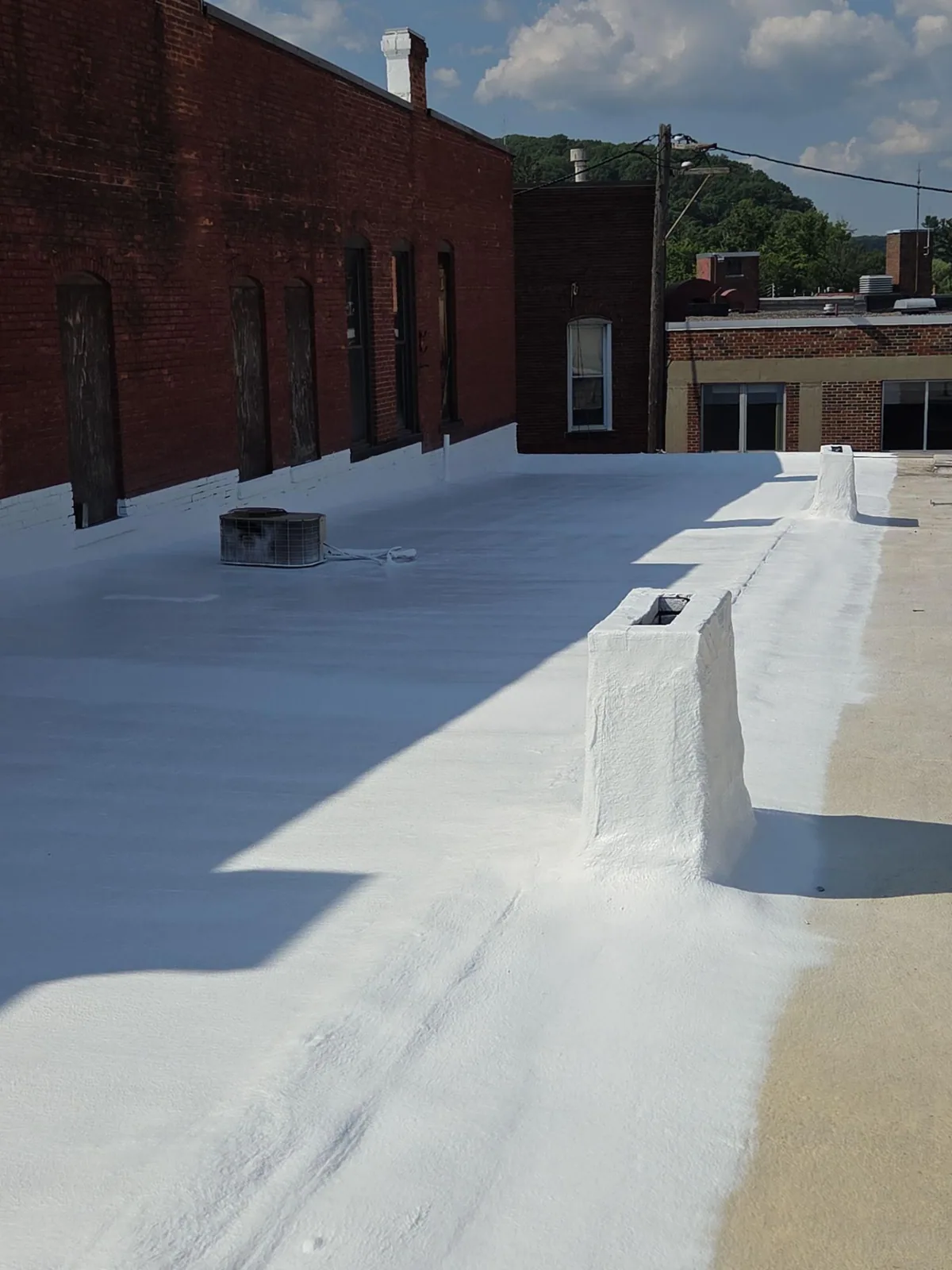
Buildings along the corridor can have different roof spans, parapets, and equipment loads. We identify the installed membrane or panel system, inspect transitions between additions, and document which areas can be reached safely. A retail address does not determine roof construction, so material selection follows the field survey. If a roof zone cannot be reached safely, we note that limit and avoid treating the unseen area as inspected. A follow-up visit or authorized test can resolve the remaining question before a repair boundary is finalized.
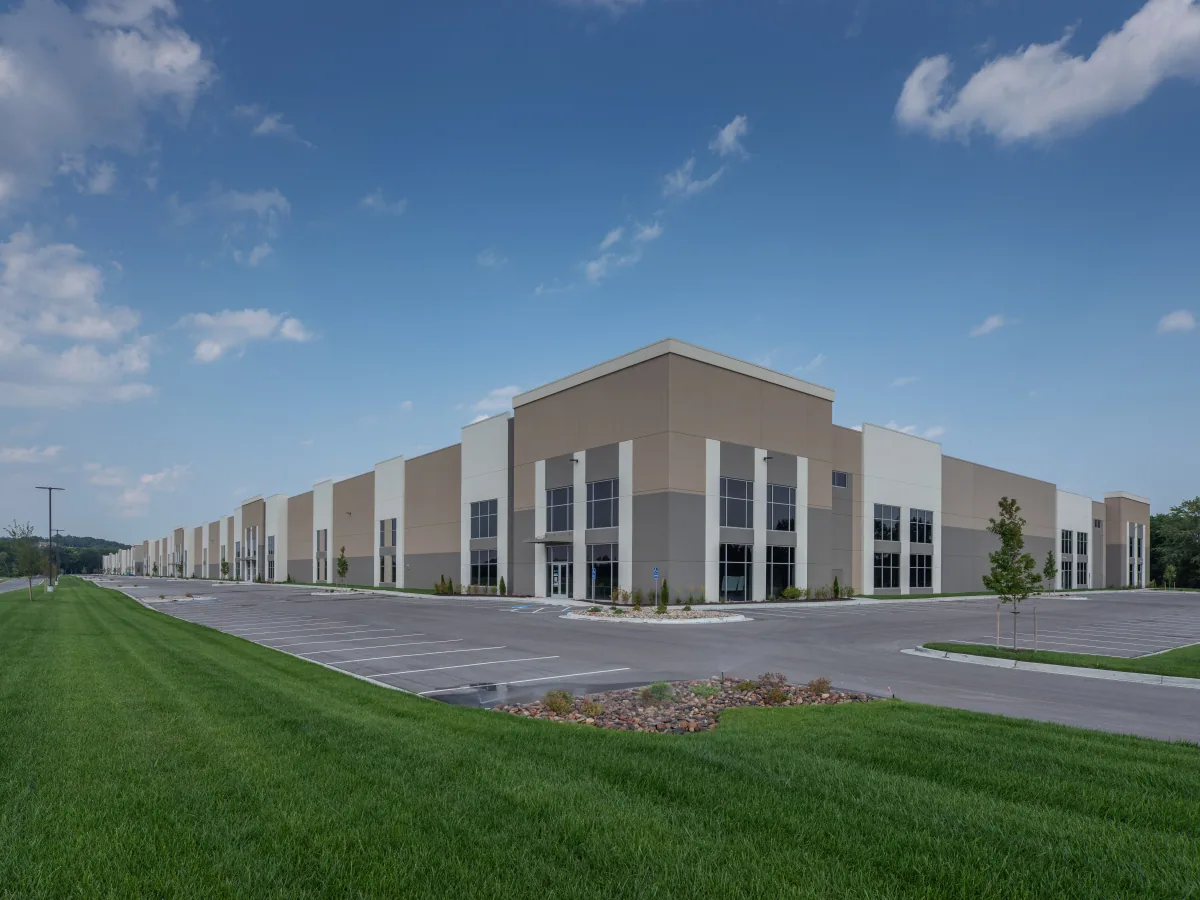
Large enclosed retail properties and smaller storefronts can place different demands on edges, penetrations, and drainage. We measure each roof zone and note where signs, mechanical equipment, or later additions interrupt the field membrane. Those observations set a repair boundary that belongs to the inspected building.
The 39th Street Corridor is one of several local shopping areas, with distinct grocery and general-retail destinations nearby. That makes the corridor a useful retail geography, not one shared property. We confirm the exact building, tenant entrances, delivery route, and roof access with its manager. A service record names the structure and roof zone so separate owners can track their own repairs.
Trace the Leak Before Patching
A leak investigation starts with the reported room and timing, then follows roof details uphill. We check whether the stain aligns with a drain, seam, curb, parapet, or prior repair. If the visible mark cannot be connected to a roof opening, we identify the next inspection or test rather than seal an arbitrary area.
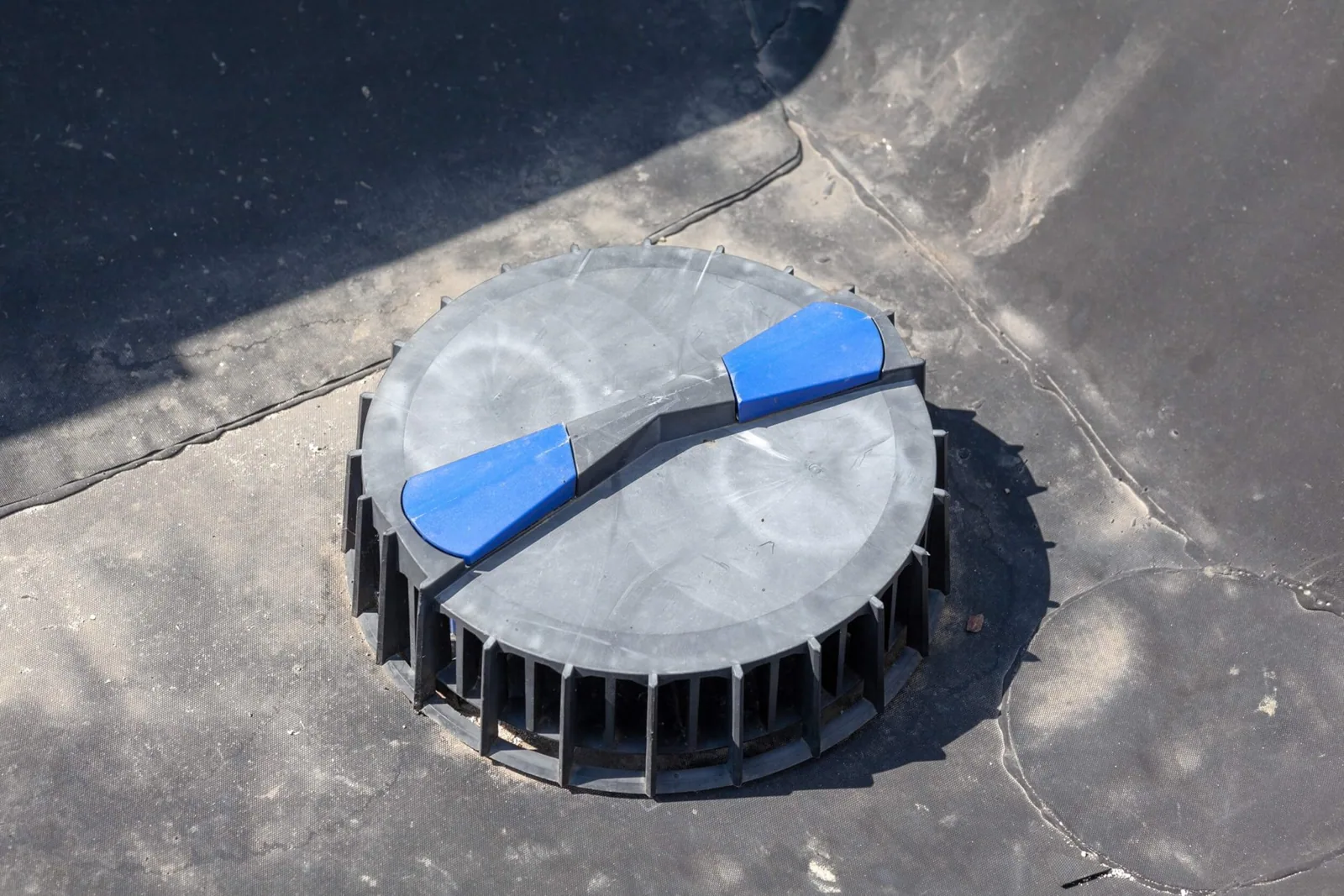
If insulation may be wet, infrared moisture survey work can guide test openings. Testing confirms whether the roof needs a small patch or removal of saturated material. Drainage review includes bowls, strainers, overflow paths, and the membrane around each connection. Drain and scupper repairs can correct a failing outlet if adjacent material remains sound. A patch is not complete until it restores water shedding across the repaired interface.
Protect Contents and Operations
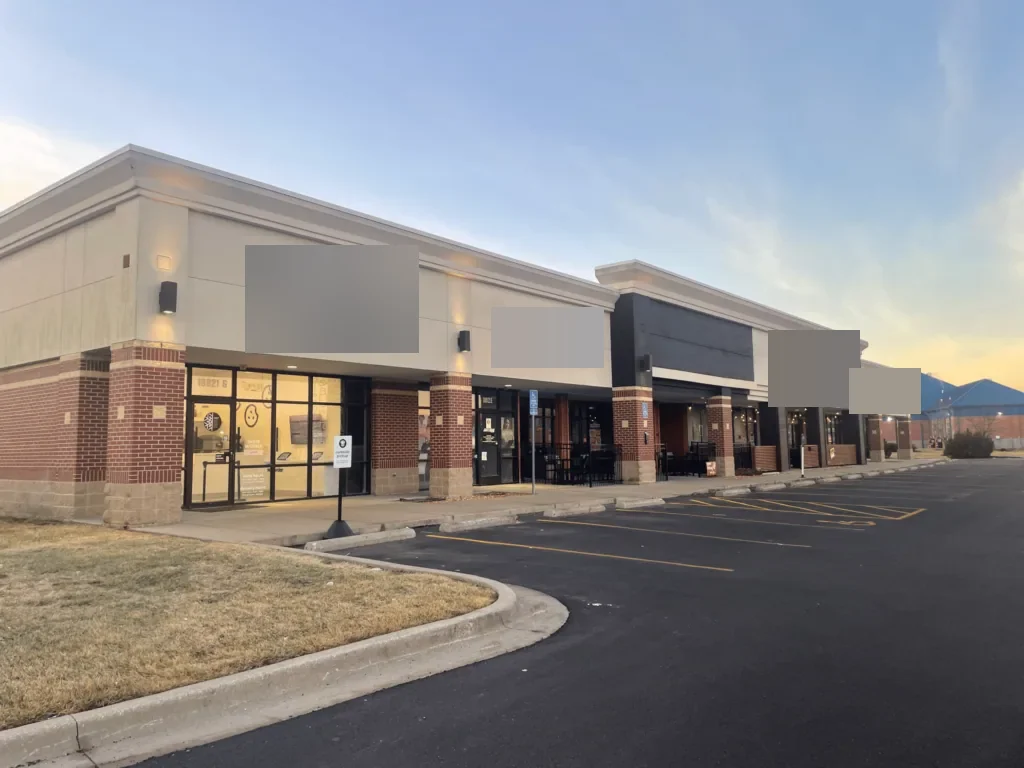
Stock, ceiling systems, and customer areas below a work zone may need different protection. The property contact identifies sensitive areas, delivery windows, and entrances that remain open. We set a work boundary, keep debris movement controlled, and close the exposed roof before leaving the site.
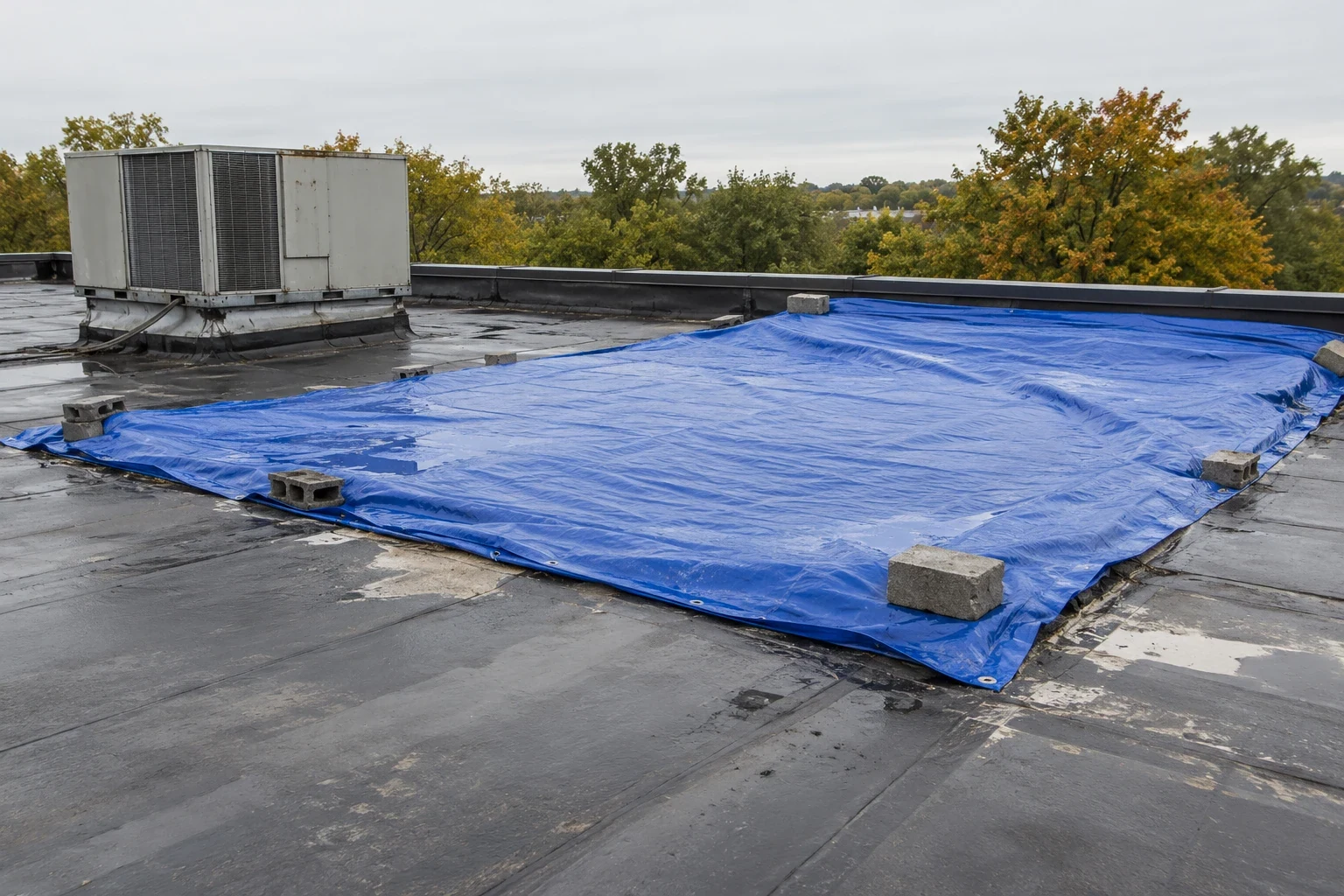
Work above occupied retail areas is sequenced to avoid leaving an open roof over stored contents. We confirm the closure at each phase and photograph the completed transition. If a repair must happen after hours, the manager specifies access and alarm procedures. Emergency response is available around the clock if water entry needs rapid stabilization. Permanent repair follows the inspection and uses materials compatible with the actual roof system.
Retail buildings often add rooftop units as tenants change. Before a new curb or conduit is installed, check the existing membrane, attachment, insulation, and remaining drainage path. A curb placed across a low area can redirect water; a poorly sealed conduit can create a leak that travels below the surface. The roofing and mechanical teams should agree on who flashes each penetration and who verifies it.
Set a Boundary for Each Repair
A localized seam, flashing, or puncture defect can be repaired when the material around it remains dry and attached. Repeated leakage, wet insulation, or deck damage may require a larger area. We test the suspected zone, photograph concealed conditions, and mark the confirmed limit. If removal exposes a new defect, we present measurements and the cost driver before extending the work.
Replacement or recover depends on the existing layer count, deck, drainage height, code, and attachment. The reported property square footage does not substitute for roof measurement or condition testing. Timing and cost depend on roof area measured, materials, access, protection, disposal, and weather. A repair plan states the patch size and tie-in; replacement planning lists roof layers, drains, edges, curbs, and testing at closeout.
Keep One Roof Record for the Marketplace
Closeout should show the completed detail in context and at close range. We record the membrane or metal, preparation method, seam or flashing repair, drain condition, and any open item that needs another visit. The property manager can use that record to distinguish completed work from future maintenance.
A retail corridor may include properties with separate owners, tenants, and service schedules. We keep each inspection, photo set, and work limit tied to the building that authorized the visit. That makes a later leak review easier to compare with the prior roof record.
Independence's neighborhood guides list Eastgate Commerce Center and the Noland Road Corridor as separate commercial locations with different land uses. For a retail building on 39th Street, we inspect its own roof and coordinate around the active tenants below. The report records the inspected property, work zone, materials, water path, and any item needing follow-up.
Commercial Roofing Questions
Is the reported 52,000 square feet the roof area?
No. It is the marketplace's described property area. We measure the actual roof zones and verify their condition independently.
Can roof work be done without moving all vendors?
The property team identifies which merchandise and operations are below the work zone. We phase the roof area and use protection based on those site requirements.
How do you protect antiques if a roof section is opened?
We coordinate interior covering or relocation with the marketplace manager, limit the exposed roof area, and verify temporary closure before leaving.
Does each vendor need a separate roof inspection?
The roof assembly is inspected by physical zone. Tenant reports help locate concerns, while one condition may affect more than one interior space.