Plan school roof repair in Independence, MO around campus access, drainage, classroom protection, and the assembly findings that set the work boundary.
School roof work has to fit the bell schedule, campus access, and the rooms below. A leak near a classroom or corridor can interrupt the day before anyone sees where water entered. The City lists education among Independence's major employment sectors, and the Benton neighborhood lists William Chrisman High School among its local amenities. Metropolitan Community College Blue River offers career programs in police, fire, and EMS training, a different campus context with its own access needs. Those facts describe the local institutional setting, not the school's roof assembly. We inspect the actual deck, membrane, drainage, and penetrations, then set a repair boundary the district can coordinate with campus operations.
Campus Access Sets the Sequence
Before work starts, the school contact identifies arrival and dismissal times, student routes, deliveries, and any areas that must remain open. We plan roof access, lift placement, and material staging around those constraints. Work over a high-traffic entrance may need a different phase from work over a closed wing. The daily scope is limited to what the crew can secure and dry in before leaving. That gives the school a clear record of which areas are active each day.
Occupied work also requires interior coordination. We confirm who receives leak notices, who can move ceiling tiles, and how temporary protection is checked. When a roof opening sits above a classroom or shared space, the protection plan is in place before removal. A phased school reroof can isolate one roof zone while other spaces stay in use. The facility team sets access limits; the roofer sets the safe work boundary within them.
Drainage Protects the Interior
Water may move beneath a membrane before it appears on a ceiling. We compare the reported room with the roof above it, then inspect seams, curbs, wall transitions, drains, and overflow routes. A stain in one wing can trace to a higher roof or travel along a deck flute. We mark the likely path, inspect nearby details, and use selective cores when the layer condition is not visible. The repair is placed where the water enters, not automatically over the interior mark.
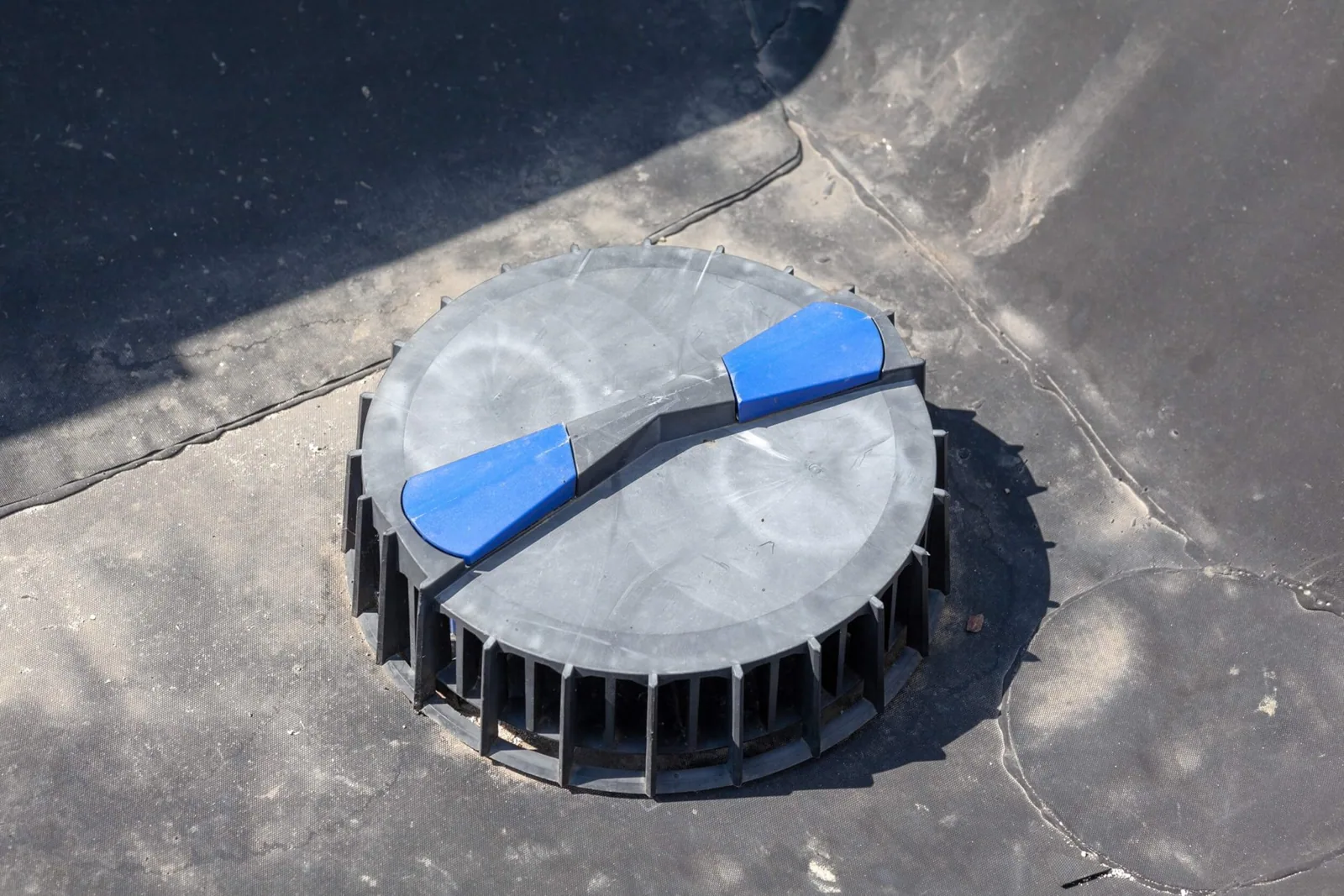
School roofs often contain multiple work phases or system changes. We document the roof surface, cover board, insulation, and deck at representative points. Wet insulation can hold moisture and reduce the support beneath a patch. A blocked drain can create standing water that tests a weak seam. If drainage is the mechanism, the scope needs to restore the outlet and surrounding slope. Drain and scupper repairs are coordinated with the membrane detail so the water path remains continuous.
Details Must Match the Assembly
Equipment curbs, exhausts, skylights, and wall transitions create interfaces that move differently from the roof field. We inspect flashing height, bond, fasteners, and substrate condition at each one. A patch can fail when it bridges onto a coating or old repair that cannot accept the new material. We identify the system first and check compatibility before installation. If the substrate is wet or unstable, we extend the opening until the repair reaches sound layers.
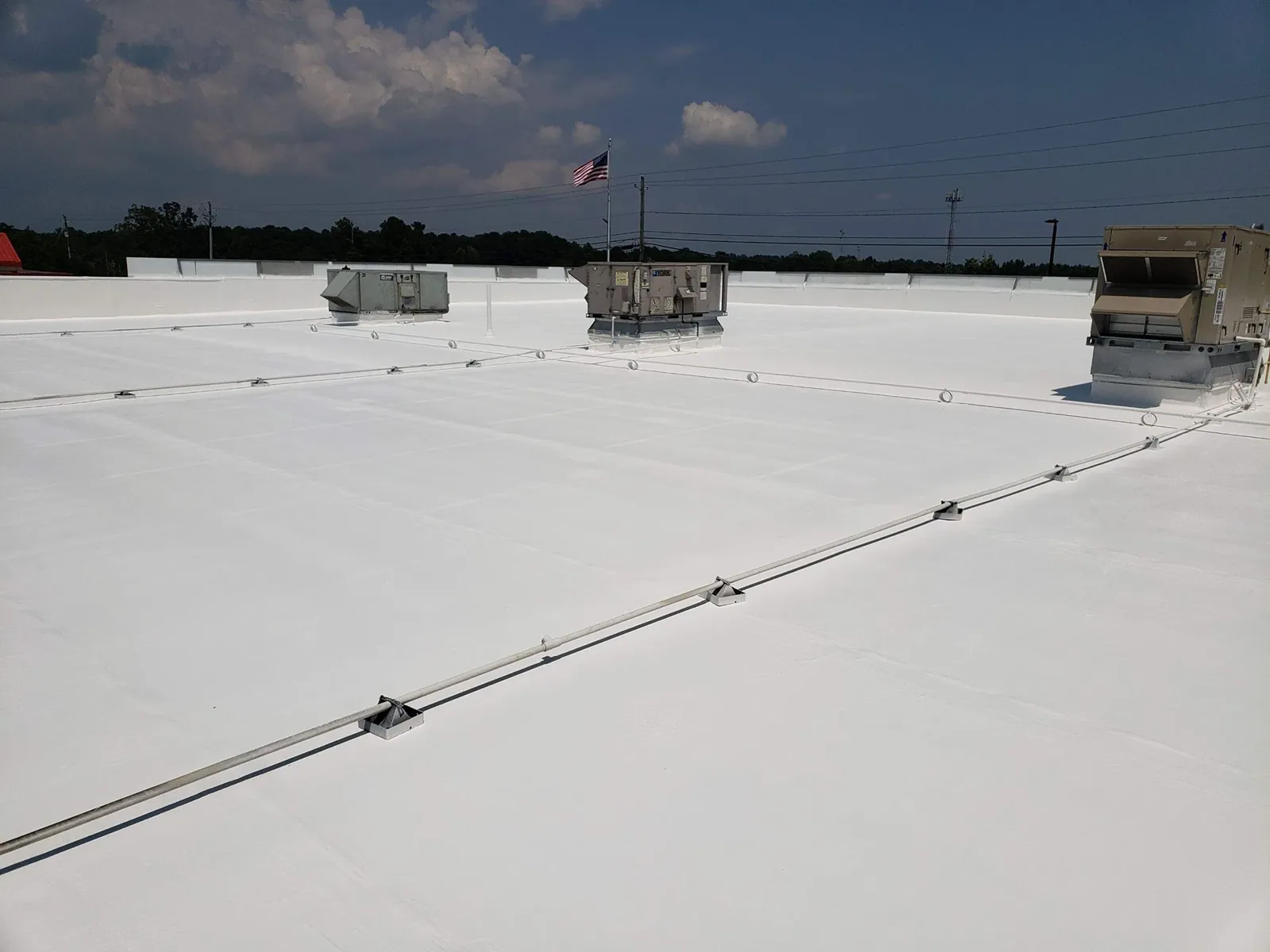
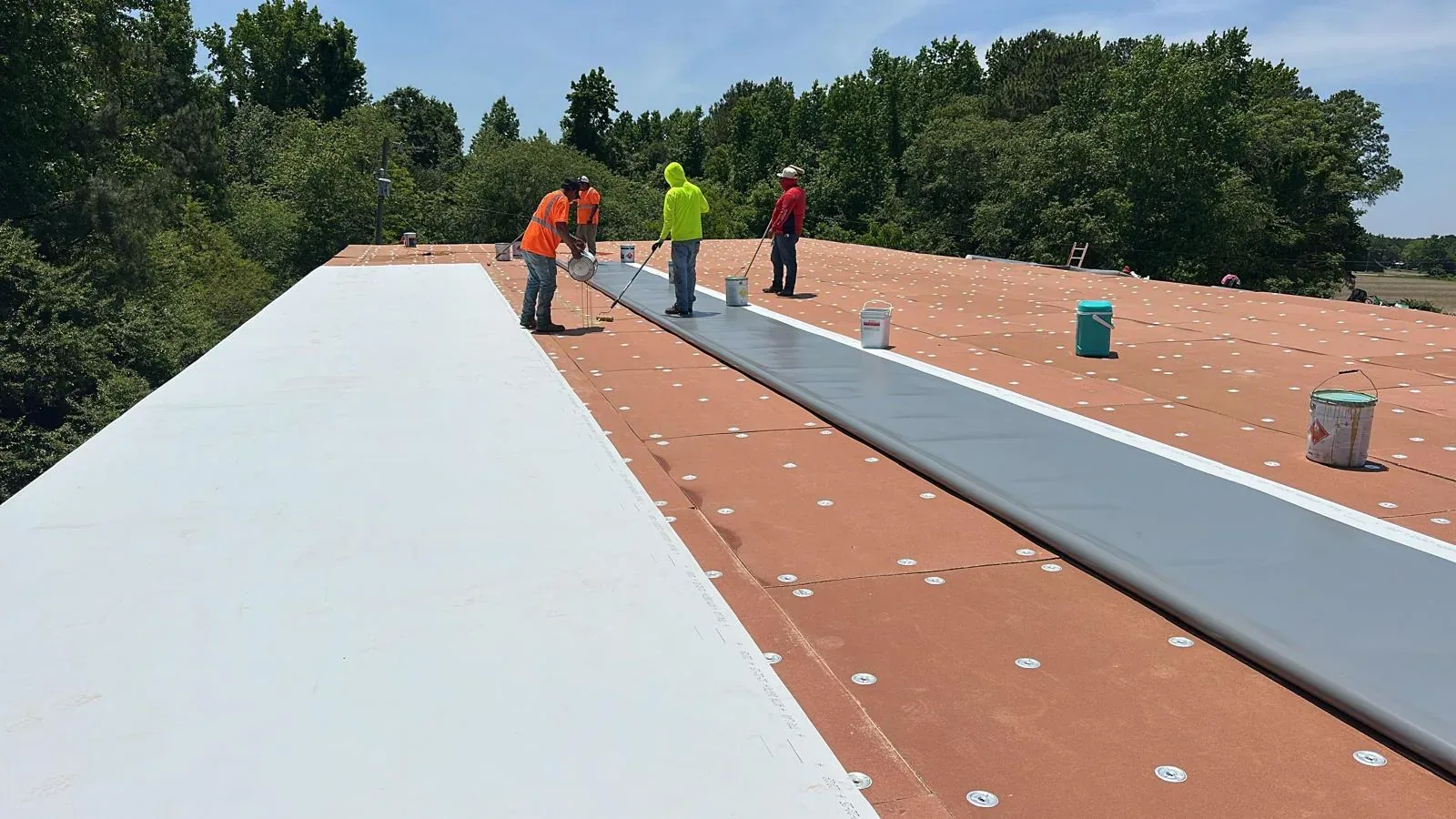
Wind force also tests attachment at edges and corners. We check terminations, edge metal, and the connection between membrane and deck. A TPO assembly requires seam and flashing details suited to thermoplastic membrane. School equipment projects are reviewed before new supports or penetrations are located. College roofs may share a campus schedule challenge, but the assembly evidence and occupancy rules remain specific to each building. A hospital roof phase requires its own access coordination.
Storm Records Guide Inspection
Spring hail and winter freeze exposure make post-storm observations useful on Independence roofs. The March 6, 2017 storm produced an NWS report of 1.75-inch hail at a point east-northeast of Independence; Centerpoint Medical Center had a separate quarter-size observation. That record does not establish hail damage at a school. We inspect for punctures, fractured surfacing, displaced accessories, and open seams, then photograph what is present. A hail inspection separates direct impact evidence from ordinary wear.
Temperature changes can also stress sealant joints and metal transitions. Kansas City climate normals are station data, not temperatures measured at a school roof. We use them as regional context and base the repair on observed movement at the actual roof. The district's maintenance team can compare those findings with leak history, previous patches, and equipment work orders. That record helps avoid treating each ceiling report as an unrelated event.
Repairs Follow Tested Conditions
A localized repair works when the membrane is stable around the defect, the substrate is dry, and the failed interface can be isolated. We show the repair extent and describe the material preparation. Repeated leaks, widespread moisture, loose attachment, or deck deterioration can support a broader replacement boundary. We compare repair, recover, and removal based on test results, access, and how the project can be phased around the school calendar.
Photos and a written condition report give the district a record for budgeting and construction coordination. The report identifies sampled areas, repair locations, drainage conditions, and work that remains. If hidden moisture changes the quantity, we document the discovery before expanding removal. A roof condition report can be used alongside a district roof program to compare priorities across buildings without assuming each roof needs the same work. We can inspect the roof, map its water path, and prepare a scope the district can schedule.
Schedule depends on roof access, occupied rooms below, removal depth, and the amount of temporary protection. Costs also change when wet insulation, deck repairs, or curb rebuilding extend the original limit. We state these drivers separately so the district can compare phased work with a school-break project window.
Commercial Roofing Questions
Can roof repairs happen during the school year?
Often they can be phased around building access and class schedules. We agree on roof access, noise windows, protection below, and the daily dry-in point with the district. A specific area may need a short restriction if equipment or an open roof section affects the space below.
How do you locate a leak that appears in a classroom?
We record the room and timing, then inspect roof details that can feed that water path. Seams, drains, curbs, wall transitions, and higher roof levels are checked. If the layers conceal the route, selective cores can show moisture and assembly condition.
Can one roof phase be completed while the rest of campus operates?
The work area can be isolated when access and protection allow it. We define a small enough opening to close each shift and coordinate materials away from student routes. The campus contact confirms any rooms or entrances that need additional protection.
What if inspection finds wet insulation beyond the leak?
We map the extent that can be confirmed and stop at a secure boundary. Photos and core results show why the repair area may need to expand. The district can review the added scope and schedule before removal continues. The repair boundary should follow the confirmed condition, not the location of the ceiling stain. We mark the wet area, determine whether the substrate remains suitable for attachment, and identify how replacement layers will tie into sound roof. During the school year, access and noise limits can affect when that work occurs. The owner should receive a clear explanation of the added area and cost before removal proceeds beyond the approved scope. Photograph both the wet boundary and the sound tie-in surface. When school staff can see the location and proposed limit, they can review the added work without relying on a ceiling stain as the map.