Commercial roofing near Benton in Independence, MO, begins with a property-specific inspection, safe access, and a verified water path.
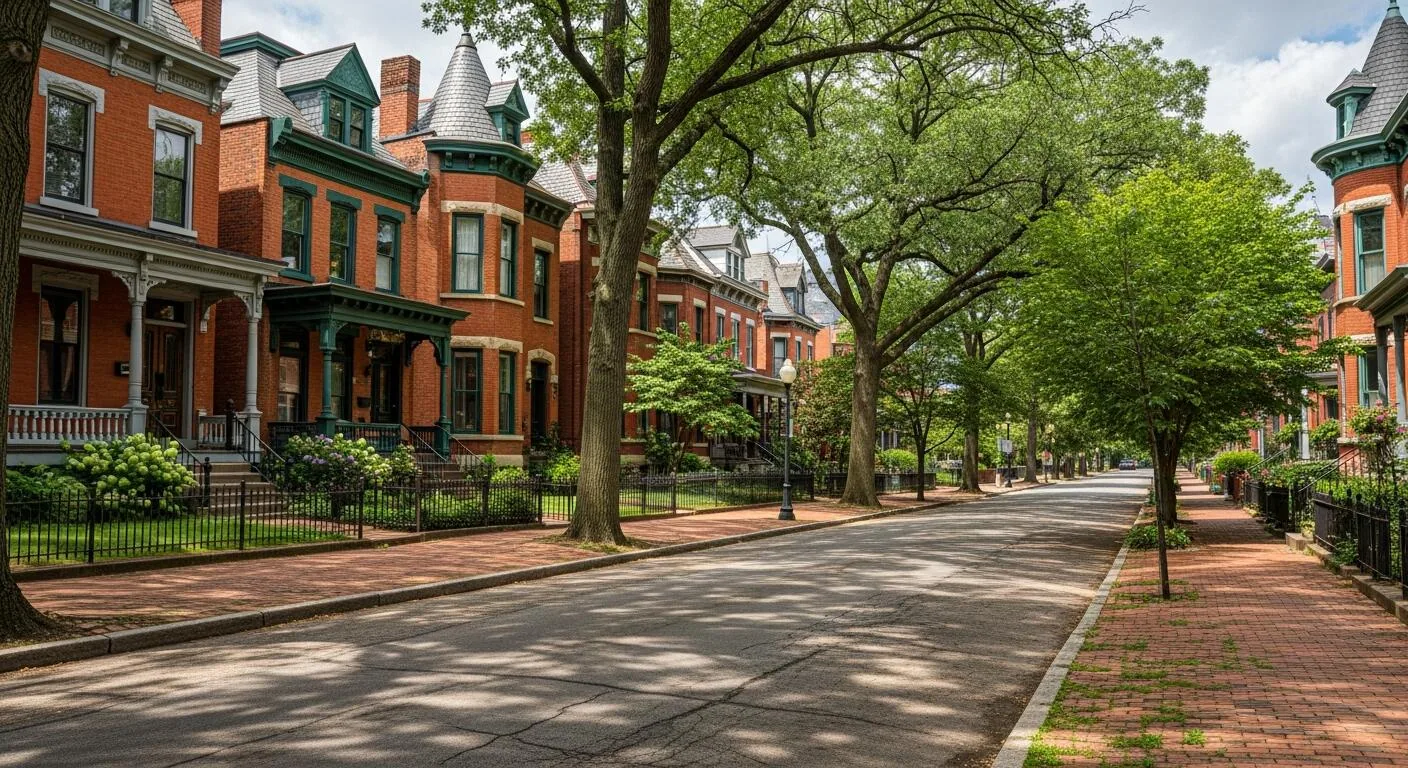
Benton lies between Lexington and Sea avenues, from Noland Road east to Hunter Street, just east of Independence Square. The neighborhood includes historic homes and later residential construction, while its amenity list names Independence Square, Hy-Vee on 23rd Street, William Chrisman High School, and Independence Transit Center. A commercial roof inspection should focus on the actual business or institutional property being serviced. The surrounding residential history does not identify the roof material or condition of a commercial building.
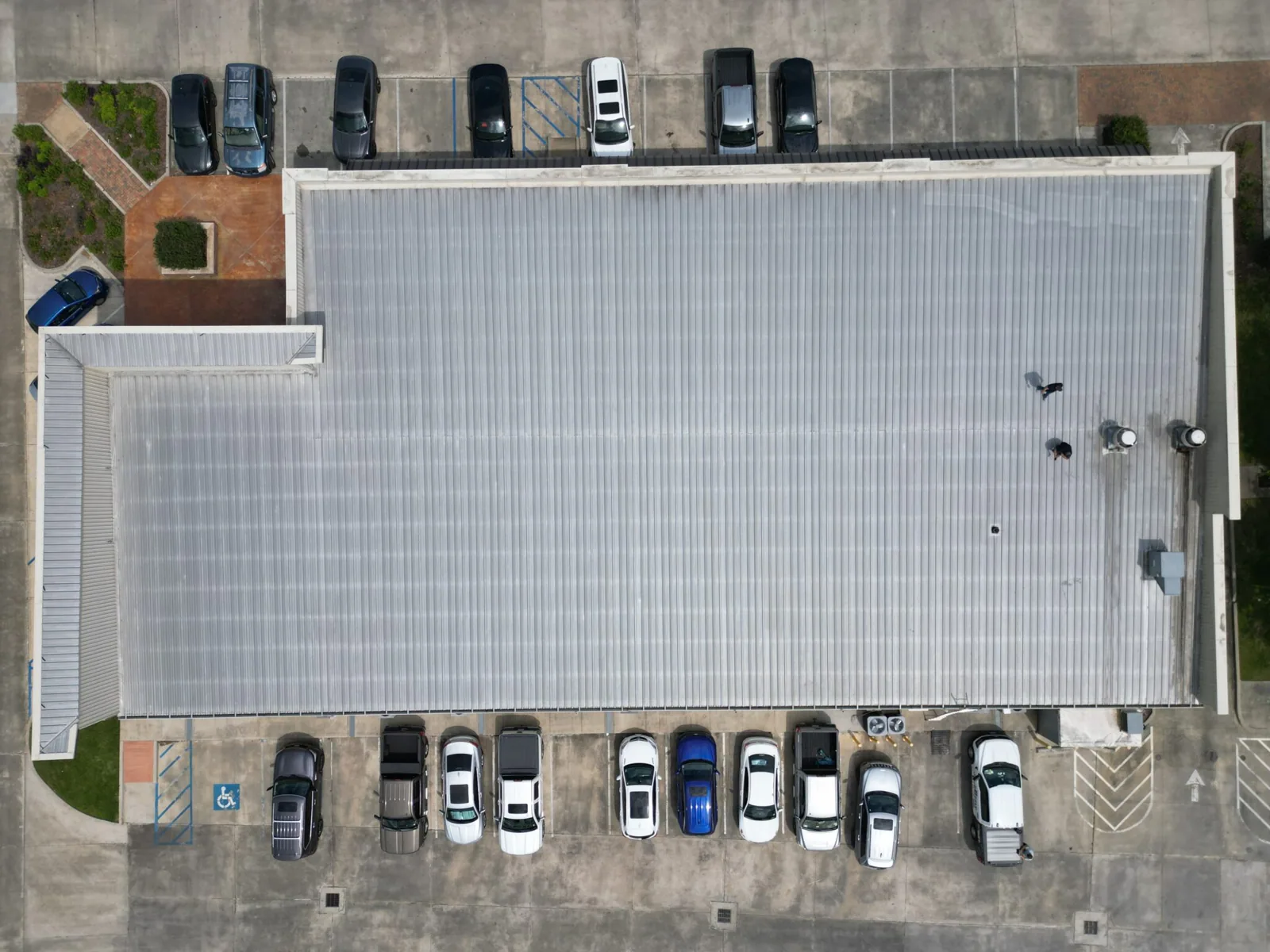
We confirm the address and site contact, then inspect visible membrane or metal, seams, edges, penetrations, drains, and interior evidence. The report traces water routes and marks sections that need testing. Where the work affects an occupied facility, the property team confirms access and operating limits. This keeps the scope specific to the building and its use rather than assuming one roof condition across Benton.
Use the Neighborhood Limits Clearly
The City places Benton east of the Square, between Lexington and Sea avenues and from Noland Road to Hunter Street. That boundary helps locate a project, but the exact property entrance and work access still need confirmation. We check roof hatch or ladder access, staging, deliveries, and any constraints affecting the ground route. For an institutional or retail building, the manager identifies entrances and interior areas that need protection.
Nearby amenities provide useful place references, not roof data. Independence Square, the 23rd Street Hy-Vee, William Chrisman High School, and Independence Transit Center may have different owners, operating schedules, and roof systems. We can also schedule separate inspections at Historic Independence Square and Belton, Missouri. Each report stays attached to its address and inspected zones.
For a project that crosses a property line or serves more than one tenant, we confirm the owner authorization and roof area before beginning. A shared wall or common drain can affect the water route, but the scope still needs a defined responsibility for each side. We note the property boundaries and the party who can approve access. That avoids combining separate buildings in one repair record and helps a manager plan future inspections by address.
Inspect Commercial Roof Details
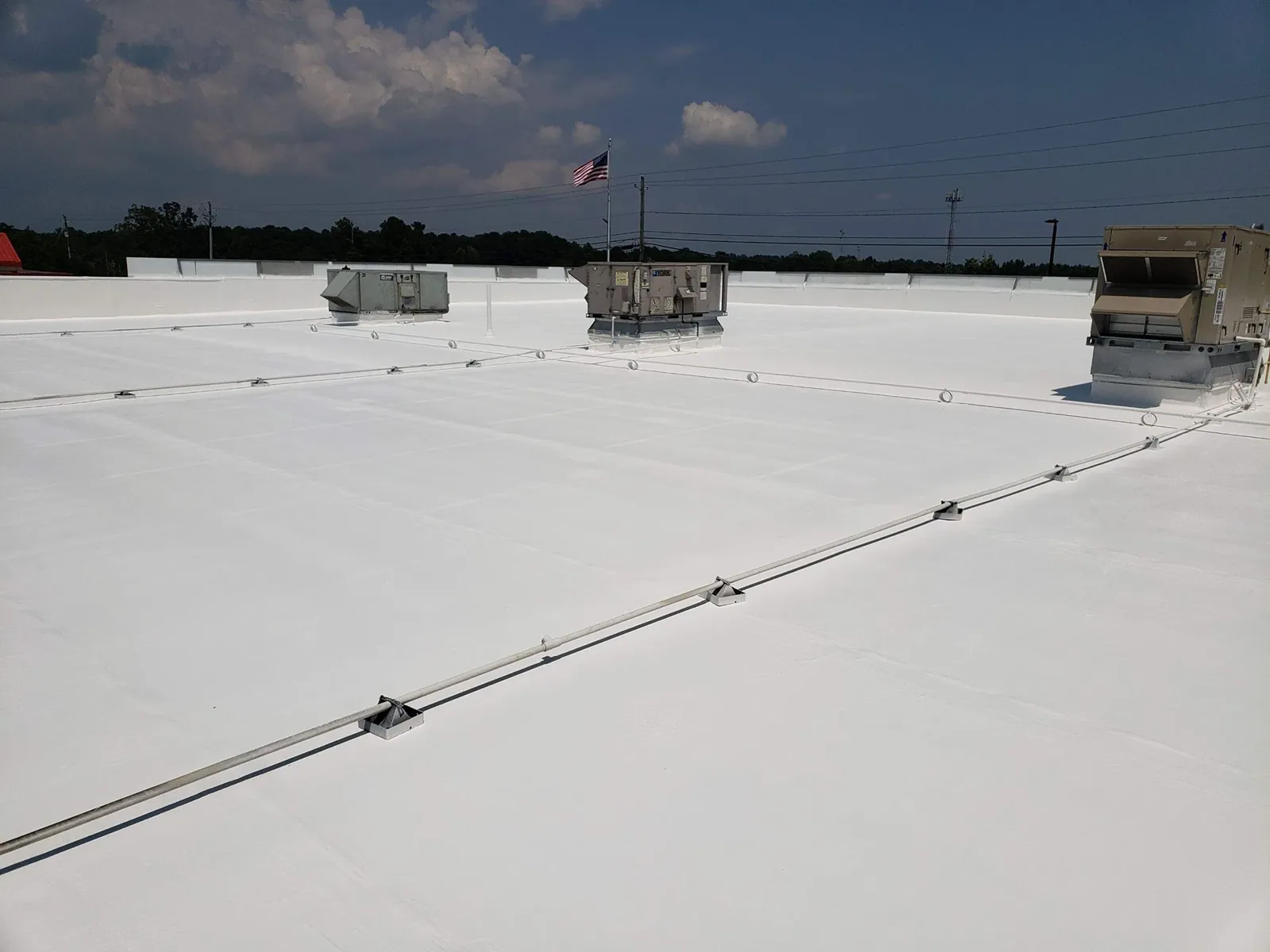
The neighborhood's houses span several eras, but a commercial roof job may involve an office, school, retail property, or another facility. We do not infer that assembly from nearby housing. At the job address, we inspect field seams, exposed edges, parapets, equipment curbs, penetrations, and previous repairs. If records show earlier roof work, we compare them with current conditions. A concealed deck or overlay may require a test opening to verify insulation and attachment.
Each system requires a different repair detail. Single-ply membranes, built-up roofing, modified bitumen, and metal panels have distinct seams and flashing methods. A coating is appropriate only when the substrate is stable and compatible. A commercial roof inspection records the visible assembly and conditions that need further testing. That report helps a property owner plan maintenance without assuming the age or condition of the surrounding neighborhood's buildings.
Trace Water Through the Assembly
A ceiling stain does not always sit under the roof opening. Water can follow framing or a deck toward an interior wall before appearing. We compare the room report with roof layout and inspect the likely route across seams, curbs, parapets, drains, and previous patches. The point of entry and the point of visible damage are recorded separately when evidence supports that distinction.
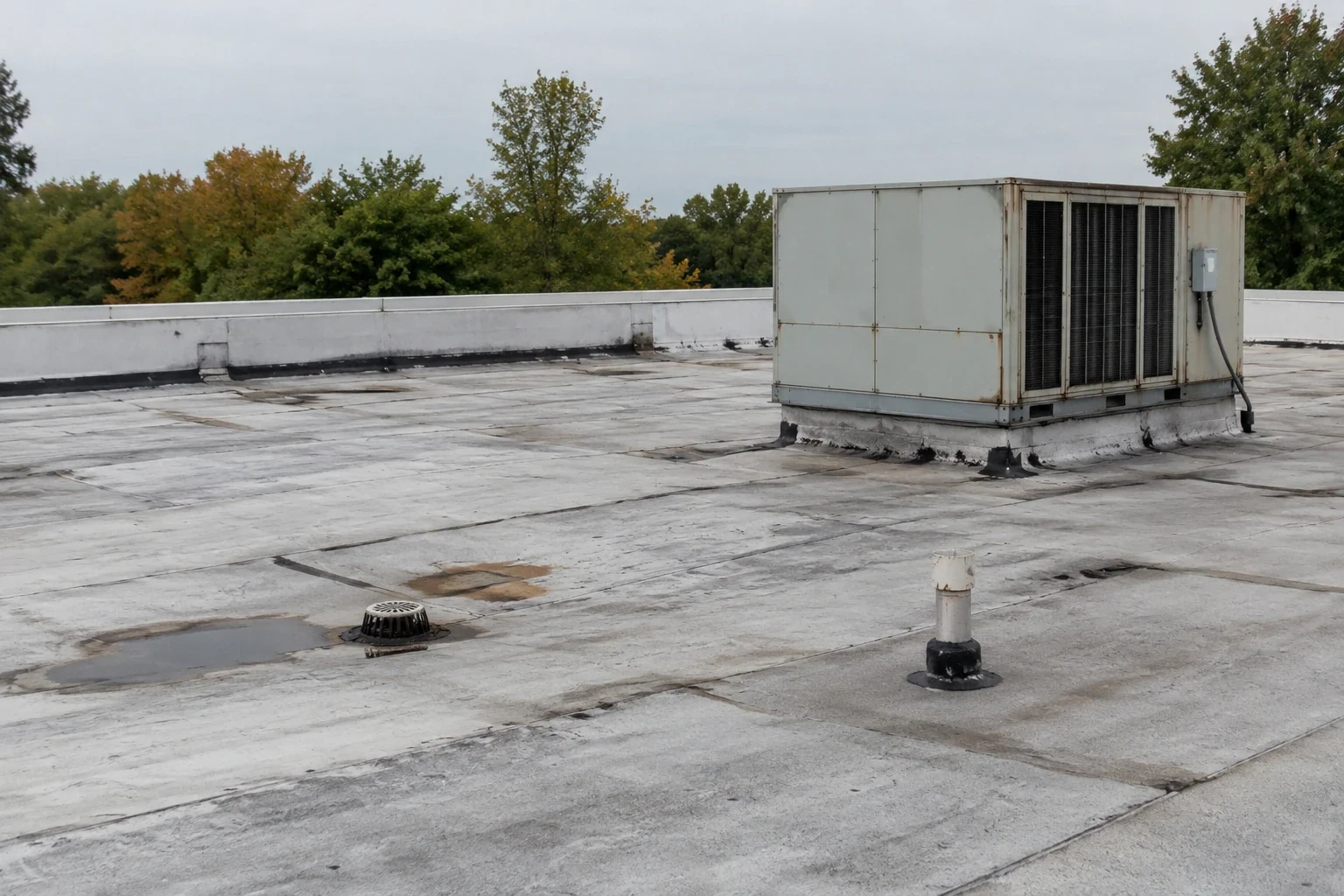
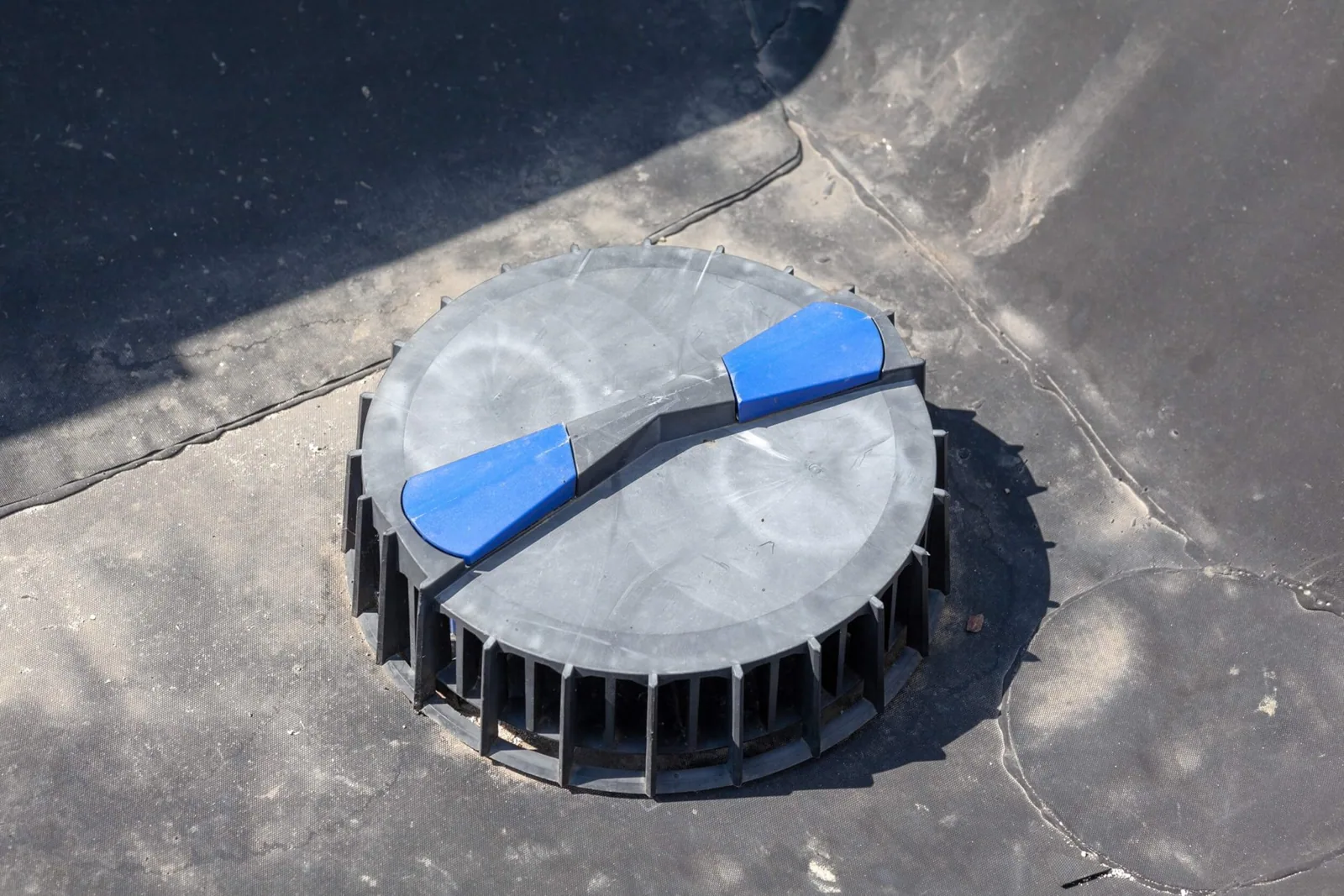
Drainage review includes roof slope, drain bowls, strainers, scuppers, overflow outlets, and leaders. We inspect persistent ponding and determine whether debris, low slope, or deck movement is involved. If moisture beneath the field membrane is suspected, infrared moisture mapping can guide test locations. An opening confirms wet insulation. If water enters through an outlet detail, drain and scupper repair can restore the connection when adjacent material remains sound.
Plan Around School and Transit Activity
William Chrisman High School and Independence Transit Center appear in the neighborhood's amenities. If a roof project is at an occupied school, transit facility, or nearby business, the authorized contact sets safety routes, operating hours, delivery controls, and any restricted zone. The neighborhood guide does not set those rules for a roofing crew. We confirm them directly before equipment arrives and plan barriers where material or debris moves overhead.
For tear-off, the opened area must be small enough to close before the shift ends. Interior protection is installed below the active zone, and temporary flashing is checked before the crew leaves. Occupied-building sequencing can limit disruption and coordinate noisy work with facility operations. If a leak is active, emergency stabilization is available at any hour, with permanent repairs planned after inspection confirms the source.
Choose the Work Boundary
A localized seam opening or puncture can be repaired when the surrounding substrate is dry and attached. Repeated leaks, widespread wet insulation, loose perimeter details, or deck deterioration can require a broader area. We use testing to confirm concealed conditions and measure the supported boundary. If hidden damage appears after removal, we pause, record the finding, and obtain approval before expanding work.
Recover is considered only after reviewing existing layers, deck strength, drainage height, code, and attachment. Replacement may be necessary to reach a sound base. Cost and timing depend on roof area, materials, access, removal, interior protection, and weather. A repair scope identifies the defect and tie-in. Replacement work outlines the new assembly, drains, curbs, and edges, plus the inspection points needed before closeout.
Keep Each Address's Roof History
A useful report records the building address, roof type where verified, zone, photos, repairs completed, and items still needing access or testing. If the property is near a school or transit route, the file may also note staging and daily closure requirements. This lets a future manager compare the same seam or drain and identify whether a repair changed. Unvisited sections remain listed as unverified.
Benton's neighborhood boundary follows Noland Road and Hunter Street, with Independence Square just west of the area. Other nearby commercial locations have separate scopes; we also serve the Noland Road Corridor and 23rd Street and Sterling Avenue retail area. The Benton project report names its own address and findings so maintenance decisions follow the actual roof rather than a neighborhood map.
Within Benton's residential setting, a commercial roofing request should still be tied to the actual nonresidential building and its own assembly. Confirm who is responsible for roof access and whether occupied rooms or a neighboring use could be affected by removal. The work plan should identify the area protected below, the material route, and the temporary covering used if an opening cannot be closed that day. At the repair point, photograph the existing layers and supporting surface before they are concealed. If conditions extend beyond the agreed area, obtain direction before changing the scope. That provides the owner with a clear record while keeping neighborhood history separate from construction findings.
Commercial Roofing Questions
Does Benton's housing history indicate a nearby commercial roof type?
No. The neighborhood guide describes residential building periods. We inspect the commercial or institutional property under review.
Can a school or transit roof be inspected during operating hours?
The facility contact determines access and safety requirements. We coordinate roof entry, barriers, deliveries, and interior protection around that plan.
Are nearby properties covered by one roof assessment?
No. Each address has its own assembly, owner, access rules, and condition record. Findings are not transferred between buildings.
What if a roof area cannot be accessed during the first visit?
The report lists that area as unverified and identifies the access needed for a follow-up. We do not treat an unseen section as clear.