Install and maintain Versico commercial roofing in Independence, MO with system selection, attachment review, seam testing, and mapped project records.
Versico publishes commercial systems in TPO, EPDM, PVC, KEE HP, and fleece-backed membrane. Its specifications also cover fasteners, insulation, accessories, adhesives, and system details. At a property near Eastgate Commerce Center or Independence Square, a product choice begins with the roof layers and exposure. We check the deck, attachment, drainage, penetrations, and maintenance routes before matching Versico components to the building.
Compare VersiWeld, VersiGard, and VersiFlex
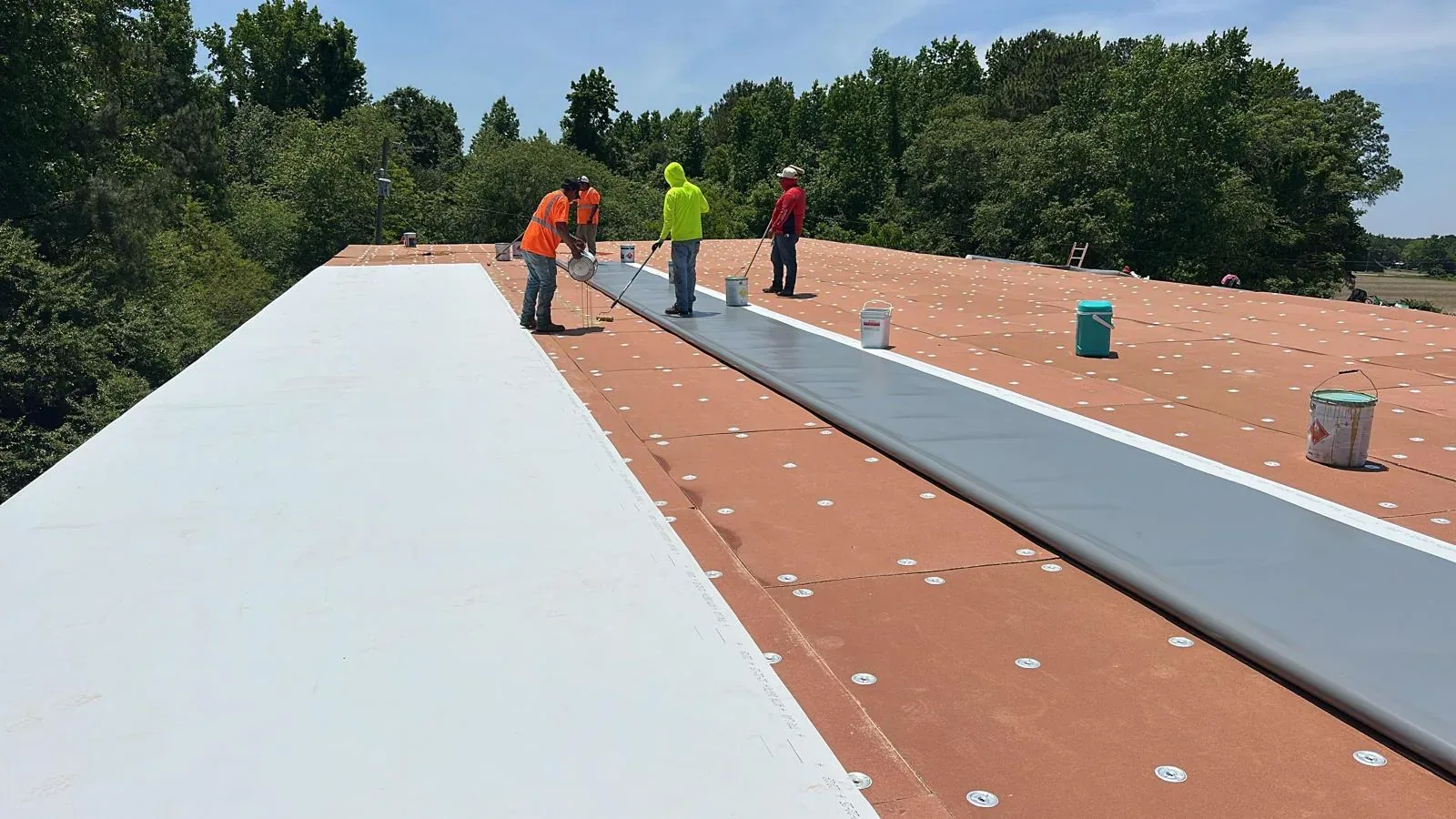
VersiWeld is Versico's heat-weldable TPO membrane. VersiWeld Plus incorporates its OctaGuard XT weathering package. VersiWeld QA has a pre-applied adhesive configuration. The VersiFleece line combines membrane with a non-woven polyester fleece backing. These options can change attachment, surface preparation, and installation steps. Consult the current system specification and product data for the selected configuration.
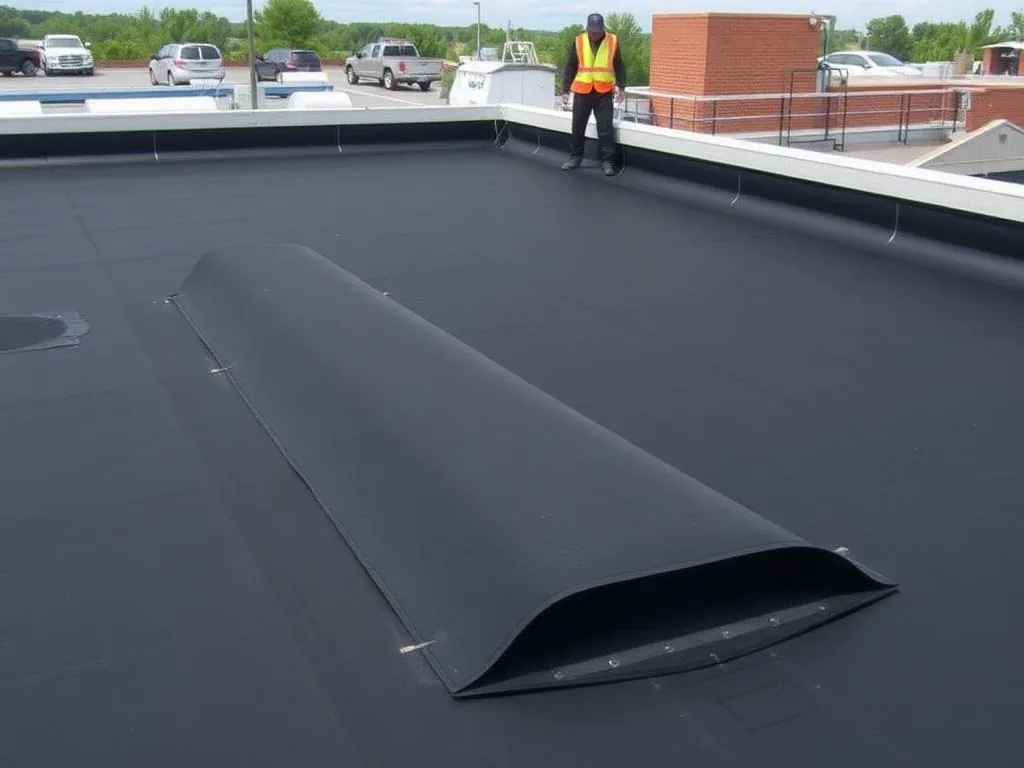
VersiGard is Versico's EPDM family, with standard, reinforced, white, and pre-applied adhesive versions. EPDM splices and flashing use a different procedure from welded thermoplastic laps. VersiFlex is the PVC family, with formulations marketed for particular exposures. TPO roofing, EPDM roofing, and PVC roofing each require a material-specific inspection and repair scope.
Fleece-backed membranes may be useful over certain substrates and can change puncture resistance or the recover interface. The fleece does not establish that an existing roof is dry or stable. Check the surface, moisture, attachment, and edge height before using a fleece-backed option over an older assembly. If a roof has multiple layers or prior patches, identify the full stack before considering an overlay. VersiFleece attachment and adhesive systems may vary by membrane and substrate. Check whether the selected product calls for a separating layer or cover board. Record which surface receives the adhesive and where the perimeter detail changes, then inspect the bond and field transitions against the approved assembly.
Plan Attachment and Water Flow
Fasteners, plates, adhesive, and perimeter details work together to transfer roof forces into the structure. A design must account for deck type, insulation thickness, cover board, edge zones, corners, and rooftop equipment. The selected system should identify the membrane attachment method and sheet layout. Do not mix components simply because they fit the same roof dimension; compatibility and approved details govern the assembly.
At a TPO or PVC seam, clean the surface, prepare test welds, set equipment, and probe the cooled lap. Check corners, T-joints, edge terminations, and repairs. EPDM needs the specified cleaning, primer, splice tape, and pressure. A seam inspection should follow that system's process, and edge metal needs a water-shedding transition with secure attachment.
Independence winter conditions can change bonding and welding work. The Kansas City January climate table gives a normal low of 20 degrees on the first day of the month. That is airport-station context, not a roof reading. We check the actual roof temperature, substrate moisture, wind, and material storage conditions. The crew should know how much roof can be opened and closed during that weather window. Store rolls and adhesives as directed and keep wet or frosted material out of the installation area. A test weld confirms settings for the actual sheet; it does not replace continuous inspection of field seams, flashing corners, and repair patches. Record tests by roof zone so deficiencies can be corrected before they are buried.
Verify the Building's Roof Use
VersiFlex PVC is described by Versico as resistant to certain chemicals, grease, fire, and punctures. That product claim does not cover every process or exposure. Identify the actual chemical, its concentration, discharge point, and cleaning schedule. For other Versico systems, compare technical documents for the expected conditions. A recommendation should name the relevant material and limits rather than relying on a broad category such as restaurant or industrial.
Manufacturing, health, education, and retail are among the sectors employing many Independence workers. The mix creates different roof-access needs, but business type does not verify membrane or roof age. Near Eastgate Commerce Center, confirm roof access, staging, and tenant boundaries at the address. The same inspection standard applies to a facility near Truman Road.
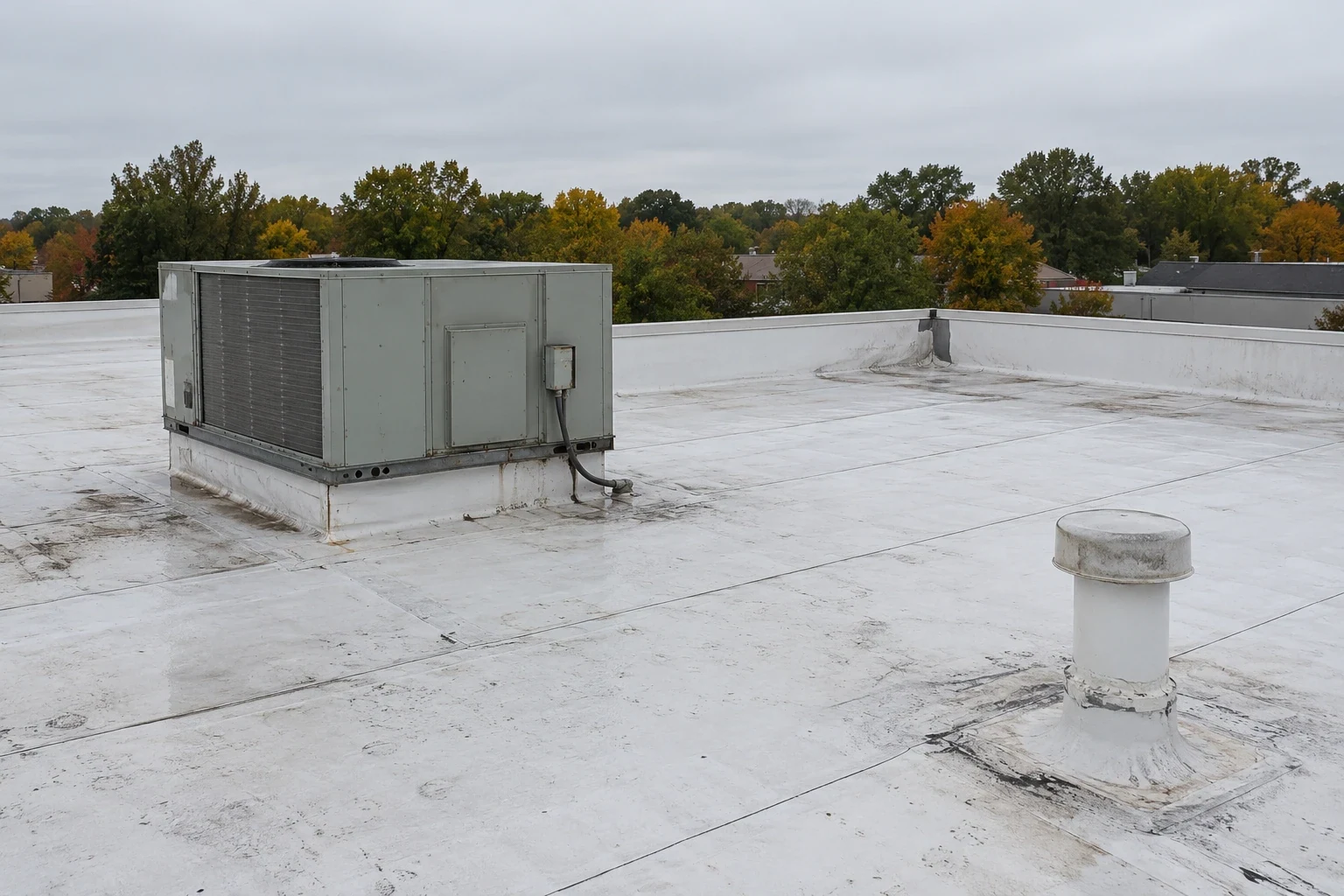
Versico publishes product data and maintenance resources for building owners. Keep the installed membrane designation, repair material, and system accessories in the property record. If the roof receives new equipment, solar supports, or service walkways, confirm that added work fits the existing assembly. A field team should inspect fasteners and flashings after new openings are installed. Check that mechanical curbs, walkway supports, and service equipment do not block drainage or create a new traffic path across the membrane. If added penetrations are not part of the roof scope, identify who will flash them and how the tie-in will be reviewed. Record the completed work in the property's maintenance file.
Test Before Re-Roofing
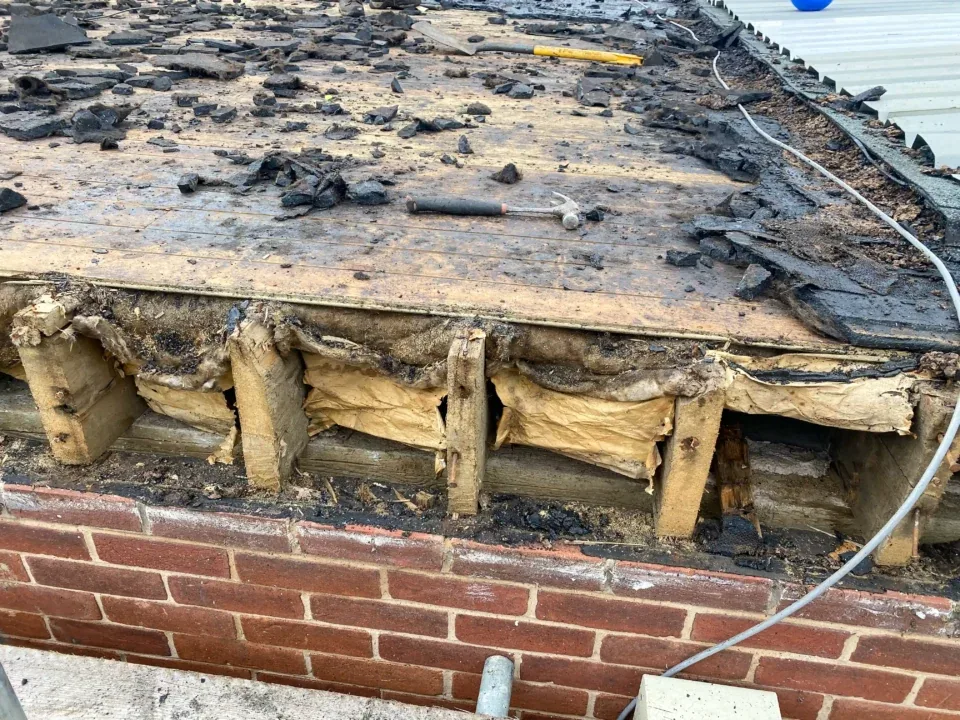
A recover proposal needs evidence that the existing roof can remain. Review moisture, deck condition, attachment, drainage, roof height, and prior layers. A core sample can confirm insulation at one location, but other areas may need additional testing if conditions differ. If a substrate is wet or deteriorated, removal and reconstruction may be safer than concealing it with a new membrane.
Versico's published specifications include mechanical attachment, adhered systems, and induction-welded TPO. Each design has its own plates, fastener pattern, equipment, and seam inspection. A recover assessment should show the interface with the existing roof and where water will drain. When tear-off is required, replacement planning sets removal limits, deck contingencies, and daily dry-in.
For comparison, Carlisle SynTec and GAF also publish TPO, EPDM, and PVC options. Compare complete assembly details, not only membrane category. System availability, building operation, substrate, drainage, and exposure decide which product scope fits the project.
Document the Completed Assembly
At installation, keep the selected product data, approved specification, delivered material, test welds or splices, attachment observations, and closeout images. Note any exposed layer that changed the repair scope. If a section was inaccessible, identify it in the closeout rather than treating the whole roof as inspected. These records let the owner and future service crew distinguish the installed Versico assembly from another membrane system.
Schedule a commercial roof review in Independence to assess Versico system choices. We will verify roof layers, check attachment and drainage, and document the repair, recover, or replacement boundary.
Commercial Roofing Questions
What is the difference between VersiWeld and VersiGard?
VersiWeld is a TPO membrane with heat-welded seams. VersiGard is the EPDM family and uses different splice and flashing materials.
Can Versico's PVC membrane be used near grease?
VersiFlex may be evaluated for some grease exposures. Confirm the actual discharge and the product's current limitations before selecting it.
Does VersiFleece work over an old roof?
A fleece backing may suit specific substrates. We check moisture, attachment, surface condition, and the published assembly before proposing a recover. A fleece-backed sheet still needs a compatible substrate and suitable assembly. Check adhesion, moisture, existing layers, and transitions before treating it as a recover option. Confirm the precise product and attachment method in current documentation, then make sure the project can terminate cleanly at drains, walls, and equipment. The product designation does not remove the need to evaluate what remains below it.
How do you inspect a VersiWeld installation?
We verify test welds and attachment, then probe cooled seams and inspect details. Any open lap is corrected before closeout. Check completed welds after cooling, including field seams, patches, corners, and transitions. Probe the full accessible seam rather than relying on a few spot checks. Confirm the specified attachment configuration from approved product documentation because similar-looking sheets can be installed differently. Record the repair location by roof zone, and correct open edges before protection board, walk pads, or equipment service makes the detail harder to reach.