Install and repair Carlisle SynTec commercial roofs in Independence, MO with system-specific membrane selection, seam checks, and assembly documentation.
Carlisle SynTec makes commercial roofing membranes and system components across EPDM, TPO, PVC, insulation, accessories, and fleece-backed products. The product name matters after the existing roof is identified. The building owner needs a choice tied to documented conditions, not a material comparison that ignores drainage, attachment, and details. At a building in the Historic Independence Square or 39th Street commercial areas, we check the substrate, drainage, roof layers, and operating conditions before recommending a Carlisle assembly or repair.
Compare Carlisle Membrane Families
Sure-Weld is Carlisle's reinforced TPO membrane. It is heat-weldable and used for new construction and re-roofing. Sure-Seal EPDM is a non-reinforced synthetic-rubber sheet suited to fully adhered and ballasted assemblies. Carlisle's Sure-Tough line offers internally reinforced EPDM for fully adhered or mechanically attached systems. Sure-Flex PVC is a reinforced, heat-weldable membrane, with formulations that include KEE HP and fleece-backed options.
Those families are not interchangeable at a seam. TPO and PVC require hot-air welding with preparation and test checks. EPDM uses compatible primers, tapes, adhesives, and flashing accessories. The roof's existing sheet and the available tie-in surface determine which repair is possible. TPO roofing, EPDM roofing, and PVC roofing each need a system-specific scope.
FleeceBACK products use a fleece layer to change the membrane-to-substrate interface and may be considered over particular substrates. Fleece does not resolve an unstable or wet roof. We verify the existing layers and follow Carlisle's current specifications for an approved assembly. A recover plan should state which layer receives adhesive or attachment, how drainage will function, and how edges and penetrations will be rebuilt.
Check Attachment and Transitions
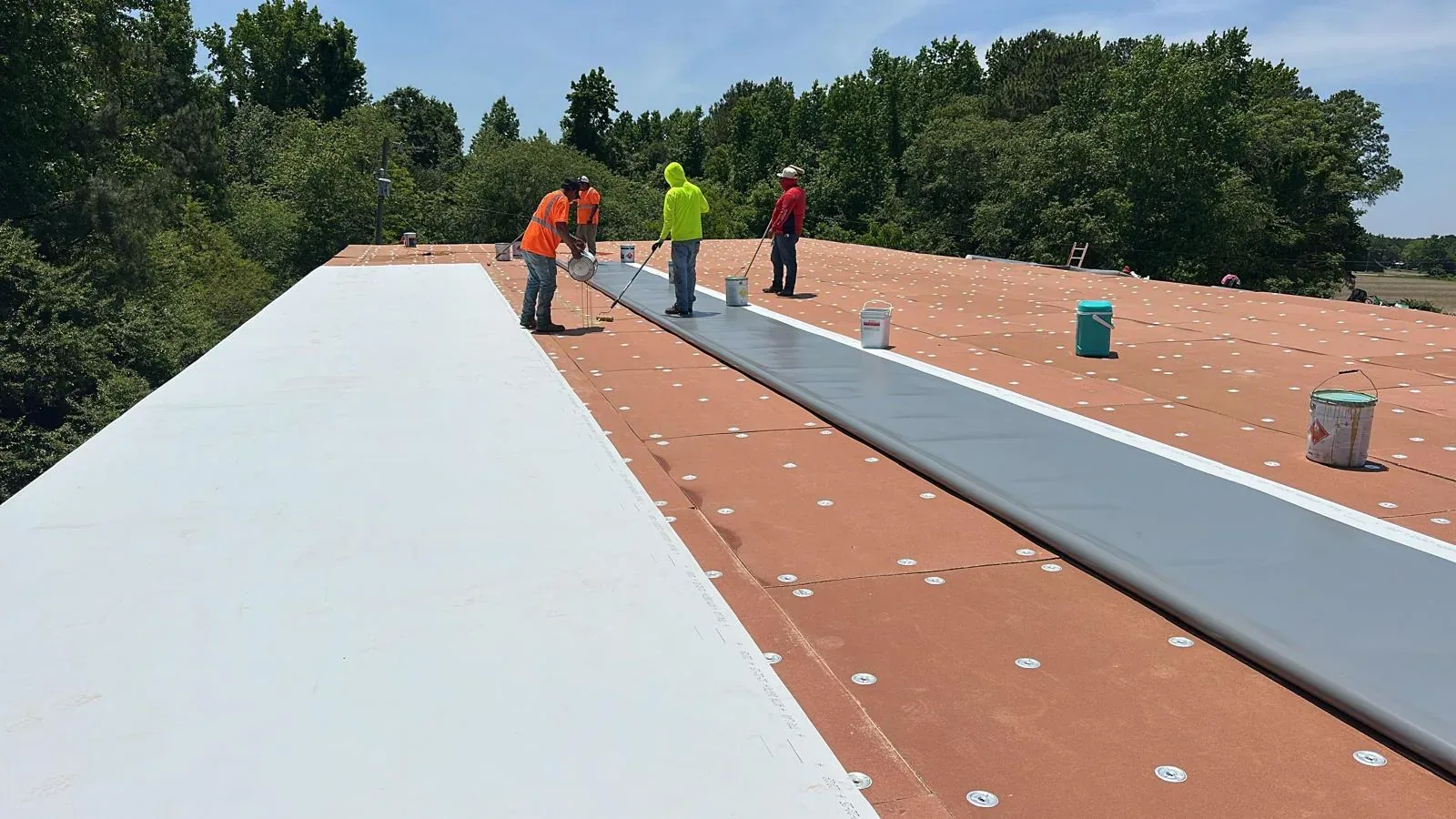
Attachment begins below the membrane. Deck type, insulation layout, cover board, fasteners, plates, adhesive, and perimeter details all affect the finished assembly. A mechanically attached sheet places fasteners and seams according to the design. An adhered roof depends on substrate preparation, adhesive coverage, and cure. Induction-welded systems need compatible plates, equipment, and tested weld settings. The selected design and Carlisle's project documents control spacing and assembly details. Keep fastener pull-out values, deck thickness, and the approved attachment pattern with the submittal so a field change can be reviewed against the design instead of improvised at the edge.
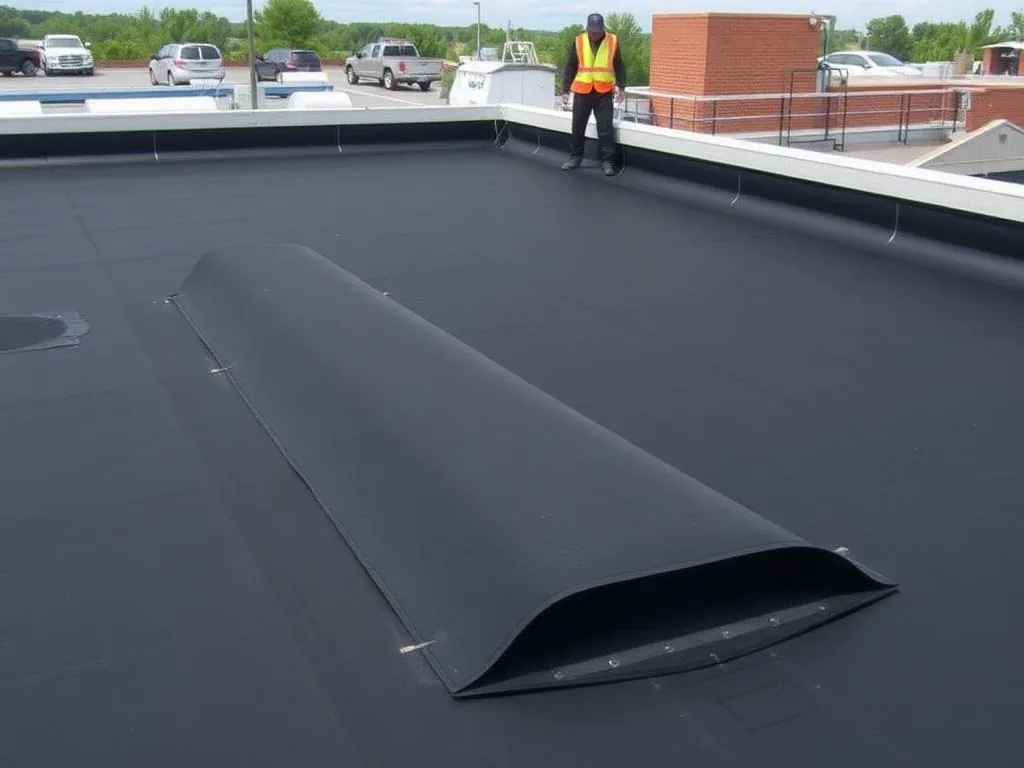
At seams, inspect the prepared area, overlap, weld or splice, and any field repair. At a TPO or PVC lap, probe the seam after cooling and correct discontinuities. At EPDM, confirm the surface is clean, the primer has flashed as required, and the splice tape is rolled correctly. Corners and wall terminations need compatible details, not a generic sealant bead. A seam assessment or edge-metal review can address an interface that is opening independently of the field sheet.
Cold mornings around Independence affect more than crew comfort. Adhesive storage, substrate temperature, condensation, and dew can change bonding conditions. The official Kansas City January normal includes lows below freezing. That regional normal is context only. We verify site conditions and observe Carlisle's current temperature and application requirements before starting work or setting the day's dry-in boundary.
Choose for Exposure and Use
A kitchen exhaust area, manufacturing operation, and general office roof can create different exposures. PVC is often considered where grease or certain chemicals are present, but the fluid, concentration, and maintenance practice need review against the exact product and warranty language. Do not treat a membrane category as blanket chemical protection. EPDM may fit a different set of assembly and detailing needs. TPO is another option where heat-welded seams and system requirements align.
Independence has commercial properties in the 39th Street corridor and at Eastgate Commerce Center. Those districts do not establish a roof's use or chemical exposure. We confirm rooftop exhausts, equipment, access paths, and discharge locations at the address. Equipment curb review can document the transitions, while a roof inspection records the field membrane and attachment.
Color and reflectance should be compared with insulation levels, HVAC operation, climate, and roof design. Carlisle lists Cool Gray EPDM as an option intended to balance reflectivity and thermal properties in mixed climates. That product description is not a predicted utility saving for a particular building. A project team should assess the full assembly and operating profile before selecting membrane color.
Test Before Installing Over
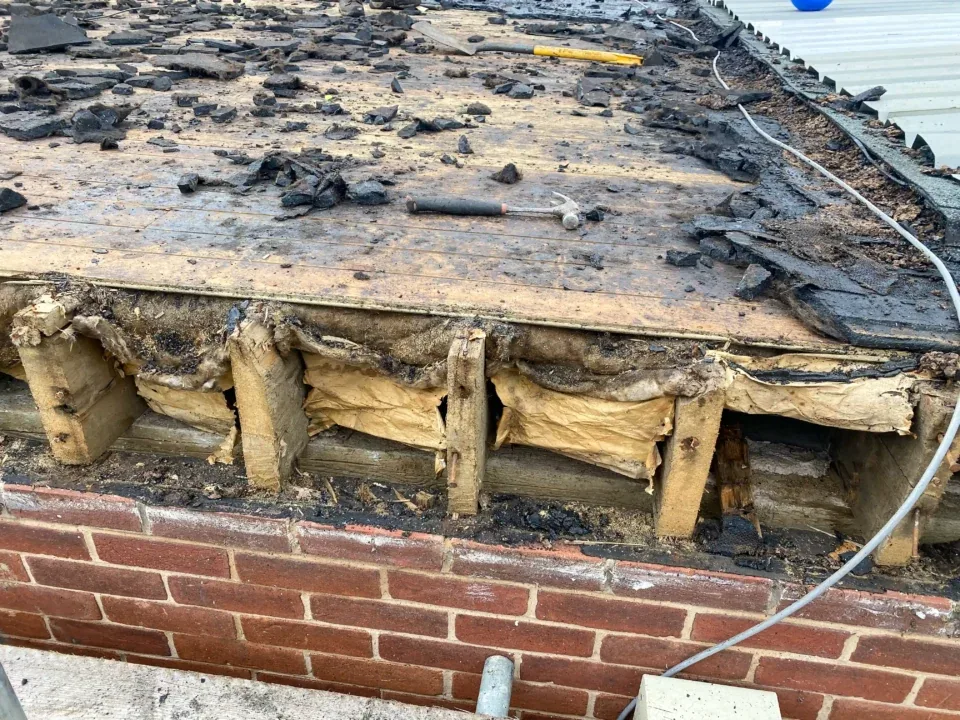
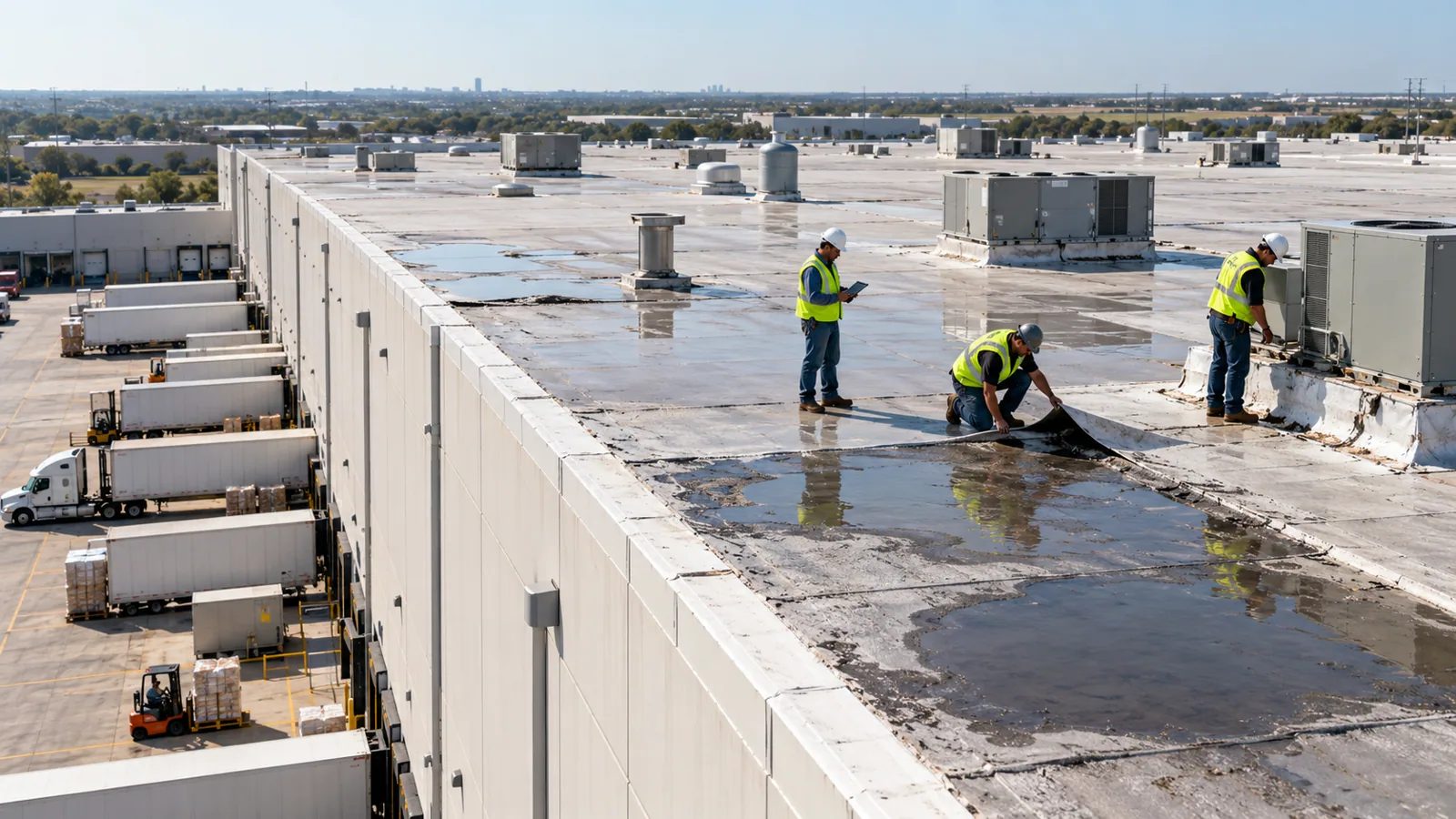
A new membrane over an existing roof may reduce tear-off only if the existing assembly is suitable. Check moisture, roof deck, attachment, surface compatibility, drainage, and height at curbs and edges. Core samples may show insulation condition that surface inspection cannot. If the old roof has wet layers or failing attachment, cover-up can carry the problem into the new system.
When recovery is feasible, identify any separation layer, cover board, adhesive, or mechanical attachment specified for the project. Existing asphaltic materials, metal, and membrane surfaces may require different preparation or may fall outside an approved assembly. A recover evaluation should document the existing layers and tests. Where removal is required, replacement planning should define removal depth, deck repair, dry-in, and tie-ins.
Every repair or installation should leave a record of materials, substrate condition, seam checks, and closeout photos. That file helps a building manager maintain the roof and gives the next inspection a baseline. Condition reports can connect current observations with past work.
Specify What Is Installed
Before work, confirm the Carlisle membrane family, attachment method, insulation, cover board, accessories, and perimeter details. At closeout, record delivery labels, test welds or splices, any concealed condition, and the completed repair boundary. Product information should match the system that was actually installed. Keep the Carlisle specification, approved details, and any field clarification with the record. During later maintenance, note the membrane family and repair products used so an inspector does not select an incompatible cleaner, primer, tape, or patch during later service and inspection work. For a project considering alternatives, compare the assembly requirements in the Johns Manville and Sika Sarnafil system documents before choosing materials.
Schedule a commercial roof review in Independence to assess Carlisle SynTec products on the building. We will identify the existing membrane, evaluate the substrate, and prepare a scope based on verified compatibility and field conditions.
Commercial Roofing Questions
What is the difference between Carlisle Sure-Weld and Sure-Seal?
Sure-Weld is a reinforced TPO membrane joined with heat-welded seams. Sure-Seal is Carlisle's EPDM membrane family and uses EPDM-compatible splice methods.
Can Carlisle fleece-backed membrane go over an old roof?
Some products are designed for particular substrates. We inspect moisture, attachment, surface condition, and project specifications before recommending a recover.
Which Carlisle system handles kitchen grease?
PVC may be evaluated for some grease exposures, but the specific substance and product limitations must be reviewed. No membrane should be treated as universal chemical protection. First establish where grease reaches the roof and how frequently the surface is cleaned. Select a compatible membrane and detail from current manufacturer guidance, then protect nearby seams from service traffic. The curb flashing, exhaust discharge path, and maintenance access all matter; changing membrane alone will not correct a discharge pattern that repeatedly soils the same roof area.
How are Carlisle seams checked during installation?
We verify preparation and settings, then inspect welded or taped seams with the method required for that system. Any discontinuity is repaired before closeout. For heat-welded sheets, inspect the weld continuously after it cools and probe the seam edge with a blunt tool suited to the detail. Corners, patches, and changes in plane deserve separate attention because a sound field seam does not confirm that every transition is closed. Adhesive-set assemblies need the prescribed coverage and contact conditions instead. Keep a record of test results and correct defects before the next layer or walkway covers them.