Evaluate commercial roofs in Independence, MO before acquisition or refinancing with mapped defects, moisture checks, repair options, and inspection limits.
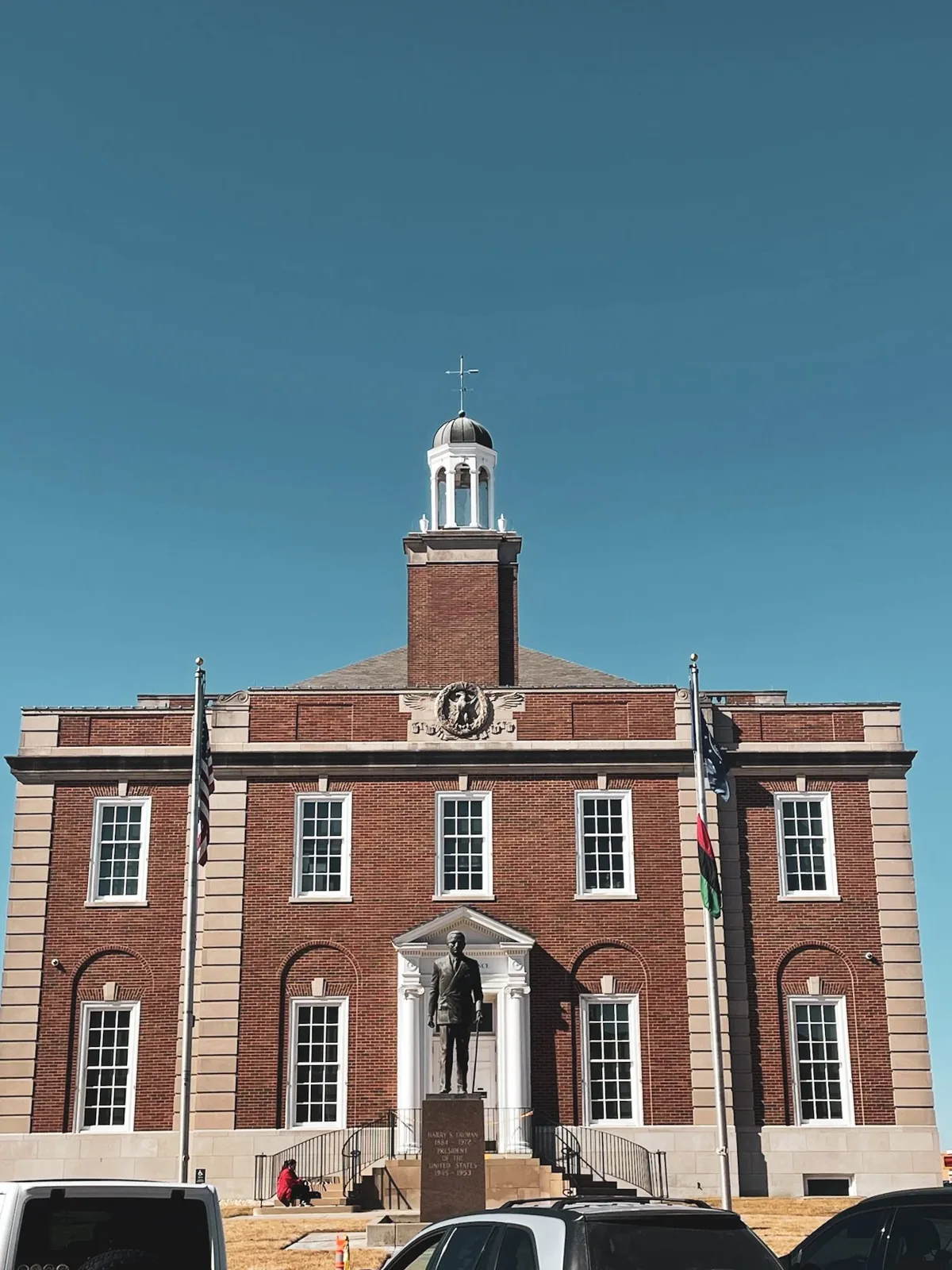
A transaction survey must give the buyer a roof-level view of condition, repair exposure, and unknowns before a decision deadline. It does not certify concealed areas as sound or determine the future performance of the assembly. For acquisitions near Historic Independence Square or Eastgate Commerce Center, we inspect the actual building, review available roof records, and document what can be confirmed within the agreed access and schedule.
Set the Survey Boundary
Before the visit, identify the buildings and roof areas included, available plans, prior repairs, known leaks, and transaction timing. Confirm who can provide access and which areas require escort or safety coordination. A roof plan helps orient the survey, but the field inspection verifies what is installed. If the client wants invasive testing, agree on locations and restoration requirements before opening the assembly.
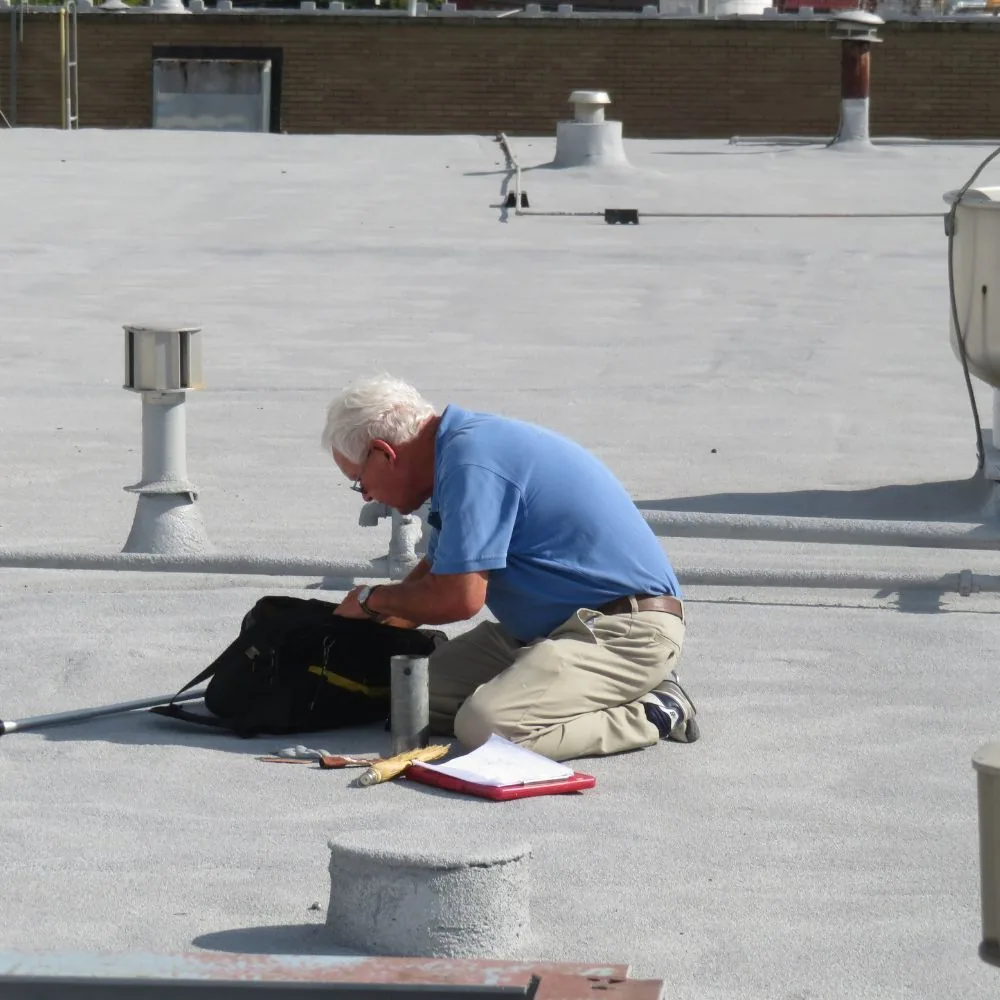
Independence's commercial economy includes manufacturing, health, education, social services, and retail. A property may be occupied, production-critical, or shared by several tenants. We confirm operating limits with the seller or site representative and state which areas could not be reached. A hands-on roof inspection checks visible roof surfaces, drainage, penetrations, edges, and transitions. The scope should distinguish visual review from moisture testing or structural analysis.
We review maintenance invoices and prior reports as background, not as proof of current condition. Documents may describe a repair that cannot be seen, or a replacement that covered only one roof section. Compare dates, locations, and materials with visible evidence. If records conflict, note the discrepancy and identify what would resolve it, such as a test cut, core sample, or follow-up with the seller.
Map Defects and Exposure
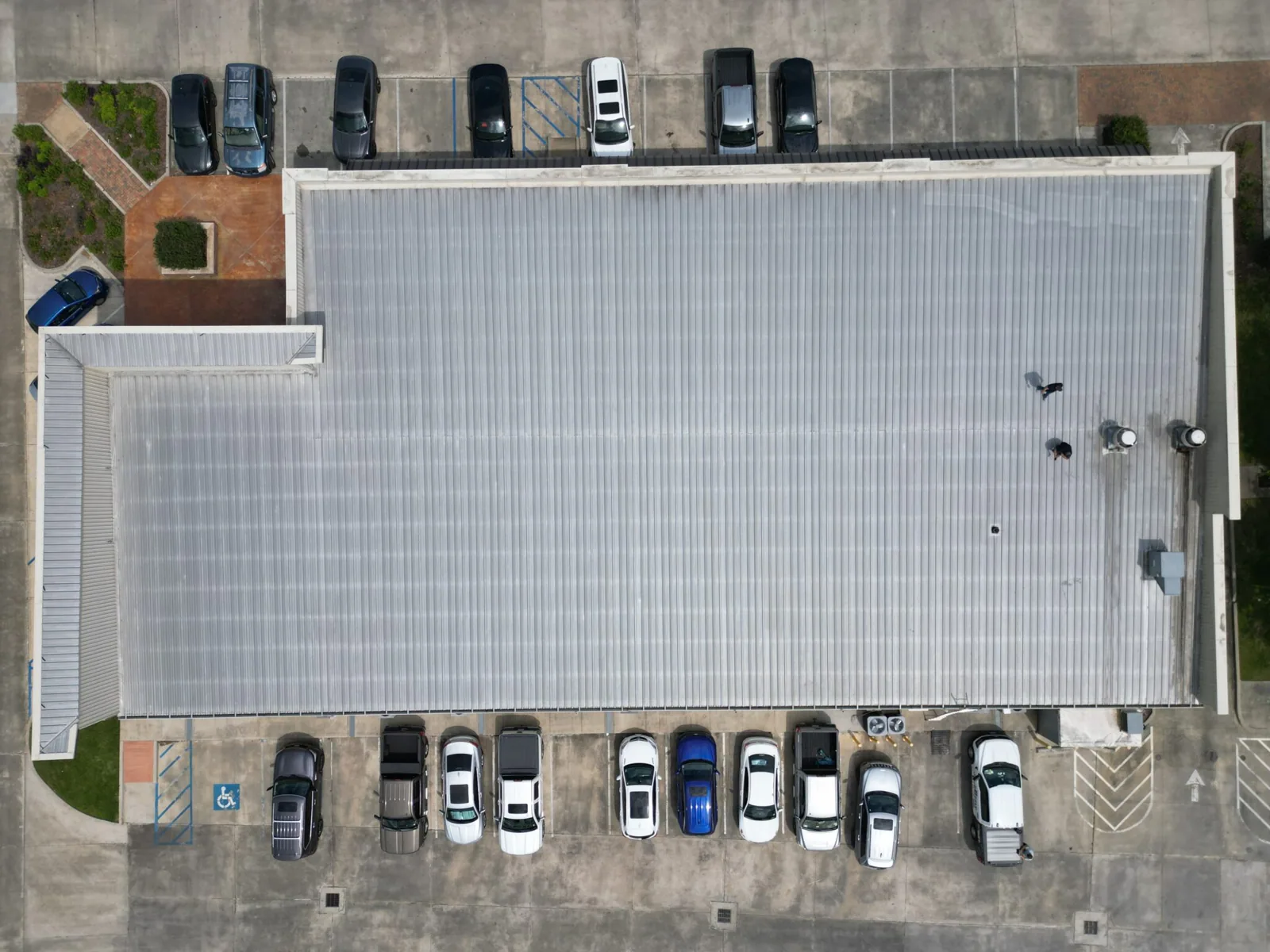
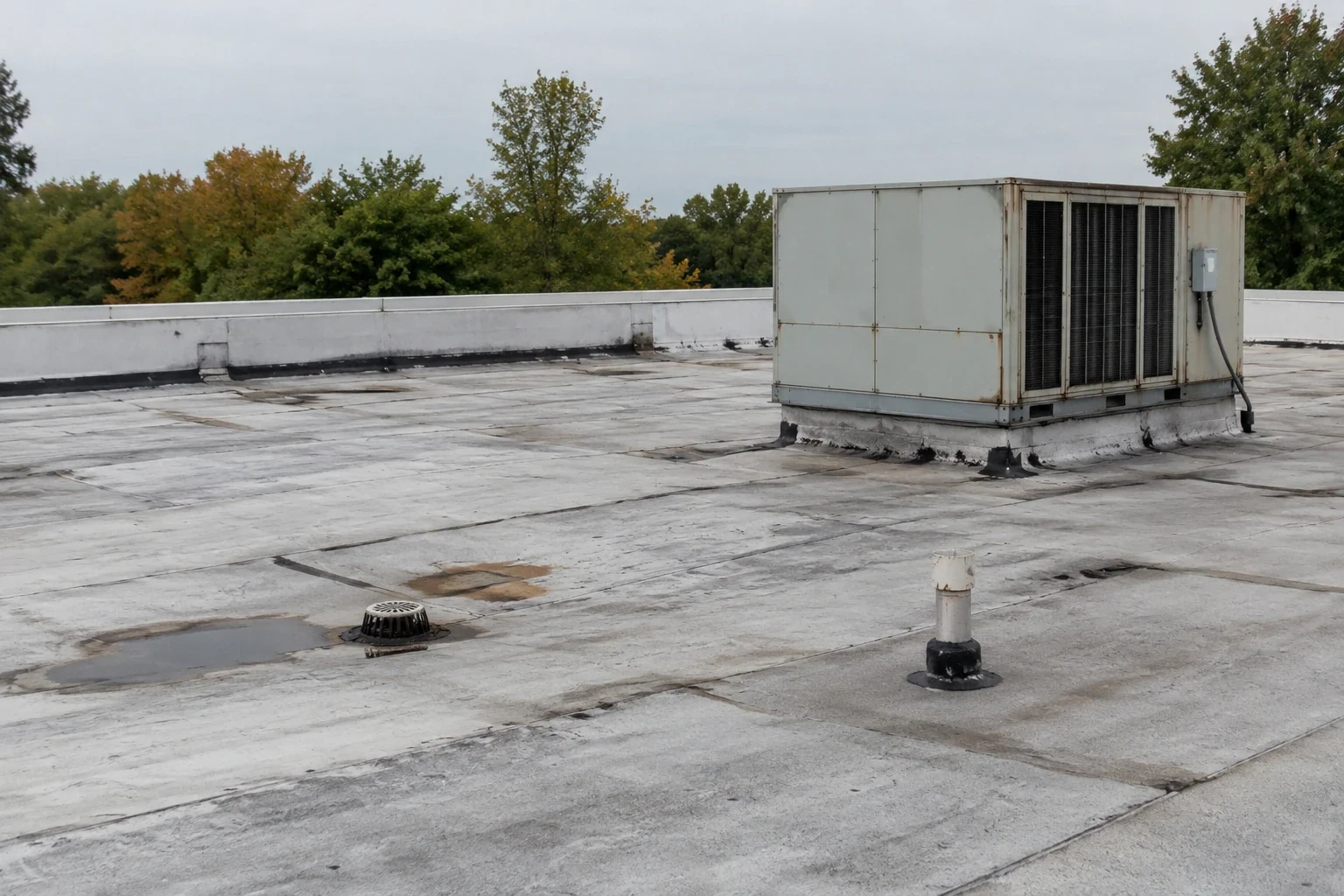
Locate each defect by roof section and describe its material, size, and apparent mechanism. Record open seams, failing flashing, ponding, membrane wear, loose metal, damaged drains, and signs of water entry. Photograph a close detail and a wider context view. If the roof is multi-layered, state whether the assembly was exposed or inferred from records. The report should not assign hidden moisture where no test supports it.
Infrared imaging may identify areas for closer review. Direct testing confirms whether insulation is wet and helps set a removal boundary. Moisture survey work should describe its conditions and limits, including any access restrictions or surface moisture that affected the scan. Where testing was not authorized, label moisture extent as unresolved. A condition report can preserve the map, photos, and distinction between observations and assumptions.
Local weather context has limits. A 2017 storm produced 1.75-inch hail near Independence, and wind damage occurred in Jackson County during a 2022 tornado event. Those events do not establish that the subject roof was affected. A transaction survey should report visible impact or displacement at the inspected property and identify any event history as separate background, if relevant.
Describe the Repair Scenarios
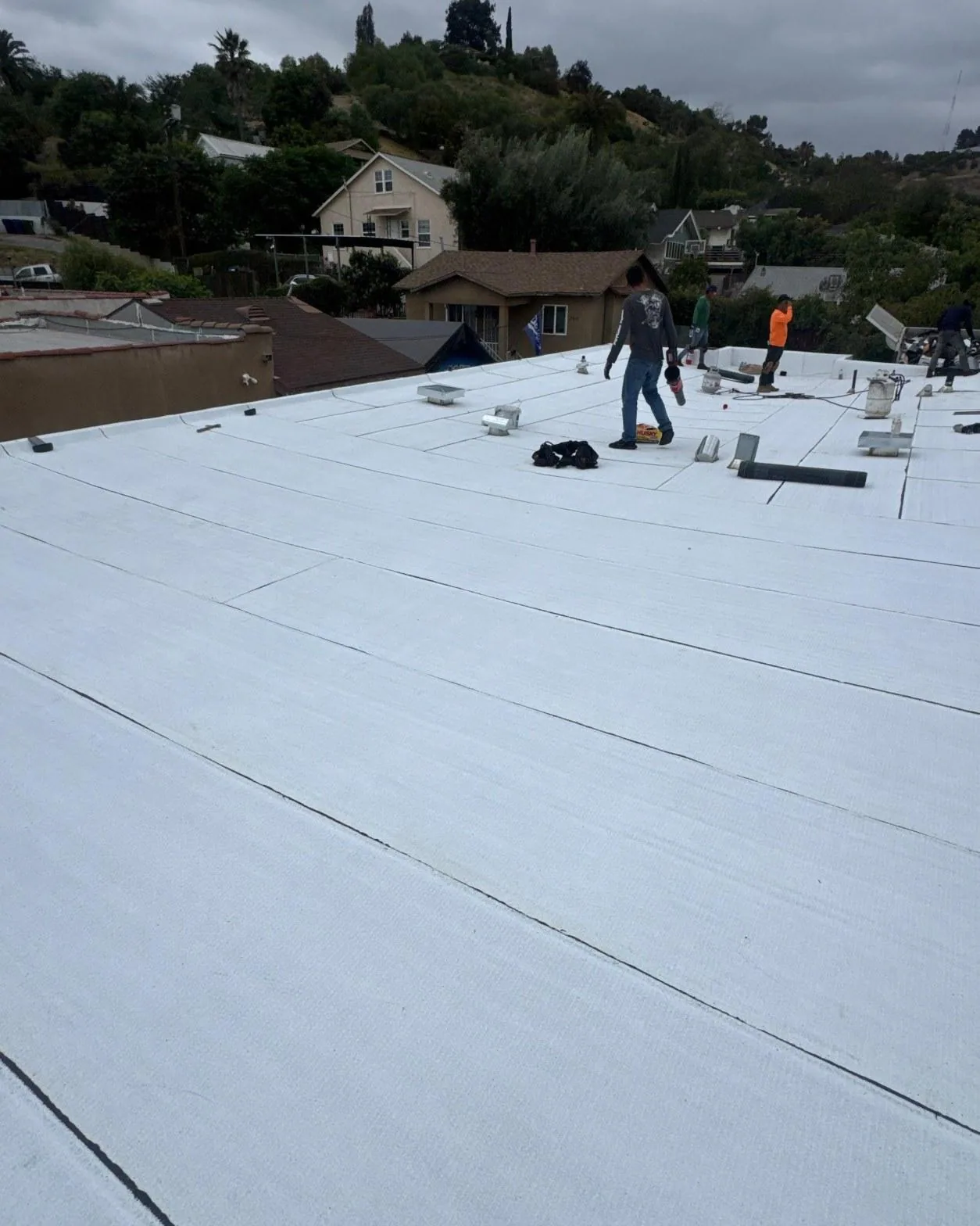
Findings become more useful when each is connected to a plausible next step. A loose drain detail may need a localized correction. Wet insulation may require selective removal and new membrane tie-in. Broad deterioration or repeated repairs can make a larger renewal alternative worth evaluating. We explain what the option includes and which tests or assumptions could change it. The survey does not replace a project design or a contractor's final bid.
For each scenario, discuss access, phasing, material compatibility, interior protection, and timing factors that affect the work. State when temporary water control should be considered and which areas need monitoring after acquisition. Capital planning can translate survey findings into a sequenced budget decision. Roof asset management can carry the condition map into later maintenance and repair cycles.
Independence applies the 2024 International Building Code and the 2024 International Existing Building Code to relevant projects. Permits and project requirements need review for the proposed work. A due diligence survey does not interpret code compliance for uninspected assemblies. The buyer should identify code, structural, insurance, or environmental reviews that fall outside the roofing scope.
Support the Decision Window
Transaction schedules can be short. We agree on deliverables, access, testing authority, and report timing before mobilization. If the seller cannot grant access to a roof area, describe the limitation and the potential effect on the decision. If rain or unsafe conditions prevent inspection, record the affected sections and schedule a return when possible. Do not convert missing evidence into a low-risk assumption.
Named locations such as Centerpoint Medical Center and the Independence Transit Center help place a building in the local service area, but do not establish its condition. For a commercial property close to Historic Independence Square, identify the exact address and access route. The property's construction, access, and operating requirements determine inspection logistics.
We can provide dated photos, roof-zone findings, testing results, repair scenarios, and stated limits. If a buyer requests a second review after a repair or new record becomes available, we can compare that evidence with the first inspection. The revised finding should retain its date and explain the basis for any change. The lender, buyer, seller, or insurer decides how those findings affect a transaction. If urgent water entry is confirmed, water-entry repair can address immediate protection without mixing emergency work with due diligence observations; a separate repair proposal can define the permanent work after the survey.
Deliver the Evidence Clearly
A strong survey separates what was observed, what was tested, what was recommended, and what remains unknown. For an acquisition, that may inform a repair request, a post-closing plan, or a decision to obtain a structural review. The roofing survey supplies condition evidence for those discussions; it does not make the commercial or financing decision for the buyer. The conclusion should not hide limitations in a general disclaimer. Identify active leaks or safety concerns first, then note repair priorities and capital alternatives. Keep maintenance records and photographs with the report so another reviewer can trace each conclusion to roof-level evidence.
Schedule a commercial roof due diligence survey in Independence to evaluate the assembly before acquisition or refinancing. We will map findings, state inspection limits, and identify which repair scenarios depend on additional testing.
Commercial Roofing Questions
Can a visual survey confirm there is no hidden moisture?
No. A visual review records visible conditions. Moisture testing or selective openings may be needed to evaluate concealed layers, and the report will state what was not tested.
Can you inspect before a financing deadline?
We can agree on access and deliverables around the schedule. Weather, testing authorization, and areas that cannot be reached may affect the report timing or scope. Yes, if roof access and any needed test openings can be arranged in time. Confirm the building list, roof access contacts, and reporting format at the outset. The schedule should reserve time to review findings and identify any areas that could not be inspected. If a deadline prevents testing, the report should keep those unknowns visible rather than imply the roof was fully verified.
Will the survey provide a final repair price?
It can describe repair scenarios and their cost drivers. A final proposal requires a defined scope, access, measurements, and resolution of concealed conditions.
Does the survey replace a structural assessment?
No. We document roofing conditions. A structural engineer should assess framing or deck capacity when movement or fire damage raises a structural question. No. A roof survey records visible assembly conditions and may include selected test openings, but it does not establish structural capacity. If the deck is deflected, corroded, or otherwise questionable, a qualified structural professional should assess it before additional loads or a recover system are considered. Keep those scopes distinct in the report so a buyer can see what the roof survey confirms and what remains a separate review.