Coordinate fitness-center roof work in Independence, MO around occupied spaces, pools or courts when present, equipment curbs, drainage, and access.
Fitness buildings may combine workout floors with offices, locker rooms, studios, courts, pools, or community rooms. Those spaces place different demands on scheduling and interior protection, but their presence has to be confirmed with the facility. In Independence, MCC-Blue River provides public-safety and technical training, and Graceland University's local campus includes academic and nursing programs. These institutions help describe local activity; they do not establish the layout or roof condition of a gym. We inspect the assembly and plan around the actual use of the property.
Confirm the Occupied Areas
Before roof work, ask the facility representative to identify operating hours, class schedules, entry routes, emergency access, and rooms that must remain available. A recreation center can have evening or weekend use that differs from the surrounding offices. Do not infer occupancy from the building name. The manager identifies the actual calendar and any room-specific restrictions.
Map the roof into work areas that correspond to building use where possible. Mark studios, courts, locker rooms, mechanical areas, low canopies, and any addition with a different roof elevation. If interior reports mention odor, staining, or dripping, record the exact location and time. Those observations guide inspection but do not prove the roof entry point. A phased reroof plan can define the areas that remain open and the daily limit of exposed roof.
Protection needs can vary. The facility identifies equipment, finishes, or surfaces that need covering or relocation. The scope should assign who moves items, who installs temporary protection, and who confirms an area is ready to reopen. Photograph existing conditions before work begins and record any space that was unavailable for inspection.
Moisture and Indoor Conditions
Warm, humid interior spaces can make roof moisture observations harder to interpret, especially near exhaust, pool, or shower areas when those uses are present. Verify the actual ventilation and room layout before treating interior condensation as a roof leak. Compare the stain or dampness with roof seams, drains, curbs, and wall transitions. If a roof opening is suspected, trace the water path from the exterior and record what confirms the source.
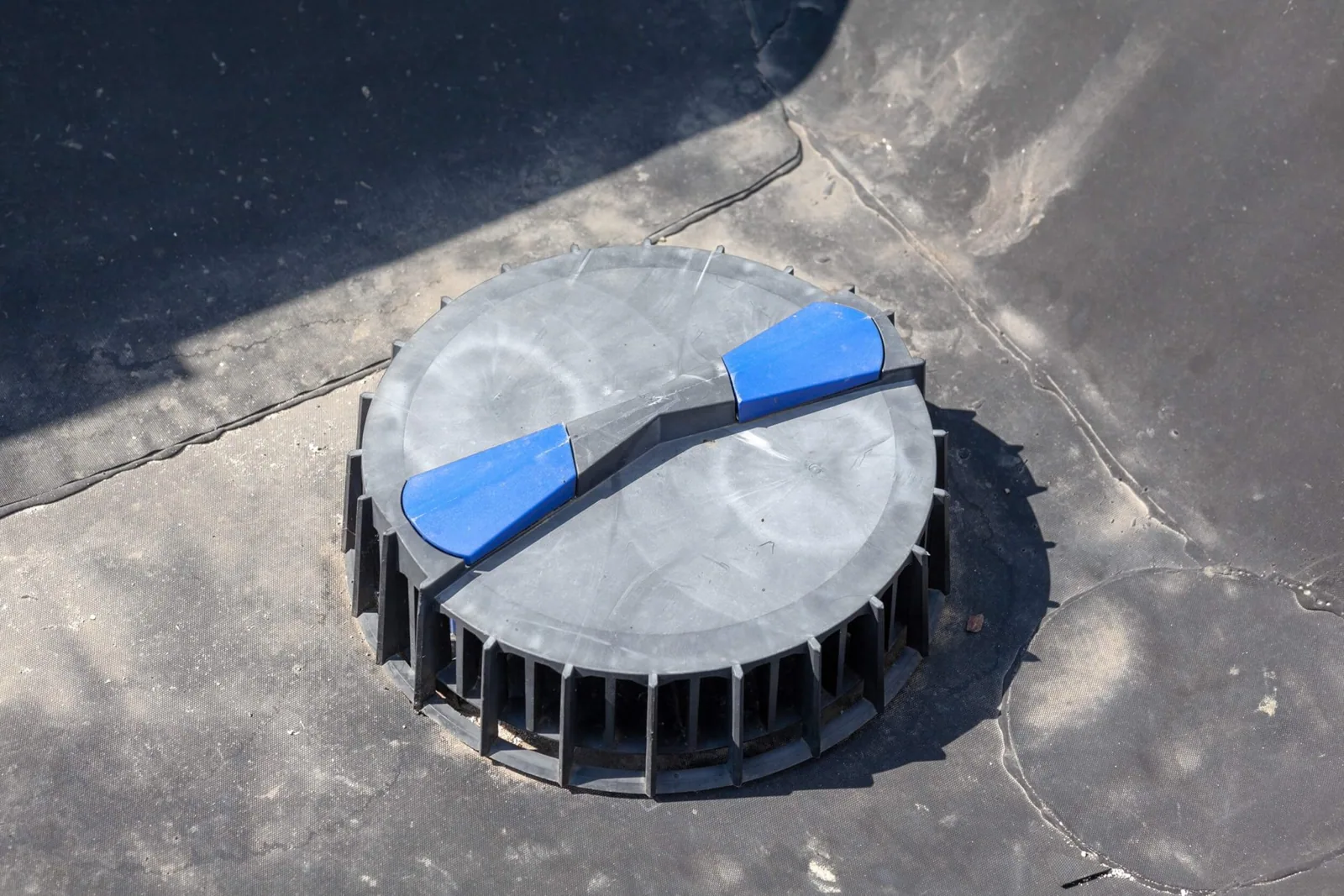
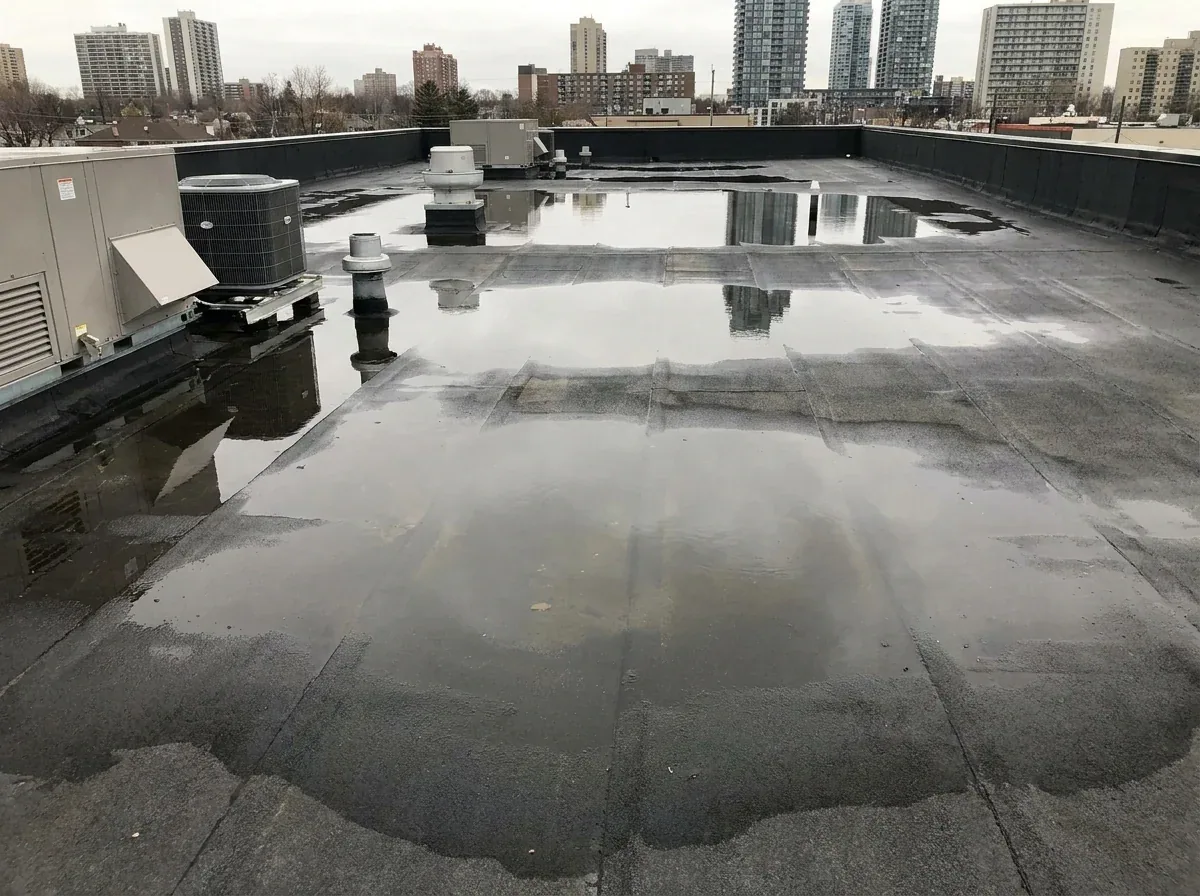
Roof drains, overflows, and gutters need a clear route. Check for debris, loose strainers, damaged bowls, backed-up leaders, and low areas around outlets. A blocked drain can create water at seams, but ponding that remains after outlets are clear needs separate evaluation. Drainage service can correct outlet details. Ponding-water review documents persistent accumulation and its location.
For a leak reported above a studio or locker area, do not assume the closest roof penetration is responsible. Water can travel along deck flutes or framing before reaching an interior finish. Leak investigation should compare the interior map with likely entry points, then explain any remaining uncertainty.
Inspect Curbs and Roof Traffic
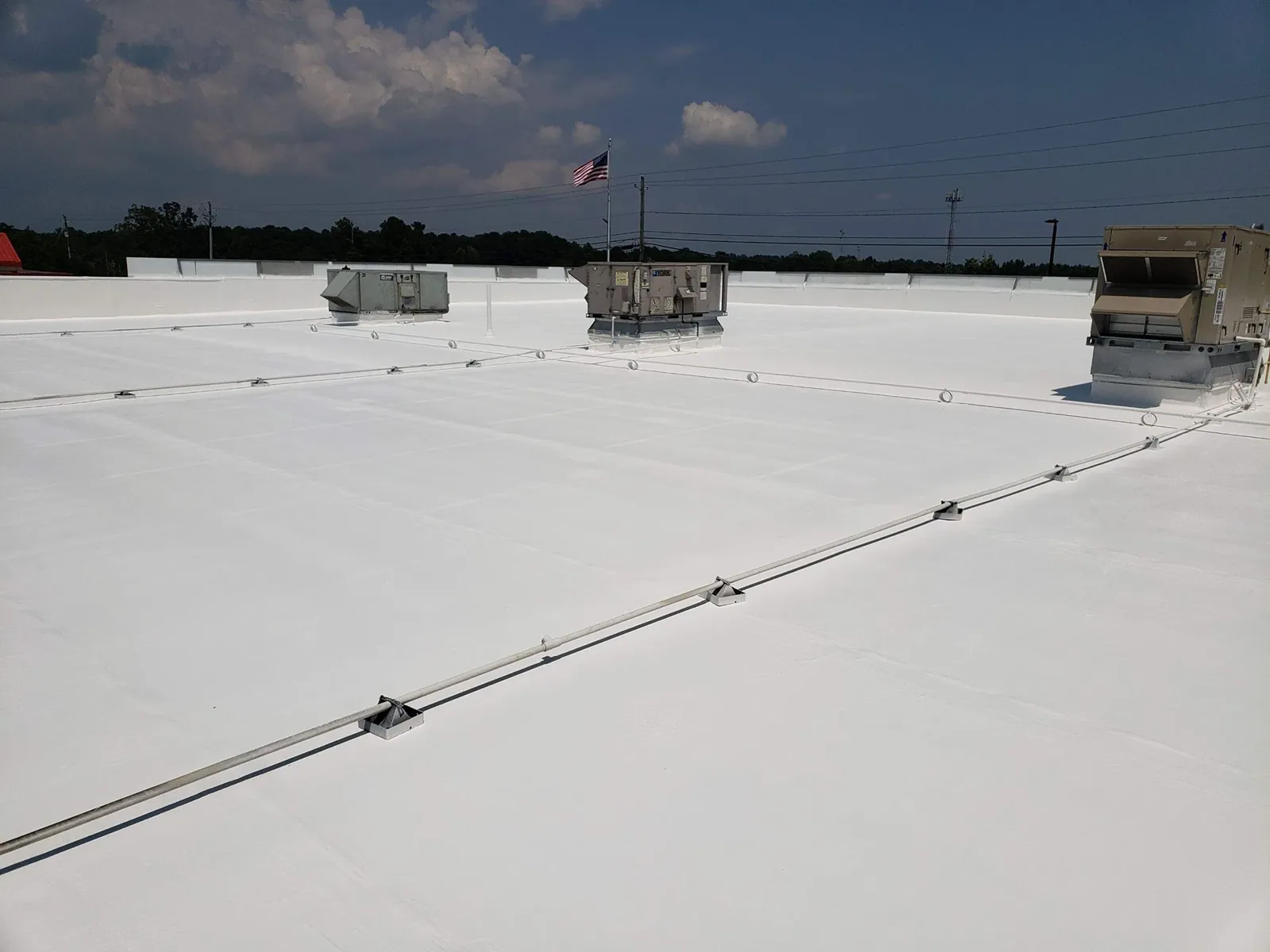
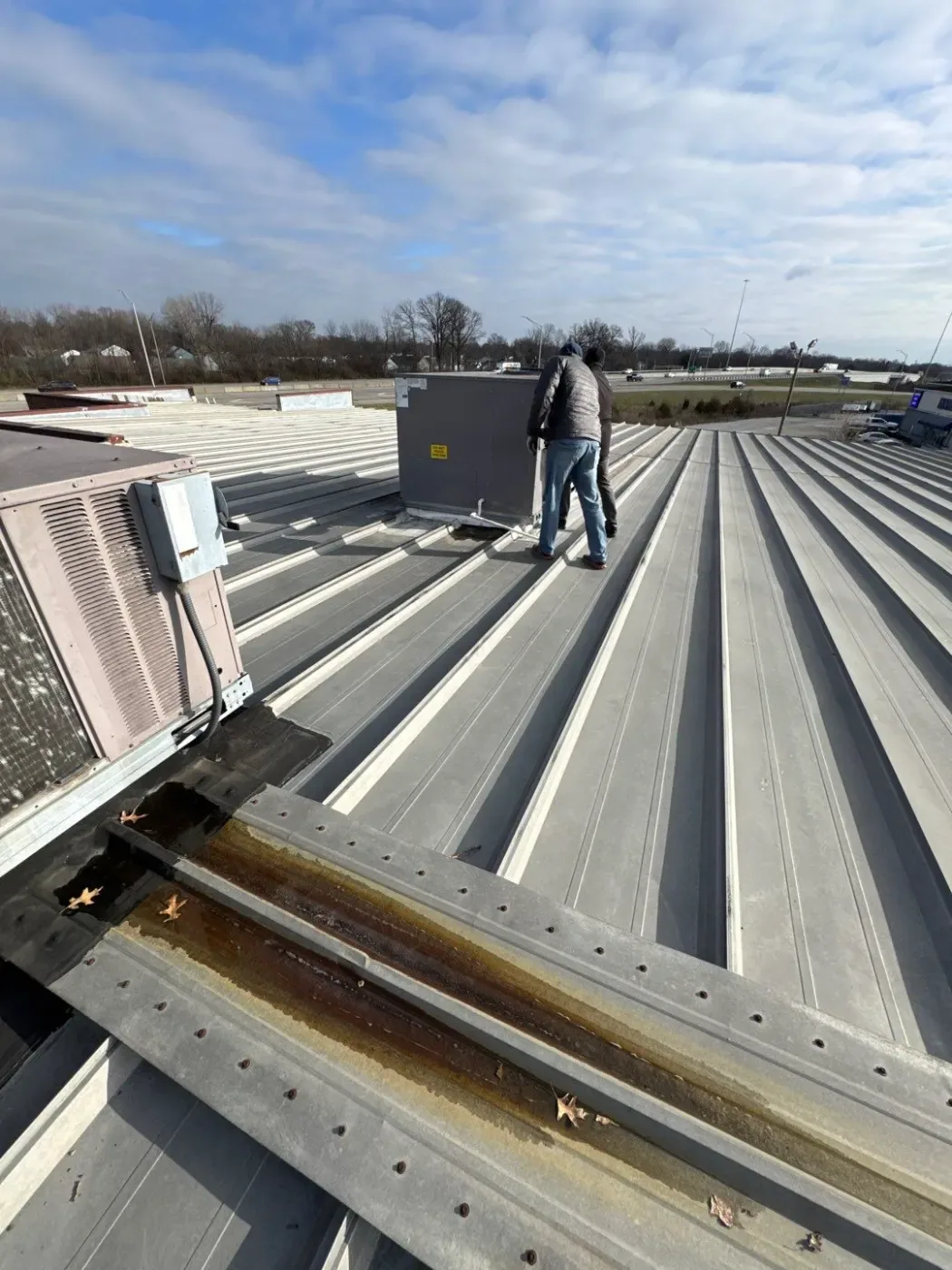
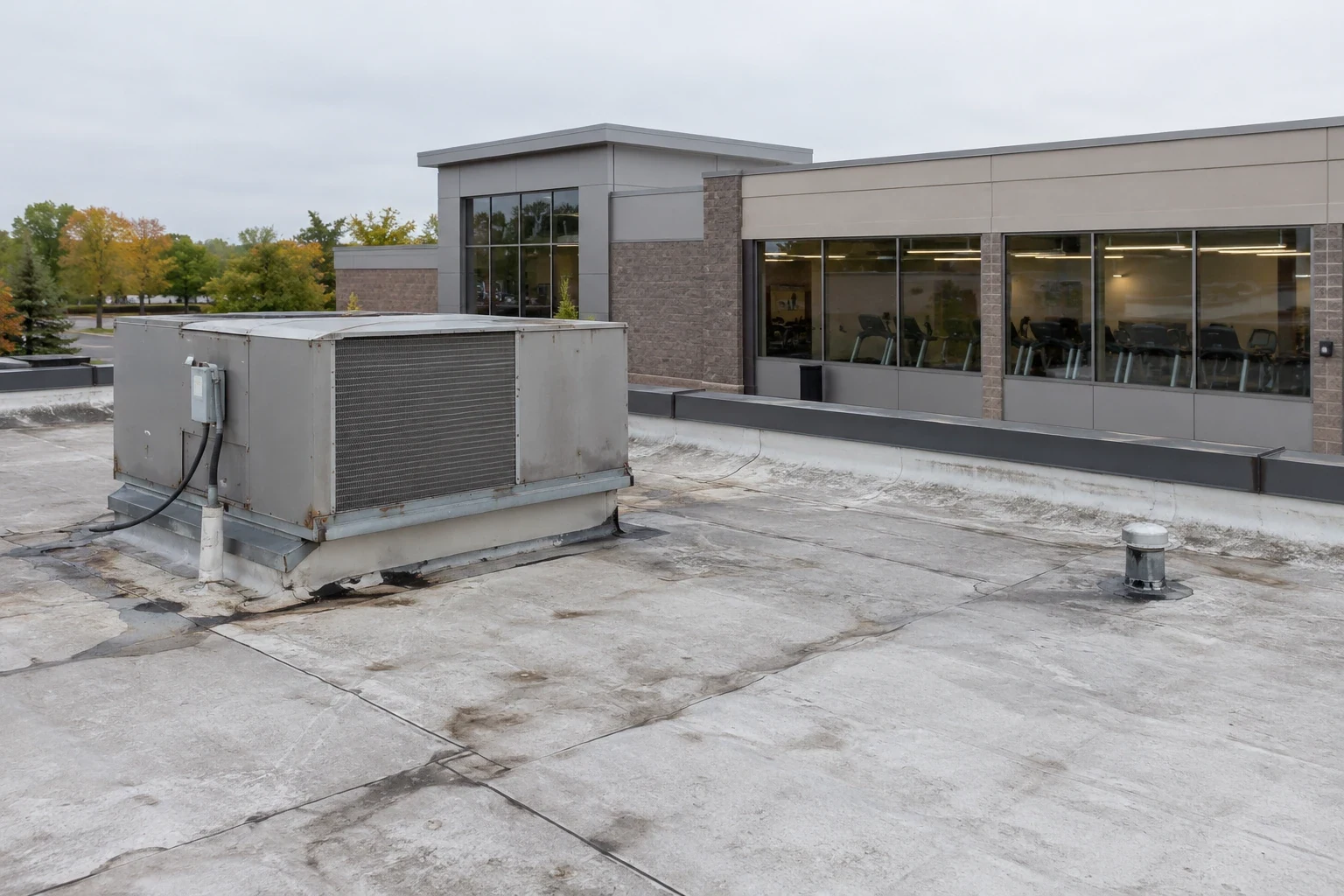
Fitness facilities often rely on mechanical ventilation, but the number, type, and placement of units vary. Inspect curb corners, flashing terminations, supports, conduits, refrigerant lines, and service paths. Repeated maintenance access can wear the roof surface around equipment. Walk pads or a protected route can limit traffic damage when compatible with the installed system.
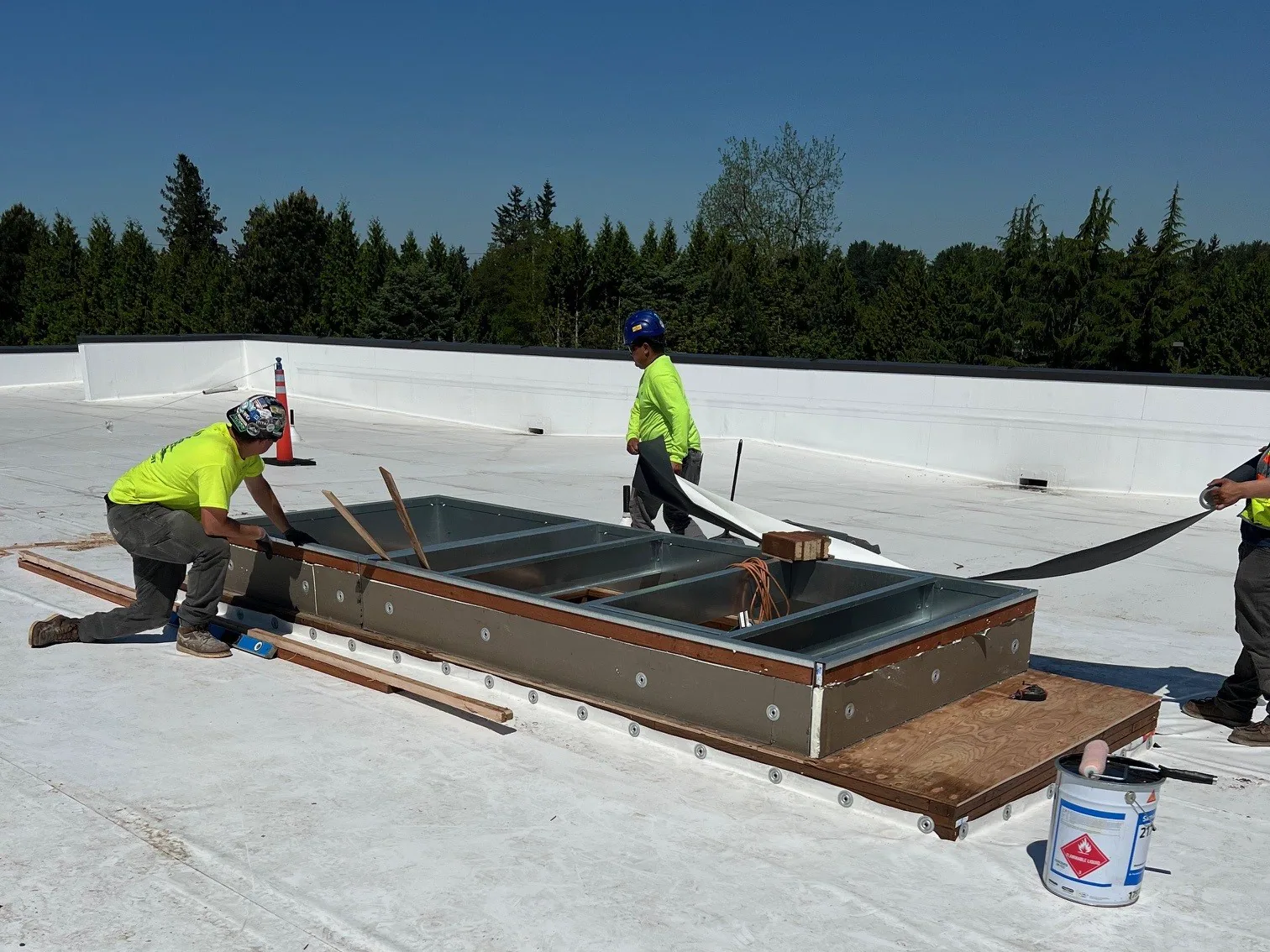
If a unit is replaced, coordinate the lift and roof work as one sequence. The opening must be protected, the curb checked after removal, and new flashing completed before the equipment is returned to operation. Identify which trade owns final closure. Abandoned curbs and penetrations should be removed or closed with a detail that restores the roof assembly. Sealant applied around the outside of a moving or unsupported curb does not substitute for a complete flashing detail.
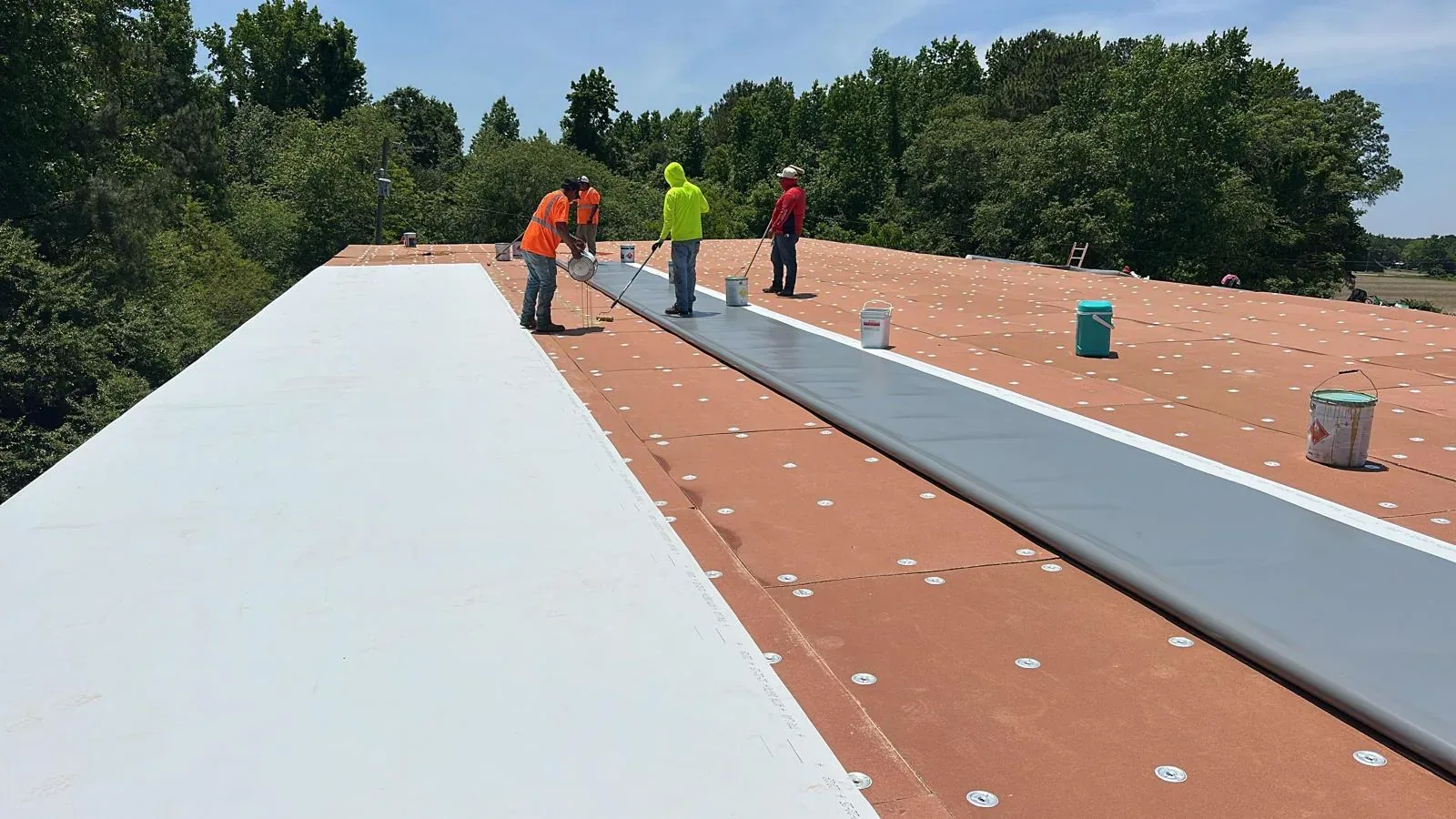
A TPO roof has different seam and curb details from standing-seam metal. Before selecting a repair product, identify the membrane or panel, attachment, substrate, and any prior coating. A repair detail should remain compatible with the existing system.
Use Local Evidence Precisely
Graceland University's Independence campus has a three-story building on West Truman Road with auditorium and nursing-program space. MCC-Blue River offers public-safety academies, paramedic and EMS training, and technical programs. At a commercial property near Pleasant Hill, Missouri, the facility contact confirms the actual use, occupancy, and access needs before roof work.
The Kansas City station's January normal high is near 39 degrees, and its late-July normal reaches about 89. These regional air values are not roof-surface readings. The March 2017 event included quarter-size hail at Centerpoint Medical Center, a separate location from any gym inspection. We check the property for damaged edges, bruised membrane, punctures, and harm near rooftop equipment.
Close the Work Area Each Day
Occupied recreation buildings need a work plan that addresses sound, dust, overhead hazards, odors, deliveries, and access. The facility identifies times when a court or studio can close. The contractor states the daily opening size, dry-in method, material staging area, and inspection point before the space is reopened. If the work crosses several elevations, describe how each transition will be protected before the crew moves to the next zone.
A repair can remain local when the surrounding substrate is sound and the defect is isolated. Wet insulation, loose seams, corroded panel edges, or deteriorated deck can require a wider repair. We mark the observed limit and explain what remains concealed. For replacement, document tear-off depth, insulation strategy, drainage improvements, edge work, curbs, and temporary protection. Recover is appropriate only when the existing layers are stable, dry, and compatible with the new system.
Closeout records should include roof-area labels, photographs, repair materials, drain conditions, test results, and any follow-up item. A roof condition report supports maintenance planning. School facilities and senior communities also require occupied-site coordination, but a fitness center's class schedule and equipment use set its own plan. Schedule an inspection to map the assembly and set a usable repair boundary.
Commercial Roofing Questions
Can a fitness center stay open during roof work?
Some areas may remain open if the work zone, overhead protection, noise, deliveries, and daily closure point are coordinated. The facility manager determines the operating areas and times that must be protected.
How can you tell a roof leak from interior condensation?
The inspection compares room conditions and reported timing with exterior roof details, drainage, penetrations, and the water path. If the evidence is inconclusive, the report records what testing or access is still needed.
Does roof work affect HVAC service?
It can when a unit must be lifted, a curb is replaced, or service paths cross the work zone. The scope coordinates equipment access and assigns responsibility for restoring the roof flashing after mechanical work.
What happens if wet insulation is found?
The affected area is documented and the owner receives the location and extent observed. The scope is reviewed before removal expands, since the repair boundary and replacement material depend on the substrate and surrounding assembly. We identify the limits of affected material, protect the opening, and coordinate timing with the operator before expanding removal. Water can spread laterally beneath a membrane, so the wet boundary may not align with the ceiling stain below. The work plan should specify how far the crew may proceed before approval is needed for added removal. After the substrate is dry and sound, the new layers must tie into the existing assembly without leaving a ridge that interrupts drainage. Close the daily work log with the roof area left watertight, any material removed, and what remains open for review. That gives the operator a reliable status even when a change in scope moves the next phase.