Repair heat and UV deterioration on commercial roofs in Independence, MO with surface checks, seam testing, moisture review, and system-compatible restoration.
A faded membrane is not automatically a failed membrane. Heat and sunlight can age a roof surface, but the repair depends on thickness, flexibility, seams, attachment, and moisture below. The Kansas City July climate table lists a normal daily high of 89 degrees on July 20. That metro reading helps frame seasonal exposure; the condition of a roof near Eastgate Commerce Center or Historic Independence Square still requires a direct inspection. We test the assembly before recommending coating, repair, or replacement.
Measure Surface Change
Look for chalking, exposed reinforcement, brittle coating, shrinkage, open laps, and loss of bond at terminations. On a membrane, examine seams and patches for cracks or edge lift. On a coating, check thickness and adhesion at representative areas. On metal, look for failed finish, corrosion, open fasteners, and movement at panel joints. A uniform color change can be cosmetic. A crack or exposed substrate changes the repair decision.
Heat moves a roof assembly. Panels expand and contract. Membrane edges and terminations experience movement at transitions. A repair that locks moving metal or coats over a loose lap may fail again. We identify the roof system, attachment, drainage, and prior repairs before selecting material. A roof inspection records where deterioration occurs and whether it follows a specific roof zone or detail.
Manufacturing, health, education, social services, and retail lead Independence employment sectors. The variety matters for planning roof access and occupied-space protection. It does not establish the roof type or age at any one business. The field survey checks the membrane, cover board, insulation, penetrations, and deck. A condition report can map confirmed defects and identify areas for follow-up testing.
Test Beneath the Surface
Sun exposure can harden an exposed surface while moisture remains trapped below it. A roof can also have heat-related shrinkage at the edge with wet insulation farther into the field. We compare surface observations with drains, seams, penetrations, and interior reports. Infrared imaging can help target test cuts, but direct inspection verifies the roof layers where necessary. Moisture mapping helps define the next test rather than treating the entire roof as uniformly wet. Before coating or replacement, we check whether the surface is clean, the substrate is dry, and existing seams remain bonded. Those field conditions decide whether restoration can start or repairs must come first.
At a metal assembly, repeated movement may elongate fastener holes or stress a lap. At a membrane roof, shrinkage can pull at corners and flashings. The Kansas City metro's seasonal range includes winter conditions below freezing and summer highs in the upper 80s. Those figures describe the official station. We use them as regional context, then inspect the actual roof system, attachment, and material response at the property.
If a surface has lost flexibility, test how far that condition extends. A small brittle area over a dry, stable assembly may be repaired locally. Widespread cracking, exposed reinforcement, or detached membrane may call for broader work. Do not apply new coating until the substrate is compatible and dry. A coating restoration can extend a suitable system, but it cannot restore saturated insulation or loose attachment.
Restore a Compatible Surface
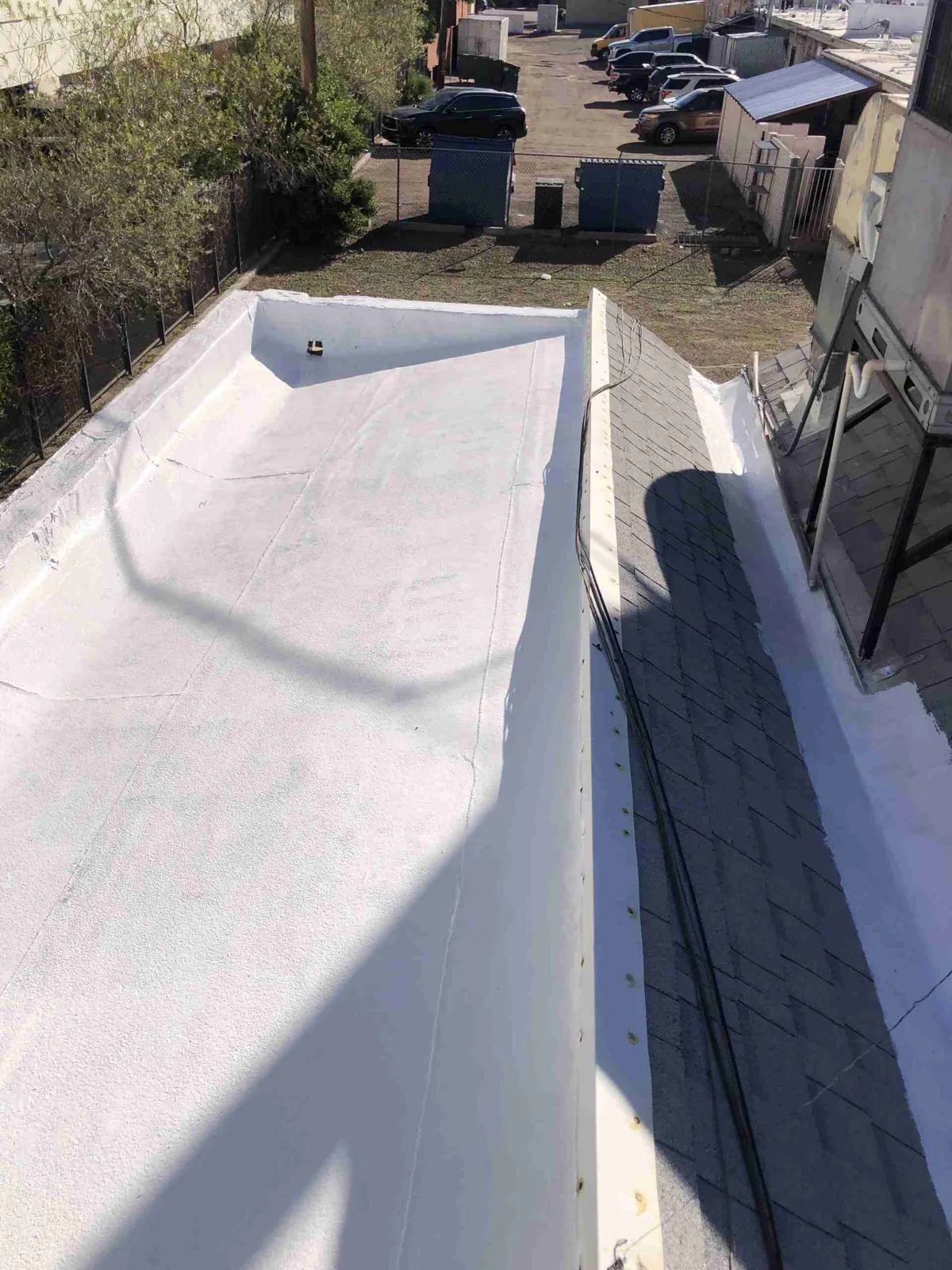
Prepare the roof according to its material and selected system. Remove loose coating and degraded membrane, clean the surface, and verify bond before applying new material. For thermoplastic membrane, weld compatible sheet to sound, prepared material. For EPDM, use the specified cleaning and splice products. For metal, address corrosion, fasteners, laps, and panel movement before recoating. The repair description should identify manufacturer instructions that apply to the chosen system and the checks performed during installation.
At a transition, rebuild the flashing rather than painting over a split edge. Coping and edge metal may need a separate correction where expansion opened a joint. Penetration flashing also needs compatible materials and movement allowance. A field coating will not correct a failed drain, open seam, or unstable substrate.
Cost and timing depend on preparation, roof area, access, thickness requirements, moisture, and the number of repairs below the surface. If the assembly remains sound, restoration may be practical. Where insulation is wet or attachment is failing across zones, compare restoration with replacement planning or a recover assessment. A new system must account for existing layers, drainage, and material compatibility.
Separate Aging from Storm Damage
Heat aging develops over time. Storm impact and wind displacement have different patterns. A 2017 storm brought hail east-northeast of Independence, and tornado-related wind damage occurred north-northwest of the city in 2022. Neither event determines the cause of damage at another building. We document cracking, punctures, displaced edges, and moisture separately. Hail inspection records impact marks, while wind inspection checks attachment and movement.
Historic Independence Square and Independence Center illustrate the range of commercial properties in the city. Roof age and material still need to be confirmed through inspection. Each property needs its own maintenance history, repair records, and inspection findings. If documentation is missing, we note that gap and base the recommendation on the visible roof and direct testing. The owner can then compare the measured repair area with the larger assembly's condition.
For a building with ongoing business activity, plan material staging, roof access, and noisy preparation with the facility contact. Work can be divided into sections so each opened area is protected by the end of the shift. Record weather limits for coating cure and membrane welding. If conditions change, pause at a defined boundary and secure the exposed roof before leaving.
Set the Next Service Interval
After restoration, record the treated areas, seam checks, coating condition, and any moisture tests. Note which roof sections remain near the repair threshold and when they should be reinspected. Maintenance should look at edges, penetrations, drains, and traffic paths because those interfaces can fail before the open field. A future comparison is more useful when the baseline includes photographs and roof-zone locations.
Schedule a commercial roof review in Independence to test heat and UV deterioration, moisture below the surface, and material compatibility. We will separate cosmetic aging from a failed assembly and document whether local repair, restoration, or broader replacement fits the observed condition.
Commercial Roofing Questions
Does a faded roof need a coating?
Color alone does not establish failure. We check thickness, adhesion, seams, moisture, and substrate before deciding whether a compatible coating can restore the surface.
Can heat damage pull membrane away from an edge?
Movement can stress terminations and corners. We inspect attachment and flashing to find whether shrinkage, substrate movement, or a failed tie-in caused the separation.
Will a new coating solve moisture below the roof?
No. We map and test moisture, remove compromised layers where needed, and rebuild a dry substrate before coating or closing the roof. No. A surface layer does not dry wet insulation or restore a weak substrate. Confirm moisture and remove or correct affected layers before coating. Then verify that repaired seams, penetrations, and perimeter details can accept the specified system and that drainage remains open.
How do you distinguish sun aging from hail damage?
Aging usually follows exposure and material condition; impact can leave localized marks or fractures. We map the evidence and keep weather reports separate from roof findings. Look at the pattern and location of surface changes, then compare them with seams, equipment paths, and drainage areas. Broad fading or chalking differs from localized cuts, fractured coating, or displaced material, but appearance alone does not establish whether the roof leaks. We inspect the membrane and details directly, document each observation, and test suspect areas when a repair decision depends on watertightness.