Repair fire-damaged commercial roofs in Independence, MO with safe access, assembly inspection, smoke-residue evaluation, and a documented dry-in plan.
A roof can be affected by flame, radiant heat, smoke, suppression water, and emergency access. Each leaves different evidence. At a manufacturing property near Truman Road or a retail building along Noland Road, the first roof review should follow the incident boundary and identify which layers still carry load and shed water. We coordinate access with the fire and safety contacts, inspect from safe areas, and document conditions before disturbed material is covered.
Confirm Safe Access
Structural stability comes before a roofing inspection. Fire officials and the building's engineer determine when the roof can be entered. Burned deck, weakened joists, hot spots, damaged electrical equipment, and wet insulation can all create hazards. We do not walk an unapproved roof area to make a faster estimate. If access is restricted, we document what is visible from safe locations and return after the responsible parties clear the work zone.
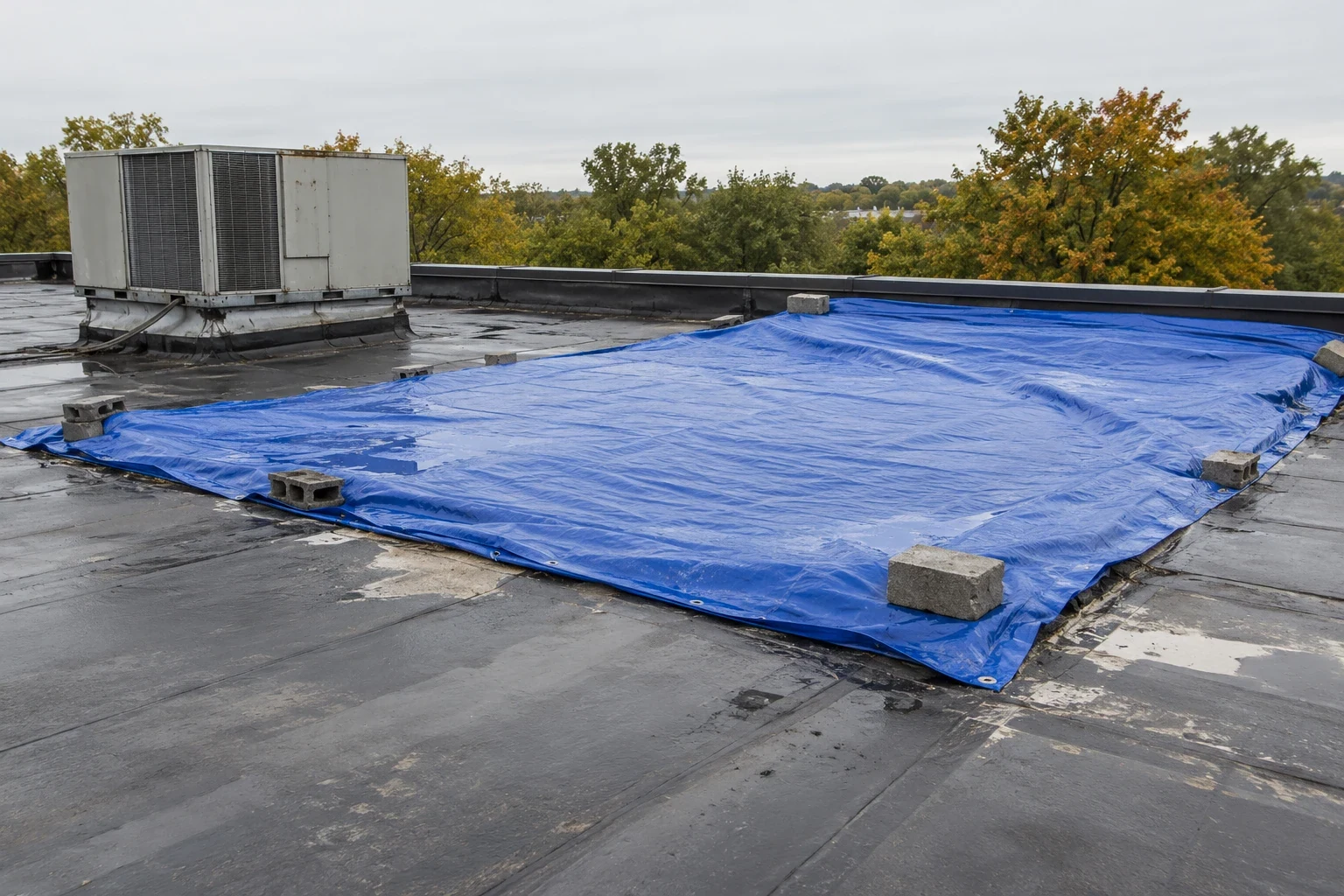
Independence's employment base includes manufacturing, health, education, and retail. Different operations have different shutdown boundaries and sensitive equipment. The property contact identifies those limits; the roof survey identifies what burned or became wet. Emergency roof response can stabilize an opening when conditions permit. Temporary protection must be attached to a sound area and arranged so that it does not trap water or create a new load on damaged framing.
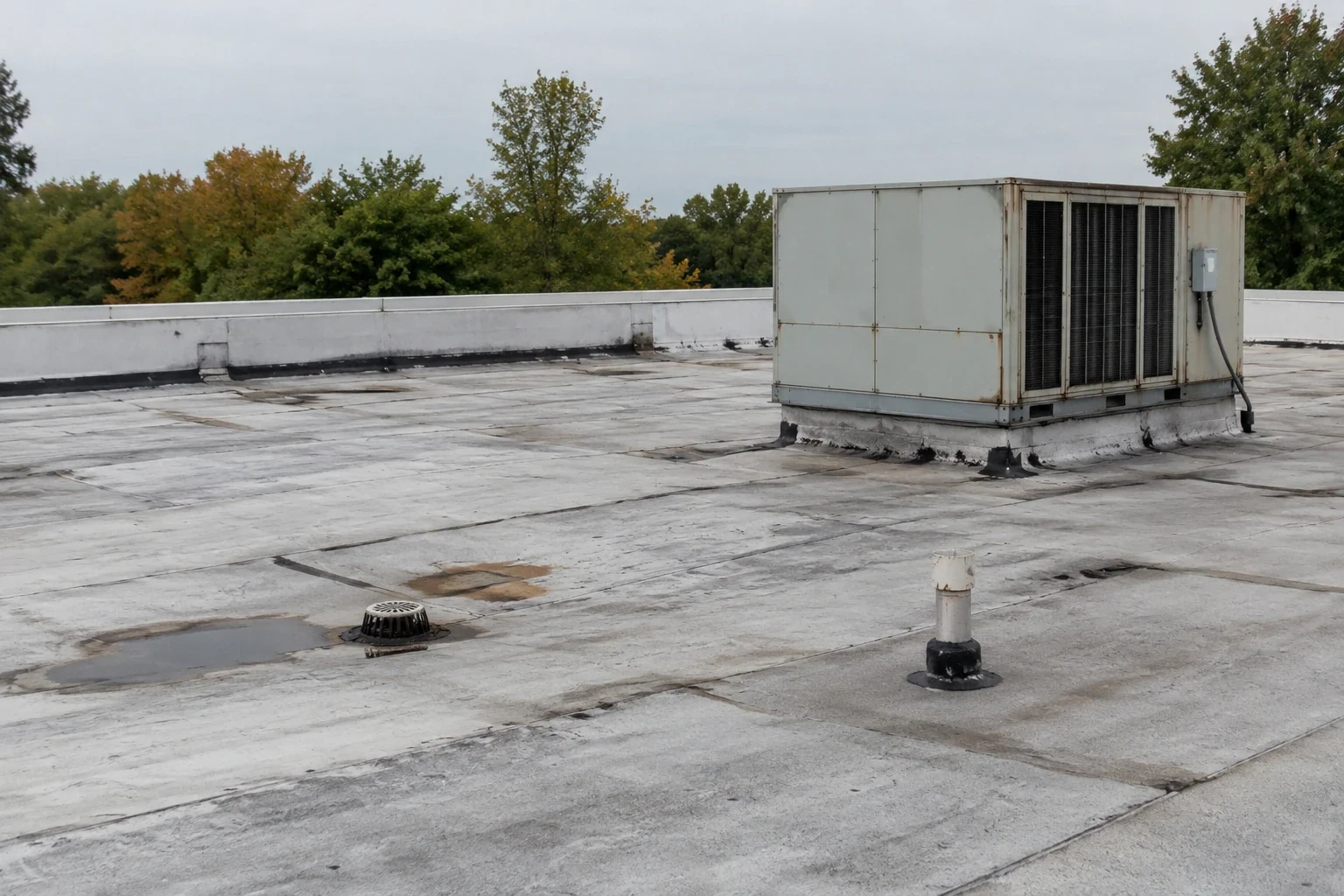
Fire suppression may saturate insulation far beyond the visible flame area. We map wet roof zones, check drains, and record where interior water reached the deck. An infrared moisture survey can help target test cuts after the surface is safe. Direct verification may still be needed to determine whether the cover board, membrane, or deck can remain.
Separate Heat and Water Damage
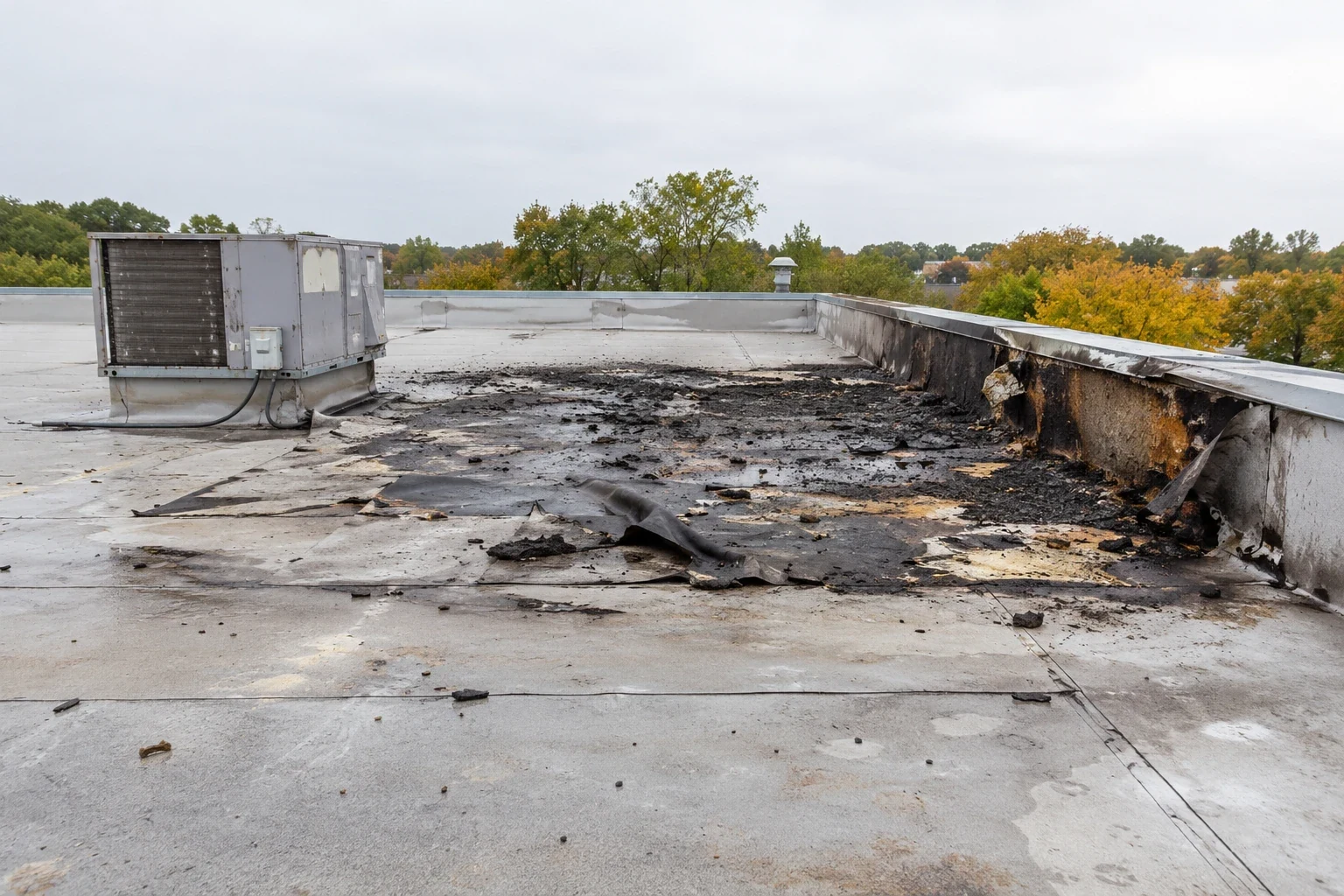
Fire can blister, shrink, char, or embrittle a membrane. Heat may also deform metal flashing, damage plastic drains, loosen adhesives, and affect insulation binders. Smoke residue can coat surfaces and interfere with adhesion. Suppression water introduces a different problem: saturated insulation, corrosion, and moisture held below an intact-looking membrane. We record each condition by roof zone and avoid treating the incident as one uniform area.
At the opening, inspect the membrane and its bond, cover board, insulation, vapor retarder, and deck. Look for discoloration, deformation, soft spots, exposed fasteners, smoke deposits, and water at seams or penetrations. Check the underside only after it is safe to enter. A roof inspection documents the assembly, while an engineer's assessment addresses structural capacity where fire exposure may have affected framing or deck.
Winter freeze exposure and summer heat are part of the Kansas City climate record. They matter during dry-in and material installation because the roof must be dry and within product conditions for a reliable bond. The official observation site is Kansas City International Airport, not each building in Independence. We use the metro climate information for planning and verify conditions at the roof when work is scheduled.
Remove to Sound Material
A repair boundary follows the tested condition. We remove burned membrane and heat-affected layers until the remaining assembly is stable, dry, and suitable for a tie-in. If the deck has lost section or its attachment has changed, the roofing scope must coordinate with structural repair. Wet insulation from suppression water needs its own removal limit. Closing a roof over soaked material can trap moisture and create problems outside the visibly burned area.
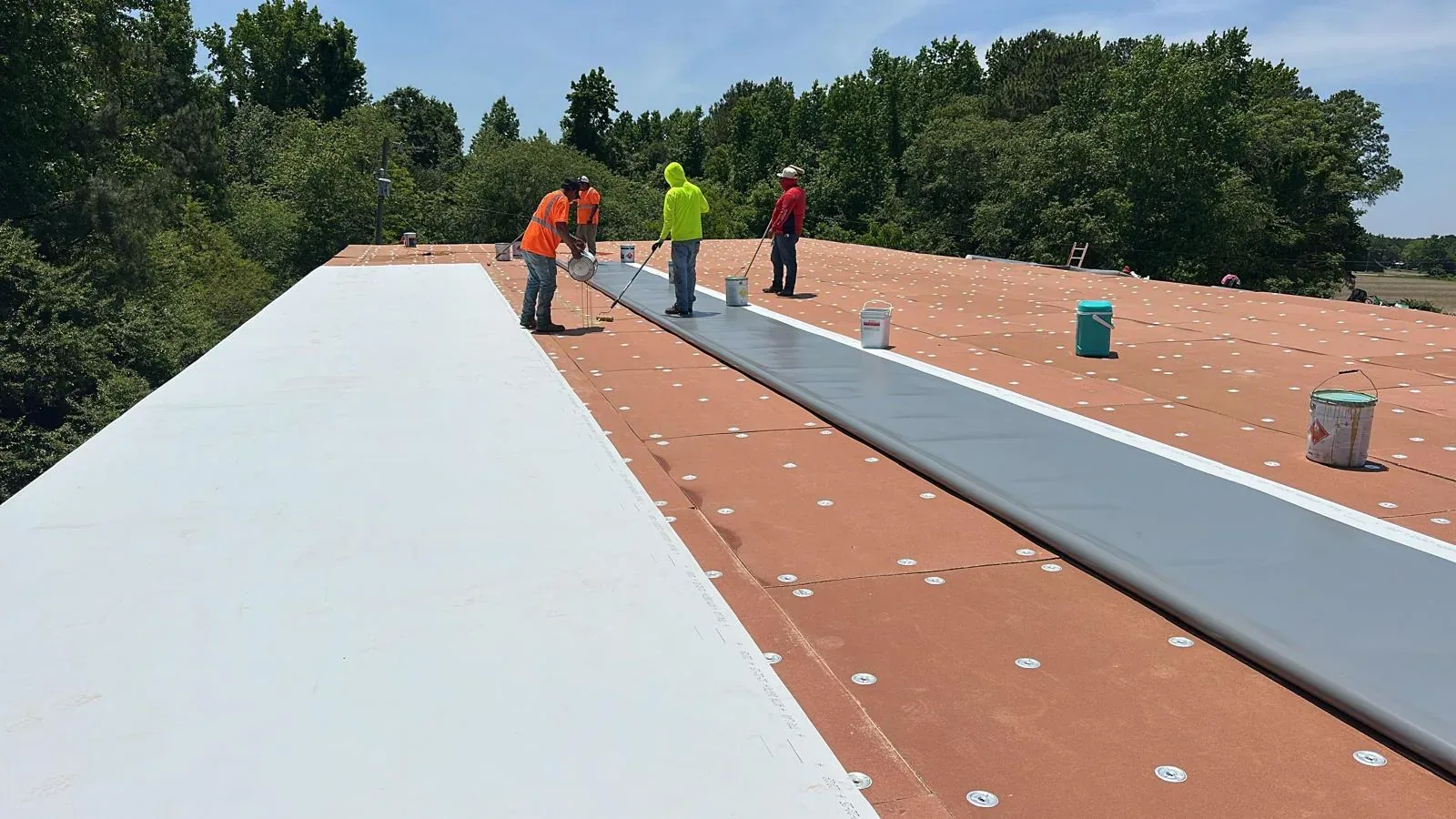
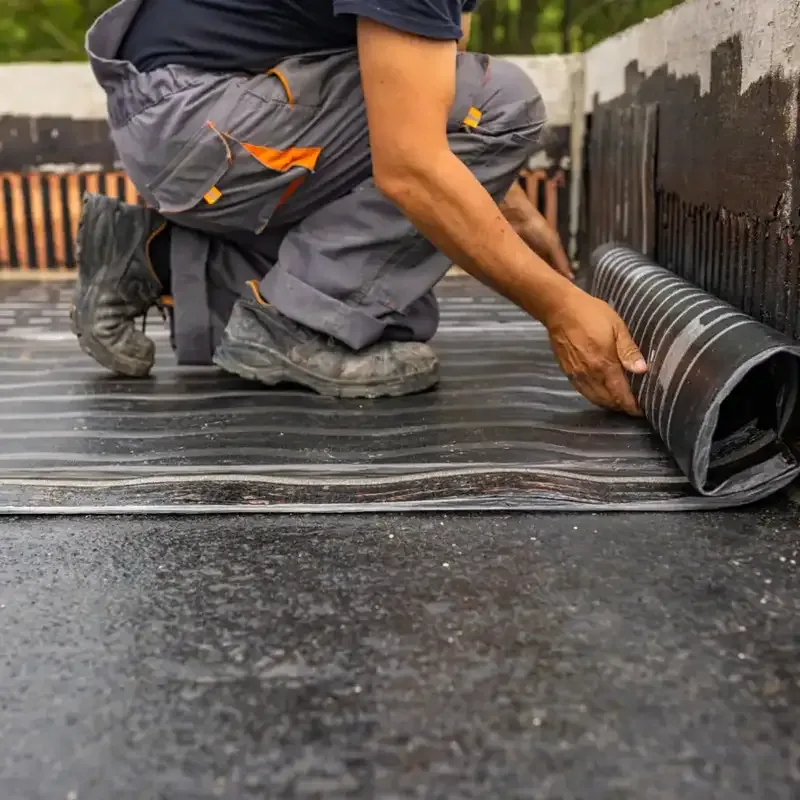
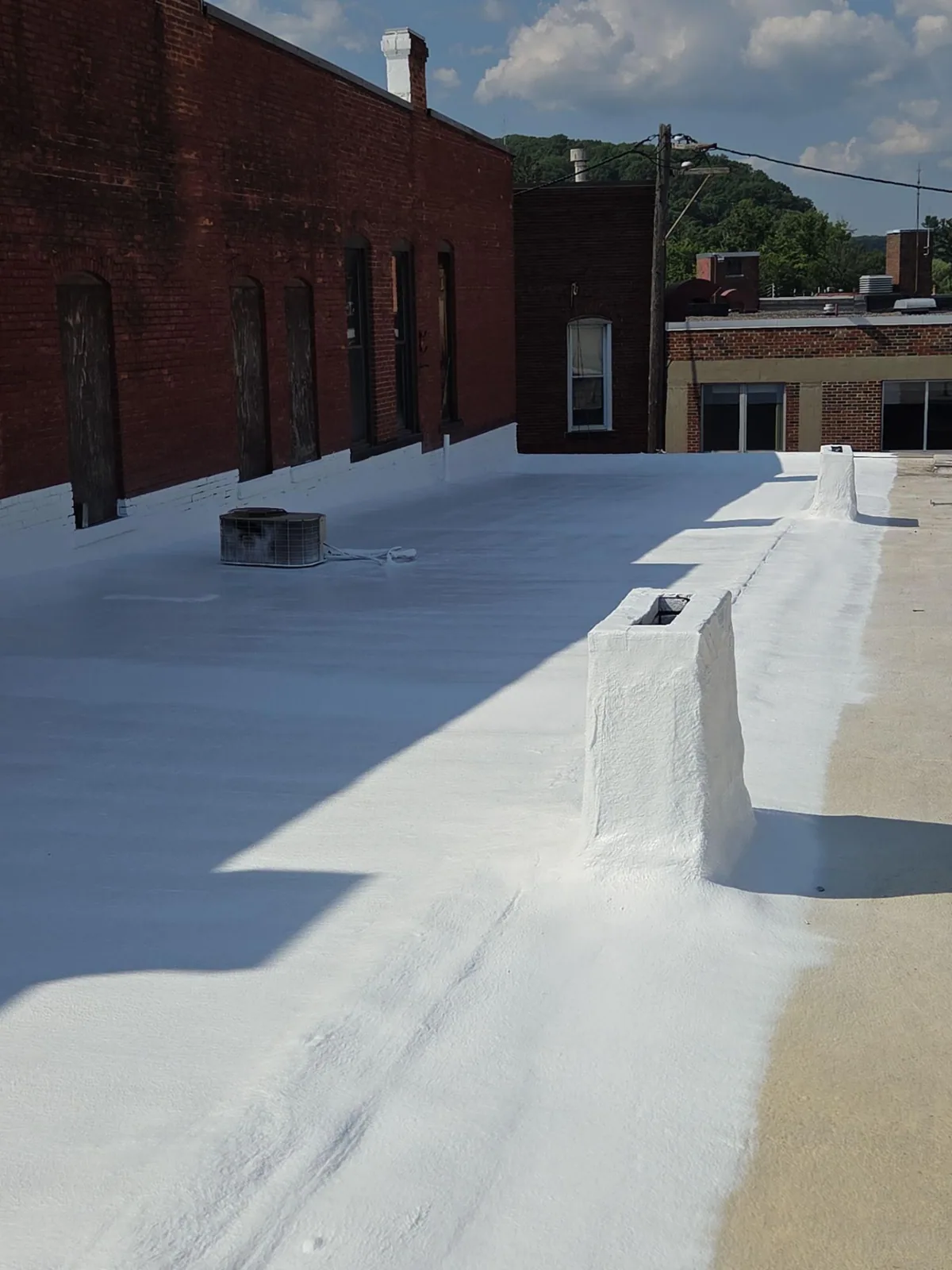
The permanent work may include deck replacement, new insulation, cover board, membrane, edge metal, curbs, drains, and flashing. The materials must be compatible with the surviving roof. A TPO assembly needs a different tie-in than an asphaltic roof system. We identify what remains before pricing the replacement layers. Where damage covers several roof zones, compare a sectional repair with full replacement planning. A recover is suitable only if the existing assembly passes moisture, attachment, and compatibility checks.
Cost and timing depend on safe access, structural review, demolition limits, disposal, material availability, weather, and the number of phases needed to keep the building dry. A site near Grandview, Missouri may have critical operating areas to protect, while another facility may be able to isolate a smaller zone. The facility contact sets operational restrictions; the contractor's scope identifies the roof construction and daily dry-in boundary.
Build a Defensible Record
Photograph each zone before removal, during exposure of the assembly, and after reconstruction. Note which areas show direct fire effects, which show suppression-water damage, and which remain untested. Record the materials installed, deck repairs, moisture findings, and temporary protection. This sequence gives facilities staff and claim reviewers a traceable record without turning nearby event history into proof of damage at this address.
Keep hail or wind findings separate from fire, heat, and suppression water. Hail evidence and wind displacement need their own roof-level observations. Claim documentation can include inspection photos and work descriptions, but an insurer determines coverage.
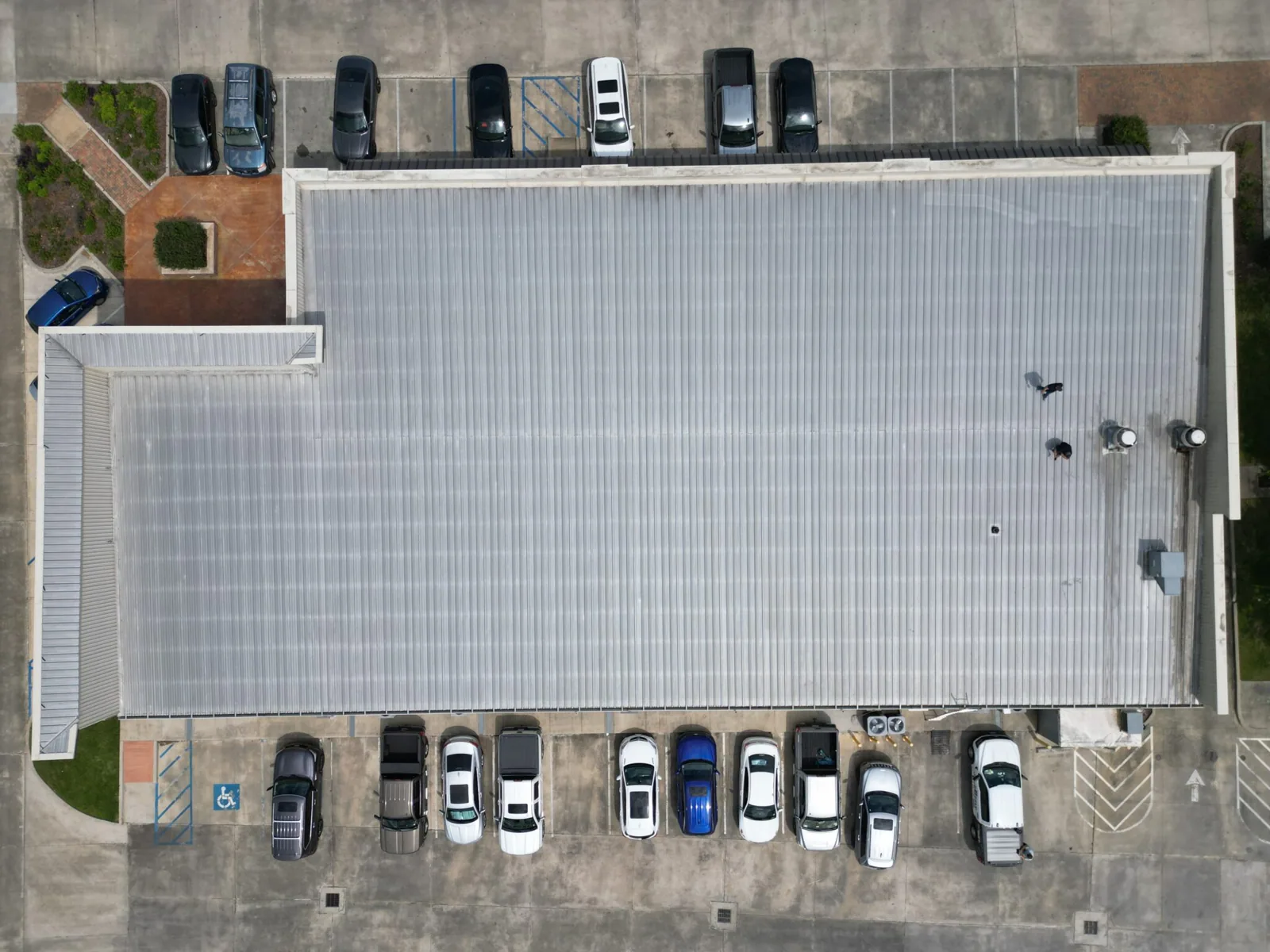
At a multi-tenant or active industrial property, divide work into sections that can be opened and dried in the same shift when possible. A temporary covering should be rechecked after weather changes. The daily log identifies the boundary of unfinished work, roof access status, and what protection remains. These practical records matter when fire response and rebuilding involve several trades.
Close the Roof in Stages
Before a section is closed, confirm that framing or deck repairs are accepted, wet layers are removed, the substrate is dry, and the new membrane ties into sound material. Test the completed seams and inspect drains, curbs, and perimeter details around the repair. If weather interrupts the work, leave a documented temporary condition and return for a final check rather than treating the dry-in as permanent restoration.
Schedule a commercial roof review in Independence after safe access is approved. We will map heat and water effects, identify the assembly layers, and define a repair or replacement boundary. For ongoing work, a written condition report can preserve the findings as the building moves from emergency stabilization to reconstruction.
Commercial Roofing Questions
Can the roof be inspected while fire crews are still working?
We follow the incident command and property safety restrictions. We inspect only from approved areas and return when roof access is cleared.
Does an intact membrane mean suppression water stayed out?
No. Water can move through seams, drains, penetrations, or damaged flashings. We check insulation and deck conditions before closing an affected area.
Can smoke residue be covered with a new patch?
Not without checking adhesion and the surface condition. We remove contamination as required and prepare sound material for the selected tie-in. No. Clean and evaluate the surface first, because soot or residue can prevent adhesion. Confirm that the material below is dry and stable, remove contaminated layers where required, and test the repair method on the prepared substrate. Record the preparation before the new flashing or membrane covers it.
What if fire damage reaches the deck?
The roofing work pauses at the structural boundary. We document the exposed condition and coordinate deck or framing repair with the responsible engineer before rebuilding the roof layers. Stop removal at a safe, supported boundary and have the affected structure evaluated before rebuilding the roof. Heat can alter coatings, membrane, insulation, and deck in different ways, while suppression water may travel beyond visible fire damage. Document the layers exposed and coordinate the next scope with the responsible building professionals. The roof cannot be closed until the supporting assembly is understood. Check adjacent attachment and transitions after the affected substrate is cleared. Heat can leave nearby materials brittle even where they show no visible burn, so the rebuild limit should follow verified condition instead of a straight line around the obvious damage.